
Direct Engineering Answer — Building Zero-Wobble Adjustable Steel Slant Boards
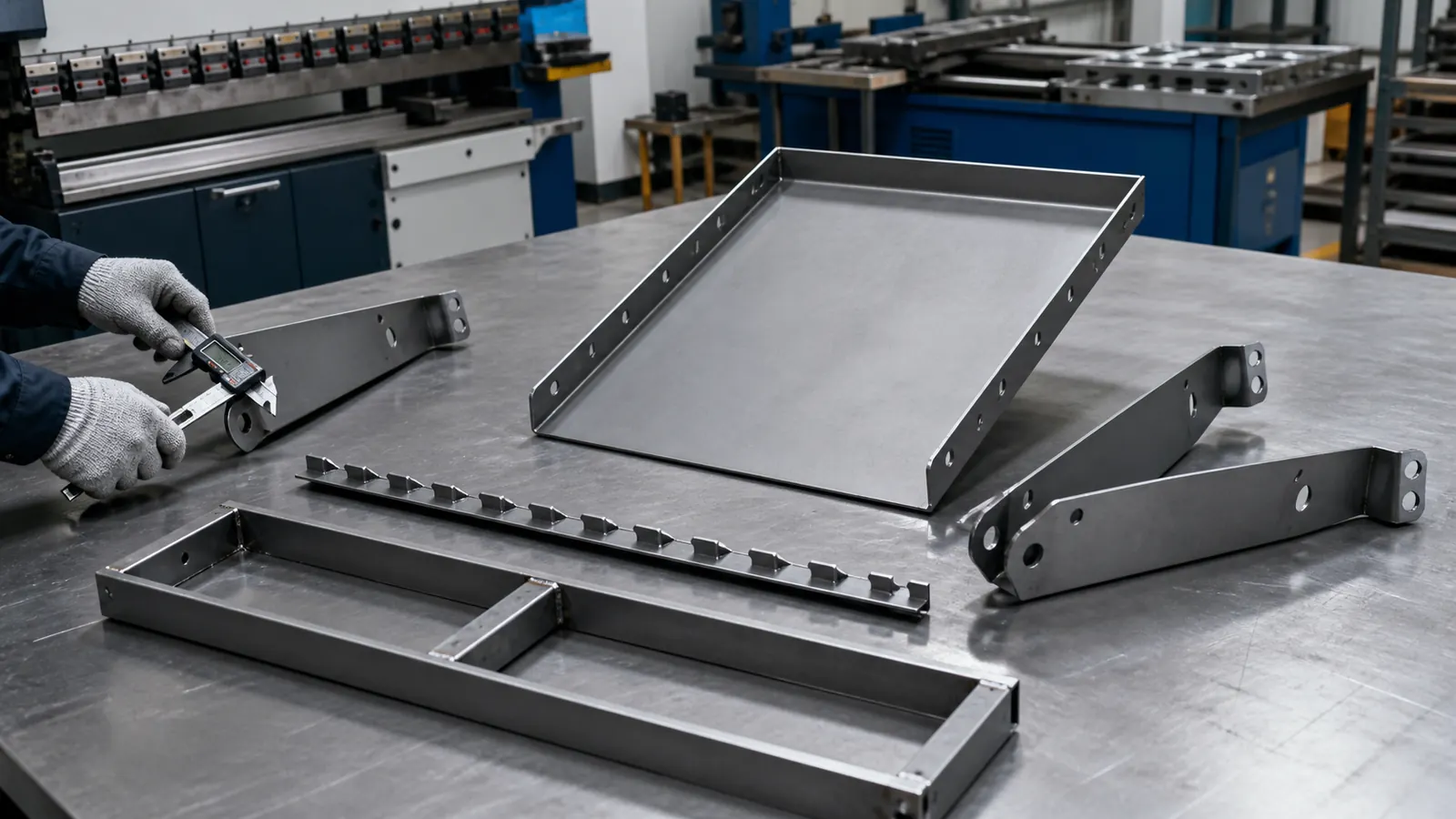
Commercial steel slant boards, incline calf stretchers, and squat wedge frames must support dynamic single-leg and weighted squat loads of 200–350 kg (450–770 lbs) without deck flex, hinge racking, or rung slip across 15° to 40° adjustment angles. When thin sheet metal decks lack longitudinal stiffening flanges or when laser-cut adjustment notches vary in pitch between the left and right rack rails, the prop bar seats on only one tooth—twisting the top plate under load. MSTFAB fabricates heavy-duty fitness incline frames from 2.0–3.5 mm Q235B / SPHC / SS304 steel with nested C-channel deck ribs, mirror-paired fiber-laser adjustment slots (±0.10 mm synchronization), full-width cold-drawn hinge rods, and high-friction textured powder coating.
01 / Engineering Specifications & Comparison Matrix
Structural Gauge, Load Rating & Geometry Matrix for Steel Slant Boards
Unlike wooden or foam calf stretchers that crack or compress under barbell squats, sheet-metal slant boards rely on formed perimeter flanges and welded cross-ribs to convert thin plate into a rigid box-beam platform.
Compare sheet thicknesses, reinforcement geometries, and safe working loads across consumer, rehab clinic, and heavy commercial gym tiers:
| Equipment Tier / Model Type | Top Deck & Base Frame Thickness | Hinge & Rung Locking Mechanism | Static Test Load & Flatness Target |
|---|---|---|---|
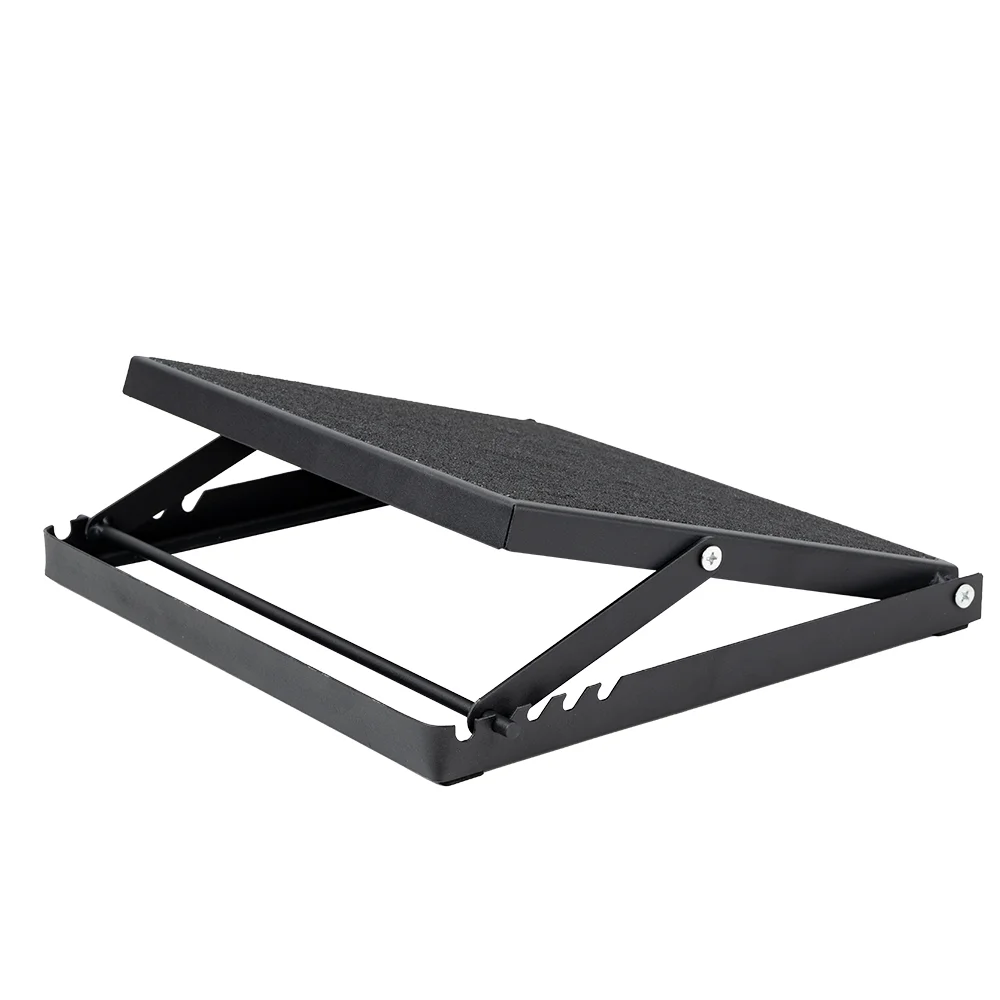
| Compact Home / Physical Therapy Slant Board (350 × 300 mm) | 2.0 mm SPCC/SPHC deck + 2.0 mm base rails with 20 mm return flanges | Ø8 mm solid steel prop rod engaging 4 laser-cut J-notches (15°–35°) | 250 kg static load; ≤0.5 mm base frame rock on flat floor |
| Commercial Gym Adjustable Incline Board (450 × 400 mm) | 2.5–3.0 mm SPHC deck + 2 welded underside hat stiffeners + 3.0 mm rack rails | Ø10–12 mm full-width hinge shaft + positive-hook safety slots (15°, 20°, 25°, 30°, 40°) | 450 kg static load (<1.0 mm center deck elastic deflection) |
| Fixed-Angle Heavy Squat Wedge / Deadlift Ramp | 3.0–4.0 mm tread-plate or smooth SPHC with internal welded gussets | Monolithic folded & TIG-welded wedge box (no moving hinge) | 600+ kg barbell squat load; 100% weld penetration on load corners |
| Stainless Steel Aquatic / Rehab Clinic Slant Board | 2.0–2.5 mm SS304 / SS316L brushed & electropolished or passivated | SS304 hinge pin with Delrin/PTFE anti-galling bushings | 300 kg load; zero rust in humid pool or physical therapy environments |
02 / Sheet Metal DFM & Structural Controls
Three Sheet Metal DFM Rules for Safe, Rock-Solid Incline Frames
A moving fitness frame is only as safe as its locking notch geometry and edge finishing. Our engineering team applies three mandatory DFM controls to every adjustable incline board:
1. Positive-Hook Notch Geometry (Anti-Jump-Out)
Shallow U-shaped slots allow the support bail to pop out if a user shifts weight toward their toes. We laser-cut a 10°–15° back-angled undercut pocket on every angle station so downward foot pressure locks the rod deeper into the slot.
2. Synchronized Left-to-Right Rack Rail Indexing
If the left and right notched side rails are welded 0.8 mm out of phase, the top platform rocks diagonally under the user’s feet. We locate both side rails on a single precision pin-jig through the laser-cut notches themselves before TIG welding.
3. Full-Radius Edge Conditioning & Hemmed Hand Grips
Users adjust the incline angle bare-handed and often use the board barefoot or in socks. We specify 180° teardrop hems on carry handles and run all laser-cut plates through rotary brush deburring (R0.3–R0.5 mm edge rounding) prior to powder coating.
Manufacturing Scope Boundary: MSTFAB manufactures build-to-print sheet metal slant boards, squat wedges, and welded fitness equipment frames, including anti-slip powder coating, rubber foot assembly, and retail-ready protective packaging.
03 / Real Production Case Study & Process Control
Case Study: 5-Angle Commercial Steel Slant Board (2,000-Unit Production Launch)
A US athletic recovery brand needed to replace a warped, noisy imported slant board that rattled during use and suffered from peeling grip tape after 3 months in commercial gyms.
- Eliminating Deck Bounce: MSTFAB upgraded the top platform to 2.5 mm SPHC steel with two full-width CNC-bent C-ribs spot/plug-welded to the underside, cutting center deflection by 68%.
- Silent Hinge & Rung Fit: Added nylon sleeve bushings on the Ø10 mm hinge axle and rubber bumper pads at the fully folded position to eliminate metal-on-metal clatter.
- Baked-On High-Grit Textured Coating: Replaced adhesive grip tape on the frame perimeter with a heavy-grit sand-textured polyester powder coat (80–110 μm, ASTM D3359 5B adhesion) plus laser-etched angle degree markers (15°–35°).
- Production Outcome: Delivered 2,000 retail-boxed units with zero warranty claims for frame wobble or rung misalignment.
We can supply bare powder-coated frames or complete turnkey assemblies with die-cut EPDM/silicone top grip mats, non-marking rubber base feet, and custom drop-tested EPE foam retail cartons.
04 / Quality Verification, Traceability & Surface Finishing
Rotary Edge Deburring, Weld Penetration & Anti-Slip Surface Finishes
Because adjustable fitness frames experience thousands of repetitive impact cycles, cold MIG tacks on the hinge barrels or rung brackets are unacceptable. Our certified welders use fixture-clamped MAG/TIG welds verified by macro-etch penetration checks and static proof-load fixtures.
Every sharp laser edge is mechanically rounded before entering our pre-treatment tunnel, ensuring thick powder coverage along corners so sweat and gym disinfectants cannot trigger edge rust.
05 / 8-Point OEM RFQ Checklist & Topic Cluster Hub
8-Point OEM RFQ Checklist for Steel Slant Boards & Fitness Frames
Include these eight drawing and specification controls in your RFQ package so our engineering team can lock down tooling, material traceability, and inspection fixtures on day one:
- 3D STEP Assembly + 2D Drawings with Angle TableInclude all unfolded and deployed incline angles (e.g., 15°, 20°, 25°, 30°, 35°) so we can verify rung lock engagement at each stop.
- Target User Load & Safety FactorState maximum user + barbell weight (e.g., 250 kg working load / 500 kg static proof load) to validate deck gauge and rib count.
- Steel Grade & Thickness per ComponentCall out 2.0–3.0 mm SPHC/Q235B carbon steel or SS304 stainless steel for the deck, base frame, and locking bail.
- Hinge Pin & Bushing SpecificationSpecify solid cold-drawn steel or SS304 shaft diameter (Ø8–Ø12 mm), end retention (welded cap vs. e-clip/nyloc nut), and nylon bushings.
- Edge Deburring & Hemming CalloutsMark hand-contact adjustment slots and carry handles requiring 180° hems or R0.5 mm rotary brush edge rounding.
- Powder Coating Texture, RAL Color & LogoSpecify fine-sand vs. heavy-grit anti-slip powder coat, RAL color, and whether your brand logo is laser-cut, embossed, or silk-screened.
- Installed Accessories (Grip Pads & Rubber Feet)Indicate if MSTFAB should bond top EVA/EPDM traction pads, install screw-on rubber feet, or attach ankle-protection foam bumpers.
- Drop-Test Retail Packaging vs. Bulk PalletizingSpecify individual mail-order brown/color boxes with EPE foam corner blocks (ISTA 1A/3A drop-ready) or bulk gym pallet crating.
Explore Connected Sheet Metal Fabrication Services & Enclosure Hubs
CNC Press Brake Sheet Metal Bending & Forming
TIG / MIG / Robotic Sheet Metal Welding Services
Powder Coating, Passivation & Anodizing Finishes
Precision CNC Machining & Hybrid Metal Assemblies
Custom Electrical Enclosures & OEM Equipment Shells
Upload 3D STEP + 2D PDF for 24-Hour DFM & Price Quote
ISO 9001 & IATF 16949 Certified Factory Fact Sheet
06 / OEM Buyer & Engineer FAQ
Frequently Asked Questions: Steel Slant Board Sheet Metal Fabrication
What steel thickness is required so a slant board does not flex under weighted squats?
For an unribbed 400 mm span, even 3.0 mm flat steel will flex slightly. The optimal engineering design uses a 2.0 to 2.5 mm SPHC top deck with 20–25 mm downward-bent perimeter flanges plus one or two longitudinal C-channel stiffeners welded underneath, delivering >400 kg rigidity while keeping total product weight manageable (5–7 kg).
How do you prevent the base frame from rocking on smooth gym floors or tile?
Base frame wobble happens when welding heat pulls the four corners out of plane. We clamp the base frame in a rigid steel fixture during welding and verify every unit on a precision granite surface plate (<0.5 mm feeler gauge check) before installing high-durometer leveling rubber feet.
Can you laser-cut or emboss our fitness brand logo and angle degree numbers directly into the steel?
Yes. We can fiber-laser cut your brand logo through the front risers (backed by a contrasting color plate if desired), laser-engrave permanent angle markers (15° / 20° / 25° / 30° / 35°) into the side rails, or apply UV-cured silk-screen graphics over the powder coat.
What is the best surface finish to prevent sweat corrosion in commercial gyms?
We use a 5-stage degreasing and zinc/iron phosphate pre-treatment followed by an 80–100 μm thermoset polyester textured powder coat (tested to 500 hours neutral salt spray). For outdoor bootcamps or aquatic rehab centers, we can either add an electrophoretic (E-coat) primer under the powder coat or fabricate the frame in SS304 stainless steel.
Can MSTFAB supply complete packaged slant boards ready for Amazon FBA or direct-to-consumer shipping?
Yes. Beyond sheet metal fabrication and welding, our assembly line installs hinge shafts, rubber feet, and die-cut 3M-backed anti-slip top pads, then packs each unit into custom-printed boxes with EPE foam inserts and barcode labels.
What is the prototype and mass production lead time for custom metal fitness frames?
Soft-tooled functional prototypes ship in 7–10 working days so you can test biomechanics and load capacity immediately. Production batches of 200 to 2,000+ units typically ship in 18–25 working days.
International Standards & Engineering References
- ISO 2768-1 / 2768-2 — General Linear, Angular and Geometrical Tolerances for Sheet Metal Fabrication
- IEC 60529 / NEMA 250 — Degrees of Protection Provided by Enclosures (IP Code & Environmental Sealing)
- ISO 9001:2015 & IATF 16949:2016 — Quality Management Systems & Production Part Approval Process (PPAP)
Ready to Quote Your Custom Sheet Metal Enclosure or Fabrication Project?
Upload your 3D STEP models and 2D PDF drawings. MSTFAB will review your tolerances, material specs, and DFM details to deliver a transparent factory quote within 24 hours.
Request Your 24-Hour DFM & Custom Quote →
Direct engineering desk: caroline@mstfab.com | ISO 9001 & IATF 16949 Certified Factory in Guangzhou, China
 WeChat Contact
 WhatsApp Me Directly