
Quick Answer
A washdown enclosure does not seal because somebody glued a gasket around the door.
It seals only when several mechanical features work together: Cabinet opening geometry, Door flatness, Gasket-contact land, Hinge position, Latch position, Latch compression, Weld distortion control, Corner geometry, Coating thickness, Cable-entry interfaces, Hardware, and Final assembly condition.
That means sealing performance starts in the sheet metal drawing.
For a custom enclosure shell intended for wet, outdoor or washdown environments, OEM buyers should freeze at least these 14 mechanical details before production: Door opening geometry, Gasket-contact land, Door flatness requirement, Hinge quantity and position, Latch quantity and position, Door reinforcement, Weld locations, Corner transitions, Gasket path continuity, Surface finish on sealing faces, Powder-coating allowance, Cable-entry and penetration interfaces, Finished first-article inspection, and Revision control.
MSTFAB provides custom sheet metal fabrication services from buyer drawings.
Our manufacturing scope can include: Enclosure bodies, Doors, Access covers, Mounting plates, Gasket flanges, Rain lips, Reinforcement frames, Hinge brackets, Latch brackets, Cable-entry plates, Gland plates, Grounding studs, Internal partitions, PEM hardware, Welding, Grinding, Powder coating, Mechanical fit checks, Dimensional inspection, and Export packaging.
We manufacture the empty mechanical enclosure shell.
The buyer controls the final installed equipment, electrical system and product-level validation.
We make the metal door.
Water decides whether everybody involved did their job properly.
Why a Good Gasket Still Leaks on a Bad Door
Buyers sometimes treat the gasket as the sealing system. It is not.
Imagine installing an excellent gasket onto a door that is: Twisted, Bowed, Uneven around one corner, or Poorly supported near the latch. The gasket cannot apply uniform pressure by itself. It simply follows the metal. If the metal moves away, the seal moves away with it.
MSTFAB’s current general enclosure DFM guidance already makes the same fundamental point: a gasket cannot rescue a twisted enclosure frame.
For washdown enclosure projects, this principle deserves its own sheet metal enclosure DFM review. The real question is not: Which gasket are you using? Start with: What surface is that gasket actually sealing against?
Rubber has responsibilities. It does not have supernatural powers.
1. Start With the Sealing Path
Before designing hinges or latches, draw the complete gasket path. It should identify: Top edge, Bottom edge, Hinge side, Latch side, and Corner transitions.
Then ask: Is the path continuous? Does a weld cross it? Does a hinge interrupt it? Does a fastener hole enter it? Does a cutout weaken the flange? Does the door remain supported along the path?
The sealing path should be treated as a functional mechanical interface. Not decorative trim.
2. The Gasket Land Must Be Wide Enough for the Selected Seal
The gasket-contact land is the sheet metal surface that supports or contacts the seal. Its required geometry depends on the actual gasket system.
The buyer should provide: Gasket type, Gasket width, Supplier recommendation, Attachment method, and Intended compression behavior.
The sheet metal drawing can then define: Flange width, Return geometry, Corner structure, and Surface finish.
Do not copy one flange width from another cabinet simply because it worked before. The previous cabinet may have used a different gasket, a smaller door, different latch spacing, or different sheet thickness.
3. Do Not Publish a Universal Gasket Compression Percentage
This is important. Different gasket materials, cross sections, densities, adhesives, and applications can require different compression conditions.
Therefore the enclosure drawing should not invent a universal percentage. Instead, obtain the acceptable compression range from the gasket manufacturer, buyer specification, applicable evaluated construction, or certification owner.
Then design the metal geometry around it. A random percentage copied from another website is not engineering. It is numerology with rubber.
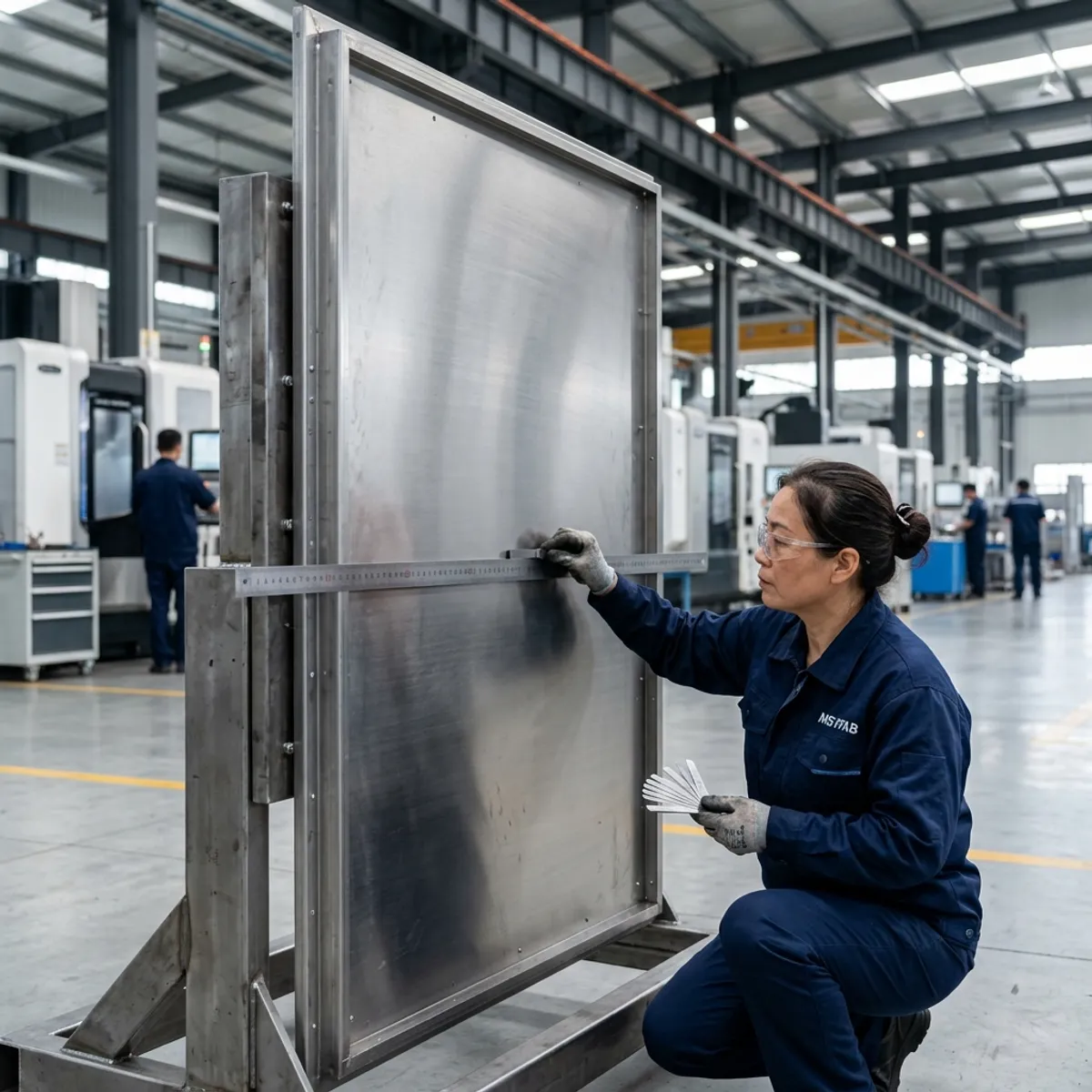
4. Door Flatness Matters Along the Seal
A door can meet overall width, overall height, and hole position, and still seal poorly. Why? Because local shape matters.
Possible door defects include bow, twist, local waviness, and corner lift. These can create uneven gasket contact. For a washdown enclosure, inspect the geometry that affects the sealing path. Do not simply measure one point in the middle of the door and declare peace.
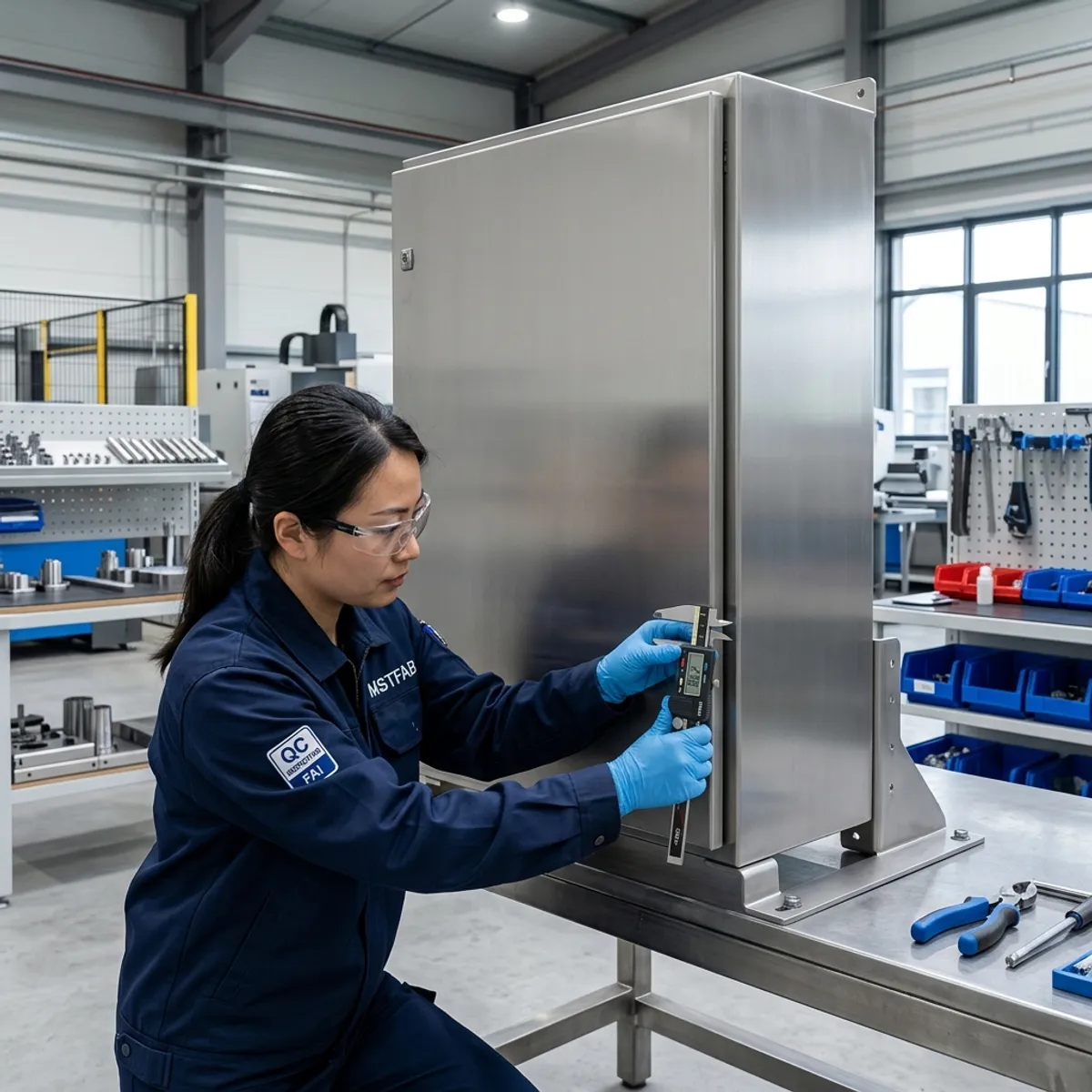
5. Measure the Finished Door, Not Only the Flat Blank
Laser cutting may be accurate. Then the door experiences bending, hardware installation, welding, grinding, powder-coating cure, and final assembly. Each step can influence its shape.
The meaningful question is therefore: What does the finished assembled door look like? Not: Was the DXF correct? The DXF has had a very easy life. The door has been through manufacturing.
6. Large Doors Need Reinforcement
A tall or wide enclosure door may flex under its own weight, hinge loading, latch compression, or buyer-installed door hardware.
Potential reinforcement approaches may include folded returns, hat sections, local channels, welded reinforcement, or mechanically fastened stiffeners. Good sheet metal design puts stiffness where stiffness has a job.
7. Hinge Position Affects Compression
A hinge does more than allow the door to open. It also controls how the door approaches the gasket land. Poor hinge geometry can contribute to uneven contact, door sag, seal scuffing, or corner lift.
Define the hinge model, quantity, position, mounting method, and hinge-side reinforcement. Do not position hinges only because “it looks balanced”. Symmetry is pleasant. Sealing performance prefers engineering.
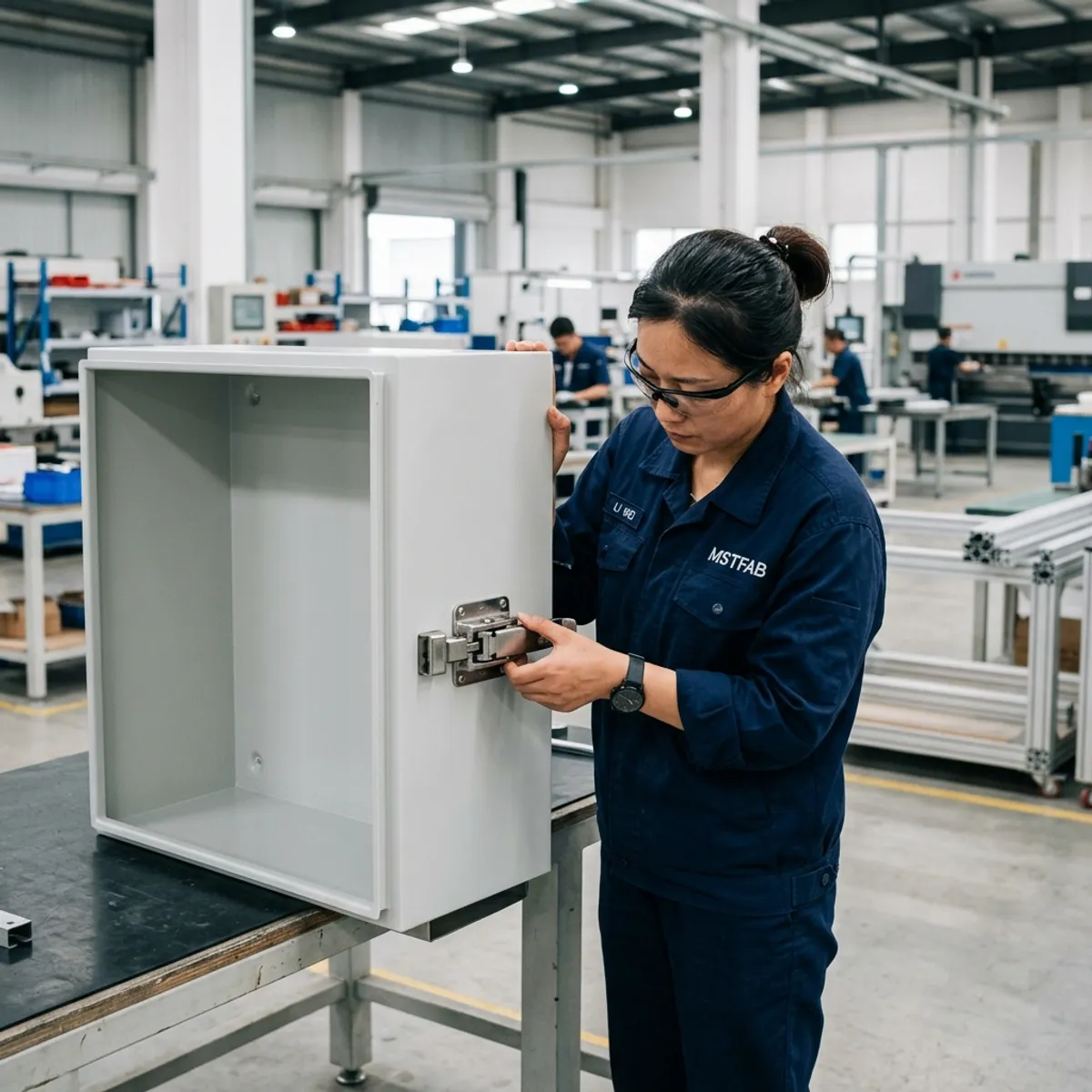
8. Latches Create Compression — But More Is Not Always Better
Compression latches help pull the door toward the gasket-contact surface. But simply tightening the latch harder is not a good solution for poor geometry.
Excessive force can bend the door, distort the flange, increase hardware stress, and make operation difficult. A strong latch cannot compensate elegantly for a banana-shaped door. It can only make the banana more determined.
9. Weld Distortion Is One of the Biggest Sealing Risks
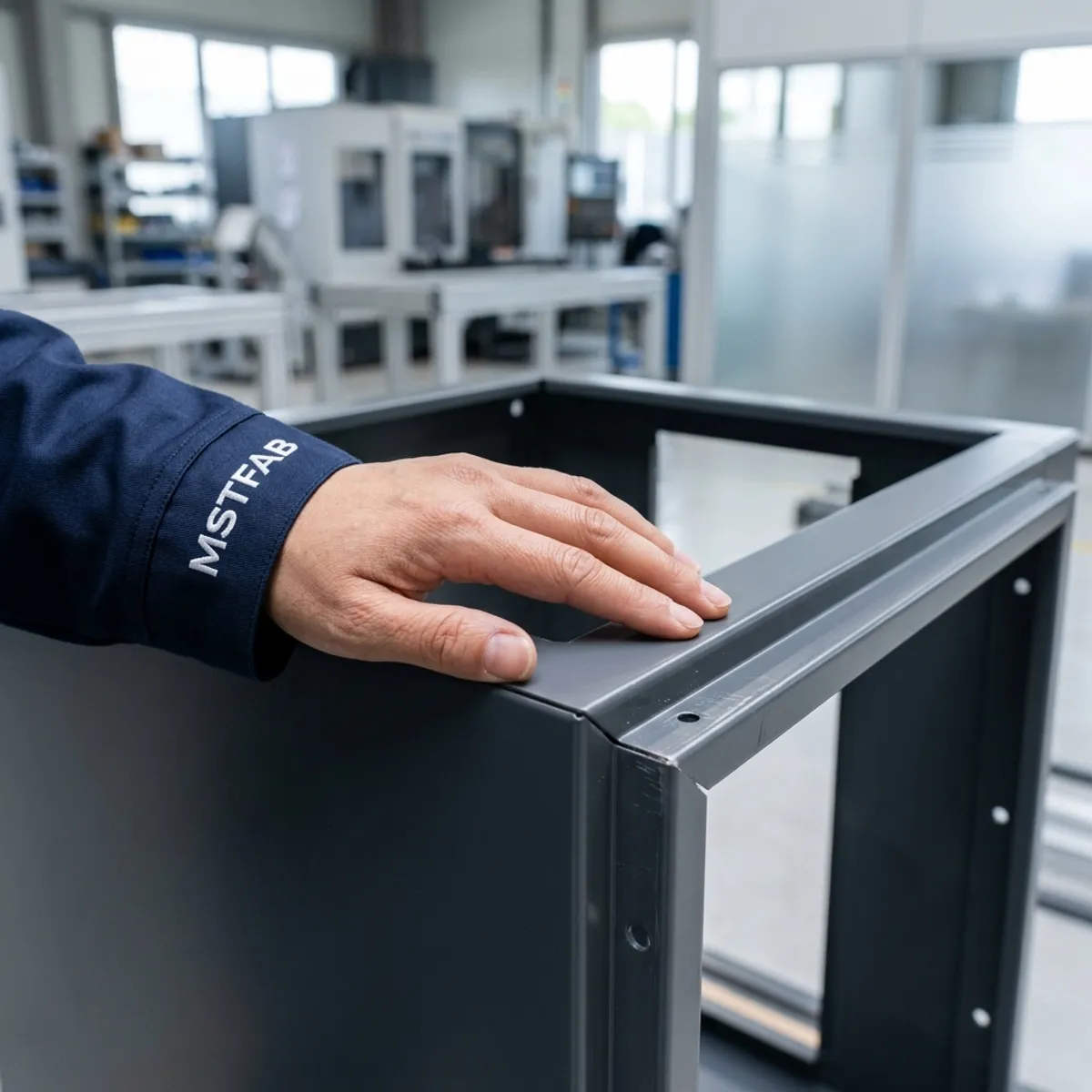
Welded enclosure frames can move when heat is introduced. Potential effects include opening no longer square, sealing flange bow, door gap variation, hinge position shift, and latch misalignment.
For sealing-critical enclosures, treat welding as part of the sealing design. Not simply a joining process.
10. Avoid a Weld Bead Across the Gasket Land
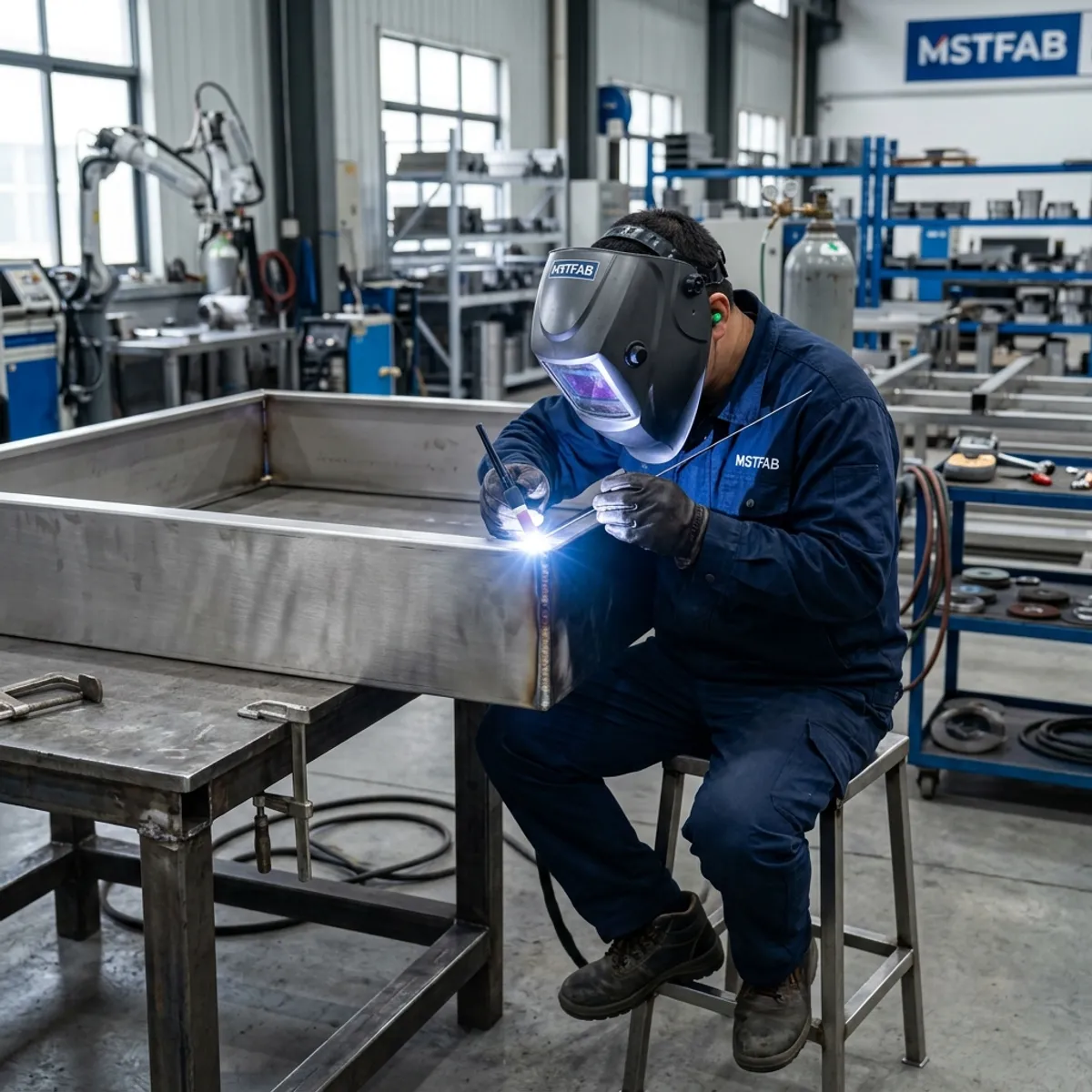
A weld intersecting the sealing surface can create high spots, grinding transitions, and local unevenness. Where practical, design a continuous formed gasket land. Every weld eliminated from a critical sealing surface is one less place where geometry can develop personality.
11. Powder Coating Changes the Sealing Interface
Powder coating is not just color. It adds a finished layer to the sheet metal. That can affect door gap, hinge fit, latch position, gasket seating, and threaded hardware.
Therefore the DFM review should consider the finished condition. The customer does not normally receive the enclosure halfway through the coating process because the fit was better then.
12. What NEMA Type 4X Actually Changes
For the sheet metal supplier, the useful takeaway is: If the buyer’s project targets Type 4X or another environmental classification, translate that requirement into controlled mechanical features such as door geometry, gasket land, hinges, latches, penetration interfaces, material/finish, and hardware.
Then validate the completed construction under the applicable project certification or test path. Do not ask the press-brake operator to certify NEMA compliance with a digital caliper. That is not what the caliper does.
For specific standards comparisons, refer to NEMA 4X enclosure requirements.
When the washdown enclosure will be installed in a food or pharmaceutical facility, the rating is only one part of the decision. Use our FDA-regulated facility distribution box guide to define the installation zone, cleaning exposure, condensation risk and completed-panel handoff before the shell is released.
Supplier Responsibility Matrix
| Project Item | MSTFAB Sheet Metal Scope | Buyer / OEM Scope |
|---|---|---|
| Cabinet body | Fabricate | Define geometry |
| Door | Fabricate | Define requirements |
| Gasket land | Fabricate | Define gasket/interface |
| Door reinforcement | Fabricate | Define required structure |
| Hinge brackets | Fabricate | Select/approve hinge arrangement |
| Latch brackets | Fabricate | Select/approve compression arrangement |
| Cable-entry plates | Fabricate | Define penetrations |
| Surface finishing | Apply to specification | Define environment |
| Gasket selection | Buyer-defined unless included | Approve material/performance |
| Environmental certification | Not implied by fabrication | Responsible certification owner |
| Electrical system | Not supplied | Buyer/integrator |
Key Takeaways
Washdown enclosure sealing is not a gasket purchasing problem. It is a sheet metal system.
OEM buyers should freeze: Door geometry, Gasket land, Flatness, Reinforcement, Hinges, Latches, Weld locations, Corners, Coating, Cable-entry interfaces, First-article checks, and Revision control.
The cheapest time to find an uneven gasket land is during DFM. The second-cheapest is during the first article.
Finding it after the cabinet has been exported and somebody is standing in front of it with a hose is the version where water performs the final inspection. Water is very thorough. It does not accept corrective-action promises.
Start Your Custom Washdown Enclosure Project
MSTFAB manufactures precision sheet metal enclosure shells and mechanical parts tailored for demanding environments.
 WeChat Contact
 WhatsApp Me Directly