
UL 50E / NEMA JUNCTION BOX DFM — EXECUTIVE TECHNICAL BRIEF
Industrial junction boxes mounted on CNC machine tools, packaging conveyors, and hydraulic skids routinely fail qualification due to corner weld pinholes from zinc vaporization, paint chipping around field-punched concentric knockouts, and coolant wicking across flat, under-formed gasket rims. MSTFAB manufactures custom empty galvanized steel (SGCC / DX51D+Z275 / ASTM A653 G90) junction box shells strictly to customer 3D STEP and 2D PDF drawings under active ISO 9001:2015, IATF 16949:2016, and ISO 14001:2015 certifications. While MSTFAB does not hold UL listing itself, we engineer UL-ready mechanical geometry—100% penetrant-checked seam welds, 14 mm rolled water-shedding gutter lips, masked M6 copper grounding studs, and laser-cut gland plates—backed by EN 10204 3.1 traceability so OEMs pass UL 50, UL 50E, and UL 508A inspections reliably.
- Watertight Seam-Weld Integrity: Self-jigging tab-and-slot corner miters on 1.5–2.0 mm ASTM A653 G90 / DX51D+Z275 steel are pulse-TIG seam welded, smoothly dressed to Ra <= 3.2 µm, and 100% dye-penetrant tested to support OEM UL 50E Type 4 (240 L/min) hose-down qualification.
- Rolled Gutter Rim & 32% Seal Compression: A 14 mm deep 90° rolled water-shedding gutter lip with a 3.0 mm smooth contact crest and corner compression stops holds closed-cell EPDM or polyurethane FIPG gaskets strictly within 30–35% compression without lid bowing.
- Clean Gland Plates & Burr-Free Knockouts: CNC-laser-cut removable gland plates (±0.10 mm cord-grip bore tolerance) or 0.40 mm micro-tabbed knockouts eliminate shop-floor hole-sawing and prevent brittle powder-coat chipping around liquid-tight conduit fittings.
- Honest UL-File Support Boundary: MSTFAB does not hold UL listing itself; operating under ISO 9001:2015, IATF 16949:2016, and ISO 14001:2015, we supply build-to-print empty junction box shells with EN 10204 3.1 steel certs, weld logs, and RoHS/REACH disclosures for the OEM's UL 50/50E/508A file.
Every project at MSTFAB includes a complimentary 24-hour CAD Design-for-Manufacturing (DFM) audit, heat-number-traceable EN 10204 3.1 mill certificates, and a ballooned First Article Inspection (FAI) report prior to volume release.
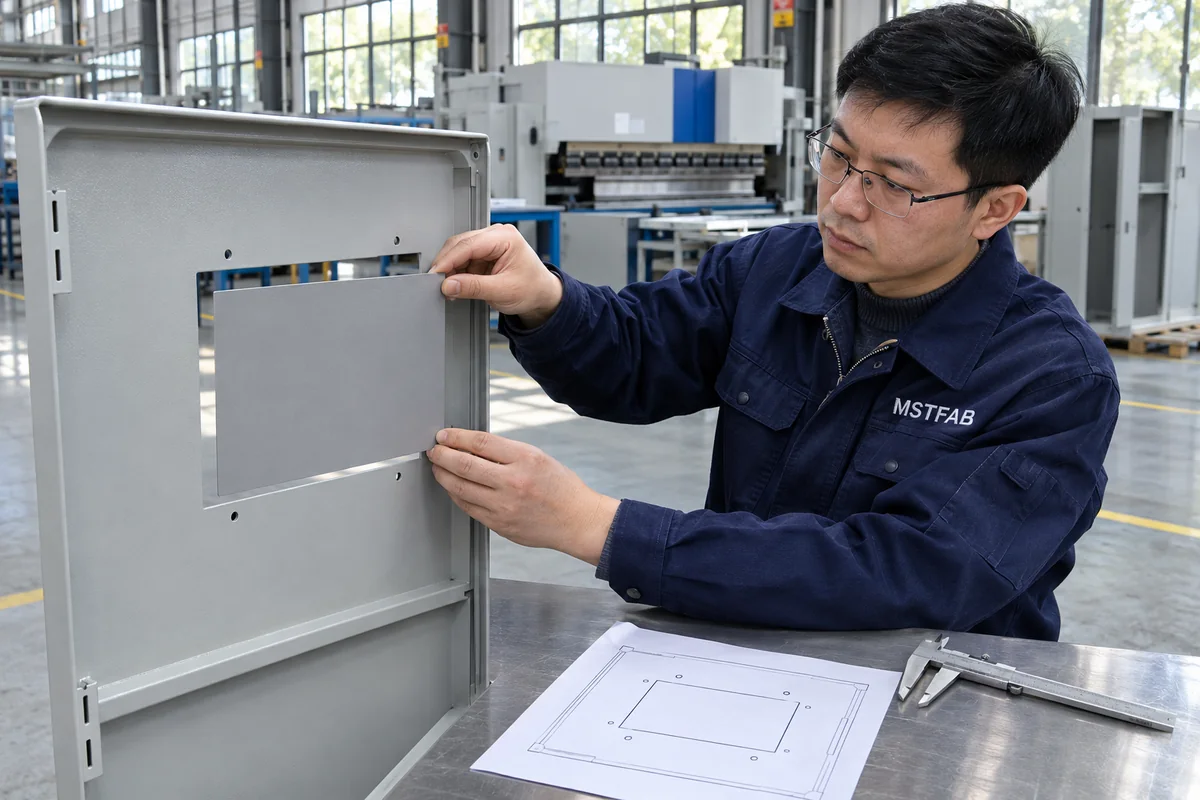
01 / Engineering Specifications & Comparison Matrix
Industrial Galvanized Junction Box DFM & UL-Ready Fabrication Matrix
When machinery OEMs build electrical control skids intended for UL 50, UL 50E, or UL 508A (NEMA 12 / NEMA 4) certification, the empty junction box shell carries disproportionate compliance risk. Minor fabrication shortcuts—such as bridged corner welds with zinc-vapor pinholes, narrow 8 mm flanges that crush closed-cell gaskets past recovery limits, or over-sprayed grounding studs—regularly trigger expensive third-party lab re-tests and factory-floor rework. Because MSTFAB manufactures empty build-to-print shells to OEM 3D STEP and 2D PDF drawings rather than holding standalone UL listings, our fabrication matrix codifies the exact sheet gauges, tab-and-slot weld geometries, gutter-rim profiles, leak-test checks, and material certifications required so your engineering team passes UL follow-up inspections cleanly on the first submittal.
Each parameter below is verified during incoming raw material quarantine, in-process CNC stage checks, and final First Article Inspection (FAI) before shipment release:
| Engineering Parameter / Zone | Material & Process Specification | Target Tolerance / Performance Standard | Inspection Method & OEM Value |
|---|---|---|---|
| Substrate & Subplate Gauge | ASTM A653 CS Type B G90 or DX51D+Z275 galvanized steel: 2.0 mm welded body and 1.5 mm flanged cover with 2.0 mm internal subplate. | Thickness ±0.08 mm; zinc mass >= 275 g/m²; subplate standoff flatness <= 0.25 mm across mounting bosses. | Incoming micrometer gauge audit and XRF zinc verification cross-checked to EN 10204 3.1 mill heat certificates per coil lot: Balances structural rigidity against lid weight while maintaining full metallic traceability for OEM UL follow-up service inspections. |
| Tab-and-Slot Seam Welding | Self-jigging laser-cut tab-and-slot miter corners joined by pulse-TIG continuous seam welding and dressed smoothly prior to priming. | Pre-weld root gap 0.15–0.25 mm; dressed weld surface Ra <= 3.2 µm; zero pinholes or dye bleed-through on 100% of units. | 100% dye-penetrant (PT) or soap-bubble air-decay test on seam-welded corners plus profilometer check on dressed external bends: Eliminates zinc-vapor corner leaks that cause immediate failures in 240 L/min UL 50E Type 4 water-hosedown qualification. |
| Rolled Gutter Rim & Seal Land | 14 mm deep 90° rolled water-shedding gutter rim with 3.0 mm smooth contact crest mating to closed-cell EPDM or polyurethane FIPG seal. | Crest flatness <= 0.20 mm per 400 mm span; gasket compression 30–35% locked by mechanical corner compression stops. | Feeler-gauge gasket compression check, CMM crest-flatness scan, and internal prototype Type 4 spray-nozzle verification: Sheds cutting-oil coolant and washdown spray away from the lid seal while preventing permanent gasket crush over thousands of cycles. |
| Gland Plates & Clean Knockouts | Bolted CNC-laser-cut removable gland plates with EPDM seal or micro-tabbed clean-break knockouts (0.40 mm web, 0.30 mm score). | Cord-grip bore ±0.10 mm; knockout retention >= 120 N static push while breaking cleanly without flaking surrounding powder coat. | Automated optical CMM bore check during 5-piece FAI and clean-break force audit on micro-tabbed knockouts per batch: Saves 15–20 minutes of shop-floor hole punching per box and prevents loose metal shavings or coating chips inside wiring compartments. |
| Masked Grounding & Hardware | M6/M8 copper-plated CD weld studs on box body and lid, protected by tight-fit silicone masking caps during dual-coat finishing. | Bonding resistance <= 0.05 Ω across stud collar; zero paint overspray within 2.0 mm of ground-symbol bonding pad. | 100% 4-wire micro-ohmmeter check on masked studs and visual inspection of mask edge sharpness under 500-lux lighting: Satisfies NFPA 79 and UL 50E grounding continuity requirements cleanly without manual wire-brushing or exposed rust rings. |
| Oil-Resistant Dual-Coat Finish | Iron/zinc-phosphate pretreatment + 35–45 µm zinc-rich epoxy primer + 70–85 µm RAL 7035 oil-resistant polyester powder coat. | Total DFT 105–130 µm; 5B zero-flaking tape adhesion; 500 h ASTM B117 / 240 h hydraulic coolant immersion pass. | PosiTector DFT 5-point scan, ASTM D3359 5B cross-hatch adhesion test, and calibrated Go/No-Go gauging on captive M5 cover inserts: Resists CNC cutting fluids, hydraulic mist, and mechanical tool knocks on automated factory floors without peeling at lid edges. |
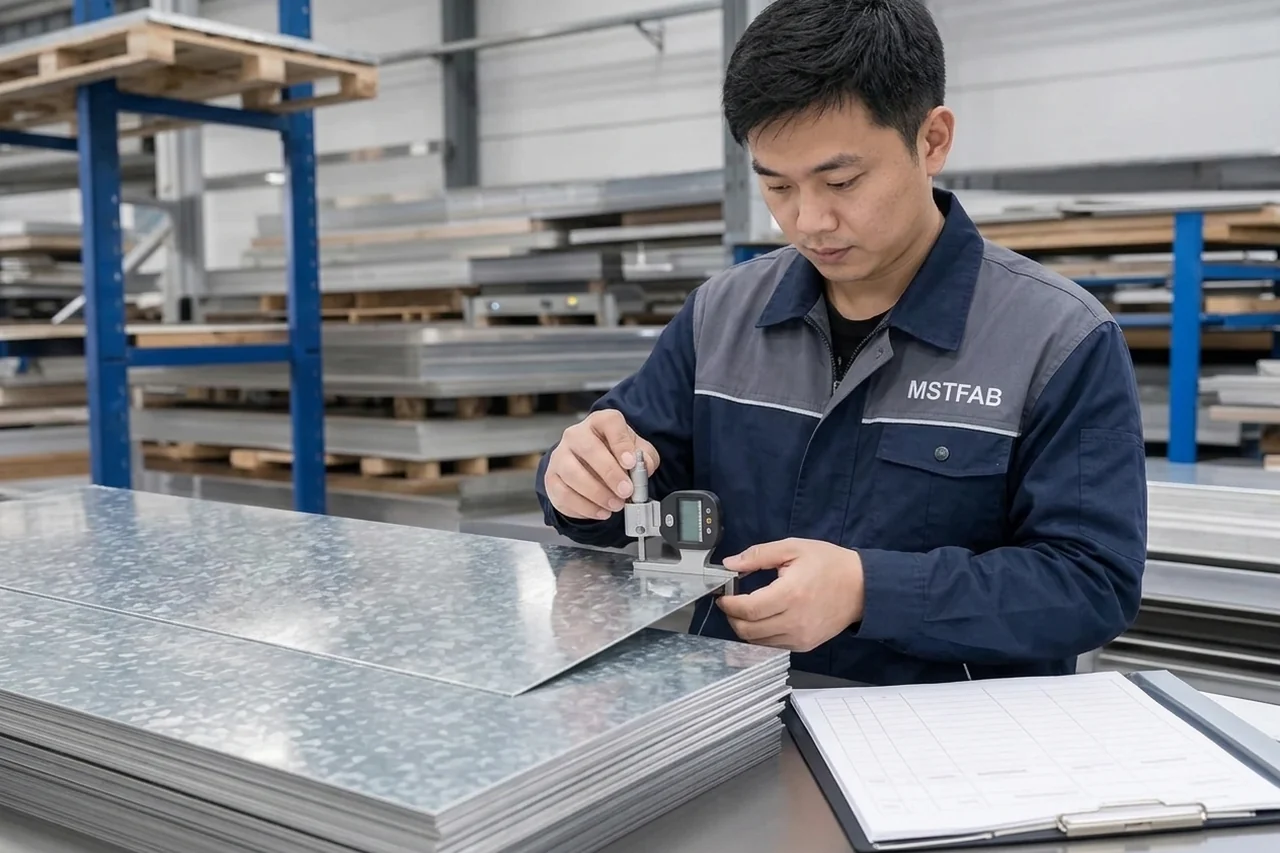
02 / Sheet Metal DFM & Structural Controls
Critical Sheet Metal DFM Failure Modes in Galvanized Industrial Junction Boxes
Industrial machinery junction boxes appear geometrically simple, yet corner weld porosity, cracked knockout coatings, and pinched lid gaskets cause most NEMA 4 / UL 50E qualification failures. Addressing these three sheet metal DFM traps upfront ensures watertight seams and audit-ready mechanical shells.
Zinc-Vapor Porosity & Corner Weld Pinholes Failing UL 50E Type 4 Hosedown Testing
Failure Mechanism: Unfixtured mitered box corners leave uneven 0.5–1.0 mm gaps that force welders to bridge pools over galvanized steel, trapping zinc-vapor porosity and microscopic pinholes that leak immediately during 240 L/min UL 50E Type 4 water-hose testing.
Engineering Solution: Incorporate laser-cut internal tab-and-slot self-jigging corner geometry holding a 0.15–0.25 mm root gap, pulse-TIG weld seams using ER70S-6 or silicon-bronze filler, dress externally to Ra <= 3.2 µm, and run 100% penetrant or pressure-decay checks before priming.
Verified Outcome: Produces gas-tight, flush corner welds that pass 100% dye-penetrant checks and withstand 240 L/min NEMA 4 hose testing.
Concentric Knockout Paint Chipping & Sharp Edge Burrs During Field Conduit Installation
Failure Mechanism: Half-sheared concentric knockouts (1/2" to 1" trade size) fracture rigid epoxy/polyester coatings when struck out on the factory floor, exposing bare steel to coolant mist and leaving jagged metal edges that violate UL 50E wire-abrasion rules.
Engineering Solution: Replace traditional concentric knockouts with precision CNC-laser-cut removable gland plates sealed by a 3.0 mm closed-cell EPDM gasket, or micro-tabbed clean-breakouts (0.40 mm web width, 0.30 mm coining) held to ±0.10 mm bore tolerance for cord grips.
Verified Outcome: Delivers burr-free, coated cable-entry apertures ready for UL-listed liquid-tight cord grips with zero field coating damage.
Narrow-Flange Gasket Over-Compression & Capillary Wicking Around Captive Lid Screws
Failure Mechanism: Flat 8 mm box opening flanges pinch closed-cell gaskets beyond 50% compression around M5 lid screws while bowing mid-span, causing permanent compression set and capillary coolant wicking along the top edge of machine-tool junction boxes.
Engineering Solution: Form a 14 mm deep 90° rolled water-shedding gutter rim around the box perimeter presenting a smooth 3.0 mm contact crest, pair with rigid internal compression stop-spacers at screw corners, and seat continuous EPDM or FIPG seals inside the flanged cover.
Verified Outcome: Prevents gasket over-crush, channels machine coolant away from the seal line, and maintains repeatable IP66/Type 4 lid closure.
Manufacturing Scope Boundary: Commercial Scope & UL File Boundary: Build-to-Print Enclosures vs. Listed Electrical Assemblies: Industrial machinery buyers frequently ask whether a contract metal fabricator carries UL 50 or UL 508A listing directly on custom junction boxes. MSTFAB does not hold UL listing, wire panels, or certify electrical assemblies; UL file ownership remains with the OEM or panel shop. — Engineering Fix: MSTFAB builds empty galvanized steel junction box shells strictly to customer 3D STEP and 2D PDF prints under ISO 9001:2015, IATF 16949:2016, and ISO 14001:2015, delivering EN 10204 3.1 mill certificates, weld logs, RoHS/REACH coating disclosures, and CMM FAI packets to substantiate the OEM's own UL file. MSTFAB manufactures custom sheet metal parts and empty mechanical enclosure shells strictly to your 3D STEP and 2D PDF drawings.
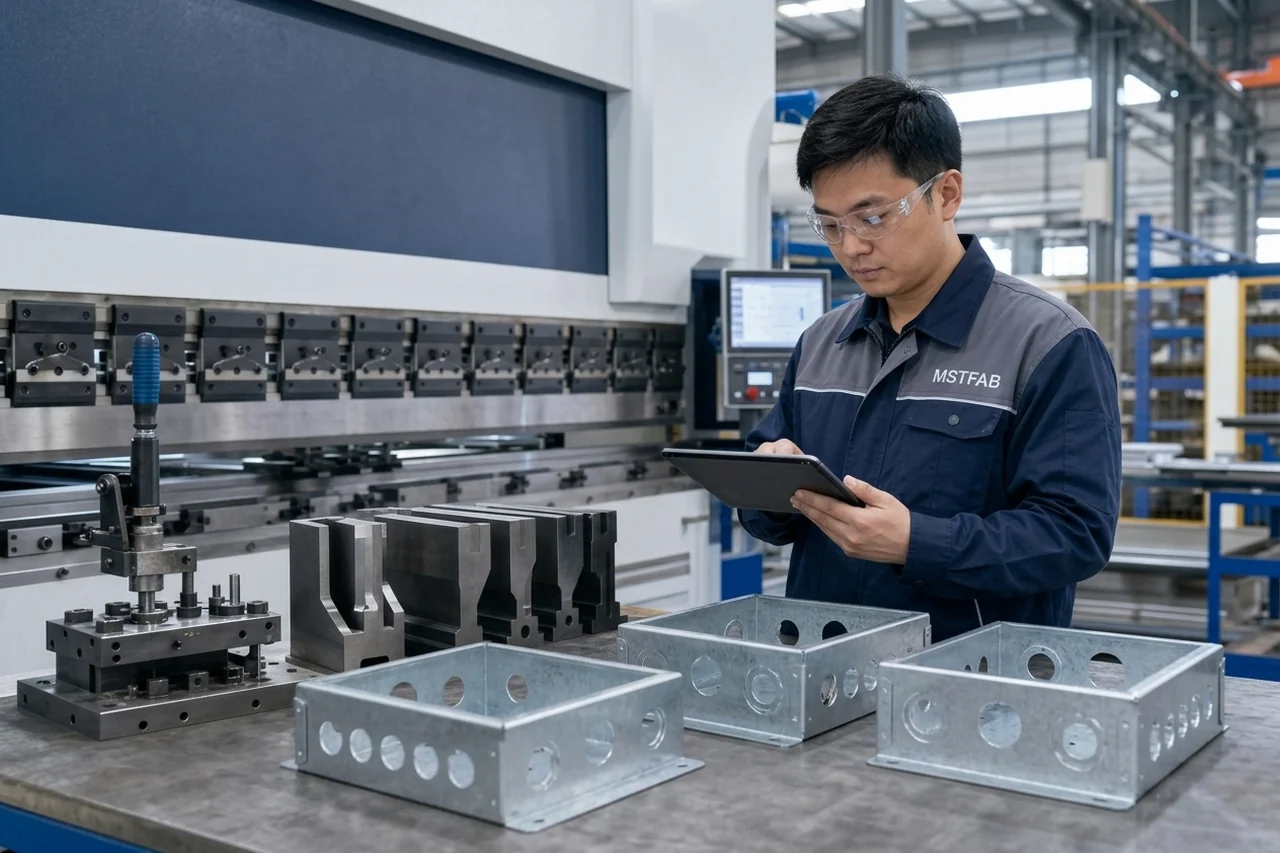
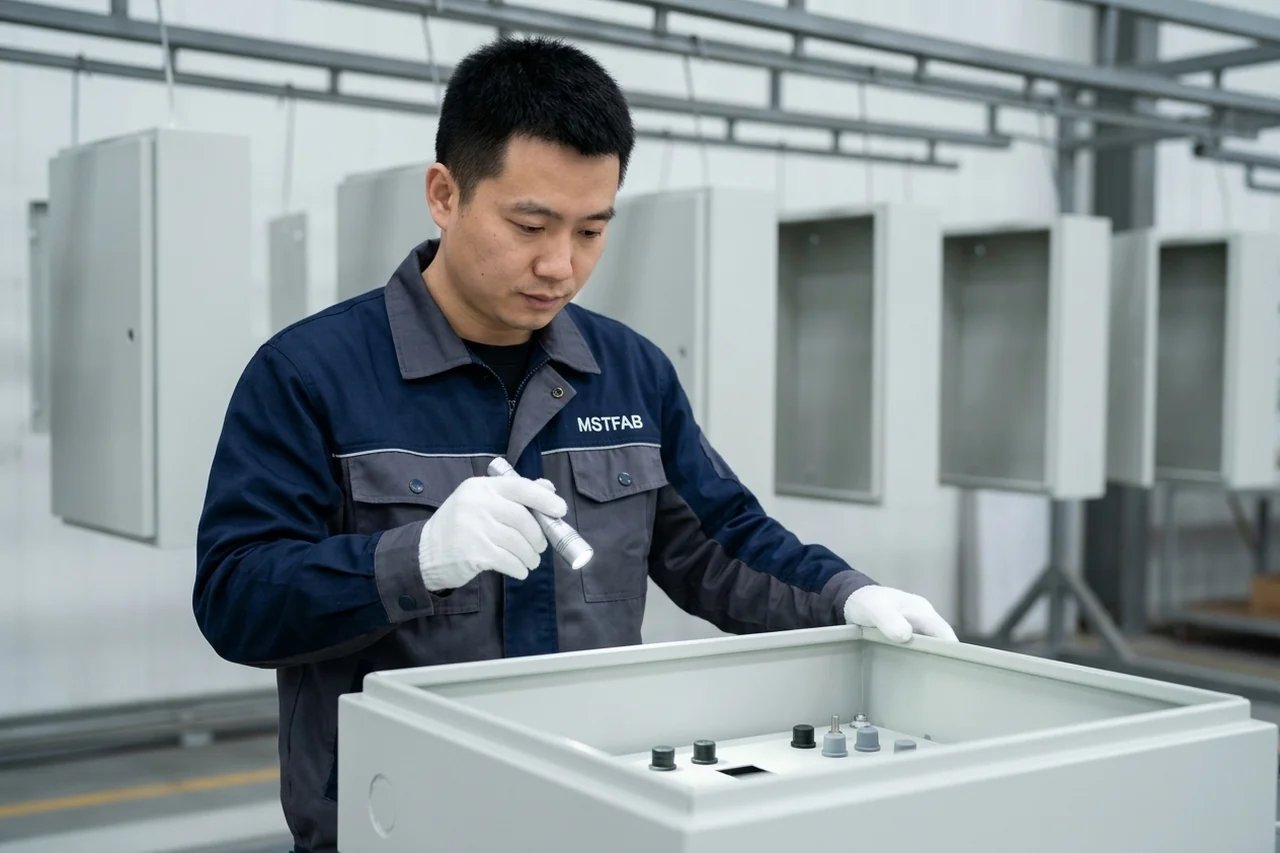
03 / Representative Engineering Scenario & Process Control
OEM Engineering Case Study: Re-Engineering a Galvanized Steel Junction Box Shell for UL 50E Type 4 Hosedown Compliance
Project Profile: Batch: 2,500 units/year (4 standard footprints) | Alloy: ASTM A653 G90 / DX51D+Z275 (1.5 mm cover, 2.0 mm body) | Finish: Iron/zinc-phosphate pretreatment + 35 µm epoxy primer + 70 µm RAL 7035 polyester powder coat
OEM Engineering Challenge: A North American industrial conveyor OEM submitting machinery control panels for UL 508A / UL 50E Type 4 qualification failed initial hosedown tests at a third-party lab. Their legacy 1.5 mm galvanized junction boxes leaked through micro-pinholes at TIG-welded miter corners, while punching shop-floor concentric knockouts fractured brittle polyester paint and left sharp burrs. Inconsistent manual gasket placement on narrow 8 mm box rims also caused uneven lid compression and intermittent NEMA 4 water intrusion.
MSTFAB Manufacturing Solution: MSTFAB redesigned the junction box shells strictly to the OEM's updated 3D STEP and 2D PDF drawings for their UL file. Box corners transitioned to laser-cut tab-and-slot miters with controlled 0.20 mm weld-fit gaps, pulse-TIG welded and 100% dye-penetrant checked before orbital smoothing to Ra <= 3.2 µm. A 14 mm rolled 90° gutter lip with a 3.0 mm crest replaced the flat 8 mm flange, concentric knockouts were swapped for laser-cut bolted gland plates, and M6 copper grounding studs received dedicated silicone masks.
- 100% UL 50E Type 4 Pass: Self-jigging tab-and-slot miter corners with automated pulse-TIG welding and 100% dye-penetrant checks achieved zero leaks across UL 50E Type 4 240 L/min hose tests.
- 18 Min/Box Labor Saved: Replacing concentric knockouts with CNC-laser-cut removable gland plates eliminated coating chipping and saved 18 minutes of field conduit-punching labor per machine skid.
- Uniform 32% Seal Compression: Forming a 14 mm rolled water-shedding gutter rim with a 3.0 mm smooth crest delivered uniform 32% closed-cell EPDM compression and zero lid distortion under M5 torque.
- Zero UL Audit Findings: Complete EN 10204 3.1 steel certs, RoHS/REACH coating files, and serialized CMM FAI packets passed the OEM's UL follow-up service inspection with zero findings.
Every production lot is archived with locked CNC laser nests, press-brake bend programs, weld fixture setups, and signed golden samples to guarantee identical repeatability across multi-year reorders.
04 / Quality Verification, Traceability & Surface Finishing
4-Stage Manufacturing Workflow, Surface Treatment & Metrology Control
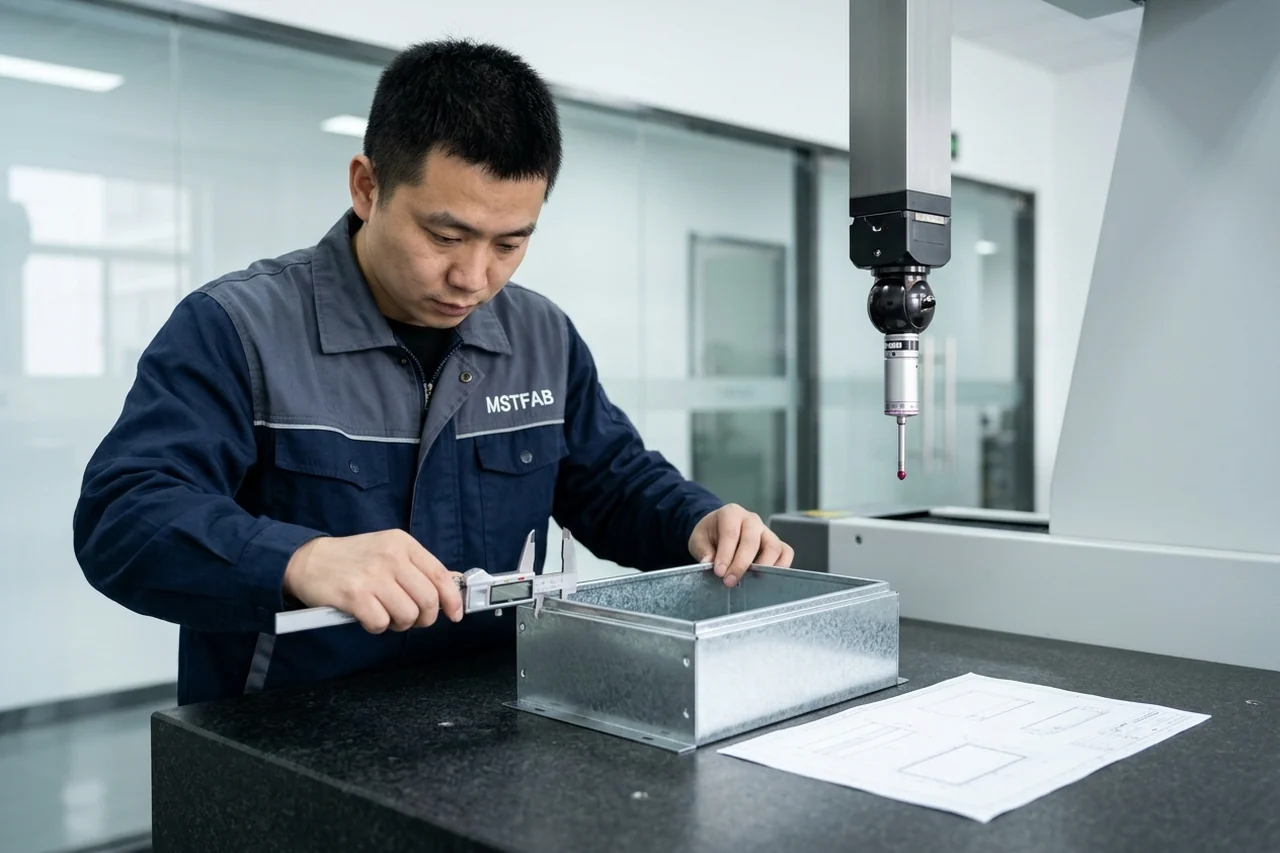
To maintain Cpk ≥ 1.33 on critical-to-quality (CTQ) dimensions from prototype through series production, MSTFAB executes a closed-loop four-stage fabrication protocol:
Step 01 — Print Audit & UL-Ready Geometry DFM: Audit customer 3D STEP and 2D PDF files within 24 hours to validate tab-and-slot weld fit-up gaps, 14 mm rolled gutter-lip tooling clearances, gland-plate bore tolerances, and silicone grounding-stud masks prior to releasing laser programs.
Step 02 — Laser Blanking, Forming & 100% Weld Leak Check: Cut ASTM A653 G90 or DX51D+Z275 blanks on CNC fiber lasers, form rolled gutter lips on servo press brakes, pulse-TIG weld mitered corners in copper-backed fixtures, dress seams to Ra <= 3.2 µm, and pass 100% dye-penetrant leak checks.
Step 03 — Stud Masking, Dual-Coat Spray & Bonding Test: CD-weld M6/M8 copper grounding studs, pre-treat in phosphate/silane tanks, cap threads and bonding lands with silicone masks, spray 40 µm zinc-rich primer plus 75 µm oil-resistant polyester topcoat, and test 100% < 0.05 Ω ground continuity.
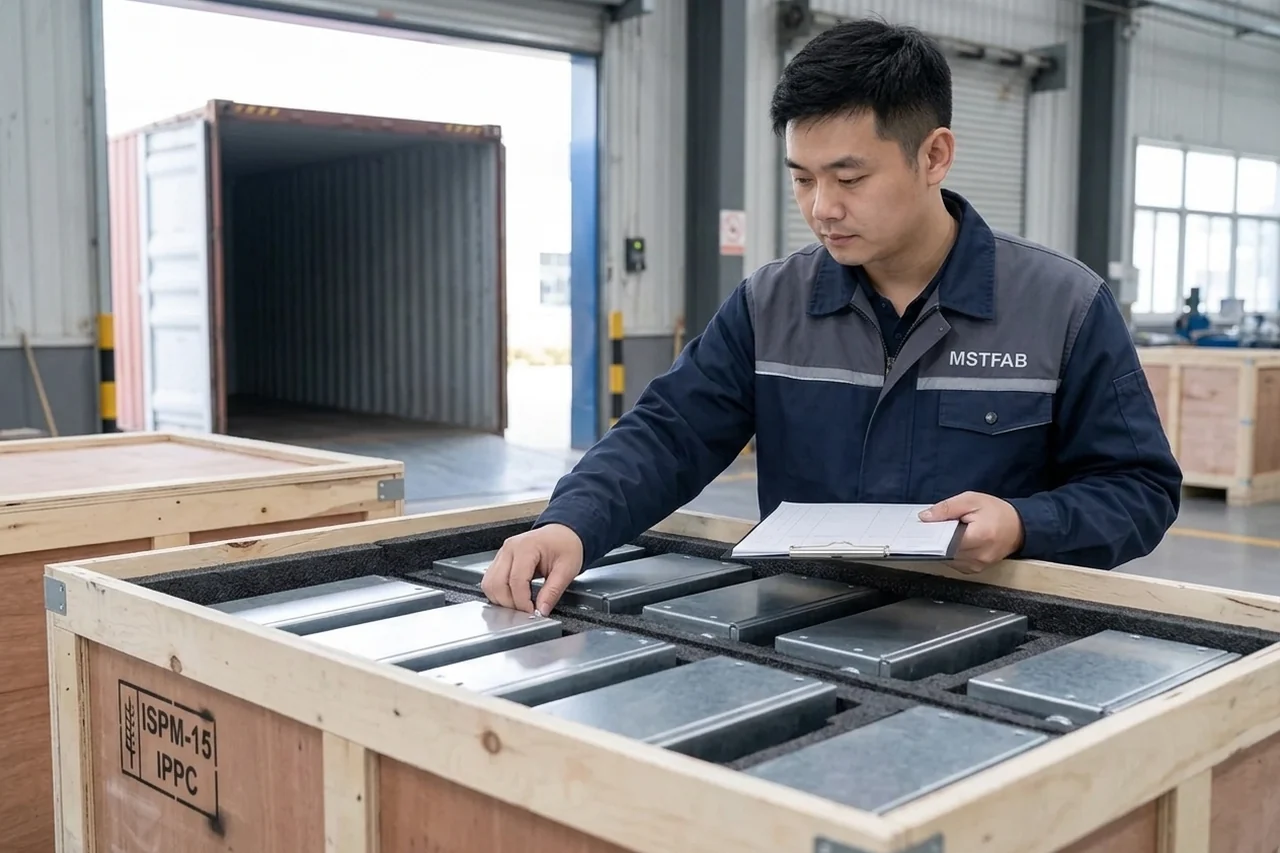
Step 04 — Gasket Assembly, VCI Packing & UL File Dossier: Install closed-cell EPDM seals or FIPG beads, captive stainless lid screws, and bolted gland plates; perform CMM FAI verification; pack in VCI film and EPE foam crates; and deliver EN 10204 3.1 certs and weld logs for OEM UL audits.
All raw sheets (SPCC, SGCC, SECC, SUS304/316L, Al 5052-H32/6061-T6) are verified via optical emission spectrometry (OES) or XRF upon arrival and linked by barcode to your purchase order.
Prior to export crating in ISPM-15 fumigated plywood boxes, our quality lab conducts ballooned dimensional FAI checks, dry-film thickness (DFT) mapping, ASTM D3359 cross-hatch adhesion testing, and ground-continuity verification.
05 / 8-Point OEM RFQ Checklist & Topic Cluster Hub
OEM Engineering RFQ Checklist & Connected Fabrication Hubs
Include these eight drawing and specification controls in your RFQ package so our engineering team can lock down tooling, material traceability, and inspection fixtures on day one:
- RFQ Requirement 01Specify galvanized steel standard and coating weight (ASTM A653 G90 or DX51D+Z275) with separate thicknesses for body (2.0 mm) and flanged cover (1.5 mm).
- RFQ Requirement 02Call out continuous seam-welded corners with 100% dye-penetrant or pneumatic leak-check acceptance for NEMA 4 / Type 4 water-tightness before priming.
- RFQ Requirement 03Dimension rolled water-shedding gutter rim geometry (e.g., 14 mm return depth, 3.0 mm smooth contact crest) and specify corner compression stop-spacers to prevent gasket over-crush.
- RFQ Requirement 04Indicate exact gland-plate cutout dimensions (±0.10 mm for liquid-tight cord grips) or clean-break knockout tab geometry (0.40 mm web) instead of generic shop-punched holes.
- RFQ Requirement 05Specify M6/M8 copper-plated grounding stud locations on both body and cover, including explicit silicone masking zones and < 0.05 Ω continuity requirement.
- RFQ Requirement 06Define finish system: phosphate/silane pretreatment, 35–45 µm zinc-rich epoxy primer, 70–85 µm RAL polyester powder coat, and 5B cross-hatch adhesion per ASTM D3359.
- RFQ Requirement 07Detail captive lid hardware (e.g., M5 stainless captive screws with nylon/EPDM retention washers) and removable DIN-rail or backplate standoff heights.
- RFQ Requirement 08Request full build-to-print documentation packet: EN 10204 3.1 steel heat certs, RoHS/REACH coating declarations, weld inspection logs, and CMM FAI report for your UL file.
Explore Connected Sheet Metal Fabrication Services & Enclosure Hubs
06 / OEM Buyer & Engineer FAQ
Engineering & Compliance FAQs for Galvanized Steel Junction Boxes
Is MSTFAB itself UL-listed, or how do your junction boxes fit into our UL 50E / UL 508A file?
No. MSTFAB is certified to ISO 9001:2015, IATF 16949:2016, and ISO 14001:2015 and does not hold a standalone UL 50 / UL 50E / UL 508A listing. Instead, we act as a qualified build-to-print mechanical fabrication partner for OEMs who own and maintain their own UL file. We manufacture the empty galvanized steel junction box shell strictly to your controlled 3D STEP and 2D PDF drawings, supplying EN 10204 3.1 steel certs, coating RoHS/REACH disclosures, and weld/dimensional inspection logs for your UL follow-up service audits.
How do you weld galvanized steel junction box corners without zinc-vapor pinholes leaking in NEMA 4 tests?
High-temperature welding directly over hot-dip galvanized zinc releases zinc vapor that causes subsurface gas porosity and tiny pinholes—a guaranteed failure in 240 L/min UL 50E Type 4 hosedown tests. We prevent this by designing self-jigging tab-and-slot miter corners with tight 0.15–0.25 mm laser-cut gaps, using pulse-TIG or silicon-bronze brazing profiles with localized edge preparation, grinding welds flush to Ra <= 3.2 µm, and performing 100% dye-penetrant or pneumatic leak verification prior to zinc-rich epoxy priming.
Why is a rolled 90° water-shedding gutter lip superior to a flat box flange for NEMA 4 / IP66 boxes?
A flat single-bent flange exposes a thin 1.5 mm sheared edge that cuts into foam gaskets and directs machine coolant straight onto the seal seam. Forming a 14 mm deep 90° rolled water-shedding gutter rim creates a rigid box-section perimeter that resists bowing between corner screws, sheds splash fluids away from the lid interface, and presents a wide 3.0 mm smooth contact crest that compresses EPDM or FIPG seals uniformly at 30–35%.
Can you replace traditional concentric knockouts with custom laser-cut gland plates or exact cord-grip holes?
Yes. Traditional stamped concentric knockouts often crack polyester powder coat when struck out with a screwdriver, leaving sharp burrs and bare metal exposed to cutting-oil mist. For machine-tool OEMs, we recommend either bolted CNC-laser-cut removable gland plates (sealed with closed-cell EPDM) or exact laser-cut cord-grip apertures held to ±0.10 mm diameter so installers simply thread UL-recognized liquid-tight fittings into pre-finished openings with zero field drilling or metal shavings.
How are protective grounding studs masked and verified inside powder-coated galvanized junction boxes?
We weld M6 or M8 copper-plated capacitor-discharge grounding studs (or stainless threaded ground bosses) inside both the box body and removable cover, then mask them with molded silicone caps prior to epoxy priming and polyester powder coating. This guarantees bare metallic thread engagement and < 0.05 Ω continuity across the ground symbol area—meeting UL 50E and NFPA 79 bonding rules without post-paint scraping that compromises corrosion protection.
What drawing details do you need to quote custom build-to-print machinery junction boxes?
Submit your 3D STEP model and 2D PDF print calling out material grade (e.g., ASTM A653 G90 or DX51D+Z275), wall/lid gauges, target NEMA/UL Type mechanical features (seam weld spec, gutter lip, compression stops), gland-plate or knockout layouts, RAL powder-coat DFT, grounding stud masking zones, and batch volume. CNC-cut and seam-welded prototype boxes ship in 10–14 days for your UL/NEMA lab testing, followed by 3-week serial production lead times.
International Standards & Engineering References
- ISO 2768-1 / 2768-2 — General Linear, Angular and Geometrical Tolerances for Sheet Metal Fabrication
- IEC 60529 / NEMA 250 — Degrees of Protection Provided by Enclosures (IP Code & Environmental Sealing)
- ISO 9001:2015 & IATF 16949:2016 — Quality Management Systems & Production Part Approval Process (PPAP)
Ready to Quote Your Custom Sheet Metal Enclosure or Fabrication Project?
Upload your 3D STEP models and 2D PDF drawings. MSTFAB will review your tolerances, material specs, and DFM details to deliver a transparent factory quote within 24 hours.
Request Your 24-Hour DFM & Custom Quote →
Direct engineering desk: caroline@mstfab.com | ISO 9001 & IATF 16949 Certified Factory in Guangzhou, China
 WeChat Contact
 WhatsApp Me Directly