
GALVANIZED BRACKET DFM & UL FILE TRACEABILITY — EXECUTIVE TECHNICAL BRIEF
Procurement teams sourcing internal mounting brackets, busbar supports, and DIN sub-plates for semiconductor power distribution bays frequently request a "UL-listed galvanized steel bracket manufacturer." In practice, UL does not list custom bare sheet metal brackets as standalone end products; UL 508A, UL 61010-1, and SEMI S2 compliance rests on the OEM's certified panel file, supported by locked material traceability and zero-defect fabrication. Engineering failures on galvanized brackets instead stem from press-brake zinc spalling on tight bend radii, oxygen-cut edge blackening, and high-resistance chromate films blocking protective earth (PE) bonding. Specifying ASTM A653 G90 (Z275) or A60 galvannealed steel with >= 1.2x thickness bend radii, nitrogen laser cutting, and tested PEM clinch retention delivers audit-ready brackets under ISO 9001:2015 and IATF 16949:2016.
- Honest UL File Traceability: Support OEM UL 508A / UL 61010-1 / SEMI S2 inspections with locked-BOM ECN control, EN 10204 3.1 heat-lot mill certificates (ASTM A653 G90 / DX51D+Z275), RoHS 3 / REACH declarations, and UL 746C resin traceability where coated.
- Zero-Spall G90 Bend Geometry: Enforce minimum inside bend radius >= 1.2x material thickness (1.5x t for 2.5–3.0 mm G90) oriented perpendicular to coil rolling grain, eliminating brittle Fe-Zn intermetallic flaking and conductive zinc whiskers inside high-voltage cabinets.
- Nitrogen-Assist Clean Laser Edges: Cut galvanized brackets strictly with high-pressure N2 assist gas instead of O2 to eliminate brittle iron-oxide edge scale, maintain clean galvanic zinc healing at sheared edges, and hold ±0.10 mm mounting-slot repeatability.
- PE Bonding & Clinch Retention: Specify RoHS trivalent conductive passivation or masked bare bonding pads paired with serrated PEM FH studs and CLS nuts tested to push-out >= 2,400 N, guaranteeing < 0.1 Ohm protective earth continuity per UL 508A.
Every project at MSTFAB includes a complimentary 24-hour CAD Design-for-Manufacturing (DFM) audit, heat-number-traceable EN 10204 3.1 mill certificates, and a ballooned First Article Inspection (FAI) report prior to volume release.
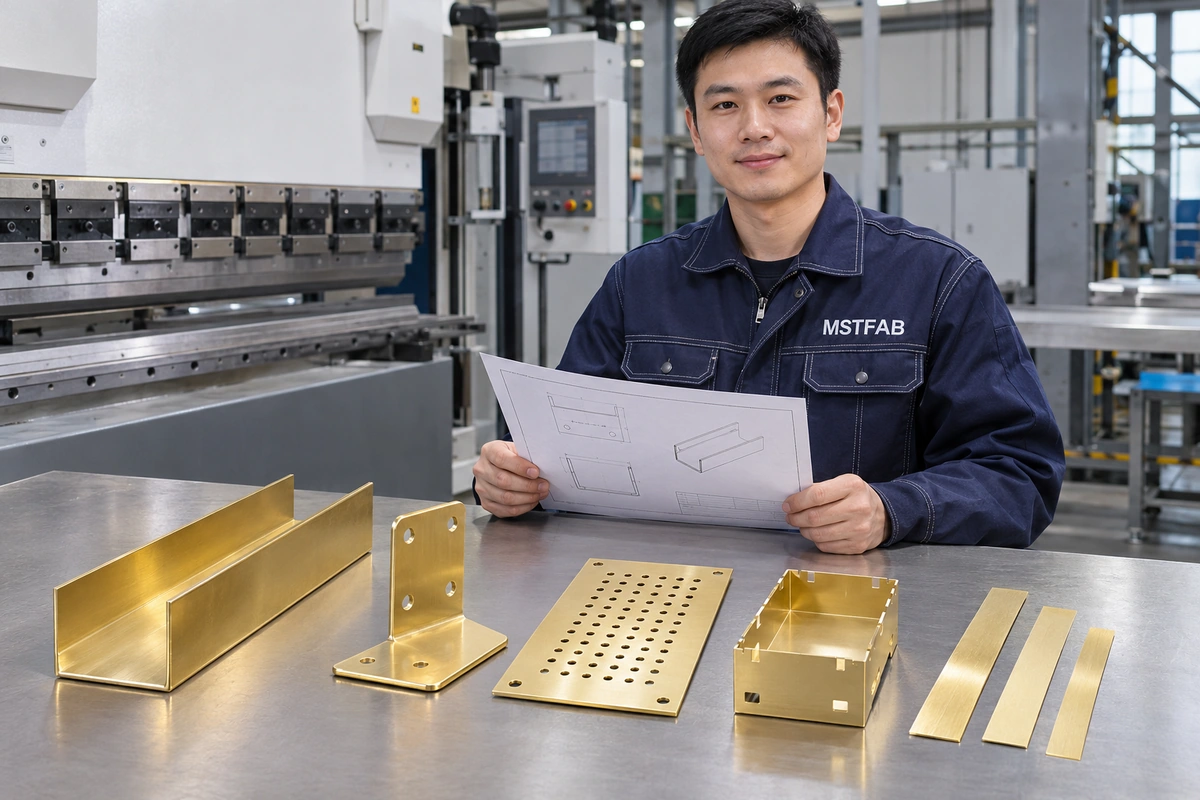
01 / Engineering Specifications & Comparison Matrix
Galvanized Steel Bracket Specification & Traceability Matrix
Inside semiconductor gas-boxes, AC/DC power racks, and robotics controllers, galvanized steel brackets bear heavy transformers, servo drives, and grounding busbars under continuous thermal and vibrational loads. Selecting the wrong zinc coating weight—or bending hot-dip G90 stock across an undersized die opening—fractures the zinc-iron alloy layer along external bend radii. Those detached zinc flakes become conductive foreign object debris (FOD) capable of shorting PCB traces or failing cleanroom particle checks. Furthermore, unverified coil substitutions or thick non-conductive passivates can silently break UL 508A protective earth continuity during factory NRTL follow-up audits. The specification matrix below links galvanized metallurgy, press-brake die geometry, clinch hardware mechanics, and heat-lot documentation directly to repeatable metrology and commercial compliance controls.
Each parameter below is verified during incoming raw material quarantine, in-process CNC stage checks, and final First Article Inspection (FAI) before shipment release:
| Engineering Parameter / Zone | Material & Process Specification | Target Tolerance / Performance Standard | Inspection Method & OEM Value |
|---|---|---|---|
| Galvanized Substrate & Zinc Weight | ASTM A653 CS Type B G90 (EN DX51D+Z275, 275 g/m² total zinc, ~19 µm/side) for corrosion resistance, or A60 galvannealed (ZF) for tight bends and painted brackets. | Sheet thickness tolerance per ASTM A924 / EN 10143 (±0.09 mm on 1.5–2.0 mm); verified coating mass >= 275 g/m² (G90) or 180 g/m² (G60/Z180). | Incoming micrometer audit, calibrated magnetic coating-weight gauge check across coil width, and EN 10204 3.1 mill certificate verification: Prevents unapproved downgrade from hot-dip G90 to thin electro-galvanized SECC (3–5 µm) that fails humid-bay salt-spray or UL follow-up audits. |
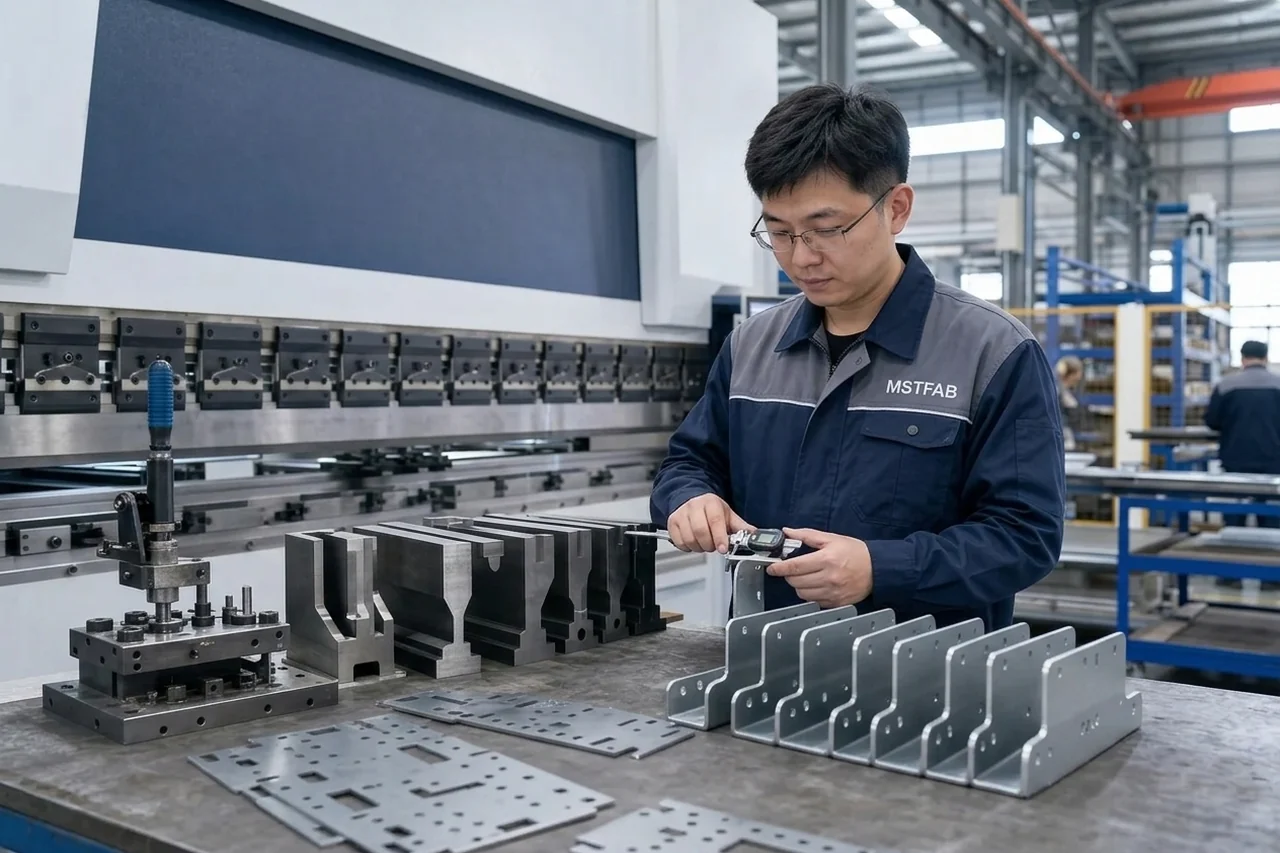
| Press-Brake Bend & Zinc Integrity | Minimum inside bend radius >= 1.2x t (1.5x t on >= 2.5 mm G90) with V-die opening 8–10x t and laser-cut corner reliefs 1.5x t wide. | Bend angle ±0.5°; flange height ±0.20 mm per ISO 2768-mK; zero visible zinc spalling, crazing, or substrate micro-cracking under 10x magnification. | 10x loupe bend-apex inspection on FAI, ASTM B571 tape-adhesion pull test on bent radii, and digital protractor / height-gauge audit: Eliminates flaking zinc whiskers near exposed high-voltage busbars and prevents structural fatigue cracking at servo-mount bend roots. |
| Nitrogen Fiber-Laser Cut Edges | High-pressure N2-assisted fiber laser cutting with micro-tab placement away from mating datum faces and rotary-brush or vibratory deburring. | Feature true position ±0.10 mm; hole diameter +0.08/-0.05 mm; burr height <= 0.05 mm; zero black oxygen-cut iron-oxide scale on edges. | Optical 2D video measuring machine (VMM) scan on mounting hole patterns, pin-gauge checks, and fingernail/micrometer burr-height audit: Maintains bright metallic edges for galvanic self-healing, crisp PEM stud seating, and rapid bolt-up alignment onto OEM chassis rails. |
| Protective Earth (PE) Bonding Zone | Conductive RoHS trivalent clear passivation (no insulating thick wax/acrylic sealers) or masked bare ground boss for serrated star washers and PE lugs. | Ground-boss flatness <= 0.15 mm; contact resistance <= 0.08 Ohm across bolted bracket-to-chassis joint under 25 A continuity test. | 4-wire Kelvin micro-ohmmeter check on sample assemblies, calibrated torque wrench test, and water-break oil-free cleanliness verification: Supports OEM UL 508A / SEMI S2 protective earth continuity testing without requiring technicians to scrape brackets manually on the assembly line. |
| Clinch Hardware & Weld Remediation | Zinc-plated or 304 SS PEM FH studs and CLS/S nuts pressed into pre-punched holes; welded brackets pre-stripped 15 mm at toes and coated with >= 92% zinc-rich touch-up. | PEM push-out >= 2,400 N (M5/M6 in 2.0 mm steel); torque-out >= 6.5 Nm; weld-zone zinc touch-up DFT 40–60 µm with zero weld porosity. | Destructive push-out/torque-out witness coupon tests per lot, Go/No-Go thread gauges, and visual/DFT check on weld-remediated seams: Prevents spinning fasteners inside tight power bays and eliminates weld-induced zinc vaporization voids or premature seam rust. |
| Lot Traceability & Export Protection | Laser-etched or ink-marked part number, revision, and heat-lot ID on non-mating face; packed in VCI vapor-inhibitor poly bags with dry EPE dividers. | 100% barcode/marking legibility; zero white-rust zinc carbonate staining after 30-day ocean transit; RoHS 3 (2015/863) & REACH compliant. | ERP lot-to-mill-cert traceability audit, visual oblique-light white-rust inspection, and VCI/desiccant packaging sign-off: Enables instant NRTL/UL factory-inspector material verification and delivers ready-to-install brackets free of humid-transit white rust. |
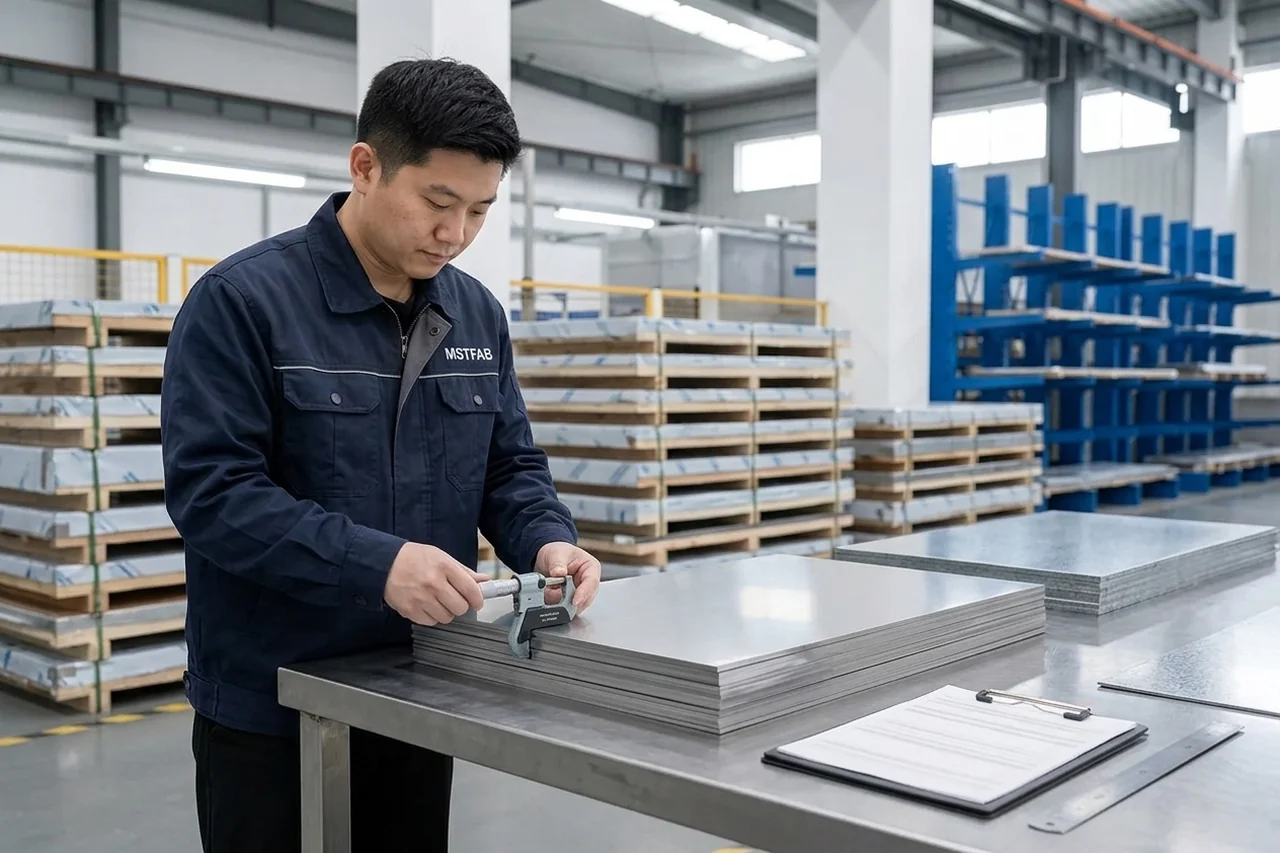
02 / Sheet Metal DFM & Structural Controls
Three Galvanized Bracket Failure Modes & Press-Brake DFM Fixes
Most production defects on galvanized semiconductor brackets occur because shops treat zinc-coated coil like bare cold-rolled SPCC. Tight 0.8x thickness bends fracture the zinc layer, oxygen laser cutting leaves flaky oxide, and unvented MIG welds trap porosity. The three DFM failure modes below show how small CAD adjustments protect UL file traceability and assembly reliability.
Undersized Bend Radii Spalling Brittle G90 Zinc Into Conductive Flakes
Failure Mechanism: Designing 2.0–3.0 mm ASTM A653 G90 brackets with sharp 0.5x t inside bend radii forces the brittle Fe-Zn intermetallic alloy layer past its ductility limit. Zinc spalls off along the outer bend crown, shedding conductive metallic flakes near live 480V power-bay busbars and breaking corrosion protection.
Engineering Solution: Enforce minimum inside bend radius >= 1.2x t (1.5x t for 2.5–3.0 mm G90) using wider 8–10x t V-dies and orienting critical bends perpendicular to coil rolling grain. For extreme 1T tight flanges, switch from hot-dip G90 to A60 galvannealed (ZF) steel.
Verified Outcome: Passes 10x magnification bend-crown inspection and ASTM B571 tape-pull testing with zero conductive zinc flaking.
Non-Conductive Passivation Films Causing UL 508A Ground-Continuity Failures
Failure Mechanism: Many commodity galvanizing mills apply heavy acrylic resin or waxy organic post-treatments to prevent storage white rust. Those transparent insulating films raise bracket-to-chassis contact resistance above 0.5 Ohm, causing OEM control panels to fail 25 A UL 508A protective earth bonding tests during NRTL audits.
Engineering Solution: Specify oil-free, resin-free RoHS trivalent chromium passivation (or bare brushed ground-boss pads masked prior to any optional UL 746C powder coat). Verify <= 0.08 Ohm contact resistance across bolted PEM stud/serrated-washer joints using a 4-wire Kelvin micro-ohmmeter during first-article qualification.
Verified Outcome: Guarantees repeatable < 0.1 Ohm UL 508A ground continuity without manual assembly-line sanding or paint scraping.
Direct MIG Welding Through Thick G90 Zinc Creating Porous, Rust-Prone Joints
Failure Mechanism: Welding gussets directly onto 275 g/m² G90 brackets vaporizes zinc at 907 °C long before steel melts at 1,500 °C. Trapped zinc vapor blows gas pores through the weld bead, weakens load capacity, and burns off adjacent protection, triggering rapid seam rust.
Engineering Solution: Where structural gussets are required, replace welded tabs with interlocking tab-and-slot bend geometry or high-strength PEM clinch fasteners. When welding is unavoidable, mechanically strip zinc 15 mm from weld toes, use pulse-MIG/TIG with root gap venting, and seal with >= 92% zinc-rich coating.
Verified Outcome: Delivers porosity-free structural brackets meeting seismic/vibration loads and passing 96-hour salt-spray seam verification.
Manufacturing Scope Boundary: UL Regulatory Scope: OEM Panel File Compliance vs. Subcontractor Bracket Manufacturing: Buyers often search for 'UL-listed galvanized brackets' assuming a sheet metal factory holds a standalone UL product listing on custom-bent mounting hardware. Under UL 508A and UL 61010-1, UL evaluates and lists the complete industrial control panel or semiconductor tool assembly—not unbranded custom-drawn brackets fabricated to OEM prints. — Engineering Fix: MSTFAB is certified to ISO 9001:2015, IATF 16949:2016, and ISO 14001:2015—we do not claim standalone UL listings. Instead, we safeguard your UL/NRTL quarterly follow-up audits by supplying locked-BOM revision control, EN 10204 3.1 mill heat-lot certificates, RoHS/REACH declarations, and UL 746C resin traceability on coated brackets. MSTFAB manufactures custom sheet metal parts and empty mechanical enclosure shells strictly to your 3D STEP and 2D PDF drawings.
03 / Representative Engineering Scenario & Process Control
Case Study: UL 508A Power-Bay Galvanized Bracket Kit for a Semiconductor Etch-Tool OEM
Project Profile: Batch: 600 bracket kits/month (11 SKUs) | Alloy: 2.0 mm & 2.5 mm ASTM A653 G90 (DX51D+Z275) | Hardware: M5/M6 PEM FH & CLS | Finish: Conductive RoHS Trivalent Passivate
OEM Engineering Challenge: A semiconductor etch-tool OEM assembling UL 508A power-distribution modules experienced two recurring audit failures with a prior stamping shop. First, 2.5 mm G90 servo-mount brackets bent at 1.0 mm inside radius shed visible zinc flakes onto adjacent HV terminal blocks during vibration testing. Second, the vendor substituted undocumented electro-galvanized coil without ECN approval, triggering an NRTL material-traceability non-conformance and delaying tool shipment by three weeks while 1,200 brackets were quarantined and reworked.
MSTFAB Manufacturing Solution: MSTFAB transitioned all 11 bracket SKUs onto an IATF 16949 locked Control Plan. We increased press-brake inside bend radii to 3.0 mm (1.5x t on 2.0 mm, 1.2x t on 2.5 mm) with 1.5x t corner reliefs, switched laser cutting exclusively to high-pressure nitrogen assist to eliminate edge oxide, and standardized certified Baosteel ASTM A653 G90 coils tied to EN 10204 3.1 certificates per heat lot. Every kit received conductive trivalent passivation, push-out tested PEM hardware, 4-wire Kelvin ground-resistance verification, and sealed VCI anti-white-rust packaging.
- Zero NRTL Audit Findings: Full heat-lot EN 10204 3.1 mill certificate linkage and locked ECN discipline passed four consecutive quarterly UL/NRTL factory compliance audits with zero material-traceability variances.
- Zero Bend Zinc Spalling: Enlarging inside radii to >= 1.2x–1.5x t and aligning coil grain eliminated bend-crown zinc flaking completely under 10x magnification and ASTM B571 tape-pull tests.
- 0.04 Ohm PE Continuity: Oil-free conductive trivalent passivation and verified PEM FH studs maintained 0.04 Ohm average bonding resistance, beating the 0.10 Ohm UL 508A threshold with wide margin.
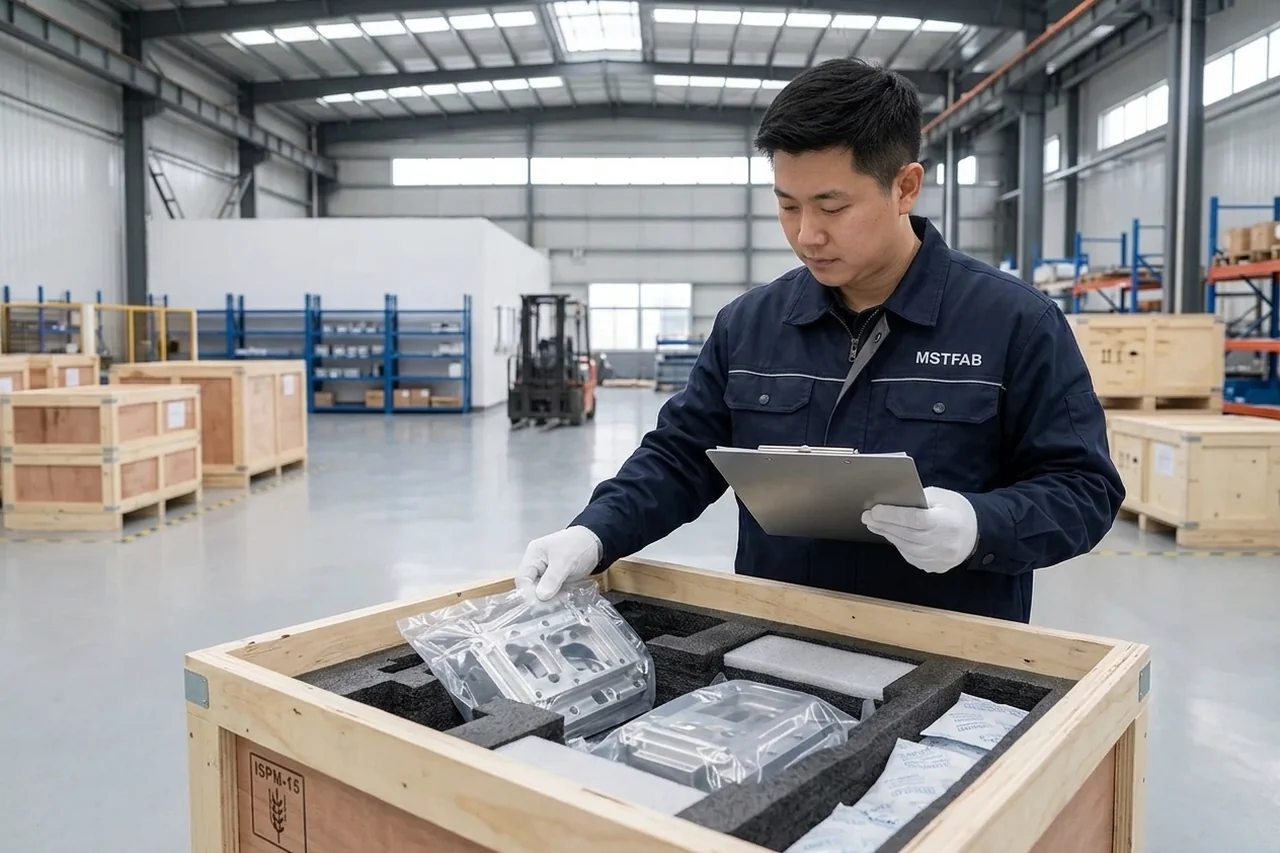
- 100% White-Rust Free: Individual VCI poly bagging and desiccated ISPM-15 plywood crating delivered 7,200+ bracket kits via sea freight with zero white-rust oxidation or bent-tab transit damage.
Every production lot is archived with locked CNC laser nests, press-brake bend programs, weld fixture setups, and signed golden samples to guarantee identical repeatability across multi-year reorders.
04 / Quality Verification, Traceability & Surface Finishing
4-Stage Manufacturing Workflow, Surface Treatment & Metrology Control
To maintain Cpk ≥ 1.33 on critical-to-quality (CTQ) dimensions from prototype through series production, MSTFAB executes a closed-loop four-stage fabrication protocol:
Step 01 — UL-Aligned DFM & Bend-Radius Audit: MSTFAB engineers review your STEP/PDF bracket files to confirm ASTM A653 G90 or A60 galvannealed thickness, enforce >= 1.2x t inside bend radii, align grain direction perpendicular to primary bends, and locate ground-bonding pads and PEM clinch clearances before locking the BOM.
Step 02 — Mill-Linked Nitrogen Laser Cutting & Deburring: Coils verified via magnetic zinc-weight gauge and EN 10204 3.1 mill certs are cut on nitrogen-assist fiber lasers to prevent dark oxygen edge scale, keeping slot true position within ±0.10 mm, followed by rotary-brush deburring to achieve <= 0.05 mm edge burr height.
Step 03 — Controlled V-Die Forming & Clinch Witness Testing: CNC press brakes form flanges using 8–10x t V-dies to eliminate G90 zinc crazing, while hydraulic PEM presses install FH/CLS hardware with lot-level destructive push-out (>= 2,400 N) and torque-out checks. Welded variants undergo zinc-strip preparation and >= 92% zinc-rich seam sealing.
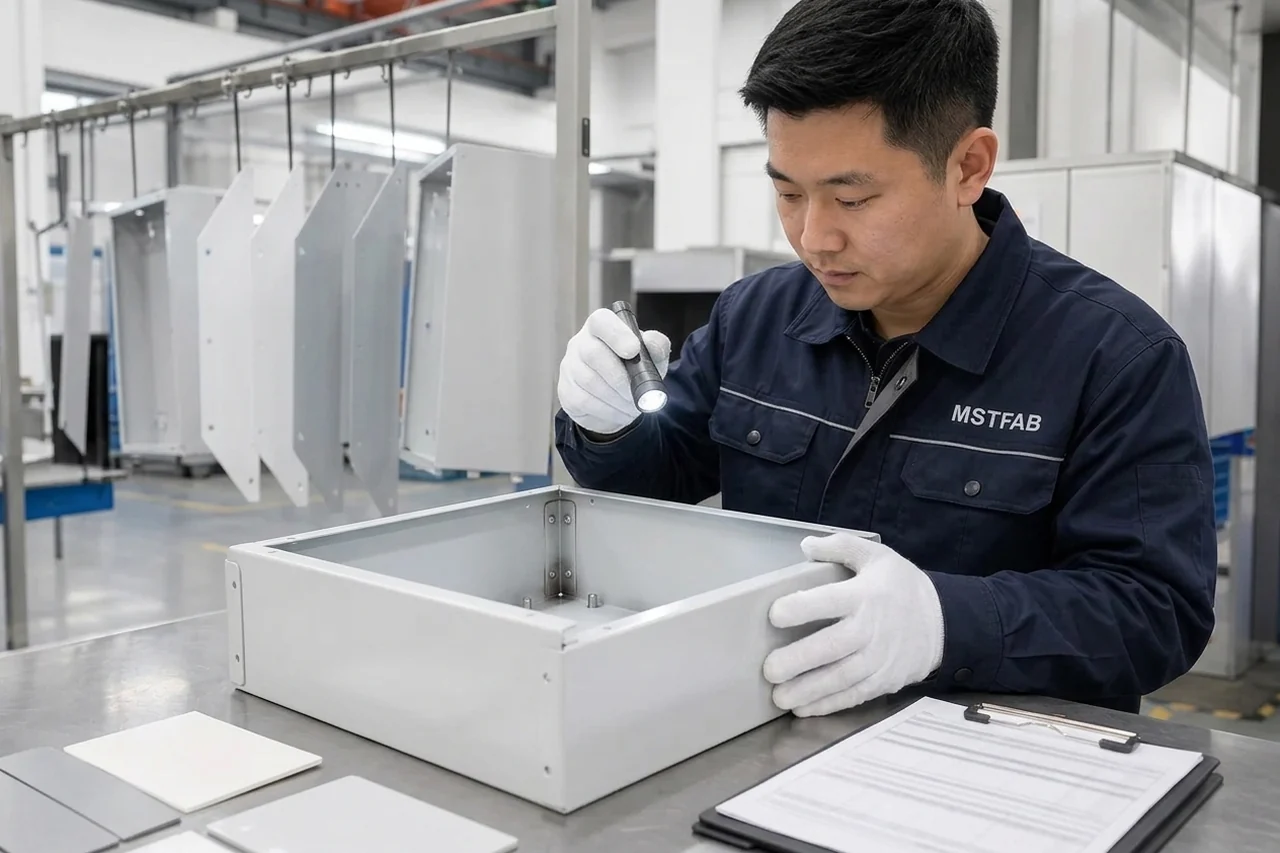
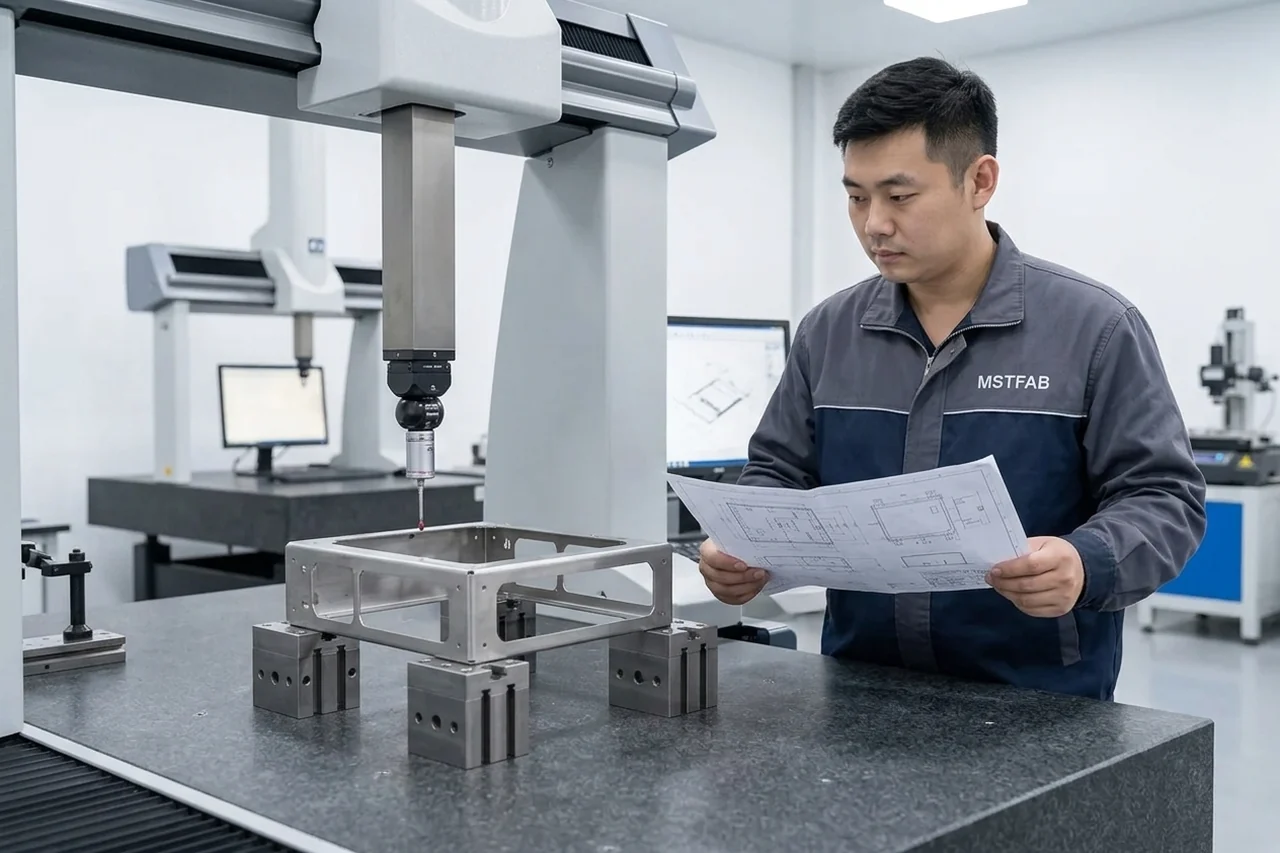
Step 04 — Bonding Verification, Lot Marking & VCI Packaging: Inspectors execute 10x bend-crown audits, VMM hole-pattern FAI, and 4-wire Kelvin PE bonding resistance checks (<= 0.08 Ohm). Brackets are laser/ink marked with part revision and heat-lot ID, sealed in desiccant VCI poly bags, and packed in EPE-lined ISPM-15 plywood crates.
All raw sheets (SPCC, SGCC, SECC, SUS304/316L, Al 5052-H32/6061-T6) are verified via optical emission spectrometry (OES) or XRF upon arrival and linked by barcode to your purchase order.
Prior to export crating in ISPM-15 fumigated plywood boxes, our quality lab conducts ballooned dimensional FAI checks, dry-film thickness (DFT) mapping, ASTM D3359 cross-hatch adhesion testing, and ground-continuity verification.
05 / 8-Point OEM RFQ Checklist & Topic Cluster Hub
OEM Engineering RFQ Checklist & Connected Fabrication Hubs
Include these eight drawing and specification controls in your RFQ package so our engineering team can lock down tooling, material traceability, and inspection fixtures on day one:
- RFQ Requirement 01Specify exact galvanized standard and coating designation (e.g., ASTM A653 CS Type B G90 / DX51D+Z275, A60 galvannealed, or SECC) plus mandatory EN 10204 3.1 mill certificates.
- RFQ Requirement 02Call out minimum inside bend radii (>= 1.2x t for G90, >= 1.5x t above 2.0 mm) and specify whether 10x magnification zero-spalling bend inspection is required.
- RFQ Requirement 03Mandate nitrogen-assist fiber laser cutting (no oxygen assist) and state maximum permissible edge burr height (<= 0.05 mm) on mounting slots and busbar pass-throughs.
- RFQ Requirement 04Define surface passivation chemistry (oil-free conductive RoHS trivalent chromium vs. bare oil-free) and explicitly forbid insulating wax or acrylic sealers on protective earth bonding zones.
- RFQ Requirement 05If brackets require powder coating for color coding or dielectric separation, specify the exact UL 746C-recognized resin system and mask diameter around grounding studs.
- RFQ Requirement 06List exact PEM/clinch fastener part numbers (e.g., FH-M5-15, CLS-M4-2), plating grade (zinc vs. 304 SS), and required push-out / torque-out witness validation per lot.
- RFQ Requirement 07Note any structural welds requiring pre-weld zinc removal and specify acceptable cold-galvanizing zinc-rich repair compound (>= 92% dry metallic zinc) or prefer interlocking tab-and-slot bends.
- RFQ Requirement 08Specify permanent part-number, drawing-revision, and heat-lot ID marking format for UL/NRTL inspector traceability, along with RoHS 3 / REACH declarations and VCI anti-white-rust export packaging.
Explore Connected Sheet Metal Fabrication Services & Enclosure Hubs
06 / OEM Buyer & Engineer FAQ
Galvanized Bracket DFM & UL File Traceability FAQ
Can MSTFAB supply UL-Listed galvanized steel brackets directly for our semiconductor equipment?
No—and understanding this distinction protects your audit schedule. UL does not issue standalone 'UL-Listed' marks on custom bare sheet metal brackets built to an OEM's proprietary drawing. Instead, brackets are evaluated inside your UL 508A, UL 61010-1, or SEMI S2 equipment file. MSTFAB is certified to ISO 9001:2015, IATF 16949:2016, and ISO 14001:2015. We support your UL compliance by enforcing locked-BOM ECN control, supplying EN 10204 3.1 mill certificates per heat lot, providing RoHS/REACH declarations, and maintaining UL 746C coating traceability when brackets are powder coated.
What is the practical difference between ASTM A653 G90, A60 galvannealed, and SECC electro-galvanized steel?
ASTM A653 G90 (comparable to EN DX51D+Z275) carries 275 g/m² total hot-dip zinc (~19 µm per side), offering strong sacrificial galvanic protection on laser-cut edges in humid tool bays. However, thick G90 spalls if bent tighter than 1.2x thickness. A60 galvannealed (ZF) undergoes an annealing heat treatment that diffuses iron into the zinc, producing a matte gray Fe-Zn layer that resists flaking on tight 1T bends and holds powder coat exceptionally well. SECC (electro-galvanized) has only 2.5–5 µm zinc—smooth for indoor dry cosmetics, but weak against edge corrosion.
Why does hot-dip G90 galvanized steel flake on tight press-brake bends, and how do we prevent it?
Hot-dip galvanizing forms brittle iron-zinc intermetallic phases at the steel interface. When a 2.0–3.0 mm G90 bracket is bent with a sharp 0.5x–0.8x thickness punch radius, tensile strain on the outer bend crown exceeds the zinc layer's elongation limit, causing metallic flakes to detach. Inside semiconductor power cabinets, loose conductive flakes risk shorting circuit boards. MSTFAB prevents spalling by designing >= 1.2x t inside radii (1.5x t for >= 2.5 mm stock), using wider 8–10x t V-dies, orienting primary bends perpendicular to rolling grain, and auditing bends under 10x magnification.
How do we ensure galvanized brackets pass UL 508A 25 A ground-continuity testing?
Protective earth bonding failures usually happen when a supplier applies heavy chromate-free wax/acrylic anti-fingerprinting sealers or allows powder-coat overspray onto mounting bosses. Those dielectric films drive contact resistance above the 0.1 Ohm limit. MSTFAB prevents this by specifying oil-free conductive trivalent passivation, applying silicone-free masks over ground pads prior to any coating, and pairing brackets with serrated-flange hardware or tested PEM FH/CLS clinch studs. We verify sample joint resistance <= 0.08 Ohm using a 4-wire Kelvin micro-ohmmeter before serial production release.
Why should semiconductor brackets be nitrogen laser-cut instead of oxygen laser-cut?
Oxygen-assist laser cutting burns steel exothermically, leaving a dark, hard, brittle iron-oxide scale along every cut perimeter. When a technician inserts a PEM nut or torques a grounding bolt near an oxygen-cut slot, that scale fractures into conductive dust and impedes galvanic zinc protection along the sheared edge. Nitrogen-assist (N2) fiber laser cutting melts and ejects material cleanly under inert gas pressure, leaving bright, oxide-free edges with minimal heat-affected zone, cleaner deburring, and superior slot true position (±0.10 mm) for zero-drag hardware installation.
How does MSTFAB prevent white rust on galvanized brackets during ocean freight from Guangzhou?
Stacked galvanized brackets shipped through humid ocean lanes suffer 'white rust' (bulky white zinc hydroxide/carbonate) when condensation gets trapped between tight flat surfaces without airflow. White rust ruins electrical contact resistance and fails incoming semiconductor clean-build inspection. MSTFAB prevents white rust by keeping brackets dry after degreasing/passivation, interleaving parts with non-hygroscopic EPE foam separators rather than moisture-holding kraft paper, sealing batches inside VCI (Volatile Corrosion Inhibitor) poly bags with active desiccant packs, and shipping inside fumigation-free ISPM-15 plywood crates.
International Standards & Engineering References
- ISO 2768-1 / 2768-2 — General Linear, Angular and Geometrical Tolerances for Sheet Metal Fabrication
- IEC 60529 / NEMA 250 — Degrees of Protection Provided by Enclosures (IP Code & Environmental Sealing)
- ISO 9001:2015 & IATF 16949:2016 — Quality Management Systems & Production Part Approval Process (PPAP)
Ready to Quote Your Custom Sheet Metal Enclosure or Fabrication Project?
Upload your 3D STEP models and 2D PDF drawings. MSTFAB will review your tolerances, material specs, and DFM details to deliver a transparent factory quote within 24 hours.
Request Your 24-Hour DFM & Custom Quote →
Direct engineering desk: caroline@mstfab.com | ISO 9001 & IATF 16949 Certified Factory in Guangzhou, China
 WeChat Contact
 WhatsApp Me Directly