
SURFACE FINISHING AFTER LASER CUTTING EDGE COATING ROUTE
Surface finishing after laser cutting starts with the edge and substrate you actually have, not with a generic instruction to polish every part. Define the delivered edge, the surfaces that will be seen or touched, the coating system and the interfaces that must remain functional. Then agree the preparation route and the evidence needed to accept it.
Supply and evidence: MSTFAB supplies drawing-defined mechanical parts within the agreed quotation. Materials, manufacturing operations, partner processes, records and lead time require project-specific confirmation. Equipment integration and final system validation remain with the responsible OEM or integrator. Images are AI-generated illustrations, not customer approvals or measured results.
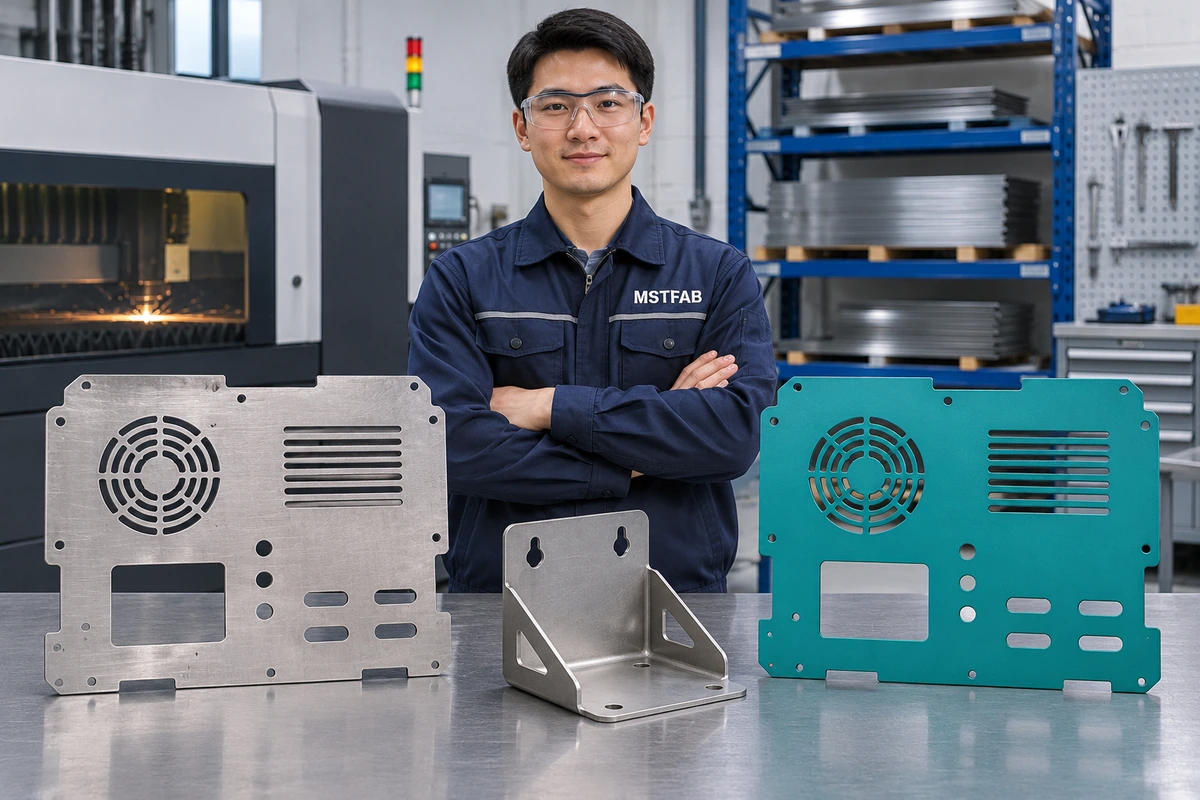
Explore this guide
01 / BUYER REQUIREMENTS
Define the Delivered Edge and Surface
Describe the problem before choosing an operation
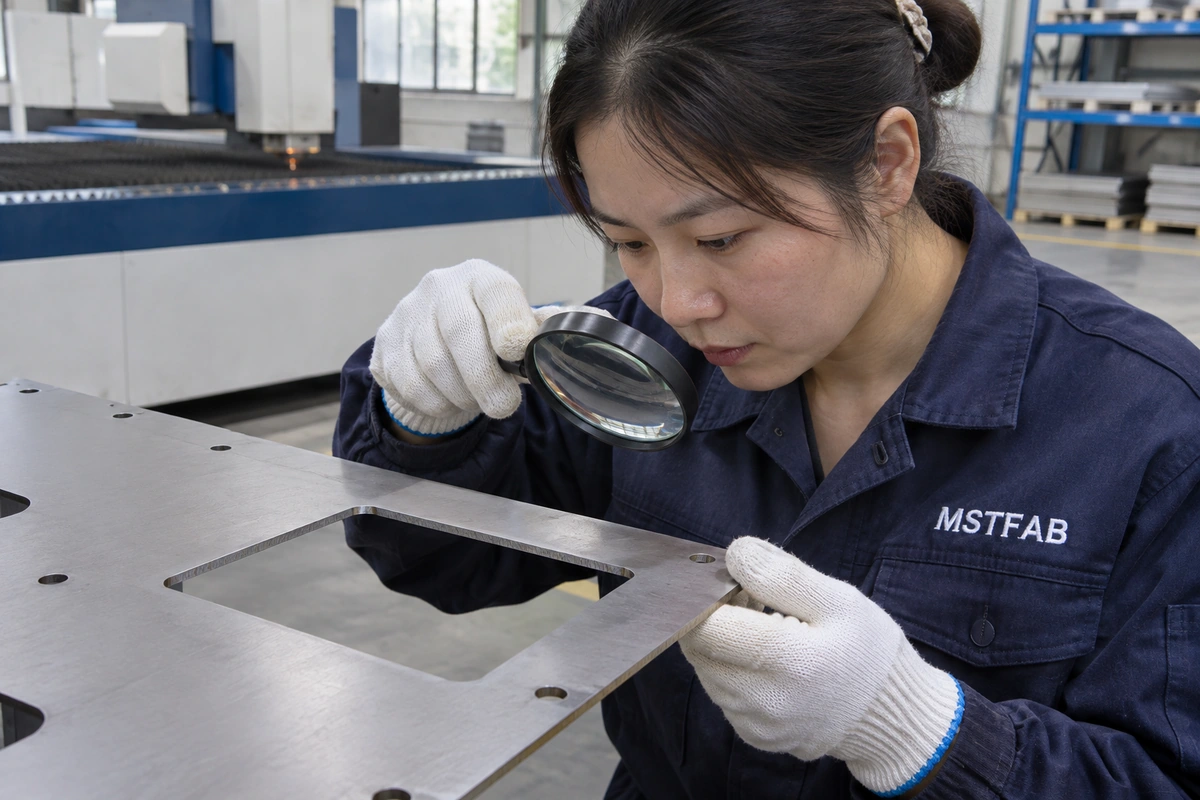
A laser-cut panel can have an acceptable outline but still need work before assembly or coating. Burrs, adherent dross, an oxide-bearing edge, handling contamination or a visible cutting texture are different conditions. They do not necessarily require the same treatment. Record the material, thickness, cutting route and downstream use so the finishing review starts with a specific part rather than a list of available machines.
Distinguish an edge that must be safe to handle from an edge that locates against another component. The first may need a defined edge break; the second may also need a controlled size, squareness or contact surface. Removing more material is not automatically better. Excessive rounding can change a slot, weaken a narrow ligament, enlarge a hole or remove the locating edge that makes the assembly repeatable.
Identify operator contact areas, cable passages, gasket lands and cosmetic boundaries on the drawing. State how accessible and hidden edges will be assessed. If the requirement is simply to remove loose burrs and sharp projections, do not replace that with an arbitrary radius that has not been reviewed by the designer. Conversely, a functional radius needs a dimensional definition and a suitable verification method.
| Observed condition | Question for the route review | Acceptance definition |
|---|---|---|
| Raised burr or dross | Where is it located and which features must not change? | Agreed residual edge condition and protected dimensions |
| Oxide-bearing cut edge | Is it compatible with the intended finish system? | Preparation required by the selected system |
| Visible scratches or directional texture | Will the surface be exposed in the delivered assembly? | Approved appearance zone and reference sample |
| Contamination | What is the substrate and downstream process? | Specified clean condition and handling controls |
02 / DESIGN AND PROCESS
Choose a Material-Specific Preparation Route
Separate mechanical edge work from surface preparation
Deburring removes unwanted material at an edge. Cleaning addresses contamination. Preparation for a coating establishes the substrate condition required by that coating system. A deburred part is not automatically ready to paint, and a clean-looking part is not automatically suitable for an adhesive or finish. Ask the supplier to explain the sequence and the condition transferred from one operation to the next.
For carbon steel, review any cut-edge oxide against the selected coating route. For stainless steel, avoid assuming that the same abrasive, brush or handling arrangement used for carbon steel is appropriate. For aluminum, consider how edge treatment and surface preparation affect appearance and the specified downstream finish. The substrate and actual condition determine the review; this article does not prescribe a chemical treatment recipe.
Cutting gas and finishing are related but separate decisions. Nitrogen-assisted cutting may reduce oxidation during the cut; it is not a general instruction for removing an oxide layer already present on a delivered part. Inspect the actual edge and agree what additional preparation is necessary. The finishing route should not be inferred solely from a machine name, gas name or sales description.
Ask which operations are proposed for the actual order and which are handled by a qualified partner. Confirm process ownership, sample approval, transfer protection and required records. Do not assume that deburring, blasting, pretreatment and coating all happen in one facility. What matters to acceptance is a controlled route with clear responsibility, not an unsupported claim that every operation is in-house.
03 / INTERFACE REVIEW
Protect Functional and Cosmetic Features
Protect the features that create fit
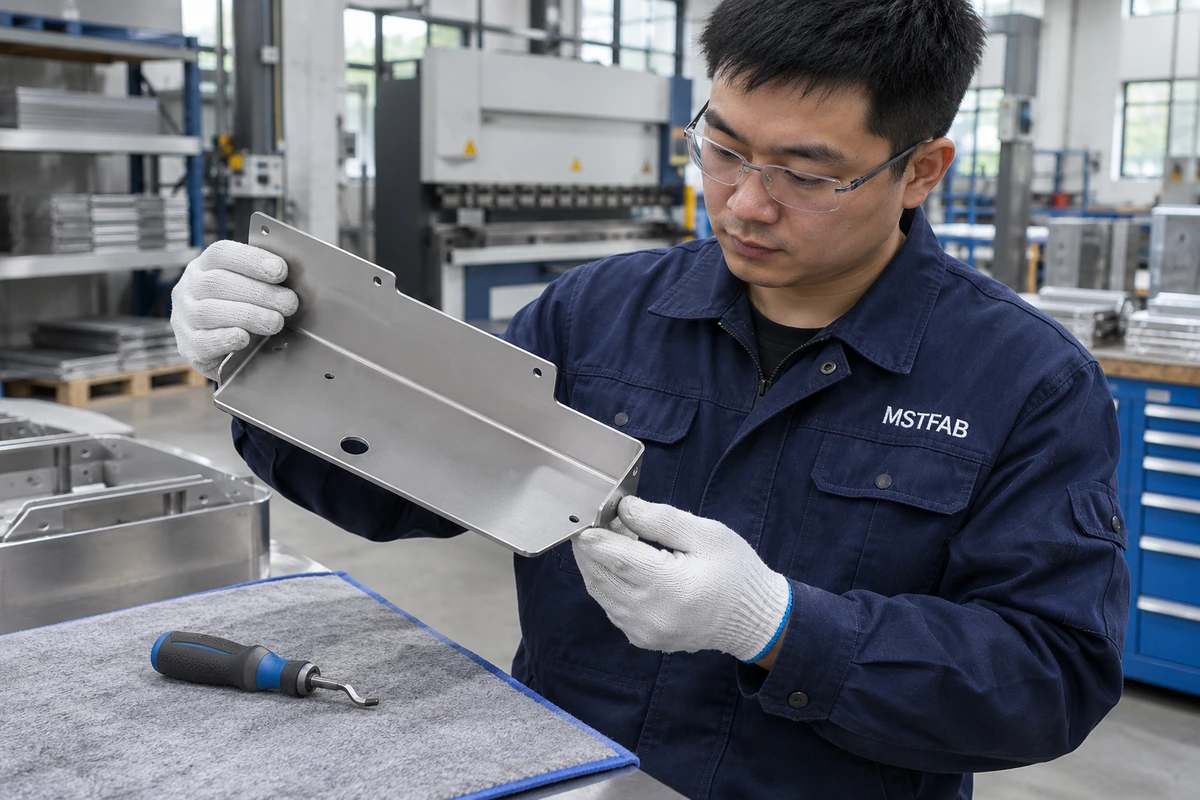
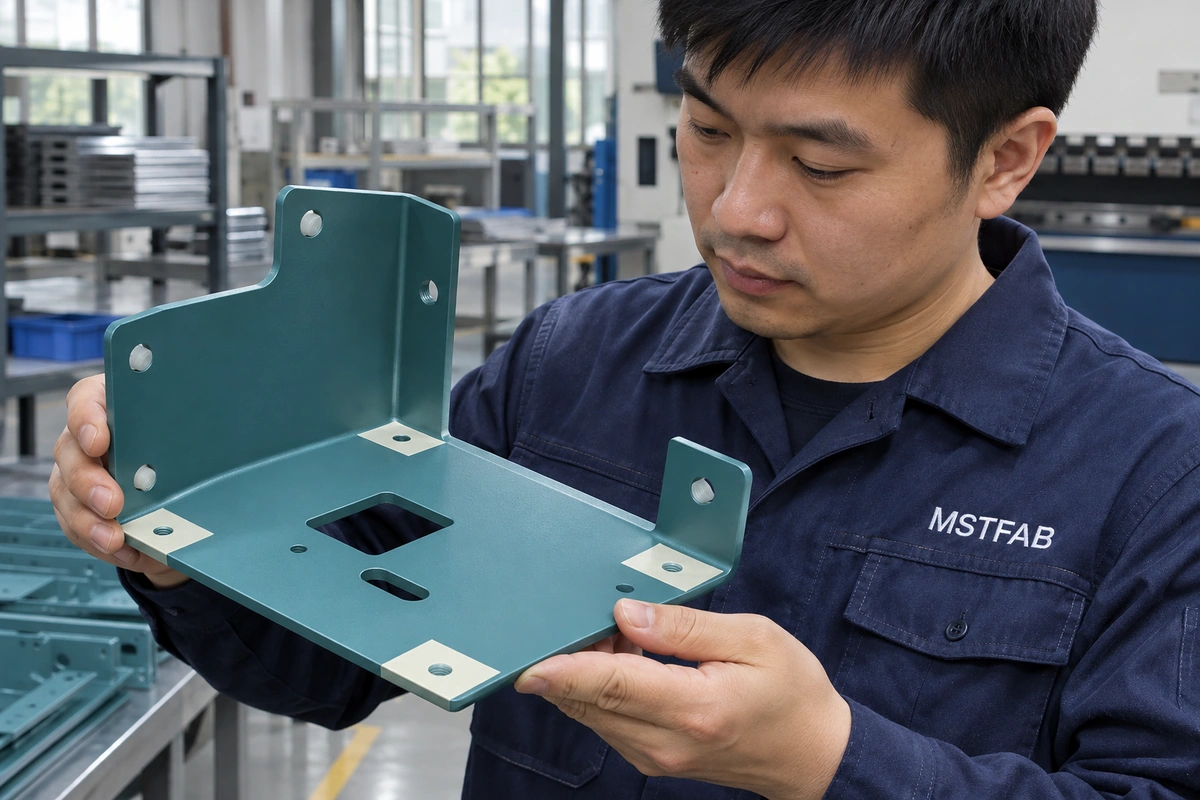
Review threaded holes, bearing or locating surfaces, small slots, countersinks and conductive interfaces before approving edge treatment or coating. Mark any surface that must remain uncoated, and define the boundary well enough for the finisher to identify it. A note such as “mask as needed” leaves the most important functional decision to interpretation after the part has already been manufactured.
Coordinate finishing with forming, joining and hardware installation. A panel may be deburred before bending but need further preparation after welding or cosmetic dressing. Some hardware must be protected during finishing; other items may be installed later. The approved sequence should show when threads, clinched features and mating faces reach their final condition and when they will be checked.
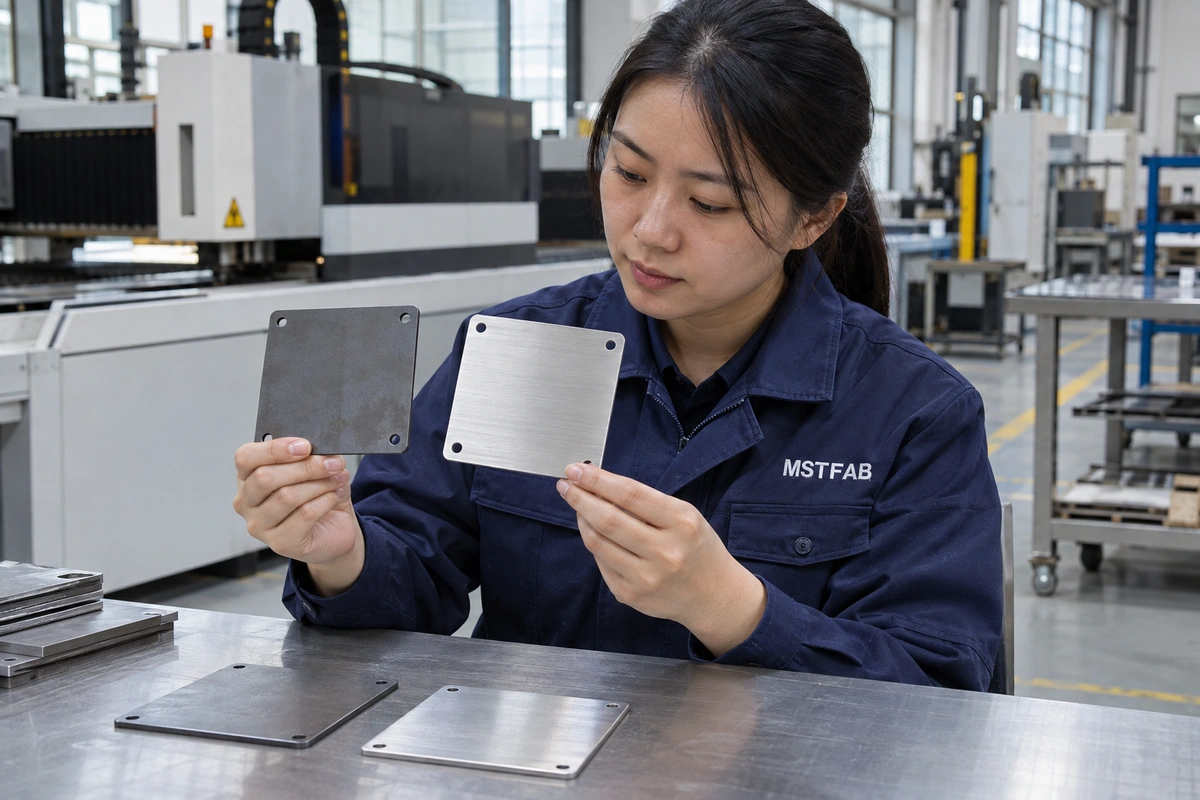
Do not use a visual sample to override a dimensioned interface. A sample can establish the intended texture or edge feel, while the drawing controls the required geometry. If the sample and drawing conflict, resolve the difference before production. Record whether the sample represents the whole part, one cosmetic zone or only one face of the material.
For brushed or otherwise directional finishes, identify the intended direction on each visible face. Adjacent panels may look inconsistent even when they share the same nominal finish name. Agree how changes in direction at bends, weld dressing or removable covers will be treated. Packaging should also prevent the finished surfaces from rubbing against each other during transport.
04 / ACCEPTANCE EVIDENCE
Approve the Finished Part
Accept the finished configuration, not an isolated coupon
Review the part after all operations that can affect its functional surface condition. A coating coupon may support a process assessment, but it does not prove that every cutout is usable, every thread is clear or every gasket land has been protected. Include the critical delivered interfaces in the inspection plan alongside any agreed coating or appearance checks.
Specify the relevant finish identity, color, texture, appearance zones and any required thickness or adhesion assessment through the project documents. The chosen method, location, sampling and pass criteria need agreement. Do not copy a universal film thickness, test frequency or salt-spray duration into unrelated parts. Nor should an accelerated test be presented as a guaranteed service-life prediction.
If the first sample reveals edge build-up, visible substrate marks or interference at a masked boundary, record the exact location and decide whether the cause is preparation, application, geometry or interpretation. A general instruction to “improve the finish” is difficult to repeat. Agree a specific correction and check that it does not damage another requirement.
The acceptance package can combine drawing-linked dimensional checks, approved appearance references and specified process records. Confirm which documents are included in the quotation. A general quality-system certificate is not evidence that every possible coating test or report is supplied with every order.
05 / ORDER AND DELIVERY
Control Repeat Orders and Delivery
Make the approved result repeatable
Record the drawing revision, material, finish identity, masking map and approved appearance reference when the sample is accepted. Include any agreed deviations and their limits. A supplier should not have to reconstruct an approval from an email photo and an old purchase order when the next batch arrives months later.
Review changes to material source, preparation method, coating system, partner location or hardware sequence before they are treated as equivalent. The level of reapproval depends on the change and the customer’s requirements. An unchanged color name alone does not establish that the complete finishing route is unchanged.
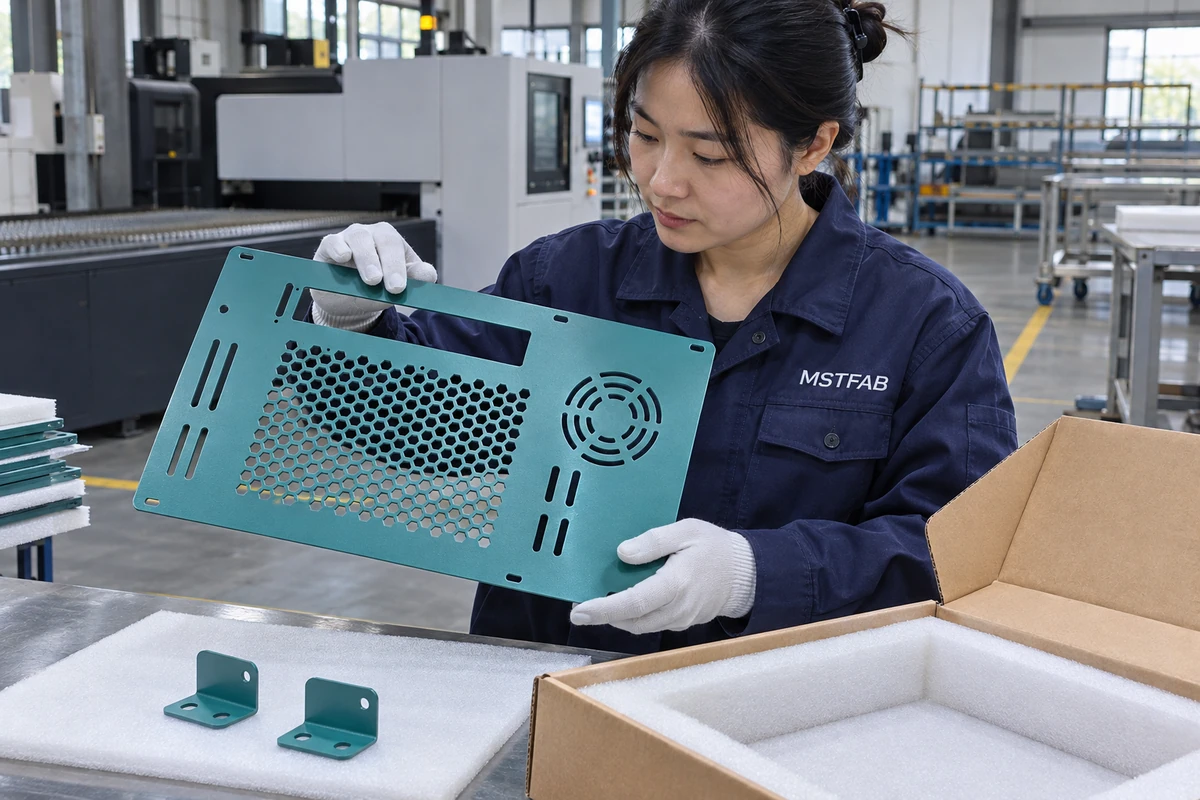
Define the condition in which parts are packed. Separate cosmetic faces, protect vulnerable edges and avoid placing loose hardware against a finished surface. If protective film is proposed, confirm compatibility with the surface and the expected removal conditions. The packing review should protect the finish without trapping an unaddressed contamination or moisture problem.
For a practical review, send the current drawing and model, substrate specification, quantity, intended finish, visible zones, critical interfaces and any reference sample. Add photographs of an existing problem if available, but do not use a photograph as the only definition of a dimensional or coating requirement. Send the part and finishing requirements for review.
06 / BUYER QUESTIONS
Post-Laser Finishing Questions
Does every laser-cut part need a fixed edge radius?
No. Define the safe-handling and functional requirements for the actual part. A radius, edge break or residual-burr limit should reflect the geometry and intended use, not an unrelated default.
Is nitrogen cutting a replacement for all preparation?
No. The cutting route influences the initial condition, but the actual substrate, contamination and intended finishing system still need review. Nitrogen-assisted cutting does not remove an oxide layer already present.
Should parts be coated before hardware installation?
The sequence depends on the hardware, masking needs, geometry and approved route. Agree which items are installed before finishing, which are protected and which are installed afterward.
What should I include in a finishing RFQ?
Send the drawing revision, material, quantity, finish identity, appearance zones, masking map, critical interfaces and required inspection records. Confirm the proposed route and sample approval before quantity release.
Review the Drawing-Defined Scope
Send the current files, material, quantity, critical interfaces, finish and required acceptance evidence for a project-specific review.
 WeChat Contact
 WhatsApp Me Directly