
PROTOTYPE-TO-PRODUCTION TRANSITION DFM — EXECUTIVE TECHNICAL BRIEF
Hardware teams are routinely blindsided when a $185 prototype enclosure drops to $38 in production—or worse, when a prototype that passed EVT fit-checks fails catastrophically during 1,000-unit ramp. Prototype quotes price single-setup CNC laser cutting, manual 1-axis press-brake bending, freehand TIG tacking, manual PEM arbor pressing, and batch box-oven painting with 100% caliper inspection. Production quotes replace manual skill with dedicated copper-backed welding jigs (±0.25 mm datum repeatability), multi-station stage-grouped press brakes, bowl-fed Haeger fastener presses, 7-stage conveyor powder lines, and SPC Cpk ≥ 1.33 verification. Because hand-bent prototypes mask springback drift, weld distortion, and missing paint-hook drain holes, quoting prototype CAD unchanged into production creates hidden fixture NRE and scrap. Aligning EVT/DVT prototypes with production datums and finishing rules eliminates costly late-stage ECNs.
- 3×–8× Prototype Price Multiplier: A 1–10 piece prototype absorbs 2–4 hours of CAM programming, press-brake trial coupons, manual silicone masking, and 100% FAI metrology—driving unit cost 3×–8× above 500-piece serial production even on identical sheet thickness.
- Datum & Fixture Transition: Freehand TIG assembly works for 5 prototypes via manual square clamping, whereas production (> 150 pcs/batch) requires dedicated copper-backed locating jigs ($650–$2,400 NRE) to hold ±0.25 mm box diagonal and prevent weld-heat warp.
- SPC & Cpk Capability Shift: Prototype FAI checks 100% of dimensions on 3–5 pieces with calipers and height gauges; production ramps enforce AQL 0.65 / Cpk ≥ 1.33 on CTQ ±0.10 mm bore centers via CMM and Go/No-Go datum gauges.
- Conveyor Paint & Masking Readiness: Prototypes hang from improvised wire hooks in batch ovens; serial production on 7-stage zirconium conveyor lines requires engineered Ø4–Ø6 mm drain/hang holes and stepped reusable silicone masks for EMI ground zones.
Every project at MSTFAB includes a complimentary 24-hour CAD Design-for-Manufacturing (DFM) audit, heat-number-traceable EN 10204 3.1 mill certificates, and a ballooned First Article Inspection (FAI) report prior to volume release.
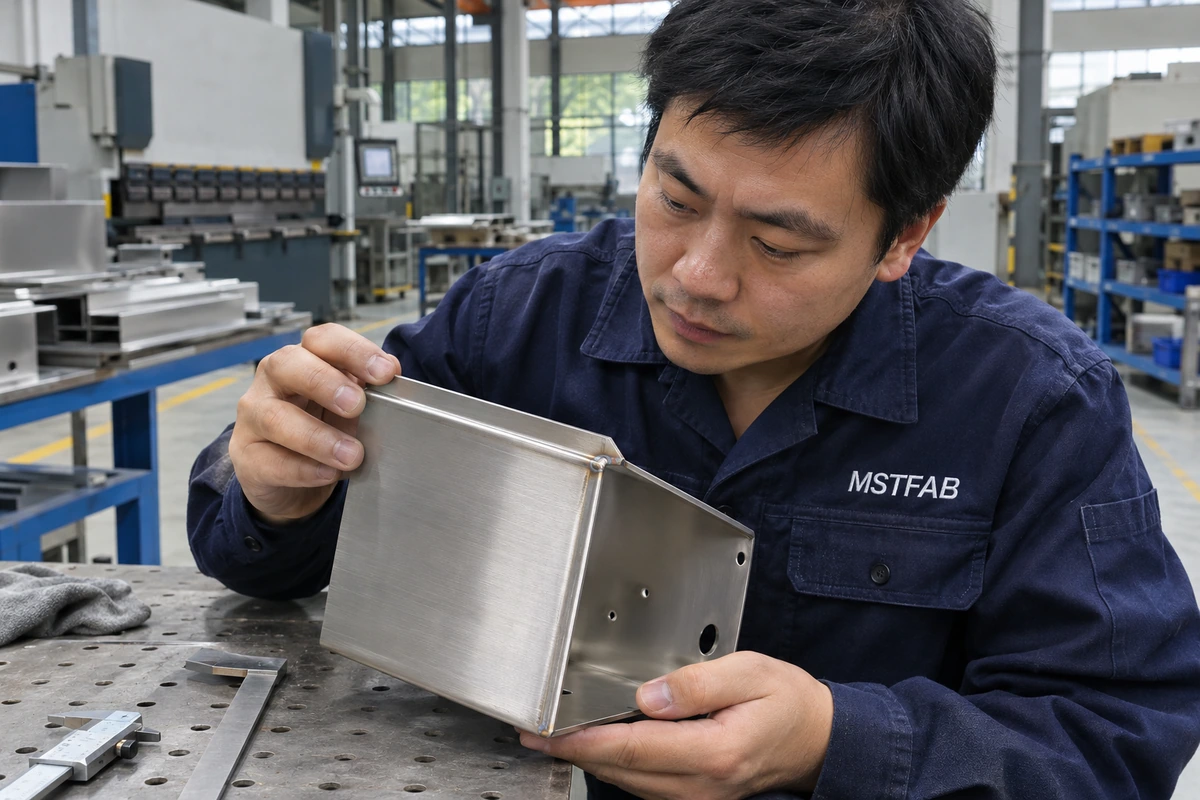
01 / Engineering Specifications & Comparison Matrix
Prototype (EVT/DVT) vs. Serial Production Process & Quote Matrix
The steep unit-price gap between a 5-piece prototype quote and a 1,000-piece production quote reflects two distinct shop-floor setups—not mere volume discounting. Prototype workflows chase 3-to-7-day calendar speed using universal soft tools and skilled technician hand-tuning, where minor springback or weld-pull errors get fixed right at the bench. Serial production removes manual handwork in favor of rigid CNC backgauge stops, dedicated copper-backed weld jigs, bowl-fed PEM fastener automation, 7-stage conveyor paint lines, and statistical process control. Mapping how blanking, bending, welding, hardware pressing, surface masking, and PPAP metrology shift from early EVT builds to serial PVT production lets OEM buyers spot hidden fixture NRE, prevent coating weepage, and hold tight mechanical assembly fit across SPCC, SGCC, Al 5052-H32, and SUS304 volume ramps without costly late-stage engineering change notice (ECN) delays.
Each parameter below is verified during incoming raw material quarantine, in-process CNC stage checks, and final First Article Inspection (FAI) before shipment release:
| Engineering Parameter / Zone | Material & Process Specification | Target Tolerance / Performance Standard | Inspection Method & OEM Value |
|---|---|---|---|
| 01 — Programming, Nesting & Setup Overhead | Prototype runs single-part laser sheets with manual scrap offload; production runs multi-part common-line nests on automated load/unload towers across 1250×2500 mm sheets. | ±0.10 mm laser profile on both; production adds locked sheet-grain orientation and batch heat-lot tracking. | Optical 2.5D VMS first-off blank verification against DXF overlay; production adds automated laser nozzle and kerf calibration check: Reduces CAM and setup allocation from $45–$120 per prototype piece down to $0.25–$0.80 per production unit across serial batches. |
| 02 — Bending & Springback Compensation | Prototype bends sequentially on a single V-die with manual angle shims; production uses multi-station stage-grouped punches/dies with laser angle-correction sensors. | ±0.5° / ±0.30 mm prototype; production tightens Cpk ≥ 1.33 within ±0.20 mm flange-to-hole per ISO 2768-mK. | Manual digital bevel protractor on every prototype bend; production uses automated angle laser plus Go/No-Go profile check fixture: Eliminates trial-piece scrap and manual hand-tweaking across SPCC, SGCC, Al 5052-H32, and springy SUS304 stainless lots. |
| 03 — Welding & Structural Assembly | Prototype uses modular table clamps and hand TIG tacking; production deploys dedicated laser-cut/CNC steel jigs with copper heat-sink backing and toggle clamps. | ±0.50 mm box squareness (prototype); production holds ±0.25 mm diagonal and ≤ 0.40 mm door-frame flatness. | Granite surface plate + feeler gauge on prototypes; production utilizes dedicated CMM datum fixture and weld coupon macro-etch checks: Cuts weld-and-grind labor by 50%–65% while guaranteeing interchangeable hinged doors and internal chassis slides across builds. |
| 04 — Self-Clinching Hardware & Grounding | Prototype presses PEM nuts/studs singly on a manual arbor; production runs bowl-fed Haeger auto-inserters with programmed force-stroke monitoring. | ±0.12 mm position (prototype); production enforces ±0.10 mm true position and verified PEM pushout/torque spec. | 100% visual flush check and thread plug gauge on prototypes; production adds automated press-force signature plus destructive torque test: Prevents missed or crooked fasteners in 20+ stud assemblies and cuts insertion time from 18 seconds to 2.5 seconds per stud. |
| 05 — Pretreatment, Masking & Powder Coating | Prototype uses manual wipe degrease, Kapton tape masking, and batch box oven; production runs 7-stage spray zirconium line and custom stepped silicone plugs. | 55–95 µm DFT (prototype); production narrows DFT window to 65–85 µm with ΔE ≤ 0.8 color consistency. | Elcometer DFT spot check (prototype); production adds ASTM D3359 5B cross-hatch, MEK cure rub, and ASTM B117 salt spray coupons: Avoids paint peeling at sharp edges and eliminates $4–$12/unit of manual Kapton tape peeling labor in serial production. |
| 06 — Quality Documentation & PPAP Deliverables | Prototype ships with a 3-to-5 piece dimension report and material cert; production delivers IATF/ISO SPC packages, control plans, and PPAP Level 2/3. | 100% dimensional check on 5 pcs (prototype); production maintains Cpk ≥ 1.33 on CTQs and AQL 0.65 visual cosmetic inspection. | Calibrated calipers and height gauge (prototype); bridge CMM automated program and witness coupon archive for serial production: De-risks OEM regulatory and customer audits with lot-traceable EN 10204 3.1 certs and RoHS/REACH compliance records. |
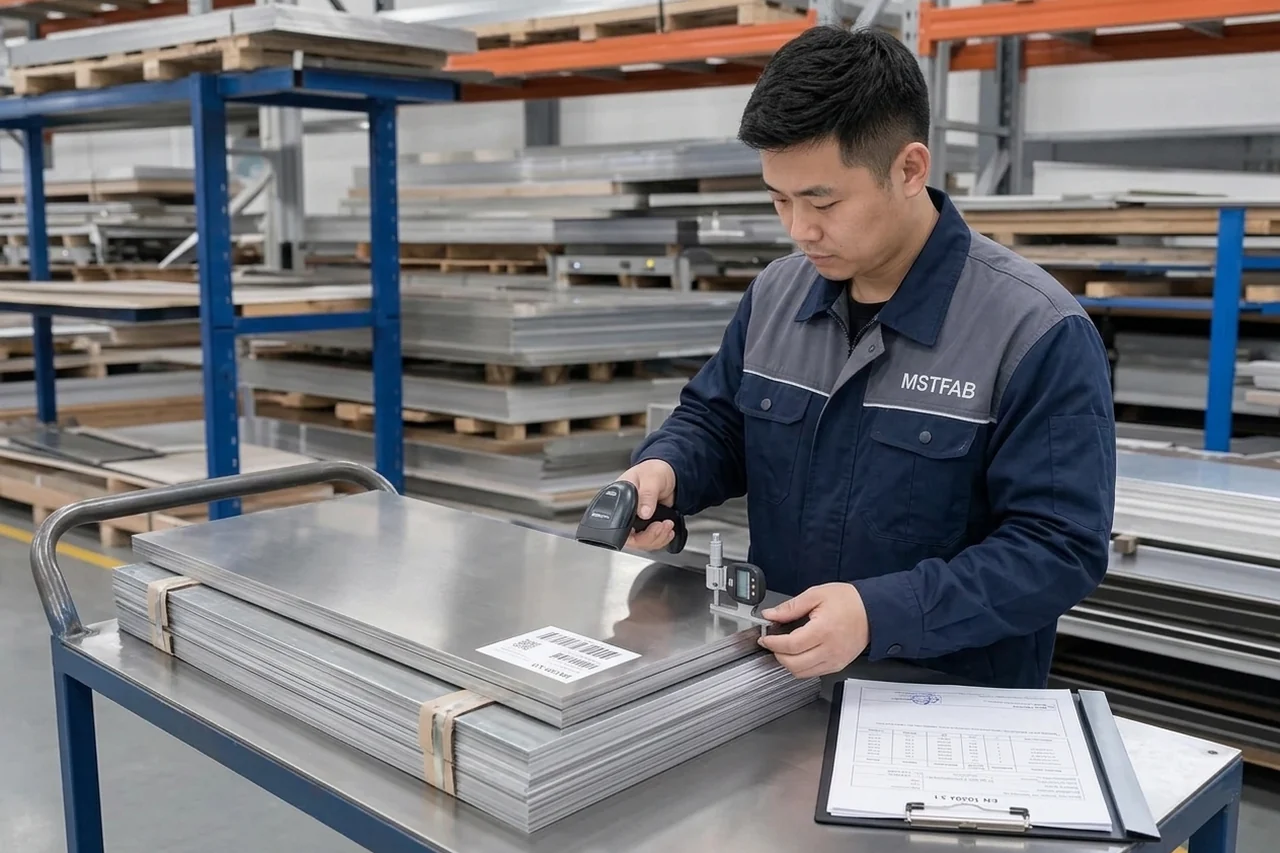
02 / Sheet Metal DFM & Structural Controls
3 Prototype-to-Production Traps That Cause Sudden Ramp-Up Failure
A prototype that looks flawless on an engineering bench often masks shop-floor shortcuts—hand-straightened flanges, manual weld fill, or custom Kapton tape masking—that cannot survive serial production cycle times. Resolving these three process-transition gaps before freezing PVT CAD prevents expensive fixture rework, coating defects, and costly assembly-line stops during commercial launch.
Hand-Tweaked Prototype Weld Distortion Failing Unadjusted Serial Production Welding Fixtures
Failure Mechanism: On a 5-piece prototype, welders manually clamp, tack, and mallet-straighten a 1.5 mm SUS304 enclosure until the door closes cleanly. When 500 units hit production without a copper-backed datum jig, cumulative TIG thermal shrinkage pulls walls inward by 1.2–2.0 mm, jamming PCB card guides.
Engineering Solution: Design interlocking laser-cut tab-and-slot weld joints during EVT, switch long continuous outer seams to staggered 15 mm stitch welds where IP sealing relies on gaskets, and budget a dedicated $800–$2,200 copper-backed welding fixture for DVT/PVT assembly validation before volume release.
Verified Outcome: Holds ±0.25 mm enclosure squareness repeatably at production line speed with 60% less post-weld grinding.
Missing Conveyor Hang & Drain Holes Causing Finish Defects on Automated Paint Lines
Failure Mechanism: Prototypes painted in manual box ovens can hang from temporary edges or wire loops. On an automated 7-stage zirconium spray line, enclosures without dedicated Ø4–Ø6 mm drain/hang holes trap alkaline cleaner inside box channels, weeping rust streaks onto cured RAL 9003 surfaces 48 hours later.
Engineering Solution: Add hidden Ø4.5 mm hang and drain holes at upper and lower internal flange corners during DVT CAD freeze, and define exact ground-masking zones (e.g., Ø12 mm bare Al or SUS pad around M4 earth studs) compatible with reusable stepped silicone plugs.
Verified Outcome: Eliminates chemical weeping and manual Kapton masking labor, cutting production finishing cost by 25%–38% across batches.
Unvalidated Countersinks & Machined Features Pinned to Prototype CNC Milling
Failure Mechanism: Prototype shops frequently CNC-mill custom 100° countersinks, step-recessed O-ring pockets, or tight ±0.05 mm dowel holes post-bend to hit a 5-day delivery. When quoted for 1,500-unit production, those hidden 3-axis machining minutes double unit price over raw sheet-metal rates and create severe capacity bottlenecks.
Engineering Solution: Replace milled countersinks with standard 82°/90° turret punch-dimple or laser-pierce plus multi-spindle countersink heads, and shift O-ring grooves or ±0.05 mm bearing pads to a small bolt-on machined sub-block rather than fixturing and machining the entire bent sheet metal chassis.
Verified Outcome: Removes 3-axis CNC bed bottlenecks during production ramp and lowers unit conversion cost by 30%–45%.
Manufacturing Scope Boundary: Commercial & Validation Boundary: EVT/DVT Soft Builds vs. PVT Production Tooling: OEM buyers frequently request full production unit pricing on a 15-piece DVT order, or ask suppliers to build $3,000 welding and check fixtures during early EVT before mechanical interfaces freeze—resulting in scrapped steel jigs immediately after the next PCB layout or fan-cutout change. — Engineering Fix: MSTFAB structures a transparent three-phase bridge quote: EVT (1–15 pcs, zero fixture NRE, 5–7 day soft turn), DVT/LRIP (25–100 pcs, modular pin-table jigs plus full CMM FAI), and PVT/Production (300+ pcs, dedicated welding/check fixtures, stepped silicone masks, and Cpk/PPAP documentation). MSTFAB manufactures custom sheet metal parts and empty mechanical enclosure shells strictly to your 3D STEP and 2D PDF drawings.
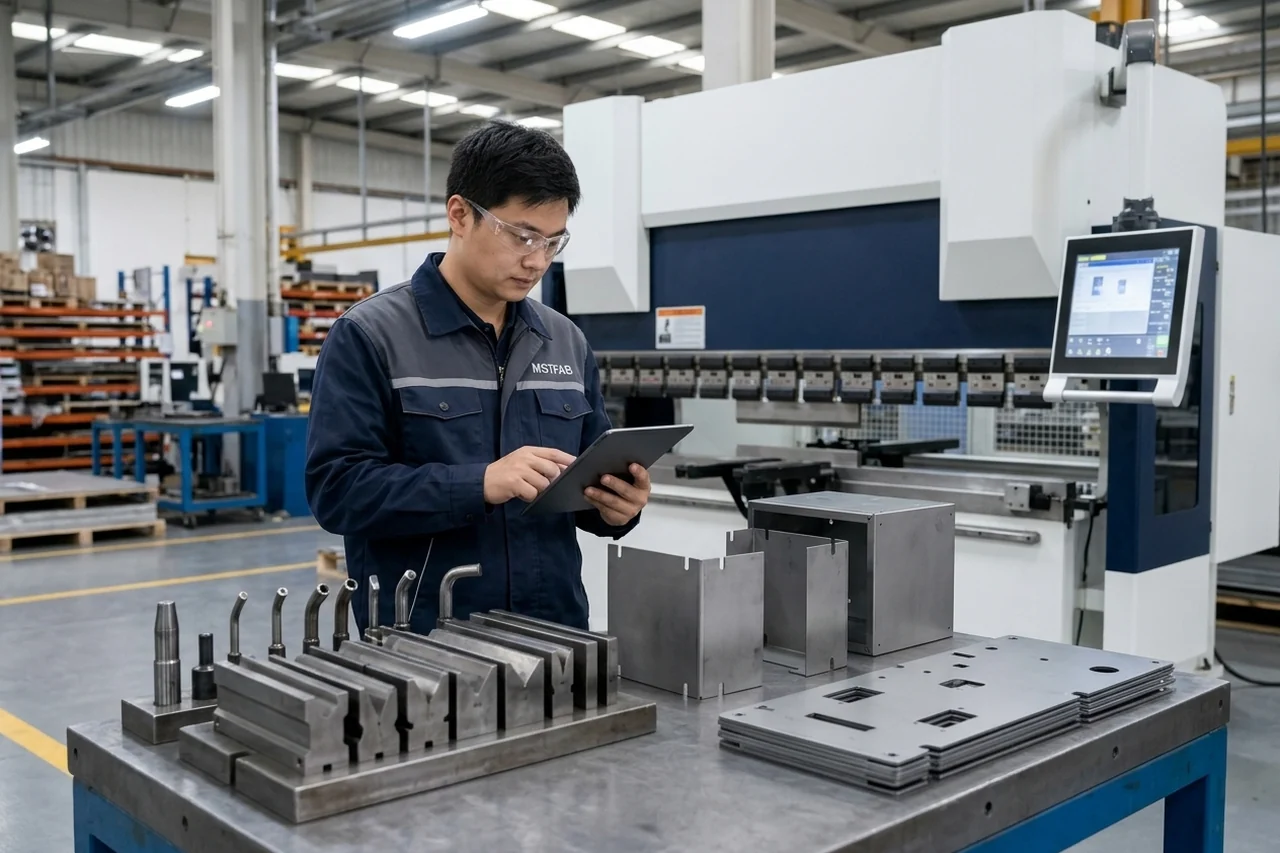
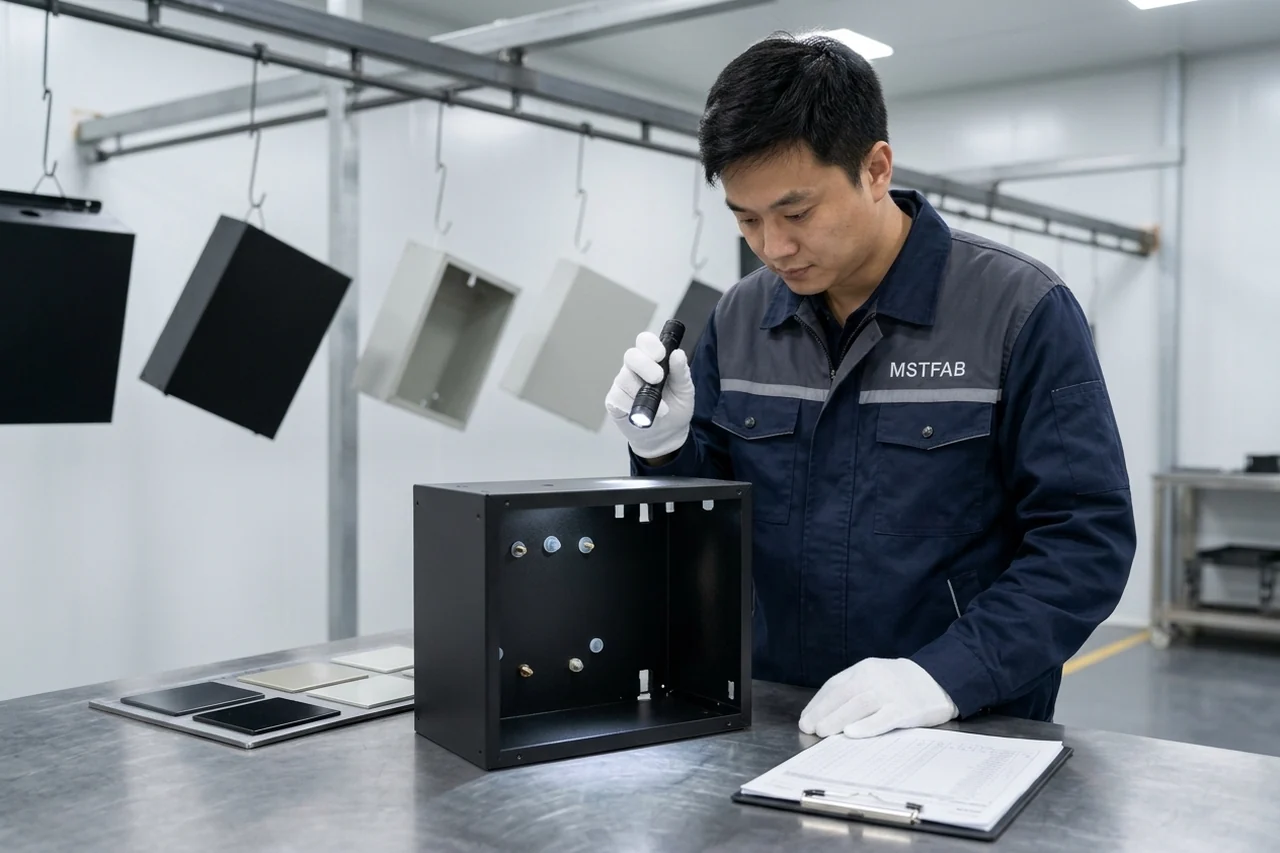
03 / Representative Engineering Scenario & Process Control
Case Study: Scaling a Diagnostic Analyzer Chassis from 12-Pc EVT to 1,800-Unit/Yr Production
Project Profile: EVT 12 pcs → DVT 60 pcs → Production 1,800 units/yr | 1.2 mm SUS304 2B inner frame + 1.5 mm Al 5052-H32 outer covers | MIL-DTL-5541 Class 3 clear chromate EMI zone + RAL 9003 semi-gloss powder coat (60–80 µm DFT)
OEM Engineering Challenge: A medical diagnostics OEM ordered 12 EVT analyzer chassis built via soft laser, manual brake, and Kapton-masked box-oven coating at $214/set. When transitioning to 1,800 units/year, their target dropped to $54/set alongside strict EMI bonding continuity (< 0.1 Ω across chromated rear I/O pads) and lot-traceable mechanical build records to support their own ISO 13485 and IEC 60601 device regulatory submission—without delaying commercial market launch or altering exterior industrial design.
MSTFAB Manufacturing Solution: MSTFAB engineered a staged DVT-to-PVT transition without altering external industrial design. During DVT (60 pcs), we introduced interlocking laser tabs on the SUS304 inner frame, built a $1,450 copper-backed TIG datum fixture to lock optical-reader rail parallelism within ±0.15 mm, and replaced 38 minutes of manual Kapton EMI masking with 14 custom stepped silicone caps on our automated conveyor line. We also converted 16 CNC-milled panel countersinks to turret punch-form stations and delivered an EN 10204 3.1 + RoHS/REACH + CMM Cpk ≥ 1.48 validation package for the OEM's compliance file.
- 74.3% Unit Price Drop at Scale: Unit cost transitioned cleanly from $214.00 (12-pc EVT) to $54.90 (300-pc production release at 1,800 EAU) with only $1,450 total weld-fixture and silicone masking NRE.
- Cpk 1.48 on Optical Datum Rails: Automated bridge CMM SPC across 120 PVT units verified ±0.15 mm rail parallelism and ±0.08 mm rear I/O bore true position with zero manual shimming.
- 68% Faster Coating Mask Cycle: Reusable stepped silicone plugs held < 0.08 Ω EMI ground resistance across clear chromate pads while cutting masking labor by 68% versus manual Kapton tape.
Every production lot is archived with locked CNC laser nests, press-brake bend programs, weld fixture setups, and signed golden samples to guarantee identical repeatability across multi-year reorders.
04 / Quality Verification, Traceability & Surface Finishing
4-Stage Manufacturing Workflow, Surface Treatment & Metrology Control
To maintain Cpk ≥ 1.33 on critical-to-quality (CTQ) dimensions from prototype through series production, MSTFAB executes a closed-loop four-stage fabrication protocol:
Step 01 — Dual-Stage Prototype & Production Quote Breakdown: Submit your 3D STEP and 2D PDF drawings once; MSTFAB returns both a 5–7 day soft-tooled prototype quote and a projected 250 / 1,000 / 3,000 unit production quote side-by-side, explicitly itemizing every weld fixture, stage die, or silicone masking plug needed at production ramp.
Step 02 — EVT Build & Production-Intent DFM Redline: While machining your 1–15 piece EVT prototypes, our process engineers document a Production-Intent DFM redline—identifying laser-tab weld joints, hidden Ø4.5 mm conveyor drain holes, standard R ≥ 1.0t bend radii, and localized tolerance relaxations required prior to DVT mechanical freeze and serial weld fixture fabrication.
Step 03 — DVT Fixture Commissioning & Masked Finish Validation: At DVT/LRIP (25–100 pcs), we commission copper-backed TIG/MIG weld jigs, reusable stepped silicone masking kits, and Go/No-Go datum gauges, running full bridge CMM FAI, Elcometer DFT thickness checks, and ASTM D3359 cross-hatch adhesion tests under production-equivalent 7-stage conveyor powder-coating, DI rinsing, and thermal curing cycles.
Step 04 — PVT Run-at-Rate & PPAP / Traceability Handover: Before mass release, MSTFAB executes a controlled PVT run-at-rate production batch generating Cpk ≥ 1.33 SPC logs, detailed process control plans, EN 10204 3.1 mill certificates, and RoHS/REACH finishing declarations so your quality engineering team signs off serial production with zero supply-chain production ramp-up surprises.
All raw sheets (SPCC, SGCC, SECC, SUS304/316L, Al 5052-H32/6061-T6) are verified via optical emission spectrometry (OES) or XRF upon arrival and linked by barcode to your purchase order.
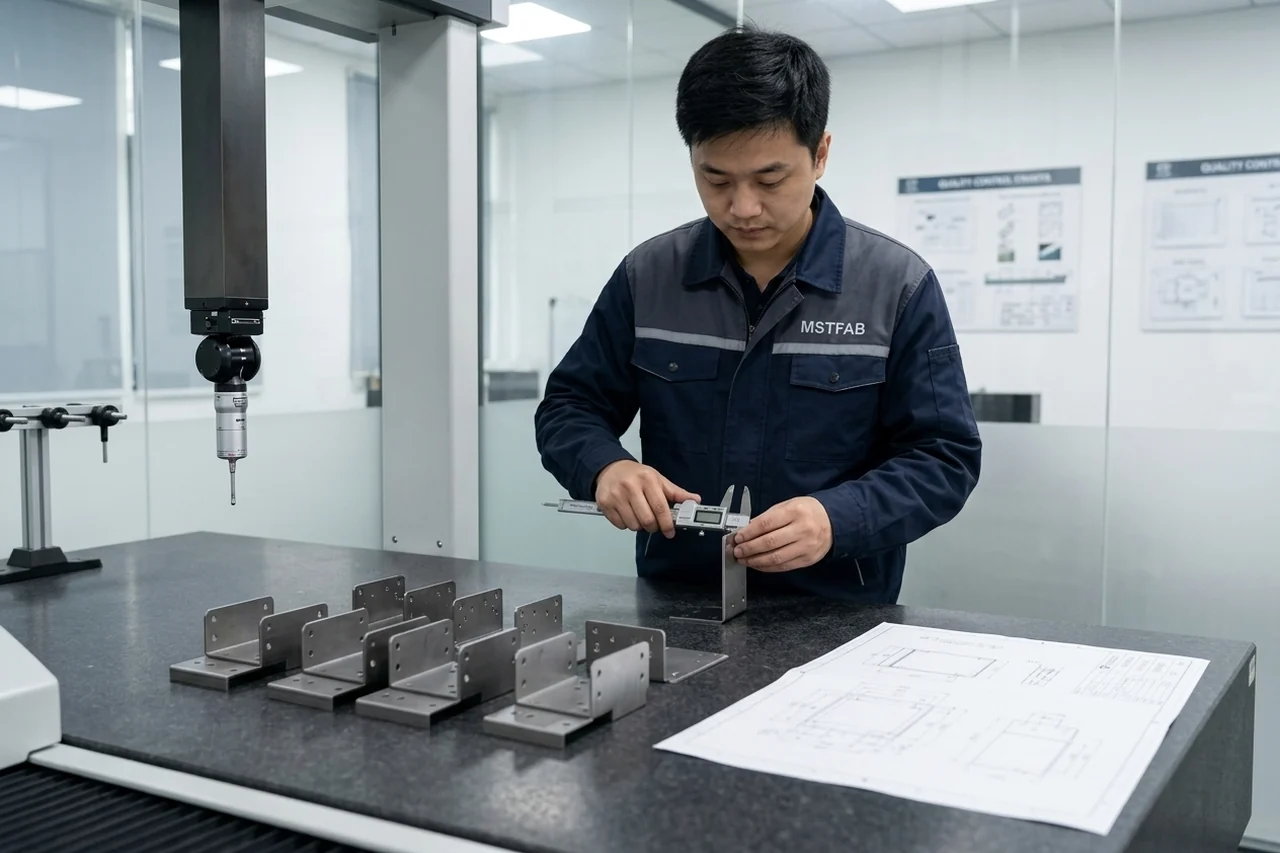
Prior to export crating in ISPM-15 fumigated plywood boxes, our quality lab conducts ballooned dimensional FAI checks, dry-film thickness (DFT) mapping, ASTM D3359 cross-hatch adhesion testing, and ground-continuity verification.

05 / 8-Point OEM RFQ Checklist & Topic Cluster Hub
OEM Engineering RFQ Checklist & Connected Fabrication Hubs
Include these eight drawing and specification controls in your RFQ package so our engineering team can lock down tooling, material traceability, and inspection fixtures on day one:
- RFQ Requirement 01Both prototype build quantity (e.g., 5–15 pcs EVT) and projected serial production batch/annual EAU so quotes accurately model the cost, fixture, and tooling transition path.
- RFQ Requirement 023D STEP assembly plus exploded 2D PDF drawings separating CTQ functional datums (±0.10 mm) from general ISO 2768-mK formed sheet metal bends and non-mating cutout edges.
- RFQ Requirement 03Clear identification of EMI conductive-ground zones (MIL-DTL-5541 clear chromate or bare SUS masking pads) versus cosmetic RAL powder-coated exterior faces for custom stepped silicone plug design.
- RFQ Requirement 04Engineering approval to add hidden Ø4.5 mm conveyor hang and drain holes on enclosed box frames for 7-stage automated pretreatment compatibility without alkaline cleaner fluid trapping.
- RFQ Requirement 05Weld seam functional specs distinguishing hermetic or structural continuous TIG seams from cosmetic stitch welds suitable for fast copper-backed fixture jigging and minimal post-weld hand grinding.
- RFQ Requirement 06Target quality deliverables by phase: 5-pc caliper FAI for EVT builds versus automated bridge CMM Cpk ≥ 1.33 SPC and PPAP Level 2/3 packages for serial production.
- RFQ Requirement 07Expected calendar timeline between EVT delivery, DVT mechanical freeze, and first production PO so weld and check fixtures are staged sequentially without premature NRE obsolescence.
- RFQ Requirement 08Regulatory file support requirements (EN 10204 3.1 mill lot traceability, RoHS/REACH declarations, and conflict-free material statements) supporting your end-product UL, CE, or medical device certification.
Explore Connected Sheet Metal Fabrication Services & Enclosure Hubs
06 / OEM Buyer & Engineer FAQ
Engineering & Procurement FAQs: Prototype vs. Production Quotes
Why is a 5-piece prototype sheet metal quote 4× to 8× more expensive per unit than a 500-piece production quote?
Prototype pricing must absorb fixed non-recurring engineering and setup labor across just a handful of parts: 3D-to-DXF unfolding, CAM nesting, laser nozzle calibration, 30–45 minutes of press-brake tooling setup and test bends, manual TIG clamping, hand Kapton masking, small-batch box-oven curing, and 100% manual FAI inspection. In 500-piece production, those fixed hours amortize by 100× while automated palletized lasers, bowl-fed PEM presses, copper weld jigs, and continuous conveyor coating triple hourly shop throughput across every station.
If my prototype fits together cleanly, why might the exact same CAD fail in 1,000-unit production?
Skilled prototype technicians routinely compensate for subtle design flaws by hand—mallet-squaring TIG-warped corners, shimming bend angles, or filing tight hole alignments on a 5-piece run. Production operators running dedicated fixtures and automated equipment cannot stop to hand-tune every enclosure. Without interlocking weld tabs, proper hole-to-bend clearances (≥ 2.5t + R), conveyor drain holes, and realistic ISO 2768-mK tolerances, serial production runs immediately hit elevated scrap, costly manual rework, and assembly line-stop delivery delays across batches.
Should I pay for production welding fixtures during the initial prototype order?
No—unless your mechanical layout is 100% frozen. During EVT (1–15 pcs), building $1,000–$2,500 welding or CMM check fixtures risks immediate obsolescence if PCB mounting bosses, PEM standoffs, or fan cutouts shift after thermal chamber testing. The proven best practice is soft-tooled modular table clamping at EVT, followed by commissioning dedicated copper-backed weld fixtures and stepped silicone masking plugs during DVT/LRIP (25–100 pcs) once all internal mechanical and electrical component interfaces lock down cleanly before ramp.
How do inspection methods and tolerance expectations change from prototype to production?
At prototype stage, MSTFAB performs 100% dimensional verification on 3 to 5 pieces using calibrated digital calipers, height gauges, pin gauges, and optical 2.5D VMS checks to confirm CAD intent. In serial production, inspection shifts to statistical process control (SPC): automated bridge CMM programs and Go/No-Go datum fixtures track critical-to-quality bores and mating planes at Cpk ≥ 1.33, paired with AQL 0.65/1.0 visual cosmetic audits and witness-coupon DFT thickness and cross-hatch paint adhesion test logs.
Can MSTFAB support medical, automotive, or UL-listed OEM programs transitioning to production?
Yes, within our certified build-to-print mechanical scope. MSTFAB holds ISO 9001:2015, IATF 16949:2016, and ISO 14001:2015 certifications in Guangzhou and fabricates custom mechanical chassis, brackets, and empty enclosure shells directly to customer 3D STEP and 2D PDF drawings. While end-device UL, FDA, or ISO 13485 product approvals belong to the OEM, we supply full EN 10204 3.1 mill certificates, RoHS/REACH declarations, PPAP Level 2/3 packages, and strict ECN change control to support your regulatory audit files.
International Standards & Engineering References
- ISO 2768-1 / 2768-2 — General Linear, Angular and Geometrical Tolerances for Sheet Metal Fabrication
- IEC 60529 / NEMA 250 — Degrees of Protection Provided by Enclosures (IP Code & Environmental Sealing)
- ISO 9001:2015 & IATF 16949:2016 — Quality Management Systems & Production Part Approval Process (PPAP)
Ready to Quote Your Custom Sheet Metal Enclosure or Fabrication Project?
Upload your 3D STEP models and 2D PDF drawings. MSTFAB will review your tolerances, material specs, and DFM details to deliver a transparent factory quote within 24 hours.
Request Your 24-Hour DFM & Custom Quote →
Direct engineering desk: caroline@mstfab.com | ISO 9001 & IATF 16949 Certified Factory in Guangzhou, China
 WeChat Contact
 WhatsApp Me Directly