
⚡ Direct Answer: How Does Order Volume Drive Sheet Metal Part Pricing?
The sheet metal price per part vs order volume curve follows a steep hyperbolic decay driven by 4 manufacturing thresholds: 1) Batch Setup Amortization (1 to 50 pcs): The steepest price drop occurs between 1 piece and 50 pieces (unit price drops by 60%–75%) as fixed laser nesting, press brake backgauge calibration, and tool staging costs are divided across more units; 2) Material Nesting Yield Optimization (50 to 500 pcs): High-density nesting interlocking parts onto standard 1,500mm × 3,000mm sheets elevates material utilization from 50% to over 85%, cutting raw scrap costs; 3) Continuous Finishing Line Efficiency (500 to 2,000 pcs): Automated powder coat conveyor lines run continuously without color purges; and 4) Full Container Freight Densification (2,000+ pcs): Ocean shipping freight cost per part drops to under 3% of total landed cost.
Volume Price Break Curve Matrix
| Order Quantity Tier | Example Part Price | Cost Driver Dynamic | Recommended OEM Strategy |
|---|---|---|---|
| 1 – 5 Pieces (Prototypes) | 145.00 | 100% setup absorption; manual one-piece handling | Fit-check only; consolidate minor design revisions. |
| 25 – 50 Pieces (Pilot Batch) | 42.00 (-71%) | Setup diluted; initial nesting optimization | Tooling validation and customer beta deployment. |
| 250 – 500 Pieces (Production) | 18.50 (-87%) | High-density laser nesting; continuous batch painting | Sweet spot for standard industrial machine runs. |
| 1,000 – 2,500 Pieces (Volume) | 13.20 (-91%) | Direct mill coil pricing; automated hardware feeds | Quarterly release schedule on annual blanket PO. |
| 5,000+ Pieces (Mass Volume) | $9.80 (-93%) | Dedicated robotic welding cells & automated stamping | Long-term supplier partnership with dedicated line. |
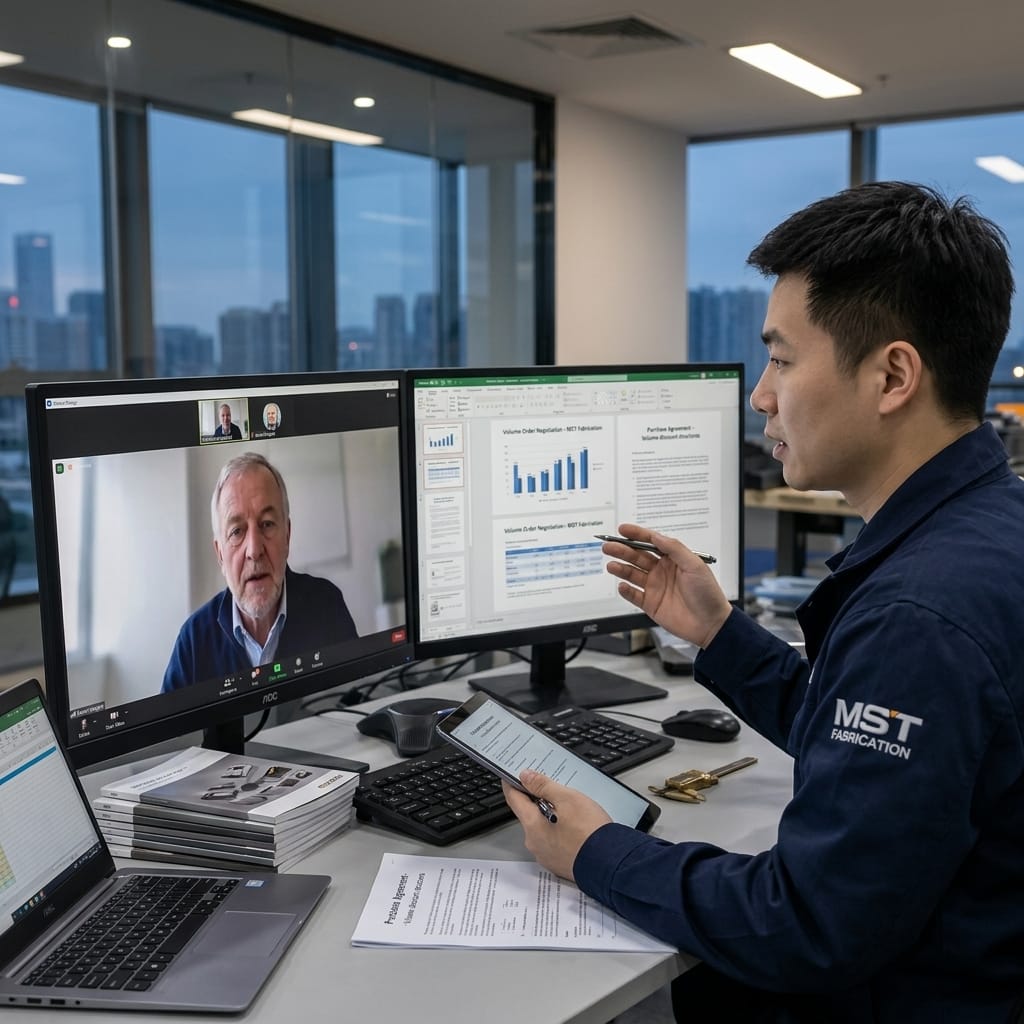
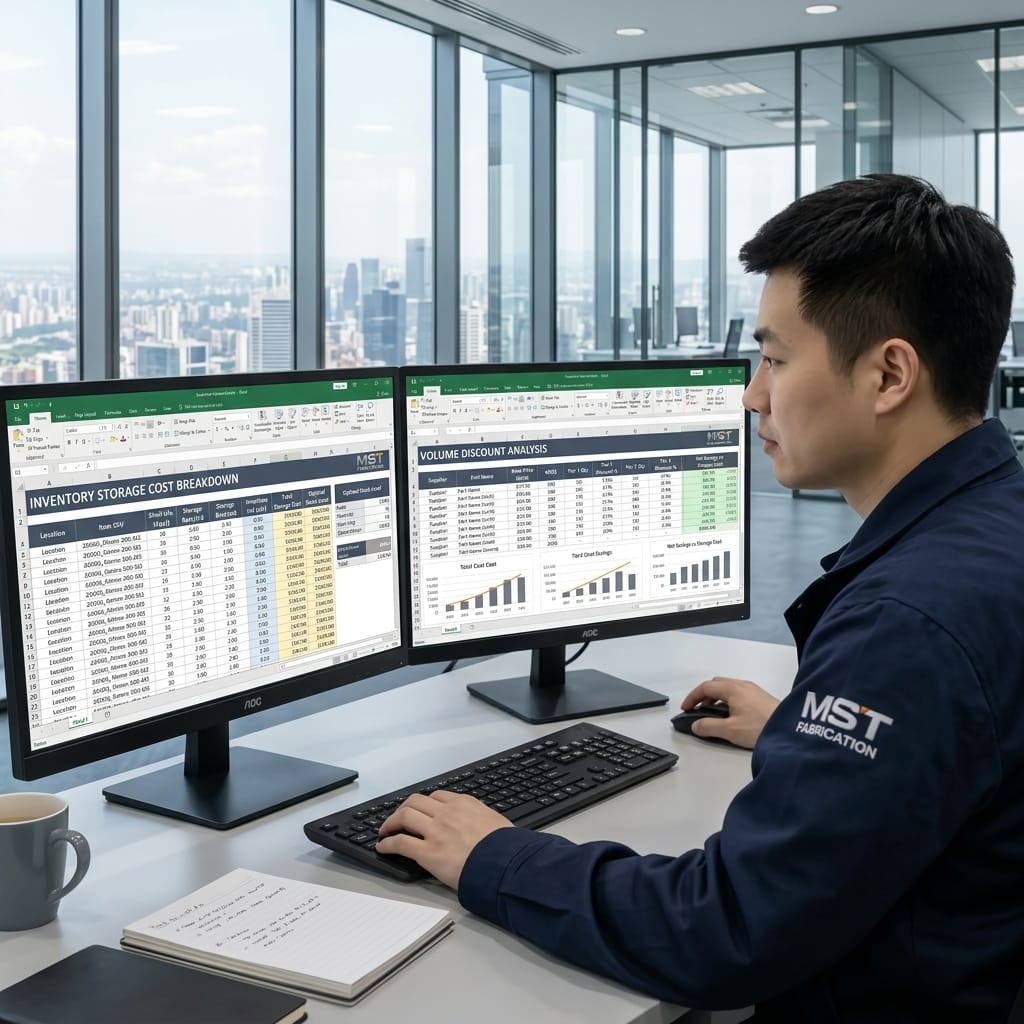
Understanding where your purchase order sits on the volume price curve prevents purchasing teams from overpaying. For example, increasing an order from 18 pieces to 35 pieces often yields a total invoice that is nearly identical because the setup costs are amortized over more units, effectively giving the OEM extra inventory for free. MSTFAB transparently charts these price break curves on all quotations.
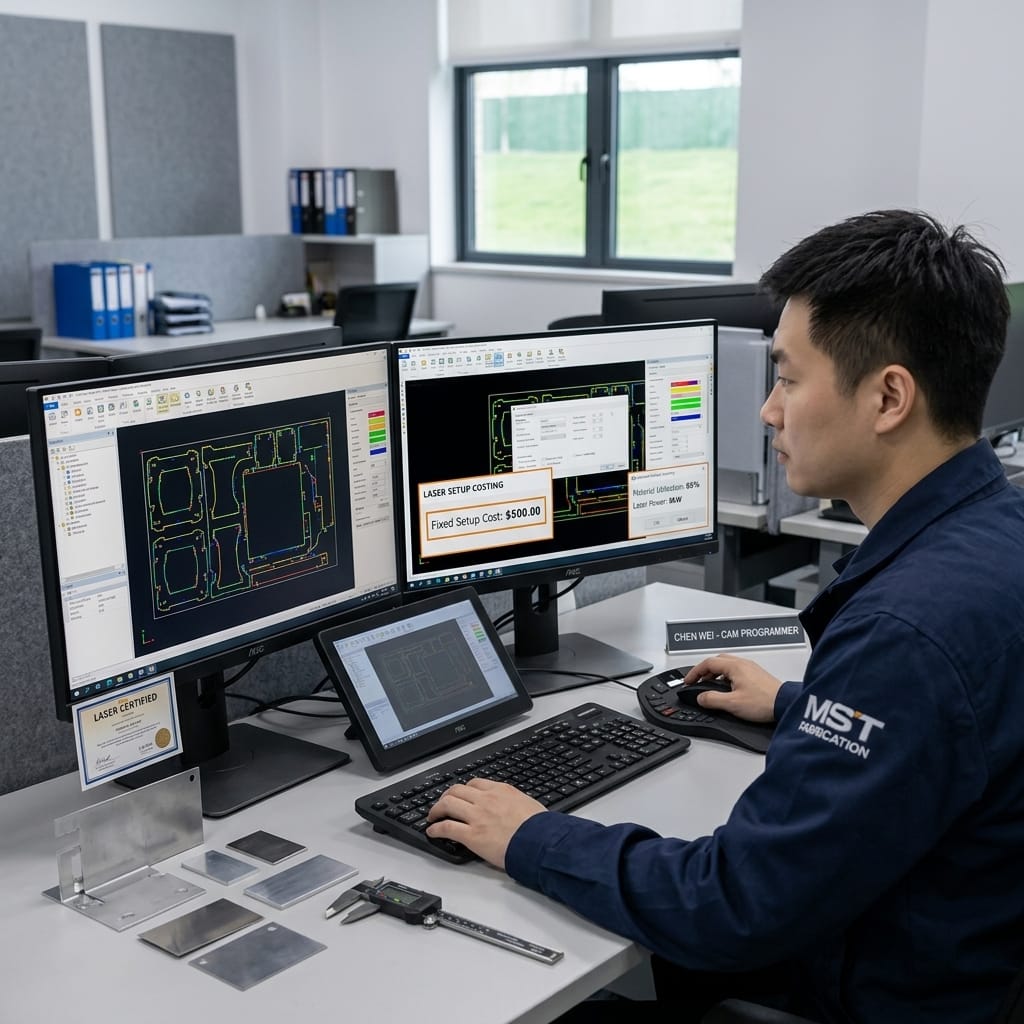
CAM Nesting Density, Setup Dilution & Pallet Logistics
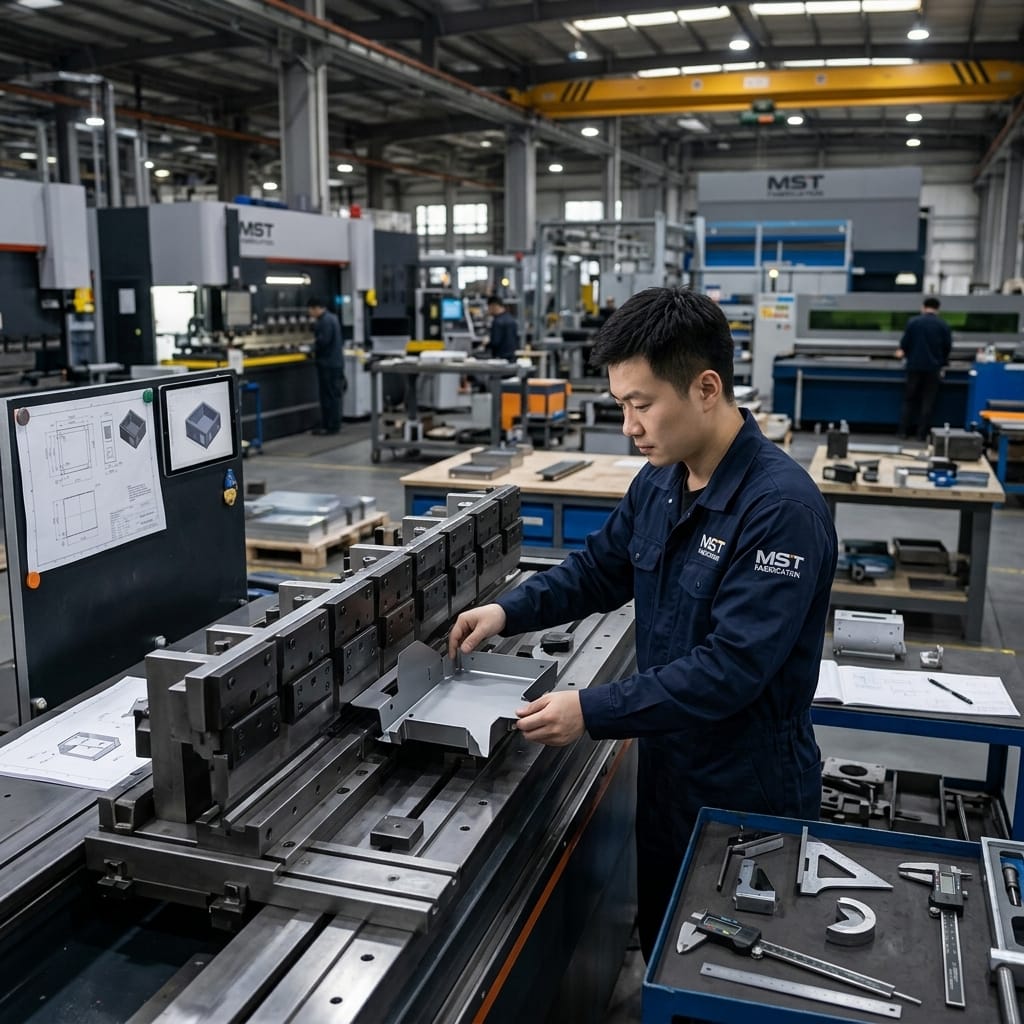
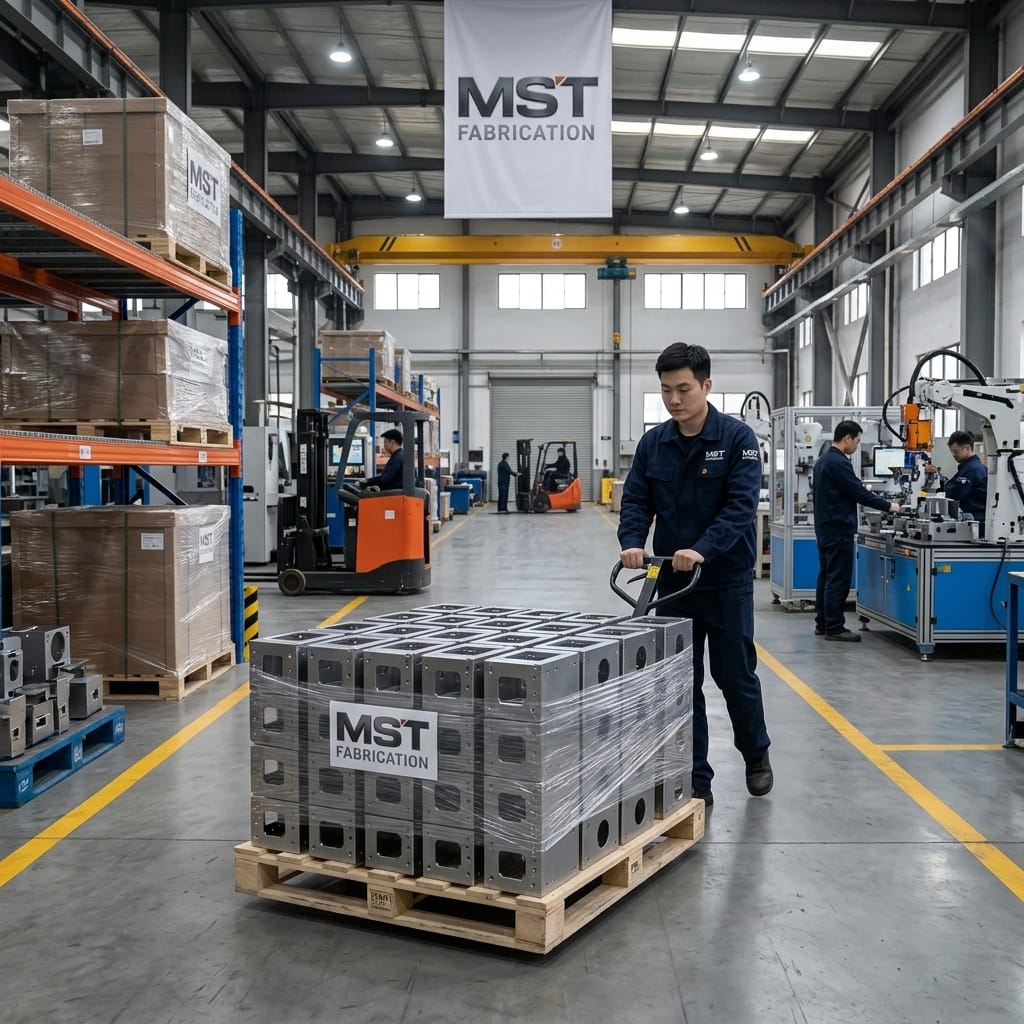
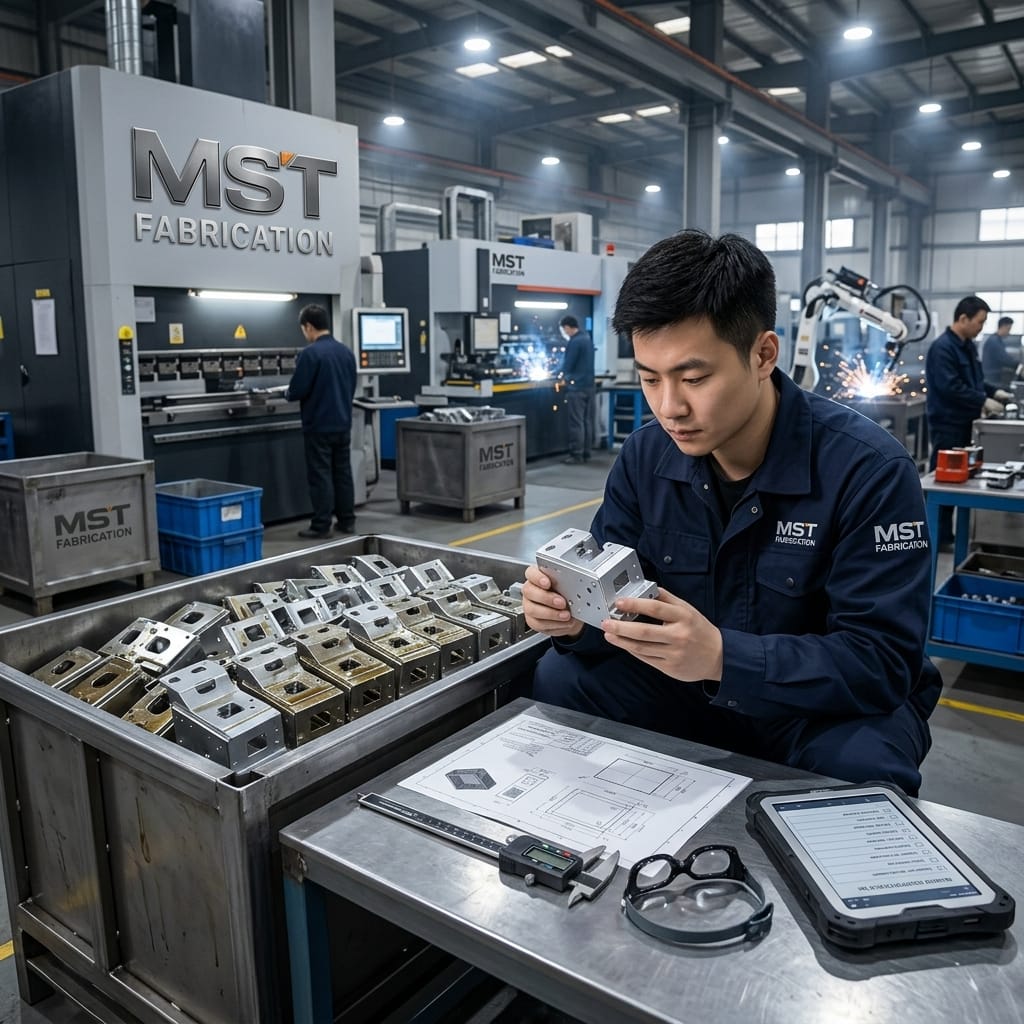
As order quantities expand, CAM programmers interlock irregular bracket geometries across standard sheet sizes, capturing high material utilization. Press brake operators form continuous runs without tooling changeovers, and parts are packed into standardized export pallets designed for maximum container shipping density.
Discover Your Optimal Order Quantity & Price Breaks
Send your CAD models to MSTFAB for an itemized multi-tier volume breakdown (10, 50, 250, 1,000, 5,000 pcs) to identify your lowest total landed cost.
Frequently Asked Questions on Order Volume Pricing
Where is the “elbow” on the sheet metal volume price curve?
For CNC laser cut and bent sheet metal, the sharpest cost reduction occurs between 25 and 100 pieces. Beyond 500 pieces, the curve flattens significantly, where savings transition from setup dilution to raw material mill bulk discounts.
Can different part numbers be combined to achieve volume discounts?
Yes. If multiple part numbers share the same material alloy, thickness, and powder coat color, MSTFAB nests them together onto common master sheets, sharing setup costs and passing material volume discounts to the buyer.
 WeChat Contact
 WhatsApp Me Directly