
Use this page when the part is already an enclosure
The broader cost article explains what drives price. This page is narrower: it helps engineers trim enclosure cost without weakening the box, ruining the finish or creating a door that argues with its hinges.
This page has been separated from the broader fabrication cost article so Google and buyers can see the job of this article clearly. The useful question here is not “can someone make metal parts?” It is: what should a buyer check before sending drawings, approving a quote or moving into production?
- Remove tight tolerances from non-critical enclosure edges.
- Use standard bend radii and hardware whenever possible.
- Keep holes away from bends and sealing flanges.
- Choose finish by environment, not by a screenshot someone liked.
- Plan carton or crate protection before coating damage becomes a warranty issue.
| 1 | Remove tight tolerances from non-critical enclosure edges. |
| 2 | Use standard bend radii and hardware whenever possible. |
| 3 | Keep holes away from bends and sealing flanges. |
| 4 | Choose finish by environment, not by a screenshot someone liked. |
| 5 | Plan carton or crate protection before coating damage becomes a warranty issue. |
Reducing sheet metal enclosure cost sounds simple.
- Ask three factories for prices.
- Pick the cheapest one.
- Tell the expensive supplier, ??our price is too high.??/li>
- Wait for the magic discount.
Then the real cost arrives.
- The door does not align.
- The cable holes are wrong.
- The powder coating scratches during shipping.
- The gasket does not seal.
- The welding warped the frame.
- Your assembly team spends two hours fixing a cabinet that was supposed to be ??ost-saving.??/li>
That is not cost reduction. That is cost relocation.
You did not remove the cost. You moved it from the supplier?? quote to your assembly floor, warranty department, project delay, and customer complaint inbox.
A better way to reduce sheet metal enclosure cost is to engineer the waste out of the enclosure before production begins.
MSTFAB manufactures custom sheet metal enclosures, electrical cabinets, telecom cabinets, EV charger enclosures, battery storage cabinets, automation enclosures, medical device housings, power cabinets, panels, brackets, and chassis parts based on customer STEP files, PDF drawings, samples, or project requirements.
First Rule: Do Not Start by Cutting Quality
The cheapest enclosure is not always the lowest-cost enclosure.
True cost reduction means reducing waste, unnecessary complexity, over-engineering, rework, poor process control, and unclear requirements.
Bad cost reduction says: ??ake it cheaper.??/em>
Good cost reduction asks: ??hich design choices are creating unnecessary cost???/em>
That is the difference between procurement pressure and engineering improvement.
1. Reduce Cost with DFM Review Before Production
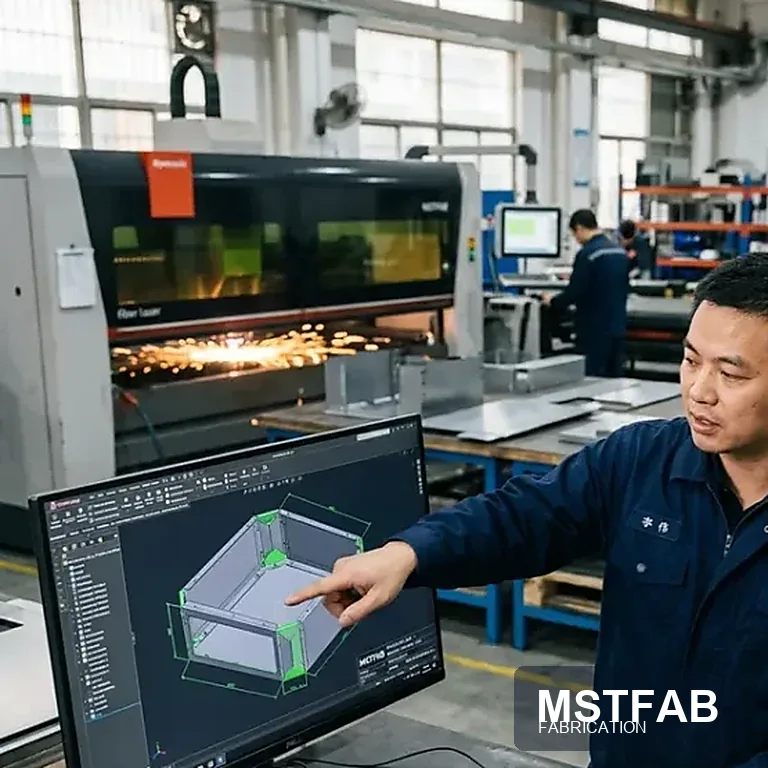
DFM means Design for Manufacturability. It is the fastest way to reduce cost before any metal is cut.
Many enclosure costs are created in CAD before the factory ever sees the drawing. A design may look clean on screen but be expensive to manufacture because it requires special tooling, extra welding, manual grinding, masking, rework, or slow assembly.
A design problem found before production is a drawing update. A design problem found after production is a rejected batch and a meeting nobody wants to attend.
2. Choose the Right Material, Not the Most Expensive Material
The most expensive material is not always the best choice.
Cold-Rolled Steel: Good for indoor enclosures. Do not use stainless steel just because it sounds premium if a powder-coated cold-rolled steel enclosure can meet the real requirement. Premium material used for the wrong reason is not engineering. It is expensive decoration.
Galvanized Steel: Can reduce cost compared with stainless steel for outdoor cabinets. But cut edges still need protection. Galvanized steel is useful. It is not magic.
Stainless Steel: Use when the environment justifies it. Do not use stainless steel to compensate for unclear requirements. That is how budgets get injured.
Aluminum: Aluminum is not automatically cheaper. It saves weight, not always money.
3. Optimize Sheet Thickness
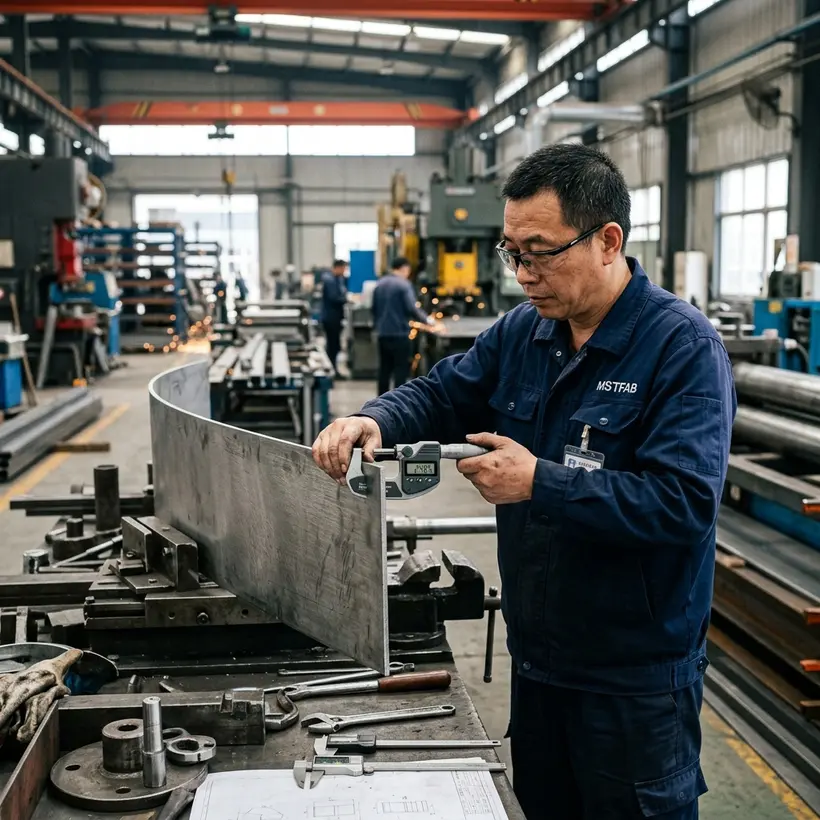
Sometimes the buyer specifies 2.0 mm or 3.0 mm sheet metal everywhere because it ??eels safer.??That may be unnecessary.
A smart enclosure does not use heavy material everywhere. It puts strength where the load actually exists. Hope is not a load-bearing feature. But neither is unnecessary steel thickness a good business strategy.
4. Reduce Welding Where Possible
Welding is often one of the most expensive parts of sheet metal enclosure fabrication. If the design can replace welding with smart bending, tabs, slots, rivets, PEM fasteners, or folded structures, cost may be reduced.
The goal is not ??o welding.??The goal is ??o unnecessary welding.??A welded enclosure that does not need to be welded is just labor wearing sparks.
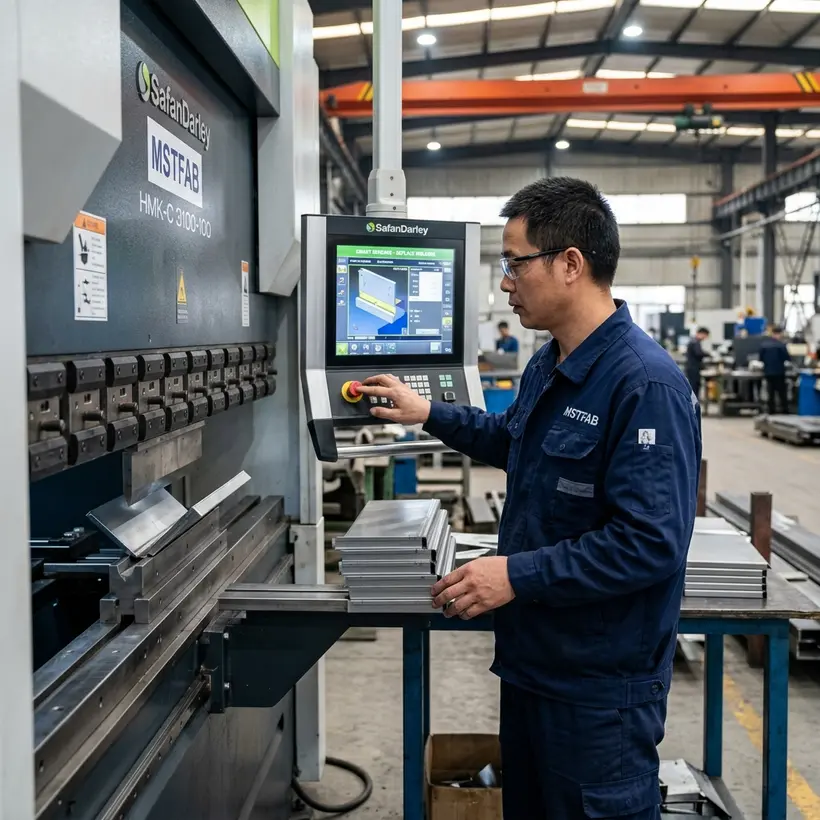
5. Simplify Bend Design
A good enclosure should be designed for real press brake manufacturing, not just for a clean CAD screenshot.
CAD does not care if the tool can reach the bend. The press brake does. And it charges accordingly.
6. Avoid Over-Tolerancing
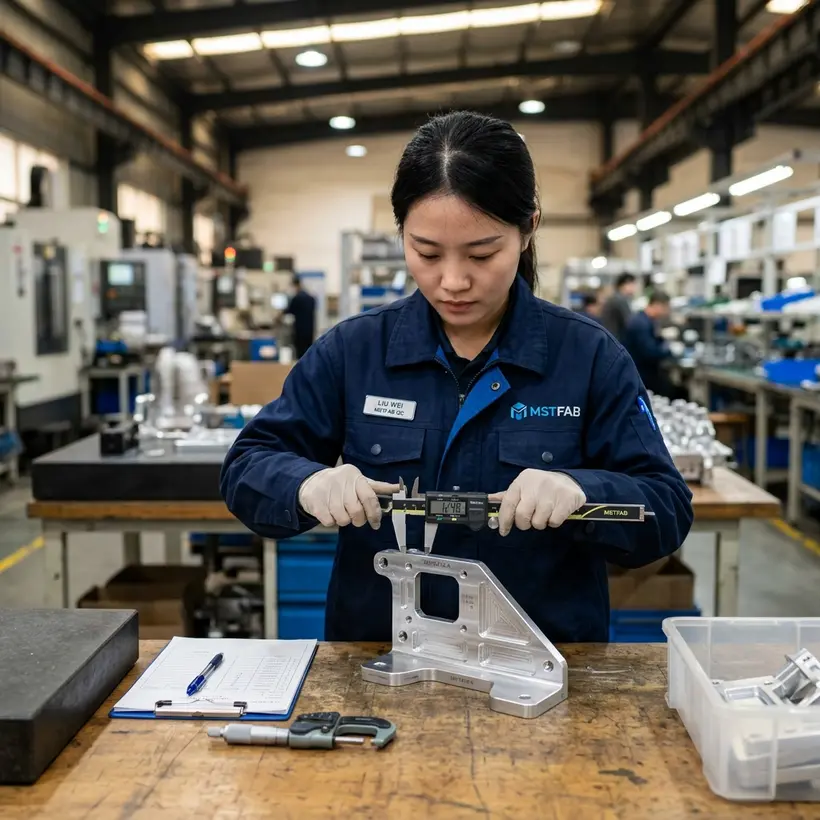
Tight tolerances increase cost. Use tight tolerances only where they matter: HMI screen openings, button holes, mounting plate positions, and gasket sealing surfaces.
A drawing that demands high precision everywhere may look professional. It may also look expensive. Metal appreciates reasonable expectations. So does your budget.
7. Standardize Holes, Fasteners, and Hardware
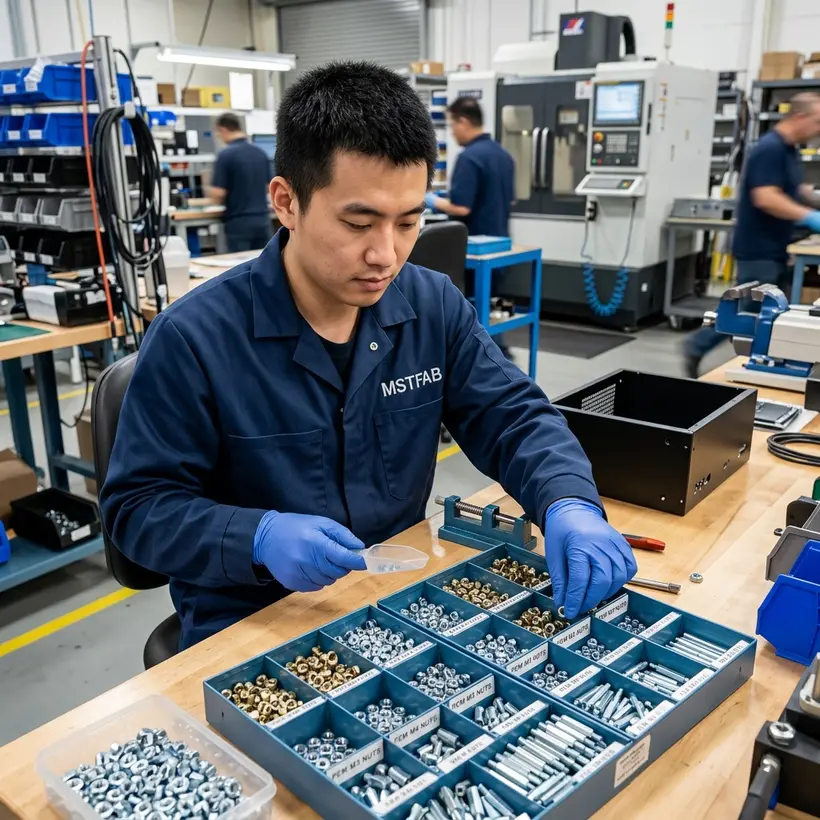
If one enclosure uses five screw types where two would work, cost is hiding in the assembly process.
The purchasing price of a screw is small. The labor cost of confusion is not. A cabinet should not require a treasure hunt through the hardware bin.
8. Design Cable Entry Before Production
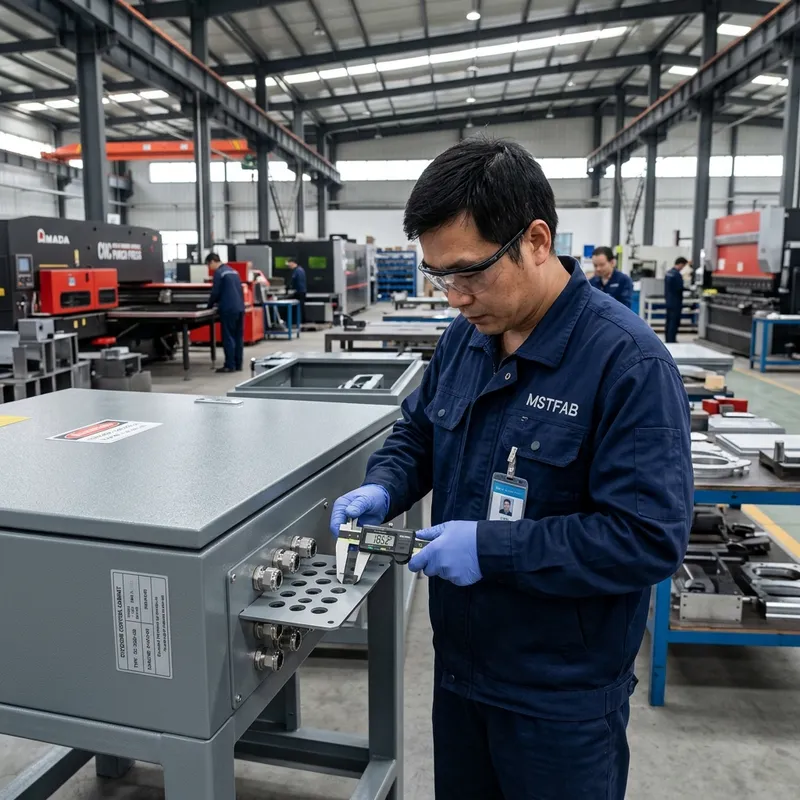
If cable holes are drilled after powder coating, cost increases and corrosion risk increases.
Cutting holes into a finished enclosure is not cost control. It is corrosion with a drill.
9. Use Mounting Plates Wisely
A mounting plate should help assembly. It should not become a second cabinet hidden inside the first cabinet.
10. Reduce Surface Finishing Cost Without Creating Finish Problems

Do not save money by skipping pretreatment. That is not cost reduction. That is future peeling with a lower invoice.
Powder coating is not just decoration. For outdoor enclosures, it is part of the protection system.
11. Separate Cosmetic Surfaces from Functional Surfaces
If every surface is treated like a premium cosmetic surface, the cost rises. If no surface is treated like a premium surface, the product may look cheap.
The answer is not ??ake everything perfect.??The answer is ??ake the right surfaces perfect.??/p>
12. Reduce Part Count
Every extra part should earn its place. If a bracket exists only because the original design did not think hard enough, that bracket is charging rent.
13. Use Tabs and Slots for Faster Assembly
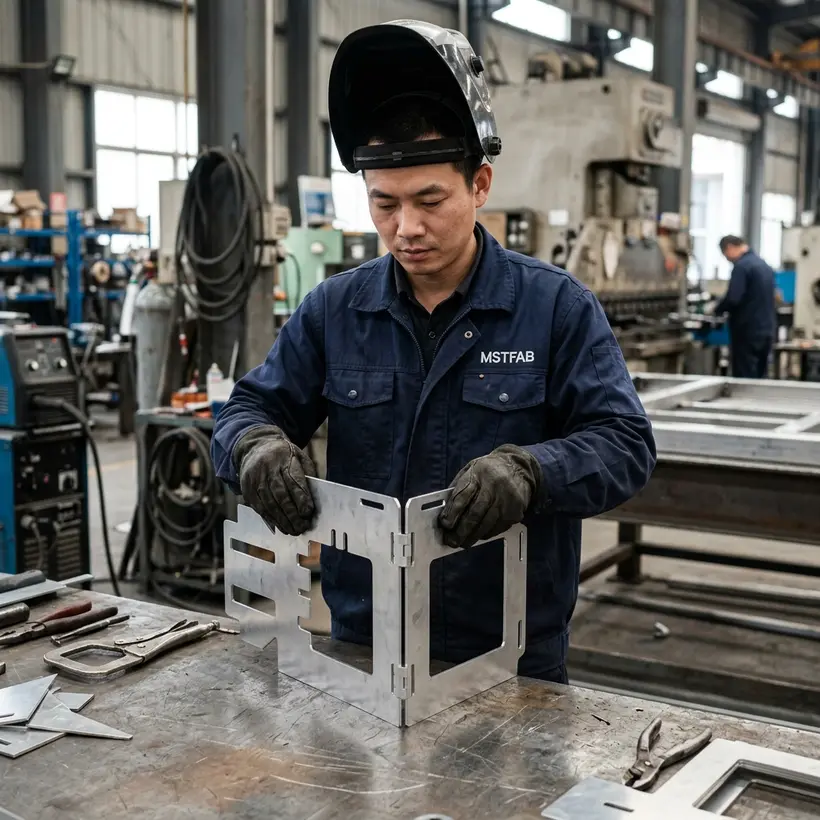
Tabs and slots can help align parts before welding or assembly. But they should be designed properly. Bad tabs are just tiny problems with sharp edges. Good tabs make manufacturing easier.
14. Design for Batch Production, Not Heroic Prototypes
A sample made with extra grinding, hand fitting, and manual adjustment may look beautiful. But if that method cannot scale, the batch cost will rise.
Magic tricks do not scale. Manufacturing processes do.
15. Increase Quantity Where It Makes Sense
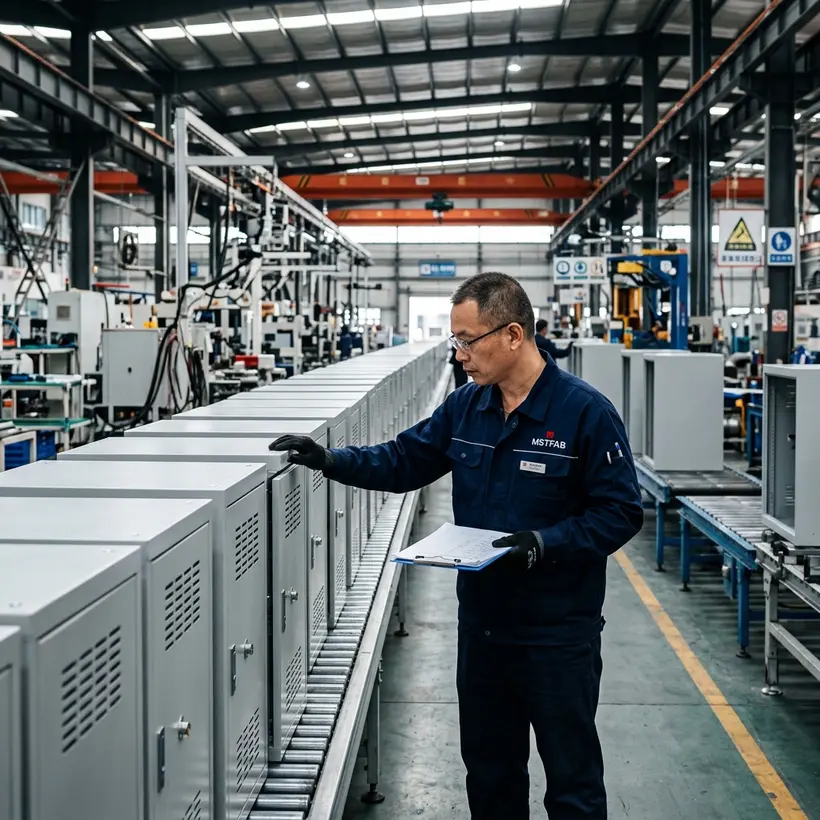
But do not jump to mass production before prototype approval. Ordering 1,000 pieces before confirming the enclosure design is not brave. It is how warehouses become museums of regret.
16. Plan Packaging Early
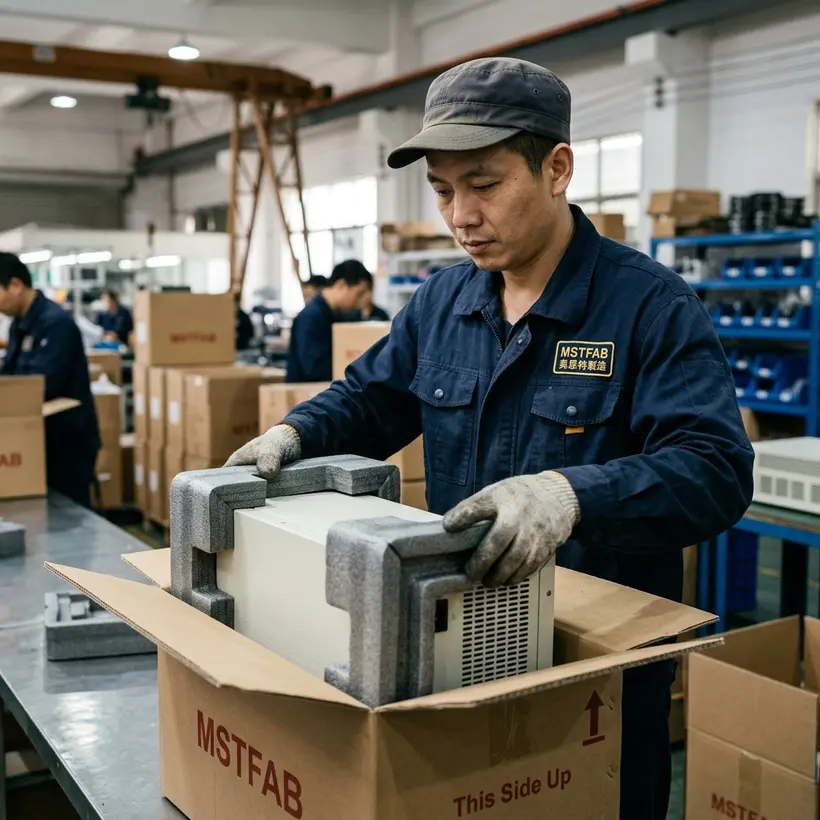
Cost-saving packaging does not mean weak packaging. It means smart packaging.
A perfect cabinet that arrives scratched is not perfect. It is a complaint with forklift marks.
17. Avoid Last-Minute Drawing Changes
Revision control is boring. That is why it saves money. If the factory produces Rev A while the buyer approves Rev B, nobody has fun.
18. Give the Factory Complete RFQ Information
Without clear information, suppliers quote assumptions. Then buyers compare prices that are not actually comparable.
That is not sourcing. That is comparing guesses in a spreadsheet. And the cheapest guess usually becomes the most expensive surprise.
What Not to Cut When Reducing Cost
Saving money by removing necessary quality control is like saving time by not checking the brakes. Technically faster. Not recommended.
OEM Trust Table: How MSTFAB Engineers Cost Reduction
| Cost Driver | Job Shop “Cheap” Method | MSTFAB Engineering Approach |
|---|---|---|
| Design Review | Builds exactly what the drawing says, even if it’s over-engineered and too expensive. | Conducts a strict DFM review to suggest smarter bends and eliminate unnecessary welds to cut cost. |
| Hardware | Uses cheap, unstandardized screws that slow down your assembly line. | Standardizes PEM nuts and standoffs to make your final wiring and assembly lightning fast. |
| Cable Entry | Tells you to “drill it yourself” after coating, causing instant rust and field failures. | Laser-cuts precise, customized cable entry plates before powder coating for maximum corrosion protection. |
| Tolerances | Forces tight tolerances everywhere, charging a premium for non-critical panels. | Applies practical tolerances to cosmetic panels, saving the tight budgets for critical HMI/gasket fits. |
| Packaging | Uses thin plastic wrap to save 5, ≤ ading to500 in scratched panels upon delivery. | Engineers cost-effective foam blocks specifically designed for the enclosure’s weight distribution. |
Related engineering resource: If your project involves EV charging infrastructure, review our custom EV charger enclosure fabrication capabilities for outdoor sheet metal cabinet design, powder coating, and export-ready manufacturing.
Related factory capability: For OEM buyers comparing a custom sheet metal enclosure factory, review how MSTFAB handles final assembly, protective packaging, export packing checks, and shipment-ready enclosure delivery.
FAQ
How can I reduce sheet metal enclosure cost?
You can reduce cost through DFM review, material optimization, correct sheet thickness, simplified bending, reduced unnecessary welding, standard hardware, practical tolerances, efficient cable entry design, suitable surface finishing, and packaging planning.
Does using thinner sheet metal always reduce cost?
Not always. Thinner material may reduce material cost, but it can cause flexing, poor door feel, vibration, shipping damage, or structural failure. Use thinner material only where the function allows it.
Is stainless steel always better than powder-coated steel?
No. Stainless steel is better for corrosion-resistant, washdown, coastal, food, medical, or premium applications. For many indoor enclosures, powder-coated cold-rolled steel may be more cost-effective.
Can reducing welding lower enclosure cost?
Yes. Welding can add labor, fixtures, grinding, distortion control, and finishing cost. Replacing unnecessary welding with bending, tabs, slots, rivets, screws, or PEM fasteners may reduce cost when strength and sealing requirements allow it.
custom sheet metal enclosure fabrication
MSTFAB manufactures custom sheet metal enclosures, electrical cabinets, control boxes and industrial metal housings for OEM buyers.
 WeChat Contact
 WhatsApp Me Directly