
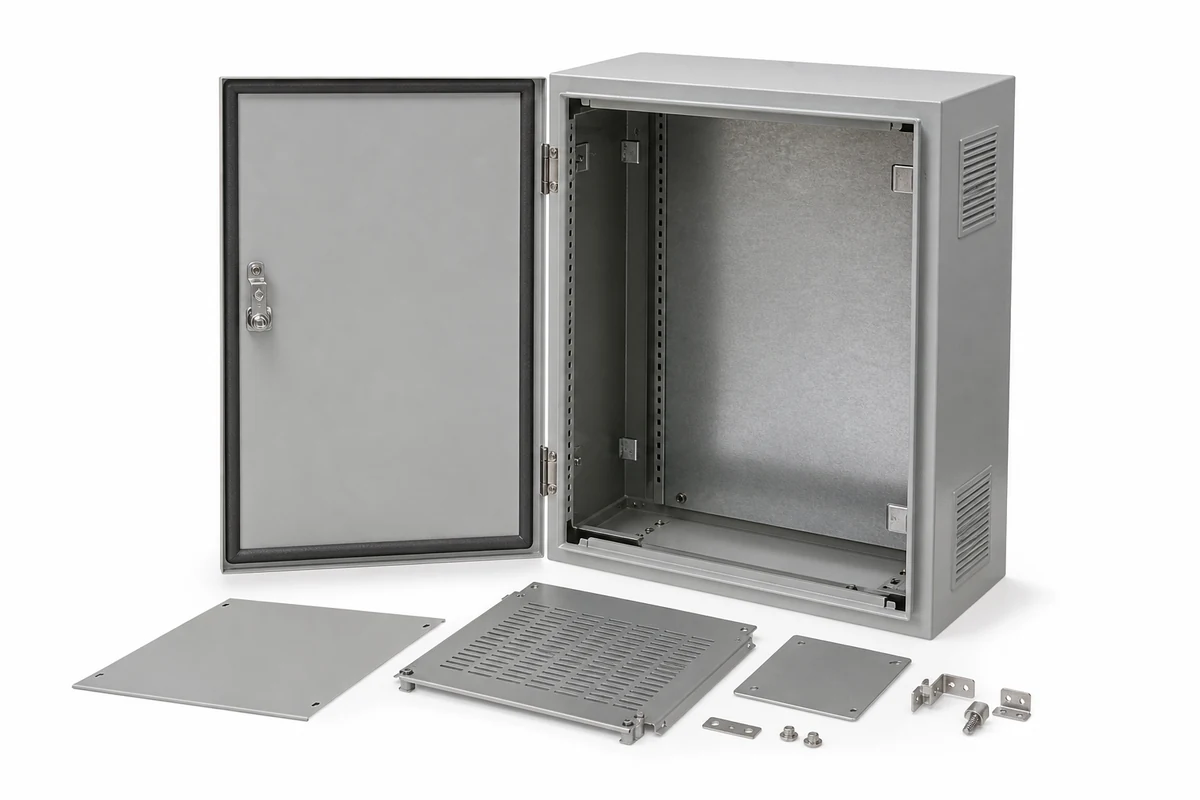
If you are sourcing a PLC control cabinet enclosure from China, the risky part is usually not the word “cabinet.” The risky part is every small mechanical detail around the cabinet: a door that does not sit flat, a gland plate that fights the cable entry, a back plate hole pattern that makes your installer invent new vocabulary, or a powder-coated thread that suddenly becomes a tiny locked door.
This guide explains the PLC control cabinet enclosure fabrication process from drawing review to export packing. It is written for OEM buyers, engineers and procurement teams who already have electrical design handled, but need a reliable sheet metal supplier for the custom enclosure shell.
PLC Cabinet Shell Fabrication Is Not the Same as a Finished PLC Cabinet
A finished PLC cabinet may include PLC modules, relays, internal electrical hardware, power devices and wiring, labeling and electrical testing. MSTFAB’s scope is different and clearer: we manufacture the custom sheet metal enclosure shell that holds those parts.
| Item | MSTFAB supplies | Usually supplied by buyer/integrator |
|---|---|---|
| Cabinet body and door | Laser-cut, bent, welded and powder-coated sheet metal shell | Electrical layout and cabinet wiring |
| Back plate and brackets | Blank or pre-punched mounting plate, support rails, DIN-rail brackets if requested | PLC modules, relays, internal wiring hardware and power supplies |
| Cable entry | Gland plate, knockouts, cutouts, gasket surfaces and grounding studs | Cable glands, wiring harnesses and electrical certification of final assembly |
| Surface finish | Powder coating, masking notes, grounding area protection and cosmetic inspection | Electrical label design and final system marking |
PLC Control Cabinet Enclosure Fabrication Process
The manufacturing process is easier to control when the supplier treats the enclosure as an engineered sheet metal assembly, not “a box with a door.” Here is the practical process we follow for custom PLC cabinet shells.

1. Laser-Cut Panels
Door blanks, side panels, gland plates, vents and brackets are cut from the correct material thickness before forming.
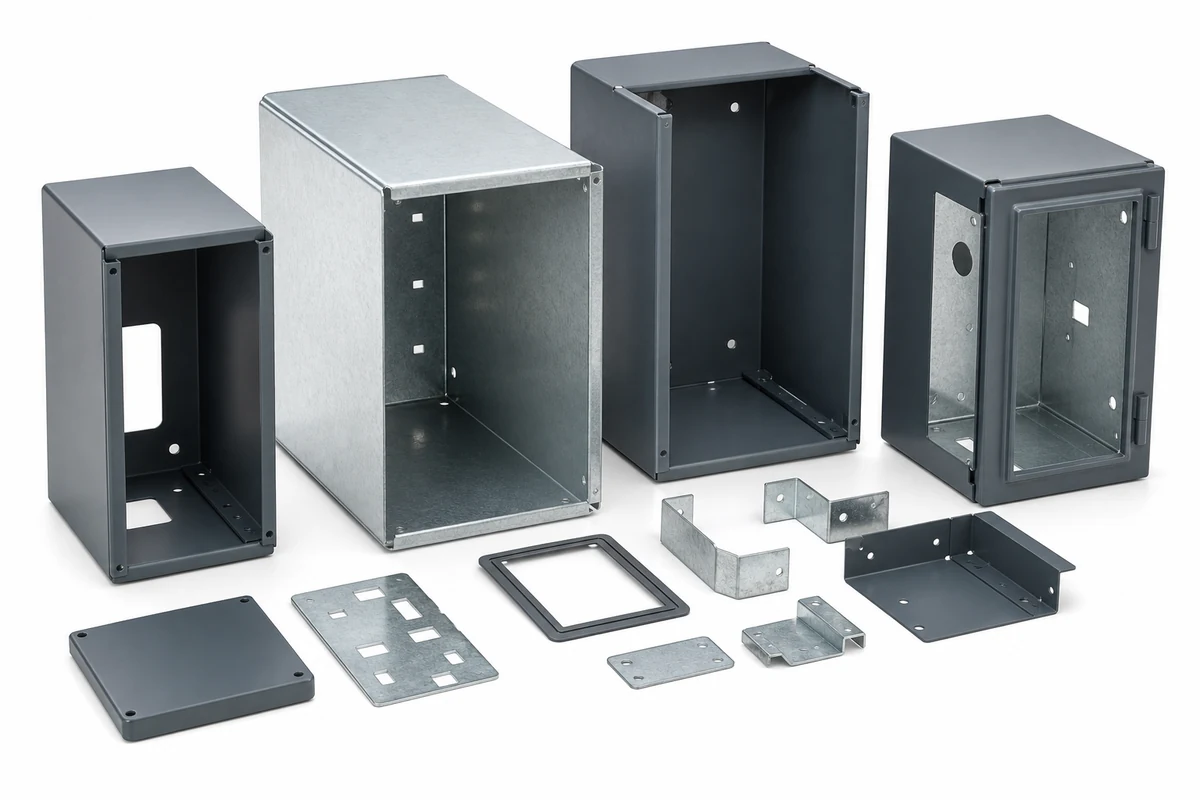
2. CNC Bending
Flanges, return bends and cabinet bodies are formed with controlled bend sequence so doors and panels fit later.
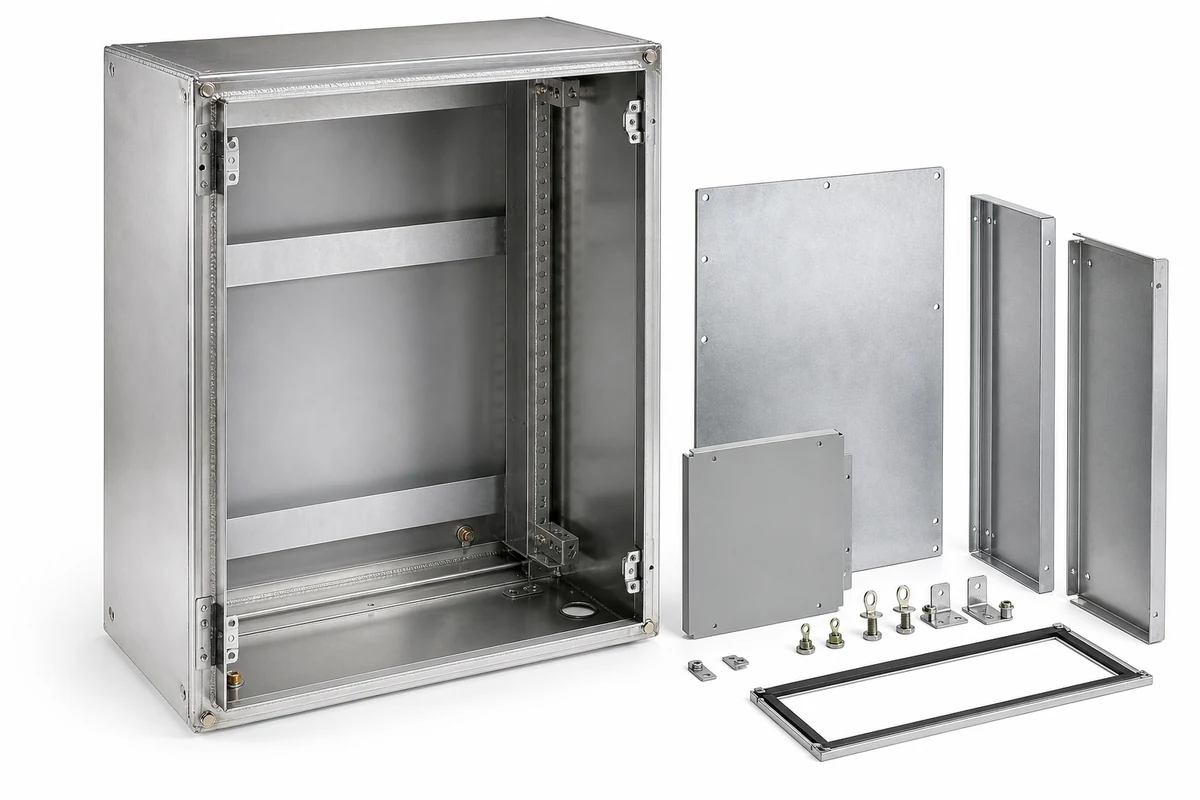
3. Welding and Hardware
Welded corners, PEM nuts, hinge points, latch brackets and gasket channels are checked before finishing.
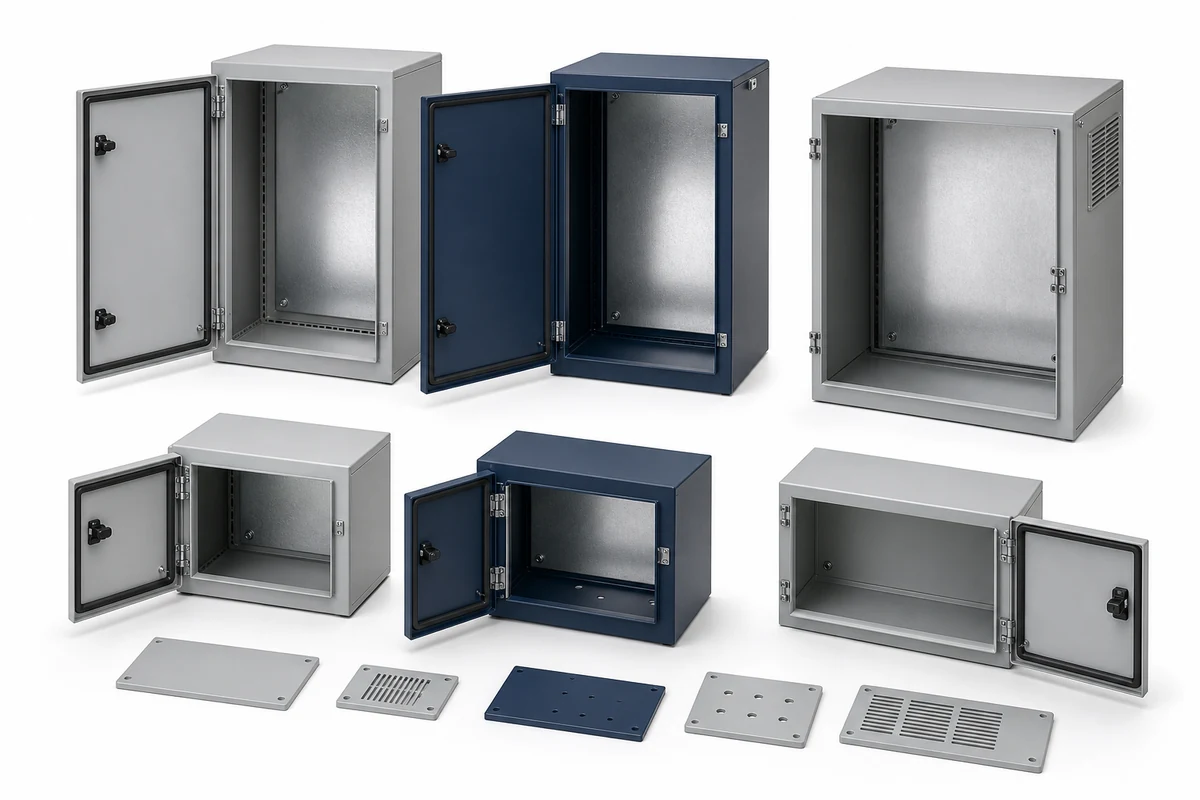
4. Powder-Coated Shells
Empty cabinet housings receive powder coating with masked threads and grounding areas where required.
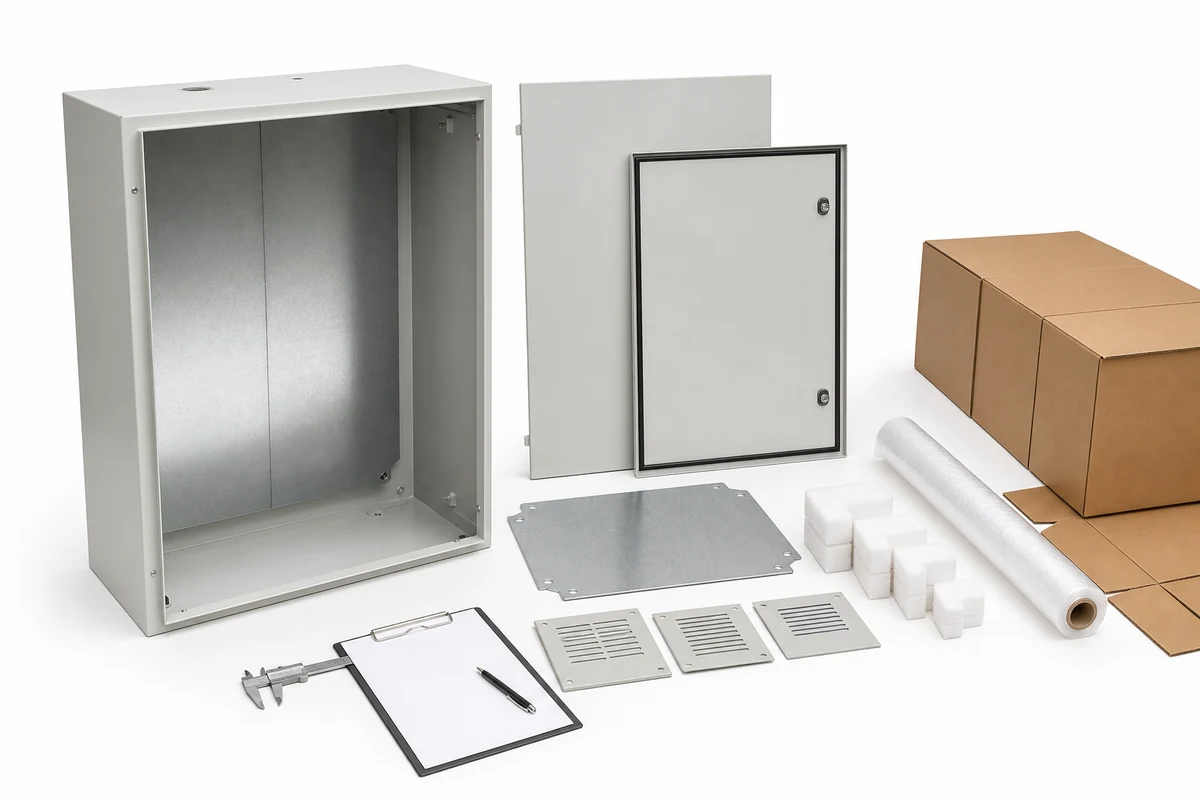
5. QC and Export Packing
Dimensions, door fit, surface finish and packaging protection are reviewed before shipment.
Buyer Checks Before RFQ
For faster quoting and fewer revisions, the buyer should confirm the mechanical requirements before sending the RFQ. A clear drawing package saves time; vague notes like “standard cabinet” usually create the kind of adventure nobody put in the budget.
| Buyer check | Why it matters for PLC cabinet shells | What to send MSTFAB |
|---|---|---|
| Material and thickness | Controls stiffness, bend radius, weight and coating durability | Steel, stainless steel, aluminum or galvanized steel grade and thickness |
| Door and gasket design | Prevents water/dust entry and reduces door warping risk | Door gap, hinge type, gasket path and latch position |
| Back plate layout | Helps integrators mount electrical parts without field drilling | Hole pattern, PEM hardware list or blank plate requirement |
| Cable entry | Wrong gland openings delay assembly and field service | Gland plate size, knockout pattern and cable direction |
| Finish and masking | Grounding points and threads should not disappear under coating | RAL color, texture, DFT target and masked areas |
| Packaging | Powder-coated cabinet shells scratch easily in export transport | Carton, pallet, film, foam and labeling requirements |
Materials and Finishes for PLC Control Cabinet Enclosures
Most PLC cabinet enclosure shells use cold-rolled steel, galvanized steel, stainless steel or aluminum. The right choice depends on indoor or outdoor use, corrosion risk, weight target, grounding needs and the buyer’s finish specification.
- Cold-rolled steel: cost-effective for indoor powder-coated control cabinets.
- Galvanized steel: useful when corrosion resistance is needed before or after coating.
- Stainless steel: better for washdown, chemical or premium appearance requirements.
- Aluminum: useful for lighter enclosures, but bend radius and surface protection need review.
For process pages about fabrication methods, see MSTFAB’s laser cutting services, sheet metal bending service, sheet metal welding services and surface treatment pages.
Quality Controls That Protect the Buyer
Procurement teams do not lose sleep because a cabinet has four sides. They lose sleep because one small mechanical error creates five people standing around a production line wondering who approved the drawing. These controls help reduce that risk:
- DFM review for bend interference, hole-to-bend distance, corner relief and hardware access.
- First article check for cabinet body size, door flatness, hinge alignment and latch engagement.
- Back plate and gland plate inspection against drawing before coating.
- Surface finish inspection for color, coating thickness, scratches and masked grounding areas.
- Export packaging checks for foam protection, film, carton strength and pallet stability.
Files Needed for a Faster PLC Cabinet Shell Quote
To quote a custom PLC control cabinet enclosure accurately, send the 3D model, 2D drawings and manufacturing notes together. STEP files help us see the geometry; PDF or DWG drawings define tolerances, materials, finish and hardware. If you only send a screenshot, the quote may come back wearing a question mark.
| File or note | Recommended detail |
|---|---|
| STEP / STP model | Cabinet body, door, back plate, gland plate, brackets and removable covers |
| 2D PDF / DWG drawings | Critical dimensions, tolerance, material, finish, hardware and revision number |
| Finish specification | RAL color, texture, coating thickness, masking and corrosion requirement |
| Quantity and schedule | Prototype, pilot run, batch quantity and expected delivery window |
| Packaging requirement | Carton, pallet, individual wrapping and export marking rules |
For RFQ preparation, use the guide what files are needed for a sheet metal fabrication quote, or submit drawings through the online drawing upload quote page.
Need a Custom PLC Control Cabinet Enclosure Shell?
Send MSTFAB your drawings, material, finish and quantity. We will review the sheet metal enclosure design for manufacturability, quote the fabrication scope and keep the project focused on the metal shell.
FAQ
Does MSTFAB build complete final electrical assembly control cabinets?
No. MSTFAB focuses on custom sheet metal fabrication for enclosure shells, housings, panels, brackets and mechanical hardware. Electrical integration is usually handled by the buyer or their control panel builder.
Can you make the cabinet shell ready for my electrical integrator?
Yes. We can fabricate the cabinet body, door, back plate, cable entry plates, PEM hardware, hinge/latch areas, grounding studs, vents and powder-coated finish according to your drawings.
Can you review my PLC cabinet enclosure drawing before quoting?
Yes. MSTFAB reviews bend feasibility, hole position, door fit, hardware access, finish notes and packaging risk before quoting when the drawing package is clear enough.
What search term best describes this page?
This page is best understood as a process guide for PLC control cabinet enclosure fabrication, custom sheet metal cabinet shells and OEM control cabinet housing manufacturing, not as a completed electrical cabinet service page.
 WeChat Contact
 WhatsApp Me Directly