
CORROSIVE WET-BENCH & SUBFAB NEMA 4X DFM — EXECUTIVE TECHNICAL BRIEF
Semiconductor wet-etch benches, CMP slurry skids, and acid-exhaust monitors expose control cabinets to HF/HCl vapors, deionized water washdowns, and high-pressure spray that pit bare carbon steel or sensitized 304 welds. True NEMA 4X and IP66 hose-down integrity requires eliminating every through-wall fastener hole, sloping top hoods to shed pooled chemicals, and controlling weld heat zones during 316L fabrication. When heavy-zinc structural subframes or duplex-coated steel shrouds replace solid 316L to cut unit BOM cost, dielectric isolation and edge DFT become critical. MSTFAB builds empty NEMA 4X mechanical shells strictly to customer 3D STEP and 2D PDF drawings, combining argon-purged TIG seams, ASTM A967 passivation, and double-lip perimeter seals under ISO 9001:2015 rules.
- 316L Molybdenum Alloy & Weld Passivation: Fabricate wetted shells from 2.0 mm–2.5 mm SUS316L (EN 1.4404, 2.0%–3.0% Mo) using pulsed argon-purged TIG welding and full ASTM A380/A967 citric or nitric pickling-passivation to restore passive Cr2O3 film across heat-affected zones and ground seams.
- Zero-Penetration External Mounting & Sloped Hood: Integrate 15°–30° overhanging drip roofs and weld external 3.0 mm mounting lugs outside the gasket perimeter, avoiding back-panel through-bolts that create hidden capillary leak paths under high-pressure 100 kPa IP66 water washdown jets.
- Heavy-Zinc Duplex & Galvanic Isolation: Where OEM budgets pair Z275 hot-dip galvanized or zinc-primed structural rear frames with 316L doors, apply zinc-rich epoxy primer plus polyester topcoat (≥110 µm total DFT) and isolate stainless fasteners using PTFE/nylon shoulder washers.
- Double-Lip Channel & High-Pressure Washdown Seal: Form a 22 mm raised gutter lip compressing closed-cell FKM (Viton) or EPDM perimeter gaskets 35%–40% via 316L compression latches, validated by pressurized hose-nozzle sweep tests and complete EN 10204 3.1 mill trace packets.
Every project at MSTFAB includes a complimentary 24-hour CAD Design-for-Manufacturing (DFM) audit, heat-number-traceable EN 10204 3.1 mill certificates, and a ballooned First Article Inspection (FAI) report prior to volume release.
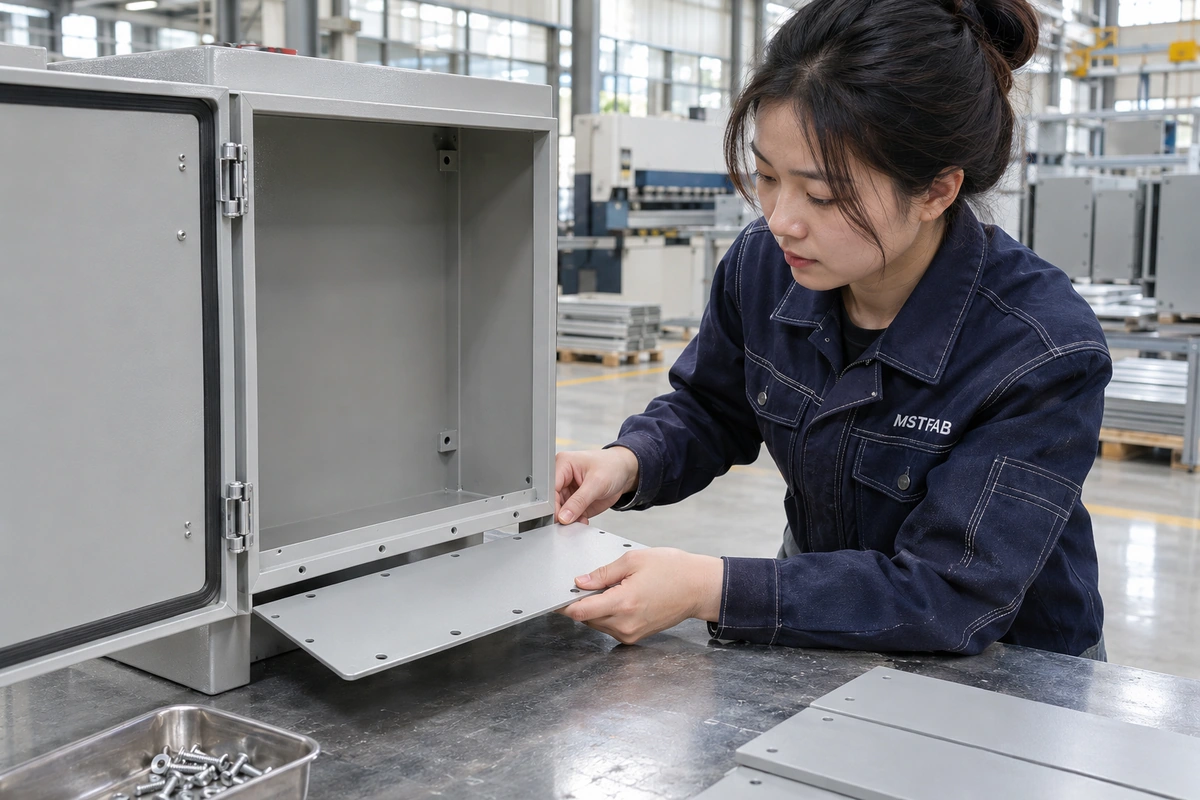
01 / Engineering Specifications & Comparison Matrix
NEMA 4X 316L & Heavy-Zinc Duplex Shell DFM Specification Matrix
Designing NEMA 4X housings for wet-process semiconductor bays is fundamentally a corrosion electrochemistry and fluid mechanics challenge rather than simply specifying a thicker rubber door gasket. High-pressure washdown nozzles running at 100 L/min drive fluid upward into horizontal door seams, while acidic or caustic mist condenses on flat roof panels and attacks unpassivated weld heat tint within weeks of fab startup. Similarly, OEM tool teams sometimes bolt 316L stainless latches, hinges, or front shrouds directly onto heavy-zinc galvanized structural skids without dielectric shoulder bushings, creating a bimetallic galvanic cell that strips sacrificial zinc right around bolt joints. Furthermore, rear mounting holes punched inside the seal zone wick water into live valve manifolds. The matrix below links alloy selection, weld passivation, duplex coating DFT, and IP66 metrology to durable wet-fab shells.
Each parameter below is verified during incoming raw material quarantine, in-process CNC stage checks, and final First Article Inspection (FAI) before shipment release:
| Engineering Parameter / Zone | Material & Process Specification | Target Tolerance / Performance Standard | Inspection Method & OEM Value |
|---|---|---|---|
| Primary Wetted Body & Sloped Roof | 2.0 mm or 2.5 mm SUS316L (ASTM A240 / EN 1.4404) cold-rolled 2B or No. 4 brushed stainless sheet incorporating a 15° to 30° integral sloped overhang hood. | ±0.25 mm overall box envelope; ±0.5° canopy slope angle; ≤0.4 mm corner seam step prior to final blending. | Optical CMM dimensional FAI, calibrated digital bevel protractor angle measurement, and handheld XRF PMI alloy verification confirming 2.0%–3.0% molybdenum content: Prevents pooling of corrosive CMP slurry, deionized rinse water, or acid condensate on top surfaces and stops chloride pitting inside wet-bench subfab corridors. |
| Continuous TIG Seams & Passivation | Full-penetration ER316L pulsed TIG corner seams with argon backing purge (<50 ppm O2), ground flush with dedicated stainless abrasives and chemically pickled and passivated. | Zero pinholes, lack-of-fusion, or straw/blue heat tint; ≥1.80 mm remaining weld-zone thickness on 2.0 mm nominal sheet. | Liquid dye-penetrant testing per ISO 3452 PT, ultrasonic wall thickness verification, and ASTM A967 copper-sulfate or ferroxyl free-iron surface verification: Eliminates weld-decay sensitization and micro-crevice corrosion sites that otherwise trigger orange rust bleeding along enclosure corners inside cleanroom wet-process equipment bays. |
| Heavy-Zinc Duplex Structural Frame | 2.0 mm to 3.0 mm SGCC Z275 heavy-zinc base frame or SPCC treated with zinc-rich epoxy primer (40 µm) plus weather-grade polyester topcoat (70 µm). | 110–135 µm combined duplex DFT; ≥500 hr ASTM B117 neutral salt-spray scribe resistance verified on witness test coupons. | Cross-cut magnetic DFT gauge verification across welded edges and corners, ASTM D3359 5B tape adhesion testing, and PTFE dielectric isolator installation audit: Delivers cost-effective sacrificial cathodic protection on structural rear skid frames while blocking accelerated bimetallic corrosion at dissimilar 316L stainless bolt joints. |
| Double-Lip Gutter & FKM/EPDM Gasket | 22 mm raised U-channel rain and washdown lip compressing continuous molded EPDM or chemical-resistant FKM (Viton) door gasket seated inside a protected perimeter channel. | 35%–40% uniform gasket compression; ±0.25 mm/m door-flange flatness; ≥3.0 mm continuous overhang gutter drainage clearance. | Full-perimeter chalk-transfer contact line check combined with simulated 12.5 mm nozzle IP66 water-jet sweep testing (100 L/min at 3 m for 3 minutes): Deflects high-pressure washdown spray jets away from the seal interface and keeps interior valve manifolds and PLC electronics completely dry without secondary field caulk. |
| Zero-Penetration External Mounting & Latches | 3.0 mm externally TIG-welded 316L mounting ears and concealed 316L lift-off hinges paired with 316L compression T-latches and PTFE dielectric shoulder washers. | ±0.30 mm mounting-ear hole center-to-center; ≥250 N·m shear margin verified across external perimeter fillet welds. | Calibrated weld fillet gauge verification, torque-wrench checking on latch compression stops, and interior moisture-indicator paper leak audit following washdown: Keeps wall-mounting bolts, strut brackets, and hinge pins completely outside the sealed NEMA 4X boundary, eliminating capillary water ingress paths under spray. |
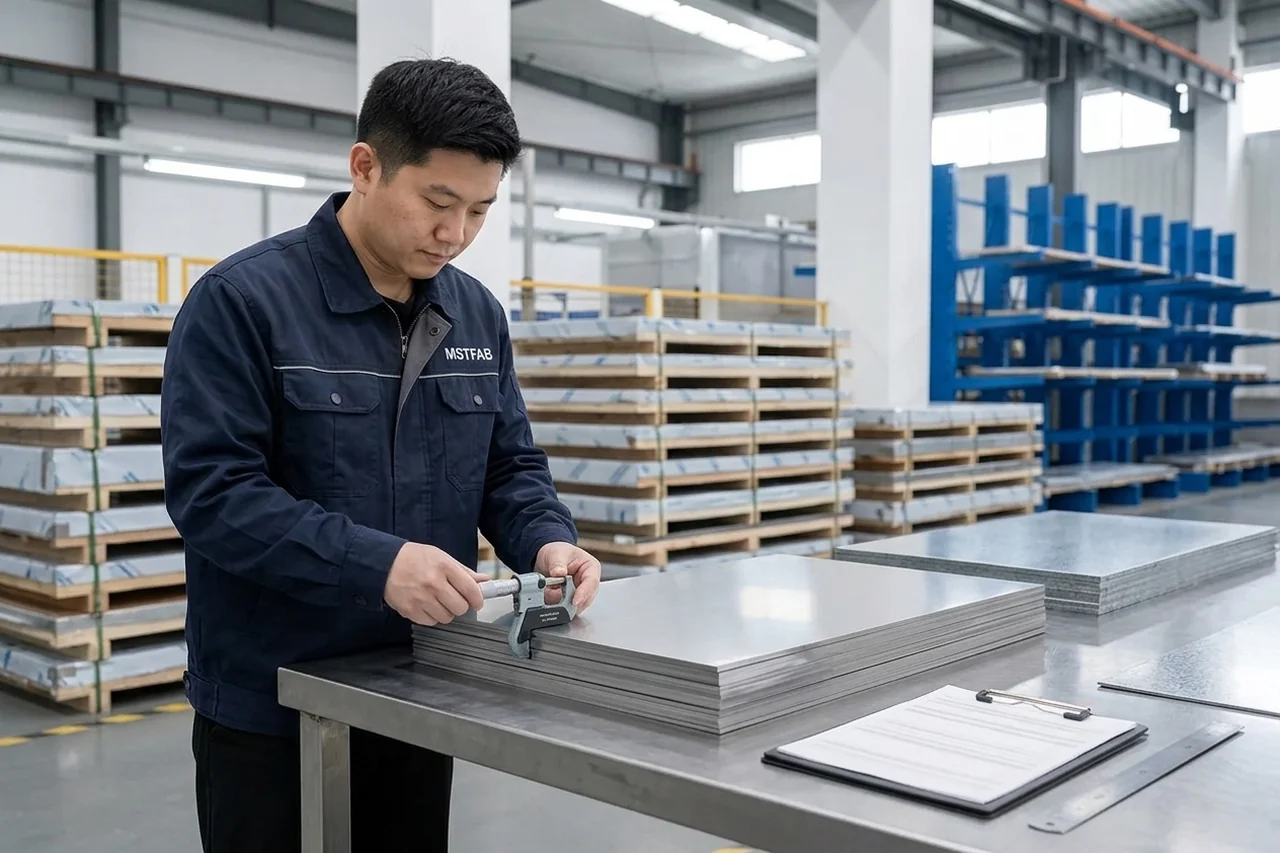
02 / Sheet Metal DFM & Structural Controls
Top 3 NEMA 4X 316L & Heavy-Zinc Fabrication Pitfalls & Fixes
NEMA 4X semiconductor enclosures fail field qualification most often from subtle metallurgical, galvanic, and sealing boundary oversights rather than gross dimensional errors. Controlling weld heat tint, through-wall mounting perforations, and dissimilar-metal galvanic couples during upfront DFM review eliminates premature corrosion, prevents pressurized washdown leaks, and protects long-term wet-bench tool uptime.
Weld Heat-Tint Sensitization and Free-Iron Contamination on 316L Enclosure Corners
Failure Mechanism: Grinding 316L TIG corner seams with carbon-steel-contaminated abrasive belts or skipping post-weld pickling leaves chromium-depleted heat-affected zones and embedded iron particles behind. Under HF or chloride vapor exposure, these micro-sites rapidly bloom into visible orange rust streaks along enclosure edges.
Engineering Solution: Mandate dedicated stainless-only zirconia or ceramic grinding belts, apply argon back-purging inside closed corners during ER316L pulsed TIG welding, and perform full-immersion or gel pickling followed by ASTM A967 nitric or citric passivation with thorough deionized water rinsing and drying.
Verified Outcome: Restores a uniform passive chromium-oxide layer across every welded seam, passing ASTM A967 ferroxyl free-iron verification cleanly.
Capillary Water Ingress Through Rear Wall Mounting and Hinge Fastener Holes
Failure Mechanism: Punching rear wall-mounting holes or exposed external hinge-screw perforations directly through the sealed 316L shell perimeter allows pressurized washdown water jets to wick past rubber washers into live PLC power supplies, solenoid valves, and chemical delivery manifolds inside the enclosure.
Engineering Solution: Relocate all rear mounting brackets onto externally TIG-welded 3.0 mm solid SUS316L ears positioned outside the 22 mm gutter perimeter and weld internal concealed stainless hinge mounting studs inside blind flange pockets so no fastener ever penetrates the sealed NEMA 4X wall.
Verified Outcome: Achieves true zero-penetration NEMA 4X and IP66 boundary integrity without relying on degradable field-applied silicone sealant plugs.
Galvanic Zinc Depletion at 316L to SGCC Heavy-Zinc Structural Frame Interfaces
Failure Mechanism: Bolting SUS316L doors, compression latches, or fluid gland plates directly against heavy-zinc SGCC rear structural frames without dielectric isolation forms an aggressive galvanic cell in humid subfabs, stripping sacrificial zinc and seizing stainless hardware within months of wet chemical-bay service.
Engineering Solution: Insert 1.5 mm PTFE or nylon shoulder isolation bushings beneath every stainless bolt head and nut, seal laser-cut SGCC edges with zinc-rich epoxy barrier primer plus polyester topcoat (≥110 µm total DFT), and separate mating flanges cleanly using closed-cell EPDM strips.
Verified Outcome: Breaks metallic electrolyte bridging and preserves sacrificial zinc coating integrity across multi-year semiconductor wet-bay operation.
Manufacturing Scope Boundary: Commercial & Certification Scope: Empty NEMA 4X Mechanical Shells: Semiconductor equipment OEMs frequently request 'UL 50E Type 4X certified cabinets' in custom fabrication RFQs, overlooking that UL Type 4X listing applies strictly to cataloged UL-inspected product lines or panel shops rather than custom build-to-print sheet metal enclosure contract manufacturers. — Engineering Fix: MSTFAB is certified to ISO 9001:2015, IATF 16949:2016, and ISO 14001:2015 and fabricates custom empty NEMA 4X mechanical shells strictly to customer 3D STEP and 2D PDF drawings. We supply EN 10204 3.1 316L mill certificates, XRF PMI alloy logs, ASTM A967 passivation reports, and simulated IP66 spray verification to support your UL 50E or SEMI S2 compliance files. MSTFAB manufactures custom sheet metal parts and empty mechanical enclosure shells strictly to your 3D STEP and 2D PDF drawings.
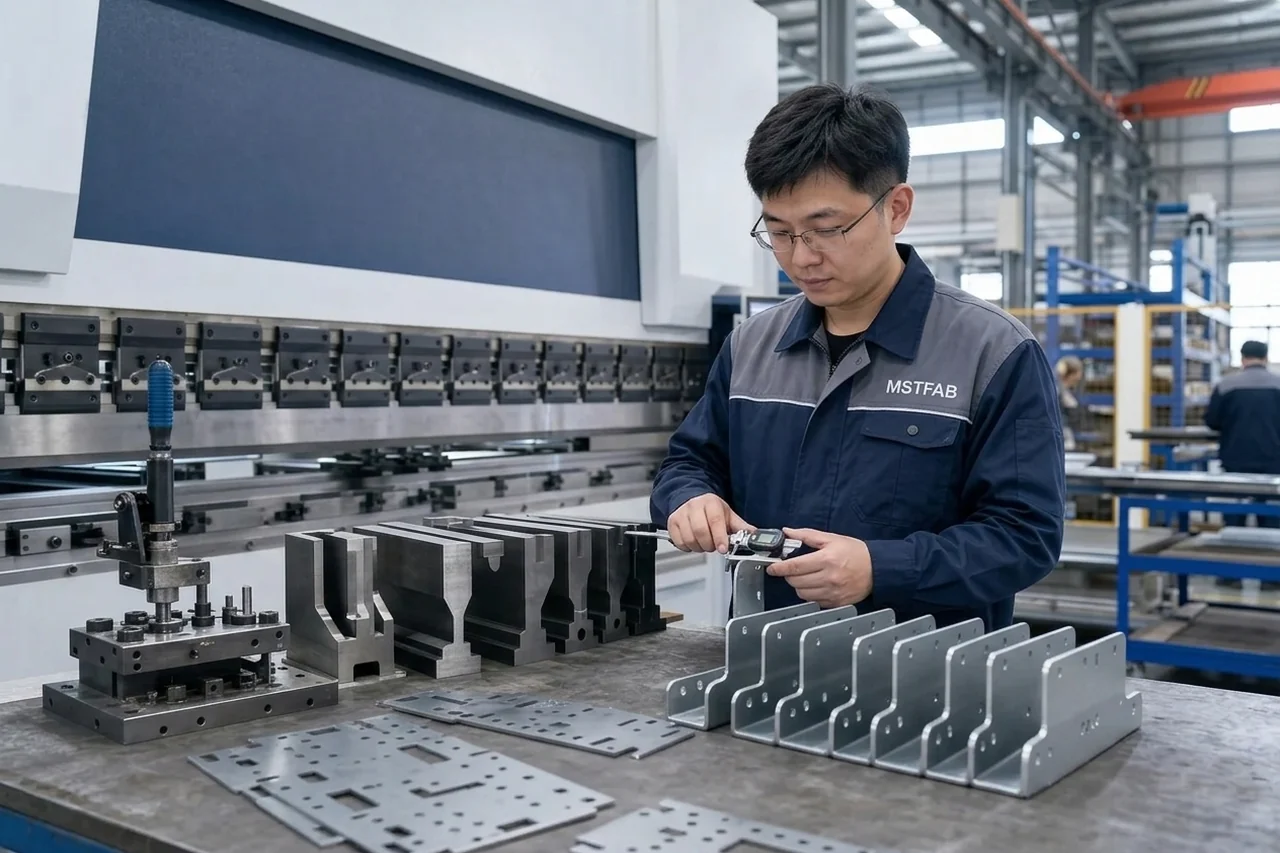
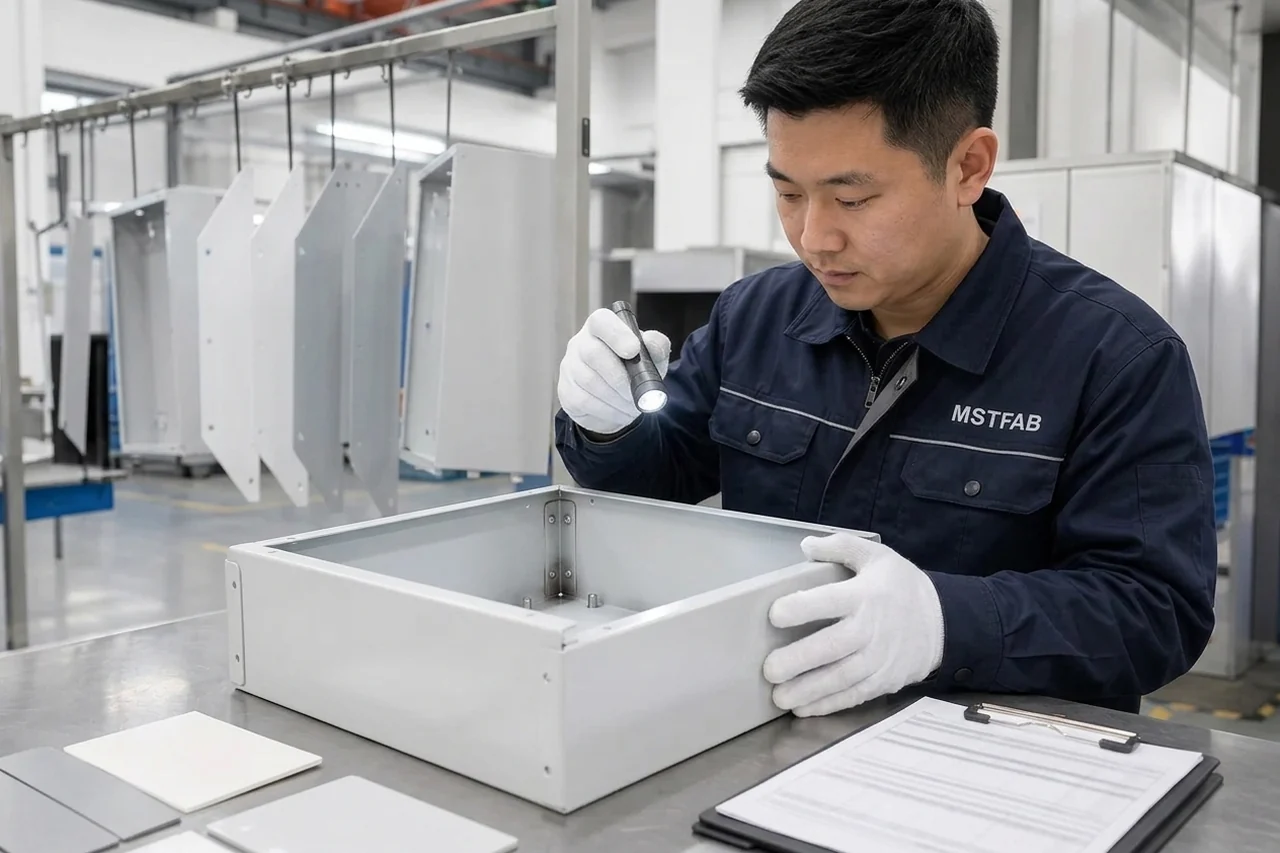
03 / Representative Engineering Scenario & Process Control
Representative OEM Project: Wet-Bench Chemical Delivery NEMA 4X Enclosure
Project Profile: Batch: 80 units/release | Alloy: 2.0 mm SUS316L shell + 2.5 mm Z275 SGCC rear skid frame | Finish: Passivated No. 4 brushed 316L + zinc-epoxy duplex rear frame
OEM Engineering Challenge: A semiconductor wet-process equipment OEM suffered repeated rust staining along vertical corner seams and failed IP66 hose-down audits across two pilot lots on prior-vendor valve-manifold enclosures mounted beside hydrofluoric acid scrubbers during tool commissioning. Root-cause teardown across multiple chemical delivery lines revealed unpurged corner welds with heavy straw-blue heat tint, carbon-steel wire brushing during post-weld cleanup, and through-bolted rear wall brackets that leaked past flat rubber washers during pressurized deionized water washdowns.
MSTFAB Manufacturing Solution: MSTFAB engineered a zero-penetration 2.0 mm SUS316L shell featuring a 20° integral sloped overhang hood, a 22 mm double-lip perimeter rain channel, and external 3.0 mm welded 316L mounting ears. All corner joints used argon-purged pulsed ER316L TIG welding followed by stainless-dedicated ceramic abrasive blending and full ASTM A967 passivation. The rear structural skid shifted to Z275 heavy-zinc SGCC coated with zinc-rich epoxy plus polyester topcoat and isolated cleanly using PTFE shoulder washers and EPDM interface gaskets across all joints.
- 100% Pass A967: Zero free-iron indications or weld-seam rust bloom recorded across all 80 passivated 316L shells following 500-hour acid-mist and neutral salt-fog witness coupon exposure testing on site.
- Zero IP66 Ingress: Passed 100 L/min pressurized nozzle sweep across all door edges, FKM gasket joints, and external mounting lugs with verified bone-dry interior moisture indicator paper strips.
- 22% Cost Reduction: Hybrid 316L wetted front shell paired with a zinc-duplex SGCC structural rear frame cut unit alloy material cost 22% compared to full-316L welded skid construction.
- ±0.12 mm Gland Fit: Held ±0.12 mm positional repeatability across 18 chemical-resistant PFA bulkhead cutouts per shell, cutting final valve-manifold assembly time by 35% on the OEM integration floor.
Every production lot is archived with locked CNC laser nests, press-brake bend programs, weld fixture setups, and signed golden samples to guarantee identical repeatability across multi-year reorders.
04 / Quality Verification, Traceability & Surface Finishing
4-Stage Manufacturing Workflow, Surface Treatment & Metrology Control
To maintain Cpk ≥ 1.33 on critical-to-quality (CTQ) dimensions from prototype through series production, MSTFAB executes a closed-loop four-stage fabrication protocol:
Step 01 — Corrosion Zone & Zero-Penetration DFM Review: Audit customer 3D STEP models to eliminate through-wall mounting holes, verify 15°–30° sloped hood overhang clearances, confirm FKM or EPDM channel compression ratios (35%–40%), and specify PTFE dielectric isolation wherever 316L interfaces with heavy-zinc structural subframes. Any crevice-trap weld geometries are converted to smooth continuous seams.
Step 02 — Dedicated Stainless Laser Cutting & Argon-Purged TIG: Cut SUS316L blanks on dedicated stainless laser slats to prevent carbon-steel iron pickup, bend 22 mm double-lip rain gutters on CNC press brakes with protective PVC film in place, and execute argon-purged ER316L pulsed TIG seam welding inside precision copper-chilled fixtures to eliminate heat distortion and sensitization.
Step 03 — ASTM A967 Passivation & Heavy-Zinc Duplex Coating: Blend outer 316L corner welds with dedicated stainless zirconia abrasives, complete full-immersion acid pickling and citric or nitric chemical passivation per ASTM A967 with deionized water rinsing, and apply ≥110 µm zinc-rich epoxy plus weather-grade polyester duplex coating onto companion Z275 SGCC structural rear frames prior to hardware assembly and final cure inspection.
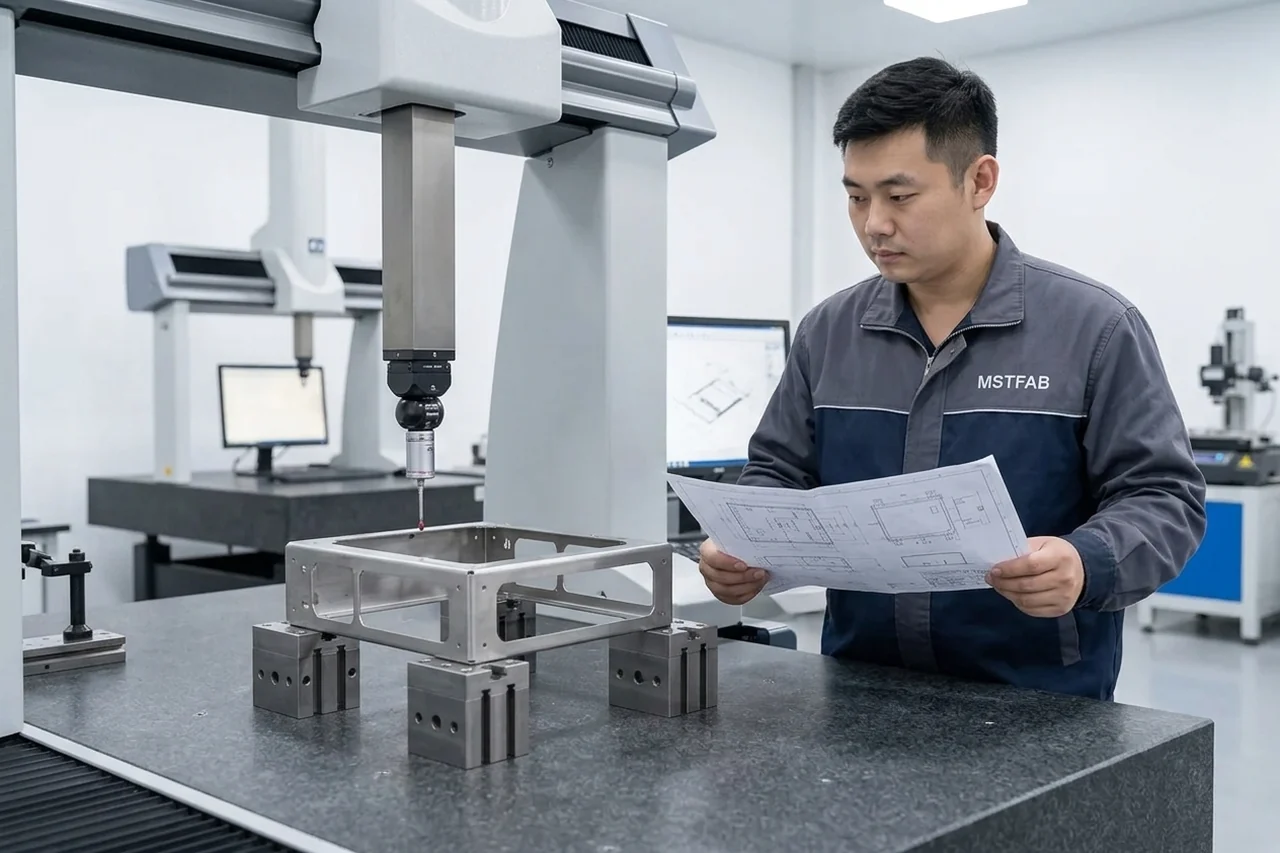
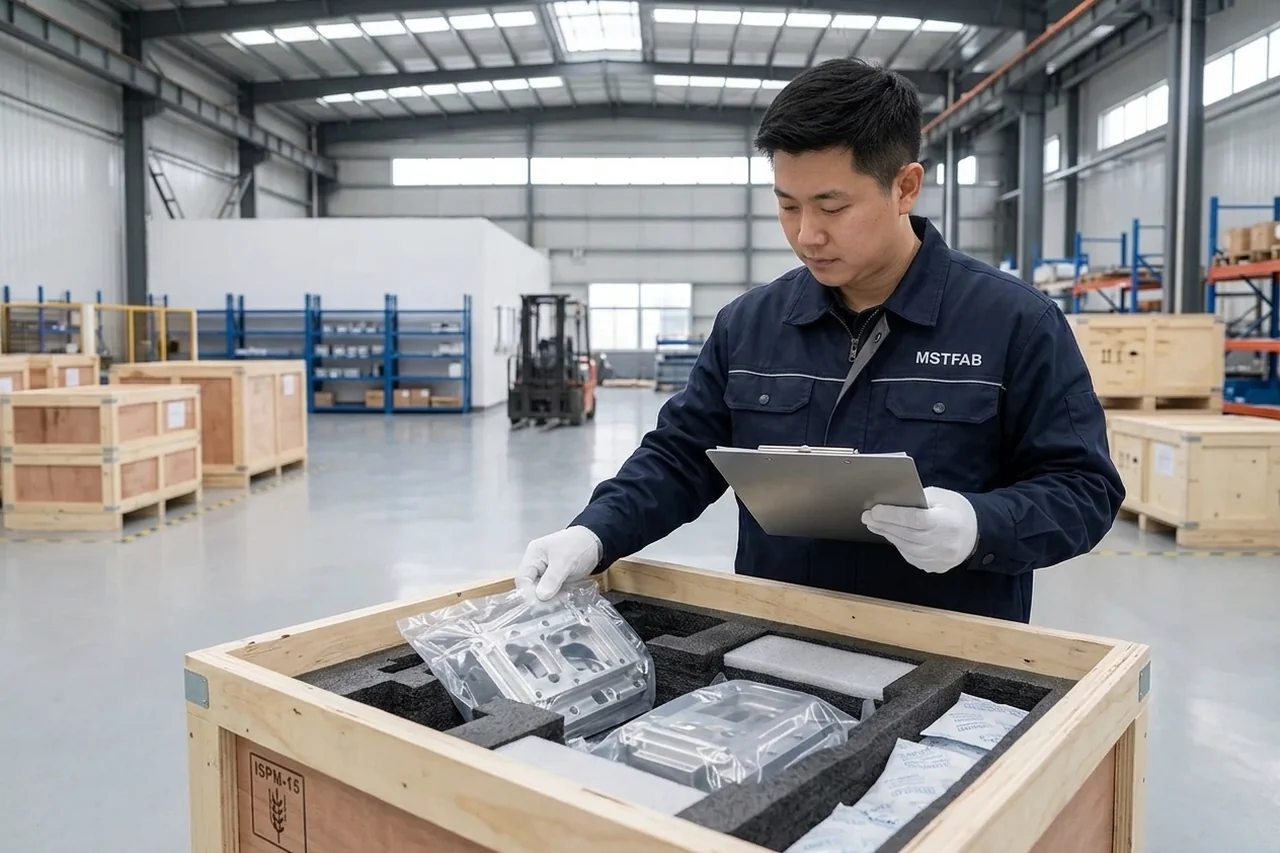
Step 04 — PMI, Dye-Penetrant, IP66 Spray Check & Export Packing: Perform handheld XRF PMI alloy checks confirming 2.0%–3.0% molybdenum, ISO 3452 dye-penetrant seam audits, simulated IP66 pressurized washdown leak tests, and optical CMM dimensional FAI before sealing each shell inside clean PE film, high-density EPE corner guards, and heat-treated ISPM-15 export crates for clean global delivery.
All raw sheets (SPCC, SGCC, SECC, SUS304/316L, Al 5052-H32/6061-T6) are verified via optical emission spectrometry (OES) or XRF upon arrival and linked by barcode to your purchase order.
Prior to export crating in ISPM-15 fumigated plywood boxes, our quality lab conducts ballooned dimensional FAI checks, dry-film thickness (DFT) mapping, ASTM D3359 cross-hatch adhesion testing, and ground-continuity verification.
05 / 8-Point OEM RFQ Checklist & Topic Cluster Hub
OEM Engineering RFQ Checklist & Connected Fabrication Hubs
Include these eight drawing and specification controls in your RFQ package so our engineering team can lock down tooling, material traceability, and inspection fixtures on day one:
- RFQ Requirement 01Native 3D STEP assembly model and 2D PDF drawings detailing ISO 2768-mK general tolerances, external welded mounting-ear locations, and exact 15°–30° sloped top hood overhang geometry across all views.
- RFQ Requirement 02Exact material grade callouts specifying SUS316L / EN 1.4404 2B or No. 4 brushed sheet (2.0%–3.0% Mo) and surface roughness alongside any Z275 heavy-zinc SGCC structural frame nominal sheet thickness.
- RFQ Requirement 03Weld and surface-treatment standard specifying continuous argon-purged ER316L TIG seams, ISO 3452 dye-penetrant testing, and ASTM A380 / ASTM A967 chemical passivation with cleanroom rinse after abrasive blending.
- RFQ Requirement 04Gasket polymer selection (FKM/Viton for aggressive solvent or acid vapor versus closed-cell EPDM for DI water washdown) and target 35%–40% perimeter compression stop height around doors.
- RFQ Requirement 05Heavy-zinc duplex coating specification (zinc-rich epoxy primer plus weather-grade polyester topcoat ≥110 µm DFT) and dielectric PTFE shoulder washer locations across every dissimilar-metal bolt mounting joint.
- RFQ Requirement 06316L stainless hardware BOM listing exact manufacturer part numbers for concealed lift-off hinges, compression T-latches, padlock hasps, and chemical-resistant PFA or 316L bulkhead cable gland plates.
- RFQ Requirement 07Required verification deliverables including EN 10204 3.1 mill certificates, XRF PMI alloy report, ASTM A967 free-iron test log, and simulated IP66 pressurized spray test video record.
- RFQ Requirement 08Target prototype lead time, quarterly production batch release quantities, clean-bagged scratch-free PE film export packaging instructions, desiccant bags, and ISPM-15 heat-treated wooden pallet or plywood crate compliance.
Explore Connected Sheet Metal Fabrication Services & Enclosure Hubs
06 / OEM Buyer & Engineer FAQ
Engineering FAQ: NEMA 4X 316L & Heavy-Zinc Semiconductor Shells
When is SUS316L mandatory over SUS304 or heavy-zinc galvanized steel in semiconductor NEMA 4X enclosures?
SUS316L is essential wherever enclosures sit adjacent to wet-etch benches, CMP slurry loops, acid-exhaust ducts, or chlorinated and fluorinated chemical vapor zones. Its 2.0% to 3.0% molybdenum addition suppresses localized pitting and crevice corrosion where standard 304 stainless rapidly fails, while the low-carbon 'L' chemistry (<0.03% C) prevents chromium-carbide precipitation along continuous TIG weld seams. Heavy-zinc SGCC with duplex epoxy-polyester coating is suitable only for dry-to-damp structural rear skids or non-acidic subfab zones when electrically isolated from 316L fasteners using PTFE washers.
Why does MSTFAB specify ASTM A967 passivation after 316L TIG welding and brushing?
Even carefully controlled ER316L TIG welding generates heat tint—a thin, chromium-depleted oxide scale—alongside microscopic free-iron smear transferred from forming dies or grinding abrasives. Left untreated, those areas lack a continuous passive chromium-oxide film and quickly bleed orange rust during subfab washdowns. Mechanical brushing alone cannot remove embedded free iron. Pickling dissolves the depleted oxide scale cleanly, and ASTM A967 citric or nitric passivation chemically rebuilds a uniform passive Cr2O3 barrier verified by copper-sulfate or ferroxyl testing before shipment.
Can we combine a 316L door and front shell with a heavy-zinc SGCC rear structural frame to cut BOM cost?
Yes—hybrid architectures are an effective cost-reduction strategy on large chemical delivery skids provided galvanic isolation is engineered into the joint. Because zinc is strongly anodic relative to 316L stainless, direct metal-to-metal contact in humid subfab environments accelerates sacrificial zinc depletion right around bolt holes. We isolate all 316L fasteners with PTFE or nylon shoulder bushings, seal cut SGCC edges with zinc-rich epoxy primer plus polyester topcoat (≥110 µm total DFT), and separate mating flanges with closed-cell EPDM gaskets to prevent electrolyte bridging.
How do you prevent pressurized IP66 / NEMA 4X washdown jets from breaching the door gasket?
True hose-down protection relies on three coordinated geometric features: a 15° to 30° overhanging sloped roof that sheds overhead liquid away from the upper door seam, a 22 mm raised double-lip gutter flange that shields the gasket line from direct lateral nozzle spray, and 316L compression latches spaced ≤450 mm apart to hold 35% to 40% gasket compression uniformly around all four corners. All through-wall mounting holes must also be eliminated in favor of externally welded 316L mounting ears outside the seal boundary.
Does MSTFAB issue UL 50E Type 4X certification labels on custom 316L enclosures?
No. MSTFAB operates strictly as a custom build-to-print OEM sheet metal manufacturer certified to ISO 9001:2015, IATF 16949:2016, and ISO 14001:2015—not a UL-listed panel builder. We fabricate empty NEMA 4X mechanical shells strictly to your 3D STEP and 2D PDF drawings and deliver complete EN 10204 3.1 mill certificates, XRF PMI alloy logs, ASTM A967 passivation records, and simulated IP66 water-jet verification videos so your compliance engineers can complete UL 50E or SEMI S2 qualification efficiently.
International Standards & Engineering References
- ISO 2768-1 / 2768-2 — General Linear, Angular and Geometrical Tolerances for Sheet Metal Fabrication
- IEC 60529 / NEMA 250 — Degrees of Protection Provided by Enclosures (IP Code & Environmental Sealing)
- ISO 9001:2015 & IATF 16949:2016 — Quality Management Systems & Production Part Approval Process (PPAP)
Ready to Quote Your Custom Sheet Metal Enclosure or Fabrication Project?
Upload your 3D STEP models and 2D PDF drawings. MSTFAB will review your tolerances, material specs, and DFM details to deliver a transparent factory quote within 24 hours.
Request Your 24-Hour DFM & Custom Quote →
Direct engineering desk: caroline@mstfab.com | ISO 9001 & IATF 16949 Certified Factory in Guangzhou, China
 WeChat Contact
 WhatsApp Me Directly