
OEM procurement guide / empty cabinet metalwork
Short answer: a useful network cabinet sheet metal fabrication RFQ should define the controlled drawings, cabinet construction, rack mounting interfaces, material, finish, critical dimensions, inspection evidence and packing method. The phrase “standard cabinet” is not a drawing, and it has a remarkable ability to mean three different things in one email chain.
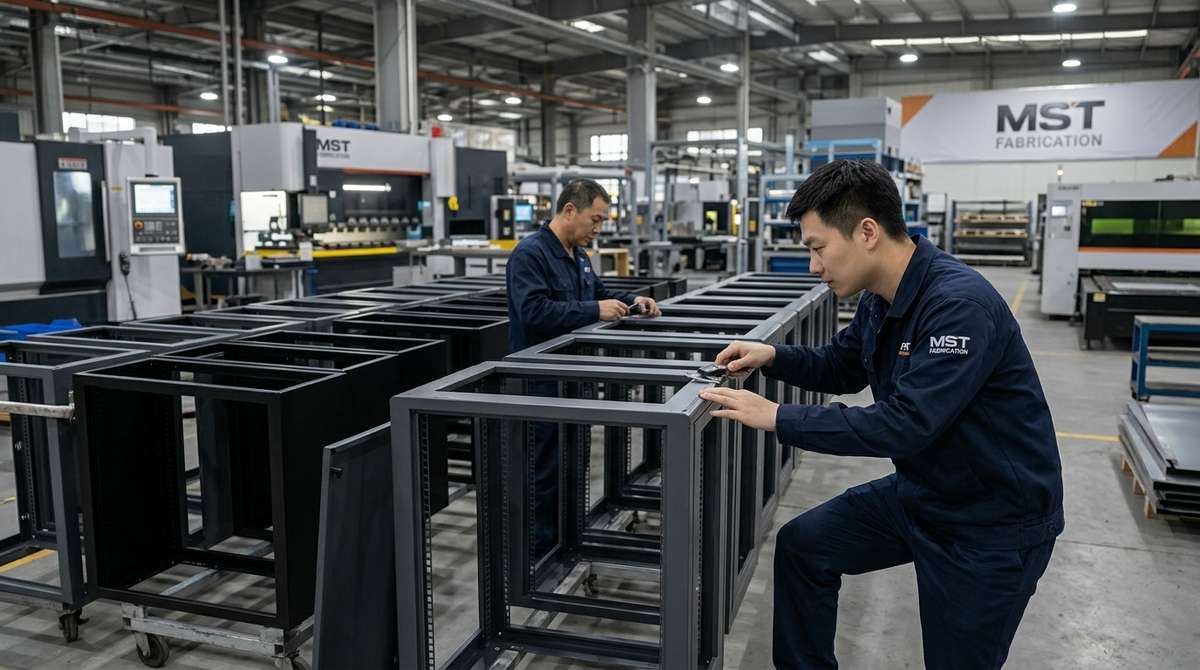
Scope boundary
What MSTFAB fabricates and what remains with the buyer
MSTFAB supplies drawing-defined empty network cabinet sheet metal shells and mechanical components. Typical fabricated items include frames, bases, uprights, doors, removable side panels, roof panels, mounting plates, brackets, perforated panels and drawing-defined mechanical hardware interfaces.
- Laser cut and formed sheet metal parts
- Welded or knock-down cabinet structures
- PEM hardware, hinges and locks when specified
- Powder coating and drawing-defined masking
- Mechanical trial fit and dimensional reports
- Protected packing for empty shells and loose parts
- Servers, switches, routers and patch panels
- Cabling, wiring, fans and cooling equipment
- Electrical design and energized testing
- Software, network configuration and commissioning
- System thermal validation and load certification
- Final IP, NEMA, UL or complete-product approval
No surprise electronics: MSTFAB does not supply finished network equipment or a complete operational cabinet system. We build the mechanical enclosure that your controlled design needs.
Project workflow
Five steps from cabinet drawing to repeatable fabrication
A practical sequence is drawing review, quotation, DFM clarification, first-article fabrication, empty-shell trial fit, evidence review and then batch release. One good sample made with heroic hand correction is not process capability. It is a very expensive magic trick.
What should a network cabinet RFQ include?
Send a STEP model for geometry, a dimensioned PDF for tolerances and notes, DXF files when flat patterns are controlled by the buyer, and a bill of materials that separates fabricated parts from purchased mechanical hardware. Give every revision a clear identity. “Latest file final final 3” is not a revision system; it is a future meeting.
| RFQ input | What it controls | What buyers should clarify |
|---|---|---|
| STEP or native 3D model | Overall geometry and assembly relationships | Revision, units and whether formed geometry is authoritative |
| Dimensioned 2D PDF | Tolerances, materials, finish and critical notes | Mark critical-to-assembly dimensions instead of tightening everything |
| Cabinet construction | Welded frame, modular frame or flat-pack joints | Service access, removable panels and transport constraints |
| Rack mounting interface | U spacing, rail position and hole pattern | Referenced standard, rail type and buyer mating hardware |
| Finish specification | Color, texture, pretreatment and masked areas | Approved sample, gloss window and appearance zones |
| Quantity and release plan | Tooling, fixtures, nesting and inspection effort | Prototype quantity, batch size and annual demand range |
| Inspection and packing | Evidence and shipment protection | Report format, critical dimensions and loose-part identification |
For a general file and quantity checklist, use our laser cutting RFQ checklist. For the broader manufacturing route, see our custom sheet metal fabrication service.
Rack mounting geometry needs a controlled reference
Buyers often say “19-inch cabinet” as though that sentence controls every rail and hole. It does not. When a project references IEC 60297 or another mechanical standard, identify the exact drawing requirement and edition that applies. The supplier still needs rail spacing, U position, front-to-rear relationship, datum strategy and the buyer’s mating hardware information.
MSTFAB can fabricate drawing-defined rack rails, uprights and mounting interfaces. We do not select the buyer’s active equipment, calculate system heat load or certify that every third-party rail kit will fit. Those decisions belong in the controlled design and verification plan.
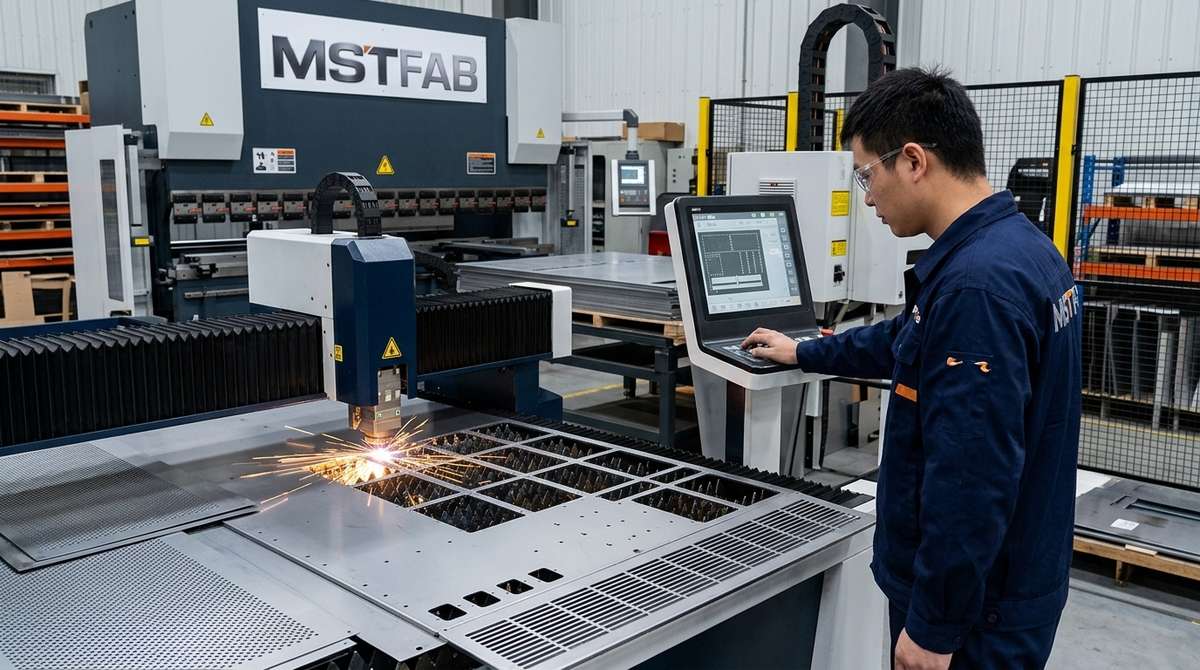
Laser cutting: openings must support the next operation
Laser cutting creates door perforations, cable-entry openings, fan-frame openings, rail patterns, mounting holes and access panels. Feature density affects cutting time, but the DFM question is broader: will the cut feature remain stable after bending, welding and coating?
Holes too close to a bend can distort. Fine perforation may reduce panel stiffness. Tiny corner radii can add time without improving function. The right custom laser cutting service reviews the part as one stage of a cabinet assembly, not as a flat drawing floating alone in space.
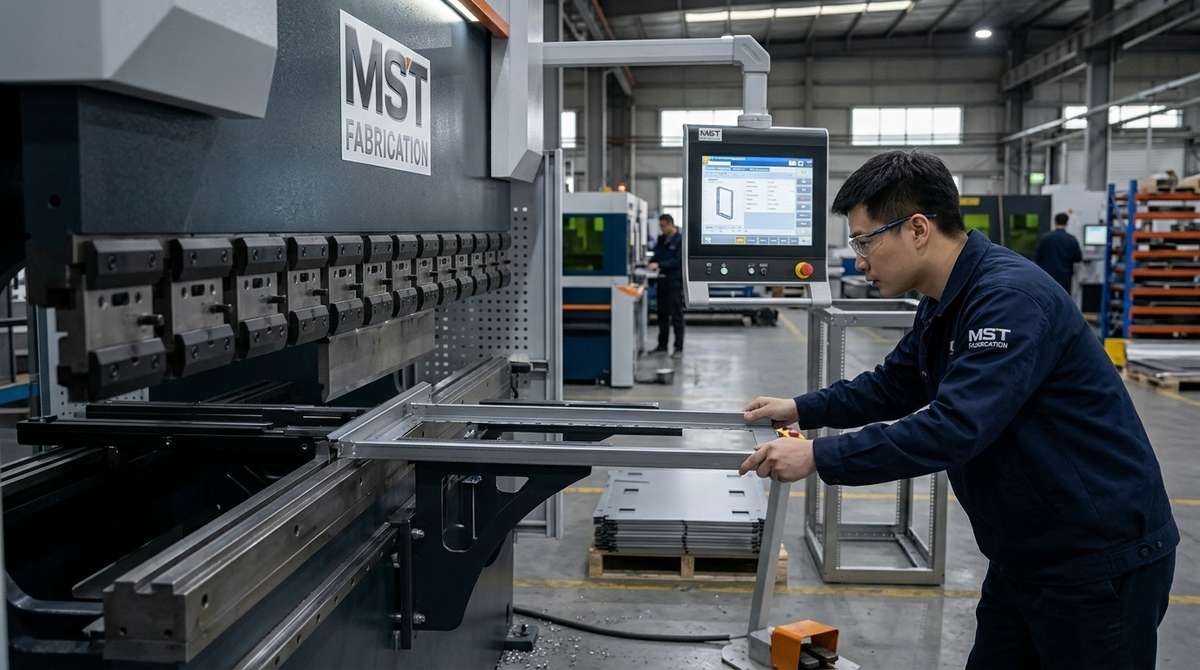
CNC bending: control the datum chain, not every dimension equally
Cabinet squareness begins with consistent formed parts. Bend radius, grain direction, flange length, tooling access and springback all influence the result. A tolerance on a flat pattern is not automatically the same tolerance after three bends and a weld.
Use functional datums for upright position, door openings, rail mounting and panel interfaces. Our CNC bending service can review bend access and sequence before parts reach the press brake. This is quieter than discovering a trapped flange after the first batch, and considerably cheaper.
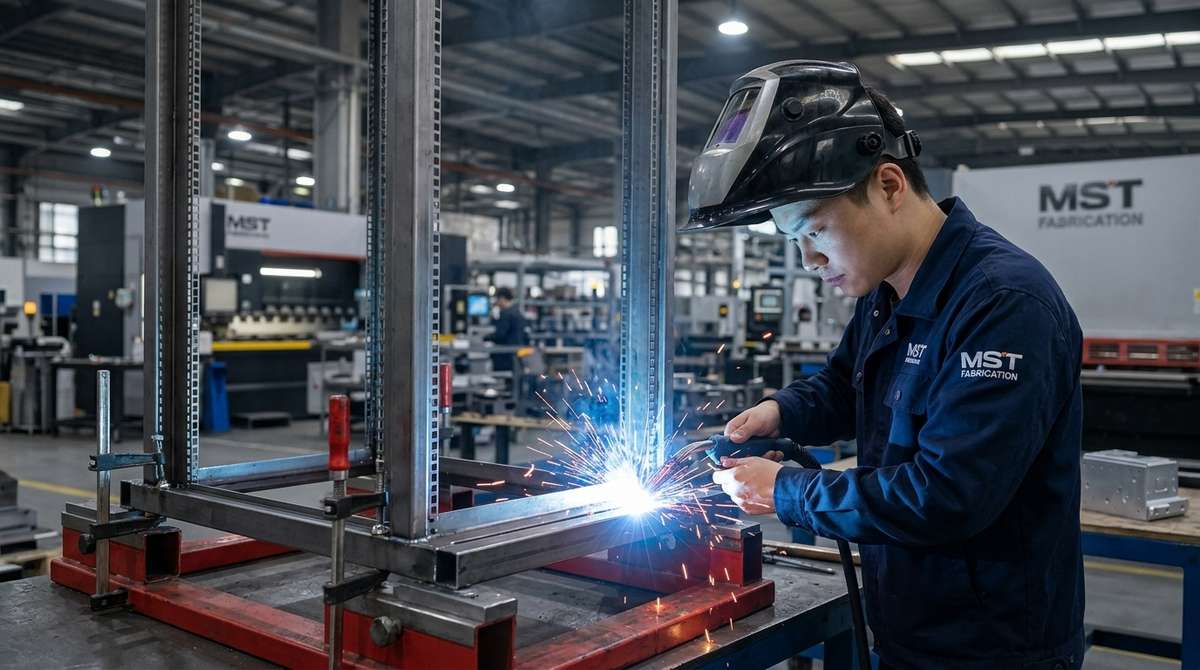
Welding and frame control: heat moves metal
Welded frames may need fixtures, balanced weld sequences and intermediate checks. Door openings, base diagonals, rail supports and removable-panel interfaces are common control points. More weld is not automatically more strength; sometimes it is simply more heat, more grinding and more opportunity for distortion.
The sheet metal welding service scope should state joint type, cosmetic class, grinding requirement and the dimensions checked after welding. Structural load targets must come from the buyer’s engineering requirements. A load rating should be supported by an agreed calculation or test, not optimism in a product description.
Mechanical trial fit
Check the empty shell before coating hides the clues
Trial fitting can confirm door swing, panel gaps, hinge position, lock engagement, rack mounting location, removable-panel access and drawing-defined hardware. It does not require installing active electronics. A representative gauge, mounting plate or buyer-supplied dummy interface is often enough to verify mechanical fit.
Powder coating adds thickness. If every slot and hinge fit works only in bare metal, the coated cabinet may arrive with a tiny but determined refusal to assemble. Masking and clearance should be part of the drawing and inspection plan.
Material and finish choices for empty cabinet metalwork
For a more detailed finish workflow, review powder coating for sheet metal parts.
First-article evidence should follow assembly risk
An inspection report is most useful when it measures the interfaces that can stop the buyer’s assembly: rail spacing, hole position, cabinet diagonals, door opening, panel gap, mounting-plate location, hinge and lock alignment, grounding-stud location and identified coating requirements.
Overall height and width matter, but they are rarely the whole story. A cabinet can pass three convenient dimensions and still reject the buyer’s mounting hardware with impressive confidence.
| Evidence | What it verifies | Typical owner | RFQ note |
|---|---|---|---|
| Material certificate | Specified material grade and heat or batch traceability when required | Supplier | State whether certificates are required with each shipment |
| First-article dimensional report | Critical interfaces against the released drawing | Supplier and buyer approval | Identify dimensions and report format before quotation |
| Mechanical trial-fit record | Doors, panels, rails and hardware interface correctly | Supplier | Define gauges, samples or mating parts used for verification |
| Finish inspection record | Color, texture, appearance zones, masking and agreed thickness | Supplier | Reference an approved sample where appearance is critical |
| Packaging photos and part list | Loose parts are identified and coated surfaces protected | Supplier | Define upright, flat-pack or subassembly packing method |
| System certification | Performance of the buyer’s completed network system | Buyer or qualified lab | Not implied by empty sheet metal shell fabrication |
See how a dimensional inspection report can be defined before production. Export projects should also specify protective packaging for fabricated sheet metal.
Related manufacturing and cabinet resources
When stainless steel is under consideration, review the 304 vs 316L stainless telecom cabinet shell guide before fixing material, finish and environmental assumptions.
Frequently asked buyer questions
Does MSTFAB supply complete network cabinets with servers and wiring?
No. MSTFAB fabricates empty sheet metal cabinet shells and drawing-defined mechanical parts. Servers, switches, routers, patch panels, cabling, fans, software and final complete-product certification remain with the buyer or system integrator.
Can MSTFAB fabricate a 19-inch rack mounting structure?
Yes, when the rail geometry, hole pattern, U position, datums, tolerances and applicable drawing or standard reference are defined. Mechanical fit should be verified against the buyer’s approved interface or representative gauge.
Should we choose a welded or flat-pack cabinet frame?
It depends on stiffness, assembly labor, shipping volume, service access and the buyer’s installation process. A welded frame can simplify site assembly, while flat-pack construction may reduce freight volume but needs controlled joints and assembly instructions.
Can you guarantee airflow or equipment temperature?
No. MSTFAB fabricates perforations, openings and mechanical fan interfaces to the released drawing. Thermal analysis, airflow targets, fan selection and completed-system validation remain with the buyer unless a separate qualified engineering scope is agreed.
What should be inspected on the first cabinet shell?
Prioritize rack mounting interfaces, cabinet squareness, door openings, panel gaps, hinge and lock alignment, mounting plates, critical cutouts, finish masking and buyer mating points. Agree the report before production.
Can MSTFAB claim IP, NEMA, UL or a static load rating?
Not from sheet metal fabrication alone. Ratings require a defined design, components, assembly method and applicable test or certification route. MSTFAB can manufacture the mechanical shell and provide agreed fabrication evidence; final product compliance remains with the responsible buyer and qualified laboratory.
Drawing-based cabinet quotation
Send the empty cabinet files and define the interfaces once
Provide the STEP model, dimensioned PDF, material, finish, quantity, construction method, critical rack and door interfaces, inspection documents and packing requirements. MSTFAB will review the mechanical sheet metal fabrication route.
 WeChat Contact
 WhatsApp Me Directly