
Telecom Cabinet OEM Sourcing: 7 Procurement Failures Buyers Can Prevent
A telecom cabinet enclosure can look simple in a quotation: metal box, door, rails, paint, ship it. Then the first batch arrives and the fun begins: doors bind, rack holes miss, coating scratches, rain lips disagree with gaskets, and your assembly team suddenly becomes a rescue crew. This guide shows the seven sourcing failures OEM buyers can catch before production starts.
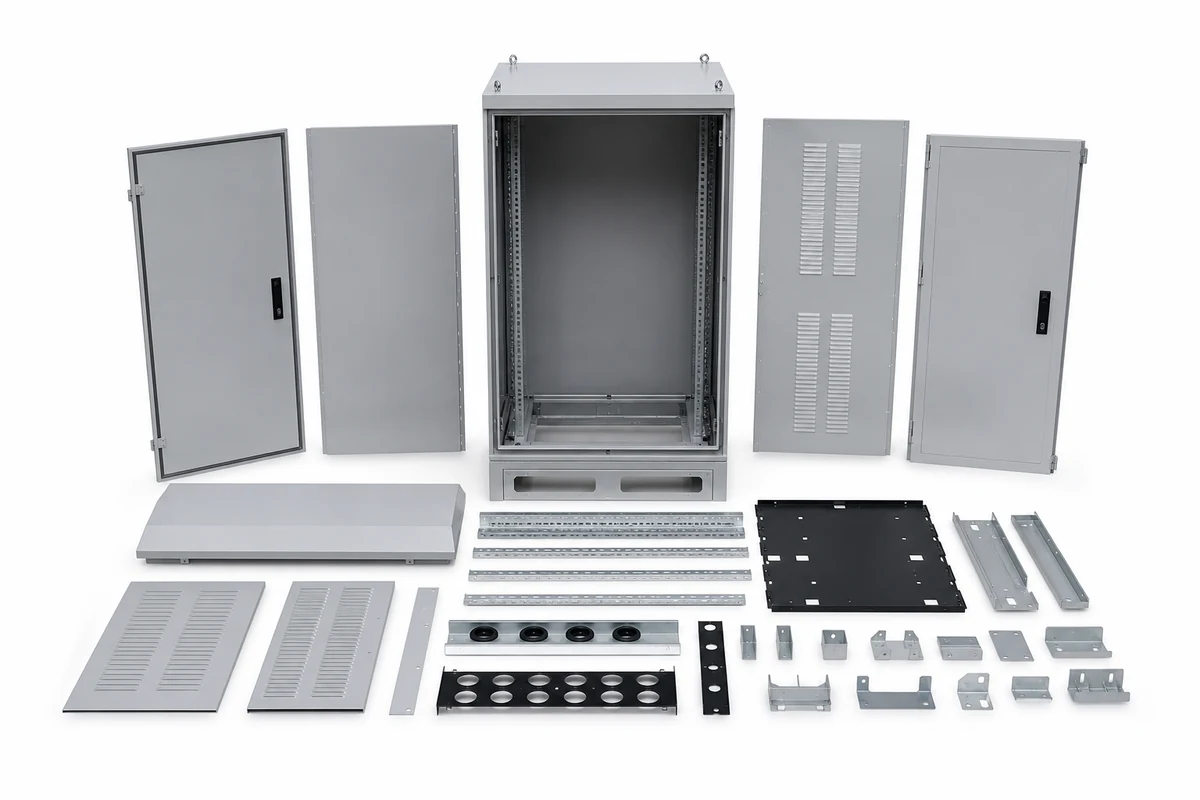
Short answer: strong telecom cabinet OEM sourcing is not about finding the lowest metal-box price. It is about controlling the semi-finished sheet metal enclosure shell: DFM review, laser cutting accuracy, CNC bending sequence, welding distortion, rack rail references, weather sealing, powder coating, inspection and export packing.
Scope note: MSTFAB manufactures custom telecom cabinet enclosure shells and related sheet metal parts from buyer drawings. We do not supply working telecom equipment. We support the metal housing, doors, panels, rack rails, brackets, louvers, gland plates, welded frames, coating and packing so your team can handle the final integration.
Why Telecom Cabinet Sourcing Fails Before the First Shipment
Most failures start during RFQ review. If the buyer only compares unit price, the supplier may ignore the details that decide whether the cabinet will assemble cleanly later. A telecom cabinet enclosure is not just a cabinet body. It is also a mounting reference, weather barrier, airflow path, service opening, grounding contact surface and export-sensitive painted product.
The right question is not “Who is cheapest?” The better question is “Which supplier can prove the drawings, manufacturing route and inspection plan will produce usable semi-finished enclosure shells repeatedly?” That question is much less glamorous, but it saves money.
The 7 Hidden Procurement Failures
Seal Geometry Is Treated as Decoration
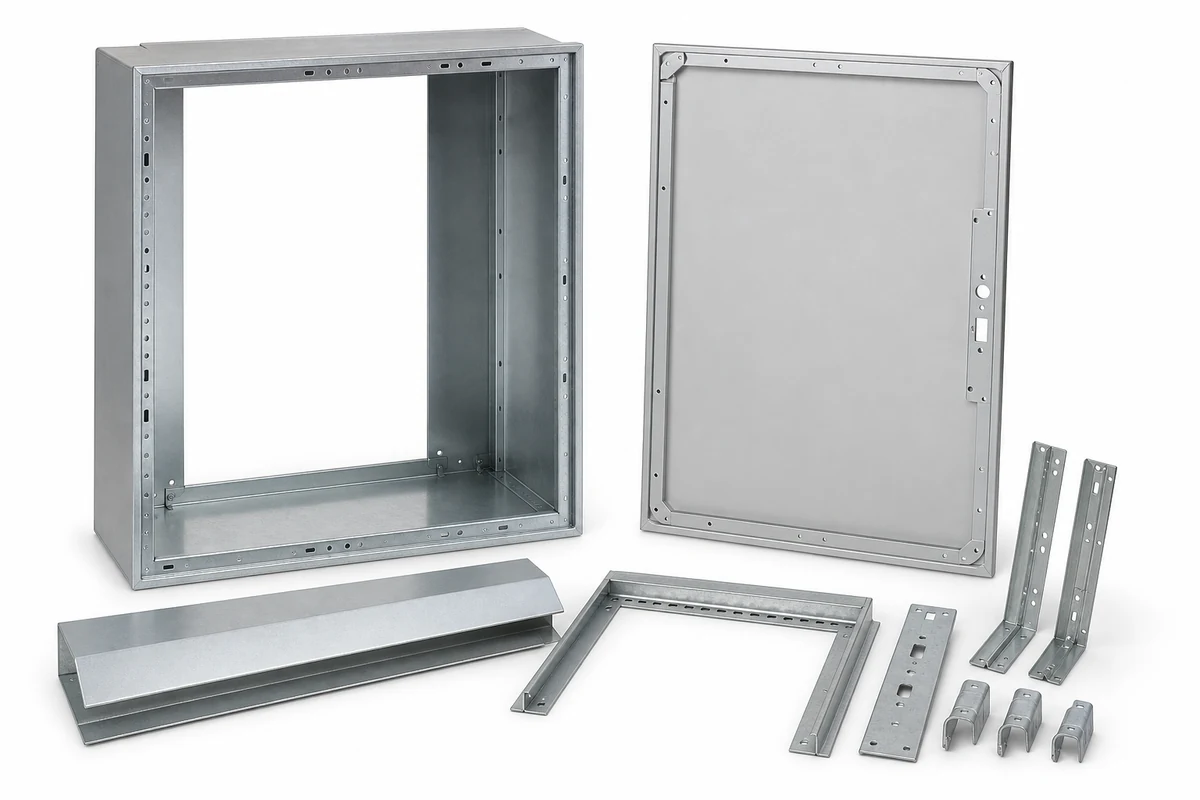
Door flatness, rain lips, hinge position and gasket-channel geometry decide whether an outdoor telecom cabinet enclosure keeps weather outside where it politely belongs.
Rack Rail References Are Vague
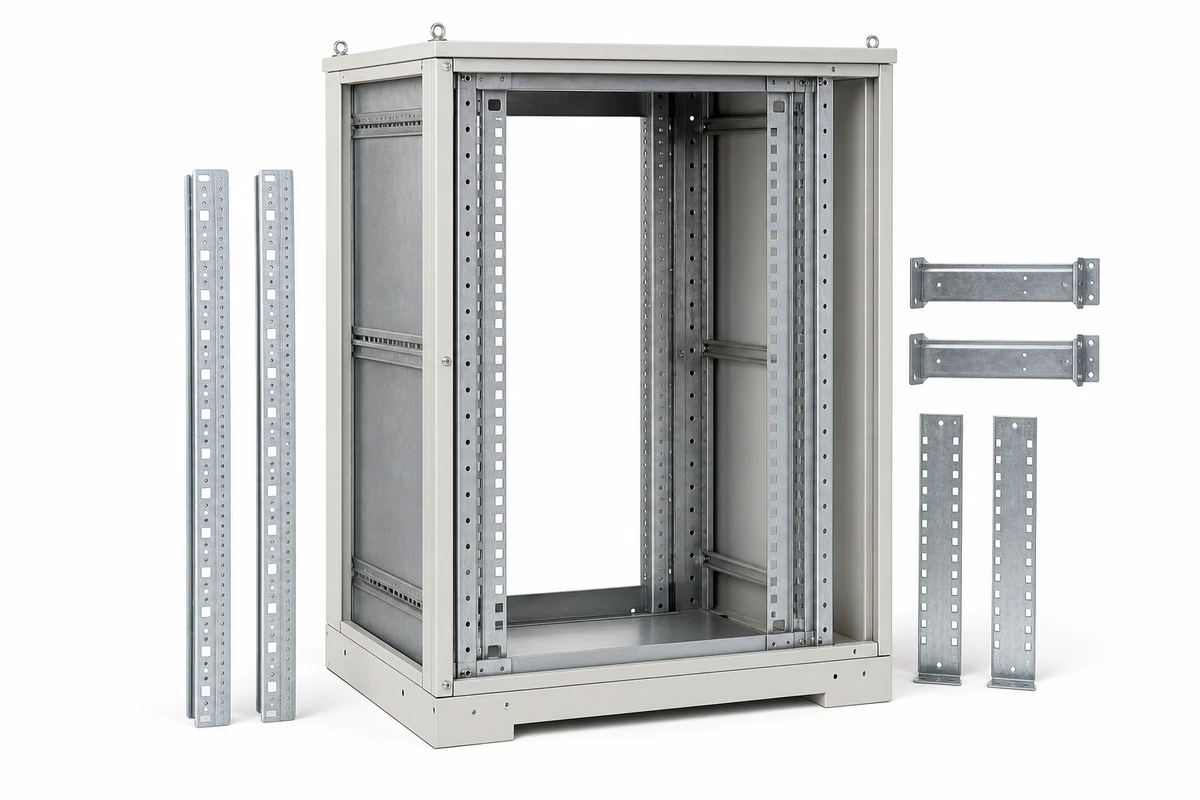
19-inch rail spacing, datum points, hole patterns and mounting brackets need clear inspection references. “Close enough” is how field installation becomes expensive.
Airflow Panels Are Added Too Late
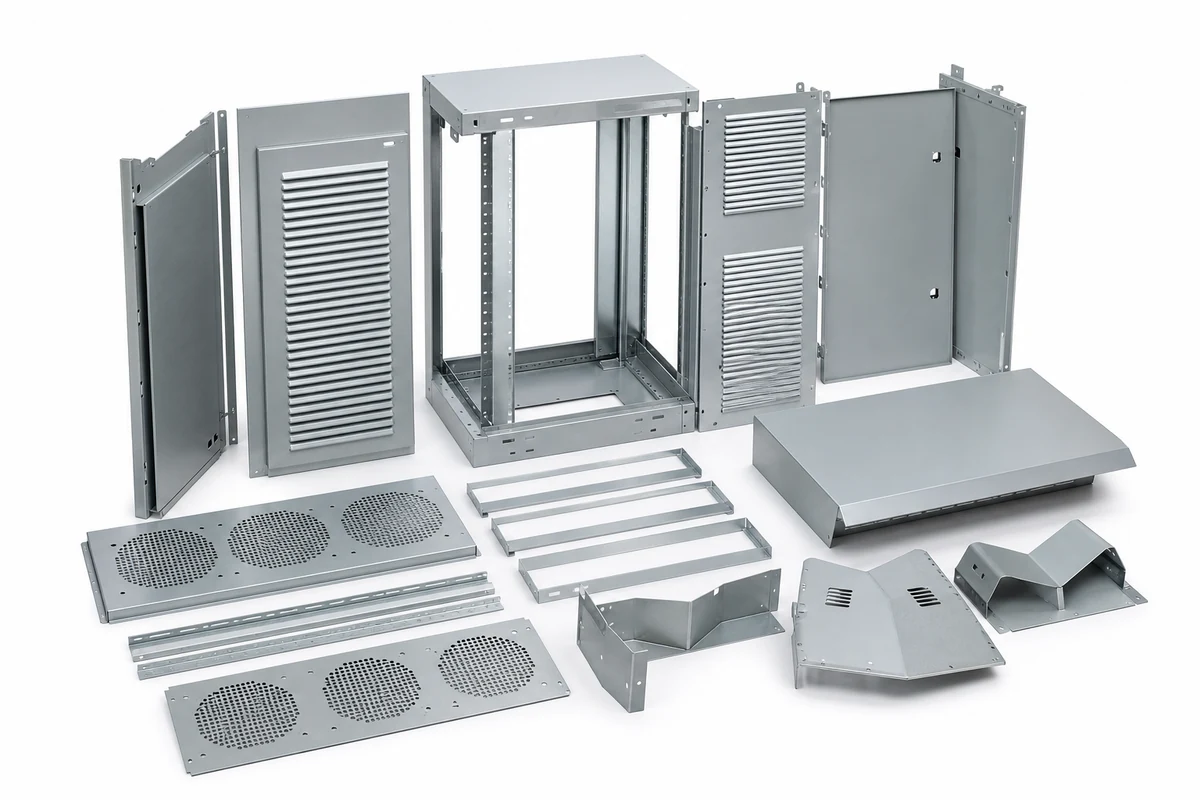
Louvers, perforation patterns, filter-frame blanks and roof covers affect bending, coating and service access. They should not be improvised after the shell is formed.
Coating Spec Ignores Real Environment
Outdoor use, coastal air, UV exposure, scratches and masking zones should guide material and finish selection before the purchase order.
Grounding Contact Areas Are Unclear
Contact fingers, bonding tabs and clean metal contact zones must be defined as metal-fabrication features, not guessed during later assembly.
Sample and Batch Drift Apart
Material thickness, bend radius, hardware holes and finish color can drift if the supplier does not control revision, material and first-article approval.
Engineering Changes Move Slowly
Telecom projects change. A supplier must manage revision updates, drawing comments and sample feedback without turning every change into a small international mystery.
Failure-Mode Quick Reference Table
| Failure mode | Buyer pain | RFQ-stage check |
|---|---|---|
| Door seal compression loss | Water ingress risk, service complaints and replacement cost | Review door return, rain lip, hinge side, latch side and gasket-channel tolerance |
| Rack rail misalignment | Slow installation and repeated field adjustment | Define rail datum, hole pattern, rail support brackets and inspection points |
| Poor thermal airflow path | Heat buildup and service access problems | Confirm louver layout, fan-plate blanks, filter frame and bend clearance |
| Coating failure | Corrosion, scratches and early visual aging | Confirm material, pretreatment, powder coating spec, masking and packing method |
| Grounding contact inconsistency | Unstable bonding contact surfaces during buyer-side assembly | Define clean metal zones, contact plates, tabs and fastener-hole positions |
| Sample-to-batch variation | Approved sample works, batch creates assembly trouble | Use revision control, first article inspection and batch material confirmation |
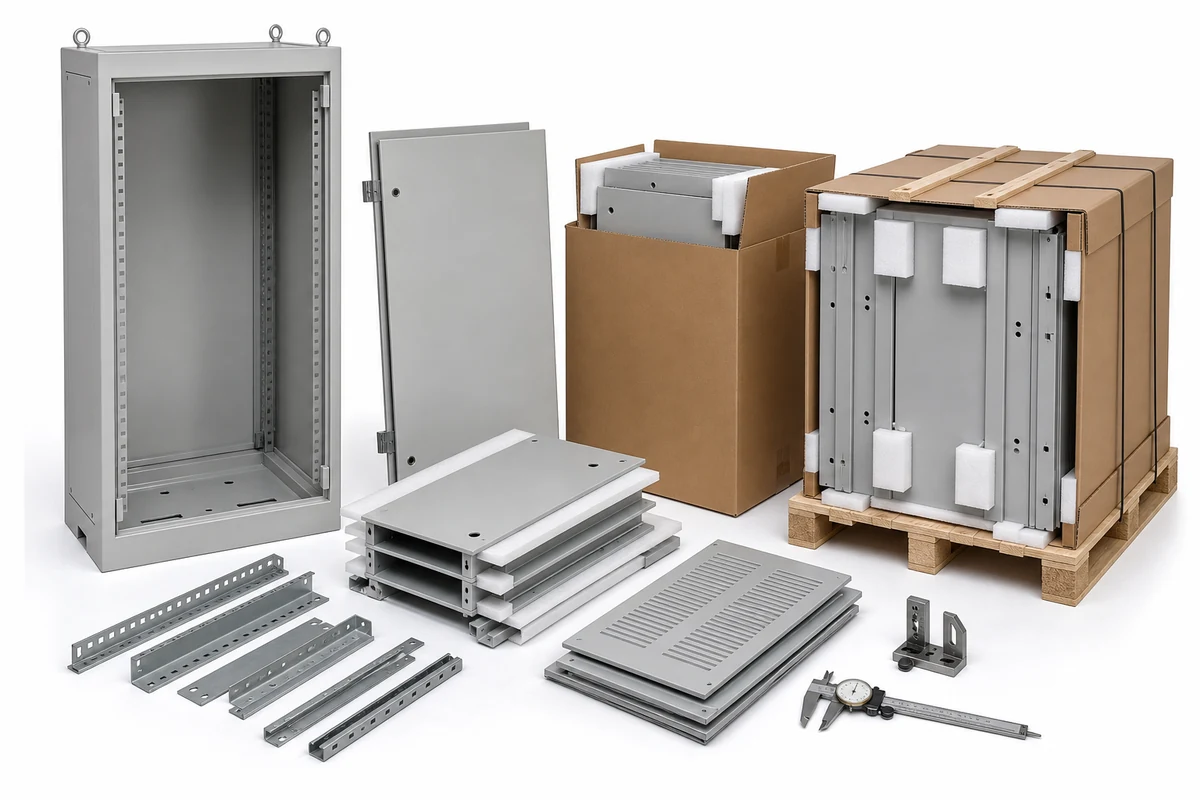
| Weak export packing | Paint rub, bent corners and freight claims | Specify foam separators, corner protection, cartons, palletization and photo evidence |
Procurement Red Flags That Predict Trouble
Red flags are usually boring. That is why they get ignored. If a supplier cannot explain the bend sequence, coating protection, rack rail inspection method or packing plan, the quotation may be hiding work that your team will pay for later.
RFQ Red Flags
- No questions about material grade, thickness or finish environment
- No comment on bend radius, flange length or door-frame flatness
- No inspection reference for rack rails or mounting-hole patterns
- No packing discussion for painted faces, long panels or corner protection
Good Supplier Signals
- DFM feedback before quotation is finalized
- Clear process route from laser cutting to CNC bending, welding and coating
- First-article approval before batch production
- Photo evidence for inspection and export packing
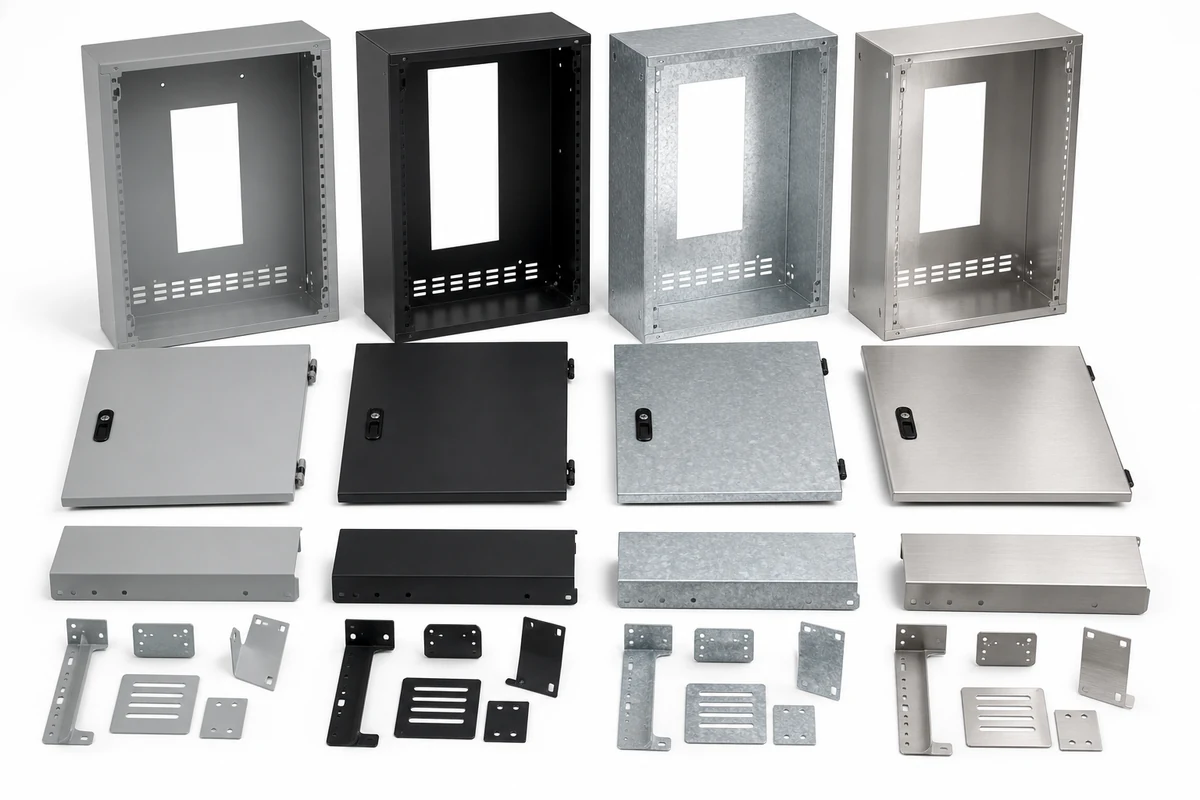

Supplier Scoring Matrix for Telecom Cabinet Enclosure Buyers
Use this matrix when comparing telecom cabinet enclosure suppliers. It keeps the discussion focused on evidence, not brochure adjectives. “High quality” is nice. A measured rail datum and a protected painted door are nicer.
| Score item | What to ask | Why it matters |
|---|---|---|
| DFM review | Can the supplier mark risky bends, holes, welds and coating zones before production? | Prevents drawing assumptions from becoming scrap or rework |
| Laser cutting control | Are vent patterns, gland plates, rack holes and mounting cutouts cut from controlled data? | Protects repeatable hole accuracy across batches |
| CNC bending capability | Can the supplier explain bend sequence, tooling access and inside radius? | Protects door fit, rail position and panel flatness |
| Welding and fixture control | Are welded frames, corners and brackets controlled against distortion? | Prevents skewed openings and poor fit-up after finishing |
| Surface treatment | Is material, pretreatment, powder coating and masking clearly defined? | Reduces corrosion, scratch and finish complaints |
| Export packing | Are foam, separators, carton, pallet and photos included in the plan? | Protects semi-finished enclosure shells during international transport |
How MSTFAB Supports Telecom Cabinet OEM Sourcing
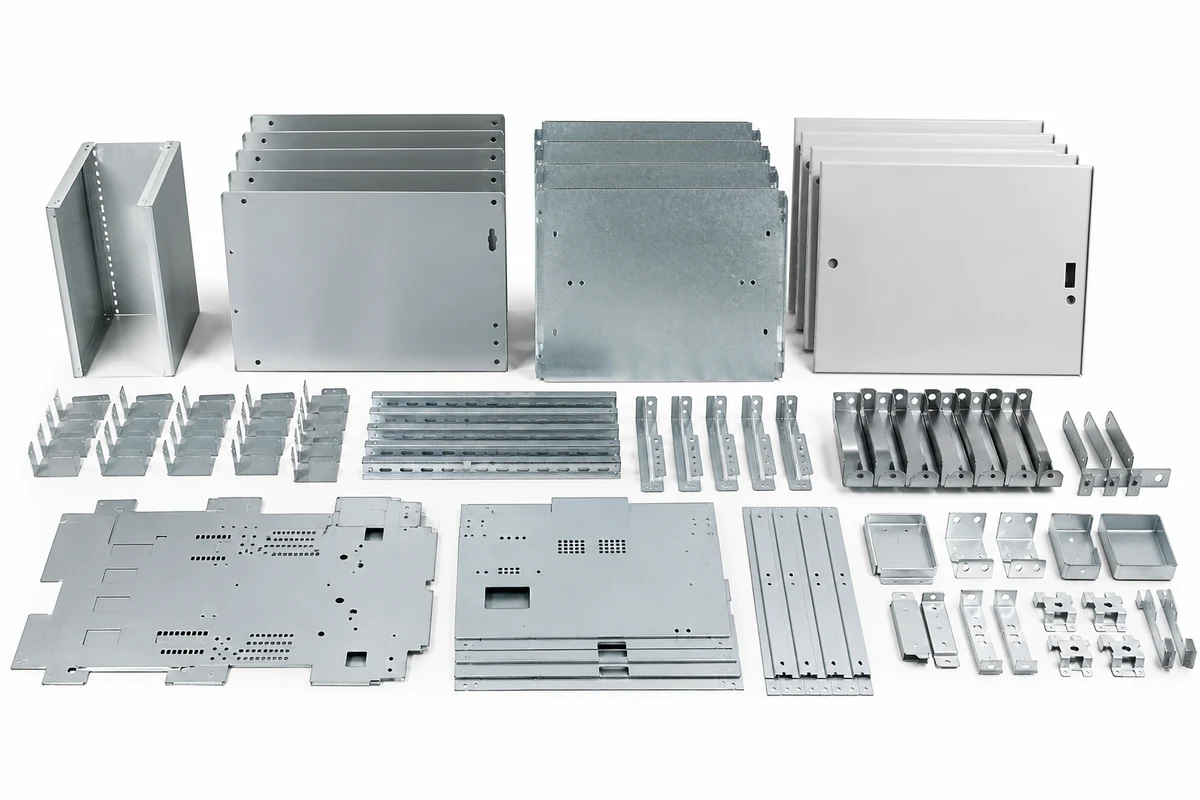
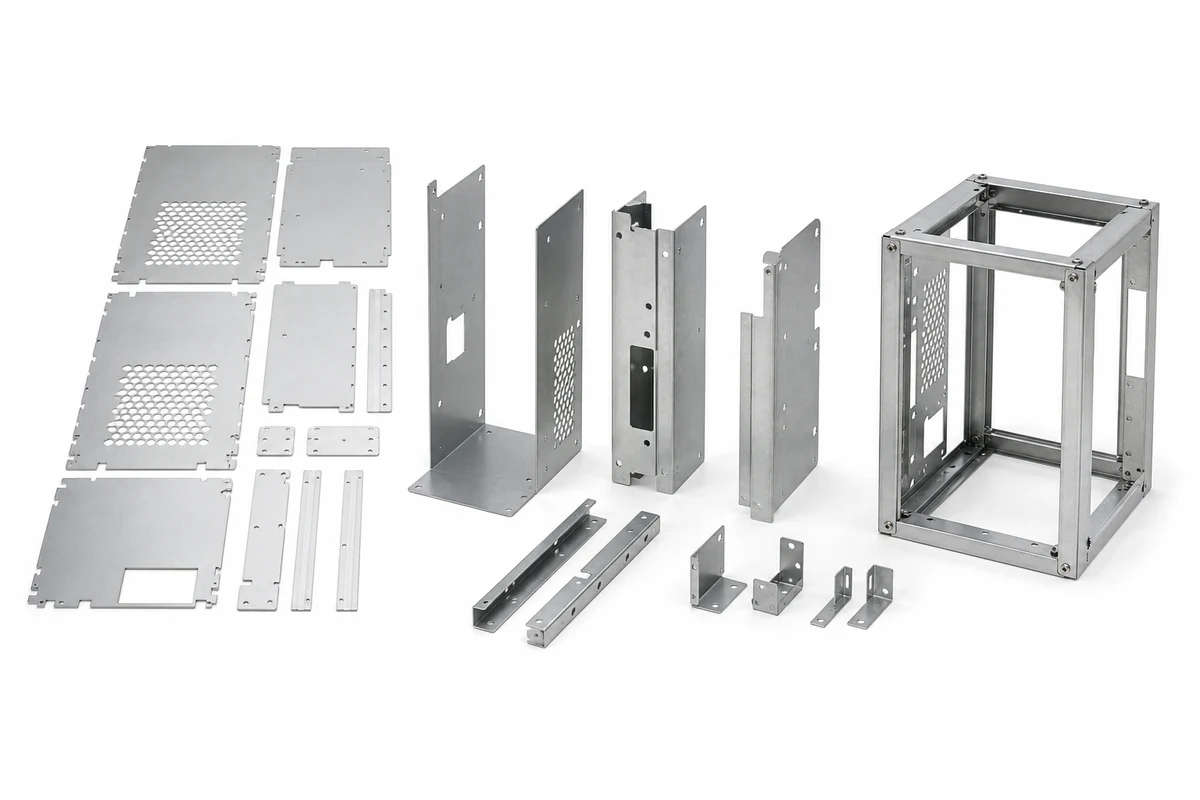
MSTFAB supports overseas OEM buyers with custom sheet metal telecom cabinet enclosure fabrication from drawings. Typical parts include empty cabinet bodies, doors, removable panels, rack rails, louver panels, filter-frame blanks, gland plates, welded support frames, mounting brackets and packing-ready shell parts.
For related sourcing pages, see Network Cabinet Fabrication, 5G Telecom Enclosure Fabrication, Outdoor Network Enclosure Procurement Guide and 42U 19-Inch Telecom Cabinet Enclosure Sourcing Guide.
Process pages that help buyers prepare RFQs include Laser Cutting Services, Sheet Metal Bending Services, Welding Services, Surface Treatment and What Files Are Needed for a Sheet Metal Fabrication Quote?.
FAQ
What is telecom cabinet OEM sourcing?
It is the process of finding and qualifying a supplier to manufacture custom telecom cabinet enclosure shells and sheet metal parts from OEM drawings, including metal bodies, doors, panels, rails, brackets, louvers, coating and packing.
Does MSTFAB manufacture working telecom systems?
No. MSTFAB manufactures semi-finished sheet metal enclosure shells and related metal parts. Buyer-side installation and final integration are outside our fabrication scope.
What drawings help avoid telecom cabinet sourcing failures?
Send STEP or STP files, 2D drawings, material grade, thickness, rack rail references, sealing details, louver layout, finish specification, critical dimensions, quantity and packing expectations.
How can buyers reduce cabinet sourcing risk?
Ask for DFM feedback, approve a first article, define rack rail datum points, specify finish and masking requirements, confirm packing protection and keep revision control clear.
Send Telecom Cabinet Enclosure Drawings for DFM Review
Upload your telecom cabinet enclosure drawings and we will review the semi-finished sheet metal shell scope: rack rail datum, door seal geometry, louver layout, CNC bending risk, welding distortion, powder coating and export packing.
- STEP / STP + PDF drawings
- Material, finish and quantity
- DFM notes before quotation
 WeChat Contact
 WhatsApp Me Directly