
How Startups Can Choose a Sheet Metal Manufacturing Partner in China
A buyer-focused framework for verifying a Chinese factory, matching process capability to the drawing, protecting revision control and proving the relationship with a representative trial order.
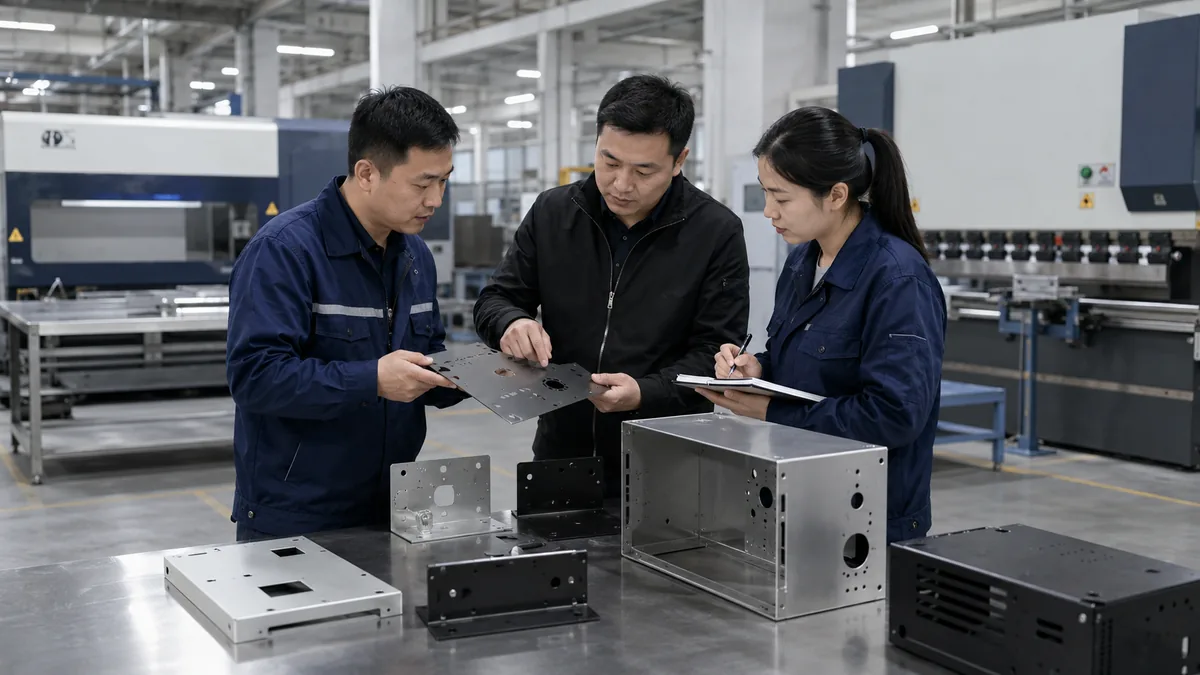
To choose a sheet metal manufacturing partner in China, first define the complete process route and acceptance criteria. Verify the legal entity and actual factory, review equipment and comparable parts, test the DFM response, confirm revision and outside-process control, normalize the quotation and Incoterm, then run a paid trial order using representative features. Approve repeat production only after the drawing, sample, inspection evidence, finish and packaging all meet the agreed standard.
China has a large and varied metalworking supply base. That creates options, but it does not mean every Chinese supplier is automatically cheaper, faster or more capable than a local source. The commercial advantage depends on the exact part, batch size, process route, freight, tariff exposure, communication load and cost of quality.
This guide is specifically for custom sheet metal fabrication: laser-cut and CNC-bent brackets, panels, chassis, cabinets, welded assemblies, hardware insertion, finishing, inspection and export packaging. It is not a generic outsourcing checklist.
Start with your drawing—not a country stereotype
| Buyer requirement | Factory evidence to request | Why it matters |
|---|---|---|
| Material and thickness range | Machine list, recent comparable parts and material-control method. | Equipment on a brochure does not prove fit for your geometry. |
| Laser cutting and CNC bending | Usable bed/press-brake capacity, tooling, bend examples and inspection route. | Part size, strength, bend length and tooling access define real capability. |
| Welded assemblies | Fixtures, weld sequence, distortion control and acceptance examples. | Weld quality is both structural and dimensional. |
| Surface finish | Approved processors, incoming/outgoing checks, masking and cosmetic standard. | Outsourcing is normal when disclosed and controlled. |
| Inspection | FAI sample, gauges, report format and records for critical characteristics. | A certificate alone does not inspect your part. |
| Export delivery | Packaging design, named Incoterm place and shipping-document responsibility. | Piece price is not total landed cost. |
1. Verify the company and the factory separately
Ask for the company’s Chinese legal name, Unified Social Credit Code, registered address, business license and bank beneficiary. Search the entity in China’s official National Enterprise Credit Information Publicity System where accessible. Registration confirms that an entity exists; it does not prove that the company owns the machines, controls the factory shown in photographs or has produced your type of part.
Then verify operations through a live video walk-through, dated factory media, process records, a third-party audit or an on-site visit. Match the people, facility, equipment, company signage and payment entity. Use the China sheet metal supplier verification checklist for a structured review.
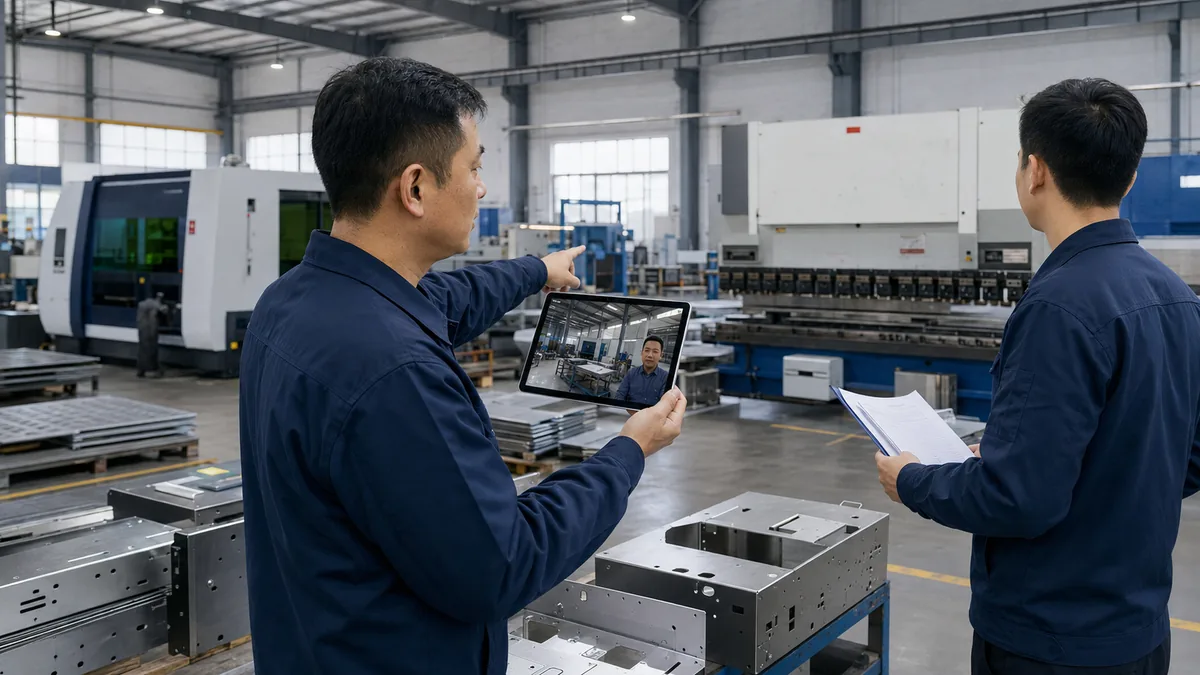
Do not rely on shortcuts: a polished website, an ISO certificate, a factory video or a familiar chat app can each be genuine and still be insufficient. Look for consistency across the legal entity, domain, quotation, purchase contract, bank account and factory evidence.
2. Match capability to the complete process route
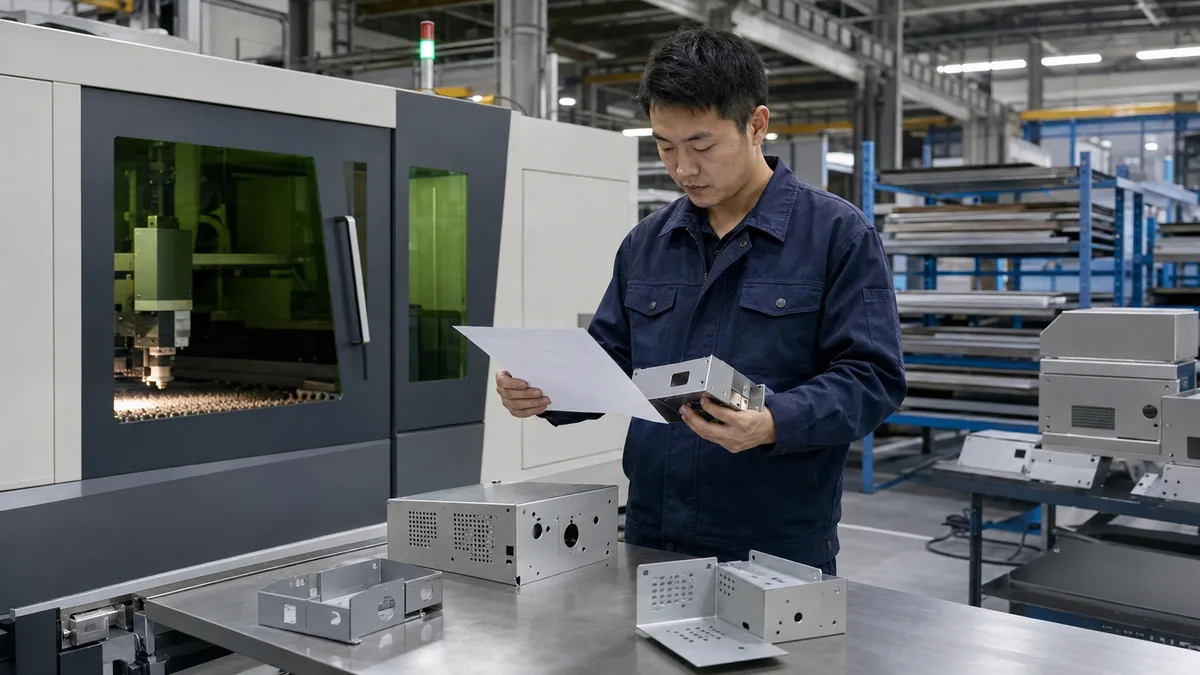
A buyer may search “China sheet metal factory,” but the RFQ often needs six or more linked operations. Map the route from incoming sheet through cutting, deburring, bending, welding, hardware, surface treatment, inspection and packaging. Ask which operations are performed in-house and which are subcontracted.
Fast engineering feedback, flexible setup, small quantities and clear sample learning.
Capacity, fixtures, repeat inspection, change control, packing and delivery discipline.
Only the certifications, traceability and records actually required by the product and market.
Trading companies are not automatically unsuitable. Some manage language, logistics and multiple processes well. The risk is undisclosed sourcing or weak control. Decide whether you need direct factory access, an integrator, or both; then make responsibilities and approval rights explicit.
3. Use DFM response as an engineering test
Send a controlled RFQ package and ask for specific DFM comments. A capable partner should discuss bend relief, hole-to-bend distance, minimum flange, tool access, inside radius, hardware edge distance, weld access, coating buildup and datum strategy. The response should distinguish a true manufacturing constraint from a cost-reduction suggestion.
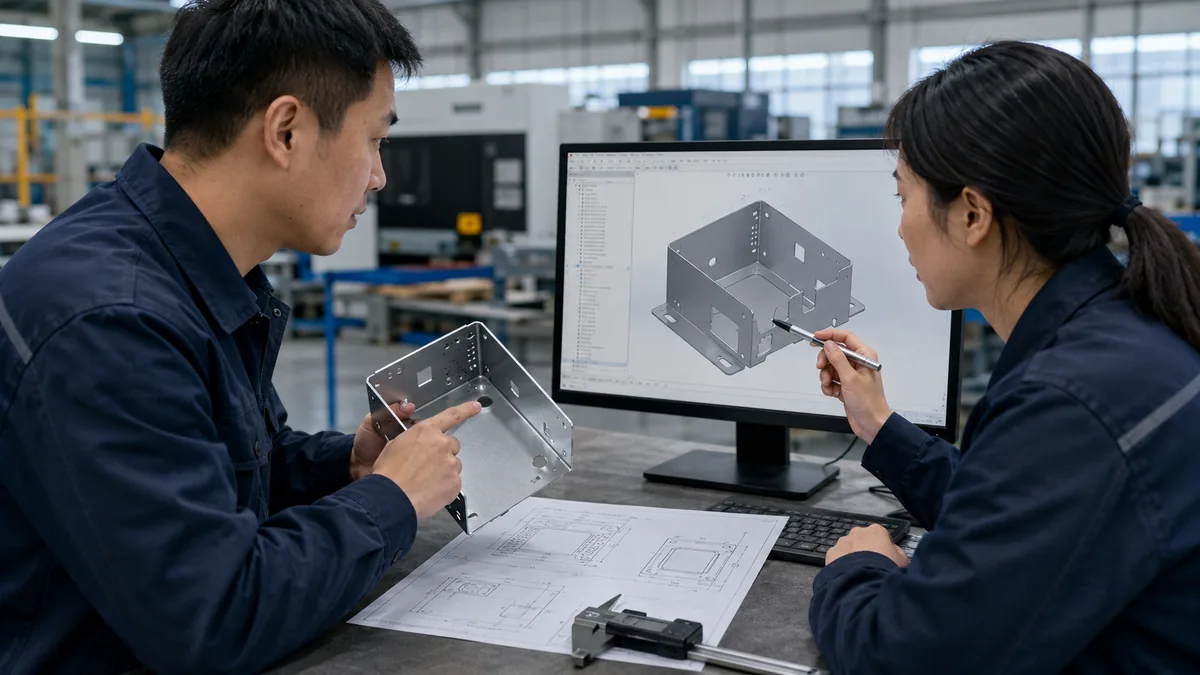
Do not accept silent modifications. Record each approved deviation against the drawing revision. A useful DFM loop ends with an updated, controlled manufacturing definition—not a collection of chat messages.
4. Protect files, revisions and commercially sensitive data
Use confidentiality terms appropriate to the project, role-based file access, clear part numbers, revision history and release records. Staged disclosure can reduce unnecessary exposure, but “never send native CAD” is not a universal rule: editable geometry may be needed for legitimate DFM, CAM or tooling. Share what the chosen process requires and involve qualified cross-border counsel when the IP is material to the business.
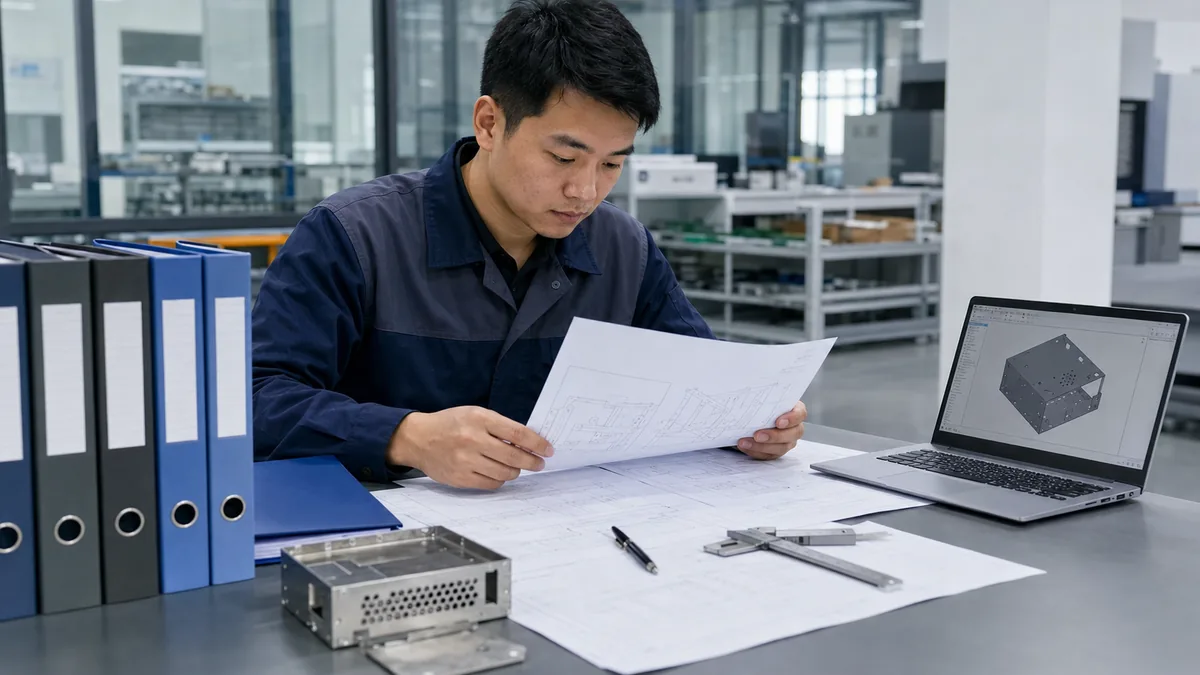
A contract should identify the correct legal entities, confidentiality and IP obligations, tooling ownership, change control, acceptance, governing law and dispute process. Do not copy a universal “NNN + arbitration location” formula without project-specific legal advice.
5. Normalize the quote and Incoterm
Compare the same scope: material, setup, programming, tooling, cutting, bending, welding, hardware, finishing, inspection, certificates, packaging, freight and taxes. Incoterms define task, cost and risk allocation; they do not by themselves set title transfer, payment or product acceptance. State the exact rule and named place, such as the agreed Incoterms 2020 term and location.
The sheet metal quote hidden-cost guide and China import guide help build a landed-cost comparison.
6. Prove the supplier with a representative trial order
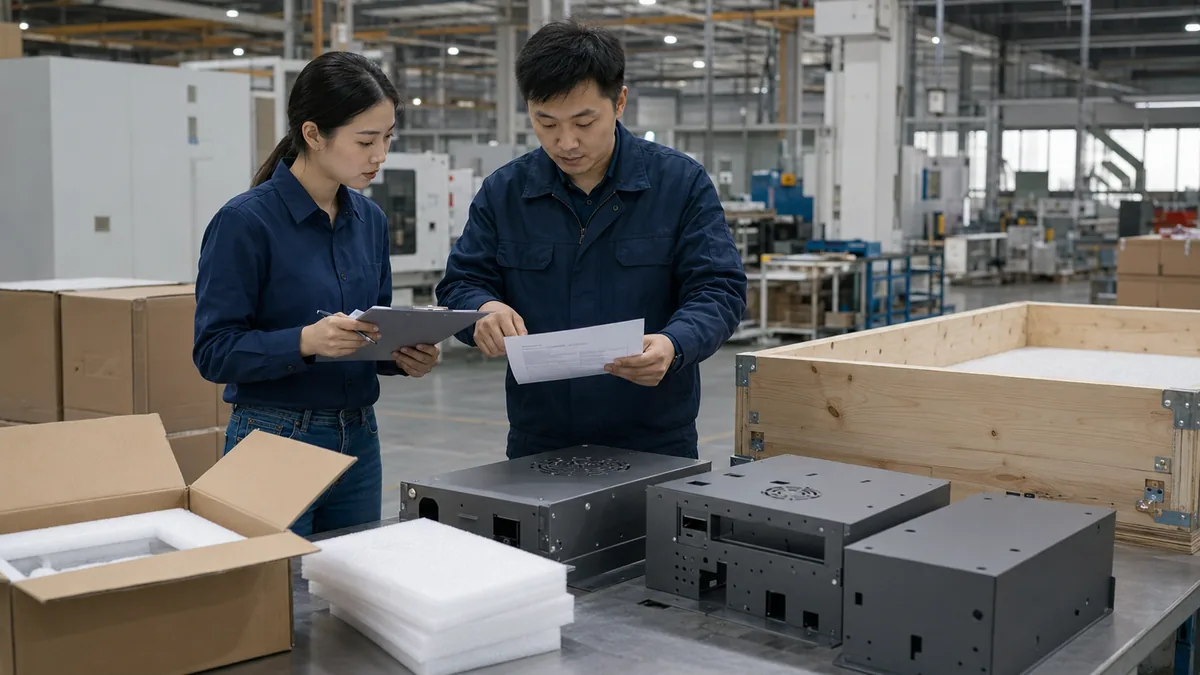
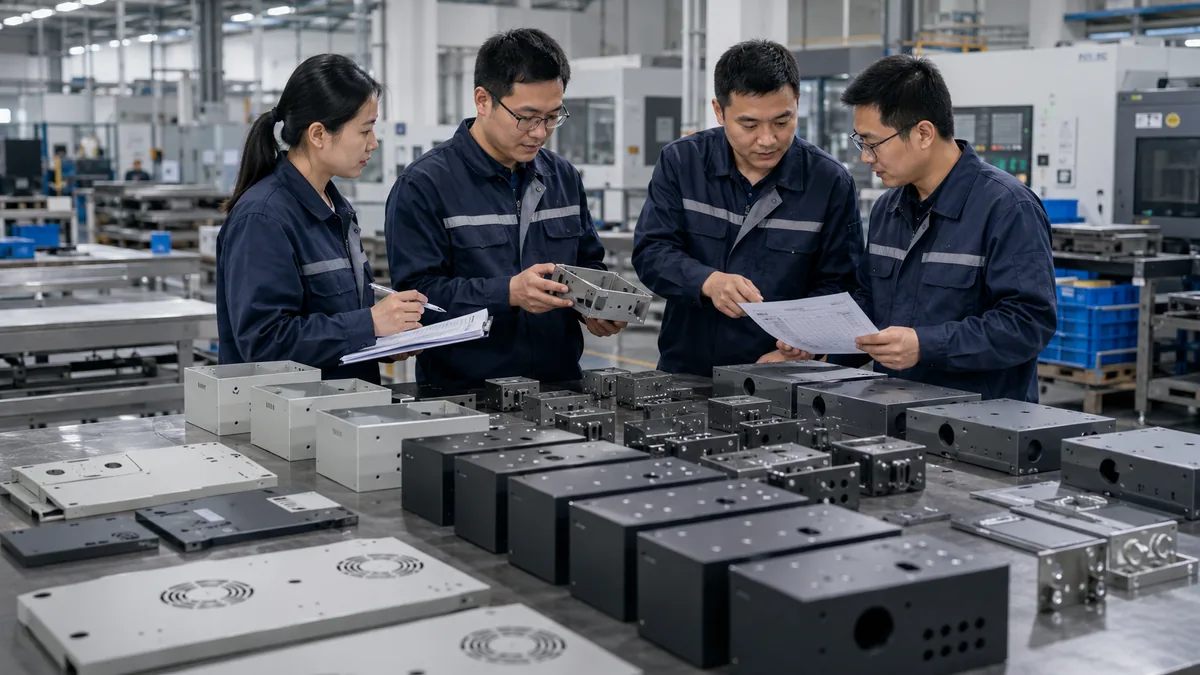
A paid trial order should contain the features that create real risk: critical bends, inserted hardware, weld geometry, cosmetic finish, mating interfaces and protective packaging. Approve the drawing and inspection plan before production, then compare the first article and lot with the same released revision.

Material certificates, heat traceability or PMI can be valuable when the drawing, industry or risk requires them. They are not universal proof of quality for every mild-steel bracket or aluminum panel. Specify the document and verification method that the application needs.
7. Control outsourced finishing instead of pretending it never happens
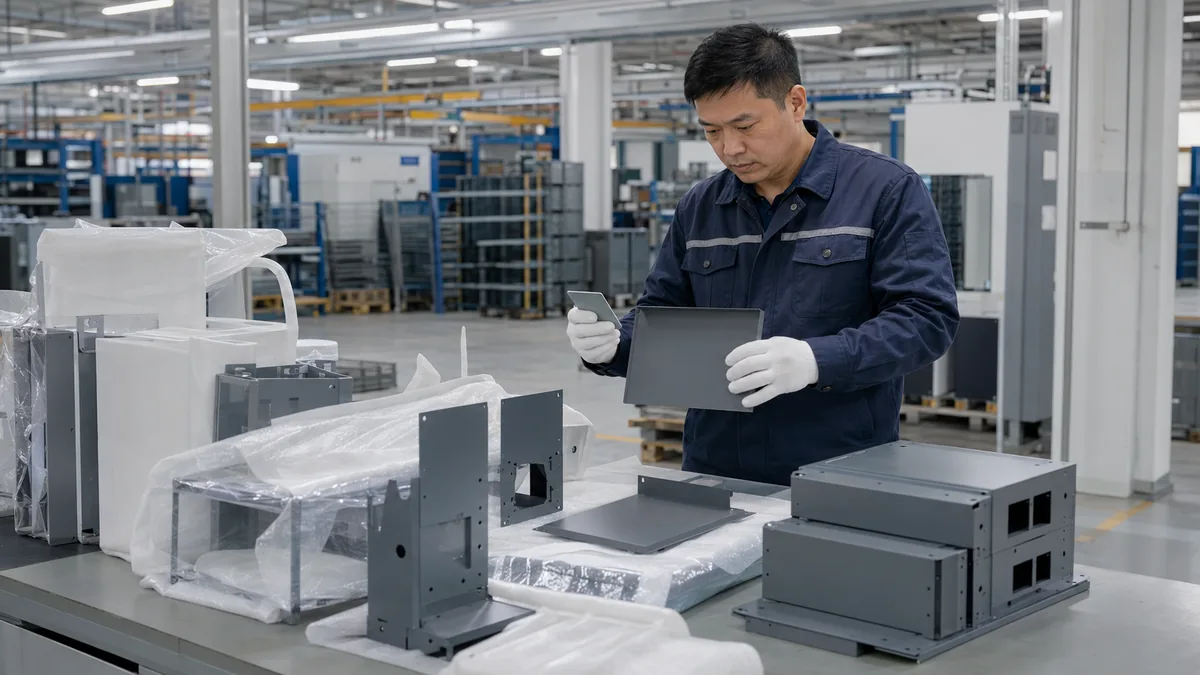
Powder coating, plating, anodizing and specialty testing are often performed by approved outside processors. Ask who selects and controls the processor, how lots are identified, what incoming and final checks are made, and whether the source can change without approval. The prime supplier should remain responsible for the complete delivered part.
8. Define payment, packaging and release terms in writing
There is no universal safe payment formula. Deposit, balance, milestone, letter-of-credit or open-account terms depend on order value, tooling exposure, supplier history and credit risk. Align payment milestones with evidence you can verify and ensure the beneficiary matches the contracted entity or an explicitly documented arrangement.
Supplier scorecard for startup buyers
| Area | Suggested weight | What earns the score |
|---|---|---|
| Drawing-fit capability | 25% | Evidence on comparable material, geometry, size and complete route. |
| DFM and communication | 20% | Specific, timely, documented answers with responsible engineering ownership. |
| Quality control | 20% | Drawing-based FAI, relevant gauges, lot control and corrective-action discipline. |
| Commercial transparency | 15% | Complete quote, exact Incoterm place, clear tooling and payment terms. |
| Delivery and capacity | 10% | Realistic schedule, bottleneck visibility and packaging plan. |
| Legal and supply-chain verification | 10% | Consistent entities, controlled outside processes and auditable records. |
Adjust the weights to the project. A medical, food, transport or outdoor product may require different controls from a simple internal electronics bracket.
Red flags when choosing a China sheet metal partner
- The legal entity, quotation name, bank beneficiary and factory identity do not match and no explanation is documented.
- The supplier quotes a complex drawing without material, tolerance, finish, quantity or DFM questions.
- Factory evidence is generic, undated or unrelated to the processes required by your part.
- Subcontracted work is denied, hidden or cannot be traced to an approved source.
- Changes are made without written deviation approval or drawing-revision control.
- Inspection evidence is a logo certificate rather than results tied to your drawing.
- The unit price omits tooling, finish, packing or delivery responsibilities.
- The trial part is artificially easy and does not represent production risk.
Why startups may shortlist MSTFAB
MSTFAB is a Guangzhou source factory for custom sheet metal enclosures, panels, brackets, cabinets and welded assemblies. Its published service route connects DFM, laser cutting, CNC bending, welding, hardware, surface treatment, inspection and export packaging. Buyers can request drawing-specific prototype, pilot and production quotations rather than relying on generic capability claims.
Need a China sheet metal partner for your startup?
Send the controlled drawings, material, finish, quantity stages, critical characteristics and destination. MSTFAB can review manufacturability and prepare a complete project quotation.
Key takeaways
- Choose by drawing fit, evidence and total landed cost—not country-level assumptions.
- Verify the legal entity and the actual manufacturing operation separately.
- Use DFM response and revision control as engineering qualification tests.
- Disclosed, controlled outside processing is different from hidden sourcing.
- Prove the supplier with a representative trial before repeat production.
Frequently asked questions
How do I verify a sheet metal manufacturer in China?
Check the Chinese legal entity and Unified Social Credit Code, then separately verify factory operations through live or third-party evidence. Match the legal name, quotation, contract, payment entity, facility and process records.
Is a trading company always worse than a direct factory?
No. A capable trading or engineering company can add value, but the manufacturing source, responsibilities, approvals and quality controls should be disclosed. Decide whether direct access is required for your project.
What should I send for a China sheet metal quote?
Send a controlled 3D model and 2D drawing, material and thickness, critical tolerances, welding and hardware, finish and masking, quantities, inspection, packaging, destination and requested Incoterm.
Should I require ISO 9001?
ISO 9001 can support confidence in a quality-management system, but it does not prove part capability. Require certifications relevant to the product and still verify the drawing-specific process and inspection evidence.
Should I request material certificates or PMI for every order?
No. Define them when the material risk, drawing, customer or regulation requires them. Select the document and verification depth appropriate to the application.
What payment terms are normal with a Chinese sheet metal factory?
Terms vary by relationship, order value, tooling and credit. Deposits and balance payments are common for new projects, but milestone, LC or credit terms may be negotiated. Put evidence and release conditions in writing.
Does MSTFAB accept startup prototypes and pilot orders?
Yes. MSTFAB reviews prototype, pilot and repeat-production sheet metal projects and confirms MOQ, tooling, inspection, lead time and commercial terms after reviewing the complete drawing package.
 WeChat Contact
 WhatsApp Me Directly