
Use this page when the RFQ scope is unclear
This article is for the buying team that has drawings but not a clean RFQ package yet. It separates scope, tolerance and QC expectations so suppliers quote the same job instead of three different versions of the same part.
This page has been separated from the industrial metal fabrication service article so Google and buyers can see the job of this article clearly. The useful question here is not “can someone make metal parts?” It is: what should a buyer check before sending drawings, approving a quote or moving into production?
- State whether the quote includes hardware, welding, finish and assembly.
- List material grade and thickness instead of saying only 'steel'.
- Mark critical tolerances and loosen cosmetic features.
- Ask which inspection report is included in the quoted price.
- Define packaging and Incoterm before comparing supplier numbers.
| 1 | State whether the quote includes hardware, welding, finish and assembly. |
| 2 | List material grade and thickness instead of saying only 'steel'. |
| 3 | Mark critical tolerances and loosen cosmetic features. |
| 4 | Ask which inspection report is included in the quoted price. |
| 5 | Define packaging and Incoterm before comparing supplier numbers. |
Buyer guide: This guide explains the design, process and quality checks OEM buyers should confirm before requesting production pricing for metal fabrication for custom industrial parts.
Short version: OEM metal fabrication is not simply cutting a piece of metal and putting it in a box. For industrial buyers, it is about receiving a finished part that fits the assembly, matches the drawing, survives shipping, and can be reordered without restarting the whole conversation from page one.
At MSTFAB, we provide OEM metal fabrication services for overseas equipment manufacturers, engineering teams, distributors, and industrial brands. Our focus is drawing-based sheet metal manufacturing for custom enclosures, cabinets, electrical panels, brackets, covers, frames, chassis, guards and welded metal assemblies.
You provide the product requirements. We help turn them into real metal parts that are ready for assembly. Because a STEP file is not a production plan just because it has a professional-looking file extension.
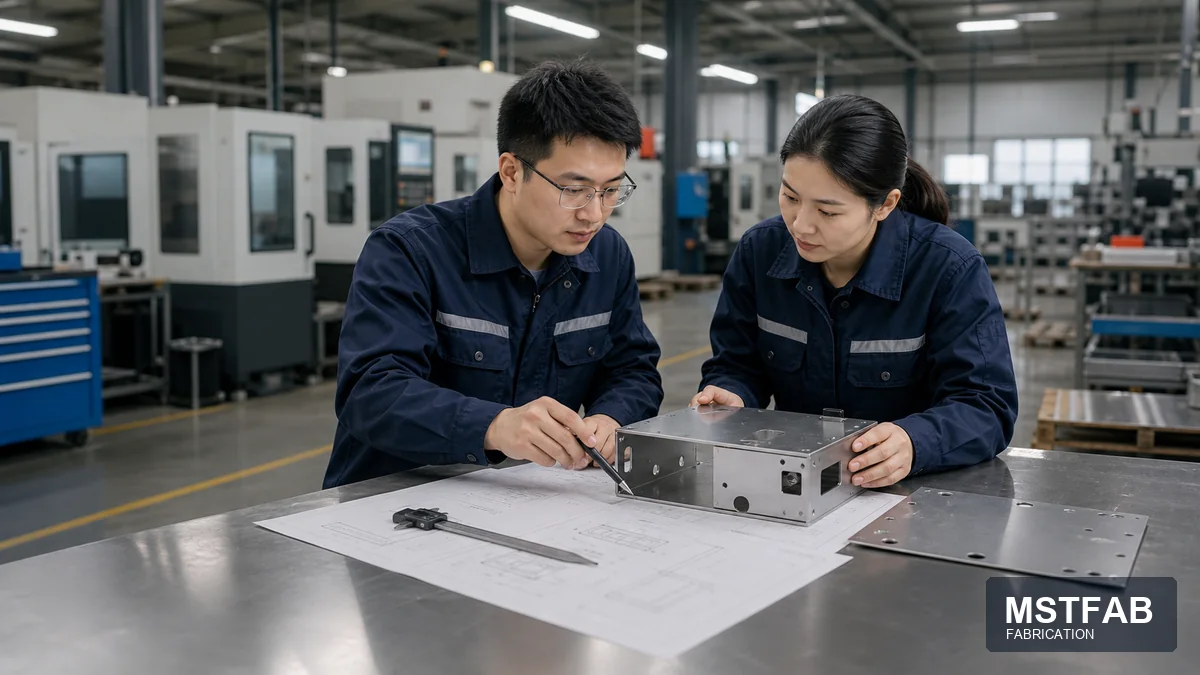
Reviewed by MSTFAB Manufacturing Engineering Team. Last updated: July 1, 2026. Focus: drawing-based sheet metal fabrication, laser cutting, CNC bending, welding, finishing, inspection and export packaging for international OEM buyers.
What does OEM metal fabrication mean?
OEM metal fabrication means manufacturing metal components according to your design, drawing, technical specification, approved sample or production requirement. The buyer owns the product concept and final application. The fabrication supplier is responsible for making the physical metal structure correctly and consistently.
For sheet metal OEM projects, this often includes laser cutting, CNC press brake bending, TIG or MIG welding, grinding, deburring, edge treatment, PEM hardware, powder coating, painting, plating, anodizing, mechanical assembly, dimensional inspection and export packaging.
MSTFAB mainly supports practical OEM sheet metal structures and assemblies. We do not sell the comforting but dangerous promise of “we can make anything from metal.” That sounds impressive until somebody asks for a ship propeller, a kitchen spoon and a satellite bracket in the same email.
For broader production capability, review our sheet metal fabrication services and the related guide for custom sheet metal fabrication for OEM parts.
The problems OEM buyers actually need to solve
Most buyers do not lose sleep because they cannot find a company with a laser machine. They lose sleep because the project has too many places where things can quietly go wrong.
Fit risk
Holes line up on the CAD model but not on the real assembly because bend direction, coating thickness or tolerance stack-up was missed.
Material risk
The drawing says stainless steel, aluminum or galvanized steel, but grade, thickness, grain direction and finish are not confirmed.
Welding risk
Welded frames can move with heat. A straight frame before welding is not a guarantee after welding.
Finish risk
Powder coating can improve durability, but it can also block threads, grounding zones or tight assembly faces if masking is ignored.
Inspection risk
Not every dimension matters equally. Critical dimensions should be marked before production, not discovered during receiving inspection.
Shipping risk
Export packing is part of quality. A perfect cabinet is less impressive after it loses a corner in transit.
A controlled workflow from drawing review to finished metal parts
A controlled OEM fabrication workflow is not about adding unnecessary steps. It is about preventing unnecessary surprises. The calmest project is usually the one where boring details were checked early.
1. Drawing and requirement review
The process starts with your available information: STEP, DXF, DWG, PDF, material grade, thickness, quantity, surface finish, critical tolerances, welding notes, hardware requirements, assembly photos, packaging instructions and target delivery date.
A clear drawing package reduces assumptions. An assembly photo is also valuable because it shows how the part works in the real world, not only how it looks in a drawing.
2. Laser cutting and blank preparation
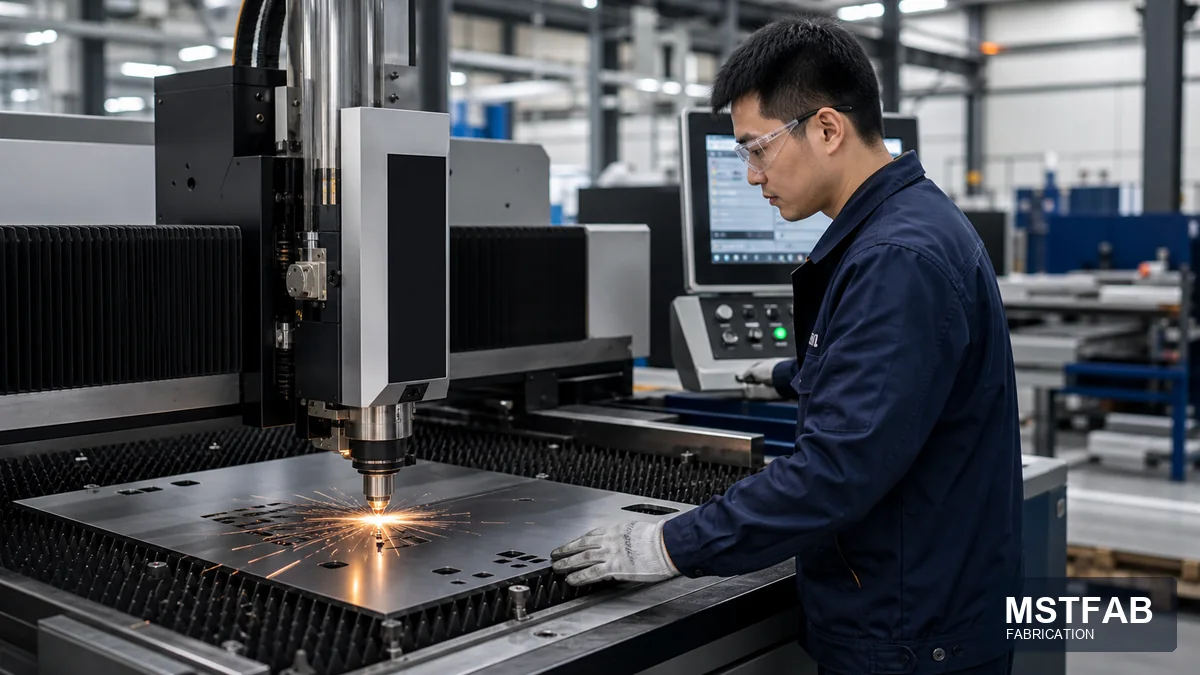
Laser cutting creates the flat pattern for brackets, panels, doors, covers, chassis parts, vents, mounting plates and structural components. It also creates holes, slots, cable openings, ventilation patterns, tabs and alignment features for downstream processes.
Our laser cutting services support custom OEM parts that move into bending, welding, finishing and assembly. Good laser-cut preparation helps the next process work properly. Bad preparation creates expensive metal puzzles later.
3. CNC bending and forming
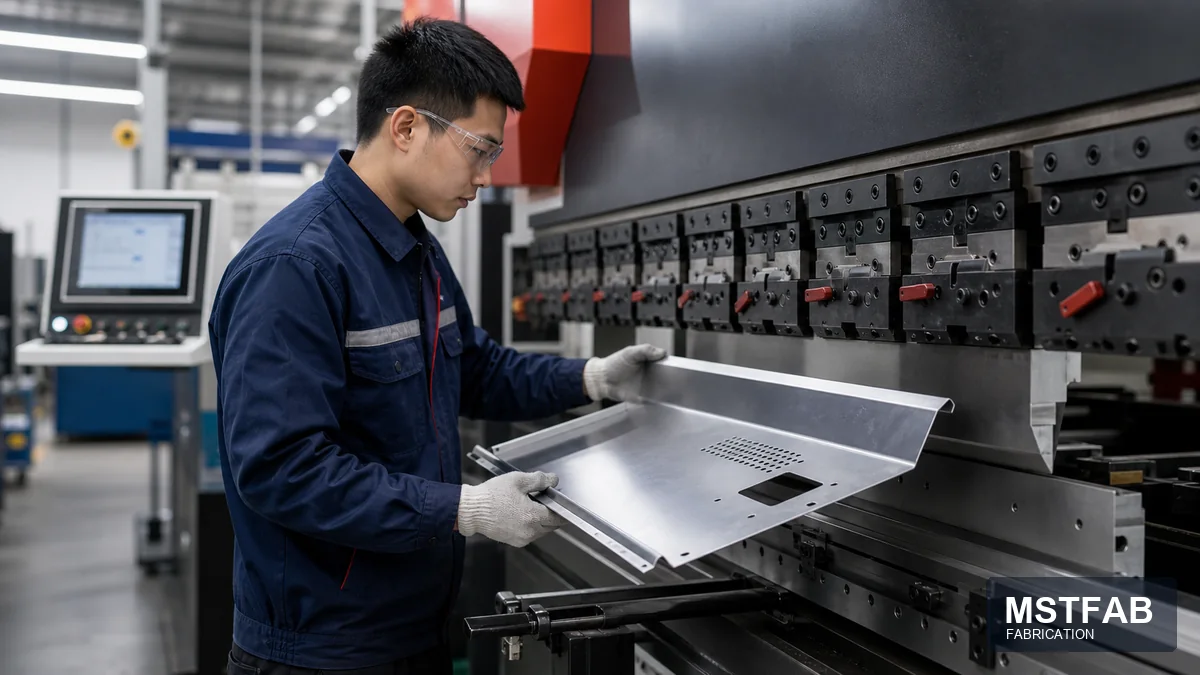
CNC press brake bending transforms flat sheets into useful three-dimensional components, including L brackets, U channels, Z bends, cabinet doors, enclosure bodies, machine guards, electrical panels, mounting frames, covers and trays.
A bend is not only a bend. It can become a source of distortion, clearance problems and tolerance stack-up if material type, bend radius, tooling, flange length and hole position are not reviewed. For formed parts, see our CNC sheet metal bending capability.
4. Welding, grinding and structural assembly
Some OEM metal parts are complete after cutting and bending. Others need welding to become frames, bases, cabinets, housings, supports, machine components and multi-part assemblies.
Welding adds strength, but it also adds heat. Heat can create distortion. Distortion can create fit problems. Fit problems create emails with too many capital letters. Before welding begins, we review weld location, weld length, structural requirements, grinding needs, assembly sequence and inspection points.
Learn more about our sheet metal welding services for custom OEM assemblies.

5. Surface finish is not decoration
Surface treatment affects appearance, corrosion resistance, scratch resistance, cleaning, assembly and shipping protection. Common finish requirements include powder coating, wet painting, brushed stainless steel, mirror polishing, sandblasting, aluminum anodizing, zinc plating, galvanizing and protective film.
Finish requirements should be defined before production, especially when parts include threads, sealing surfaces, electrical grounding areas, cosmetic panels or visible customer-facing surfaces. For process options, review our surface treatment services.

6. Inspection and export packaging
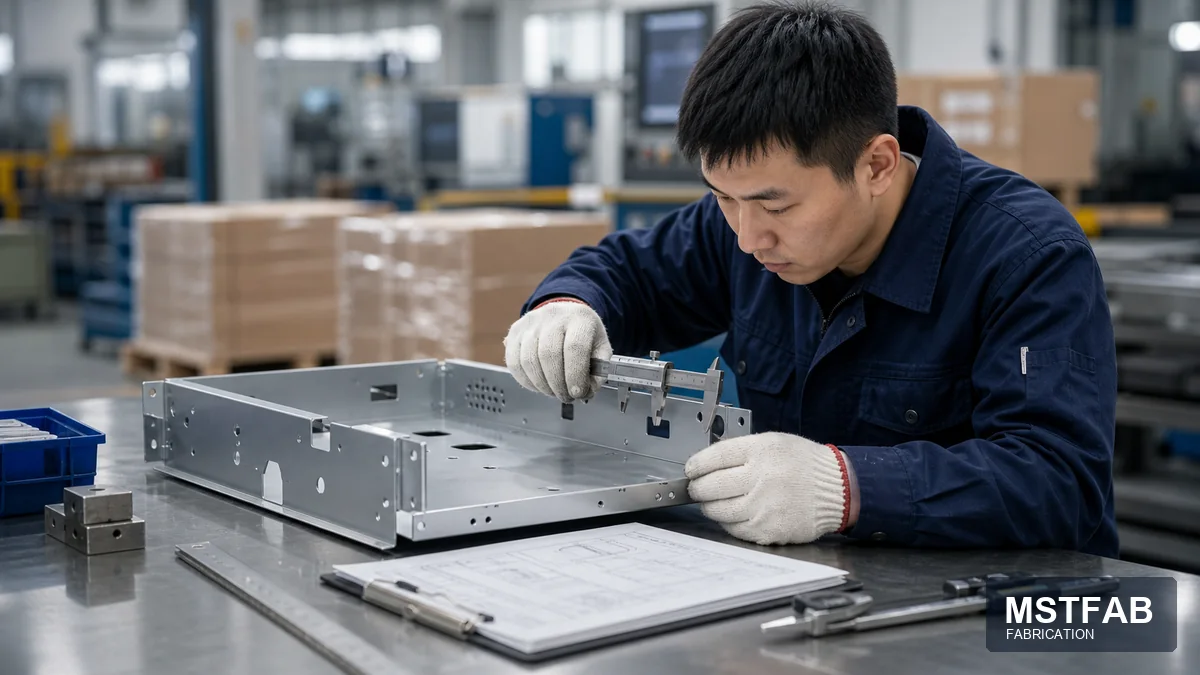
Not every dimension needs the same inspection level. A hidden mounting hole and a front-facing display opening have different importance. A cosmetic brushed panel and an internal welded bracket should not be judged in exactly the same way.
For OEM metal fabrication, inspection should focus on critical dimensions, hole and slot positions, bend angles, flatness, squareness, hardware function, weld condition, finish condition, assembly fit and packing protection.
Material selection: choose for function, not for fashion
| Material | Common use | Buyer notes |
|---|---|---|
| Stainless steel | Industrial equipment, medical environments, food-related machinery, outdoor cabinets and visible panels. | Define brushing, polishing, passivation, protective film and visible weld treatment where needed. |
| Aluminum | Lightweight housings, transport equipment, electronic panels, battery-related structures and machine covers. | Check alloy grade, bend radius, welding requirement and final load before production. |
| Mild steel | Structural frames, machinery parts, brackets, guards and powder-coated industrial products. | Cost-effective, but finishing and packing must protect against corrosion. |
| Galvanized steel | Cabinets, enclosures, ducts, outdoor-related parts and corrosion-conscious assemblies. | Confirm welding, coating compatibility and cut-edge protection. |
Material selection should never be based only on the cheapest quotation line. A low-cost material that rusts early, bends incorrectly or creates assembly problems is not actually low cost. It is simply a delayed invoice.
Common OEM metal fabrication products MSTFAB supports
- Custom sheet metal enclosures and industrial cabinets
- Electrical panels, control cabinet parts and mounting plates
- Metal brackets, covers, guards, frames and chassis parts
- Welded assemblies and structural sheet metal components
- Outdoor power, telecom and equipment housings
- Powder-coated parts for OEM machinery and smart energy systems
If your project is enclosure-focused, you may also want our custom sheet metal enclosure fabrication page. For charging infrastructure projects, see EV charger enclosure fabrication.
What to send for an OEM metal fabrication quote
| Information to send | Why it helps |
|---|---|
| 3D STEP file and 2D PDF drawing | Lets engineering review geometry, tolerances, bend direction and critical dimensions. |
| DXF or DWG cutting file | Helps prepare flat patterns and estimate laser cutting time accurately. |
| Material grade and thickness | Prevents substitutions that may affect strength, corrosion resistance or forming. |
| Surface finish details | Defines color, texture, coating thickness, visible surfaces and masking areas. |
| Quantity and target schedule | Separates prototype review from batch production planning. |
| Assembly photos or reference samples | Shows how the part is used, which is sometimes clearer than ten more emails. |
| Packaging and destination country | Helps protect corners, coatings, threads and assembled geometry during export shipping. |
Frequently asked questions
Can MSTFAB manufacture OEM metal parts from our drawings?
Yes. MSTFAB supports drawing-based custom sheet metal fabrication for OEM brackets, cabinets, enclosures, panels, covers, frames, chassis and welded assemblies.
Do you support prototype and repeat orders?
Yes. OEM projects can begin with prototype validation, then move into repeat batch production after drawing, material, finish and inspection requirements are confirmed.
Can you handle cutting, bending, welding and finishing together?
Yes. The purpose of an integrated fabrication workflow is to coordinate the full route from raw material to finished, export-ready metal parts.
Do you provide product design services?
MSTFAB focuses on manufacturing custom metal structures based on buyer drawings, samples and technical requirements. We can provide practical DFM feedback related to fabrication, while the buyer remains in control of the product design and functional requirements.
Start your OEM metal fabrication project
A reliable fabrication partner should not only say, “Yes, we can make it.” They should help identify what needs attention before production, control the fabrication route, check the key details and deliver parts ready for your assembly line.
Send your STEP, DXF, DWG, PDF drawing, sample photo, material requirement and quantity. We will review the project from a manufacturing point of view before you invest in production.
 WeChat Contact
 WhatsApp Me Directly