
OEM buyers do not simply purchase metal parts.
They purchase a repeatable manufacturing result.
A bracket needs to align with the machine frame. A cover needs to fit after powder coating. A welded assembly needs to remain square. A control panel needs the correct openings for switches, wiring, displays, and connectors. A visible stainless steel part needs to arrive without scratches.
The drawing may look simple. The final product usually is not.
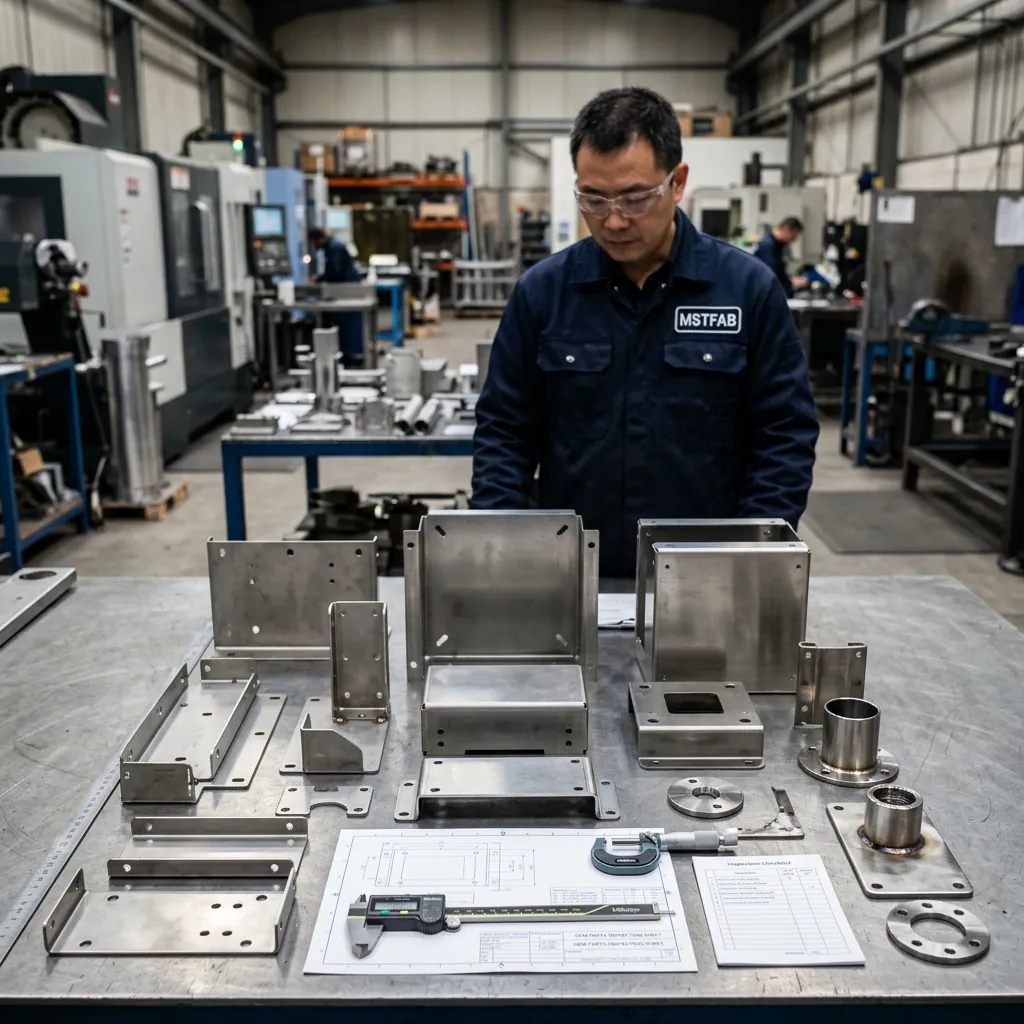
That is why custom metal parts manufacturing services for OEM buyers should focus on more than laser cutting or bending alone. The real goal is to turn an approved drawing into parts that fit, function, ship safely, and remain consistent when the next production order is placed.
At MSTFAB, we support drawing-based fabrication for OEM brackets, panels, cabinets, enclosures, machine covers, chassis parts, mounting plates, guards, and welded metal assemblies.
The objective is straightforward:
Your parts should arrive ready for assembly, not ready for modification.
What OEM Buyers Are Really Buying
A custom metal part may be only one component in a larger product. It must work with the rest of the assembly.
For example: A mounting hole may need to align with another fabricated part. A welded frame may need to remain flat enough for final installation. A cabinet door may need to close correctly after hinges, latches, and powder coating are added.
A part that “almost fits” is not a successful OEM part. It is usually an expensive metal reminder that assumptions were made too early.
Procurement Trust Table: The Difference Between Buying Metal and Buying Manufacturing
| Verification Point | The “Cheap Material” Supplier | The MSTFAB Standard |
|---|---|---|
| Engineering Review | Immediately quotes the flat pattern without checking assembly fit. | Conducts DFM review to ensure bend feasibility and hardware alignment. |
| Surface Protection | Throws cosmetic panels into a box together. | Applies protective film and uses foam dividers for export safety. |
| Tolerances | Assumes all dimensions are ±1mm. | Verifies critical functional dimensions during First Article Inspection (FAI). |
| Consistency | Treats every repeat order like a brand new experiment. | Maintains strict drawing revision control and approved process records. |
The First Question to Ask a Metal Parts Supplier

Many buyers ask: “Can you make this part?” Most suppliers will say yes.
The better question is: “What manufacturing risks do you see before production begins?”
A reliable supplier should review your drawing before cutting metal. This is commonly called DFM: Design for Manufacturing.
DFM does not mean changing your design without approval. It means identifying potential production issues while the part is still a digital file, not after hundreds of finished pieces are sitting in a warehouse. A hole that sits too close to a bend line may deform during CNC bending. A powder-coated threaded hole may no longer accept a screw. These are not unusual issues. They are normal fabrication issues. The real difference is whether they are found before or after production.
Material Selection Should Follow the Application
The lowest-cost material is not always the lowest-cost decision. Material needs to match the real environment, expected load, corrosion risk, appearance requirement, finish, and assembly method.
Stainless Steel is commonly selected for corrosion resistance, hygiene, and visible surfaces. But “stainless steel” is not a complete requirement. OEM buyers should clarify the grade, thickness, finish, and protective film requirement. A hidden stainless mounting plate and a front-facing brushed stainless steel panel may use similar material, but they do not need the same visual standard.
Aluminium is selected when weight reduction matters. However, aluminium should be reviewed carefully for stiffness and alloy selection. A lightweight part is useful. A lightweight part that flexes every time somebody touches it is less useful.
CNC Bending: Why “Just Bend It to 90 Degrees” Is Not Enough
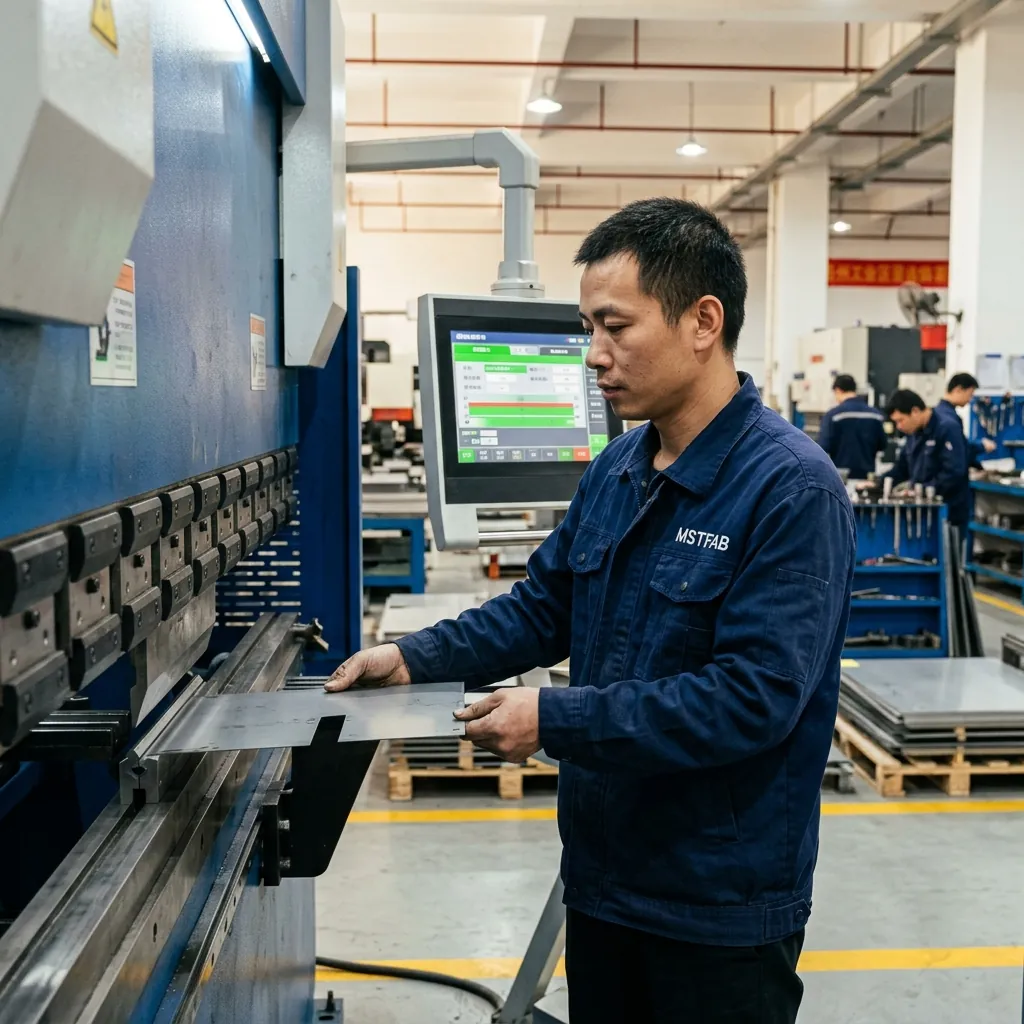
A 90-degree bend may look simple on a drawing. In production, it depends on material thickness, bend radius, tooling, grain direction, and springback.
Springback happens because metal naturally moves slightly back toward its original flat shape after bending. Metal is cooperative, but it does occasionally have opinions.
For OEM buyers, the important question is not only whether the bend angle is correct. It is whether the finished part will still fit the next component. Will the bracket align with the machine frame? Will the enclosure door match the cabinet opening?
Hardware and Surface Finish Must Be Planned Early
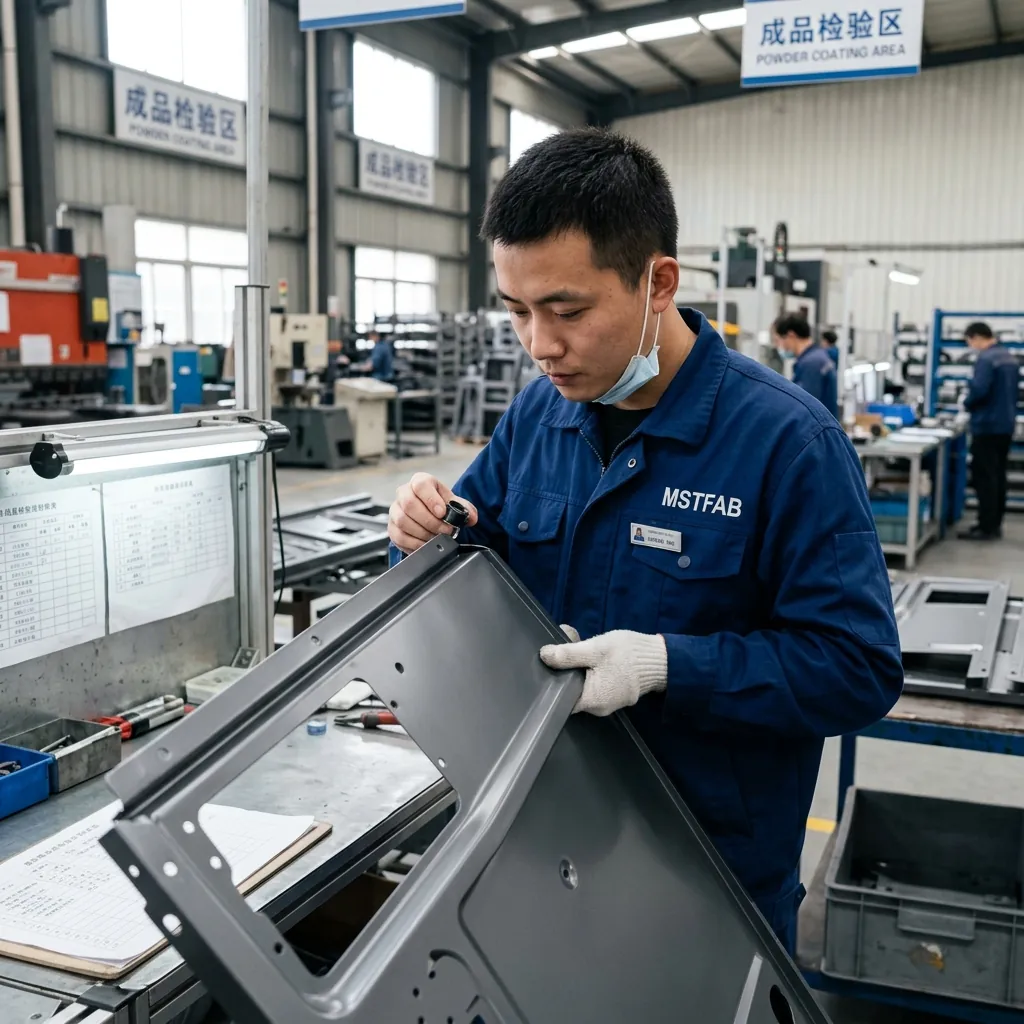
Many custom metal parts require PEM nuts, studs, rivet nuts, or hinges. These features should be decided before coating, painting, anodizing, or plating.
Powder coating inside a thread can stop screws from fitting. A grounding point may need exposed metal contact. Clear finish requirements prevent future disagreements.
Why Prototypes and FAI Matter for OEM Buyers

A prototype should not only prove that one sample looks good. It should prove that the manufacturing route can be repeated.
The goal is not to approve a nice-looking part on a table. The goal is to confirm that the part works in the real product.
Export Packaging and Final Quality
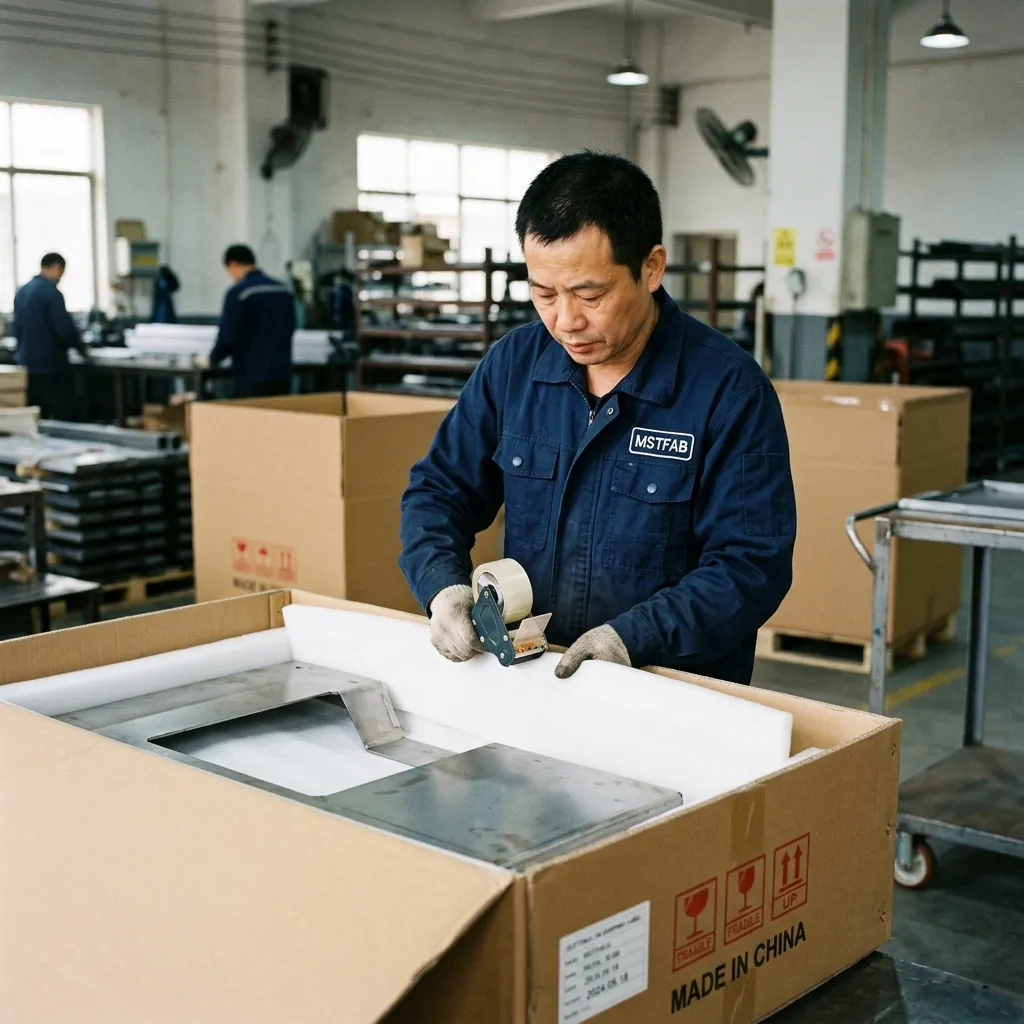
A lower quotation may include only basic laser cutting. Another supplier may include bending, welding, hardware, finishing, inspection, and export packing. Those are not the same quotation. The best supplier is not always the one with the lowest starting number. It is the one that clearly understands the full manufacturing scope.
Frequently Asked Questions
Can OEM buyers order prototypes before production?
Yes. Prototype or first-article production helps verify fit, material, bend angles, welding, hardware, surface finish, assembly, and packaging before larger batch orders begin.
What causes a quote to change after it is issued?
Common reasons include revised drawings, material or thickness changes, added bends, welding, hardware, tighter tolerances, finish changes, inspection requirements, packaging requirements, or quantity changes.
What should an OEM buyer confirm before production starts?
Confirm the approved drawing revision, material, thickness, finish, hardware, critical dimensions, inspection points, packaging method, quantity, and delivery requirement.
Start Your OEM Metal Parts Project
A good custom metal part should do more than match a drawing.
It should fit your assembly, meet the intended function, arrive safely, and remain consistent when you reorder.
Send your drawings, material requirements, quantity, finish details, tolerance notes, and application information through the MSTFAB quotation page.
Our team will review the manufacturing route before production begins. Because a good OEM part should solve problems quietly, not create new ones.
Low-Volume Production for OEM Buyers
Understand how to transition smoothly from prototype approval to stable, repeatable pilot batch production.
 WeChat Contact
 WhatsApp Me Directly