
⚡ Direct Answer: What Is Electrical Enclosure Fabrication?
Electrical enclosure fabrication is the custom sheet metal manufacturing process of engineering, cutting, forming, welding, and finishing protective mechanical housings designed to safeguard electrical switchgear, motor drives, PLCs, and terminal connections from environmental damage (dust, moisture, chemicals, vandalism) while protecting personnel from electric shock. The process transforms sheet metal blanks (cold-rolled steel, galvanized steel, stainless steel, or aluminum) into rigid cabinets conforming to international NEMA (National Electrical Manufacturers Association) or IEC 60529 (IP) ingress standards.
The 6-Stage Electrical Enclosure Fabrication Process
For industrial equipment manufacturers and automation systems integrators, sourcing custom electrical cabinets requires a deep understanding of core sheet metal manufacturing sequences:
| Fabrication Stage | Equipment & Technology | Process Function | Critical Quality Checkpoint |
|---|---|---|---|
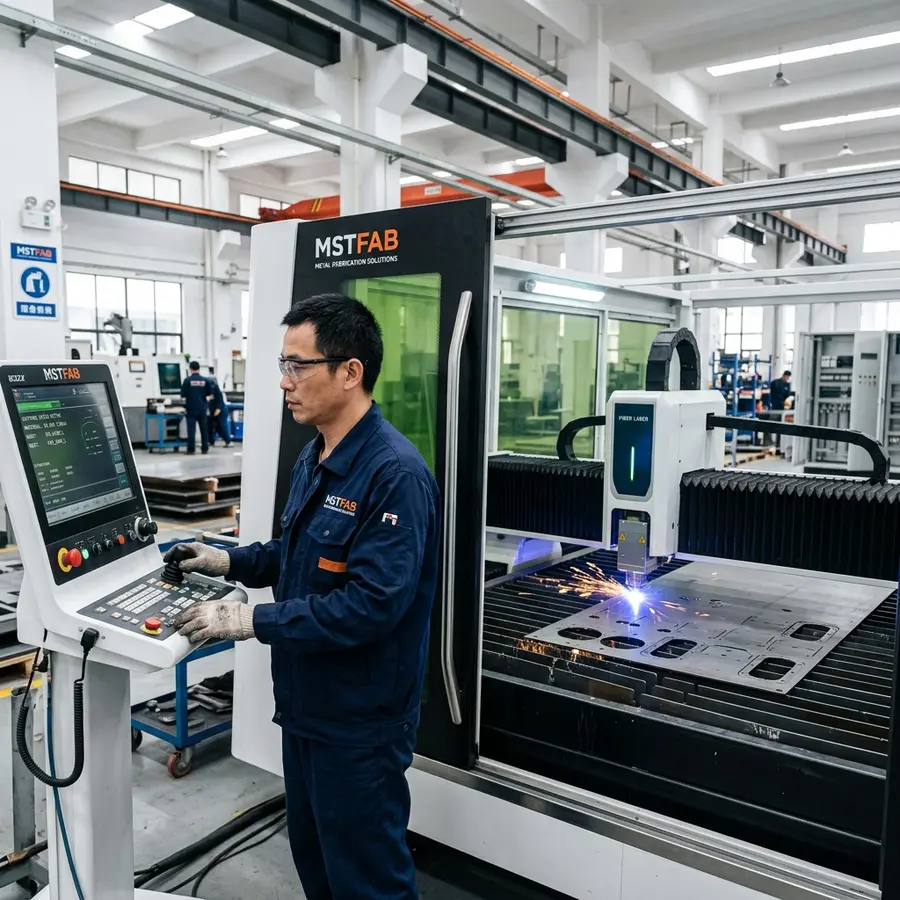
| 1. Laser Blanking & Cutouts | 12kW–20kW Fiber Laser Cutters | High-speed cutting of exterior perimeter, HMI screen cutouts, cable knockout patterns, and mounting slots. | Burr height < 0.05mm; dimensional tolerance within ±0.1 mmmm. |
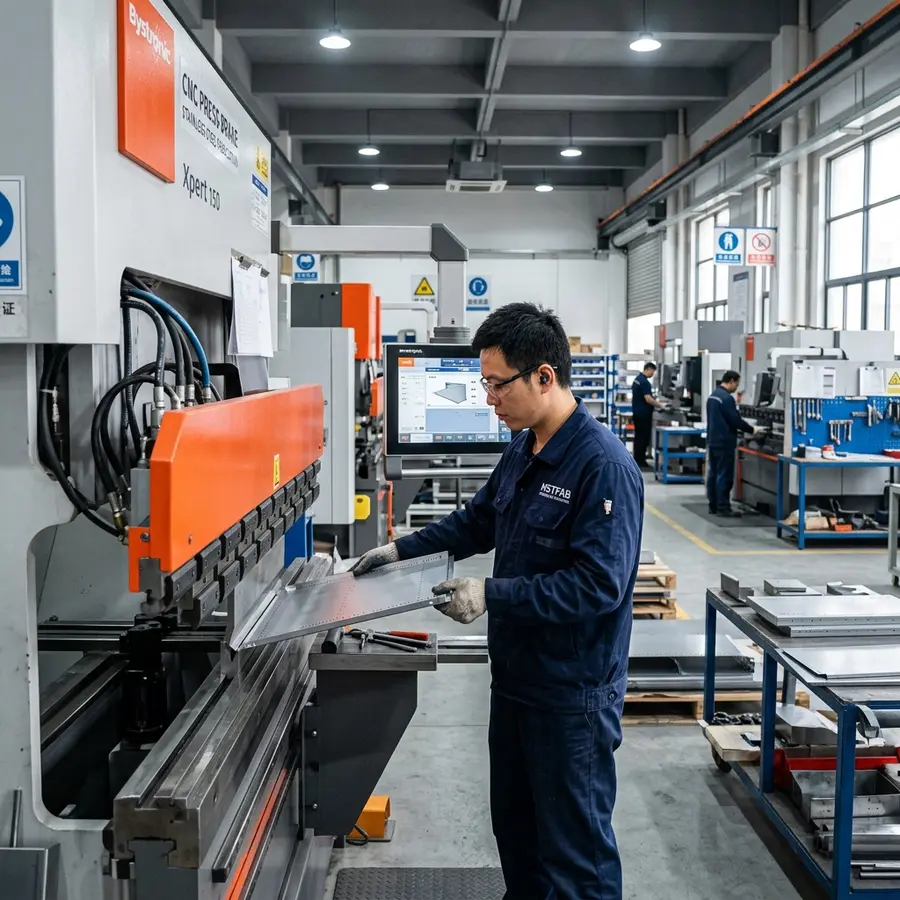
| 2. Multi-Axis CNC Bending | Hydraulic Press Brakes with Laser Angle Sensor | Forming cabinet bodies, door returns, internal DIN rail brackets, and gutter lips. | Flange length ±0.2 mmmm; angularity within ±0.3° across 2-meter bends. |
| 3. Precision Seam Welding | Continuous TIG (GTAW) & Robotic Laser Welding | Hermetically sealing cabinet corners, mounting studs, and sub-frame stiffeners. | Zero weld porosity; weld seam ground flush without thinning base metal. |
| 4. Gasket Dispensing (Sealing) | CNC Formed-in-Place Foam Gasket (FIPFG) Machine | Robotic continuous dispensing of two-part polyurethane or silicone sealing bead onto door troughs. | Seamless continuous bead with 25%–30% compression recovery for IP55/IP66. |
| 5. Pretreatment & Coating | Automated 5-Stage Phosphate & Electrostatic Powder Line | Degreasing, conversion coating, electrostatic spraying of UV-resistant polyester powder, oven curing at 200°C. | Dry film thickness 80–120 µm; 1,000 hrs ASTM B117 salt spray compliance. |
| 6. Mechanical Assembly & FAI | Assembly Cells & Optical CMM | Installing quarter-turn locks, hinges, zinc-plated mounting sub-plates, and grounding studs. | Door hinge swing test, grounding bond continuity (<0.1 Ω), CMM dimensional verification. |
Common Sheet Metal Materials Used for Electrical Cabinets
- Cold-Rolled Steel (SPCC / DC01): Standard material for indoor NEMA 1 and NEMA 12 control cabinets. Requires high-quality electrostatic powder coating. Highly cost-effective with excellent mechanical rigidity.
- Hot-Dip Galvanized / Electro-Galvanized Steel (SGCC / SECC): Ideal for utility boxes and outdoor NEMA 3R distribution panels. Zinc layer provides sacrificial corrosion protection along punched hole edges.
- Stainless Steel (AISI 304 & 316L): The gold standard for NEMA 4X / IP66 applications in corrosive chemical plants, wastewater facilities, pharmaceutical cleanrooms, and food processing lines. Available in brushed No. 4 finish or electro-polished.
- Aluminum (5052-H32 / 6061-T6): Lightweight (one-third the weight of steel) with natural atmospheric corrosion resistance. Favored for pole-mounted telecom cabinets and rooftop solar combiner boxes where weight reduction and passive thermal conductivity are essential.
Source Custom Electrical Enclosures from an ISO 9001 Factory
Send your electrical cabinet drawings (STEP/DWG/PDF) to MSTFAB. Our engineering team provides a comprehensive DFM review on cutouts, NEMA/IP sealing paths, and powder coat options with quotes within 24 hours.
Frequently Asked Questions on Electrical Enclosure Fabrication
What is the difference between standard and custom electrical enclosure fabrication?
Standard catalog enclosures require secondary drilling, cutting, and repainting to fit internal components, which voids paint warranties and causes rust. Custom fabrication cuts all HMI, DIN rail, cable gland, and ventilation openings prior to powder coating, ensuring 100% paint coverage and eliminating field modification costs.
Can MSTFAB provide internal galvanized mounting plates and swing-out panels?
Yes. We supply heavy-gauge (2.0mm–3.0mm) white powder-coated or zinc-plated gear sub-plates, 19-inch rack mounting rails, internal deadfront barriers, and swing-out secondary operator doors built to your exact specifications.
 WeChat Contact
 WhatsApp Me Directly