
⚡ Direct Answer: What Are the Key Engineering Rules for Weatherproof Enclosure Design?
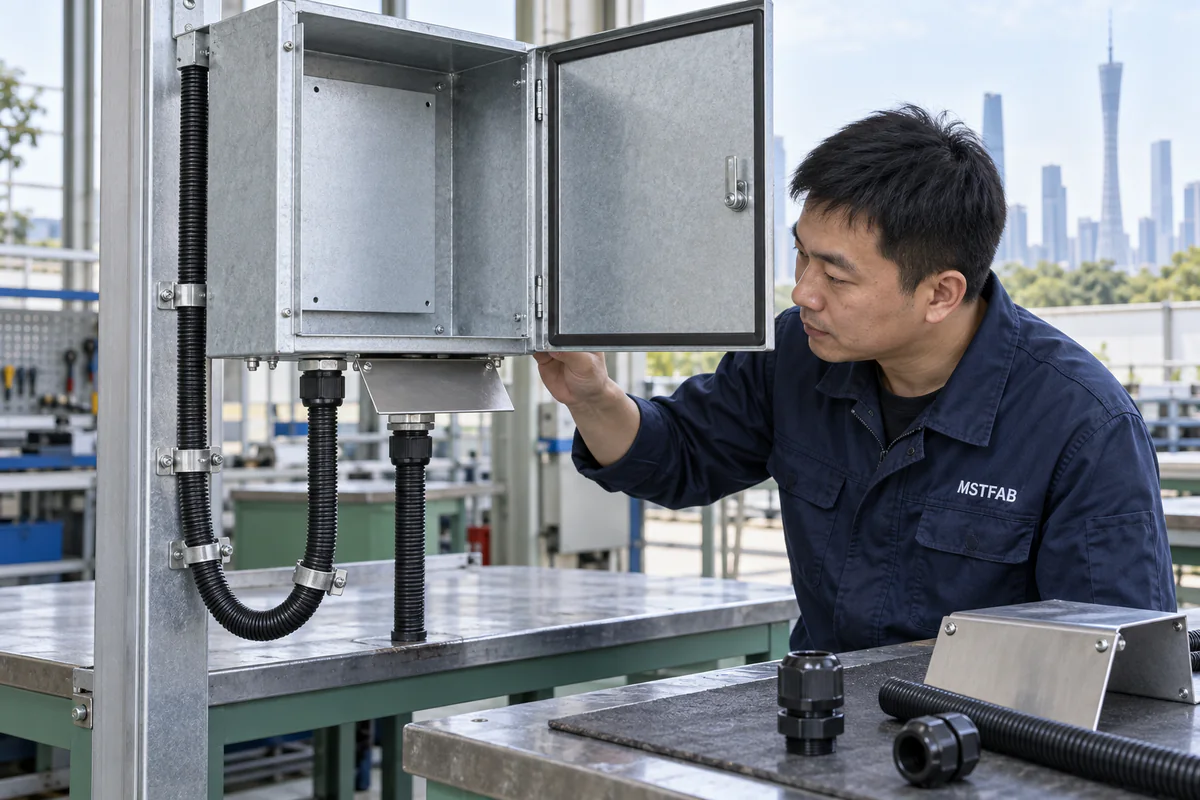
Designing a true outdoor weatherproof electrical enclosure (NEMA 3R / NEMA 4X / IP66) requires implementing 4 mandatory mechanical barrier strategies: 1) Sloped Rain Hoods & Drip Shields: Incorporating a 15°–30° forward-slanted top roof overhang (extending 25mm–50mm past the door face) to divert torrential rainfall and prevent standing water puddles; 2) Sheltered Bottom Gland Plates: Positioning all cable entry conduits on the bottom face with gasketed gland plates to eliminate water tracking along incoming wire harnesses; 3) Labyrinth Louvers with Internal Water Baffles: Stamping downward-facing louvers backed by an internal vertical deflection plate and washable mesh filter to allow heat dissipation without wind-driven rain penetration; and 4) Condensation Drainage Valves (Weep Plugs): Installing one-way sintered bronze or stainless breather drains at the lowest gravity point to vent internal humidity and prevent condensation buildup.
Outdoor Weatherproof Enclosure DFM Checklist
| Weatherproofing Feature | Engineering Specification | MSTFAB Fabrication Standard | Outdoor Climate Risk Prevented |
|---|---|---|---|
| Sloped Top Roof Hood | 15°–30° forward pitch; 40mm overhang | Welded water-shedding peak; Ra <1.6µm dressed | Prevents standing water from pooling and penetrating upper door gaskets. |
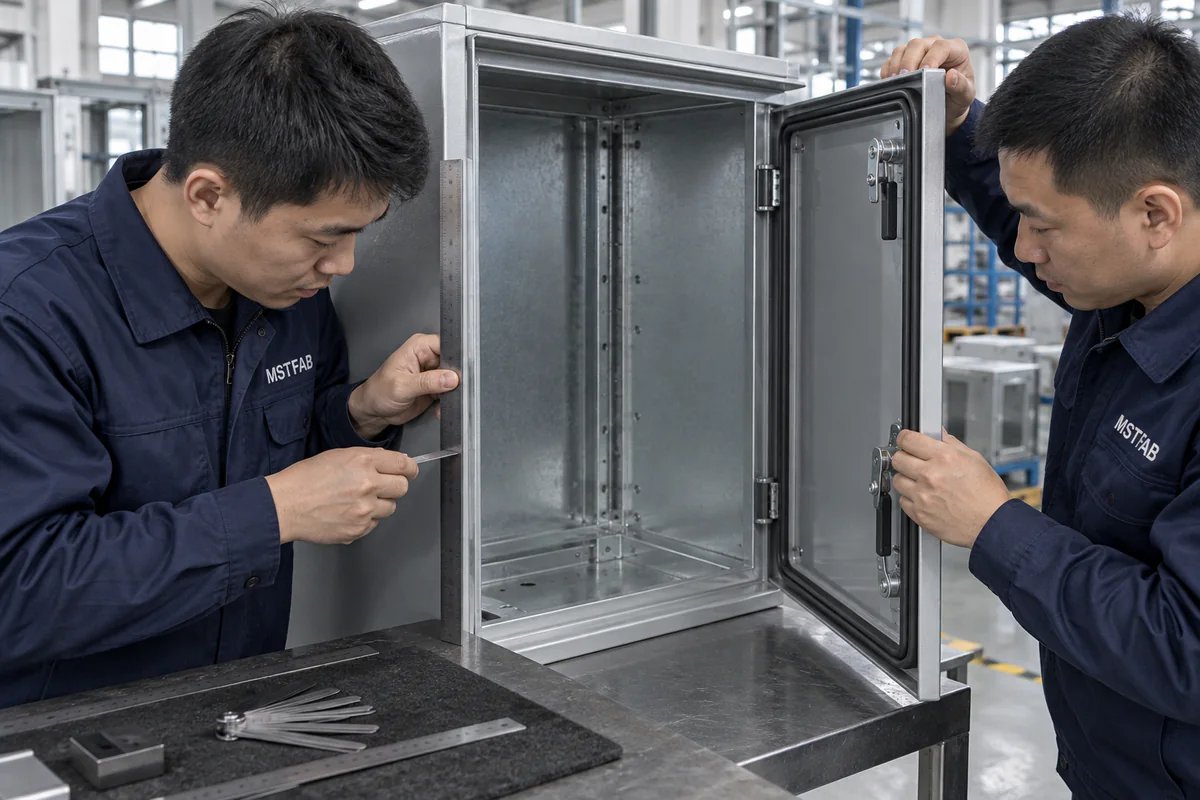
| Formed Gasket Channels | Knife-edge door flange with liquid FIPFG PU | Seamless robotic dispensing; 30% compression | Blocks wind-driven rain and high-pressure hose washdown. |
| Bottom Cable Entries | Removable 3.0mm aluminum or steel plate | Recessed 20mm above bottom rim | Forces external cable drips to shed before reaching conduit fittings. |
| Breather Drain Plugs | M12 stainless sintered drainage vent | Installed at lowest corner datum | Prevents internal vacuum suction during day/night temperature cycling. |
Outdoor electrical enclosures installed in solar farms, telecom towers, and roadside monitoring stations face extreme thermal swings, intense solar UV radiation, and horizontal wind-driven rain. A common rookie mistake is sealing an enclosure completely air-tight without breather drains. During evening cooling, the air inside shrinks, creating a negative pressure vacuum that sucks external moisture past door gaskets. MSTFAB incorporates integrated pressure-equalizing breather vents and sloped roofs to guarantee decades of outdoor weatherproofing.
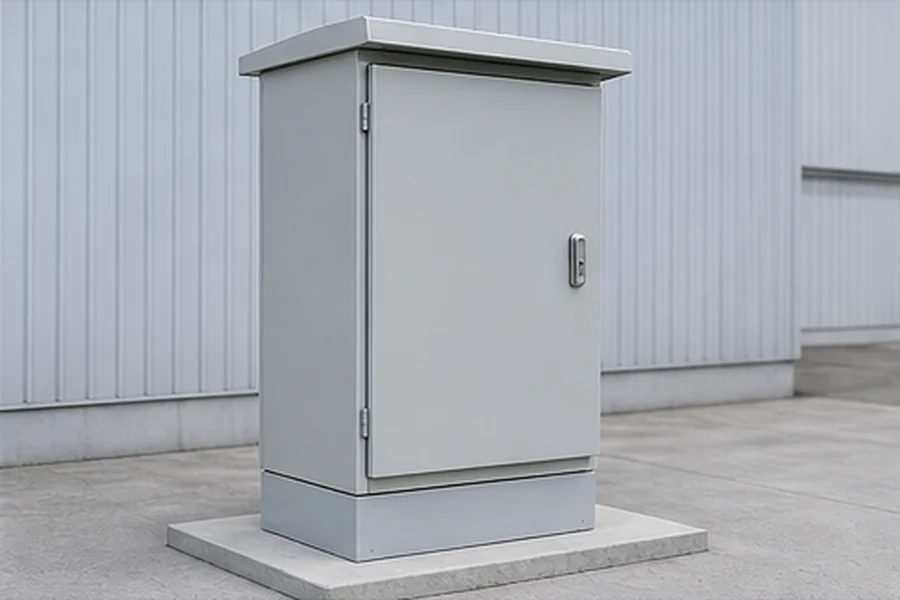
Water Deflection Channels, Bottom Entries & Baffled Louvers
Our engineering team designs knife-edge return flanges around the entire door aperture. When water runs down the enclosure face, it is channeled into side gutters and directed harmlessly to the ground before it can contact the gasket. When forced cooling air is needed, our CNC punching cells form downward-angled louvers with internal catch baffles that separate entrained water droplets from the incoming air stream.

Need Outdoor Weatherproof Enclosures Engineered for Harsh Climates?
Partner with MSTFAB for custom NEMA 3R, 4, and 4X weatherproof enclosures. We engineer sloped rain hoods, baffled ventilation, and automated PU foam gaskets.
Frequently Asked Questions on Weatherproof Enclosures
Why are side cable entries avoided in outdoor weatherproof enclosures?
Side-mounted conduit fittings create horizontal ledges where rainwater pools directly against the sealing O-ring. Gravity-assisted bottom entries eliminate water pooling and allow natural drip loops in incoming cable bundles.
How does solar heat gain affect outdoor electrical enclosures?
Direct sunlight can increase internal enclosure temperature by up to 20°C above ambient. We mitigate this using high-reflectivity RAL 7035 light grey powder coating, double-walled sun shields, and internal heat exchanger plenums.
 WeChat Contact
 WhatsApp Me Directly