
⚡ Direct Answer: How to Choose the Right Steel for Industrial Electrical Enclosures?
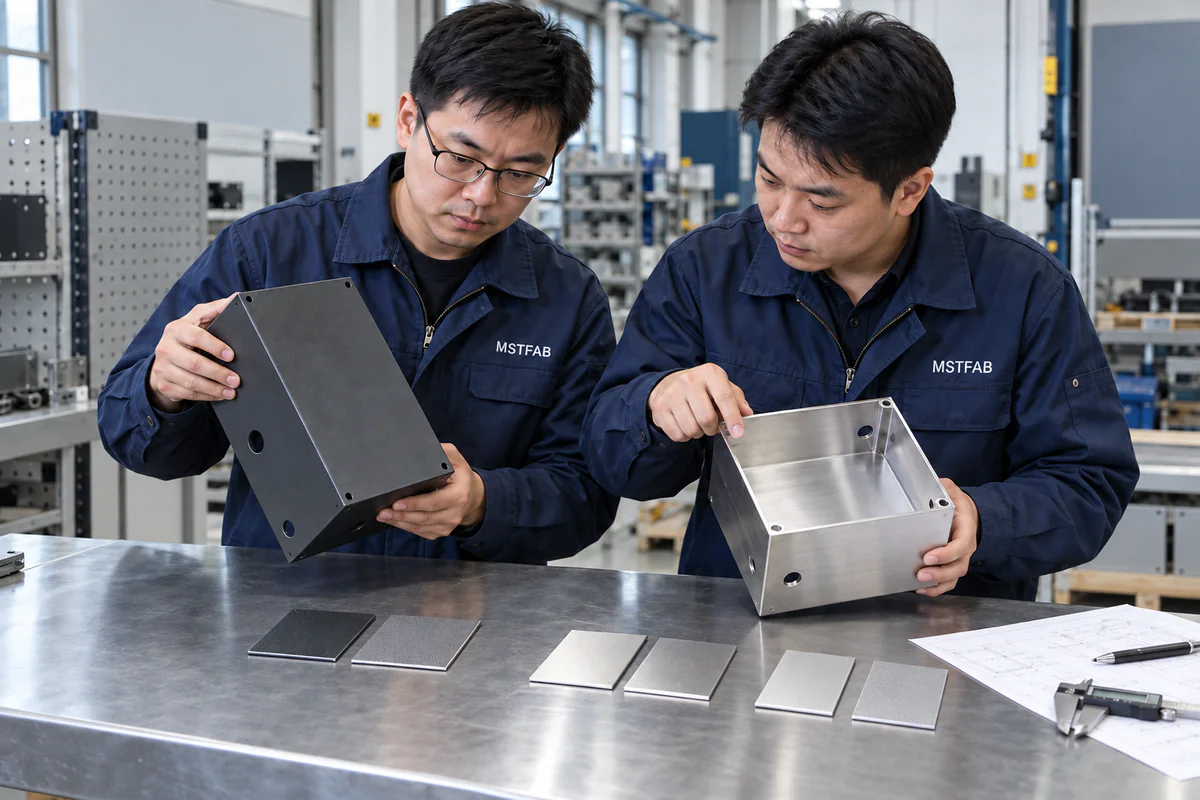
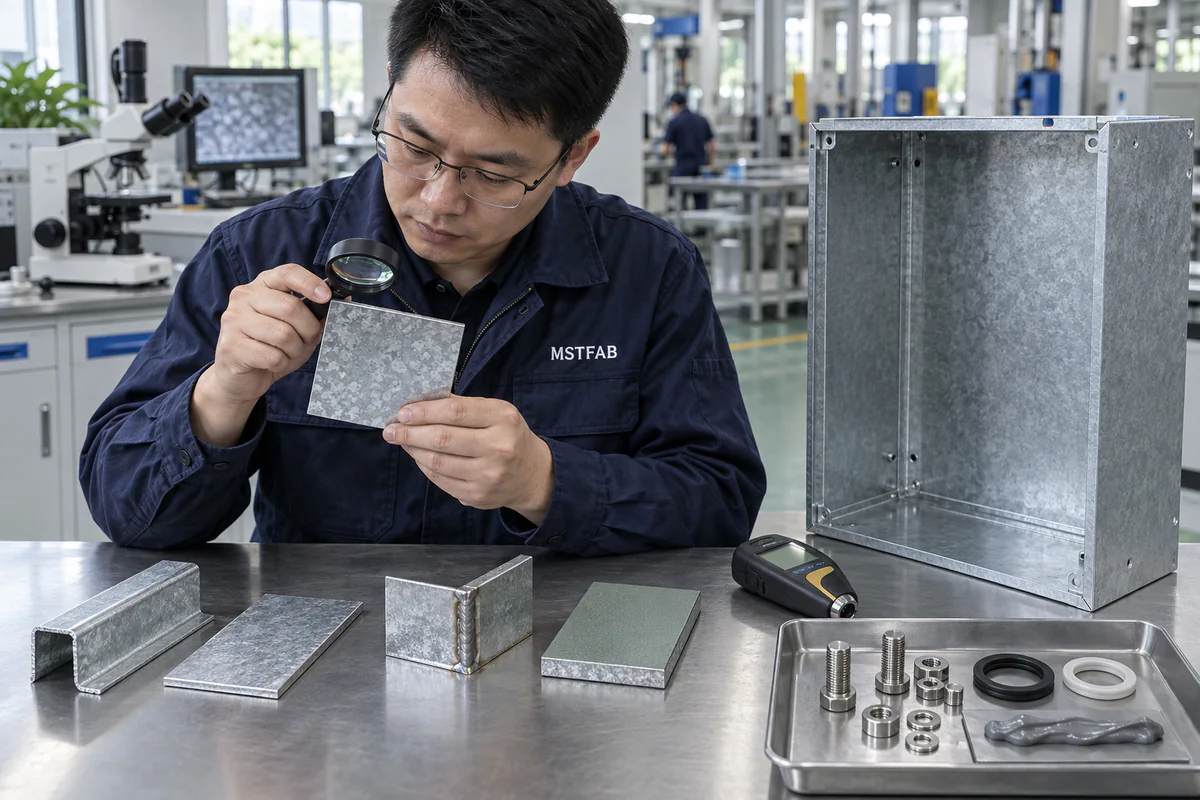
Selecting the optimal steel alloy for custom electrical enclosures requires evaluating 4 environmental exposure and cost thresholds: 1) Cold-Rolled Carbon Steel (SPCC / CRS): Most economical for indoor climate-controlled factory environments (NEMA 1 / NEMA 12); requires polyester powder coat to prevent rust; 2) Hot-Dip Galvanized Steel (G90 / Z275): Best cost-performance for outdoor commercial and solar enclosures; sacrificial zinc layer protects laser cut edges electrochemically; 3) 304 Stainless Steel (1.4301): Standard for outdoor washdown, pharmaceutical, and food-grade environments (NEMA 4X); resists washdown chemicals; and 4) 316 Marine-Grade Stainless Steel (1.4404): Essential for marine coastal installations, offshore oil rigs, and chemical processing plants containing chlorides, where its 2.0%–2.5% Molybdenum content prevents pitting and crevice corrosion.
Steel Enclosure Alloy Comparison & Corrosion Matrix
| Material Specification | Corrosion Resistance Mechanism | ASTM B117 Salt Spray Rating | Cost Factor Relative to CRS |
|---|---|---|---|
| Cold-Rolled Steel (SPCC) | Barrier only (zinc phosphate + powder coat) | 500 hours (fails quickly if paint scratched) | 1.0× (Baseline lowest cost) |
| Hot-Dip Galvanized (G90) | Sacrificial zinc galvanic protection | 1,000+ hours with powder topcoat | 1.25× |
| 304 Stainless Steel | Passive chromium oxide (Cr2O3) self-healing layer | 1,500+ hours (unpainted passivated) | 2.8× – 3.2× |
| 316 Marine Stainless Steel | Chromium-Nickel-Molybdenum passive barrier | 3,000+ hours (immune to coastal salt spray) | 3.8× – 4.5× |
Specifying the wrong grade of steel for an outdoor electrical box results in premature warranty claims, corrosion staining, and potential equipment failure. While cold-rolled carbon steel provides exceptional mechanical strength for indoor motor control centers, specifying it in outdoor coastal settings is a fatal design flaw. Understanding the boundary between galvanized steel and austenitic stainless steels allows engineering buyers to optimize enclosure lifespan while managing raw material budgets.
Passivation, Salt Spray Testing & Hardware Compatibility
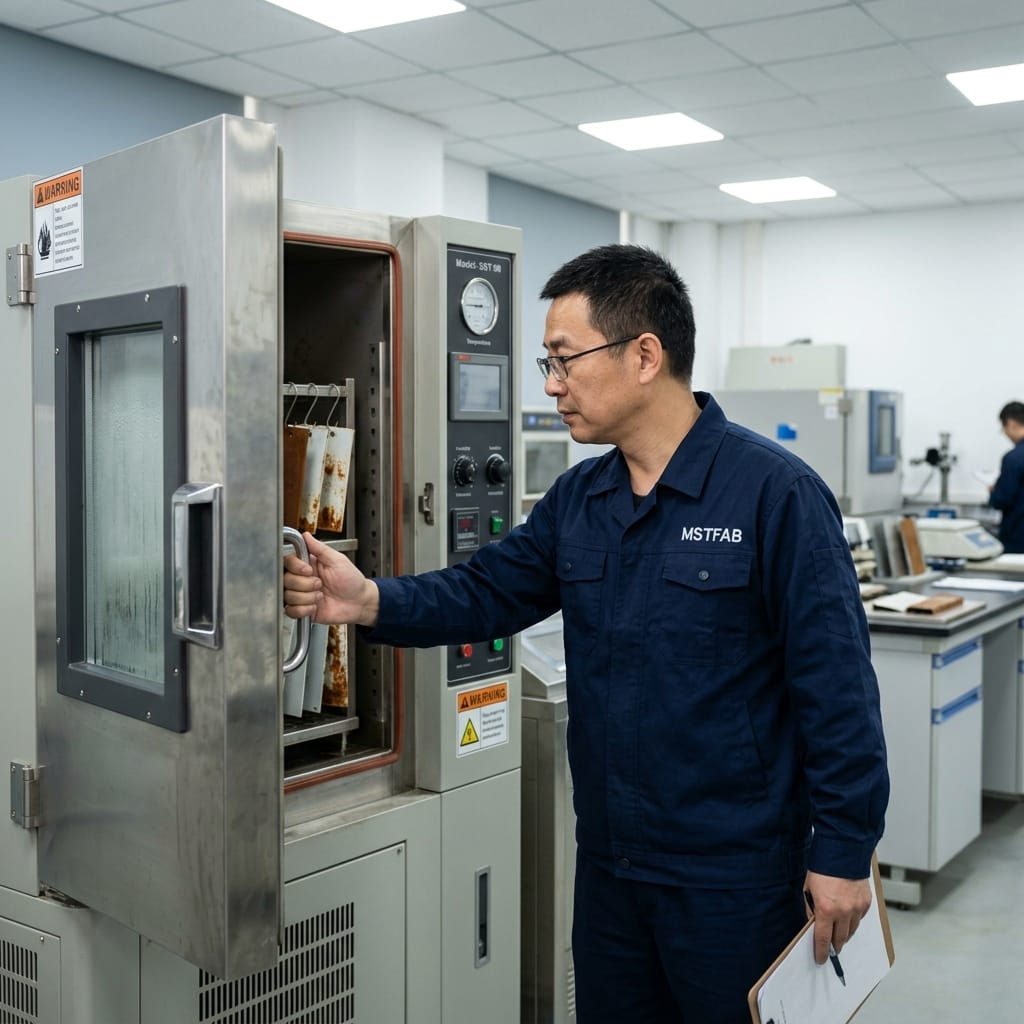
Stainless steel enclosures fabricated at MSTFAB undergo complete citric or nitric acid chemical passivation (ASTM A967) after welding. This process strips free iron particles embedded during press brake bending and restores the protective chromium oxide film. We validate all surface treatments in calibrated ASTM B117 salt fog test chambers.
Need Expert Material Guidance for Industrial Enclosures?
Consult with MSTFAB metallurgists and enclosure engineers to select the optimal alloy—from G90 galvanized to 316L stainless steel—backed by certified salt spray testing.
Frequently Asked Questions on Enclosure Materials
Why does 304 stainless steel develop tea-staining in marine environments?
Atmospheric chloride ions from ocean mist penetrate the chromium oxide passive layer of 304 stainless steel, initiating microscopic pitting corrosion (tea staining). 316 stainless steel contains 2%–3% molybdenum, which prevents chloride penetration.
Can carbon steel mounting plates be installed inside stainless steel enclosures?
Yes, internal sub-plates are commonly fabricated from white-powder-coated or galvanized carbon steel, provided non-conductive nylon washers or plated fasteners isolate direct contact to prevent galvanic couple corrosion.
 WeChat Contact
 WhatsApp Me Directly