
⚡ Direct Answer: What Are the IP Risks of Using a Sheet Metal Trading Company?
Sourcing custom sheet metal parts through trading companies or export brokers introduces 4 severe Intellectual Property (IP) vulnerabilities: 1) The “Invisible Factory” Blind Spot: The trading company conceals the actual manufacturing factory to protect its commission margin, meaning your Non-Disclosure Agreement (NDA) with the broker does not legally bind the sub-tier shop floor actually holding your 3D CAD models; 2) Uncontrolled CAD Broadcasts to Multiple Bidders: Brokers routinely email unencrypted STEP models and 2D blueprints to 5–10 third-party job shops to find the cheapest quote, leaking your trade secrets across the industrial market; 3) Loss of Factory Audit & Inspection Rights: Trading companies block OEM engineers from walking the factory floor, making it impossible to audit physical scrap destruction or CAD data wipe procedures; and 4) Orphaned Tooling Risk: If a commercial dispute occurs with the broker, you have zero direct legal standing to retrieve your custom stamping dies from the physical factory.
Trading companies often market themselves as “one-stop manufacturing solutions” with flashy English websites. However, when proprietary electronics enclosures, medical chassis, or aerospace brackets are sourced through middlemen, you surrender direct quality control, technical DFM collaboration, and IP security. Working directly with a verified manufacturer like MSTFAB eliminates these vulnerabilities.
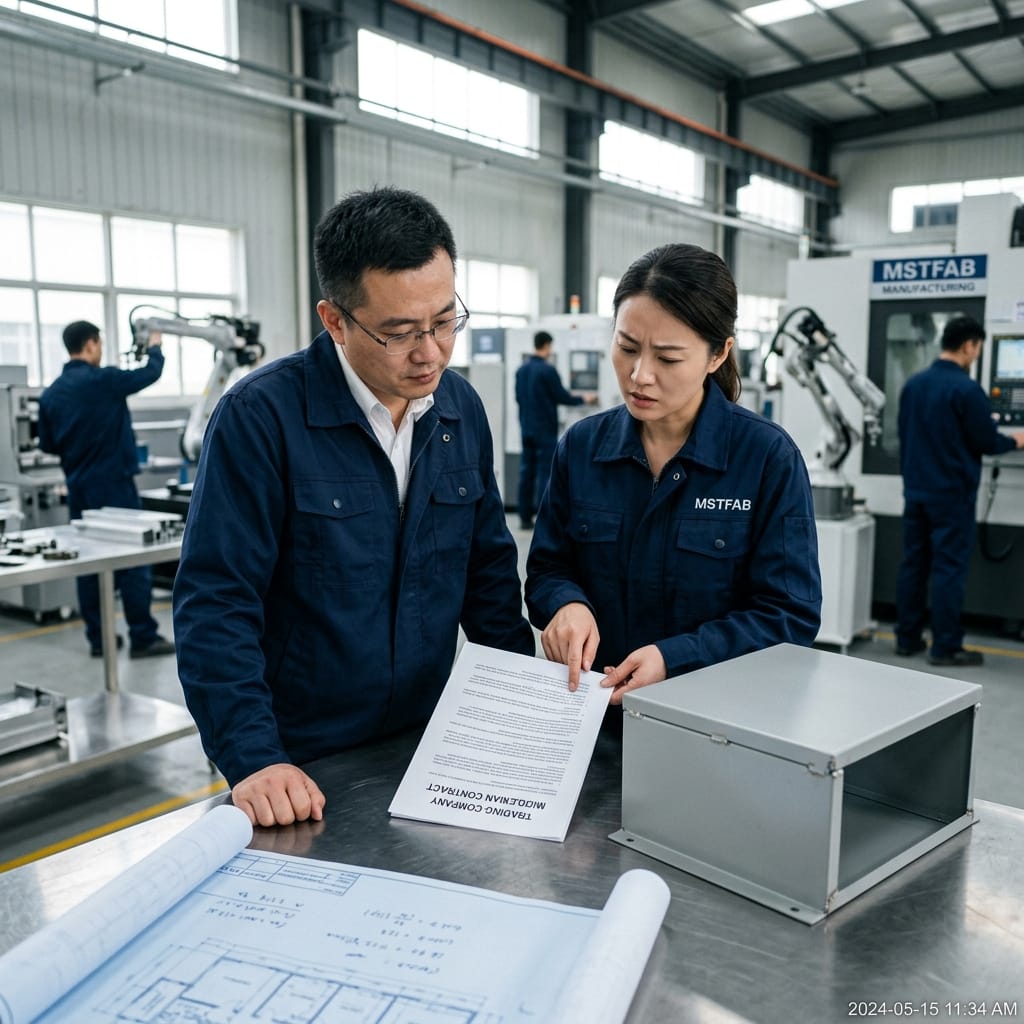
Direct Manufacturer vs. Trading Company Middleman: Operational Comparison
Compare how direct manufacturer engagement fundamentally protects your intellectual property and project quality:
| Operational Dimension | Trading Company / Broker | Direct Manufacturer (MSTFAB) |
|---|---|---|
| IP Legal Enforceability | Broker signs NDA, but the actual sub-tier factory is not bound by it. Zero privity of contract. | Direct, China-enforceable NNN agreement signed directly with the legal factory entity holding official registration seal. |
| CAD Data Security | CAD files blasted via email/WeChat to multiple cut-rate workshops to solicit low quotes. | Strict Need-to-Know access control; CAD files remain on secure internal servers accessible only to programming engineers. |
| DFM Engineering Feedback | Sales reps translate technical feedback back-and-forth, creating misunderstanding and delays. | Direct video conference with shop-floor tooling engineers and CAM specialists within 24 hours. |
| Tooling Custody & Recovery | Tooling held hostage at an unknown third-party workshop if broker disputes occur. | Explicit title transfer on payment; buyer asset plates affixed; full physical recovery rights guaranteed. |
| Quality & Material Pedigree | Broker switches sub-tier factories to squeeze margin; fake or generic CoC certificates. | In-house ISO 9001 quality systems; EN 10204 3.1 MTC with XRF alloy chemistry testing. |
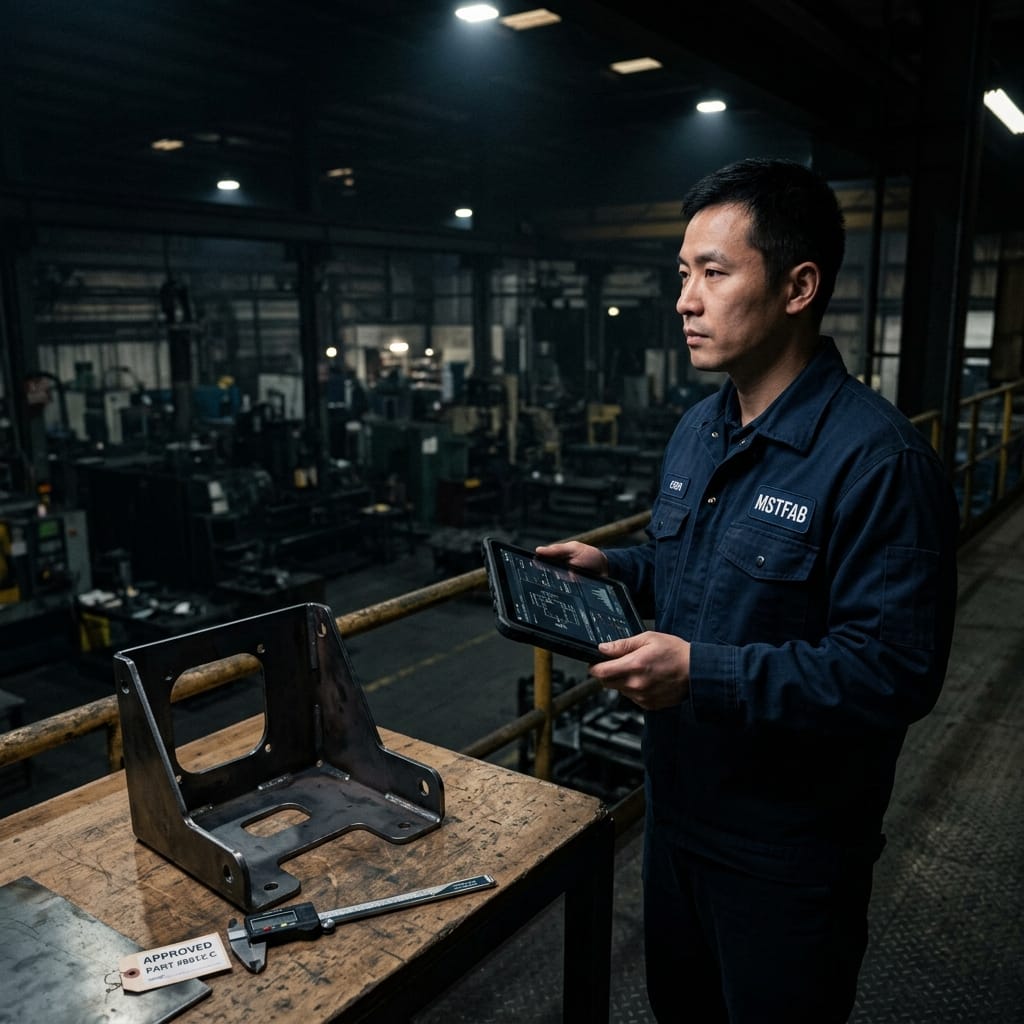
How to Spot a Trading Company Disguised as a Factory
Before sending proprietary CAD drawings to an overseas contact, use these 4 vetting techniques to confirm whether you are speaking with the real factory:
- Check Business License Scope: In China, a genuine manufacturer’s business license explicitly includes “Manufacturing / Processing of Sheet Metal and Hardware” (制造 / 加工). If the license scope lists only “Wholesale, Import/Export, and Consulting” (贸易 / 进出口), it is a broker.
- Request an Instant Live Video Tour: Ask the sales rep for an immediate live video call from the machine shop floor showing laser cutting tables, CNC press brakes, and QA rooms. Brokers working from commercial office buildings will make excuses to decline.
- Ask In-Depth Machine Parameter Questions: Inquire about laser beam focus parameters, V-die opening ratios for 3mm stainless, or automated powder booth cure curves. Factory engineers answer immediately; trading reps stall to consult their suppliers.
- Verify Bank Account Beneficiary Name: The corporate bank account receiving wires must match the exact legal factory name on the ISO 9001 certificate and business license.
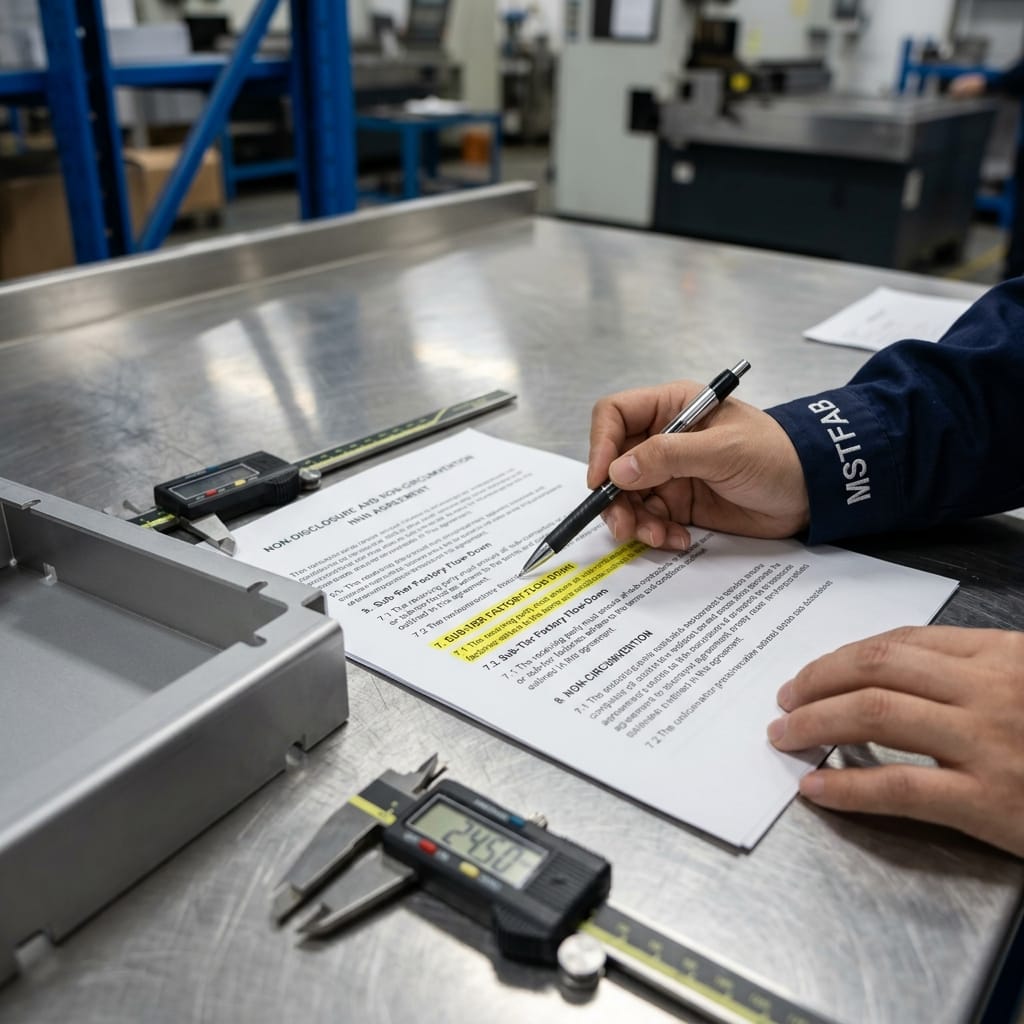
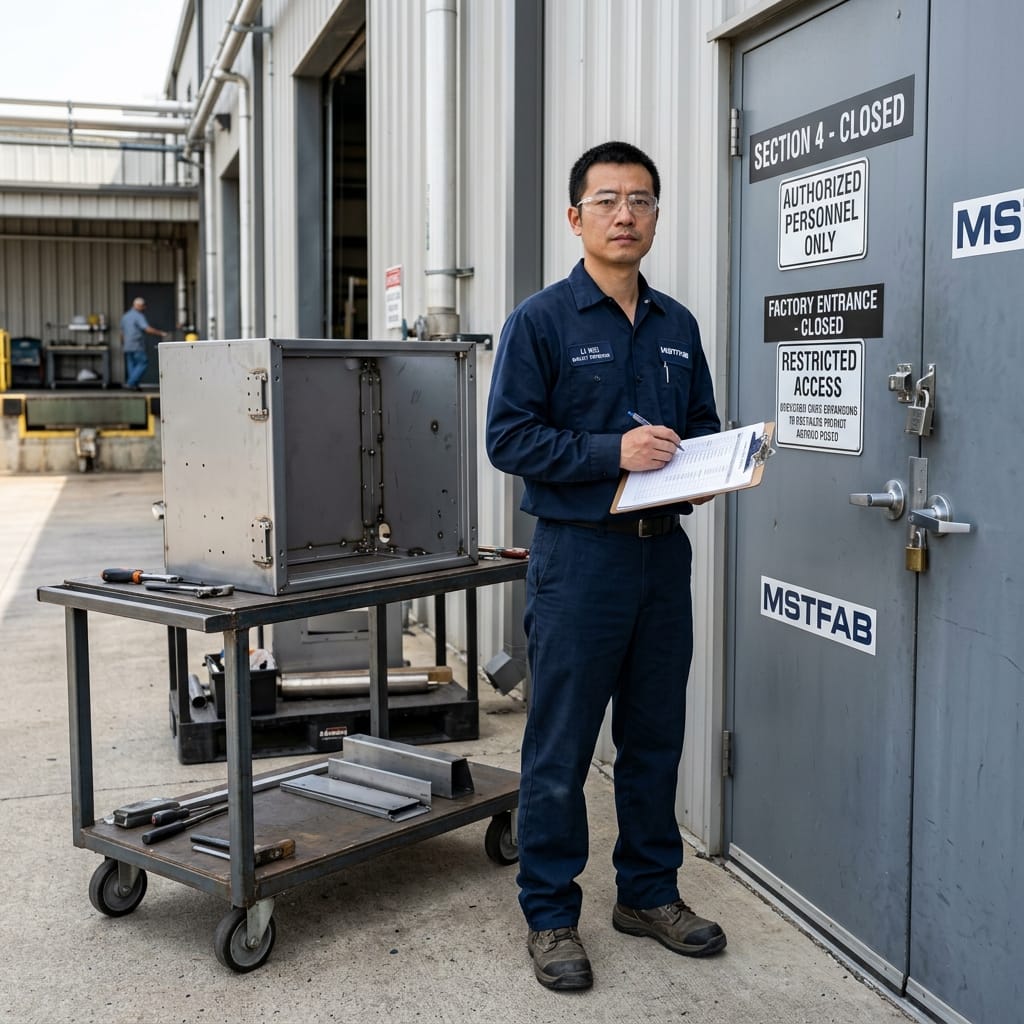
Secure & Scalable Direct Sheet Metal Manufacturing Sourcing With MSTFAB
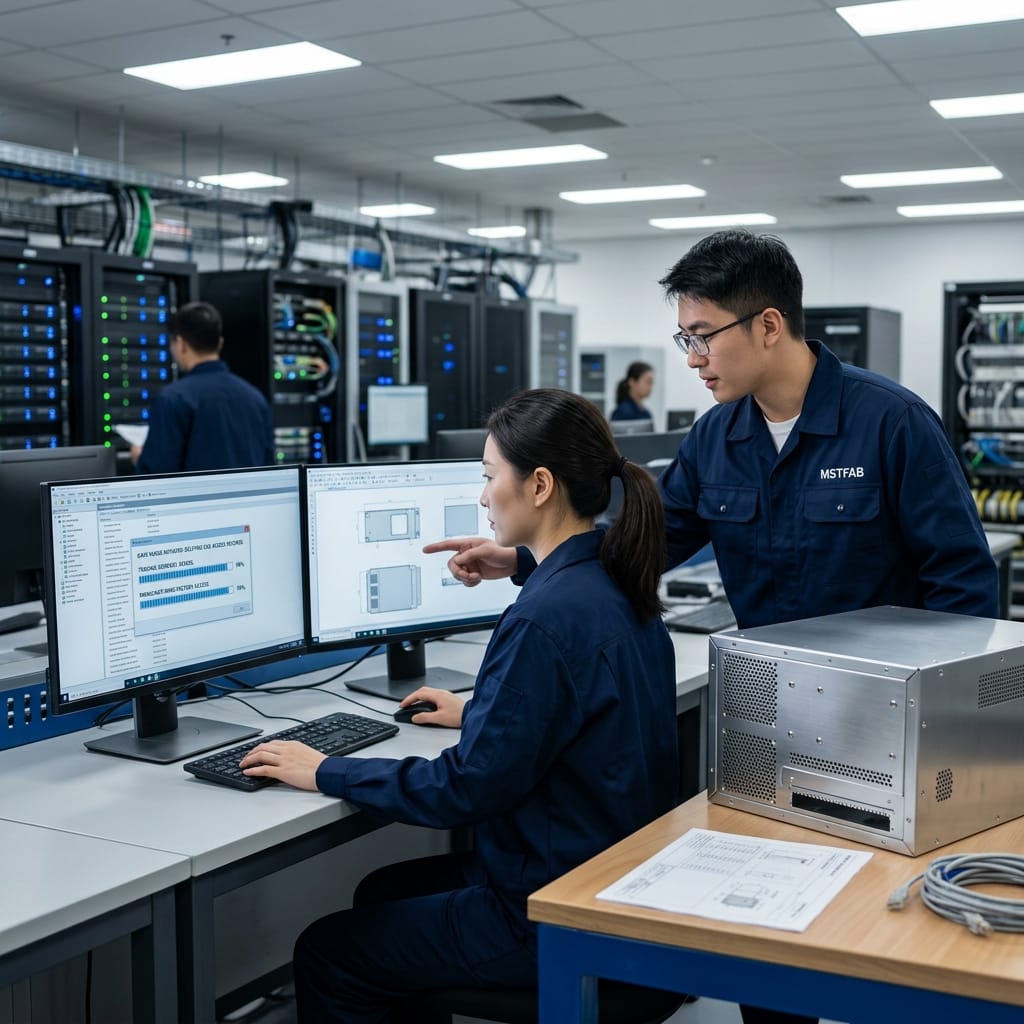
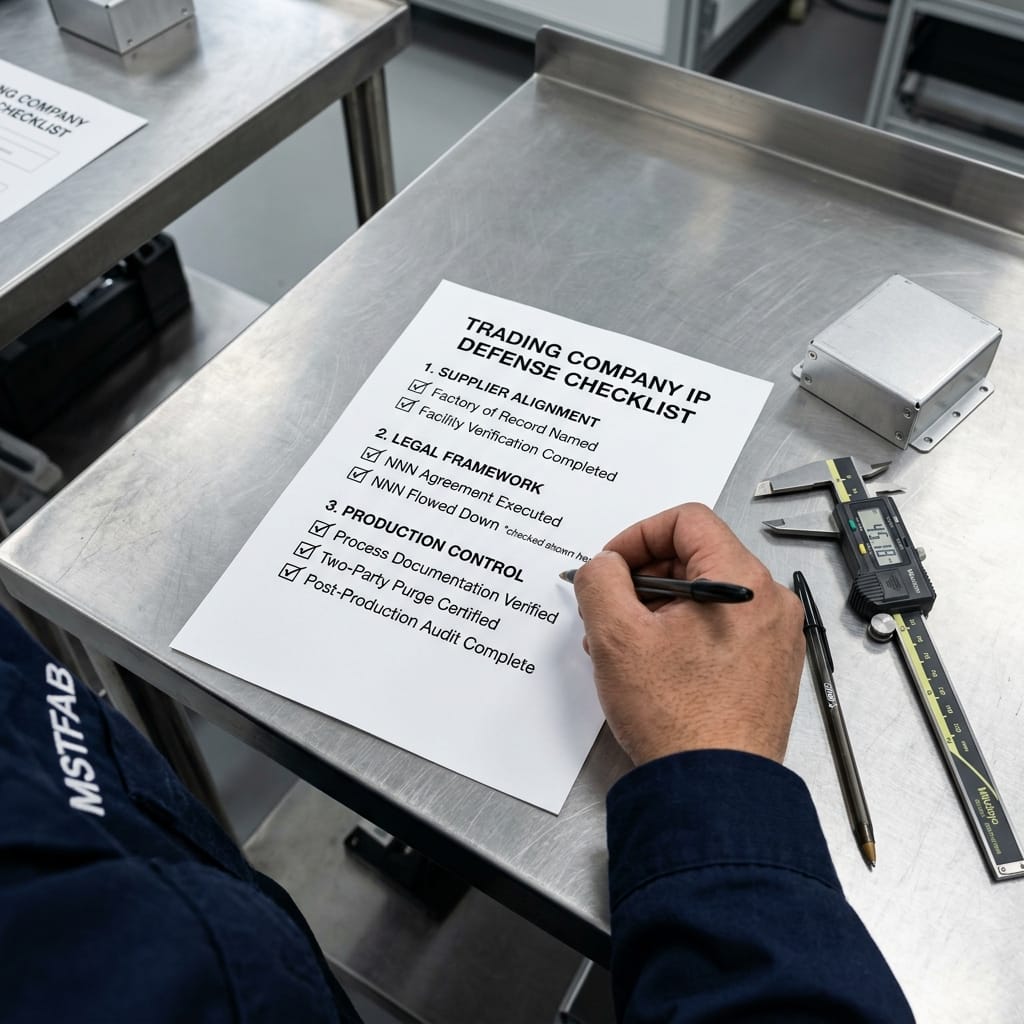
MSTFAB combines direct factory manufacturing, China-enforceable NNN IP security, transparent tooling ownership, and flexible low-MOQ rapid prototyping. Protect your designs and streamline precision production.
Frequently Asked Questions (FAQ)
Is MSTFAB a direct manufacturer or a trading company?
MSTFAB is a direct, self-owned precision sheet metal manufacturing facility located in China. We own and operate our entire fleet of high-power fiber laser cutters, automated CNC press brakes, robotic welding cells, continuous powder coating conveyor lines, and CMM metrology laboratories. All manufacturing, DFM, and quality control occurs directly in our plant.
Why is a standard US NDA ineffective with an overseas middleman?
A standard US-governed NDA is nearly impossible to enforce in Chinese courts due to jurisdictional hurdles and lack of reciprocal enforcement treaties. Furthermore, even if valid against the broker, it has zero legal reach over the independent Chinese workshop where the broker sent your drawings. Direct engagement backed by a bilingual Chinese NNN agreement governed by Chinese law is the only proven defense.
Can buyers visit MSTFAB’s factory for on-site audits and inspections?
Absolutely. We operate with complete open-door transparency. OEM buyers, engineering teams, and third-party inspection auditors (SGS, TUV, Bureau Veritas) are welcomed at our facility to inspect ongoing production, audit quality labs, and review physical data security controls.
 WeChat Contact
 WhatsApp Me Directly