
Quick answer: Renewable energy equipment enclosures should not be sourced by comparing price, material thickness, and a claimed IP rating alone. A solar inverter housing, PV combiner enclosure, or wind-turbine control cabinet can have very different electrical, thermal, corrosion, sealing, and maintenance requirements. This guide helps procurement and engineering teams build their own shortlist with hard manufacturing evidence instead of trusting generic sales pitches.

Scope boundary: What MSTFAB can support, and what stays with the OEM
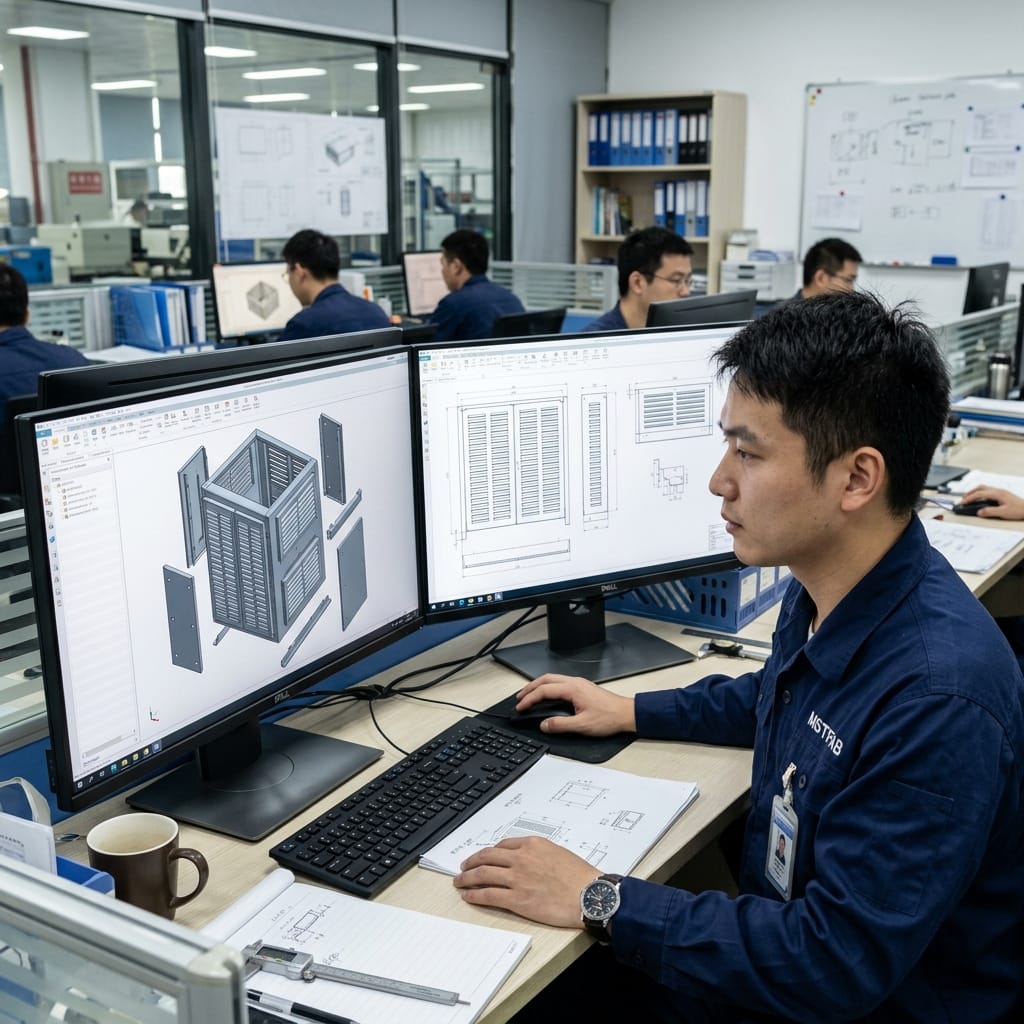
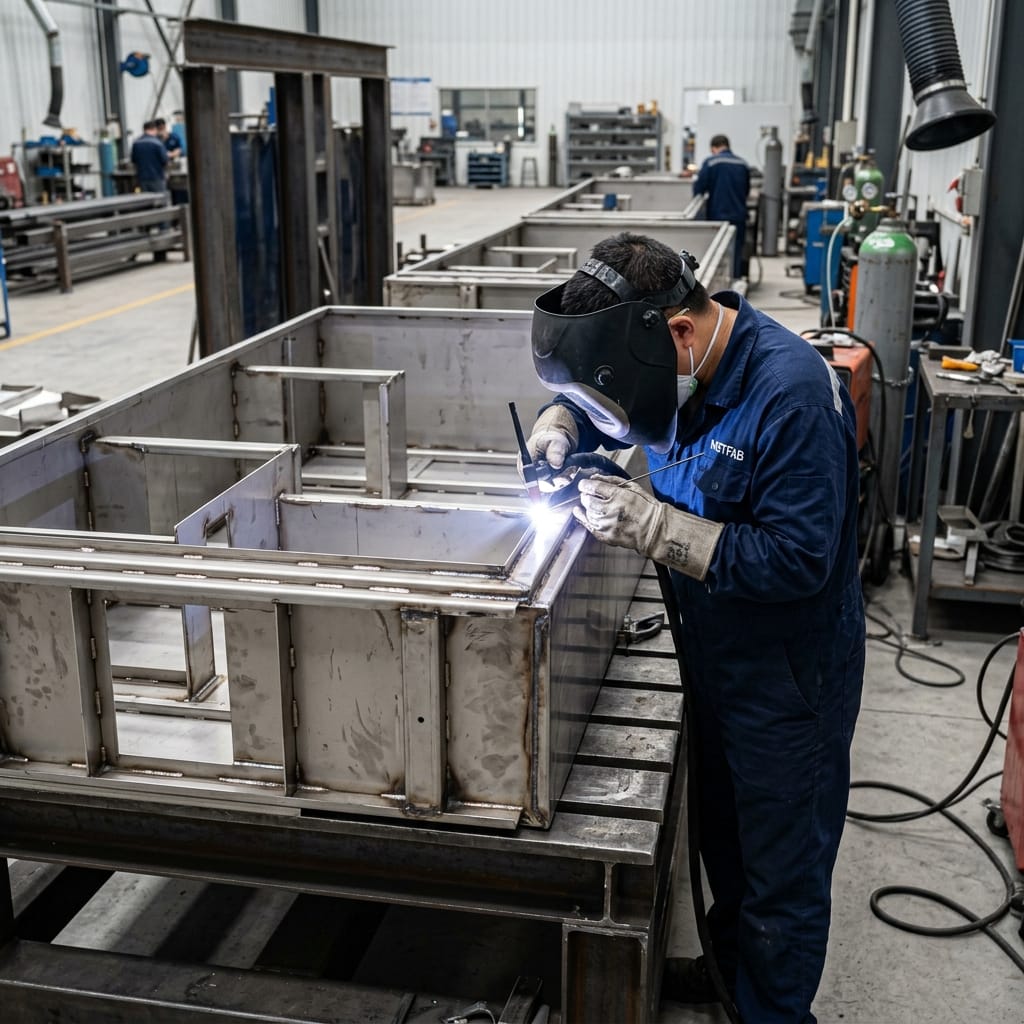
MSTFAB fabricates empty, rugged sheet metal enclosures designed for survival in harsh outdoor environments based on buyer CAD models. Typical work includes precision laser cutting, heavy-duty TIG/MIG welding, outdoor-rated powder coating, and gasket installation for solar inverter cabinets and PV combiner boxes.
MSTFAB does not supply complete functional electrical systems, inverters, software, or final product certification. The buyer remains responsible for electrical integration, thermal simulation, and final safety approvals.
What we do:
- Precision fabrication of empty outdoor sheet metal enclosures and renewable energy cabinets.
- TIG/MIG welding of stainless steel (304/316L) or aluminum with strict water-ingress prevention.
- Application of outdoor-rated, UV-stable powder coatings for long-term corrosion resistance.
- Gasket installation, multi-point lock fitting, and mechanical assembly of doors and access panels.
- Manufacturing support for creepage/clearance dimensions and internal grounding studs.
What the OEM (Buyer) owns:
- Final electrical wiring, busbar installation, and active component integration.
- System-level thermal simulation (CFD) and heat-dissipation calculations.
- Final product certification (e.g., UL 1741, IEC 62109, IP66, NEMA 4X).
- Site installation, field validation, and grid connection.
Why Renewable Energy Enclosures Require Specific Evaluation
“Renewable energy enclosure” describes several very different products: from coastal solar farms to offshore wind installations and desert PV combiner boxes. A generic supplier can quote the dimensions of a metal box, but without knowing the specific environment, they cannot reliably confirm whether the enclosure will survive. You need a partner who understands that “outdoor use” is not a specification—salt spray, solar load, and internal heat generation are the real specifications.
The 7 Buyer Checks for Renewable Energy Enclosures
Before placing a pilot order, evaluate your supplier against these seven checks. A supplier that makes false certification claims or ignores thermal loads should be disqualified immediately.
D1: Define the Application and Installation Environment
The first supplier question should not be: “What is your best outdoor enclosure?” It should be: “What environmental conditions must this specific enclosure withstand?” A trustworthy supplier will ask about ambient temperatures, direct-sun exposure, relative humidity, and salt-laden atmospheres before recommending a material or finish.
D2: Separate IP Ratings, NEMA Types, and Product Certification (Hard Gate)
One of the most common trust problems in enclosure marketing is the claim: “This empty cabinet is UL 1741 compliant.” This is false. UL 1741 applies to the final functioning electrical equipment. A credible fabricator says: “We build to your controlled drawings to support your UL 1741 equipment certification.” Furthermore, a professional supplier knows that IP66 and NEMA 4X are not identical and will ask which standard you are targeting.

D3: Evaluate Thermal Management and Electrical Integration
Renewable-energy electronics generate significant heat. A sealed outdoor enclosure protects against water but traps heat. The enclosure manufacturer must support manufacturability (e.g., adding louvers, double walls, or sun shields), but they should ask you for the internal heat dissipation data rather than just guessing.
D4: Match Material and Corrosion Protection to the Site (Hard Gate)
No single metal is best. Carbon steel is cost-effective but requires pristine coating control. Stainless steel (316L) is necessary for coastal environments. A supplier should never substitute 316L with 304 without written approval. For critical projects, demand EN 10204 3.1 material certificates to prove the alloy identity.

D5: Review Sealing, Drainage, and Cable Entries
The gasket is only one part of the protection. A highly sealed enclosure can still experience condensation due to temperature changes. Ask the supplier how they control door flatness, flange continuity, and weld discontinuities to ensure the gasket actually compresses evenly.
D6: Define Inspection and First-Article Verification
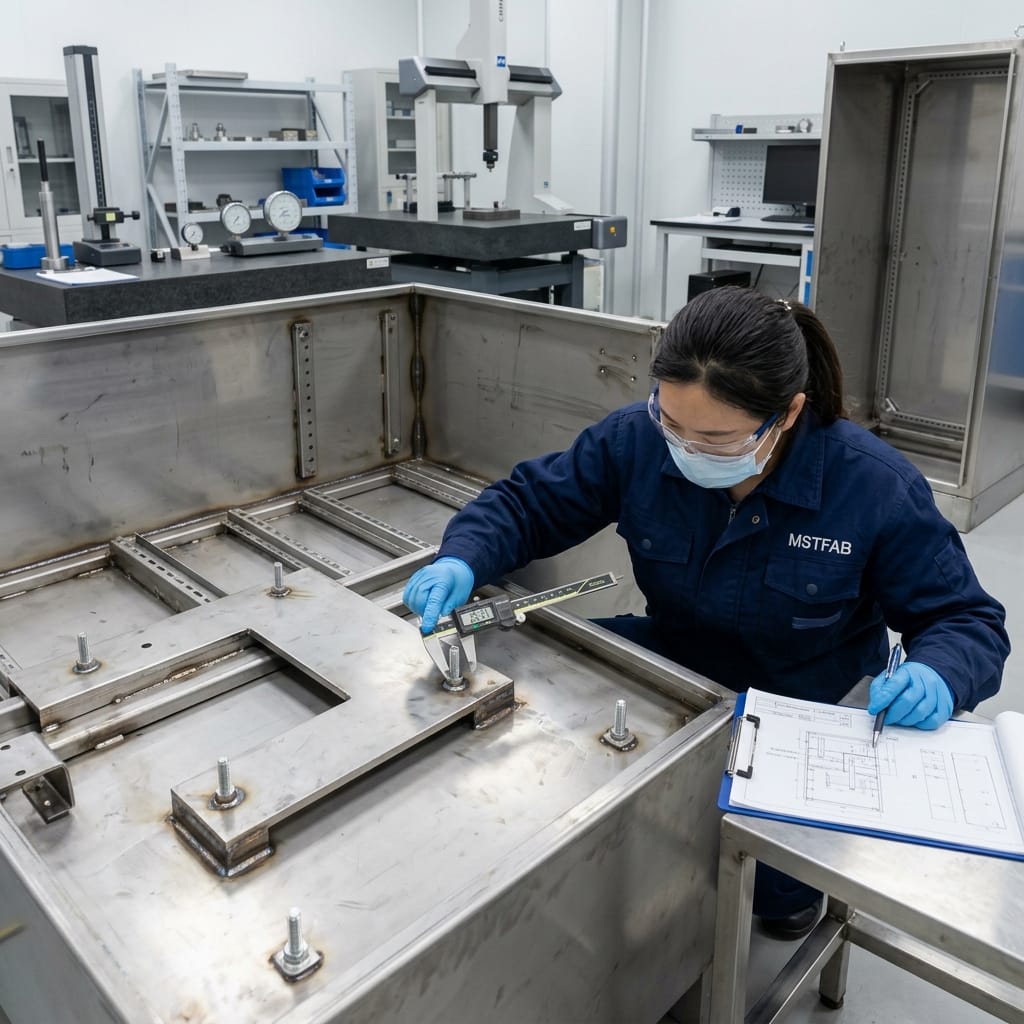
“100% inspected” is a meaningless marketing phrase. What are they inspecting? A professional First Article Inspection (FAI) for a renewable energy cabinet must include weld sealing checks, grounding-stud locations, coating thickness measurements, and door/latch alignment checks.
D7: Verify Traceability, Communication, and Supply Transparency
Renewable equipment designs often change after field testing. Without strict revision control, you will receive enclosures built to an old CAD file. The supplier must also be transparent if they outsource powder coating—hiding subcontractors creates massive quality risks.

The Supplier Trust Table: Red Flags vs. Green Flags
| What You Ask For | The “Run Away” Red Flag | The “We Can Work With This” Green Flag |
|---|---|---|
| Enclosure Certification | “Our empty metal box is fully UL 1741 and IEC 62109 certified.” | “We build strictly to your drawings to ensure your final assembly passes UL 1741.” |
| Rating Claims | Treats IP66 and NEMA 4X as exactly the same thing. | Explains the difference between ingress protection (IP) and the corrosion testing in NEMA 4X. |
| Thermal Design | Assumes a completely sealed box is fine without asking about the internal equipment. | Requests the internal heat load and discusses double-wall or ventilation options. |
| Material Verification | Swaps 316L stainless steel for 304 to save costs without informing you. | Provides EN 10204 3.1 mill certificates for marine-grade material batches automatically. |
| Sealing Quality | Relying purely on a thick gasket to hide a warped, poorly bent door. | Inspects door flatness and flange continuity before applying the gasket. |
How MSTFAB Approaches Renewable Energy Projects
MSTFAB manufactures custom sheet metal enclosures to customer-controlled drawings. We do not make unsupported whole-product certification claims. We support your final product certification by providing exact mechanical dimensional control, documented material traceability, verifiable surface-finishing (UV/salt spray resistance), and precise gasket seating. Before a pilot run, we agree on critical datums, establish strict revision controls, and provide a verifiable First-Article Inspection (FAI) report.
Key Takeaways
- Renewable-energy enclosure sourcing requires understanding the installation environment (salt, heat, UV), not just choosing a metal and a color.
- IP66 and NEMA 4X are not interchangeable. UL 1741 applies to the final functioning equipment, not an empty cabinet.
- Thermal management and electrical clearances are the OEM’s responsibility; the fabricator executes the mechanical design flawlessly.
- MSTFAB supplies the precision heavy-duty metalwork, allowing your engineering team to focus on system integration and grid validation.
FAQ
Is IP66 the same as NEMA 4X?
No. IP codes primarily address access and water/dust ingress (IEC 60529). NEMA Type 4X includes additional defined environmental considerations, specifically corrosion protection. They require different tests.
Can a sheet metal enclosure be UL 1741 certified?
UL 1741 applies to the functioning power-conversion equipment (inverters, controllers). A custom empty cabinet cannot be standalone UL 1741 certified. The manufacturer supports your certification by building precisely to your approved design.
Does an outdoor enclosure always need stainless steel?
No. Coastal or offshore environments demand 316L stainless steel, but properly pre-treated and powder-coated carbon steel or aluminum can be excellent, cost-effective choices for many inland solar farms.
 WeChat Contact
 WhatsApp Me Directly