
⚡ Direct Answer: How to Source Custom Sheet Metal Without Revealing Your Full Design?
Modular Sourcing (also called Black-Box Procurement) protects proprietary hardware designs by decomposing a complex mechanical product into physically and conceptually isolated sheet metal sub-assemblies so that no single external vendor possesses the complete CAD master model. A best-practice modular protection architecture deploys 4 controls: 1) Architectural CAD Decomposition: Splitting the product into separate functional tiers (e.g. outer cosmetic chassis, internal power busbar brackets, proprietary sensor mounts, and locking mechanisms); 2) Black-Box Interface Drawings: Releasing 2D/3D models showing only external mounting hole coordinates, clearances, and boundary envelopes while stripping internal features; 3) Split-Vendor Allocation: Sourcing cosmetic external covers from Fabricator A, internal structural frames from Fabricator B (such as MSTFAB), and proprietary electromechanical boards from Fabricator C; and 4) In-House Final Integration: Performing the final mechanical bolting, cable harness integration, and proprietary firmware flashing inside your own secure assembly facility.
Handing an external fabricator your complete 3D top-level assembly CAD file (.STP or .SLDASM) containing power supplies, proprietary optics, and sensor mounting geometry exposes your entire product architecture to reverse engineering. If that file is leaked, competitors can clone your machine in weeks. Modular decomposition makes reverse engineering mathematically impossible for individual component suppliers.
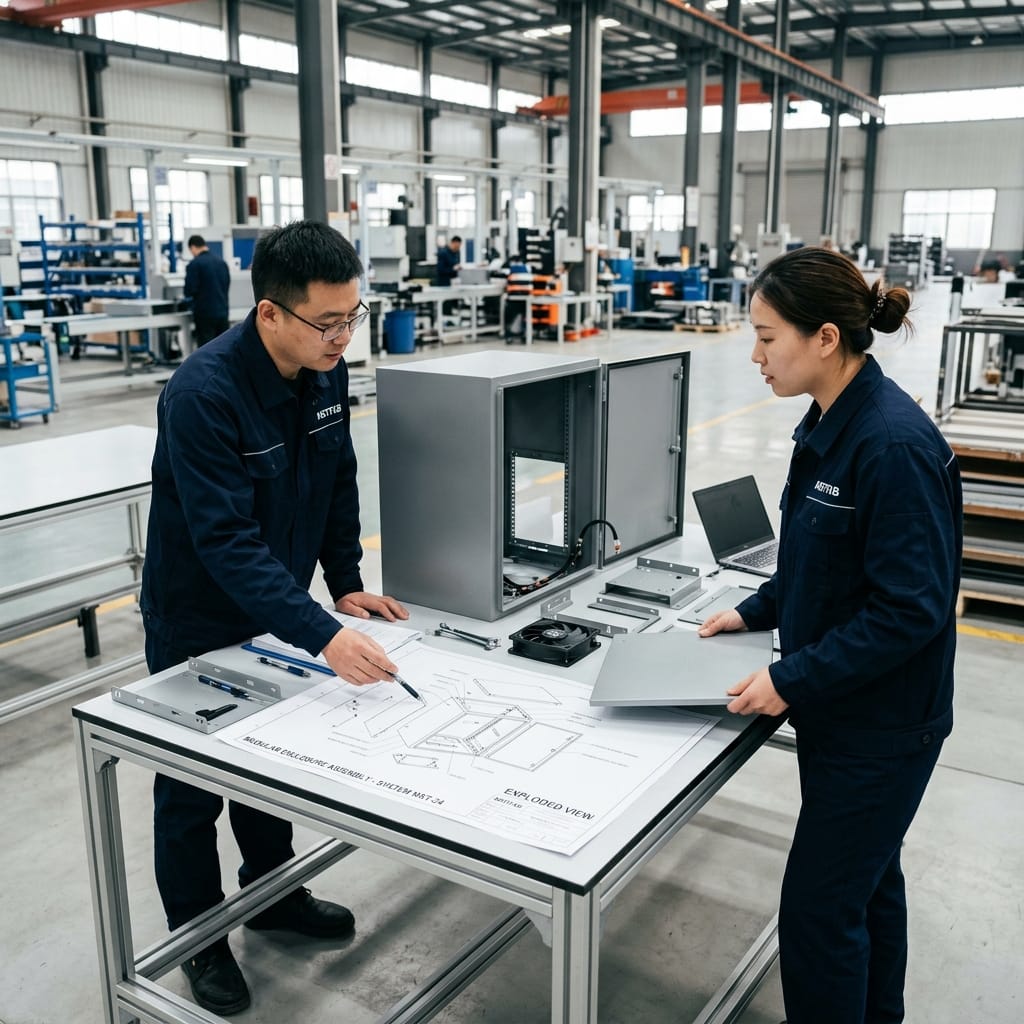
Modular Sourcing Architecture: Part Decomposition & Risk Allocation
Structure your sheet metal Bill of Materials (BOM) to isolate high-risk proprietary features from standard structural components:
| Module Tier | Physical Components | IP Exposure Level | Sourcing Strategy |
|---|---|---|---|
| Tier 1: External Enclosure Skin | Outer sheet metal panels, access doors, cosmetic louvers, hinges | Low (Looks like a generic metal box) | Outsource to high-volume precision fabricator (MSTFAB); release with dummy internal mounting hole callouts. |
| Tier 2: Structural Frame & Rails | 19-inch rack uprights, base skids, transformer mounting angles | Low (Standard industrial geometry) | Outsource to precision laser/brake fabricator; specify standard ISO 2768-m tolerances. |
| Tier 3: Core Mechanical Interfaces | Proprietary sensor brackets, lens mounts, heatsink thermal clips | High (Reveals trade secret functionality) | Split-source to separate specialized CNC shop or fabricate under strict China-enforceable NNN agreement. |
| Tier 4: Final Integration | Full mechanical bolting, cable routing, PCB integration, calibration | Maximum (Complete working machine) | Retain 100% in-house or inside buyer-controlled cleanroom assembly facility. |
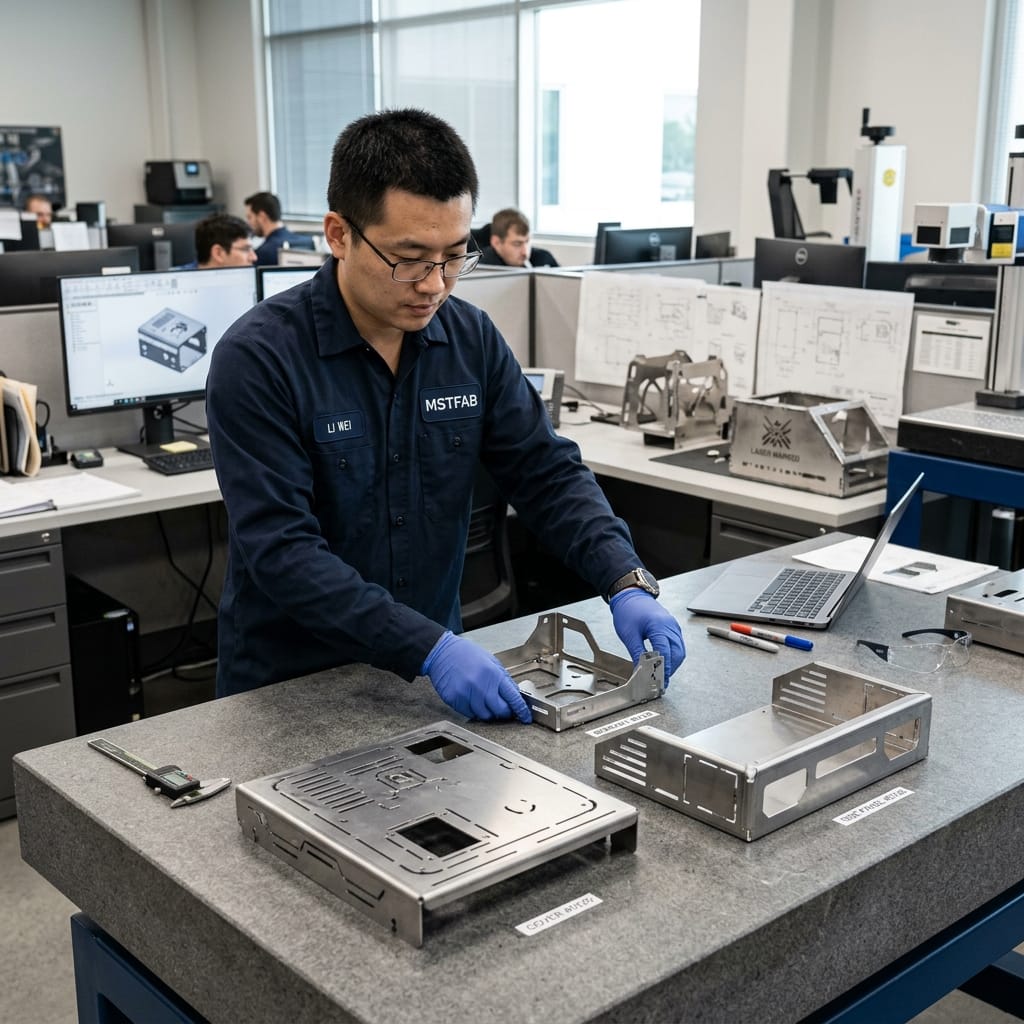
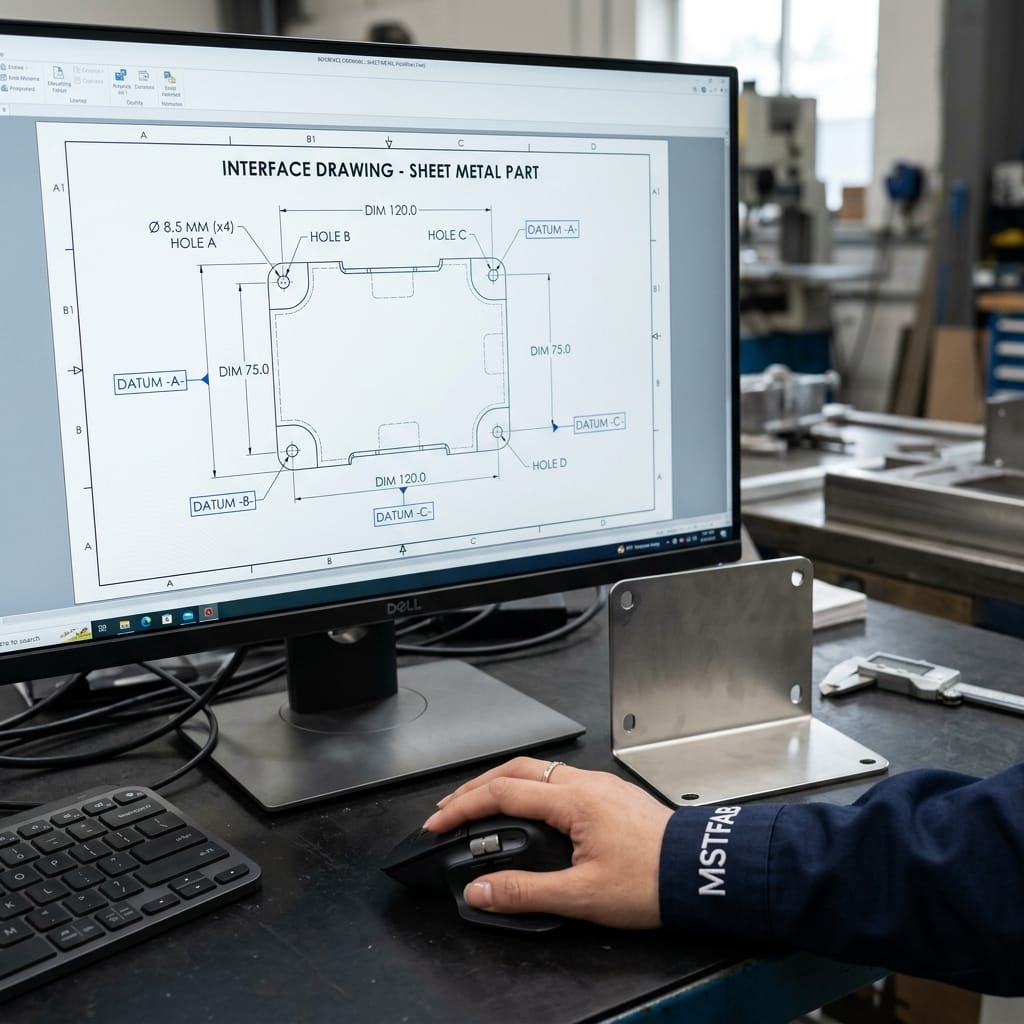
How to Create “Black-Box” Interface Drawings
When sending drawings to an external sheet metal fabricator, protect your core IP using these CAD preparation rules:
- Defeature 3D STEP Models: Remove all internal proprietary electronics, PCBs, sensor lenses, and proprietary heatsink fin geometry before exporting. Share only the bare sheet metal parts required for fabrication.
- Conceal End-Use Functionality: Label drawing titles generically (e.g., “Bracket, Formed Aluminum 2.0mm – P/N 8402-A” instead of “Autonomous Drone LiDAR Gimbal Stabilization Arm”).
- Use Standard Mounting Grid Patterns: Design mounting flanges with standard DIN rail pitch (35mm) or 25mm grid spacing so the pattern appears generic and unrevealing of proprietary module spacing.
- Pre-Punch Multi-Pattern Hole Arrays: Punch extra universal mounting holes on internal chassis trays. A supplier seeing an array of 20 holes cannot deduce which four holes actually mount your proprietary controller.
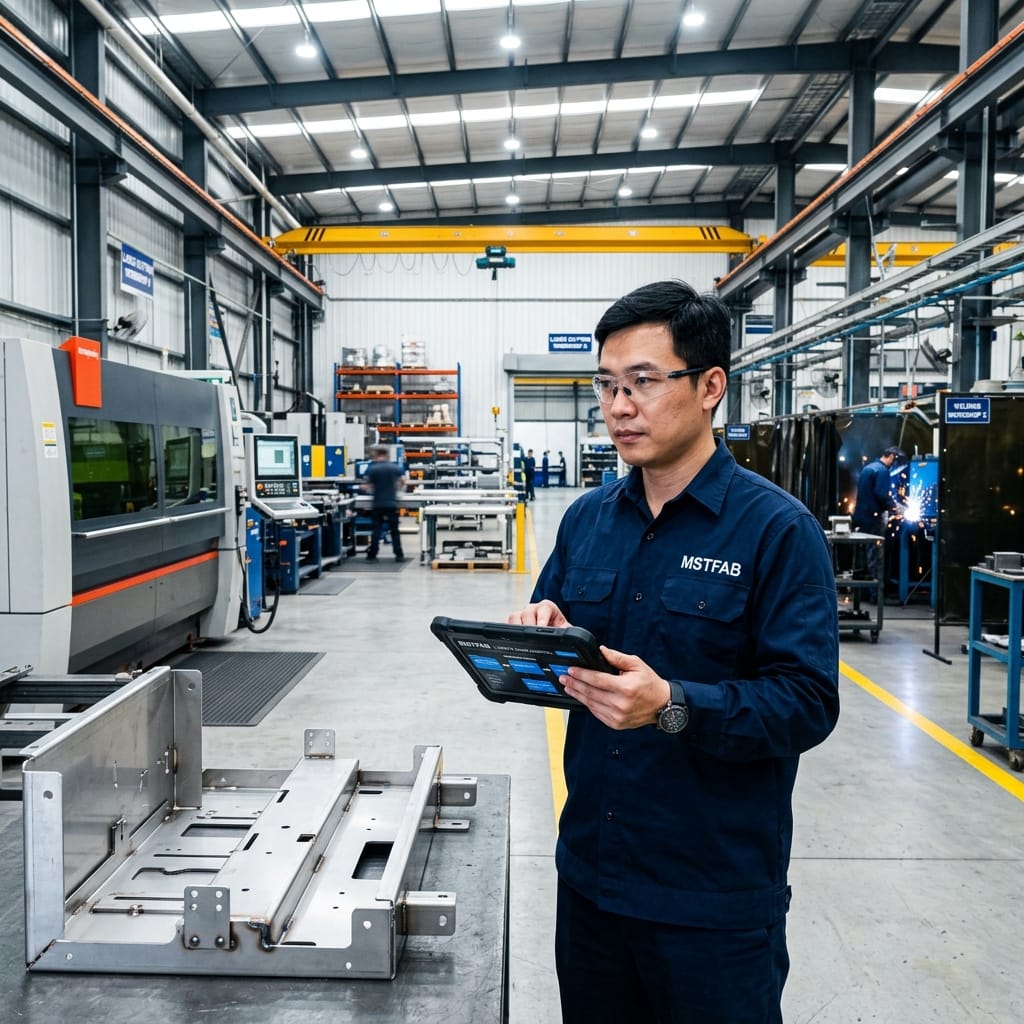

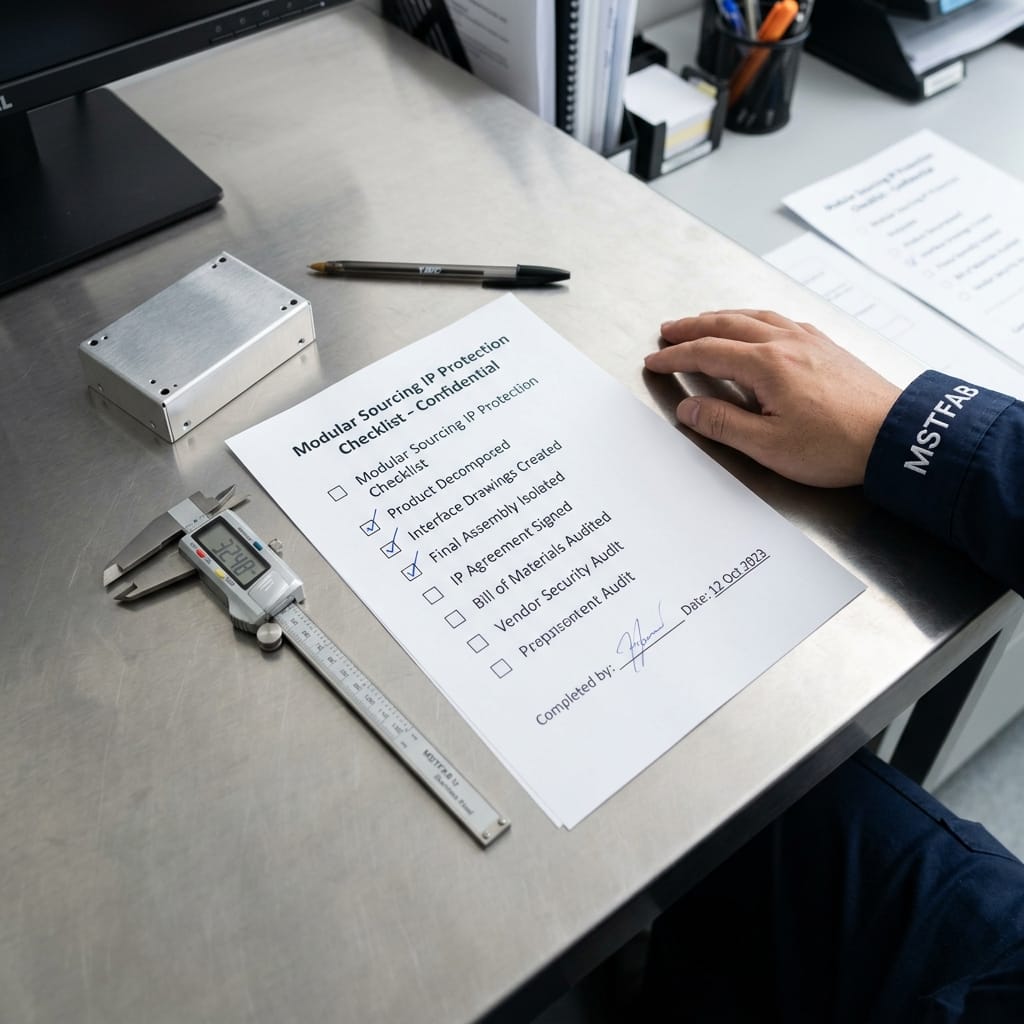
Secure & Scalable Secure Modular Fabrication Sourcing With MSTFAB
MSTFAB combines direct factory manufacturing, China-enforceable NNN IP security, transparent tooling ownership, and flexible low-MOQ rapid prototyping. Protect your designs and streamline precision production.
Frequently Asked Questions (FAQ)
Does modular sourcing increase total manufacturing cost?
Not necessarily. While modular architecture introduces additional mechanical fasteners (PEM studs, screws) and assembly joints, it allows procurement teams to source high-volume structural chassis from specialized sheet metal fabricators like MSTFAB while sourcing delicate CNC components from high-speed milling shops, optimizing overall manufacturing cost per part.
Can MSTFAB manufacture high-precision sub-modules without seeing the top assembly?
Yes. Our engineering team routinely fabricates complex welded chassis, precision brackets, and card-cage sub-assemblies strictly from individual part drawings and interface specifications. We verify dimensional compliance using 3D CMM probing against your explicit datum targets without needing your top-level assembly file.
What legal agreement complements modular sheet metal sourcing?
Even with modular decomposition, buyers should always execute a direct, bilingual Chinese NNN Agreement (Non-Disclosure, Non-Use, Non-Circumvention) governed by Chinese law. MSTFAB proactively signs binding NNN agreements with all client partners before receiving any CAD models or technical drawings.
 WeChat Contact
 WhatsApp Me Directly