
Quick Answer: To prevent counterfeit material certificates in overseas metal sourcing, stop trusting the paper and start verifying the source. Build a layered defense: vet the supplier and the actual mill, contractually require EN 10204 3.1/3.2 with a named heat number, confirm that heat traces to the coil and packing list, run PMI or independent chemistry at receiving on every critical batch, use third-party inspection at the source, and confirm suspect certs through the mill’s own verification channel. The overseas traps that bite hardest are a reused cert stretched across many shipments, a “mill” that does not exist, an edited PDF, and goods that arrive from a different country than the certificate claims. A counterfeit mill certificate is cheap to forge and ruinous to discover — block it at the edge of your process, not in a customer’s failure report.
Why Overseas Sourcing Is the Danger Zone
Domestic sourcing is painful enough; overseas metal sourcing risk is a different sport. The moment the coil crosses a border, several things work against you:
- Distance kills verification. You cannot walk the floor of the mill. The cert arrives as a PDF, often translated, often twice-removed through a trading company.
- Trader chains blur accountability. By the time steel reaches you, it may have passed through two or three intermediaries, each relabeling and each a chance to swap a cert.
- Language and format hide edits. An edited PDF in another language is easy to skim and hard to challenge.
- Jurisdiction weakens recourse. A fake cert from a supplier three time zones away is a legal headache, not a quick refund.
- Price pressure invites cuts. When a quote is suspiciously low on stainless, the certificate is often the first thing to be “optimized.”
None of this means avoid overseas sourcing — it means treat the certificate as a claim to be proven, not a fact to be filed.
The Counterfeit Playbook: How Fakes Get Made
Know the enemy. The common fake-certificate moves in overseas trade:
- The reused cert. A genuine certificate from one good heat is photocopied and attached to a different, cheaper heat, shipment after shipment. The paper is real; the link to your metal is fiction.
- The edited PDF. Someone opens the cert in software and changes the grade, thickness, or heat number.
- The fictional mill. The cert names a mill that doesn’t exist, or exists but never made that heat. The letterhead looks official; the company is a mailbox.
- The country mismatch. Goods ship from Country B, but the cert is from a famous mill in Country A. Sometimes legitimate (re-export), often not.
- The double cert. One coil gets two certificates — a clean one for customs, a different one for you — and they disagree. Classic smuggling or tax dodge; also a fraud signal.
- The “equivalent” swap. The cert says “equivalent to 316” while the chemistry is 304. Equivalent is not identical, and the cert quietly buries that.
Layered Defense: Eight Controls That Actually Work
A single check fails. Stack these:
- Vet the supplier and the mill. Confirm the supplier is a real entity and the named mill actually exists and makes that grade. Build a small library of each mill’s genuine certificate format.
- Write cert-integrity clauses into the contract. Name the certificate type explicitly (EN 10204 3.1 minimum), ban “equivalent” substitutions, and attach a rejection right for unverifiable certs.
- Require 3.1/3.2 with a named heat — reject 2.1. A 2.1 is a compliance statement with no test of your heat; it is the easiest document to fake. Insist on 3.1. No heat number, no deal.
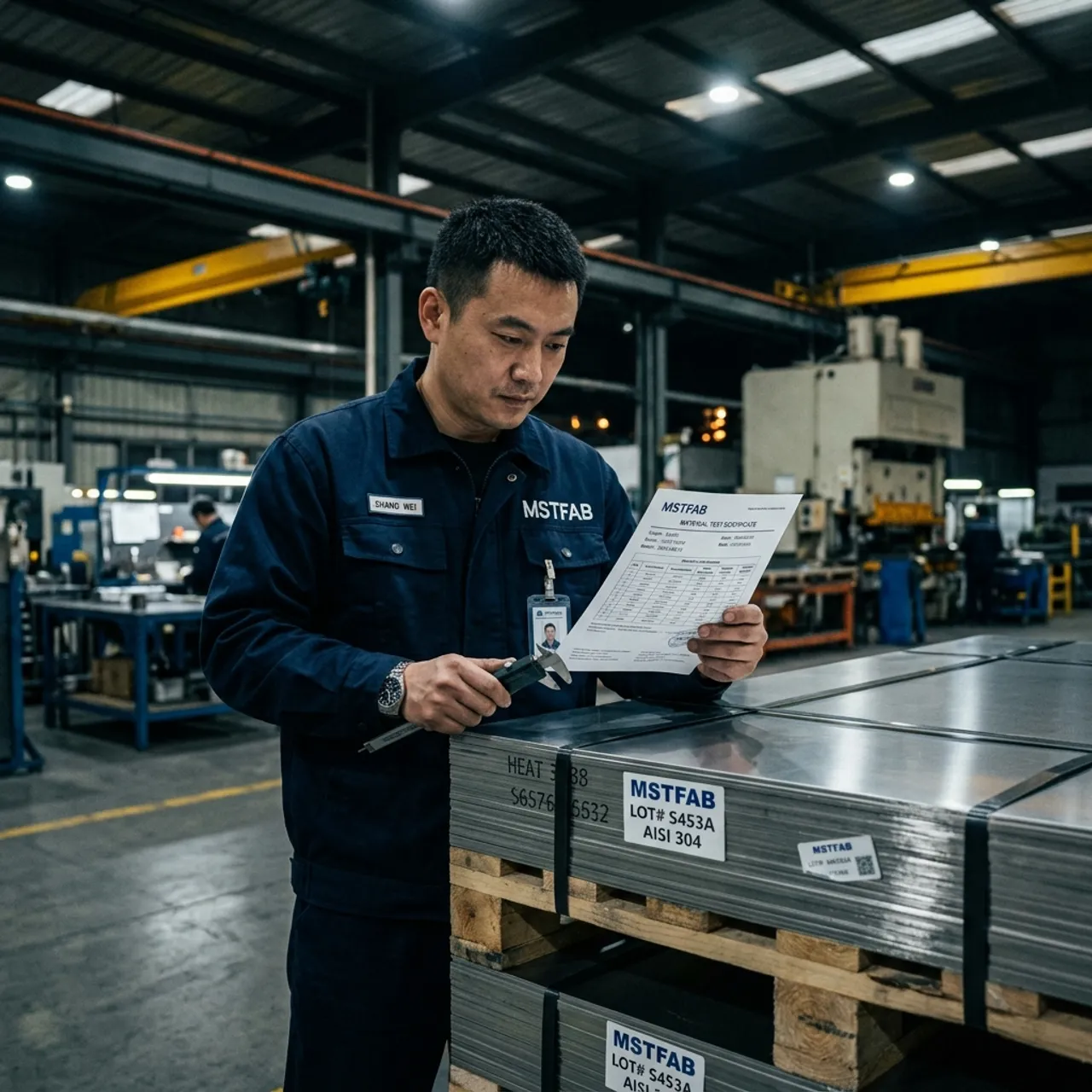
- Force the heat-number trace. The cert’s heat number must match the stencil on the coil and the packing list. This single check defeats most reused-cert scams.
- PMI or independent chemistry at receiving. A handheld XRF gun reads the actual alloy in seconds. The paper proves nothing if the metal disagrees.
- Third-party inspection at the source. Hire a surveyor to witness the load, confirm the cert matches the coil, and stamp a 3.2 where needed.
- Confirm through the mill’s own channel. Many mills publish certificate-verification portals or will confirm a heat number by email.
- Run a random audit and cert cross-check program. Predictable randomness is what keeps a supplier honest.
Overseas-Specific Red Flags
- Country mismatch — cert mill in one nation, goods from another, with no re-export paper.
- A “mill” you cannot find on any industry registry or website.
- Price too good to be true on stainless — the cert is where they make it up.
- Rush to skip inspection — “just pay, we’ll send the cert after.”
- Cert arrives edited or translated with fonts that don’t match the letterhead.
- Trader refuses to name the mill or names a different one each time.
- Two certs for one coil that disagree.
MSTFAB Trust & Quality Verification Table
| Anti-Fraud Defense | Standard Overseas Practice | MSTFAB Protocol | Buyer Benefit |
|---|---|---|---|
| Mill Traceability | Opaque supply chains shielding the true mill | Direct mill purchasing; full transparency on origin | No “fictional mills” or shadow intermediaries |
| Physical Heat Match | Files the PDF without checking the physical coil | Mandatory 100% heat match (Cert = Coil Stencil) at receiving | Defeats the “reused cert” scam instantly |
| Chemistry Verification | Relies entirely on the provided paperwork | In-house PMI testing for all critical stainless shipments | The metal proves the paper is real, not the reverse |
| Document Authenticity | Accepts translated or poorly scanned PDFs | Maintains a verified format library of approved mills | Immediate flagging of edited PDFs or font mismatches |
Verify-Every-Time vs Risk-Based Cadence
You cannot PMI every bracket forever, and you should not. Triage:
- Every batch: heat number matches coil + packing list; cert type and grade as contracted. (Cheap, automatic.)
- Every critical / high-value / stainless batch: PMI at receiving, or independent lab for regulated work.
- Random sample (say 1 in 10) of low-risk commodity: PMI spot-check to keep the supplier guessing.
- First article / new supplier / new mill: full verification including mill-channel confirmation and source inspection.
The point is not paranoia — it is a known, documented cadence so a fake cert cannot slip through unnoticed and uncaught.
What to Do When You Suspect a Fake
- Quarantine the lot — do not weld, ship, or mix it.
- Demand the original cert file (not a photo), with the mill’s contact for direct confirmation.
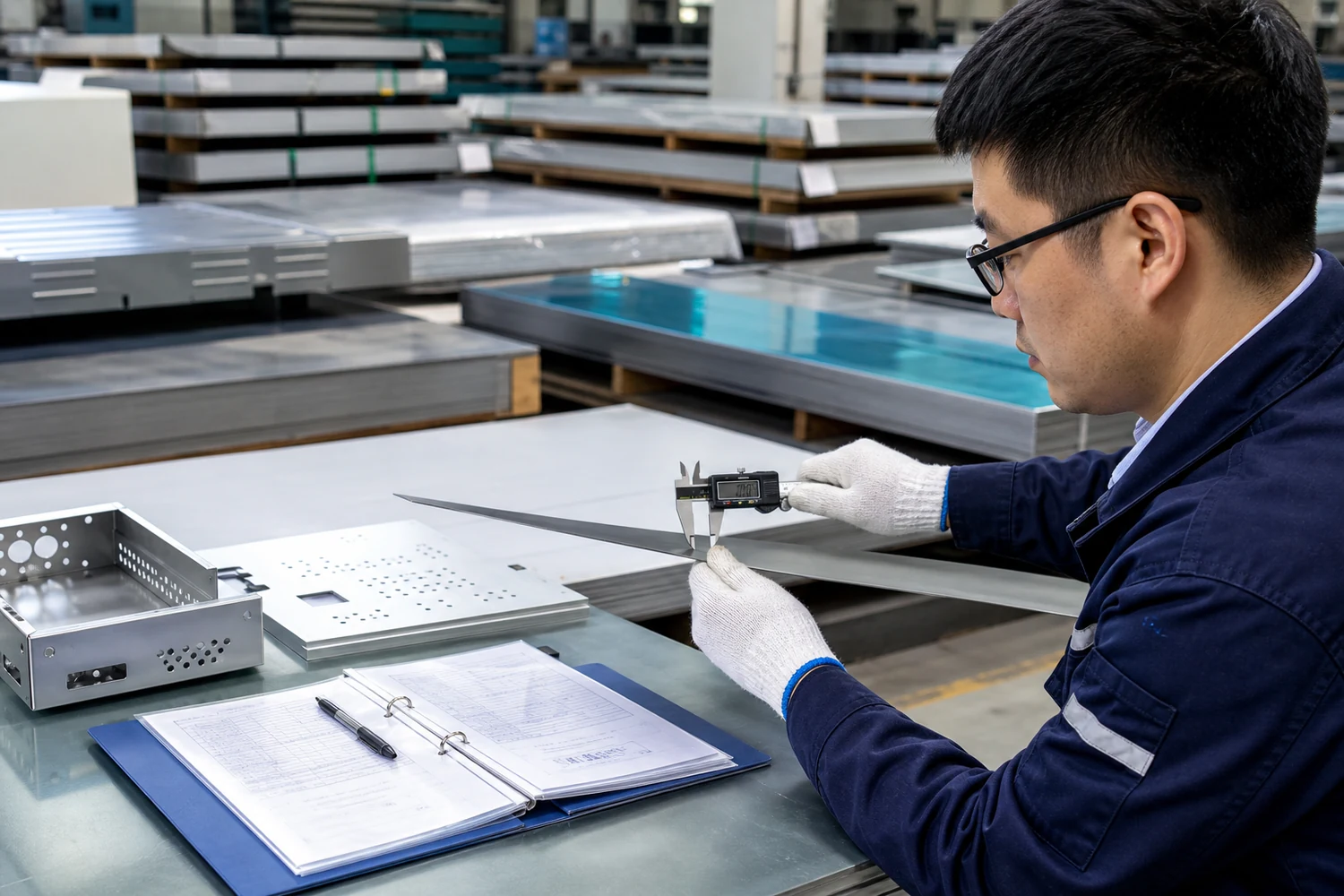
- PMI the actual metal immediately; document the reading.
- Cross-check the heat number with the mill’s records if reachable.
- Escalate through the quality agreement’s breach clause; notify your customer if product already shipped.
- Preserve evidence — the cert, the coil stencil photo, the PMI reading, the emails — before any recall or dispute.
A suspected fake handled quietly is how a small problem becomes a recall. Act in the light.
FAQ
How can I tell if a mill test certificate is counterfeit?
Start from the paper, then prove it with metal. On the document: confirm the heat number matches the coil and packing list, check the issuer is a real mill with a consistent format, watch for edited-PDF tells. Then verify with a PMI gun at receiving — if the chemistry doesn’t match the grade, the cert is fake.
Why is overseas metal sourcing more exposed to fake certificates?
Distance stops you walking the mill floor, trader chains blur who actually made and certified the steel, translated and edited PDFs hide alterations, and cross-border jurisdiction makes recourse slow and weak. Price pressure tempts suppliers to “optimize” the certificate.
What certificate type prevents counterfeit material certificates best?
Require EN 10204 3.1 at minimum and 3.2 for high-risk or regulated work. Both report actual test results for your specific heat and are far harder to fake than a 2.1 compliance statement.
Should I PMI every shipment to catch fake certs?
Not every bracket, but on a documented cadence. Every critical, high-value, or stainless batch gets PMI at receiving. Run random spot-checks on low-risk commodity lots to keep the supplier from optimizing around your checks.
What do I do if I suspect a counterfeit certificate after parts are already in production?
Quarantine the lot immediately. Demand the original cert file, PMI the actual metal and document the reading, and cross-check the heat with the mill. Escalate through the quality agreement’s breach clause.
 WeChat Contact
 WhatsApp Me Directly