
Written by: Frank, Sheet Metal Manufacturing Specialist | Technical Review: David Chen, Senior Quality Engineer | Last Reviewed: August 2026
MSTFAB manufacturing scope: drawing-based empty sheet metal enclosure shells.
Let’s start with a brutal truth: most buyers confuse IP67 and IP68 because both sound like “waterproof.” They are not the same, and picking wrong costs you either a flooded panel or a needlessly expensive box.
- IP67: Protects against temporary immersion (1 meter for 30 minutes). Think storm floods or brief pump-station surges.
- IP68: Protects against continuous immersion at a depth and time the manufacturer sets (often 1-3 meters for days/years). Think buried vaults, marine duty, or washdown pits that never drain.
The honest line for an electrical DB shell: if the box sits in standing water longer than half an hour, IP67 is no longer enough. You need IP68-rated glands, a pressure-equalizing vent, and a sealed assembly. We ship the precision-engineered empty galvanized shell to support these ratings; your panel shop earns the final certificate when they close it up.
Reading the Two Ratings: The Second Digit is the Whole Story
Both ratings share the same first digit: 6 (fully dust-t). The split is the second digit.
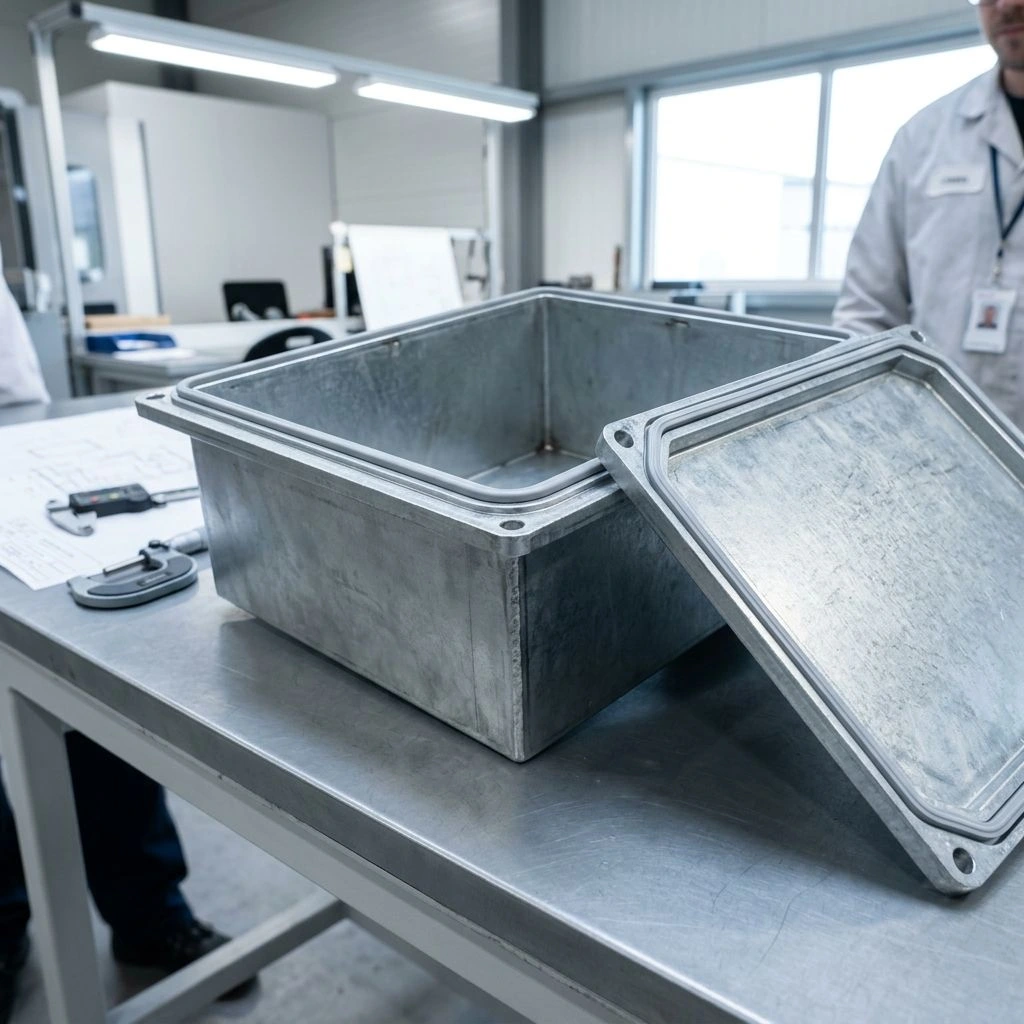
IP67 — The “7” means temporary immersion. Tested at 1 meter for 30 minutes with zero ingress. The real-world threat model is a storm flood, a pump-station surge, or a box briefly underwater during service.
IP68 — The “8” means continuous immersion. Tested at conditions agreed between maker and user (commonly 1m to 3m, sometimes deeper) for an extended duration. The threat model is a box that lives underwater: buried-adjacent vaults, permanent splash pools, or marine washdown pits.
The easy mistake? A procurement spec that lazily says “IP67 or better,” assuming IP68 is just a safer IP67. It is not. IP68 is a totally different sealing commitment involving continuous pressure resistance, specialized glands, and often a vent to stop the shell from “breathing” water during thermal cycles.
The Galvanized-Shell Reality: Geometry is Shared, Depth is the Differentiator
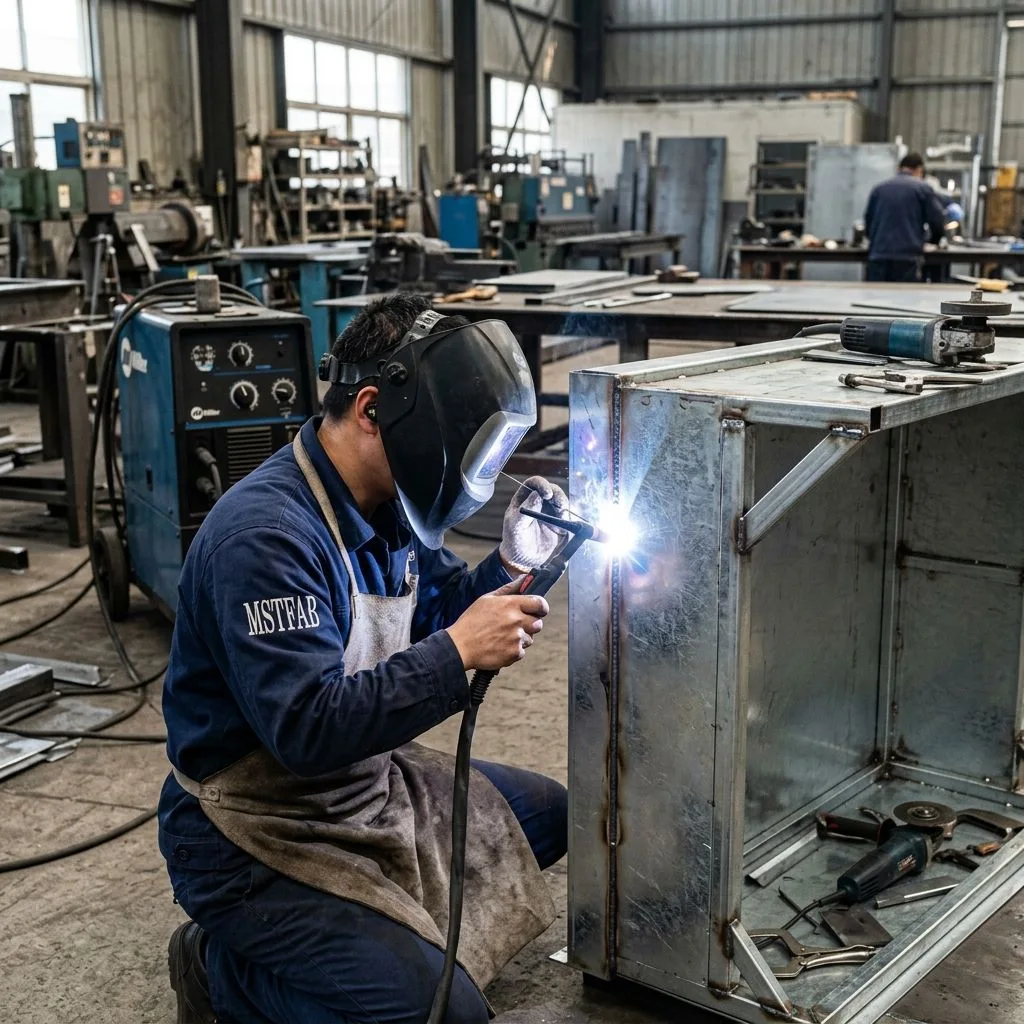
Here is what a decade of building these teaches you: the galvanized steel shell we cut, form, weld, and galvanize is largely the same foundation for both ratings. The difference is in the details that survive constant head pressure.
- Gasket durometer and cross-section: IP68 needs a gasket that holds compression under long-term load without taking a permanent set. A soft gasket that seals fine for a 30-minute dunk can relax and leak after a month underwater.
- Cable glands: IP67 glands are for temporary immersion. IP68 glands carry a depth rating. Mixing them up is the #1 way an “IP68 box” drowns.
- Pressure-equalizing vent: Submerged enclosures heat and cool. Without a breathable IP68 vent, the shell inhales water on every cool-down cycle. This stays invisible until the panel rusts from the inside out.
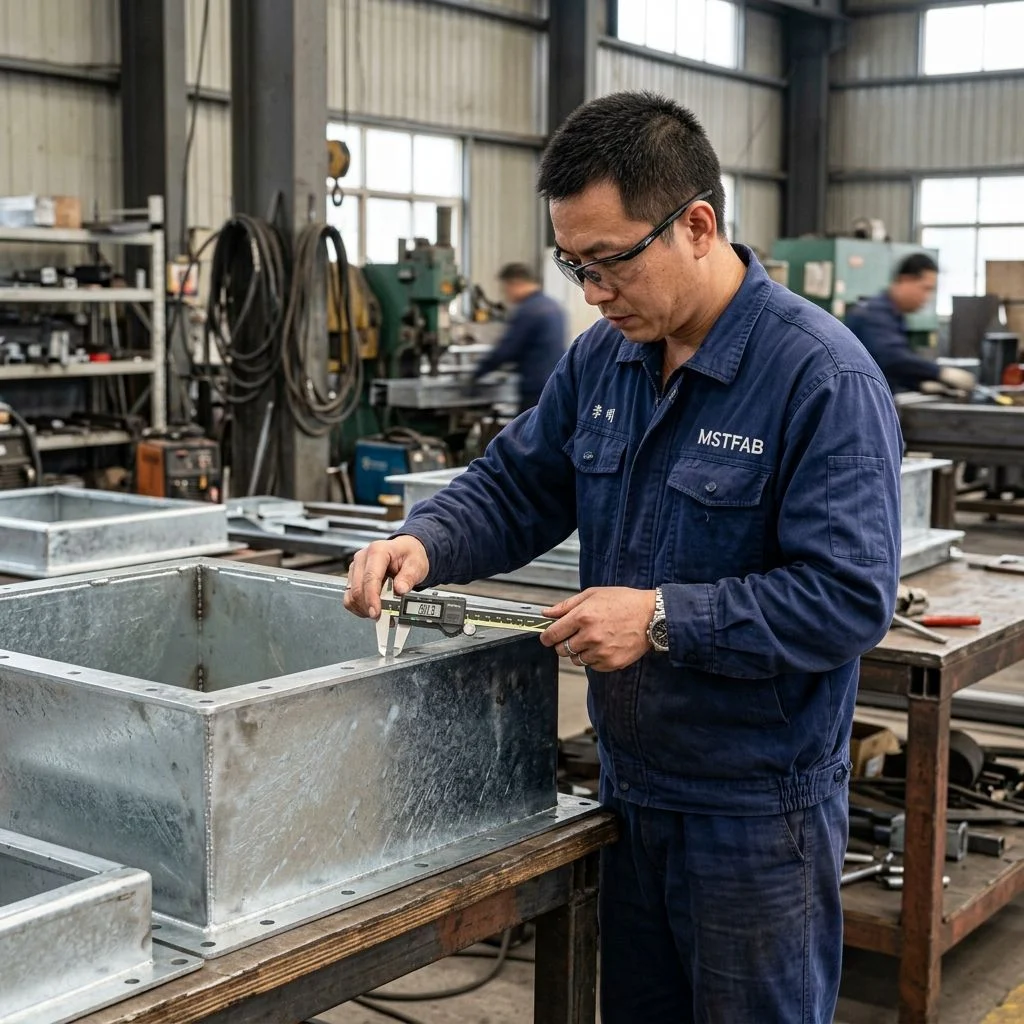
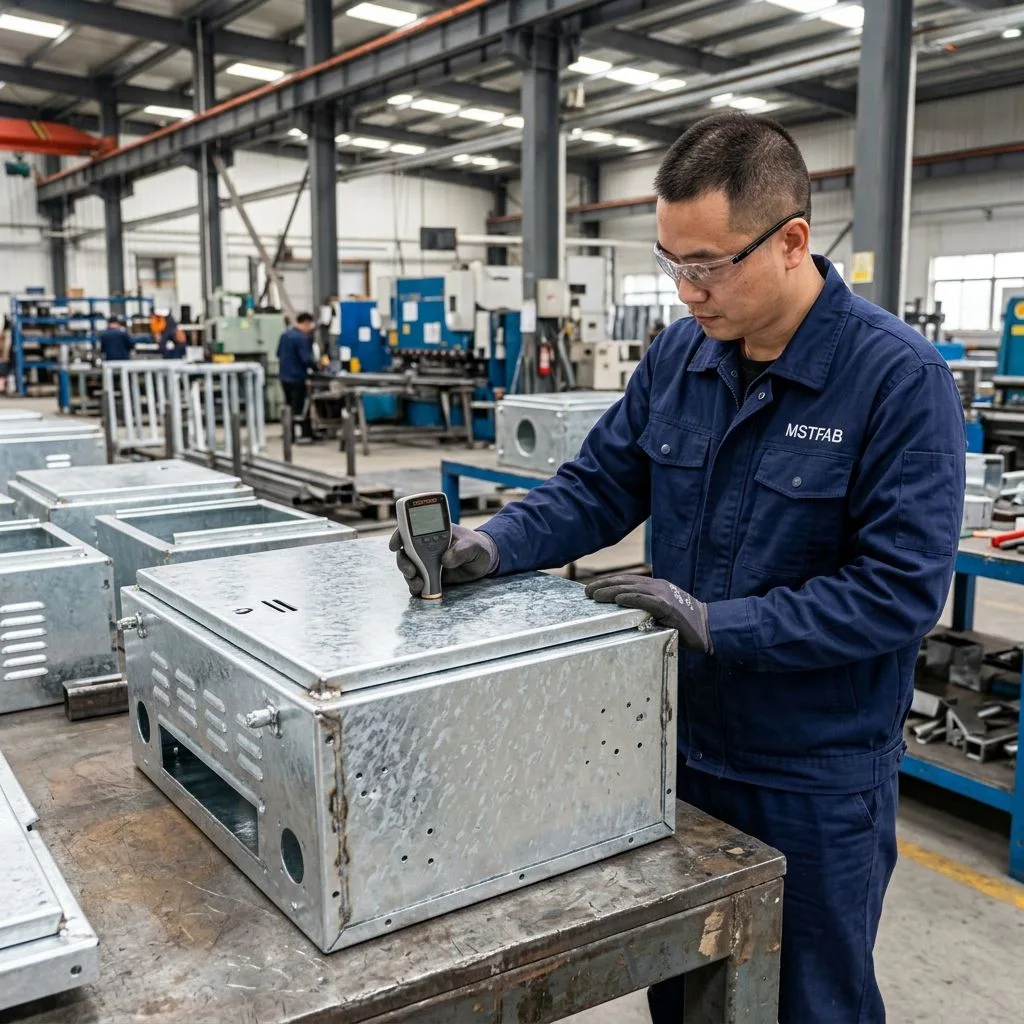
- Flange stiffness after galvanizing: Hot-dip coating and its extreme heat can bow a thin lid flange. For IP68, the flatness tolerance is way tighter.
So, an IP67 vs IP68 galvanized steel distribution box electrical manufacturer is really selling two levels of sealing discipline on the exact same steel. Pick the level based on the water threat, not fear.
The Defining Fit Gate (D2)
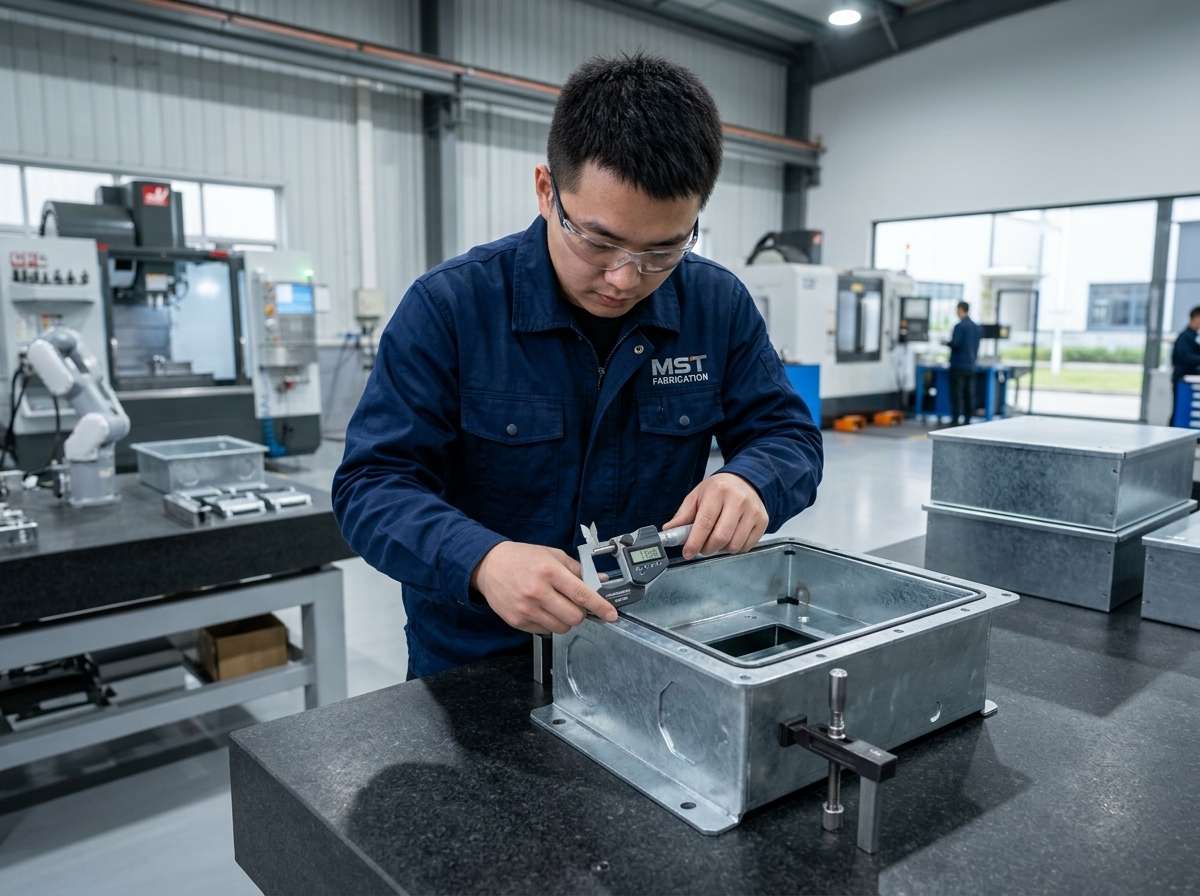
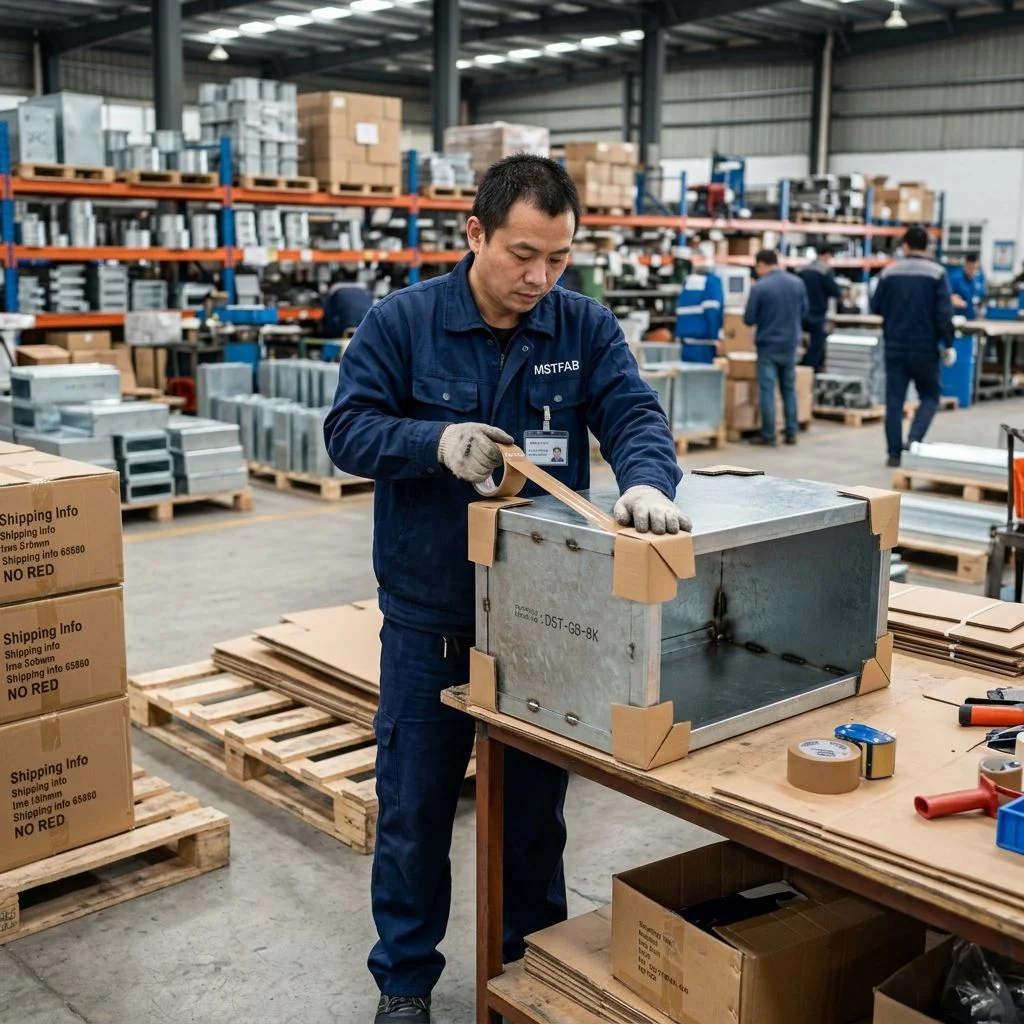
HARD GATE / mandatory: MSTFAB builds the empty galvanized steel distribution box shell to the sealing geometry that supports both outcomes—precision gasket channels, fully welded seams, and cable-entry provisions sized for immersion-rated glands and vents. We verify weld integrity and flange flatness. We do NOT certify the final assembly, because we ship the box empty. The IP certificate is earned by your panel shop on the completed, sealed unit.
HARD GATE / mandatory (buyer fit): Specify IP68 ONLY when the box will face continuous immersion (vaults, permanent pools, submersibles). If the threat is just a 30-minute flood, IP67 is correct and cheaper. If it’s just rain, IP65 or IP66 is honest. Don’t pay for a dive watch to wear in the shower.
7-Dimension Supplier Scorecard
| Dim | What to verify | MSTFAB position |
|---|---|---|
| D1 | Factory video audit of welding and sealing (HARD GATE) | Available on request; we show the active weld cell, not a brochure |
| D2 | Defining fit gate: System ratings vs bare-shell certs | We ship the engineered shell; you seal and certify the final unit |
| D3 | Capability: Gasket channel, flange flatness, seam welding | Fiber laser cut, CNC formed, continuous TIG/MIG seams |
| D4 | Quality & FAI: Flatness measurement, weld leak-check | First Article Inspection on every new drawing |
| D5 | EN 10204 3.1 material cert + PMI + heat number (HARD GATE) | Supplied per batch; positive material identification on request |
| D6 | Certifications held (ISO 9001 baseline) | ISO 9001 quality system; certificate copy on request |
| D7 | Commercial: MOQ, lead time, drawing-based scope | From 1 prototype to production runs; strict build-to-print |
The IP67 / IP68 Decision Table
| Rating | Liquid test | Survives | Honest fit for an electrical DB shell |
|---|---|---|---|
| IP65 | Low-pressure jet (6.3 mm nozzle) | Rain, splashing, hose-down | Indoor-adjacent, covered outdoor, light washdown |
| IP66 | Powerful jet (12.5 mm, 100 L/min) | Heavy spray, pressure washer | Exposed outdoor, machinery washdown, no standing water |
| IP67 | Temporary immersion 1 m / 30 min | Brief flood, pump-station surge | Flood-prone pads, coastal splash with pooling |
| IP68 | Continuous immersion, maker-defined depth/time | Permanent submersion, marine, buried vaults | Submersible duty, never-draining pits, deep splash pools |
Read it as a threat ladder, not a quality ranking. Higher isn’t “better”—it’s built for a wetter problem.
Vetting Checklist Before You RFQ an Immersion-Rated Shell
- State the real water threat: Depth, duration, temporary or continuous. Stop just writing “waterproof.”
- Confirm flatness checks: Does the supplier check flange flatness AFTER galvanizing? Constant head pressure exposes every wave.
- Specify gland rating: IP67 glands vs IP68 glands. They are not interchangeable.
- Ask about a vent: Is a pressure-equalizing vent needed, and is the shell boss prepared for it?
- Require material certs: EN 10204 3.1 with heat number and PMI for the galvanized sheet.
- Request video proof: Get a factory video of the sealing-area welding. See the process, not a render.
- Clarify ownership: Remember, the IP rating belongs to the assembler’s sealed, closed unit, not the bare shell.
Key Takeaways
- An IP67 vs IP68 galvanized steel distribution box electrical manufacturer conversation is about depth and duration, not “more waterproof is better.”
- IP67 covers temporary immersion (1m/30min); IP68 covers continuous immersion. Pick by the real threat.
- The galvanized shell foundation is shared, but IP68 demands tighter gaskets, depth-rated glands, a vent, and stricter post-galvanizing flatness.
- The IP certificate belongs to the complete sealed assembly your panel shop builds; we just ship the empty engineered shell.
FAQ
Q1. What is the real difference between IP67 and IP68 for an electrical distribution box?
IP67 protects against temporary immersion up to 1 meter for 30 minutes; IP68 protects against continuous immersion at a defined depth and duration. The practical split: a box that might briefly flood versus a box that lives underwater.
Q2. When do I need to step up to IP68?
Only when the box faces continuous immersion or water deeper than 1 meter (buried vaults, permanent splash pools, marine duty). If the threat is a brief flood, IP67 is right. If it’s just rain or spray, IP65/IP66 is cheaper and honest.
Q3. Can an IP67-rated shell pass IP68 if I just use better glands?
No. Better glands help, but IP68 also demands a gasket that resists permanent set under long-term load, a pressure-equalizing vent, and an incredibly flat flange. The rating is a system commitment, not a simple gland swap.
Q4. Does galvanizing hurt the immersion seal?
It can, if ignored. Hot-dip zinc coating plus extreme heat can bow a thin lid flange, wrecking the flat seat. The fix is Design for Manufacturability (DFM): stiffer flanges, post-galvanizing flatness checks, and gasket channels cut after coating.
Q5. What proof should I demand from the shell supplier?
A factory video of the sealing-area welding, flange flatness data after galvanizing, weld integrity results, and an EN 10204 3.1 material cert with heat number and PMI. Don’t buy a promise; buy a verified process.
 WeChat Contact
 WhatsApp Me Directly