
⚡ Direct Answer: When Does IATF 16949 Apply to Telecom Enclosures?
IATF 16949 standards apply to telecom enclosures when cabinets are deployed in Connected Vehicle Infrastructure (V2X), roadside intelligent transportation units (RSUs), autonomous vehicle test corridors, and EV fleet charging power hubs directly linked to automotive OEMs. While standard telecom shelters mandate ISO 9001 and Telcordia GR-487, automotive-linked contracts require IATF core tools: PPAP Level 3 submission packages, Process Failure Mode and Effects Analysis (PFMEA), Statistical Process Control demonstrating Cpk ≥ 1.67 on critical interfaces, and 100% material lot traceability.
Telecom vs. Automotive Enclosure Quality Framework Comparison
| Quality Governance Dimension | Standard Telecom (ISO 9001 / GR-487) | Automotive-Integrated Telecom (IATF 16949) |
|---|---|---|
| 1. Production Part Approval (PPAP) | First Article Inspection (FAI) per ISO 9001 | Full 18-element PPAP Level 3 package with PSW sign-off. |
| 2. Process Capability (Cpk) | Standard dimensional conformity (Cpk ≥ 1.0) | Mandatory Cpk ≥ 1.67 for initial study; ongoing Cpk ≥ 1.33 on CTQ datums. |
| 3. Risk Management & Prevention | General design review checklists | Dynamic PFMEA with actionable Risk Priority Numbers (RPN) & Control Plans. |
| 4. Sub-Tier Material Traceability | Batch Certificate of Conformance (CoC) | IMDS (International Material Data System) registration + steel heat lot tracking. |
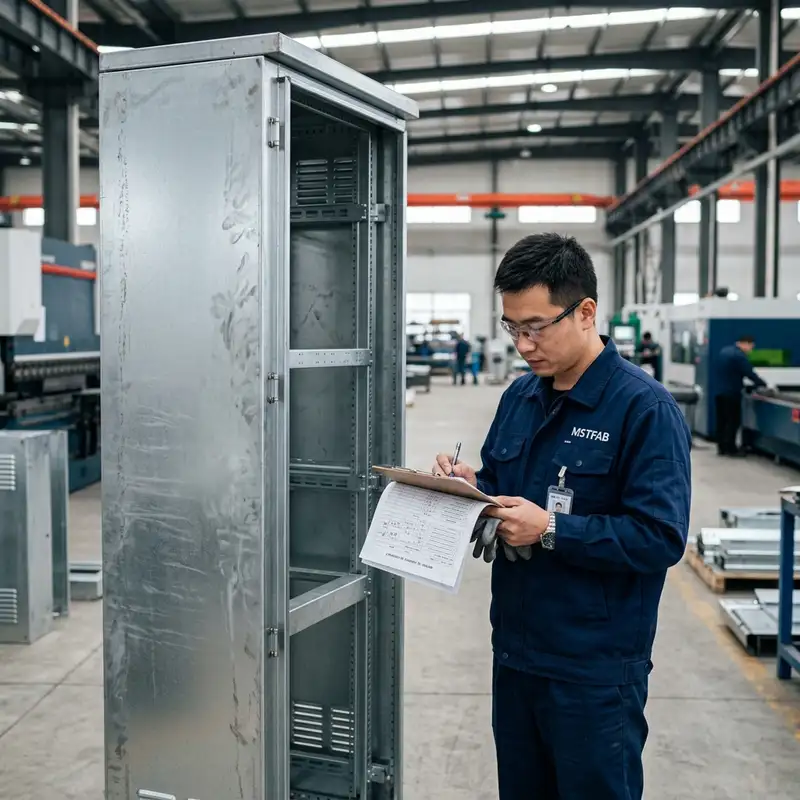
Key Manufacturing Controls for V2X Roadside Telecom Cabinets
When telecom equipment interfaces with automotive highways, environmental stress profiles increase drastically. Cabinets experience continuous high-vibration from heavy freight traffic, cyclic thermal shock (-40°C to +75°C), and chemical spray from winter de-icing salts (calcium chloride / magnesium chloride):
- Continuous Seam Robotic Laser Welding: Eliminates vibration-induced weld fatigue cracks, ensuring an unbroken IP66 environmental seal.
- Masked EMC Grounding Pads: Automotive radar and 5G cellular antennas require low-impedance ground bonding (<2.5 mΩ). Grounding studs are masked with high-temp caps before powder coating to guarantee clean bare metal conductivity.
- Vibration-Proof Hardware Retention: Threaded PEM® studs undergo push-out and torque-out validation exceeding automotive standard ISO 898-2.
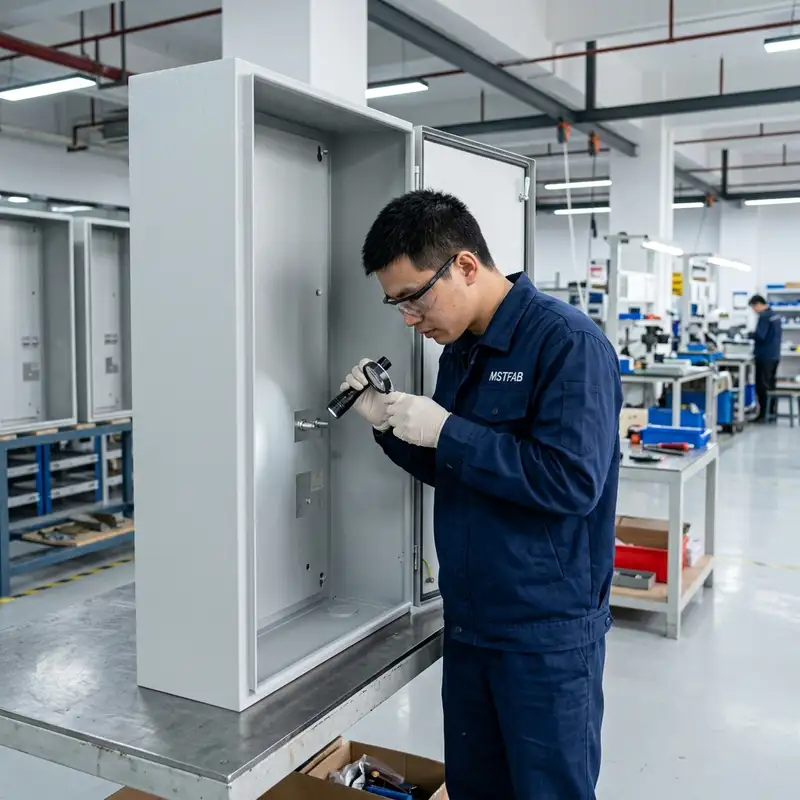
Build Automotive-Grade Telecom Enclosures with MSTFAB
MSTFAB applies rigorous automotive quality controls to custom outdoor telecom cabinets, V2X enclosures, and roadside intelligent equipment.
Frequently Asked Questions on IATF Telecom Enclosures
Can a factory certified to ISO 9001 supply parts for an IATF 16949 tier-1 project?
Yes. Under IATF 16949 Section 8.4.2.3 (Supplier Quality Management System Development), automotive Tier-1s can procure non-vehicle components (such as infrastructure cabinets) from suppliers certified to ISO 9001:2015, provided the supplier submits PPAP documentation and adheres to automotive Control Plans.
What salt spray resistance is required for roadside V2X telecom enclosures?
Roadside cabinets exposed to splash zones require a minimum of 1,000 hours ASTM B117 salt fog testing with zero blistering or creepage along scribed lines, achieved via 5052-H32 aluminum or galvannealed steel paired with architectural TGIC polyester powder coating.
 WeChat Contact
 WhatsApp Me Directly