
An IATF 16949 galvanized steel switch box manufacturer shouldn’t win your business just because they slapped an IATF logo on their website.
The real question you should be asking: Can the factory repeatedly manufacture the exact switch and actuator interface your approved hardware actually needs?
For a custom switch-box shell, precision is everything. Three millimeters in the wrong direction can turn a very expensive switch into an equally expensive decorative object.
MSTFAB manufactures the empty metal shell. Your automotive OEM, Tier supplier, or electrical integrator selects and installs the actual components.
We make the metal fit the switch. We do not make the switch switch.
1. First Define What We Mean by “Switch Box”
A “switch box” is a dangerously convenient name. To some, it means a disconnect-switch enclosure. To others, it’s a rotary actuator box or an operator switch station.
For this guide, a switch box shell is a fabricated metal enclosure where one or more switch interfaces are mechanically critical. The defining feature isn’t that it holds electricity. The defining feature is that the switch operation depends entirely on the sheet metal interface being in the exact right place.
2. Confirm IATF Applicability
Don’t automatically mandate IATF 16949 just because your buyer is an automotive company. A switch box installed on standard factory machinery doesn’t automatically become an automotive production part.
Once your Tier supplier or OEM confirms the applicable quality requirements and flows them down—then we can focus on the metal. Metal is much more enjoyable. It has far fewer acronyms.
3. The Actuator Cutout Is the First Hard Fit Gate
The front-panel opening is never just a “hole for a switch.”
The approved component might require:
- Anti-rotation notches
- Keyed openings
- Clearance for a locking ring
Don’t rely on generic specs like “standard 22 mm switch.” Different brands use different bezel envelopes and rear locknut geometries. The strongest drawing package references the exact component geometry.
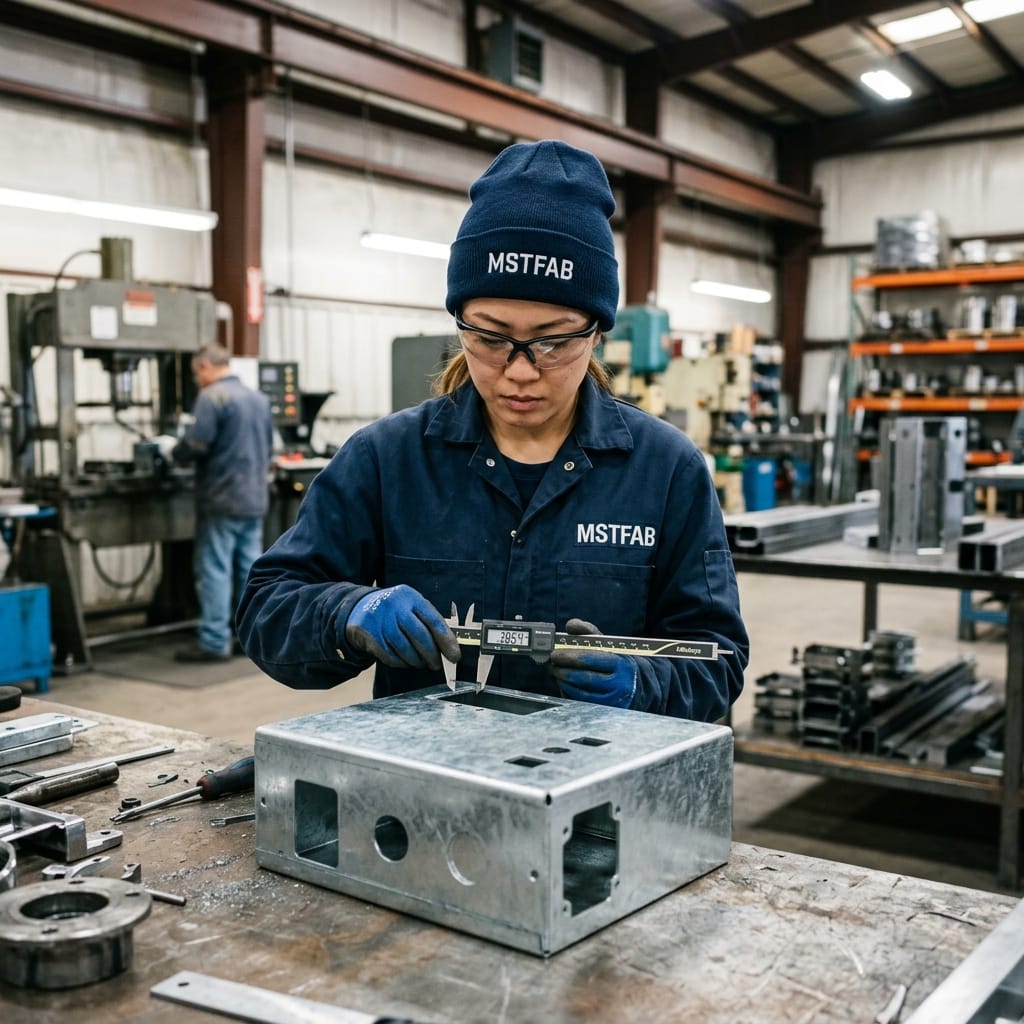
4. Hole Diameter Alone Doesn’t Prove Fit
Procurement sometimes asks QC to only measure the main actuator diameter. That’s how you miss the features that actually stop assembly.
For instance, the main hole might pass, but the anti-rotation notch is misplaced, or the rear locknut hits a bracket.
Tight tolerances aren’t free quality. Sometimes, they’re just expensive typography. Identify the actual functional Critical-To-Quality (CTQ) dimensions.
5. Back-of-Panel Clearance: Where Good CAD Goes to Die
From the front, a switch looks tiny. Behind the panel, it’s a different story: contact blocks, terminals, locking rings, rotary mechanisms, and cable bend radii.
A switch box can pass front-panel inspection and still fail on the assembly line because the rear envelope collides with a DIN rail or a welded bracket.
Before releasing the enclosure, provide the relevant keep-out envelope. The question isn’t “Does the hole fit?” The question is: “Does the device fit after passing through the hole?”
Small difference in wording. Massive difference in scrap rate.

6. The Best Switch Fit Check Uses Production Hardware
A common prototype shortcut is grabbing “something roughly the same size.”
That’s only acceptable if you understand the risk. For production release, use the exact production switch or an approved master gauge.
A hole gauge checks the hole. A switch checks the relationship. And relationships are usually where projects get complicated.
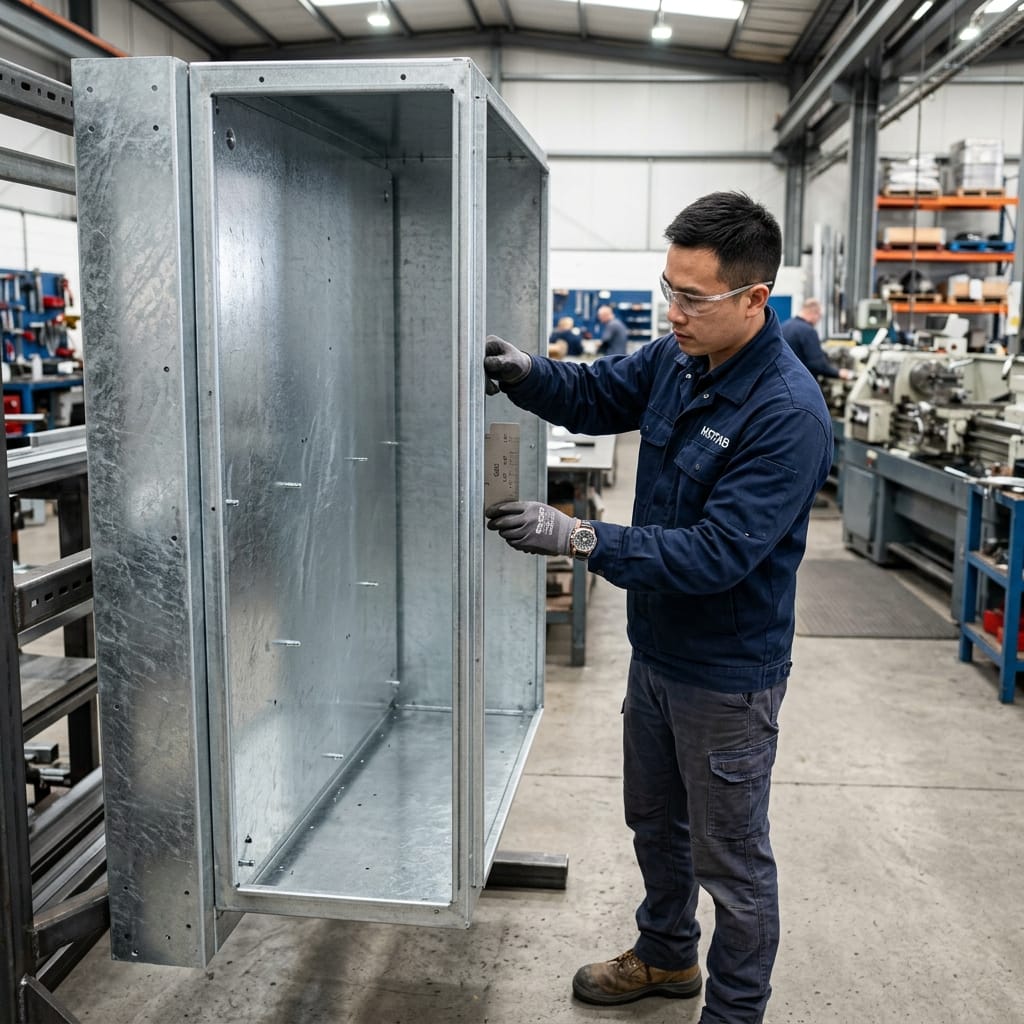
7. Change Control Matters More After the Switch Fits
The sample passes. Production begins. Six months later, the switch supplier tweaks the actuator design, or the powder coating supplier changes.
The question isn’t whether changes will happen—they will. The question is whether the change hits the engineering approval route before 3,000 parts are welded.
“Same thing, tiny change” is how many very large, very expensive automotive meetings begin.
8. Welding Distortion Can Move the Actuator Without Moving the CAD
A fabricated box might measure perfectly in the flat pattern. After welding, the face panel bows, or the actuator center shifts relative to the rear bracket.
For repeat automotive production, MSTFAB controls this with dedicated fixtures, weld sequencing, and post-weld dimensional checks. A beautiful weld isn’t an actuator datum (although it photographs much better).

9. First Article Inspection Should Include the Actual Interface
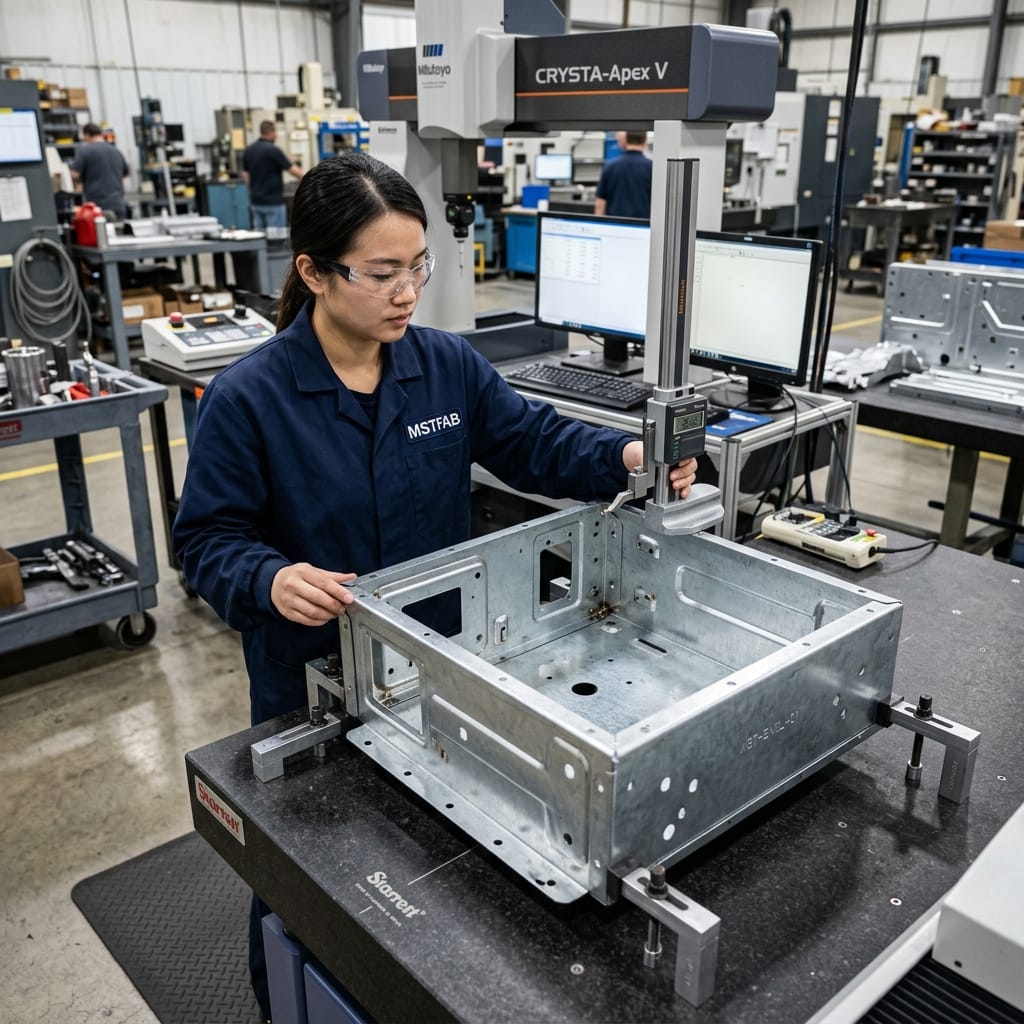
A CMM can tell you the hole is correct. The actual switch can tell you whether everyone involved in the design was correct. Both opinions are worth hearing.
For automotive programs, your First Article Inspection (FAI) should verify the part revision, the main actuator opening, panel flatness (for bezel seating), and cover fit to ensure switch mechanism clearance.
10. MSTFAB Trust Table: Supplier Vetting Checklist
Stop accepting “trust me, our quality is good” as an engineering answer. Here is a practical, 7-dimension scorecard to evaluate your next automotive switch-box supplier.
| Buyer Gate | What to Verify | Strong Evidence |
|---|---|---|
| IATF Applicability | Program is actually within automotive flow-down | Customer/program requirement documents |
| Certified Site | Correct factory location and scope | Current IATF certificate verification |
| Switch Interface | Exact actuator geometry frozen | Released switch interface + metal drawing |
| CTQs Identified | Functional characteristics identified | Balloon drawing & Control Plan |
| First Article | Production-intent part measured | FAI/PPAP dimensional evidence |
| Change Control | No invisible switch/material/tooling changes | Written notification & reapproval procedure |
| Scope Boundary | Empty shell only (no electronics) | Clear BOM and supply statement |
What MSTFAB Manufactures (And What We Don’t)
- We Fabricate: Galvanized steel switch-box bodies, actuator face plates, internal brackets, DIN rail mounting interfaces, grounding studs, and PEM hardware.
- We Do Not Supply: The disconnect switch, breakers, PLCs, wiring, or finished electrical certification. You choose and validate the electrical switch. MSTFAB manufactures the controlled metal shell.
No switch installed. No breaker hidden inside. Just the exact, repeatable metal interface your production line expects when the carton opens.
Request a Custom Automotive Switch Box Shell Quote
Send MSTFAB your STEP/STP files, controlled PDF drawing, exact switch/actuator interface, material specs, and required automotive quality documents.
Our engineering team will review your actuator cutouts, anti-rotation geometry, and mounting boss layouts to ensure seamless, repeatable production.
 WeChat Contact
 WhatsApp Me Directly