
How do hardware operations teams establish an effective sheet metal supplier recovery plan after a shipment failure?
Hardware operations teams execute a structured 5-phase recovery roadmap: (1) immediate 24-hour physical containment across all pipeline inventory (in-transit, dock, and warehouse), (2) emergency bridging stock activation (backup AVL fabricator or authorized on-site rework), (3) formal 8D root cause investigation with physical tooling/process verification, (4) short-run pilot requalification lot with 100% CMM delta FAI, and (5) temporary heightened Safe-Launch inspection gates (Level II Tightened) until three consecutive clean production lots are achieved.
A failed production shipment of custom sheet metal parts – whether due to out-of-tolerance bend angles, missing weld penetrations, or flaking powder coating – immediately threatens factory revenue and customer delivery commitments. Emotional reactions or unstructured supplier firefighting usually result in recurring failures two weeks later. A disciplined Supplier Recovery Plan (SRP) stabilizes production lines, isolates non-conforming inventory, and permanently fixes the manufacturing root cause.
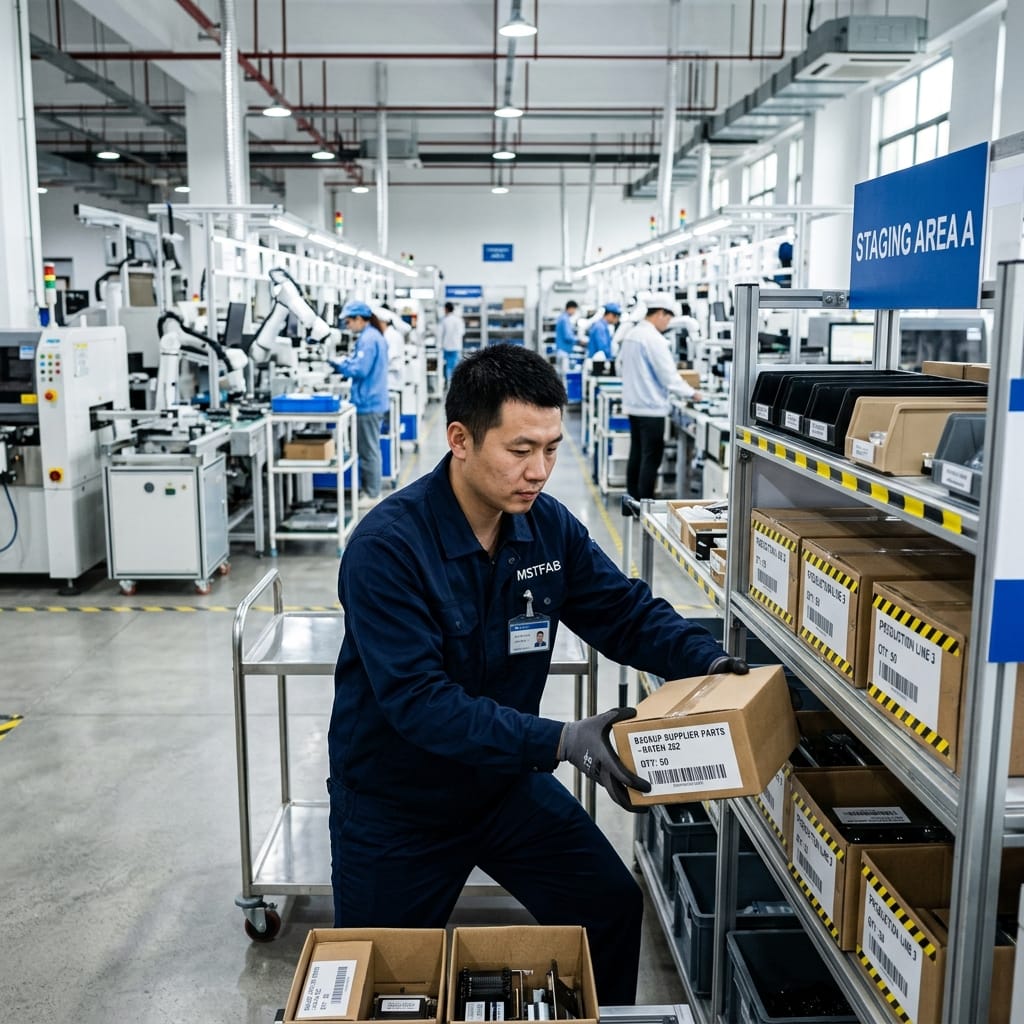
Phase 1 & 2: Containment & Emergency Bridging Stock
The first 48 hours dictate whether an assembly line survives a supplier quality collapse:
- Complete Pipeline Quarantine: Issue a global quarantine hold across all open purchase orders, in-transit ocean containers, receiving docks, and shop floor staging areas. Every container tied to the suspect manufacturing date code is tagged and locked in physical quarantine.
- Safe-Launch Sorting Cell: If finished chassis inventory is near zero, deploy an on-site sorting station to check 100% of parts against go/no-go gauges, releasing only conforming units hour-by-hour to prevent line stoppage.
- Dual-Source / Backup Activation: Immediately issue a bridging PO to your pre-qualified secondary fabricator (e.g., MSTFAB) for 2 to 4 weeks of emergency buffer volume while the primary vendor undergoes remediation.

Phase 3 & 4: Root Cause Audit & Short-Run Requalification
Never accept a generic 8D report stating “operator retrained.” In precision sheet metal, human error is rarely the root cause; systemic equipment and tooling failures are:
- Mechanical Root Cause: Did the press brake punch tip radius wear down from 0.8 mm to 1.4 mm? Did the nitrogen assist gas regulator drop below 18 bar, causing cut-edge dross?
- Engineering Poke-Yoke: Mandate physical mistake-proofing fixtures – such as asymmetrical locating pins on punching dies or automated laser height sensors – that physically prevent improper part loading.
- 30-Piece Verification Run: Require the supplier to produce a pilot verification lot under observation, submitting 100% dimensional CMM data showing Cpk ≥ 1.33 before full volume production is reinstated.
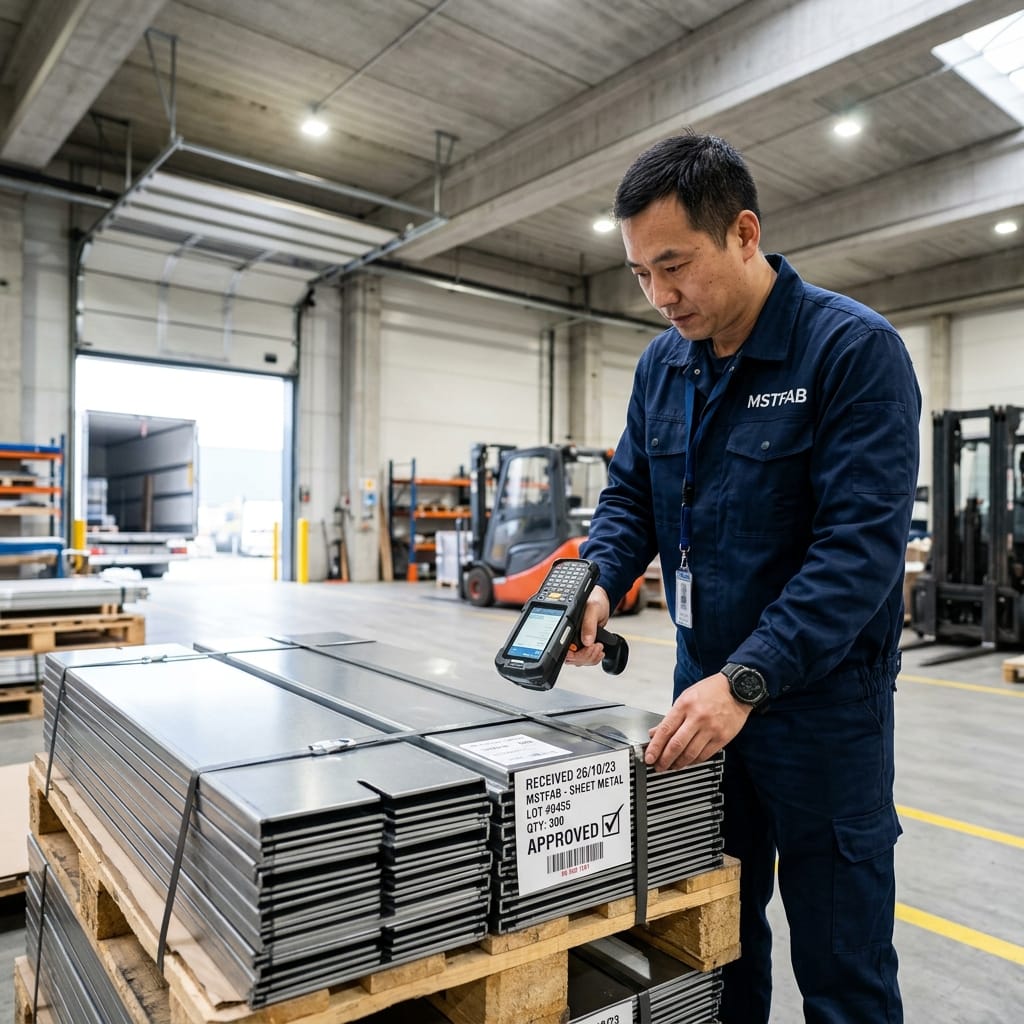
Supplier Recovery Plan (SRP) Milestone Schedule
The table below provides a structured 30-day supplier recovery timeline with enforceable deliverables and sign-off gates:
| Milestone Window | Recovery Action Item | Responsible Stakeholder | Required Documentation | Acceptance Gate |
|---|---|---|---|---|
| Day 1 (24 Hours) | Issue global lot quarantine, freeze open POs, establish dock sorting cell | OEM SQE & Receiving Lead | Quarantine hold log & formal NCR notification | 100% Pipeline Frozen |
| Day 2–3 (72 Hours) | Implement Interim Containment Action (D3), activate secondary bridging stock | Supplier Executive & OEM Buyer | D3 Containment report & Bridging PO release | Zero Line Starvation |
| Day 4–10 | 5-Why Root Cause analysis (D4), tool regrinding / machine calibration (D5) | Supplier Quality Engineering | Full 8D Root Cause Report with tooling proof | OEM Engineering Sign-Off |
| Day 11–15 | Produce 30-piece pilot requalification run; execute 100% CMM delta FAIR | Joint SQE & Metrology Lab | CMM Dimensional FAIR & Capability Study | Cpk ≥ 1.33 Validated |
| Day 16–30 | Safe-Launch Level II Tightened inspection across 3 volume production shipments | OEM Receiving Quality | Safe-launch dock scorecards (0 defects allowed) | AVL Status Restored |
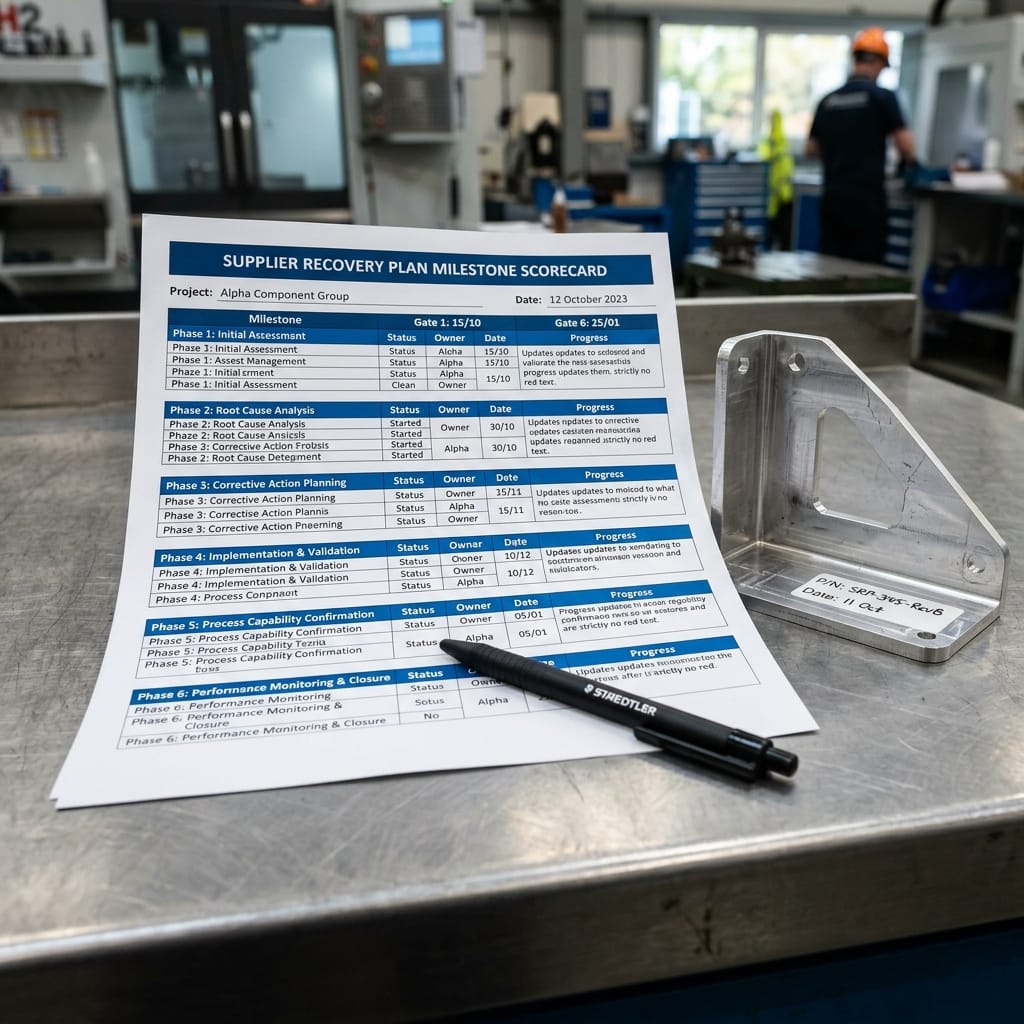
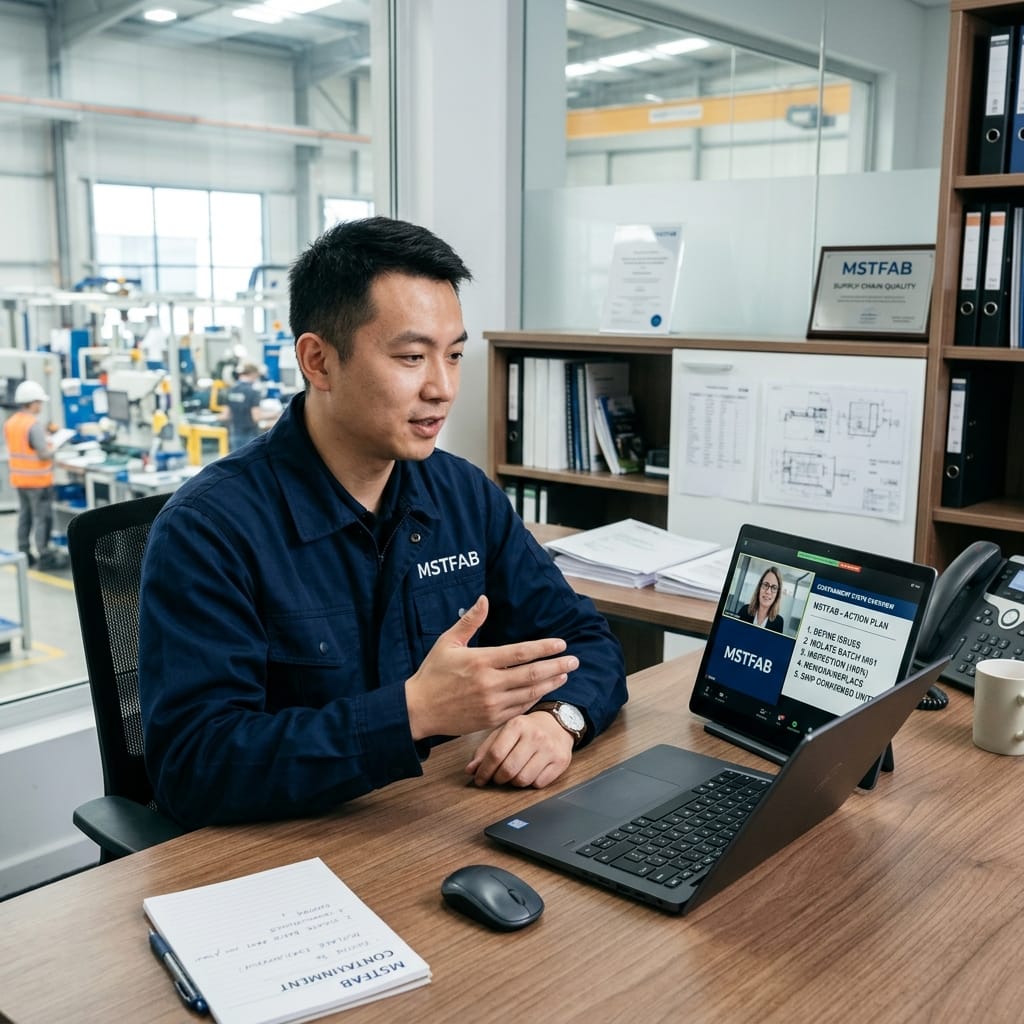
Need an Emergency Bridging Supplier or Permanent Quality Partner?
When an incumbent fabricator fails, MSTFAB steps in with rapid CNC tooling setups, high-precision fiber laser cutting, and certified CMM dimensional verification. We can produce emergency bridging runs within days or transition your parts to full volume production with guaranteed zero-defect quality. Contact our engineering team today.
 WeChat Contact
 WhatsApp Me Directly