
⚡ Direct Answer: How to Optimize Automation Distribution Box Shells?
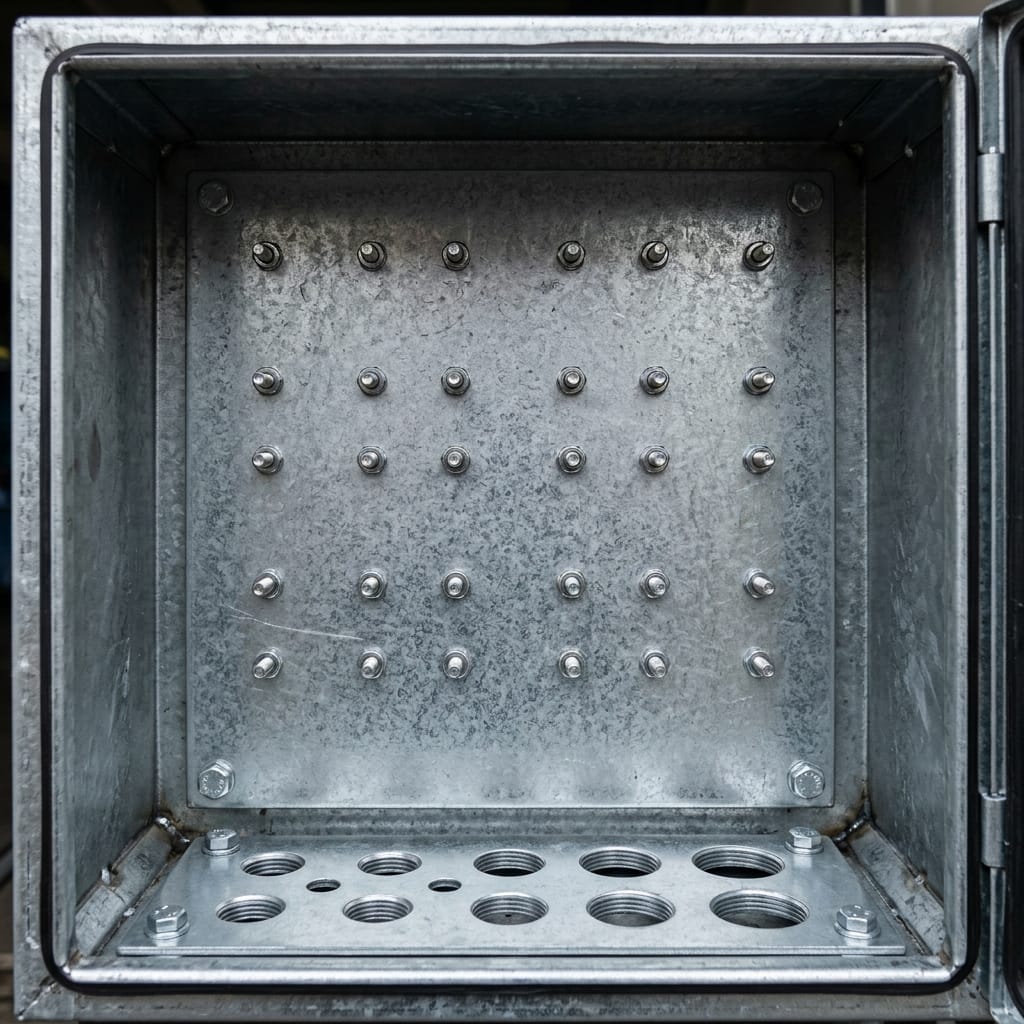
High-performance automation distribution box shells house sensitive PLCs, variable frequency drives (VFDs), and remote I/O modules requiring structured physical separation and passive thermal dissipation: 1) Minimum 75mm vertical clearance above and below PLC heat sinks for natural air convection; 2) Removable 2.0mm bright zinc-plated internal gear plates providing low-impedance ground bonding (<0.05 Ω); 3) Precision laser-cut bottom modular gland plates holding ±0.10mm for sealed cable entries; and 4) IP66 / NEMA 4 continuous robotically poured polyurethane foam gaskets (FIPFG) protecting against factory dust and coolant mist.
Automation Distribution Box Architecture & Thermal Matrix
| Internal Component Zone | Thermal Heat Dissipation / Load | Sheet Metal Enclosure DFM Solution |
|---|---|---|
| 1. Top Exhaust Zone | Accumulates rising hot air (>55°C) | Laser-perforated top ventilation louvers with insect mesh or roof fan-filter cutouts with rain hoods. |
| 2. Mid PLC & I/O Rail Zone | Moderate heat; highly sensitive to thermal drift | Standard TS35/7.5 DIN rails mounted on pre-tapped standoffs; 50mm wire duct spacing for laminar airflow. |
| 3. Bottom VFD & Power Supply Zone | High heat generation (20W–100W+ per drive) | Positioned lowest in the cabinet; bottom cool air intake louvers with washable dust filters. |
| 4. Cable Entry Gland Plate | High cable congestion; strain relief requirements | Removable 2.5mm aluminum or galvanized gland plate with pre-punched knockout pattern and silicone gasket. |
5 DFM Best Practices for Automation Panel Enclosure Design
- Elevate Sub-Panels with Threaded Standoffs: Pressing M8 blind standoffs into the rear enclosure wall creates a 15mm air gap behind the mounting plate, preventing hot spots from transferring directly to external mounting surfaces.
- Segmented Wire Duct Mounting Patterns: Pre-punching slotted mounting holes on 25mm centers eliminates on-site drilling by electrical panel builders, speeding up control panel assembly.
- Continuous Knife-Edge Door Gutters: Enclosure openings incorporate an outward-sloping water shedding gutter that deflects liquids away from the gasket perimeter during washdowns.
- Dedicated Grounding Busbar Brackets: Include pre-welded copper-plated M6 studs at the bottom of the enclosure to ensure all shielded signal cables can be grounded within 100mm of entering the cabinet.
- Reversible Concealed Hinges: Symmetrical laser-cut hinge mounting tabs allow left- or right-hand door swings to be reconfigured on the factory floor in minutes.
Custom Automation Enclosures Fabricated to Your Layout
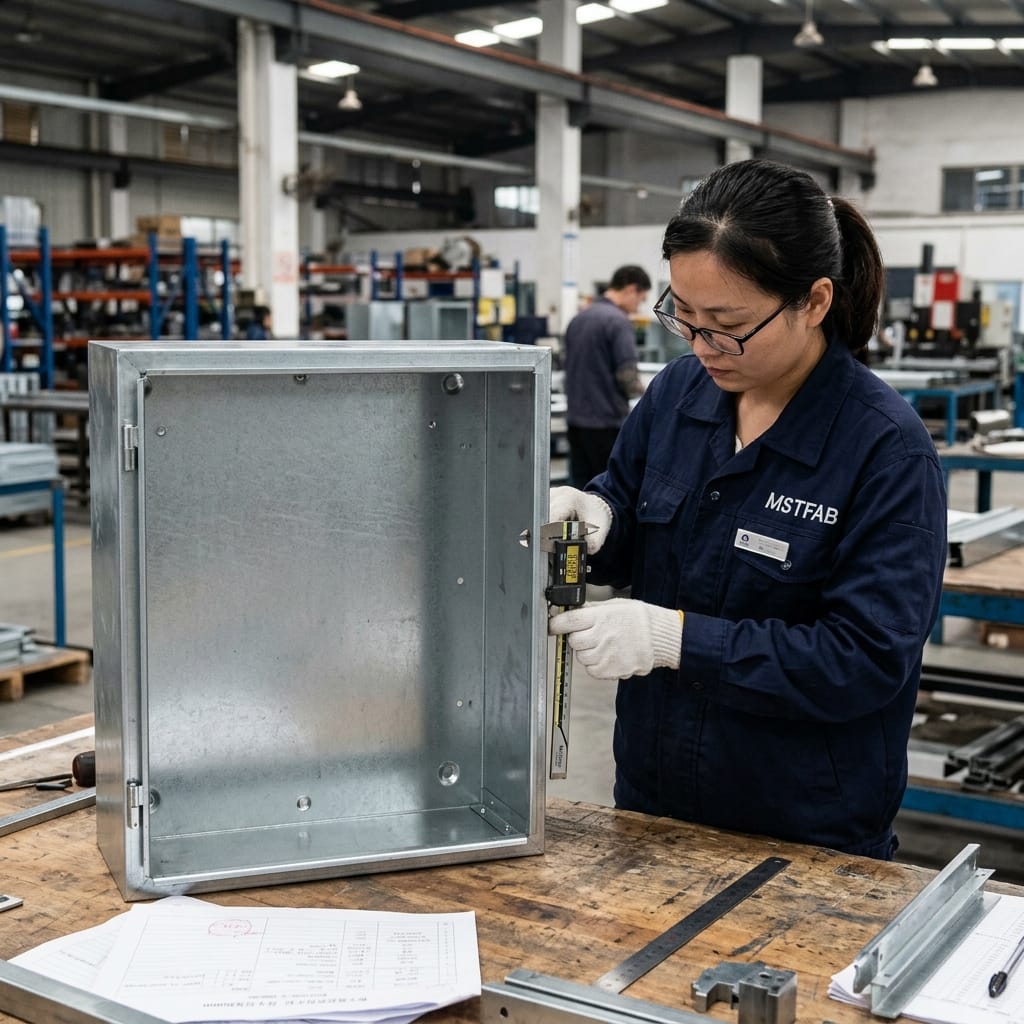
Send your PLC layout drawings to MSTFAB. We manufacture precision galvanized and stainless steel automation distribution boxes.
Frequently Asked Questions on Automation Distribution Boxes
What is the benefit of a pre-galvanized back sub-panel vs a painted one?
Pre-galvanized or zinc-electroplated steel sub-panels provide uninterrupted metallic conductivity across the entire mounting surface. This eliminates the need for panel builders to scrape away paint to achieve proper DIN rail and VFD chassis grounding.
How do you prevent door sag on large automation cabinets housing heavy HMI touchscreens?
We form internal structural hat-channel stiffening ribs welded directly to the door interior, paired with heavy-duty 2.5mm stainless steel concealed hinges that eliminate door droop even with 15-inch industrial touch panels installed.
 WeChat Contact
 WhatsApp Me Directly