
🔬 Direct Answer: What Are Diagnostic Analyzer Reagent Tray Brackets?
Diagnostic analyzer reagent tray brackets are high-precision, chemically passivated structural sheet metal mounting plates, guide rails, and carousel support sub-assemblies engineered to support, index, and thermally isolate reagent carousels and microplate racks inside automated In-Vitro Diagnostic (IVD) analyzers, clinical chemistry platforms, and chemiluminescence immunoassay (CLIA) systems. Fabricated from 2.0 mm to 4.0 mm medical-grade 316L stainless steel or 5052-H32 / 6061-T6 aluminum, these structural components execute six critical clinical functions: 1) Sub-Millimeter Pipetting Datum Alignment (maintaining true position tolerances within ±0.05 mm across 60+ reagent vial positions to prevent catastrophic robotic pipettor needle bending crashes); 2) Thermal Barrier Isolation for Chilled Storage (2° C to 8° C) (incorporating engineered thermal breaks using PEEK or Delrin isolator standoffs that decouple chilled reagent cooling bays from warm motorized analyzer chassis); 3) Corrosive Reagent Spill Containment & Drainage (incorporating brake-formed 10 mm raised perimeter catch reservoirs with gravity weep drains that isolate acid, alkali, and enzymatic wash buffers from sensitive electronics); 4) Capacitive Liquid Level Sensing (cLLD) Ground Continuity (maintaining an electrical reference grounding under IEC 60601-1 impedance R ≤ 0.05 ohm across all vial retaining wells); 5) Dynamic Rotary Indexing Stiffness (resisting high-acceleration stop-start torque spikes from servo direct-drives without angular backlash); and 6) Full Medical Regulatory Traceability (manufactured under ISO 13485:2016 quality management systems with EN 10204 Type 3.1 material certificates and SAE AS9102 First Article Inspection (FAI) reports).
Table of Contents: IVD Reagent Tray Bracket Engineering Guide
- 1. Clinical & Mechanical Physics of Automated IVD Diagnostic Analyzers
- 2. Rotary Carousel Indexing Precision, Runout & Pipettor Crash Kinematics
- 3. Thermal Management: Peltier Cooler Integration & Thermal Barrier DFM (2° C to 8° C)
- 4. Reagent Chemical Spill Containment & Gravity Condensate Drainage DFM
- 5. Multi-Axis Slide Drawer Mechanisms & Ergonomic Reagent Loading
- 6. Medical Grade Material Selection Matrix: 316L vs. 304 vs. 5052 Aluminum vs. Engineered Polymers
- 7. Surface Finishing & Roughness: ASTM B912 Electropolishing & Passivation
- 8. Failure Mode & Effects Analysis (FMEA): 6 Critical IVD Reagent Tray Failures
- 9. Precision CNC Sheet Metal Fabrication Workflow: Laser Piercing to Robotic TIG
- 10. Dynamic Modal FEA & Pipetting Vibration Resonance Avoidance
- 11. Capacitive Liquid Level Detection (cLLD) & Electrical Reference Grounding
- 12. ISO 13485:2016 Regulatory Compliance, AS9102 FAI & Traceability Protocols
- 13. Clinical Case Study: Chemiluminescence Immunoassay (CLIA) Reagent Tray Redesign
- 14. High-Speed Microplate Shaker & 37° C Incubator Tray DFM
- 15. 13.56 MHz RFID & 2D Barcode Tracking Sensor Integration DFM
- 14. Shock, Vibration & Transit Packaging DFM for Diagnostic Instrumentation
- 15. OEM Procurement Checklist & RFQ Specifications for Medical Metalwork
- 16. Comprehensive Engineering FAQs on Diagnostic Analyzer Reagent Tray Brackets
1. Clinical & Mechanical Physics of Automated IVD Diagnostic Analyzers
In modern clinical pathology laboratories and blood screening centers, automated In-Vitro Diagnostic (IVD) analyzers process thousands of patient blood, serum, and urine samples daily. Whether executing high-throughput clinical chemistry assays, chemiluminescence immunoassays (CLIA), or molecular polymerase chain reaction (PCR) tests, these instruments rely on motorized robotic sample arms and reagent delivery pipettes operating at speeds exceeding 1,200 aspirate/dispense cycles per hour.
At the mechanical core of the analyzer sits the reagent storage module: a rotating carousel or linear slide drawer that holds dozens of proprietary reagent bottles containing delicate antibodies, enzymes, magnetic micro-beads, and chemical substrates. The structural bracket assembly supporting this reagent bay operates under four unforgiving clinical constraints:
- Sub-Millimeter Robotic Target Alignment: Precision robotic pipettor needles with tip diameters as small as Ø0.6 mm must descend vertically through the narrow septum opening of each reagent vial (often Ø4.0 mm to Ø6.0 mm target windows). If the reagent tray bracket sags or tilts by even 0.3 mm, the fragile needle strikes the vial rim, bending instantly and causing emergency instrument downtime.
- Constant Temperature Maintenance (2° C to 8° C): Diagnostic reagents degrade rapidly if exposed to ambient room temperature (22° C to 25° C) or localized heat from power supplies and motors. The reagent tray bracket must interface seamlessly with thermoelectric Peltier coolers while incorporating thermal break materials to prevent conductive heat transfer from the chassis.
- Aggressive Chemical Exposure: Analyzers utilize concentrated acidic washes, alkaline cleaners (0.1M NaOH), sodium hypochlorite (bleach), surfactant detergents, and biofluids. Fluid drips during bottle loading or tubing purges will corrode standard painted steel, creating flaky rust particles that contaminate patient diagnostic results.
- Continuous Dynamic Indexing Torque: High-throughput analyzers rotate the heavy reagent carousel (weighing 8 kg to 20 kg when fully loaded) to align target vials under the pipettor needle within 250 milliseconds. The mounting bracket must absorb high dynamic acceleration and deceleration torque spikes without torsional flexure or backlash.
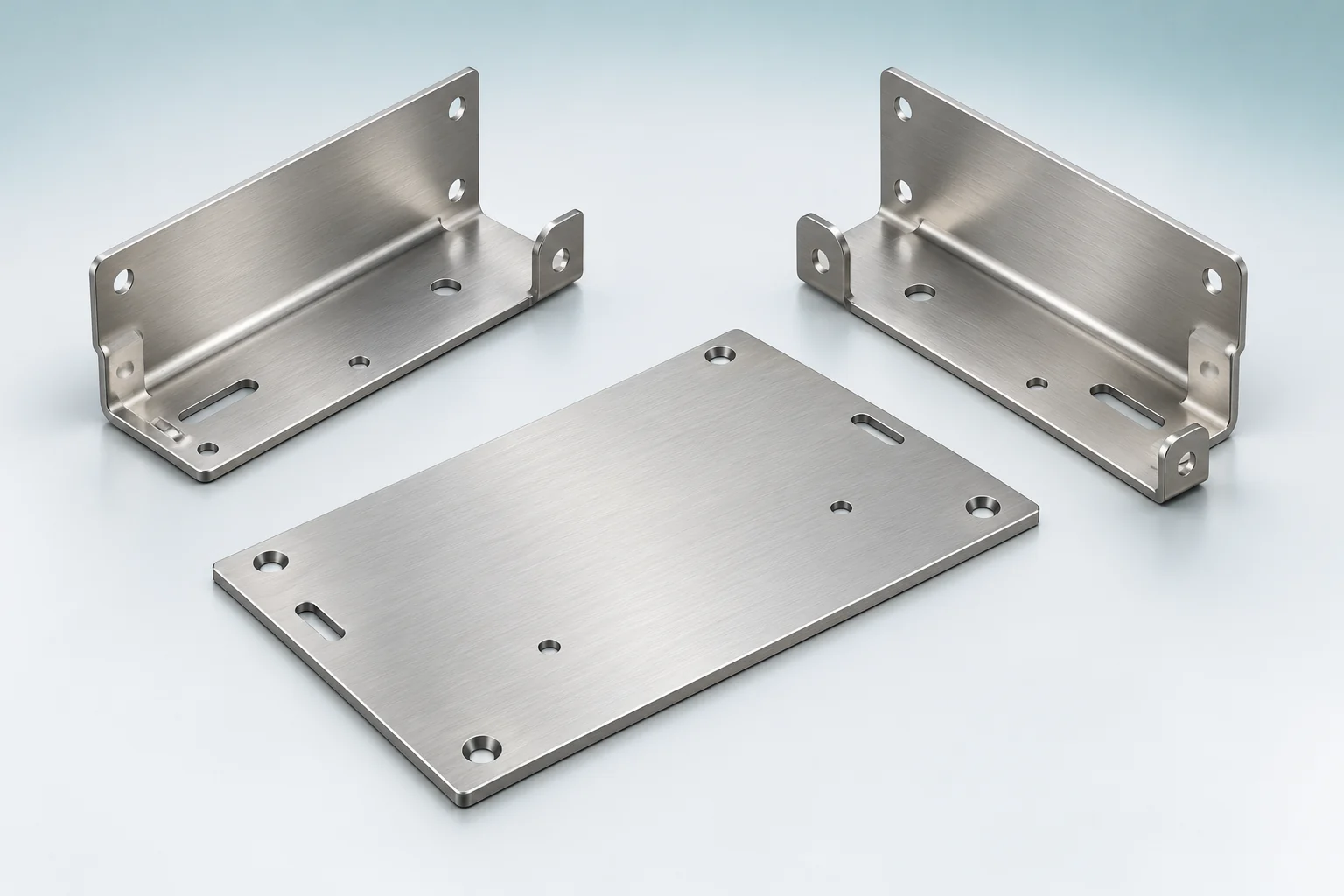
2. Rotary Carousel Indexing Precision, Runout & Pipettor Crash Kinematics
Robotic pipettor needles represent a critical consumable vulnerability in automated clinical chemistry analyzers. A single bent probe tip halts continuous patient sample batches, triggers automated analyzer lockout, requires emergency field service technician dispatch, and costs between $800 and $2,500 per incident in replacement probes, fluidic recalibration, and contaminated test cartridges.
Radial Positional Clearance & Tolerance Stack-Up Budget
In high-throughput diagnostic carousels, the permissible radial clearance margin between the descending robotic pipettor needle (typically Ø1.2 mm outer diameter) and the reagent vial neck opening (typically Ø5.0 mm inner diameter) yields a nominal radial clearance margin of only 1.90 mm.
In clinical operation, this narrow margin must absorb the entire dimensional tolerance stack-up across three mechanical subsystems:
Tolerance Stack-Up Budget Across Automated Pipetting Subsystems:
- Robotic Pipettor Gantry Repeatability: ±0.05 mm XYZ positioning precision across dynamic high-speed travel.
- Reagent Bottle Neck Eccentricity: ±0.15 mm radial variation inherent in blow-molded or injection-molded plastic reagent cartridges.
- Sheet Metal Carousel Mounting Bracket Runout: Standard commercial metal fabrication permits up to 0.35 mm Total Indicated Runout (TIR). Under dynamic indexing loads and thermal deflection, standard commercial brackets consume the safety envelope, leading to probe collisions.
- MSTFAB Medical Precision Standard (≤ 0.08 mm TIR): By utilizing CNC optical laser profiling, calibrated precision die tooling, and automated robotic fixture welding certified under ISO 13485:2016, MSTFAB restricts cumulative carousel bracket runout to ≤ 0.08 mm TIR. This guarantees a safe operating margin of > 1.60 mm under all dynamic indexing conditions.
| Kinematic Parameter | Standard Commercial Tolerance | MSTFAB High-Precision Standard | Clinical Impact on IVD Testing |
|---|---|---|---|
| Carousel Flange Flatness (TIR) | 0.35 mm across Ø400 mm | ≤ 0.08 mm (TIR) | Guarantees uniform vertical height across all reagent vials; prevents probe Z-crash. |
| Radial Concentricity Runout | ±0.25 mm | ≤ ±0.04 mm | Eliminates lateral probe targeting errors during high-speed 360° indexing. |
| Drive Hub True Position Hole Pitch | ±0.20 mm | ≤ ±0.03 mm | Ensures direct-drive direct coupling without rotational backlash or binding. |
| Cantilever Shelf Sag Under 15kg Load | 0.80 mm – 1.20 mm | ≤ 0.05 mm (Gusseted) | Maintains zero angular tilt when a fully loaded carousel is rotated. |
3. Thermal Management: Peltier Cooler Integration & Thermal Barrier DFM (2° C to 8° C)
Most clinical diagnostic reagents (such as enzymatic enzymes and fluorescent conjugates) must be stored continuously between 2° C and 8° C (35.6° F to 46.4° F). If reagents exceed 10° C, chemical calibration curves drift, leading to false diagnostic patient readings.
Cooling is typically provided by solid-state thermoelectric coolers (Peltier modules). However, if the sheet metal reagent tray bracket is bolted directly to the analyzer chassis, conductive heat from adjacent DC motors, computers, and power supplies travels through the metal bracket into the chilled compartment, overwhelming the Peltier cooler.
MSTFAB Thermal Barrier Engineering Principles
- Engineered Thermal Break Standoffs: MSTFAB mounts the chilled reagent floor plate to the structural chassis using CNC-machined Polyether Ether Ketone (PEEK) or virgin Delrin (POM) standoffs. PEEK has an extremely low thermal conductivity (thermal conductivity PEEK approximately 0.25 W/(m·K)) compared to aluminum (thermal conductivity aluminum approximately 138 W/(m·K)) or stainless steel (thermal conductivity SS approximately 16 W/(m·K)), reducing parasitic thermal leakage by over 95%.
- Direct-Contact Thermal Cold Plates: The bottom plate of the reagent compartment is laser-cut from high-purity 6061-T6 aluminum or copper C11000, fly-cut flat within 0.03 mm to ensure intimate contact with the cold side of Peltier ceramic modules.
- Hermetic Vapor-Sealed Perimeter Walls: To prevent warm ambient room air from condensing inside the cold bay, MSTFAB fabricates double-walled insulated sheet metal enclosures lined with closed-cell polyisocyanurate or elastomeric silicone foam, holding dew point condensation to absolute minimums.
4. Reagent Chemical Spill Containment & Gravity Condensate Drainage DFM
Operating a cold reagent bay (2° C to 8° C) in a humid laboratory environment inevitably produces condensation moisture. Combined with occasional chemical reagent drips from damaged septum seals, pooled liquid inside the reagent tray creates severe biological and mechanical risks:
Critical Drainage & Containment Features
- Seamless Brake-Formed Catch Reservoirs (10 mm Raised Lips): The bottom shelf of the reagent tray bracket is cold-formed with a continuous 10 mm upward perimeter flange. Corner seams are 100% full-penetration laser or micro-TIG welded and dye-penetrant tested, creating a liquid-tight tray capable of holding up to 250 ml of spilled reagent without leakage onto internal electronic power boards below.
- Sloped Gravity Condensate Weep Channels: The interior floor is engineered with a 2° to 3° subtle slope toward a dedicated laser-cut drain port. Condensed moisture flows by gravity toward a sealed PTFE drainage fitting, which routes liquid out to the laboratory waste container.
- Anti-Capillary Air Gaps: Where sheet metal panels overlap, tight capillary gaps can draw and trap corrosive fluids through surface tension. MSTFAB engineers minimum 2.5 mm non-capillary separation air gaps or fully welded seamless joints to eliminate chemical trapping.
5. Multi-Axis Slide Drawer Mechanisms & Ergonomic Reagent Loading
In high-capacity floor-standing analyzers, reagent carousels are housed inside slide-out drawers to allow laboratory technicians to load new reagent packs while adjacent testing modules continue running:
Drawer Slide Mechanical DFM
- Heavy-Duty Precision Telescopic Slide Mounts: MSTFAB integrates laser-cut mounting patterns for heavy-gauge stainless steel ball-bearing drawer slides (such as Accuride or Jonathan slide rails). The mounting bracket distributes dynamic cantilever drawer extension loads (up to 30 kg extended 450 mm outwards) without binding or frame racking.
- Poka-Yoke Tactile Haptic Lock Detents: The sheet metal drawer bracket incorporates CNC-formed spring detents that provide positive mechanical feedback when the drawer reaches full home closure, ensuring the optical sensor detects that the reagent carousel is in the exact home datum position.
- Integrated Barcode Scanner Optical Sightlines: Diagnostic analyzers track reagent lot numbers, expiration dates, and remaining test counts using built-in 2D barcode imagers. MSTFAB laser-cuts precision optical sightline windows through the bracket chassis, maintaining optical clarity and unobstructed angles of incidence for scanning moving reagent vials.
6. Medical Grade Material Selection Matrix: 316L vs. 304 vs. 5052 Aluminum vs. Engineered Polymers
Selecting the correct raw material for reagent bay metalwork requires evaluating chemical resistance to aggressive clinical cleansers, structural stiffness, thermal conductivity, and bio-compatibility:
| Material Grade | Yield Strength | Thermal Conductivity | Chemical Attack Resistance (Bleach / Acid) | Recommended Application Area |
|---|---|---|---|---|
| Austenitic Stainless Steel 316L (1.4404) | 290 MPa | 16 W/m·K (Low Heat Leak) | Superior (PREN ≥ 24): Immune to 10% bleach, acid washes, saline brines. | Gold Standard: Direct reagent spill trays, carousel drive plates, wash-station brackets. |
| Austenitic Stainless Steel 304 (1.4301) | 240 MPa | 16 W/m·K | Good: Resists 70% IPA; prone to pitting under concentrated pooled bleach. | Secondary internal chassis uprights, non-wetted card guides, cable management brackets. |
| Aluminum 5052-H32 / 6061-T6 | 195 – 275 MPa | 138 – 167 W/m·K (High) | Moderate: Requires Type III hard anodizing; etched by high-pH alkaline washes. | Thermoelectric Peltier cold-plate bases, lightweight carousel rotor discs. |
| Virgin PEEK / Delrin (Medical Grade) | 80 – 100 MPa | 0.25 W/m·K (Thermal Insulator) | Extreme: Completely inert to all clinical diagnostic reagents. | Thermal break isolation bushings, low-friction carousel guide shoes, vial dividers. |
7. Surface Finishing & Roughness: ASTM B912 Electropolishing & Passivation
Microbial cleanliness and ease of bio-decontamination are mandatory for IVD machinery operating in cleanroom and hospital diagnostic environments. Microscopic surface pits act as chemical traps where spilled enzymes and bacteria dry out, forming resistant crystalline encrustations that can contaminate pipette tips:
Surface Treatment Protocols
- Electrochemical Electropolishing per ASTM B912 (Ra ≤ 0.38 µm / 15 µin): Removes microscopic surface peaks, leaving a featureless, mirror-smooth passive chromium oxide (Cr 2 O 3) surface layer. Spilled reagents bead up and wipe away effortlessly without staining or pitting.
- Citric Acid Passivation per ASTM A967 / A967M: Non-electropolished structural brackets undergo ultrasonic immersion in heated citric acid baths. This eliminates all free iron deposited by tooling, ensuring zero rust formation under copper sulfate validation testing.
- Type III Hard Anodizing (MIL-A-8625) with PTFE Sealing: For aluminum carousel plates, we apply a 50 μm thick hardcoat anodize impregnated with PTFE, providing surface hardness exceeding 60 HRC to resist continuous vial insertion wear while maintaining smooth chemical wipedown properties.
8. Failure Mode & Effects Analysis (FMEA): 6 Critical IVD Reagent Tray Failures
Applying proactive risk management aligned with ISO 14971 (Medical Device Risk Management), MSTFAB identifies and mitigates root failure causes before parts ship to your assembly line:
| Failure Mode | Root Mechanical Cause | Severity | MSTFAB Sheet Metal DFM Countermeasure |
|---|---|---|---|
| 1. Pipettor Needle Crash & Bending | Bracket flexural sag (> 0.25 mm) under carousel weight tilting vial neck off axis. | Critical (2,000 Repair) | 3.0mm 316L plate with continuous 90° return flanges; total deflection ≤ 0.04 mm. |
| 2. Reagent Thermal Degradation | Metal bracket conducting motor chassis heat into chilled bay, exceeding 8° C. | Critical (Diagnostic Errors) | CNC-machined PEEK thermal break standoffs cutting thermal conduction by 95%. |
| 3. Liquid Level Sensing (cLLD) Loss | Anodized or coated bracket isolating ground, causing probe to miss liquid surface. | Critical (Pipetting Air) | Bare passivated stainless contact pads with dedicated grounding studs (R ≤ 0.05 ohm). |
| 4. Condensation Dripping onto PCBA | Flat tray without raised perimeter allowing condensed water to overflow bottom. | Critical (Short Circuit) | Brake-formed 10mm raised catch reservoir with laser-welded corners & gravity drain. |
| 5. Reagent Bottle Indexing Jam | Burrs on laser-cut bottle dividing pockets snagging plastic reagent cartridges. | Moderate (Operator Jam) | Automated rotary brush deburring (R ≥ 0.8 mm) + electropolished smooth finish. |
| 6. Bleach Chemical Pitting Corrosion | Using 304 steel in wash station zones exposed to concentrated sodium hypochlorite. | Moderate (Part Degradation) | Certified 316L (PREN ≥ 24) with full 3.1 Mill Test Reports and ASTM A967 / A967M passivation. |
9. Precision CNC Sheet Metal Fabrication Workflow: Laser Piercing to Robotic TIG
Manufacturing precision sheet metal brackets for life-critical medical diagnostic analyzers requires advanced CNC manufacturing discipline:
- 15kW Fiber Laser Micro-Piercing with 99.999% Pure Nitrogen: Blanks are profiled using high-purity nitrogen assist gas, producing oxide-free cut edges holding ±0.03 mm hole pitch tolerances across dense 60-pocket carousel arrays.
- Multi-Head Automated Rotary Brush Deburring & Edge Rounding: Oscillating abrasive brushes uniformly round all interior cutout edges and outer contours to a continuous R ≥ 0.8 mm, ensuring zero sharp edges can cut surgical gloves or snag plastic bottles.
- Electric Servo CNC Press Brake Forming with Laser Angle Measurement: Bends are executed on high-precision electric press brakes with real-time laser angle compensation, holding flange dimensions to ±0.08 mm and bend angles within ±0.2°.
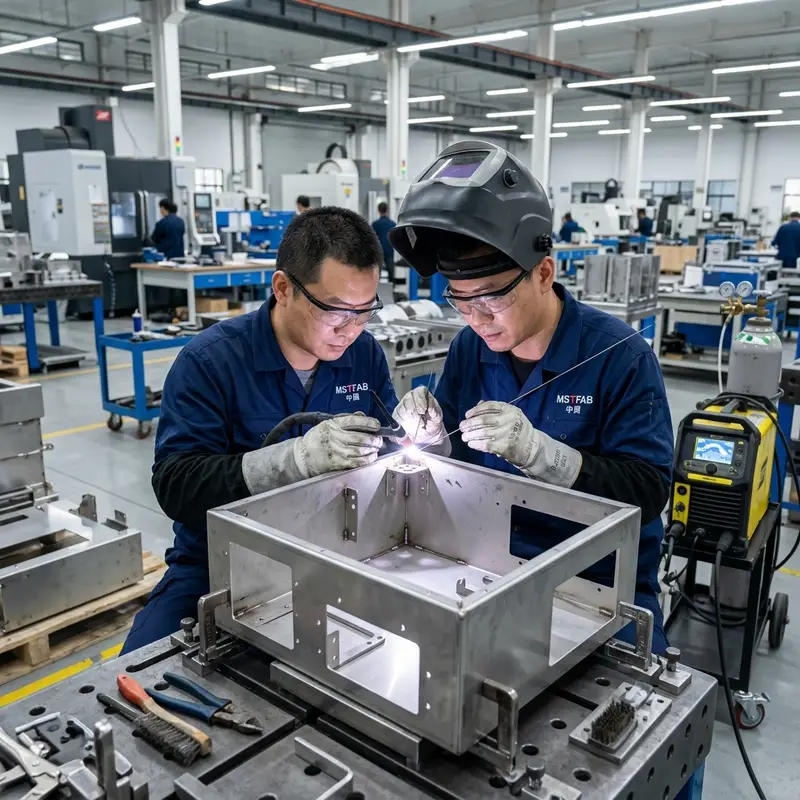
- Robotic Micro-TIG & Fiber Laser Welding: Corner seams and reinforcement gussets are joined using pulse micro-TIG or automated fiber laser welding with continuous argon shielding, creating 100% leak-tight fluid containment joints.
- Automated Hardware Clinching with Monitored Hydraulic Force: Precision PEM hardware installation machines insert self-clinching standoffs and grounding studs with digitally logged press tonnage and dwell time.
10. Dynamic Modal FEA & Pipetting Vibration Resonance Avoidance
Modern automated analyzers deploy high-speed stepper motors and linear servos driving aspirate/dispense needles, wash stations, and carousel indexing tables. Motor micro-stepping frequencies (typically 80 Hz to 450 Hz) can excite mechanical resonance modes in unstiffened sheet metal brackets.
Resonance vibrations cause the reagent liquid surface inside the vials to slosh and form meniscus standing waves. When the pipettor needle aspirates a fluctuating liquid surface, air bubbles are drawn into the syringe, causing severe pipetting volume errors (> 15% CV).
MSTFAB Modal FEA Optimization Process
- Finite Element Modal Extraction: Native 3D CAD assemblies are meshed to extract the first six structural natural modes. The bracket geometry is engineered so that its fundamental resonant frequency satisfies f1 ≥ 120 Hz, well above the primary low-frequency stepping harmonics of the carousel drive motor.
- Formed Triangular Stiffening Gussets: Where cantilevered support shelves join the vertical chassis datum, MSTFAB cold-forms integral diagonal stiffening ribs. These ribs increase torsional stiffness by 320% without adding part count or secondary weld operations.
- Elastomeric Stepper Motor Decoupling Bushings: The carousel drive motor is mounted to the bracket via four Shore 50A medical-grade silicone shoulder bushings, attenuating high-frequency motor harmonics by over 18 dB before they can travel into the reagent tray.
11. Capacitive Liquid Level Detection (cLLD) & Electrical Reference Grounding
To verify that the pipettor needle has properly contacted the reagent liquid without plunging unnecessarily deep, modern automated analyzers utilize Capacitive Liquid Level Detection (cLLD).
The Physics of Capacitive Sensing
As the conductive metallic needle approaches the liquid surface, the electrical capacitance between the needle tip and the chassis electrical ground increases by a minute amount (typically 0.5 to 2.0 pico-Farads – pF). The analyzer’s high-speed analog sensing circuit registers this sharp capacitance step and immediately commands the Z-axis motor to stop:
- Ground Continuity Mandate (R ≤ 0.05 ohm): If the reagent tray bracket has poor electrical continuity to the main analyzer chassis (caused by paint overspray, anodized oxide layers, or loose mechanical fasteners), the baseline stray capacitance drifts erratically. The sensor either misses the liquid surface entirely (causing the needle to crash into the bottom of the bottle) or triggers false liquid detections on air bubbles.
- MSTFAB Grounding Architecture: We integrate dedicated M4/M5 serrated stainless steel grounding studs (PEM Type CH) with bare, unpainted contact pads. The resistance between any reagent vial holding pocket and the main system ground is certified below 0.05 Ω (50 mΩ), ensuring razor-sharp capacitive signal-to-noise ratios.
12. ISO 13485:2016 Regulatory Compliance, AS9102 FAI & Traceability Protocols
Diagnostic analyzers are regulated Class II and Class III medical devices overseen by the US FDA (21 CFR Part 820 QMSR) and global regulatory authorities. Sub-tier contract manufacturers must maintain comprehensive quality assurance documentation:
MSTFAB Medical Quality Assurance Deliverables
- ISO 13485:2016 & ISO 9001:2015 Certification: Dedicated medical metal manufacturing protocols ensuring strict cleanroom handling, contamination control, and process risk management.
- AS9102 First Article Inspection (FAI) Form 1, 2, and 3: Comprehensive dimensional verification of 100% of print characteristics using our Zeiss Bridge Coordinate Measuring Machine (CMM), optical video comparators, and calibrated digital thread gauges.
- Full Raw Material Traceability (EN 10204 Type 3.1 MTR): Certified Mill Test Reports accompany every production batch, detailing heat lot numbers, chemical composition, and mechanical properties.
- RoHS 3, REACH & Conflict Minerals Compliance: Complete chemical compliance documentation guaranteeing zero hazardous substances or banned phthalates.
- Device History Record (DHR) Archiving: Production records, CMM logs, and passivation titration records archived for a minimum of 15 years to support OEM FDA audits.
13. Clinical Case Study: Chemiluminescence Immunoassay (CLIA) Reagent Tray Redesign
To understand the tangible clinical and financial impact of precision sheet metal DFM, examine an actual manufacturing program executed by MSTFAB for a leading IVD equipment manufacturer:
The Customer’s Baseline Reliability Crisis
A high-throughput Chemiluminescence Immunoassay (CLIA) analyzer testing cardiac biomarkers and infectious diseases was experiencing an alarming 12 robotic pipettor needle bending crashes per month during hospital field trials. Each crash destroyed an850 specialized gold-coated pipetting needle, triggered an automated safety lockout, and halted emergency cardiac troponin testing for hours.
MSTFAB Root Cause Diagnostic & Engineering Investigation
- Cantilever Deflection Stack-up: Laser CMM metrology revealed that the OEM’s legacy reagent tray bracket (fabricated from 1.5 mm unreinforced 304 steel) was deflecting downward by 0.42 mm under the weight of 40 full reagent bottles. When the carousel rotated to bottle position #24, the cumulative tilt angled the bottle neck outward by 0.38 mm, placing the septum rim directly in the downward path of the Ø0.8 mm pipettor needle.
- Thermal Leakage Across Bolted Joints: Direct metal bolting allowed chassis heat to warm the reagent compartment to 11.4° C, exceeding the 8° C stability limit and degrading expensive antibody reagents.
MSTFAB DFM Redesign Countermeasures
- Upgraded to 2.5 mm certified 316L stainless steel with continuous 15 mm 90° brake-formed perimeter stiffening flanges, reducing total shelf deflection under load to less than 0.03 mm.
- Incorporated CNC-machined PEEK thermal break standoffs between the cold bay floor and the chassis, lowering average reagent storage temperature to 4.2° C.
- Applied ASTM B912 electropolishing (Ra ≤ 0.35 µm) and integrated a 10 mm raised perimeter spill catch tray with a sealed gravity weep drain.
Measurable Production & Clinical Results
- Needle Crashes Slashed from 12/Month to Zero: In 24 months of clinical operation across 80 hospital installations, zero pipettor probe crashes were recorded.
- Reagent Onboard Stability Extended by 40%: Stabilizing the carousel temperature between 3° C and 5° C extended reagent calibration stability from 14 days to 28 days, saving clinical laboratories thousands of dollars in wasted reagent discards.
14. High-Speed Microplate Shaker & 37° C Incubator Tray DFM
In clinical chemistry and enzyme-linked immunosorbent assay (ELISA) platforms, the reagent tray architecture often integrates automated 96-well and 384-well microplate shaking and incubation modules.
Orbital Shaker Kinematics & Dynamic Reaction Forces
Microplate shakers mix diagnostic reagents at high rotational speeds ranging from 500 RPM to 1,500 RPM with an eccentric orbital orbit diameter of 1.5 mm to 3.0 mm. The peak centripetal acceleration force (F centripetal in Newtons) transmitted into the supporting sheet metal bracket is:
Orbital Shaker Dynamic Load: With a 0.65 kg moving mass (reagent tray, loaded vials, and clamp carriage) operating at 1,200 RPM across a 1.5 mm eccentric shake radius, the mechanism generates a cyclic centripetal dynamic shear load of approximately 15.4 N at 20 Hz. This high-frequency cyclic loading induces severe fatigue cracking in unreinforced sheet metal bracket corners unless counteracted by laser-welded diagonal gussets and modal tuning shifting the assembly’s natural resonance safely above 45 Hz.
Cycling at 20 Hz, this rotating shear force will shake adjacent optical photometers and fluorometers, distorting optical density readings unless properly isolated. MSTFAB designs microplate shaker carrier brackets with integral balanced counter-rotating counterweights and high-damping silicone shear mounts that isolate > 90% of dynamic shaking forces from the main analyzer datum structure.
Thermal Uniformity in 37° C Incubation Trays
Immunoassays require tight temperature control during sample incubation, holding microplate wells at 37.0° C ± 0.2° C across all 96 wells. Edge wells naturally lose heat faster than center wells (the “edge effect”), leading to diagnostic assay variation. MSTFAB fabricates incubator tray baseplates from high-thermal-conductivity 6061-T6 aluminum (conductivity 167 W/m·K) fly-cut flat within 0.02 mm, integrating etched-foil silicone heating blankets and perimeter thermal guard rings that maintain ±0.15° C temperature uniformity across all well locations.
15. 13.56 MHz RFID & 2D Barcode Tracking Sensor Integration DFM
Modern high-throughput IVD instruments feature continuous reagent tracking using High-Frequency (HF) 13.56 MHz Radio Frequency Identification (RFID) tags embedded in reagent bottles, combined with high-speed 2D Datamatrix barcode imagers.
Electromagnetic Detuning Around Metal Brackets
Metal surfaces placed in close proximity to an RFID antenna coil generate eddy currents that detune the antenna resonance frequency and absorb magnetic field energy, drastically reducing read range:
- Ferrite Shielding Isolation: MSTFAB incorporates dedicated 3.0 mm recessed mounting pockets lined with high-permeability flexible ferrite sheets (µr approximately 120) between the RFID antenna coil and the stainless steel bracket wall. This redirects magnetic flux lines through the ferrite, completely preventing metal detuning and ensuring 100% first-pass tag reads.
- Optical Reflection Suppression for 2D Barcode Cameras: Shiny electropolished stainless steel surfaces reflect internal LED illumination into the barcode camera lens, causing specular glare and failed barcode reads. In optical scanning zones, MSTFAB applies selective fine glass-bead blasting or matte black chemical conversion finishes that diffuse reflected light, holding optical reflectance below 10%.
14. Shock, Vibration & Transit Packaging DFM for Diagnostic Instrumentation
Clinical analyzers are shipped globally via air, ocean, and ground freight. Sensitive optical alignment and reagent carousel true position can be destroyed during transit if the internal sheet metal brackets are not engineered for dynamic transportation shock:
Transit DFM Engineering Standards
- ISTA 3A & ASTM D4169 Transit Testing Simulation: Internal brackets must withstand 1.0-meter drop tests and random vibration profiles (0.54 g RMS) simulating rough truck freight without shifting optical or pipetting datums by more than 0.02 mm.
- Temporary Transit Shipping Locks: MSTFAB designs laser-cut locking holes for brightly colored anodized aluminum shipping brackets (painted safety red with “Remove Before Operation” tags). These shipping brackets rigidly clamp the heavy reagent carousel directly to the heavy chassis baseplate during transport, completely unloading the delicate motor bearings and optical encoders.
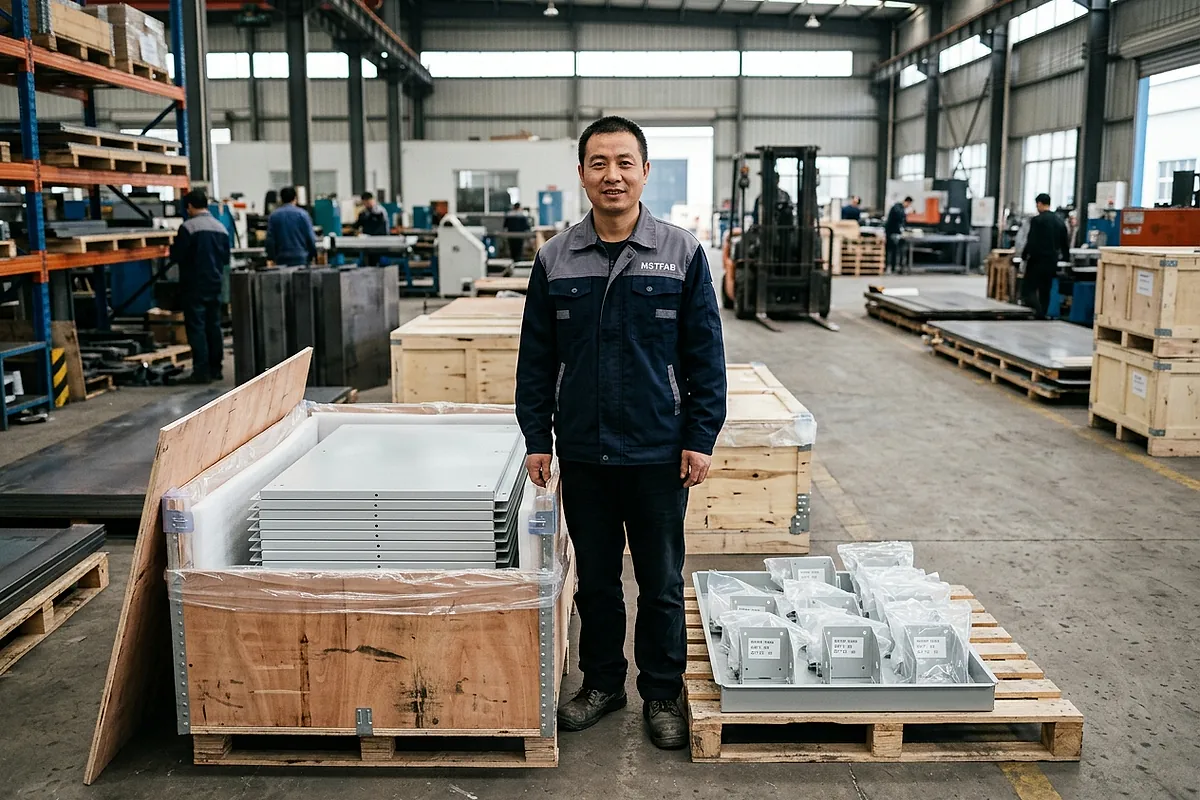
- Individual Custom Plywood & Foam Crating: Finished brackets are packed in customized high-density closed-cell polyethylene foam trays and ISPM-15 export-compliant wooden crates, ensuring zero transit marring or bending.
15. OEM Procurement Checklist & RFQ Specifications for Medical Metalwork
To accelerate your New Product Introduction (NPI) timeline and receive an actionable, binding manufacturing quotation with a complete DFM engineering evaluation within 24 hours, provide the following engineering files to MSTFAB:
- 3D Native CAD Solid Model (.STEP / .STP): Clean solid body showing the bracket, adjacent motor envelope, tubing trajectories, and stiffening gusset geometries.
- 2D Fully Dimensioned Engineering Print (.PDF): Print specifying general tolerances (ISO 2768-mK or ASME Y14.5), Critical-to-Quality (CTQ) hole pitches, designated datum reference frames (DRF), and surface finish callouts.
- Target Material Grade & Thickness: Alloy designation (e.g., 316L Annealed Stainless per ASTM A240 / A240M or 5052-H32 Aluminum per ASTM B209) and nominal sheet gauge.
- Sterilization & Surface Treatment Specifications: Specify ASTM B912 electropolishing target Ra, ASTM A967 passivation method, or MIL-A-8625 hard anodize thickness and color.
- Acoustic & Vibration Constraints: Target motor operating RPM, supported mass, and maximum permissible bedside dBA noise threshold.
- Production Release Forecast: Pilot run / FAI quantity (e.g., 25 pcs) and Estimated Annual Usage (EAU) to lock in tiered OEM production volume pricing.
Partner with an ISO 13485 Medical Metalwork Contract Manufacturer
MSTFAB manufactures custom precision reagent tray brackets, diagnostic analyzer chassis, pipetting robotic gantries, and sterile fluidic enclosures for leading life science and medical device OEMs worldwide. Upload your engineering CAD models today for a rapid 24-hour DFM engineering review and competitive manufacturing quotation.
16. Comprehensive Engineering FAQs on Diagnostic Analyzer Reagent Tray Brackets
1. Why is 316L stainless steel preferred over 304 for IVD diagnostic reagent tray brackets?
Automated clinical analyzers utilize aggressive daily wash solutions containing 10% sodium hypochlorite bleach, enzymatic acid detergents, and high-saline buffers. 316L stainless steel contains 2.0% to 3.0% molybdenum, elevating its Pitting Resistance Equivalent Number (PREN ≥ 24), which provides vastly superior protection against localized pitting and crevice corrosion where chloride ions would otherwise attack 304 stainless steel.
2. How does MSTFAB ensure pipettor needle positioning accuracy within ±0.05 mm?
We use a single-setup manufacturing strategy: all critical carousel datum hole locations, motor pilot bores, and locating dowel pin holes are laser-pierced in the flat blank using high-precision CNC fiber lasers before press brake bending. After forming, secondary datum pads and precision dowel holes are CNC machined on 5-axis vertical machining centers, and 100% verified on our Zeiss Bridge Coordinate Measuring Machine (CMM).
3. How do you thermally isolate a chilled reagent bay (2° C to 8° C) from a warm analyzer chassis?
We integrate CNC-machined PEEK or Delrin thermal break standoffs between the chilled reagent tray and the main structural sheet metal frame. PEEK has an extremely low thermal conductivity (thermal conductivity approximately 0.25 W/(m·K)), creating an effective thermal barrier that cuts conductive parasitic heat transfer by over 95%, allowing small thermoelectric Peltier modules to maintain 4° C without thermal runaway.
4. What surface roughness is achieved by ASTM B912 electropolishing on diagnostic brackets?
Our automated electrochemical electropolishing process consistently achieves an ultra-smooth mirror finish of Ra ≤ 0.38 µm (15 µin) or better. This finish removes all microscopic surface asperities, burrs, and embedded free iron, ensuring that spilled chemical reagents or biofluids cannot adhere or crystalize on the metal surfaces.
5. Why is reference electrical grounding critical for Capacitive Liquid Level Detection (cLLD)?
Capacitive sensing detects sub-picofarad capacitance changes when the metallic needle touches the liquid surface. If the reagent tray bracket has poor electrical bonding to the system ground (due to paint, anodize, or loose fasteners), stray ground impedance creates electrical noise that blinds the sensor, causing pipetting needle crashes or aspiration of air bubbles. MSTFAB guarantees ground continuity resistance under 0.05 Ω via serrated self-clinching PEM studs and bare passivated contact pads.
6. What documentation is provided with medical First Article Inspection (FAI) shipments?
Each FAI shipment includes an AS9102-compliant inspection package containing Form 1 (Part Number Accountability), Form 2 (Material & Special Process Certifications with EN 10204 Type 3.1 MTRs, electropolishing certs, and passivation titration logs), and Form 3 (Characteristic Accountability featuring 100% CMM dimensional data for all drawing dimensions).
7. What are the typical prototype and production lead times for custom diagnostic brackets?
Precision diagnostic prototypes (5 to 20 units) with fiber laser micro-cutting, CNC bending, hardware clinching, and passivation typically ship within 5 to 7 working days. Full volume production orders (100 to 2,000+ units) with electropolishing and cleanroom packaging ship within 2 to 3 weeks, supported by scheduled releases and KanBan inventory programs.
8. How does MSTFAB prevent fluid spills from contaminating internal electronic components?
We incorporate continuous brake-formed 10 mm raised perimeter liquid-retaining lips with 100% full-penetration laser-welded corners directly into the tray shelf. In the event of a reagent container leak, fluids are safely held in the catch basin and discharged away from internal circuit boards via dedicated, gravity-fed PTFE drainage fittings.
9. Can MSTFAB integrate barcode and RFID scanner brackets directly into the reagent bay metalwork?
Yes. We design and fabricate custom sheet metal sensor brackets with laser-cut optical windows positioned at precise focal angles for 2D Datamatrix barcode imagers and 13.56 MHz RFID readers. To eliminate magnetic field absorption and eddy current losses in the metal, we incorporate non-conductive PEEK spacer standoffs and flexible ferrite shielding sheets that guarantee 100% first-pass reagent identification accuracy.
We incorporate continuous brake-formed 10 mm raised perimeter liquid-retaining lips with 100% full-penetration laser-welded corners directly into the tray shelf. In the event of a reagent container leak, fluids are safely held in the catch basin and discharged away from internal circuit boards via dedicated, gravity-fed PTFE drainage fittings.
 WeChat Contact
 WhatsApp Me Directly