
How do certified TIG and MIG welding processes ensure structural strength and cosmetic perfection in custom sheet metal fabrication?
High-integrity sheet metal welding matches the exact process to material thickness: AC/DC pulsed TIG (GTAW) delivers low-heat, spatter-free hermetic seals on thin enclosures (0.8 mm–3.0 mm stainless steel and aluminum), while pulsed MIG (GMAW) provides high-deposition structural strength on heavy tubular frames (> 3.0 mm carbon steel). Thermal distortion is eliminated through self-fixturing tab-and-slot joint geometry, 3D modular clamping fixtures with copper chill heat sinks, balanced skip-welding sequences, step-down abrasive weld blending (80 to 120 grit) flush with the parent sheet, and full compliance with AWS D1.1 (structural steel) and AWS D1.3 (sheet steel).
1. The Welding Challenge: Joining Precision Thin-Gauge Sheet Metal
Welding sheet metal is fundamentally different from structural heavy welding. In gauge materials (0.8 mm to 3.0 mm / 22 ga to 11 ga), the margin for error is razor-thin: excessive arc heat instantly burns through thin walls, while localized thermal expansion induces severe angular distortion, buckling, and oil-canning across wide panels.
Conversely, insufficient penetration results in weak joints that crack during transit vibration or fail pressure testing in sealed NEMA 4X enclosures. Delivering structural rigidity, watertight seams, and cosmetic excellence requires matching joint architecture, welding process, thermal fixturing, and post-weld blending into an integrated manufacturing discipline.
2. DFM for Welded Sheet Metal Joints
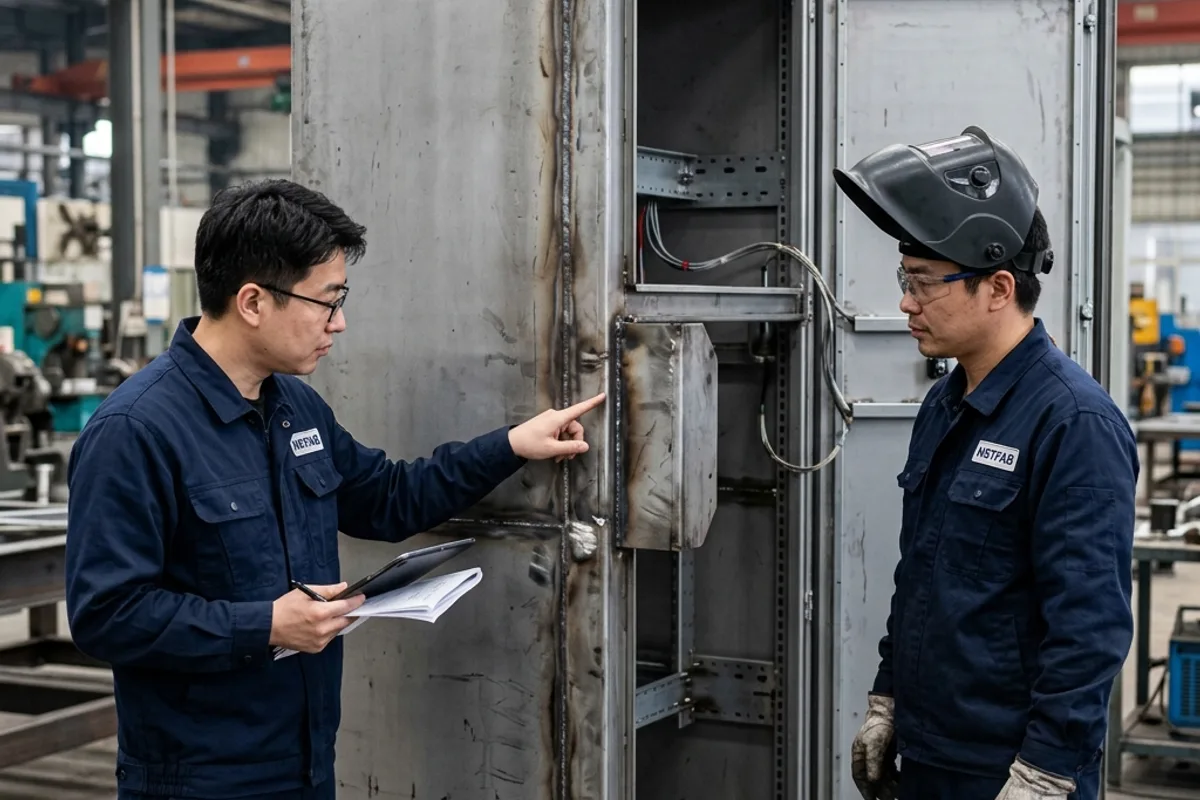
Preventing welding defects begins in the CAD model. Inexperienced designers often model idealized zero-gap butt joints that require extreme manual fit-up labor or heavy filler deposition.
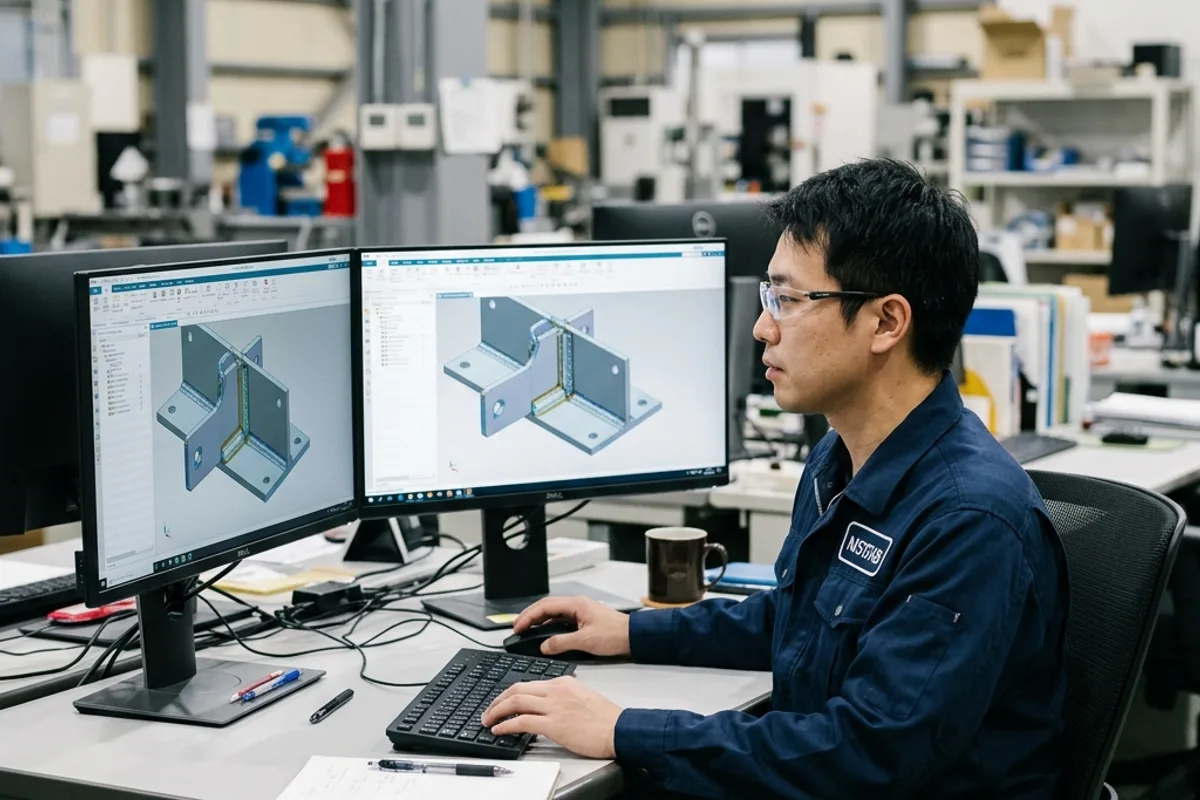
- Self-Fixturing Tab-and-Slot Architecture: Laser-cut interlocking tabs and mating slots position components in three dimensions with ±0.05 mm repeatability. Components snap together securely, enforcing squareness and eliminating expensive hard fixturing while ensuring zero fit-up gaps before arc strike.
- Outside Corner Joint Geometry: On formed enclosure corners, designing sheet edges with a half-thickness overlap (50% lap) creates an ideal natural groove for autogenous TIG welding (fusion without filler wire). This produces a narrow, flush weld bead that requires minimal abrasive blending.
- Intermittent Stitch vs. Continuous Welds: Unless hermetic sealing is required (e.g., NEMA 4/4X washdown enclosures), continuous fillet welds should be replaced by calculated intermittent stitch welds (e.g., 25 mm weld length on 75 mm pitch). This slashes heat input by over 60%, drastically reducing residual distortion.
3. Process Selection: TIG (GTAW) vs. MIG (GMAW)
Selecting between TIG and MIG welding is governed by material thickness, cosmetic criteria, and production volume:

Gas Tungsten Arc Welding (TIG / GTAW):
- Thickness Range: 0.6 mm to 3.0 mm sheet metal.
- Key Advantages: Utmost arc precision, zero weld spatter, smooth cosmetic ripple bead, and tight heat control via foot pedal current modulation. Pulsed TIG (100–300 Hz) narrows the arc cone, increases penetration, and reduces the heat-affected zone (HAZ) by 35%.
- Primary Applications: Medical housings, food-grade sanitary vessels, brushed stainless steel architectural panels, and aluminum electronic chassis.
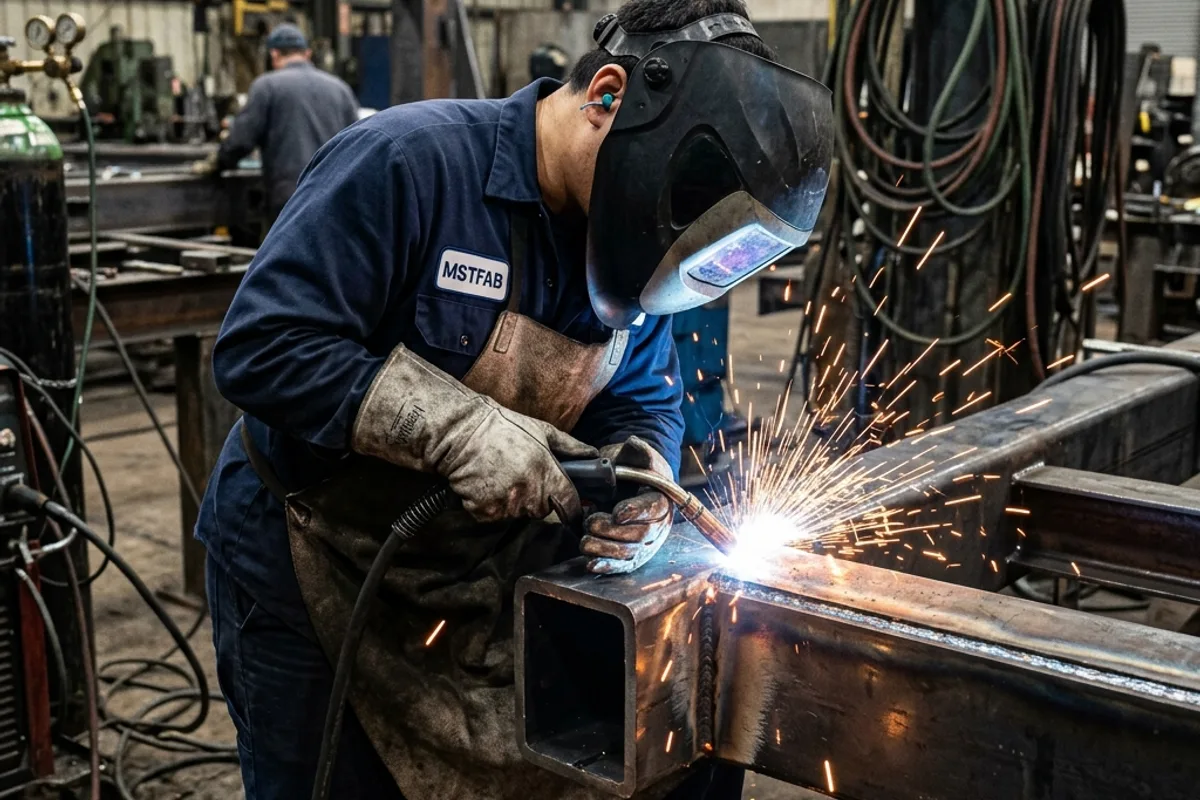
Gas Metal Arc Welding (MIG / GMAW):
- Thickness Range: 2.0 mm to 25.0 mm structural steel and heavy tubing.
- Key Advantages: High wire deposition rate, fast travel speeds, and deep root penetration. Modern synergic pulsed MIG power sources eliminate traditional short-circuit weld spatter while maintaining high production throughput.
- Primary Applications: Heavy equipment base frames, automation skids, material handling brackets, and structural sub-assemblies.
4. Fixturing & Thermal Distortion Management
Thermal shrinkage during weld solidification exerts immense mechanical forces. To maintain tight dimensional squareness and planar flatness, MSTFAB deploys multi-tiered distortion countermeasures:
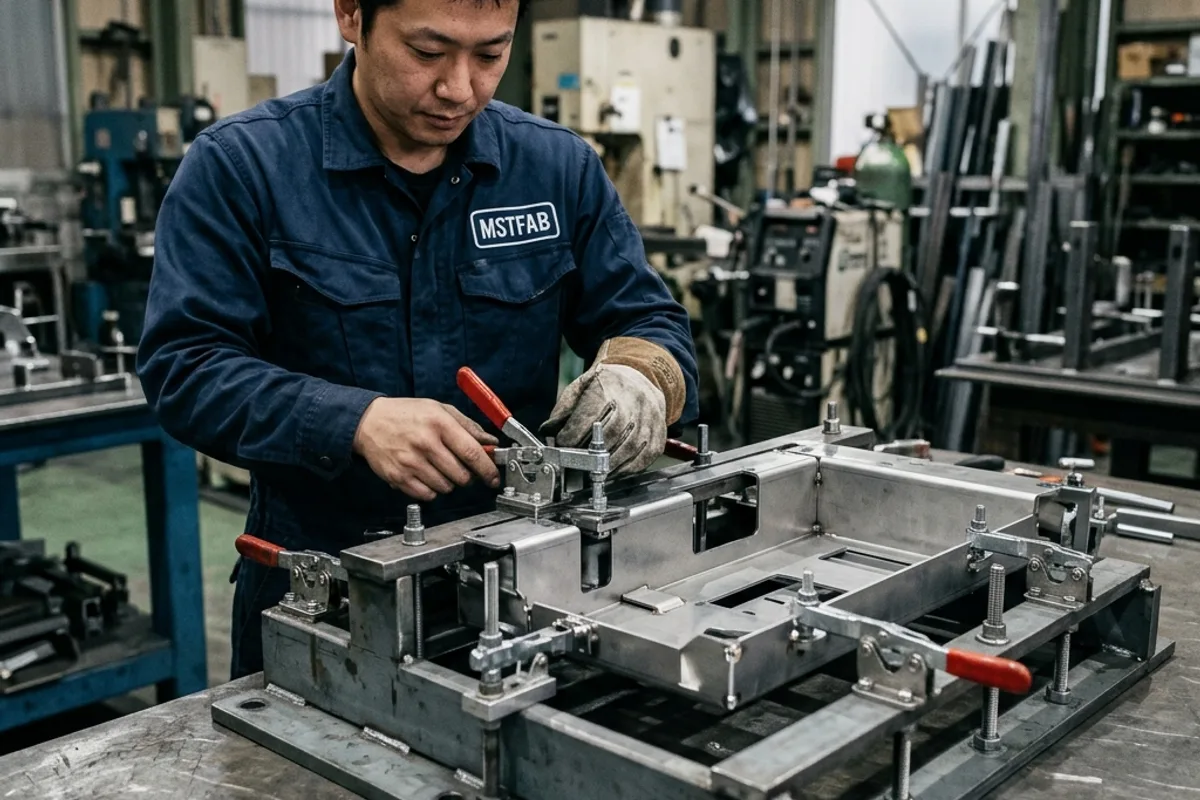
- Modular 3D Fixture Tables: Precision cast-iron/steel tables (Demmeler/Siegmund) with 28 mm CNC bore grids hold components under rigid toggle-clamp restraint throughout welding and cool-down.
- Copper & Aluminum Chill Heat Sinks: High-conductivity copper backing bars are clamped directly behind weld seams. The copper draws heat away rapidly through conduction, preventing heat buildup in adjacent flat panels and virtually eliminating panel buckling.
- Balanced Back-Step Welding Sequences: Welders execute short segmented beads, alternating symmetrically across the neutral axis of the structure to equalize opposing contraction stresses.
5. Cosmetic Weld Blending & Mechanical Finishing
On cosmetic assemblies, the weld crown must be dressed flush with the parent sheet without compromising structural strength or gouging the metal.
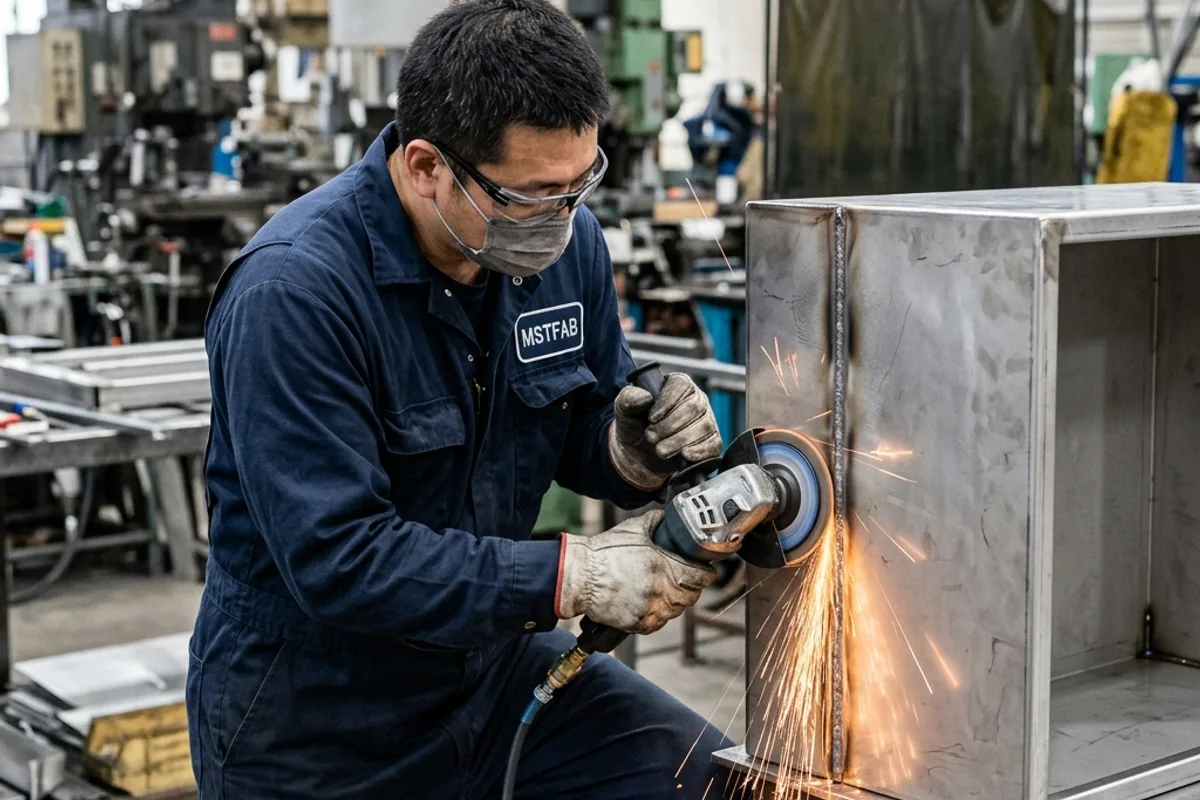
Our standard weld blending progression follows a 3-step discipline: coarse ceramic leveling (80 grit flap disc), intermediate refinement (120 grit abrasive belt), and non-woven grain restoration (Scotch-Brite drum sander). Maximum sheet thinning during weld leveling is strictly limited to ≤ 5% of nominal sheet thickness.
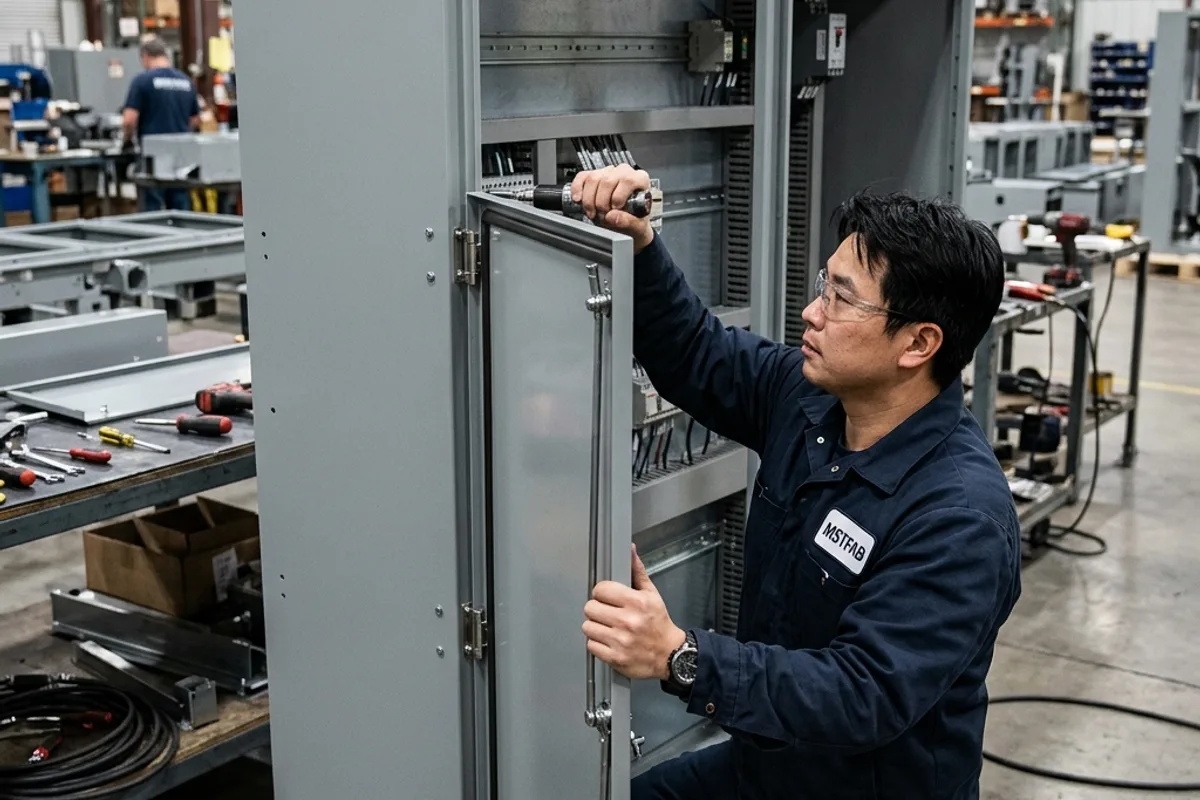
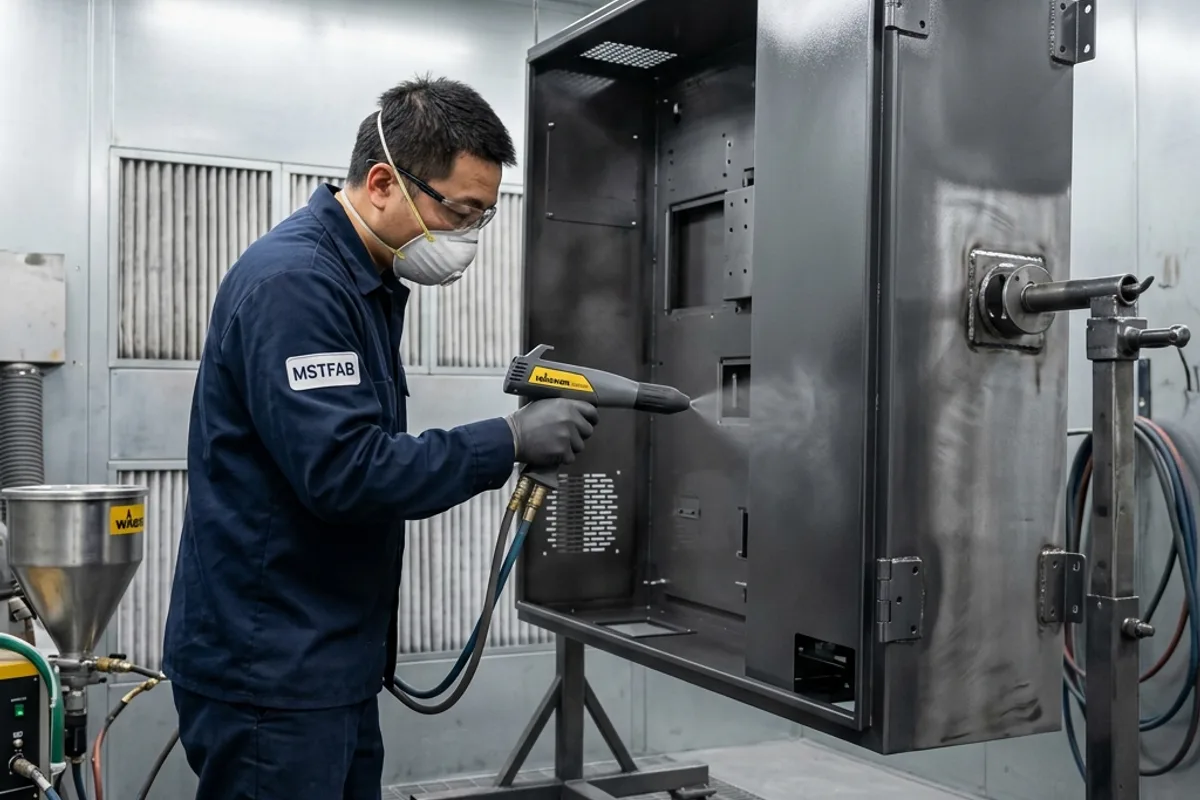
6. Quality Verification & Welding Standards Matrix
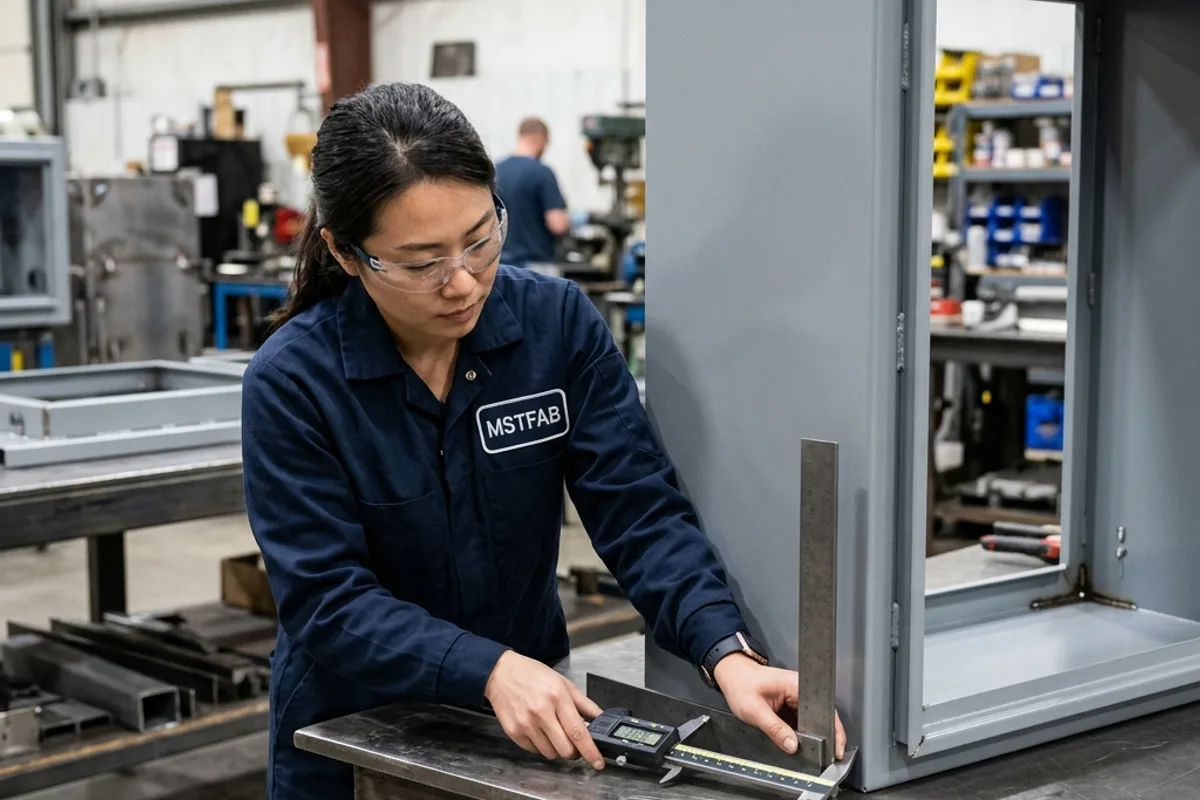
MSTFAB operates under certified welding procedure specifications (WPS) compliant with American Welding Society (AWS) and ISO standards:
| Welding Category | Governing Standard | Process & Shielding Gas | Quality Criteria & Inspection |
|---|---|---|---|
| Structural Steel Frames | AWS D1.1 / ISO 5817 Level B | GMAW (MIG) / 85% Ar + 15% CO2 | 100% full root fusion; zero cracks; visual + magnetic particle test |
| Sheet Steel Enclosures | AWS D1.3 (Sheet Steel Code) | GTAW / Short-Circuit GMAW | Zero burn-through; spatter-free; corner diagonal Δ ≤ 1.0 mm |
| Stainless Steel Enclosures | AWS D1.6 / ASTM A380 Passivation | Pulsed GTAW / 99.999% Ar + Backside Purge | Oxygen < 50 ppm; zero sugaring; ASTM A967 citric passivation pass |
| Aluminum Chassis & Tanks | AWS D1.2 (Structural Aluminum) | AC GTAW / Pure Argon / ER4043 / ER5356 | Cathodic oxide strip; zero porosity; dye-penetrant tested |
| Cosmetic Blended Corners | ISO 1302 Surface Texture | Multi-step ceramic & Scotch-Brite | Flush within ±0.05 mm; sheet thinning ≤ 5%; Class A visual match |
Need Certified TIG & MIG Sheet Metal Welding Services?
MSTFAB provides AWS-certified TIG and MIG welding for precision enclosures, frames, and tanks. Benefit from 3D fixture distortion control, seamless corner weld blending, and certified NDT quality inspection.
 WeChat Contact
 WhatsApp Me Directly