
When buyers search for a custom metal parts manufacturing factory, they are usually not just looking for someone with a laser cutting machine. Most factories can cut metal.
They are looking for a factory that can take a drawing, understand how the part will actually be used, manufacture it consistently, protect it during shipping, and support the next order without starting from zero again.
That is a very different requirement.

A custom bracket may look simple. A few holes, two bends, and perhaps a powder-coated finish. But if the holes do not line up, the bend angle changes between batches, the coating blocks the threads, or the part arrives scratched, the project becomes expensive very quickly. Let’s be honest: “almost fits” is not a quality standard. It’s an expensive headache.
The purpose of this guide is to help OEM buyers evaluate a custom metal parts manufacturing factory before placing a prototype or production order.
Why the “Factory” Question Matters in OEM Sourcing
A drawing is not yet a finished production plan. It is a starting point.
Before a metal part reaches your assembly line, it moves through cutting, deburring, bending, welding, grinding, hardware insertion, surface treatment, inspection, and export packing. Every stage can completely ruin the next one.
This is why OEM buyers should not only compare unit prices. They should compare manufacturing control. If the part needs rework, misses an installation date, or requires emergency air freight, the original “cheap” price advantage disappears very fast.
Factory Verification Checklist / Buyer Trust Table
Use this table to separate real manufacturing partners from blind quote-generators:
| Verification Point | Red Flag (High Risk) | MSTFAB Standard (Low Risk) |
|---|---|---|
| Engineering Review | Quotes immediately without checking CAD file issues. | Provides DFM feedback on bend limits, hardware, and tolerances. |
| Process Control | Outsources bending or welding to unknown shops. | In-house laser, CNC bending, welding, and final assembly. |
| Quality Inspection | “Looks okay” visual check before throwing in a box. | First Article Inspection (FAI) with digital calipers & reports. |
| Surface Protection | Ships cosmetic parts without film or masking. | Masks threads, applies protective film on visible stainless surfaces. |
| Export Packaging | Uses thin local cardboard boxes. | Custom foam, heavy-duty export cartons, and secure pallets. |
1. Can the Factory Review Your Drawing Before Cutting Metal?
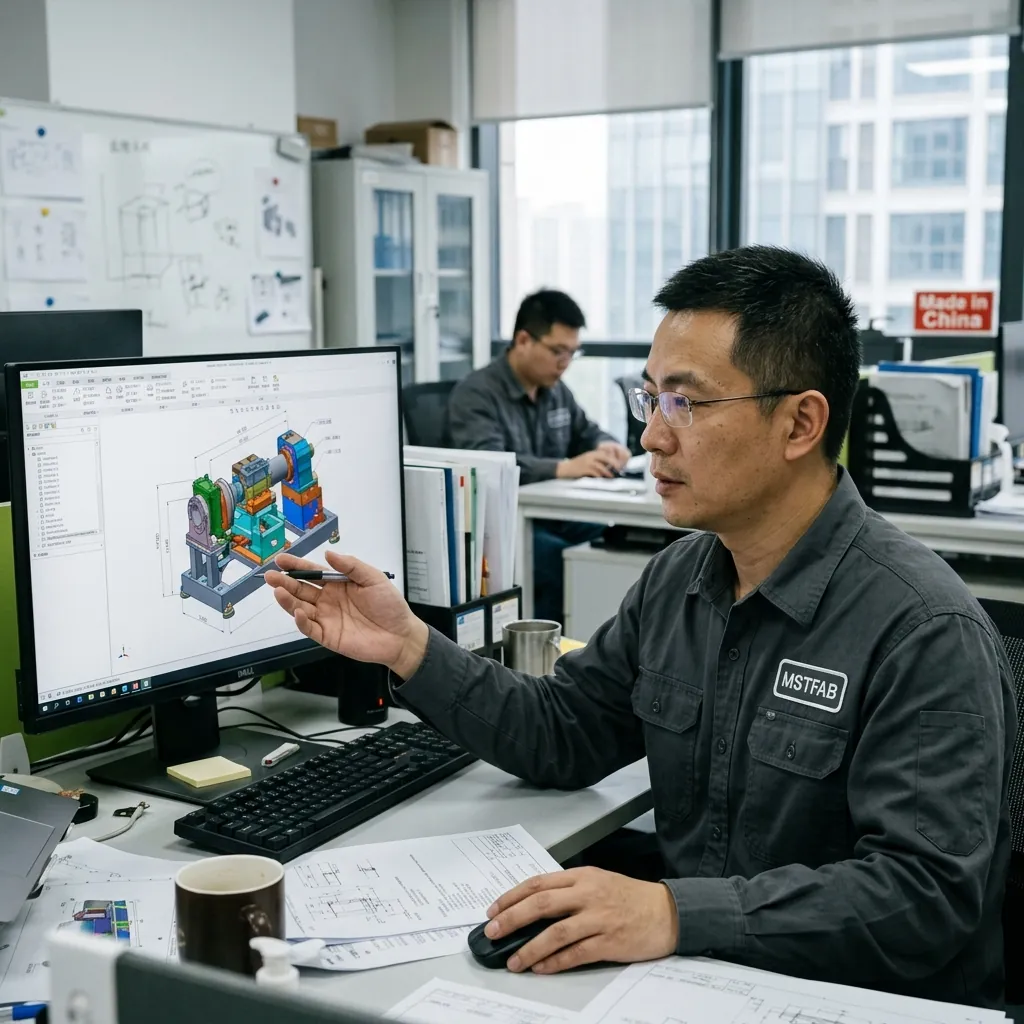
The first question to ask is not: “Can you make this?” Most factories will say yes.
The better question is: “What manufacturing risks do you see before production begins?”
A capable factory reviews a drawing through DFM (Design for Manufacturing). This means identifying potential production issues while the part is still a digital file, instead of after 300 finished pieces are sitting in a warehouse.
2. Does the Factory Understand CNC Bending, Not Just Flat Cutting?
A 90-degree bend may look simple on a CAD drawing. In production, it depends on much more than the number 90.
Springback is normal. After a sheet is bent, metal naturally tries to move slightly back toward its original flat position. In simple words, metal has opinions.
This is why buyers should identify which dimensions are critical after bending. A good factory will ask: Which direction does each bend face? Are there holes close to bend lines? Will the part connect with another formed component?
3. Can the Factory Control Welding Distortion?
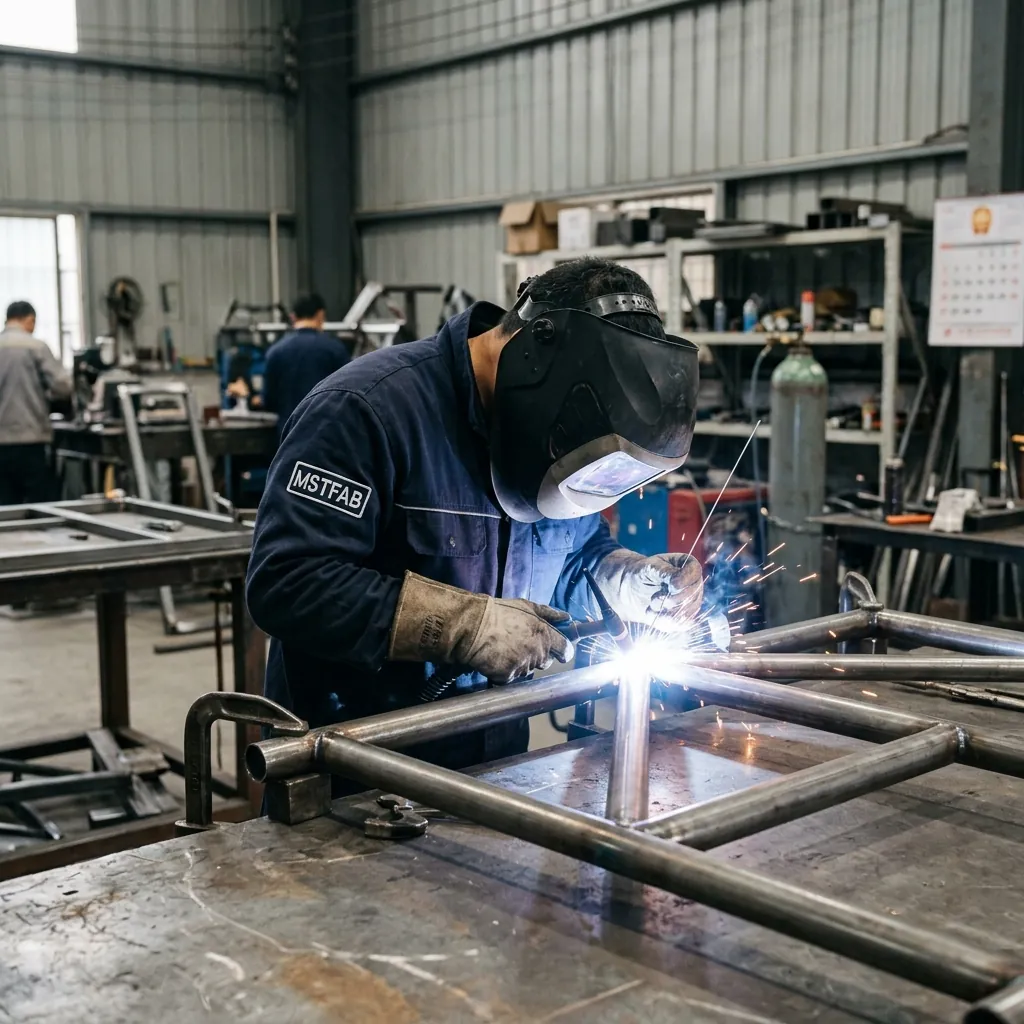
Welding adds strength. It also adds heat. Heat can affect flatness, squareness, alignment, and final assembly fit.
A welded frame can be structurally strong and still be wrong if it is no longer square. For visible stainless steel parts, “nice weld” is not a useful specification. It is better to state whether welds need to be hidden, smooth-ground, or fully structural. This saves everyone from a future email chain containing angry photos of welds from six different angles.
4. Are Hardware and Surface Finish Planned Before Production?
Many custom metal parts need functional features such as PEM nuts, rivet nuts, hinges, and tapped holes. These features must be planned before surface finishing.
For example: Powder coating inside threads will prevent screws from fitting. Grounding points may need exposed metal contact. Clear instructions and factory masking processes prevent assembly workers from having to become amateur metal surgeons.
5. Quality Inspection and First Article Approval (FAI)
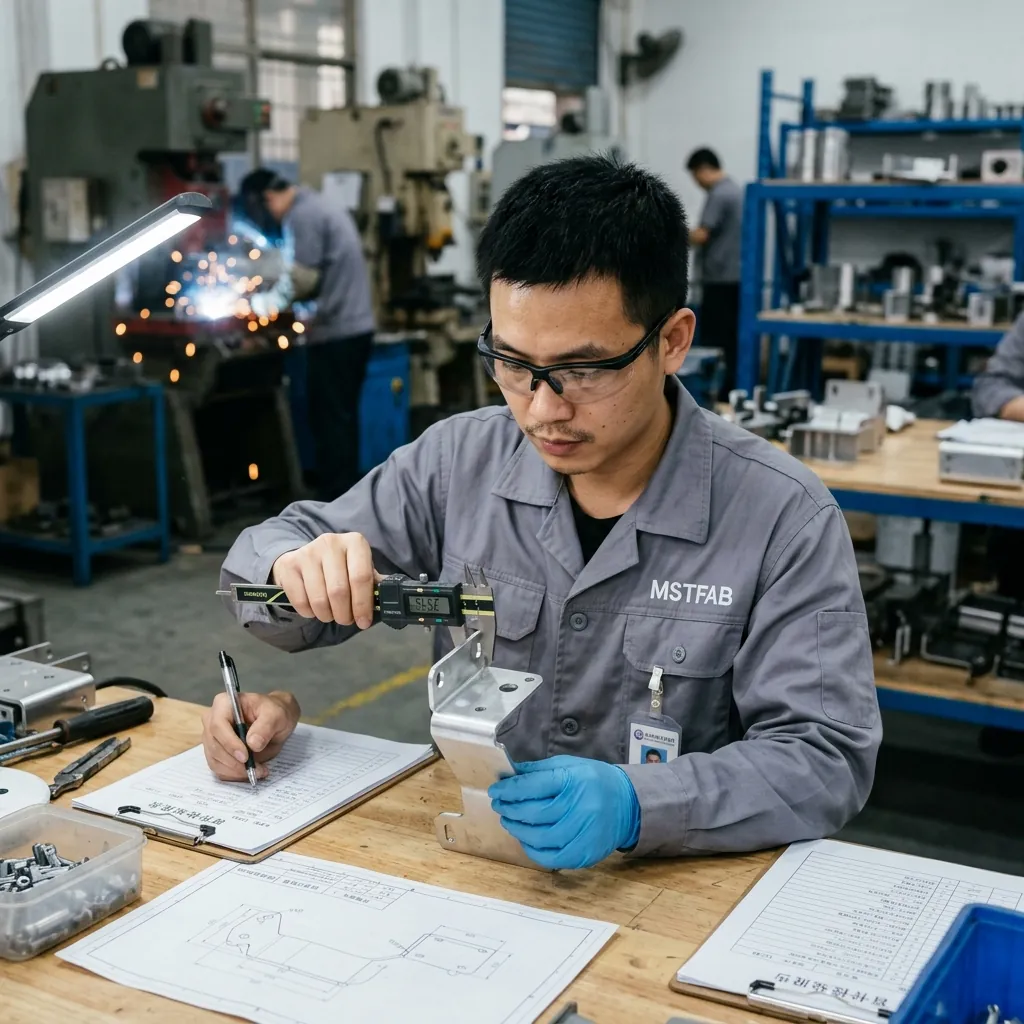
Not every dimension needs the same inspection priority. A hidden internal flange is not as critical as a front display cutout. For OEM metal parts, quality control should focus on critical dimensions, hole locations, bend angles, thread function, and cosmetic appearance.
6. Export Packaging: Because Shipping is Brutal
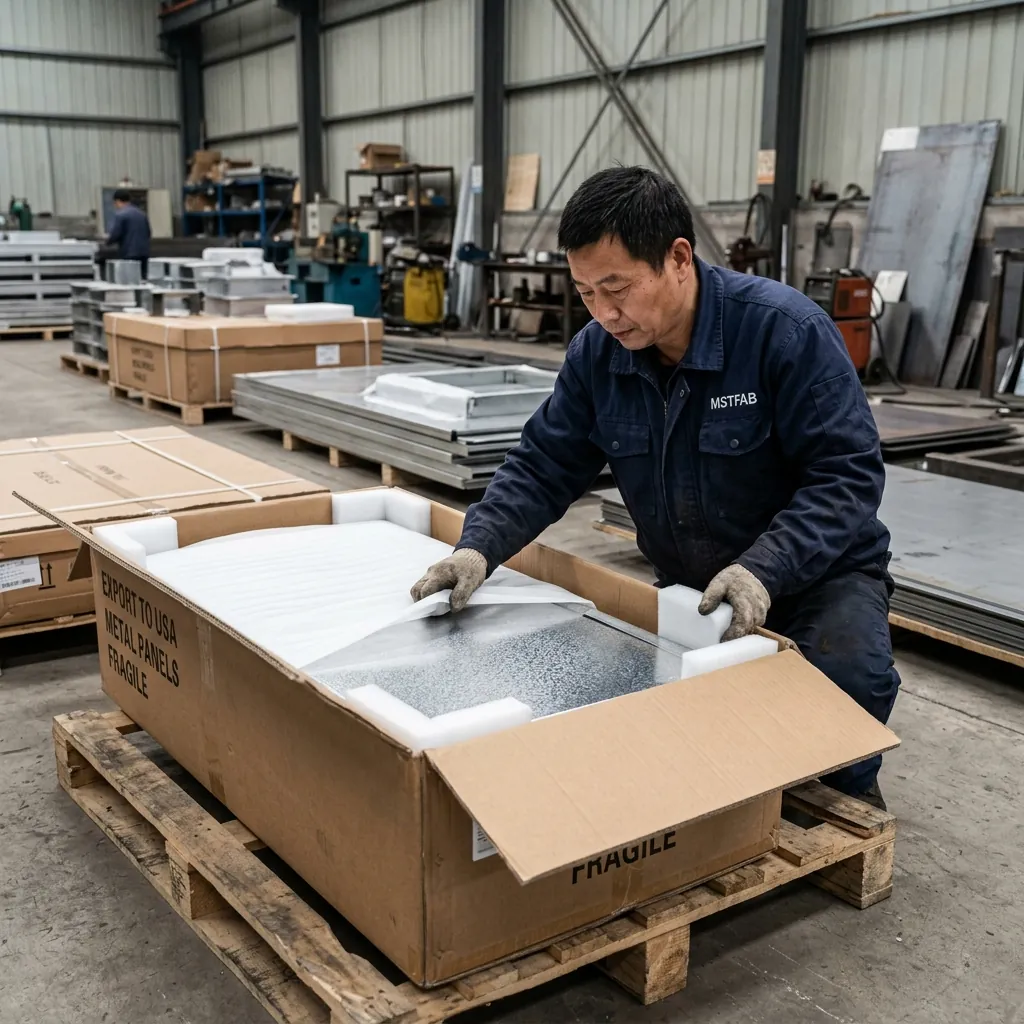
It does not matter how perfectly the part was manufactured if it arrives at your facility scratched, bent, or damaged by moisture. A serious custom metal parts factory designs the packaging (using foam, dividers, film, and sturdy pallets) just as carefully as they design the part.
Start Your Custom Metal Parts Project
The best custom metal parts manufacturing factory is not the one that only sends a fast quotation.
It is the one that asks practical questions before production, helps identify manufacturing risks early, controls the process across multiple stages, and delivers parts that work in your final assembly.
Send your drawings, material requirement, quantity, finish details, and application information to the MSTFAB team. We will review the manufacturing route before production begins.
Because a good metal part should solve problems quietly, not create new ones.
Sheet Metal DFM Guide for OEM Buyers
Learn how to avoid expensive manufacturing mistakes before production begins by reviewing our comprehensive Design for Manufacturing (DFM) guidelines.
 WeChat Contact
 WhatsApp Me Directly