
FABRICATOR-TO-INTEGRATOR HANDOFF
An electrical cabinet shell handoff should tell the integrator exactly what the metal fabricator delivered, what remains unfinished and which interfaces were inspected. A painted box with mystery hardware is not a handoff package; it is a future meeting.
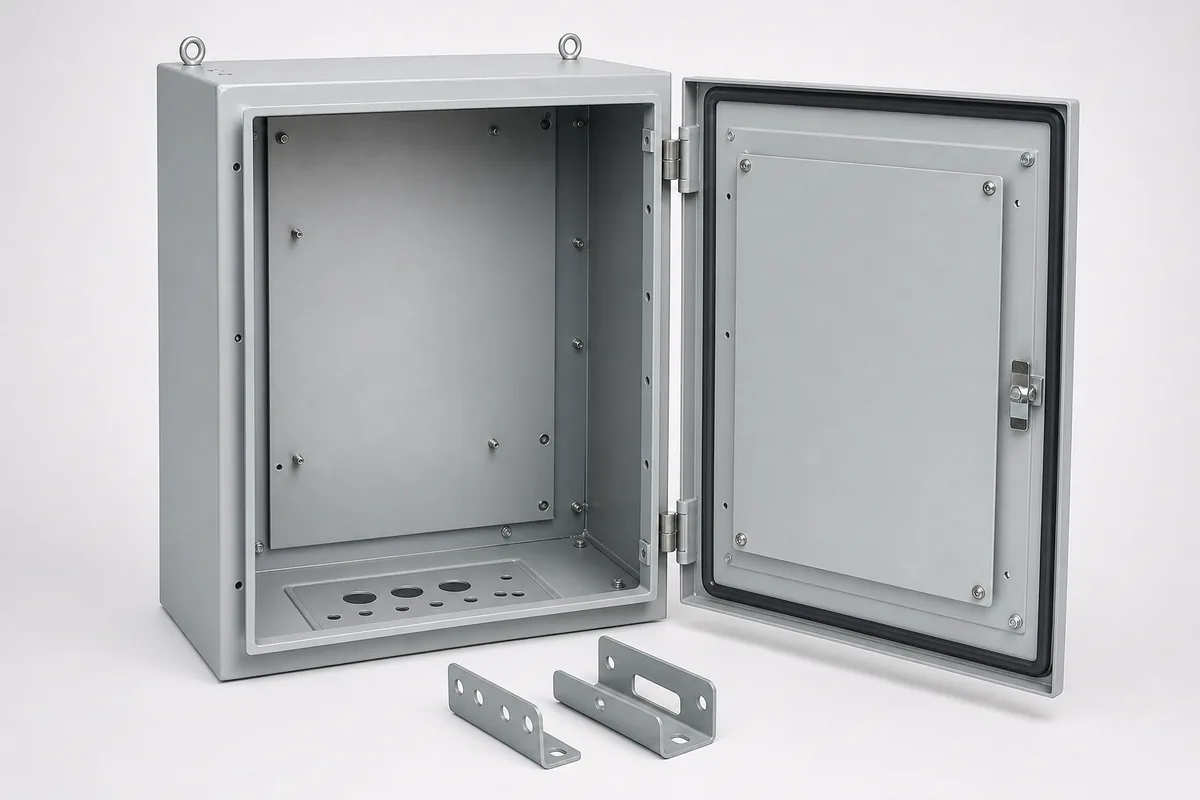
Agree the Responsibility Matrix Before Production
| Scope item | Metal fabricator | Electrical integrator |
|---|---|---|
| Cabinet metalwork | Frames, doors, panels, plates and brackets to released drawings | Approves assembly interfaces and installed equipment envelopes |
| Mechanical hardware | Installs controlled hinges, latches, studs and inserts when quoted | Controls device rails and electrical component selection |
| Grounding provisions | Fabricates specified studs and masks contact areas | Defines bonding design and validates the completed system |
| Environmental target | Builds approved gasket, opening and closure geometry | Owns final configuration and applicable verification |
Inspect the Cabinet in the Delivered Condition
Check door and panel fit, hinge movement, latch engagement, mounting-plate insertion, threads, studs, cutouts, cable plates and removable components after finishing. Critical measurements should use functional datums and the support condition defined by the drawing.

Make Loose Parts and Open Issues Visible
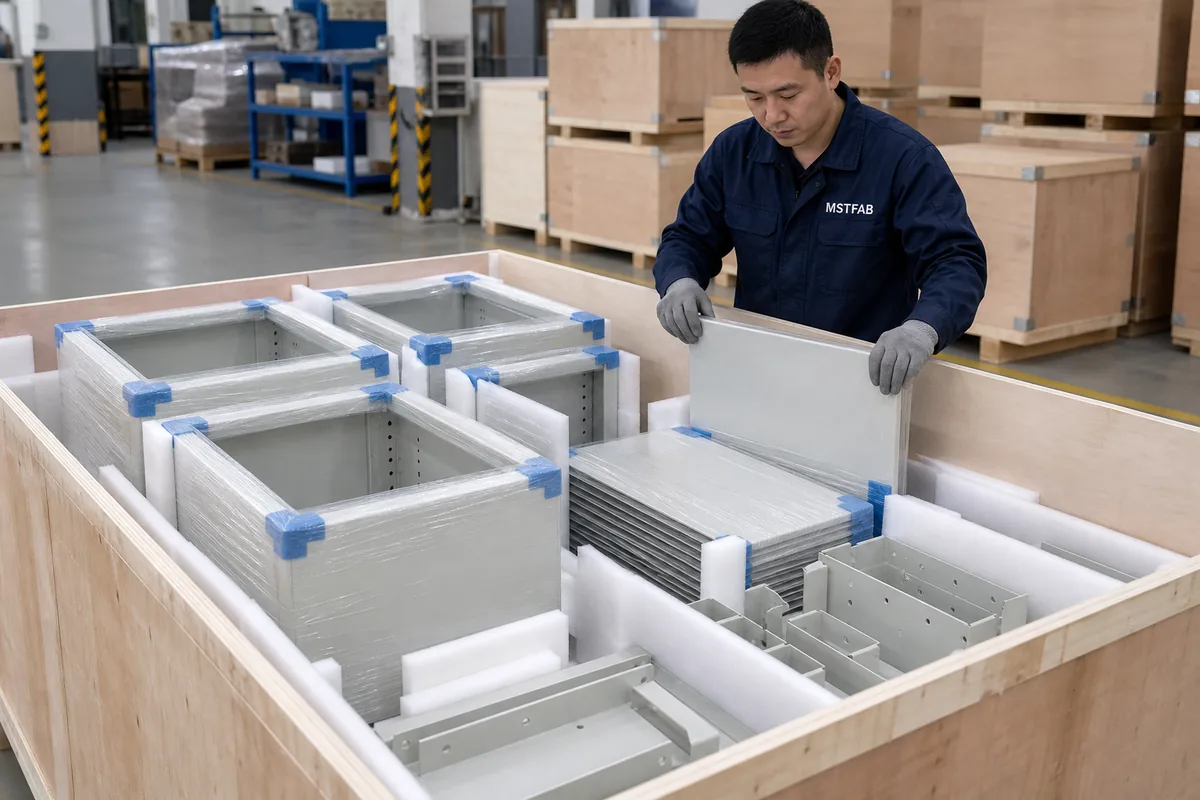
Label removable plates, keys, hardware bags, brackets and packing supports with the part number and quantity. Record accepted deviations and unresolved points. If the buyer must drill, mask, bond or install an item later, say so before the cabinet reaches the integration floor.
Buyer Trust Table
| Supplier statement | Handoff evidence | Buyer value |
|---|---|---|
| “Hardware installed” | Part-number and function check | Confirms identity, orientation and operation |
| “Grounding ready” | Specified studs and uncoated contact areas | Provides the mechanical provision without claiming system bonding |
| “Inspection passed” | Named CTQs, results, revision and approver | Makes the accepted condition traceable |
| “Ready for integration” | Loose-parts list, deviations and open-item register | Prevents surprises on the assembly floor |
Electrical Cabinet Handoff Checklist
- Released revision and PO matched
- Material and finish recorded
- Installed hardware schedule checked
- Loose parts counted and labeled
- Door, panel and mounting-plate fit verified
- Threads and contact areas protected
- CTQ report included
- Approved deviations attached
- Open items assigned to an owner
- Packing photos retained
Frequently Asked Questions
Does an empty electrical cabinet include wiring?
No. The standard MSTFAB scope is mechanical metalwork and specified hardware. Wiring and electrical integration remain with the buyer or integrator.
Does a grounding stud prove compliant bonding?
No. It is a mechanical provision. The completed bonding design, installation and validation remain the integrator’s responsibility.
Should the mounting plate be trial fitted?
Yes when its insertion path, fasteners or finished clearances are critical to integration. Define the check in the inspection plan.
Make the Next Assembly Step Predictable
Send the cabinet files, hardware schedule, CTQs and integration requirements for a handoff review.
 WeChat Contact
 WhatsApp Me Directly