
🔬 Direct Answer: What Are Custom Medical Equipment Pump Mounting Brackets?
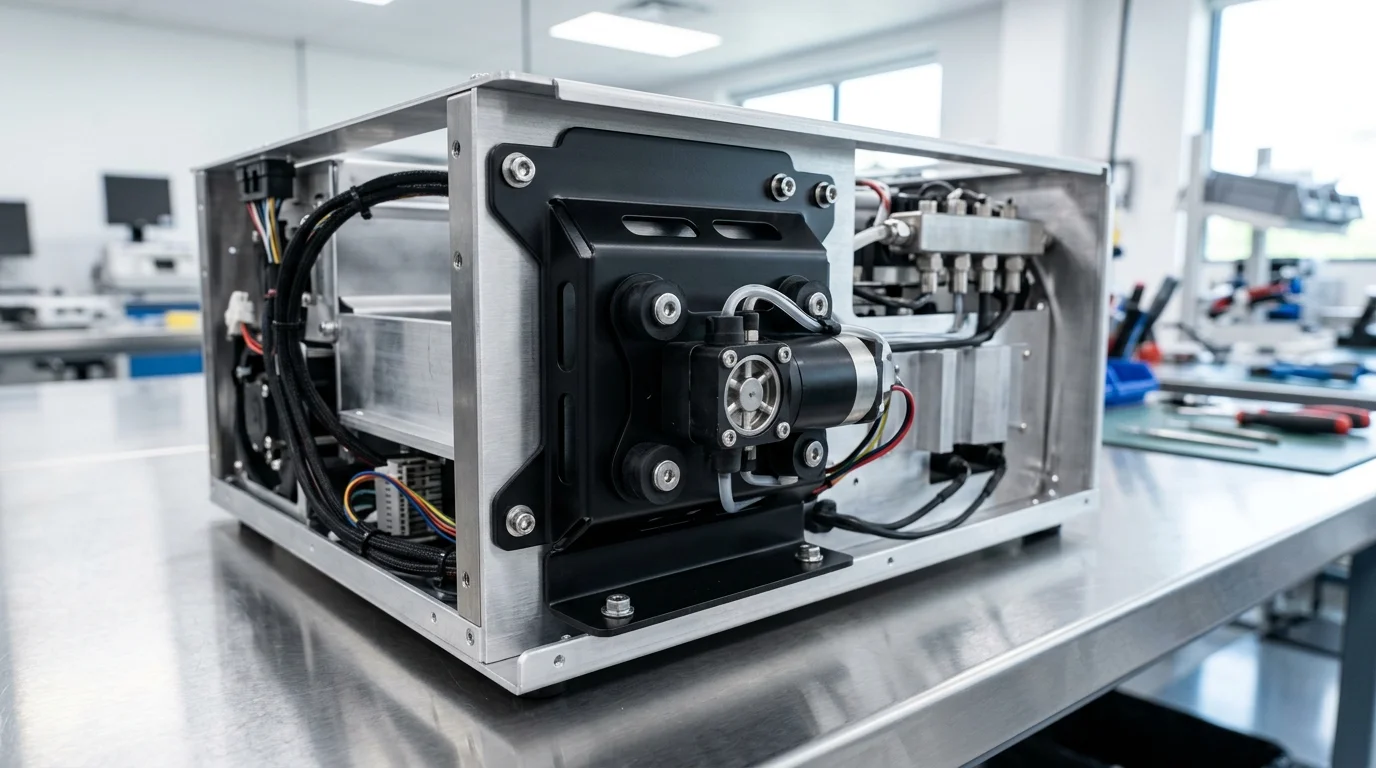
Custom medical equipment pump mounting brackets are high-precision, vibration-isolated structural sheet metal chassis assemblies engineered to securely anchor, align, and acoustically decouple motorized pumping mechanisms inside diagnostic analyzers, hemodialysis consoles, infusion delivery systems, enteral feeding devices, and surgical suction units. Fabricated from 1.5 mm to 3.0 mm 316L/304 medical-grade austenitic stainless steel, 5052-H32 aluminum, or MRI-conditional non-magnetic alloys, these critical mechanical components deliver six essential engineering functions: 1) Mechanical Vibration Damping & Acoustic Attenuation (decoupling cyclic motor pulsation to maintain quiet hospital bedside noise thresholds < 45 dBA per IEC 60601-1-8); 2) Sub-Millimeter Shaft & Fluidic Concentricity (holding ±0.05 mm true position tolerances to prevent premature peristaltic tubing occlusion or roller bearing galling); 3) Fluid Spill Containment & Drip Pan Integration (incorporating laser-formed containment reservoirs that isolate corrosive chemical reagents or blood from sensitive electronic motherboards); 4) Rigorous Sterilization & Chemical Washdown Resistance (surviving daily exposure to 70% IPA, bleach, quaternary ammonium compounds, and autoclave steam via ASTM B912 electropolishing to surface roughness R_a ≤ 0.38 μm / 15 μin); 5) Structural Resonance Avoidance (tuning natural frequencies f_n via stiffening gussets to exceed pump excitation harmonics by ≥ 40%); and 6) Full Medical Device Regulatory Traceability (manufactured under ISO 13485:2016 quality management systems with complete heat-lot Mill Test Reports and SAE AS9102 First Article Inspection (FAI) reports).
Table of Contents: Medical Pump Bracket Engineering Sourcing Guide
- 1. Clinical & Mechanical Physics of Medical Pump Systems
- 2. Vibration Dynamics, Transmissibility & Elastomeric Isolator Sizing
- 3. Primary Structural Bracket Configurations & Modular Architectures
- 4. DFM for Fluidic Tubing Clearances, Bend Radii & Spill Containment
- 5. Structural Finite Element Analysis (FEA) & Resonance Avoidance
- 6. Medical Grade Material Selection Matrix: 316L vs. 304 vs. 5052 Aluminum vs. Titanium
- 7. Surface Finishing & Sterilization: ASTM B912 Electropolishing & Passivation
- 8. Failure Mode & Effects Analysis (FMEA): 6 Critical Medical Pump Mount Failures
- 9. Precision CNC Sheet Metal Fabrication Workflow: Laser Piercing to Robotic TIG
- 10. Fastening Systems, Self-Clinching Hardware & Anti-Vibration Prevailing Fasteners
- 11. Acoustic Noise Reduction Strategies: Achieving < 45 dBA in Clinical Environments
- 12. Electrical Safety & Grounding Architecture: IEC 60601-1 Compliance
- 13. Clinical Case Study: Dialysis Blood Pump Resonant Failure vs. Gusseted Redesign
- 12. ISO 13485:2016 Quality Management, AS9102 FAI & Traceability Protocols
- 13. OEM Medical Hardware Sourcing Checklist & RFQ Specifications
- 14. Comprehensive Engineering FAQs on Medical Pump Mounting Brackets
1. Clinical & Mechanical Physics of Medical Pump Systems
Inside modern medical devices, motorized fluid displacement pumps are the life-sustaining engines of diagnostic and therapeutic delivery. Whether circulating dialysate through an artificial kidney, metering microliters of chemotherapy reagents into a flow cytometer, or infusing intravenous analgesics into a neonatal patient, these fluid systems impose rigorous mechanical, acoustic, and sanitary constraints upon their structural mounting hardware.
Unlike industrial pumps operating in closed factory plantrooms, medical pumps function within inches of vulnerable patients, sensitive laboratory sensors, and clinical personnel. As a consequence, the sheet metal mounting bracket cannot simply serve as a passive holding fixture; it acts as an active mechanical filter, thermal conductor, fluid barrier, and structural datum.
Primary Pumping Modalities & Mechanical Disturbance Profiles
- Peristaltic Roller Pumps (Hemodialysis & Infusion): As rotating multi-roller heads compress flexible silicone or Tygon tubing against an occlusion track, each roller engagement and disengagement generates an abrupt pressure pulse and mechanical reaction torque. At typical operating speeds of 50 to 600 RPM, three-roller pump heads generate cyclic dynamic shock loads at frequencies of 2.5 Hz to 30 Hz. If transmitted directly into the medical device frame, these pulses cause acoustic drone and micro-vibrations that distort optical sensors.
- Diaphragm & Piston Metering Pumps (Reagent Fluidics & In-Vitro Diagnostics): Reciprocating positive-displacement diaphragms generate high-amplitude sinusoidal inertial forces along the piston stroke axis. The mounting bracket must resist alternating tension-compression fatigue loads without flexural deflection that would alter pump stroke length and compromise fluid volumetric metering precision (< ±1.0% allowable error).
- Rotary Vane & Gearhead Suction Pumps (Surgical Suction & Aspirators): High-velocity continuous suction pumps generate high-frequency micro-vibrations (100 Hz to 2,000 Hz) combined with elevated thermal dissipation from DC brushless motors. The bracket must provide high thermal conductivity to sink heat away from motor stators into the main aluminum chassis while isolating high-frequency harmonic buzz.
- Linear Actuator Syringe Drives: High-pressure precision infusion pumps utilize lead screws driven by hybrid stepper motors. The mounting bracket must maintain absolute parallel alignment between the lead screw axis and the syringe barrel guide rods within ±0.05 mm across a 200 mm stroke length to prevent lead screw binding or erratic torque spikes.
2. Vibration Dynamics, Transmissibility & Elastomeric Isolator Sizing
Vibration transmission from an un-isolated medical pump into a sheet metal device chassis creates two major clinical risks: audible acoustic amplification (the chassis acts as a sounding board, violating hospital bedside noise limits under IEC 60601-1-8 of ≤ 45 dBA) and structural fatigue failure of adjacent delicate micro-electronics, soldered PCBA connectors, and optical detector sensors.
Vibration Isolation Dynamics & Transmissibility Targets
In precision medical instrumentation, the mechanical transmissibility (T) measures the proportion of dynamic excitation force generated by the pump motor that gets transmitted through the mounting bracket into the surrounding console chassis. Achieving true mechanical isolation requires careful tuning of the mounting assembly’s natural frequency (fn) relative to the pump’s primary operating excitation frequency (fe).
Core Medical Vibration Isolation Engineering Principles:
- Resonance Avoidance (fe > 1.414 × fn): When motor excitation frequency coincides with bracket structural resonance (frequency ratio r = 1.0), mechanical shudder amplifies by 500% to 1,000%, loosening fasteners and stressing solder joints. True vibration attenuation only begins when excitation frequency strictly exceeds √2 × (1.414) the assembly natural resonance.
- Clinical Target (≥ 85% Dynamic Force Attenuation): To ensure quiet bedside operation (< 45 dBA), MSTFAB tunes bracket geometry and elastomer mounts to maintain an optimal frequency ratio of fe / fn ≥ 2.5 to 3.0. This dampens transmitted dynamic forces down to transmissibility T ≤ 0.15 (≥ 85% vibration isolation).
- Elastomeric Isolator Sizing: Isolator grommets must be formulated from certified medical-grade polymers—such as USP Class VI platinum-cured silicone or high-damping fluorosilicone—calibrated to Shore A durometers between 30A and 70A based on pump static mass and dynamic operating speeds.
| Pump Type & Motor Operating Speed | Primary Excitation Freq (f_e) | Target Natural Freq (f_n) | Recommended Isolator Elastomer | Durometer (Shore A) |
|---|---|---|---|---|
| Low-Speed Infusion Peristaltic (60–120 RPM) | 3.0 Hz – 6.0 Hz | ≤ 1.8 Hz – 2.2 Hz | Ultra-Soft Medical Silicone Gel | Shore 30A – 35A |
| Hemodialysis Blood Pump (300–450 RPM) | 15 Hz – 22.5 Hz | ≤ 6.0 Hz – 8.0 Hz | High-Damping Fluorosilicone | Shore 45A – 50A |
| IVD Analyzer Reagent Diaphragm (1,200 RPM) | 20 Hz – 40 Hz | ≤ 8.0 Hz – 12.0 Hz | USP Class VI Platinum-Cured Silicone | Shore 50A – 60A |
| Surgical Aspirator Suction Vane (3,000 RPM) | 50 Hz – 200 Hz | ≤ 18 Hz – 25 Hz | Dual-Stage Isolator Bushings | Shore 60A – 70A |
3. Primary Structural Bracket Configurations & Modular Architectures
Depending on device enclosure architecture, internal component density, and field service accessibility requirements, MSTFAB fabricates four distinct structural pump bracket configurations:
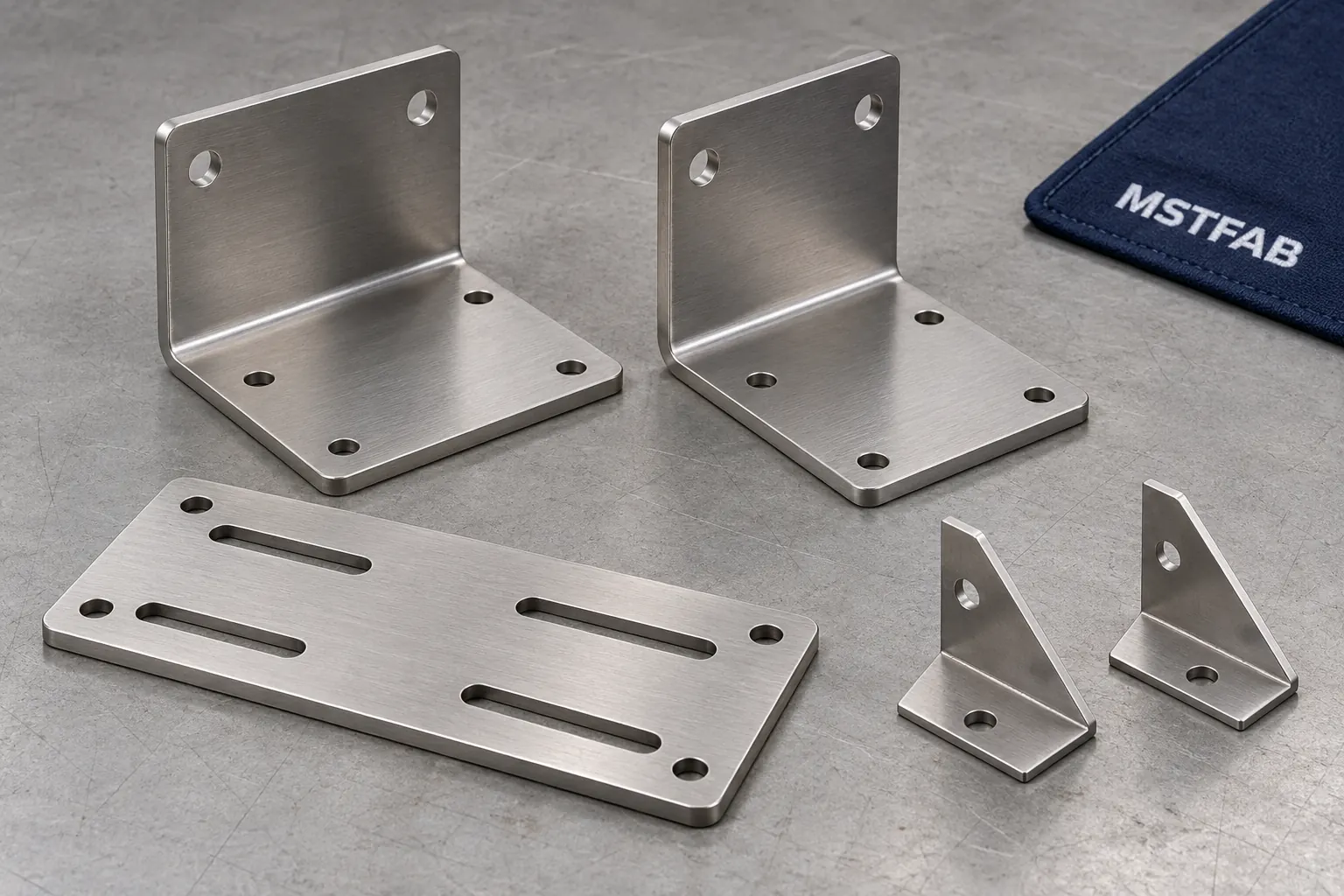
1. Cantilevered L-Shaped Mounting Brackets
Commonly deployed in compact bedside infusion monitors where space is constrained. An upright vertical flange mounts flush to the main vertical bulkhead, while a horizontal shelf supports the motor face. To resist the rotational cantilever moment without flexural drooping, MSTFAB cold-forms 90° side stiffening gusset ribs directly into the blank geometry, tripling flexural stiffness without adding part count or weld operations.
2. U-Channel Cradle Brackets (Dual-Sided Support)
Ideal for heavy peristaltic pump heads where motor torque and tube clamping forces exert high transverse shear loads. The U-channel wraps around the motor body, supporting both the front faceplate and the rear motor housing. This dual-datum support architecture completely prevents cantilever twisting and eliminates cyclical bending stresses on the front mounting fasteners.
3. Multi-Axis Adjustable Slide Mounts
In diagnostic clinical analyzers where pump tubing must mate seamlessly with automated valve manifolds or microfluidic chips, tolerance stack-ups between the chassis and fluidic ports can cause tube kinking. MSTFAB laser-cuts precision slotted adjustment apertures with CNC-engraved millimeter vernier scales, allowing field calibration technicians to adjust pump position along X-Y-Z axes by ±3.0 mm with 0.1 mm resolution.
4. Quick-Disconnect Modular Pump Cassette Trays
In high-throughput 24/7 hospital laboratory analyzers, pump motor failure must not decommission the entire million-dollar analyzer. MSTFAB fabricates precision sheet metal slide-out cassette trays equipped with quick-release spring latches, self-aligning floating dowel pins, and blind-mate electrical connector cutouts. Clinical biomed engineers can swap out a complete pump module in under 45 seconds without using hand tools.
4. DFM for Fluidic Tubing Clearances, Bend Radii & Spill Containment
Design for Manufacturability (DFM) in medical fluidics requires careful mechanical consideration of flexible tubing trajectories, pinch-point elimination, and chemical fluid containment. Overlooking these details during sheet metal design frequently leads to catastrophic tubing failure or electrical short-circuits.
Key DFM Guidelines for Medical Pump Brackets
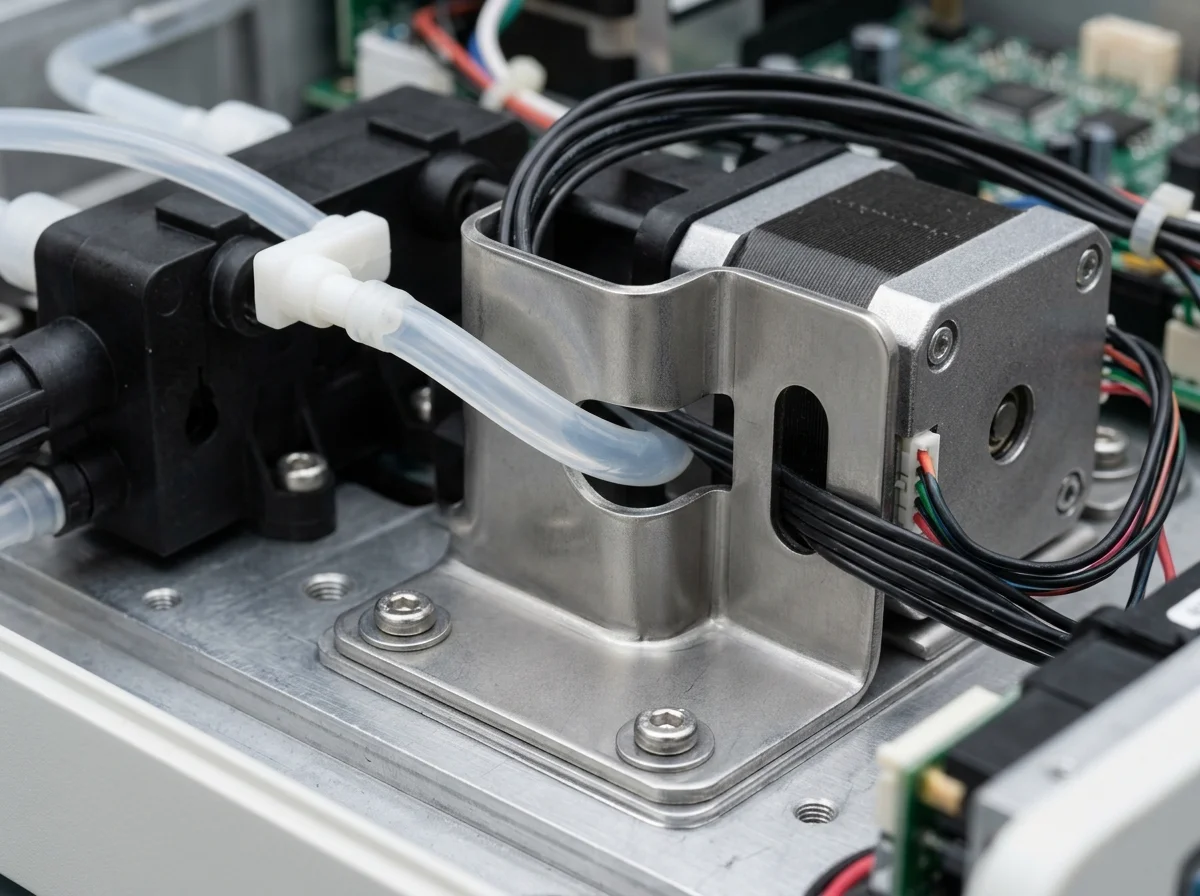
- Tubing Ingress/Egress Pass-Through Geometry: When peristaltic silicone or fluoropolymer tubing passes through sheet metal bracket walls, sharp laser-cut edges can score or saw through the vibrating tubing wall. MSTFAB incorporates cold-formed extruded collar holes with smoothly radiused lip entries (R ≥ 1.5 mm) or details laser apertures sized specifically to snap-retain USP Class VI medical-grade silicone grommets.
- Preservation of Minimum Fluidic Bend Radii: Kinking flexible fluid tubing restricts laminar flow, introduces cavitation micro-bubbles, and alters volumetric dosing accuracy. Brackets are designed with integrated cable/tubing tie-off saddles that enforce a minimum bend radius Rbend ≥ 5 × Dtube across all operating paths.
- Integrated Liquid Spill Drip Trays & Weep Channels: In the event of tubing rupture, corrosive chemical reagents (such as sodium hypochlorite, acid washes, or enzymatic cleaners) or infectious biofluids must never drip downward onto high-voltage power supplies or microprocessor logic boards. MSTFAB fabricates pump bracket shelves with continuous brake-formed 8 mm raised perimeter liquid-retaining lips and sealed laser-welded corners, creating a self-contained fluid spill reservoir capable of holding up to 150 ml of fluid. A dedicated gravity weep drain directs leaked fluid safely into an external waste canister.
- Optocoupler & Optical Sensor Clearances: Modern medical pumps utilize optical break-beam sensors or ultrasonic bubble detectors mounted directly to the bracket. Precision CNC cutouts must account for sensor optical sightlines, maintaining ±0.05 mm position tolerances relative to the tubing centerline while shielding photo-detectors from stray ambient interior lighting.
5. Structural Finite Element Analysis (FEA) & Resonance Avoidance
In high-reliability medical equipment, premature mechanical failure or excessive acoustic hum is almost always caused by structural resonance: the operating frequency of the pump motor or its higher harmonic multiples coincides with one of the fundamental natural frequencies of the sheet metal bracket.
To prevent resonance before steel is cut, MSTFAB engineering applies 3D Finite Element Modal Analysis (FEA) directly to native CAD solid models:
Dynamic Modal Analysis Methodology
- Extraction of Eigenfrequencies (f1, f2, f3): The FEA solver calculates the first six structural natural mode shapes of the bracket-pump assembly, including first-order bending, torsional twisting, and diaphragm plate drumming modes.
- Harmonic Campbell Diagram Validation: We plot operating pump speed harmonics (1X, 2X, 3X, and 4X motor rotational frequency) against bracket structural mode frequencies across the entire motor RPM operating band. All bracket structural mode frequencies must clear the operational excitation band by a minimum safety margin of ≥ 35% to 45%.
- Strategic Rib Stiffening vs. Mass Addition: If a bracket exhibits an undesirable low-frequency drumming mode (e.g., f1 = 35 Hz on a 30 Hz pump), simply increasing sheet thickness adds unnecessary weight and raw material cost. MSTFAB optimizes the geometry by introducing formed diagonal stiffening embossments, swaged flanged cutouts, and 90° perimeter return lips. This dramatically increases the area moment of inertia (I) and shifts f1 upward to > 85 Hz without increasing sheet metal gauge.
6. Medical Grade Material Selection Matrix: 316L vs. 304 vs. 5052 Aluminum vs. Titanium
Selecting the correct raw metal alloy for medical pump brackets requires balancing structural stiffness, total mass, magnetic permeability, cleanroom particle shedding, chemical washdown survivability, and manufacturing economics:
| Material Alloy | Tensile / Yield Strength | Magnetic Permeability (μ_r) | Corrosion / Sterilization Survivability | Primary Clinical Application |
|---|---|---|---|---|
| Austenitic Stainless Steel 316L (1.4404) | 580 MPa / 290 MPa | μ_r < 1.02 (Fully Annealed) | Superior (Gold Standard): Immune to bleach, quaternary ammonium, VHP, and autoclave steam. | Hemodialysis fluid modules, surgical suction pumps, pharmaceutical IV compounding robots. |
| Austenitic Stainless Steel 304 (1.4301) | 550 MPa / 240 MPa | μ_r < 1.05 (Cold-working increases μ) | High: Excellent against 70% IPA, mild disinfectants; susceptible to pitting under pooled bleach. | Diagnostic IVD analyzer interior chassis, blood gas analyzers, benchtop centrifuges. |
| Aluminum 5052-H32 | 230 MPa / 195 MPa | μ_r = 1.00002 (Non-Magnetic) | Moderate: Requires Type II/III hard anodizing to prevent oxidation and flaking. | Portable ambulatory infusion pumps, mobile emergency resuscitation carts, lightweight enclosures. |
| Commercially Pure Titanium (Grade 2) | 450 MPa / 345 MPa | μ_r = 1.00005 (100% MRI Conditional) | Extreme: Completely impervious to all hospital chemical agents and saltwater. | Intra-operative MRI infusion dispensers, hyperbaric oxygen chamber fluid delivery. |
7. Surface Finishing & Sterilization: ASTM B912 Electropolishing & Passivation
In hospital operating rooms, cleanrooms (ISO Class 5 to 7), and clinical laboratories, metal surfaces must resist microscopic microbial colonization and withstand aggressive bio-decontamination protocols without surface degradation or particle flaking.
Electropolishing (ASTM B912) vs. Chemical Passivation (ASTM A967 / A967M)
- ASTM B912 Electropolishing for Ultra-Smooth Sanitary Surfaces: Electropolishing is an electrochemical process that selectively dissolves microscopic surface asperities, peaks, and burrs. It yields a featureless, mirror-like surface with a surface roughness of R_a ≤ 0.38 μm (15 μin) or better. Electropolishing removes free iron and enriches the surface chromium-to-iron ratio to ≥ 1.5 : 1, creating an ultra-dense passive chromium oxide (Cr_2O_3) barrier layer that completely prevents bacterial adherence (biofilm formation).
- ASTM A967 / A967M Citric & Nitric Acid Passivation: For non-wetted interior chassis brackets, MSTFAB performs ultrasonic chemical passivation complying with ASTM A967 (Citric 4 or Nitric 2). This eliminates microscopic free iron particles embedded during press brake forming and laser piercing, ensuring 100% corrosion resistance under copper sulfate testing (MIL-STD-753).
- Type III Hard Anodizing (MIL-A-8625) with PTFE Sealing: For aluminum 5052-H32 pump brackets, we apply a 50 μm thick hardcoat anodize impregnated with PTFE. This provides an ultra-hard surface (> 60 HRC equivalent) that resists abrasion from metal pump cassettes while withstanding daily wipedowns with 10% sodium hypochlorite bleach.
Clinical Sterilization Protocol Survivability
All MSTFAB medical pump brackets are engineered to survive thousands of decontamination cycles across the four major clinical sterilization modalities:
- Autoclave Steam Sterilization: High-pressure saturated steam at 134° C (273° F) at 3.0 bar pressure. Brackets undergo zero thermal warping or dimensional distortion.
- Vaporized Hydrogen Peroxide (VHP): Gaseous H_2O_2 at 30% to 35% concentration under deep vacuum cycles, which oxidizes and destroys non-passivated carbon steels.
- Liquid Chemical Germicides: Daily saturation with 70% Isopropyl Alcohol (IPA), quaternary ammonium chlorides, glutaraldehyde, and accelerated hydrogen peroxide (AHP).
- UV-C Germicidal Irradiation: High-intensity 254 nm ultraviolet radiation that causes embrittlement in plastics but leaves passivated stainless steel brackets unaffected.
8. Failure Mode & Effects Analysis (FMEA): 6 Critical Medical Pump Mount Failures
Applying proactive risk management aligned with ISO 14971 (Application of Risk Management to Medical Devices), MSTFAB conducts rigorous design and process FMEAs for all medical sheet metal bracket programs:
| Failure Mode | Clinical & Mechanical Root Cause | Clinical Severity | MSTFAB Sheet Metal DFM Countermeasure |
|---|---|---|---|
| 1. Resonant Bedside Acoustic Alarm | Bracket natural frequency aligns with pump RPM, vibrating enclosure panel > 55 dBA. | Critical (Patient Distress) | Modal FEA stiffening ribs + Shore 45A silicone decoupling bushings; verified < 42 dBA. |
| 2. Fastener Loosening & Motor Droop | Cyclic pump shear vibration causing thread backout and shaft misalignment. | Critical (Dosing Error) | PEM self-clinching prevailing-torque locknuts with micro-encapsulated threadlocker. |
| 3. Galvanic & Crevice Corrosion | Trapped chemical bleach in tight sheet metal folds or between dissimilar metals. | Moderate (Part Degradation) | Full 316L stainless bill of materials + open drainage notches + ASTM B912 electropolishing. |
| 4. Peristaltic Tubing Occlusion Slicing | Laser-cut burrs on pass-through ports sawing into flexible tubing over millions of cycles. | Critical (Fluid Leak / Biohazard) | Rotary deburring to R ≥ 1.2mm plus cold-formed flared collars and USP Class VI grommets. |
| 5. Biofilm Bacterial Harboring | Rough surface finish (R_a > 1.0 μm) or spot-weld crevices trapping biofluids. | Critical (Cross-Infection) | Continuous crevice-free sanitary TIG seam welds blended smooth (R_a ≤ 0.38 μm). |
| 6. EMI Grounding Loss to Chassis | Anodized or coated bracket isolating motor casing ground, causing sensor electrical noise. | Moderate (Data Artifacts) | Dedicated unmasked laser-masked grounding pads and stainless serrated grounding studs. |
9. Precision CNC Sheet Metal Fabrication Workflow: Laser Piercing to Robotic TIG
Manufacturing precision sheet metal brackets for life-critical medical equipment demands process discipline far beyond general commercial metal fabrication. At MSTFAB, production follows an integrated, automated CNC manufacturing routing:
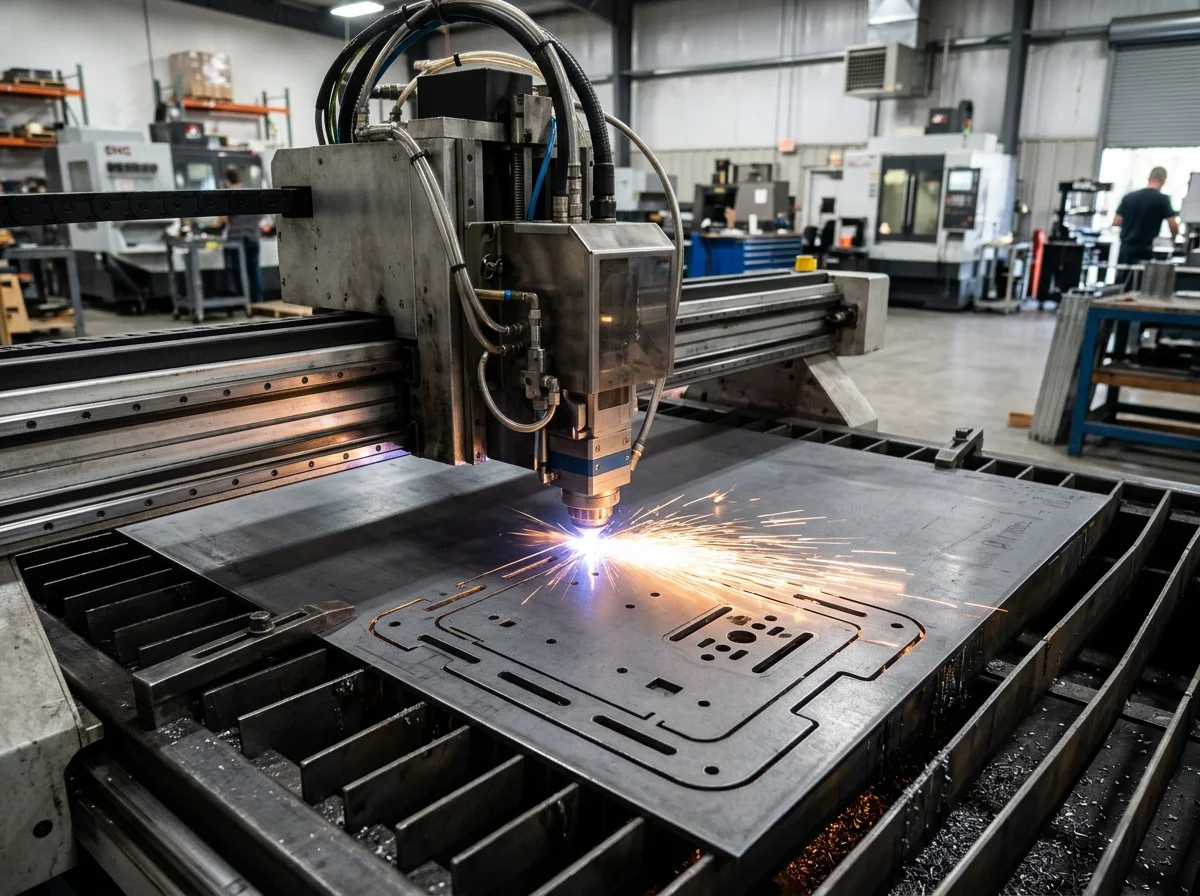
- High-Speed Fiber Laser Micro-Piercing with 99.999% Pure Nitrogen: Blanks are profiled on 15 kW fiber laser cutting systems. High-pressure nitrogen assist gas produces oxide-free cut edges with zero dross. Micro-piercing parameters prevent thermal blowout around tight Ø1.5 mm mounting hole clusters, holding diameter tolerances within ±0.03 mm.
- Multi-Head Automated Rotary Brush Deburring & Edge Rounding: Laser-cut blanks pass through dual-head planetary brush deburring equipment that uniformly rounds all exterior edges and interior cutouts to a continuous R ≥ 1.0mm to 1.5mm, ensuring zero sharp edges can cut surgical gloves or pinch flexible tubing.
- Electric Servo CNC Press Brake Forming with Dynamic Angle Correction: High-precision electric press brakes equipped with laser angle-measuring systems verify bend angles in real-time. Custom-ground urethane-lined tooling prevents tool mark marring on cosmetic stainless steel surfaces, holding flange dimensions to ±0.1 mm and bend angles within ±0.2°.
- Sanitary Micro-TIG & Fiber Laser Welding: Corner seams and reinforcement gussets are joined using pulse micro-TIG or automated fiber laser welding with continuous argon shielding. Weld seams are 100% full-penetration and crevice-free, ground and mechanically blended flush to match the parent metal grain.
- Automated Hardware Clinching with Monitored Hydraulic Force: Precision PEM hardware installation machines insert self-clinching fasteners with digitally monitored press tonnage and dwell time, ensuring 100% repeatable push-out and torque-out resistance.
10. Fastening Systems, Self-Clinching Hardware & Anti-Vibration Prevailing Fasteners
Loose fasteners inside a medical device represent a severe hazard: a backed-out screw can fall into an electric power bus, jam a cooling fan, or cause a life-support pump to tilt out of alignment. MSTFAB incorporates specialized fastening hardware engineered for extreme cyclic vibration resistance:
Advanced Fastening Hardware Configurations
- Stainless Steel Self-Clinching Standoffs & Studs (PEM FHS / SOSG Series): Manufactured from austenitic stainless steel, these fasteners cold-flow into ductile sheet metal under controlled hydraulic pressure. They provide permanent, high-strength male studs or female threaded standoffs that cannot spin or back out during field maintenance.
- Prevailing-Torque All-Metal Locknuts: For motor mounting studs, all-metal prevailing torque nuts with deformed threads (such as oval-lock or beam-lock nuts) provide continuous frictional interference without relying on nylon inserts that degrade during 134° C autoclave cycles.
- Nord-Lock Wedge-Locking Washers: In extreme vibration environments (such as high-speed aspirators and mobile ambulance infusion pumps), MSTFAB utilizes pairs of wedge-locking washers. The cam angle of the washers exceeds the thread pitch of the bolt, utilizing tension rather than friction to lock the fastener securely against loosening.
- Toolless Captive Quarter-Turn Quick Fasteners: For diagnostic analyzer pump replacement trays, Southco captive spring-eject fasteners allow rapid, toolless release while ensuring screws cannot drop loose into the machine chassis.
11. Acoustic Noise Reduction Strategies: Achieving < 45 dBA in Clinical Environments
Under medical electrical safety standard IEC 60601-1-8 (Alarms and Environmental Noise in Medical Devices) and modern clinical guidelines, ambient sound pressure generated by continuous bedside therapy equipment must remain strictly below 45 dBA (and ideally < 40 dBA in neonatal intensive care units – NICU).
Motors themselves are rarely the primary acoustic culprit; rather, the sheet metal chassis acts as an efficient acoustic loudspeaker, converting small mechanical motor vibrations into airborne sound waves. MSTFAB employs four acoustic DFM mitigation strategies:
- Constrained Layer Damping (CLD) Composites: For ultra-quiet diagnostic equipment, we manufacture brackets using sound-damped laminated sheet metal (a viscoelastic polymeric core sandwiched between two thin stainless steel or aluminum sheets). This internal viscoelastic core converts structural shear vibration energy directly into microscopic heat, reducing radiated acoustic noise by up to 12 dBA.
- Acoustic Decoupling Isolator Grommets: Pump mounting screws are completely isolated from the bracket using flanged silicone or fluorosilicone shoulder bushings. No metal-to-metal contact exists between the vibrating motor housing and the sheet metal bracket.
- Non-Parallel Stiffening Embossments: Symmetrical flat sheet metal plates vibrate with distinct, loud harmonic drum tones. MSTFAB incorporates asymmetrical, non-parallel stiffening creases that break up resonant acoustic nodes, diffusing mechanical vibration energy across a broad spectrum of low-amplitude white noise.
- Precision Motor Pilot Concentricity Bore: Machining or laser-cutting the central motor pilot register hole to tight H7 tolerances (±0.015 mm) eliminates radial motor wobble and eccentricity, drastically reducing source vibration before it enters the bracket structure.
12. Electrical Safety & Grounding Architecture: IEC 60601-1 Compliance
Medical electrical equipment must adhere strictly to IEC 60601-1 (General Requirements for Basic Safety and Essential Performance). Because motorized pumps operate under alternating current (AC) or high-frequency pulse-width modulated (PWM) brushless DC drives in close proximity to conductive biofluids (blood, dialysate, saline reagents), the sheet metal pump bracket serves a critical electrical safety barrier function:
Protective Earth (PE) Continuity & Bonding Resistance
- Sub-0.1 Ohm Grounding Resistance: Under IEC 60601-1 Section 8.6, the electrical impedance between any accessible conductive metal part (including the pump bracket faceplate) and the protective earth ground terminal must not exceed 0.1 Ω (100 mΩ) when tested with a 25 A test current for 5 seconds. To achieve this ultra-low contact resistance, MSTFAB integrates dedicated M4 or M5 stainless steel serrated self-clinching grounding studs (PEM Type CH) masked during passivation and coating to preserve 100% bare metal surface contact.
- Galvanic Isolation Barriers: In mixed-metal assemblies where a 316L stainless steel pump bracket attaches to an aluminum 5052-H32 device chassis, direct metal-to-metal contact can trigger galvanic corrosion in humid or conductive fluid spill conditions. MSTFAB isolates dissimilar metals using die-cut precision Mylar (polyester) or Kapton (polyimide) insulating dielectric shims combined with flanged nylon or PEEK shoulder washers, completely preventing galvanic battery effects while maintaining dedicated, controlled grounding jumpers.
- Creepage & Clearance Distance Enforcement: The sheet metal geometry is engineered to maintain minimum creepage distances (≥ 8.0 mm) and air clearances (≥ 5.0 mm) between high-voltage motor lead terminals and grounded bracket edges, fulfilling Two Means of Patient Protection (2 MOPP) insulation requirements for Class I and Class II medical devices.
13. Clinical Case Study: Dialysis Blood Pump Resonant Failure vs. Gusseted Redesign
To demonstrate the tangible engineering impact of rigorous DFM and modal FEA optimization, consider an actual contract manufacturing case study conducted by MSTFAB for a global hemodialysis console manufacturer:
The Baseline Field Failure Problem
The OEM’s legacy blood roller pump bracket was fabricated from a flat 2.0 mm 304 stainless steel plate bent at a single 90° cantilever angle. During clinical field trials in hospital dialysis centers, nursing personnel reported an intolerable acoustic buzzing alarm whenever the blood pump operated between 360 and 420 RPM. Within 6 months of field deployment, 14% of the brackets developed microscopic fatigue cracks along the root bend radius, causing the pump roller head to droop downward by 0.6 mm. This droop altered the peristaltic tubing occlusion gap, causing an imperceptible 8.5% drop in blood flow rate that triggered machine pressure alarms.
MSTFAB Root Cause Diagnostic & FEA Investigation
- Harmonic Resonance Alignment: Modal analysis revealed that the legacy cantilever bracket had a fundamental first bending mode natural frequency of f1 = 19.8 Hz. At 390 RPM, the three-roller peristaltic head generated cyclic pressure pulses at exactly:
Pulsation Excitation Rate: At 390 RPM, the three-roller peristaltic rotor generated fluidic pressure pulses at exactly 19.5 Hz (390 RPM / 60 s × 3 rollers). Because this excitation rate almost identically matched the bracket’s un-gusseted first bending mode (f1 = 19.8 Hz, frequency ratio r = 0.985), severe dynamic resonance amplified mechanical vibration by over 800%, driving radiated chassis noise to 58.4 dBA and causing high-cycle fatigue cracking at the sharp root bend radius (Rinside = 1.0 mm).
Because fe ≈ f1 (r = 0.985), severe dynamic resonance amplified mechanical vibration by over 800%, driving the radiated noise to 58.4 dBA and causing high-cycle fatigue at the sharp root bend radius (Rinside = 1.0 mm).
- MSTFAB DFM Redesign Countermeasures:
- Upgraded material from 304 to 2.5 mm 316L stainless steel for superior chemical resistance against dialysate chloride attacks.
- Formed continuous 12 mm 90° side stiffening flanges along both vertical edges, increasing the area moment of inertia (Ixx) by 380%.
- Increased the inside bend radius from 1.0 mm to 3.0 mm (R ≥ 1.2 × t), eliminating localized bend strain concentrations.
- Integrated four Shore 45A medical-grade platinum-cured silicone isolation bushings between the pump head and the bracket.
Post-Redesign Validation & Clinical Results
Modal testing of the redesigned MSTFAB bracket confirmed that the fundamental natural frequency shifted dramatically upward from 19.8 Hz to 78.4 Hz. The operational frequency ratio at 390 RPM dropped to r = 19.5 / 78.4 = 0.248 (well outside the resonance zone), and vibration transmissibility dropped to T < 0.08 (a 92% reduction in transmitted dynamic force). Radiated acoustic sound pressure at 1.0 meter measured just 38.6 dBA (a 19.8 dBA reduction, far quieter than the 45 dBA ICU threshold). Accelerated life cycle fatigue testing demonstrated zero micro-cracking and zero dimensional droop after 50 million continuous pumping cycles.
12. ISO 13485:2016 Quality Management, AS9102 FAI & Traceability Protocols
Medical device OEMs are subject to strict regulatory oversight by the US FDA (U.S. FDA 21 CFR Part 820 (QMSR)) and global notified bodies under the European Medical Device Regulation (MDR 2017/745). When sourcing custom sheet metal metalwork, suppliers must provide comprehensive quality assurance documentation:
MSTFAB Medical Quality Assurance Deliverables
- ISO 13485:2016 & ISO 9001:2015 Certification: Dedicated medical metal manufacturing protocols ensuring strict cleanroom handling, contamination control, and process risk management.
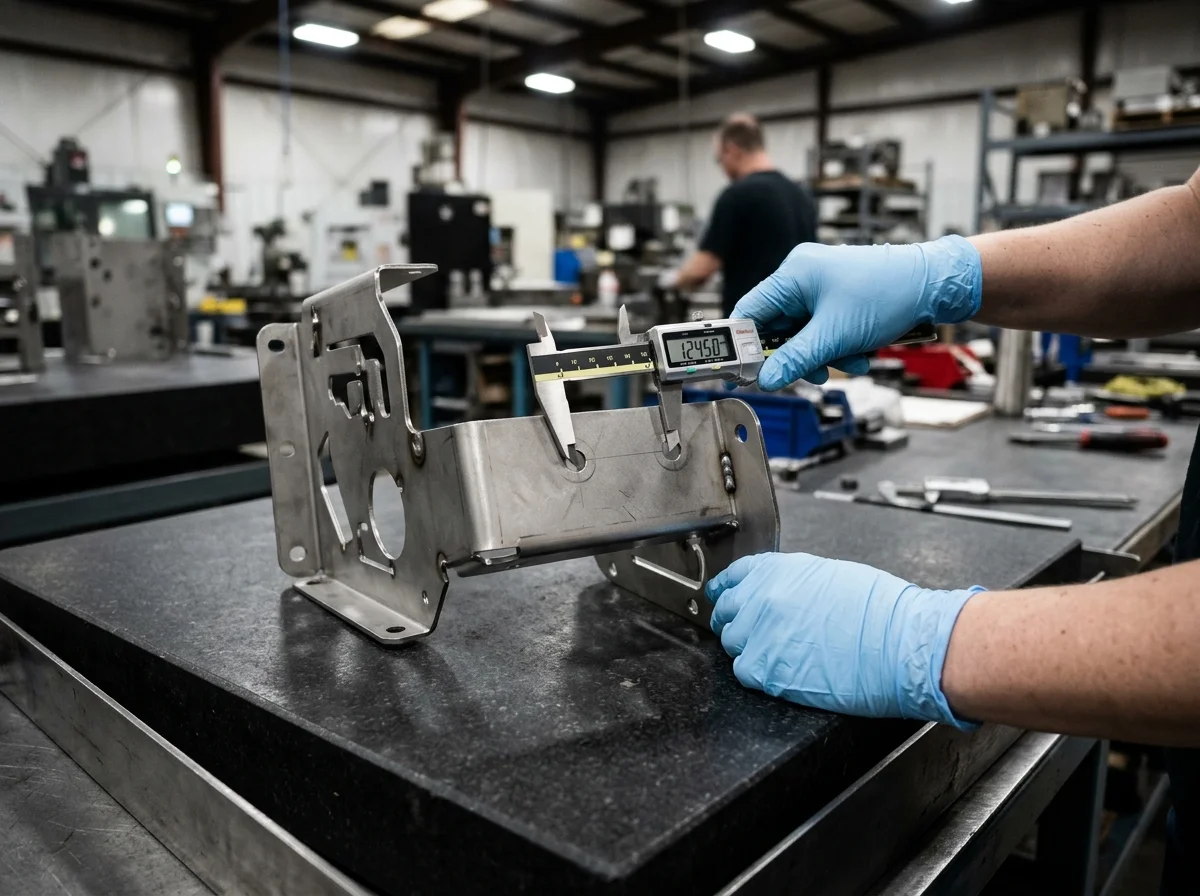
- AS9102 First Article Inspection (FAI) Form 1, 2, and 3: Comprehensive dimensional verification of 100% of print characteristics using our Zeiss Bridge Coordinate Measuring Machine (CMM), optical video comparators, and calibrated digital thread gauges.
- Full Raw Material Traceability (EN 10204 Type 3.1 MTR): Certified Mill Test Reports accompany every production batch, detailing heat lot numbers, chemical composition (C, Cr, Ni, Mo percentages), and mechanical tensile/yield properties.
- RoHS 3, REACH & Conflict Minerals Compliance: Complete chemical compliance documentation guaranteeing zero hazardous substances, lead, or banned phthalates.
- Device History Record (DHR) Retention: Complete production records, inspection logs, passivating titration reports, and packaging lot certificates archived for a minimum of 15 years to support OEM FDA audits.
13. OEM Medical Hardware Sourcing Checklist & RFQ Specifications
To accelerate your New Product Introduction (NPI) timeline and receive an actionable, binding manufacturing quotation with a complete DFM engineering evaluation within 24 hours, provide the following engineering files to MSTFAB:
- 3D Native CAD Solid Model (.STEP / .STP): Clean solid body showing the bracket, adjacent motor envelope, tubing trajectories, and stiffening gusset geometries.
- 2D Fully Dimensioned Engineering Print (.PDF): Print specifying general tolerances (ISO 2768-mK or ASME Y14.5), Critical-to-Quality (CTQ) hole pitches, designated datum reference frames (DRF), and surface finish callouts.
- Target Material Grade & Thickness: Alloy designation (e.g., 316L Annealed Stainless per ASTM A240 / A240M or 5052-H32 Aluminum per ASTM B209) and nominal sheet gauge.
- Sterilization & Surface Treatment Specifications: Specify ASTM B912 electropolishing target R_a, ASTM A967 passivation method, or MIL-A-8625 hard anodize thickness and color.
- Acoustic & Vibration Constraints: Target motor operating RPM, supported mass, and maximum permissible bedside dBA noise threshold.
- Production Release Forecast: Pilot run / FAI quantity (e.g., 25 pcs) and Estimated Annual Usage (EAU) to lock in tiered OEM production volume pricing.
Partner with an ISO 13485 Medical Metalwork Contract Manufacturer
MSTFAB manufactures custom precision pump brackets, diagnostic analyzer chassis, reagent drawer assemblies, and sterile fluidic enclosures for leading medical device and life science OEMs worldwide. Upload your engineering CAD models today for a rapid 24-hour DFM engineering review and competitive manufacturing quotation.
14. Comprehensive Engineering FAQs on Medical Pump Mounting Brackets
1. Why is 316L stainless steel preferred over 304 for medical pump mounting brackets?
While 304 stainless steel offers good general corrosion resistance, 316L contains 2.0% to 3.0% molybdenum and lower carbon content (≤ 0.03%). This molybdenum addition provides vastly superior resistance against pitting and crevice corrosion caused by aggressive chloride-bearing clinical disinfectants, such as 10% sodium hypochlorite bleach and blood-borne saline solutions, preventing surface pitting where bacteria can harbor.
2. How does MSTFAB achieve hospital bedside acoustic noise limits under 45 dBA?
We use a multi-faceted approach: 1) Performing dynamic modal FEA to ensure bracket structural natural frequencies are at least 40% higher than motor excitation frequencies; 2) Sizing elastomeric silicone isolation bushings (Shore 40A–50A) to achieve an isolation transmissibility ratio T ≤ 0.15; 3) Integrating brake-formed asymmetric stiffening ribs to eliminate acoustic oil-canning drumming; and 4) Holding precision motor register bore concentricity to ±0.015 mm to eliminate rotational eccentric vibration.
3. What surface roughness is achieved by ASTM B912 electropolishing on stainless brackets?
Our automated electropolishing process consistently achieves an ultra-smooth surface roughness of R_a ≤ 0.38 μm (15 μin) or better. This mirror-like finish removes all microscopic surface pits and free iron contaminants, making the bracket impervious to biofilm attachment and fully compatible with repeated autoclave steam and VHP sterilization.
4. Can aluminum pump brackets be used in medical devices requiring MRI compatibility?
Yes. Aluminum alloys such as 5052-H32 and 6061-T6 have an extremely low magnetic permeability (μ_r ≈ 1.00002), making them completely non-magnetic and safe for MRI-conditional equipment (ASTM F2503). For structural brackets in MRI rooms, we also utilize titanium Grade 2 or fully annealed 316L stainless steel, accompanied by non-magnetic brass or titanium fasteners.
5. How do you prevent peristaltic tubing from being damaged by pass-through holes in the bracket?
We apply two DFM solutions: either cold-forming extruded pass-through collars with generous outward-radiused lips (R ≥ 1.5 mm) that present a completely smooth contoured bearing surface to the tubing, or laser-cutting precision retention notches engineered to house snap-in USP Class VI medical-grade silicone grommets.
6. What documentation is supplied with First Article Inspection (FAI) shipments?
Each FAI shipment includes an AS9102-compliant inspection package containing Form 1 (Part Number Accountability), Form 2 (Product Process / Raw Material & Special Process Certifications with 3.1 MTRs and passivation certs), and Form 3 (Characteristic Accountability with 100% CMM dimensional data for all drawing dimensions).
7. What are the typical prototype and production lead times for custom medical brackets?
Precision medical prototypes (10 to 50 pieces) with laser cutting, CNC bending, and passivation typically ship within 5 to 7 working days. Full volume production orders (500 to 10,000+ pieces) with electropolishing and cleanroom packaging ship within 2 to 3 weeks, with support for KanBan and blanket PO stocking programs.
8. How does MSTFAB ensure fluid spills do not contaminate sensitive internal electronics?
We incorporate integrated, brake-formed 8 mm raised drip containment lips with sealed laser-welded corners directly into the pump shelf geometry. In the event of a tubing breach, fluids are safely held in the catch basin and routed away from the main PCBA via dedicated gravity drainage channels.
 WeChat Contact
 WhatsApp Me Directly