
FINISHED-CONDITION FIT-UP
A control cabinet door and hardware fit-up inspection should be performed after the processes that can move or cover the interfaces: forming, welding, grinding, coating and hardware installation. The drawing must define which gaps, datums and functions matter.

Inspect the Cabinet in Its Functional Orientation
A tall floor-standing cabinet can change slightly when lifted, leveled or anchored. Define the support condition for inspection. Record the frame datums, diagonals and door measurements after welding and finishing, not only on loose flat parts.
| Inspection point | What to check | Why it matters |
|---|---|---|
| Frame | Datums, diagonals, opening flatness and support condition | Creates the reference for the door system |
| Door gap | Top, bottom, hinge and latch sides at buyer-defined locations | Reveals twist, sag and inconsistent alignment |
| Hinges | Axis, fasteners, movement, service angle and removal path | Protects access and avoids binding |
| Latches | Engagement, rod guides, striker position and operating effort | Confirms closure without forcing the door |
| Hardware | Part number, orientation, thread function and tool clearance | Prevents assembly-floor replacement or rework |
Freeze Hardware Before Releasing Cutouts
Hinges, compression latches, multi-point rods, handles, door stays, grounding studs and inserts need controlled part numbers or approved interface drawings. Check body depth, cam reach, fastener access, coating allowance and the keep-out zone behind each item.
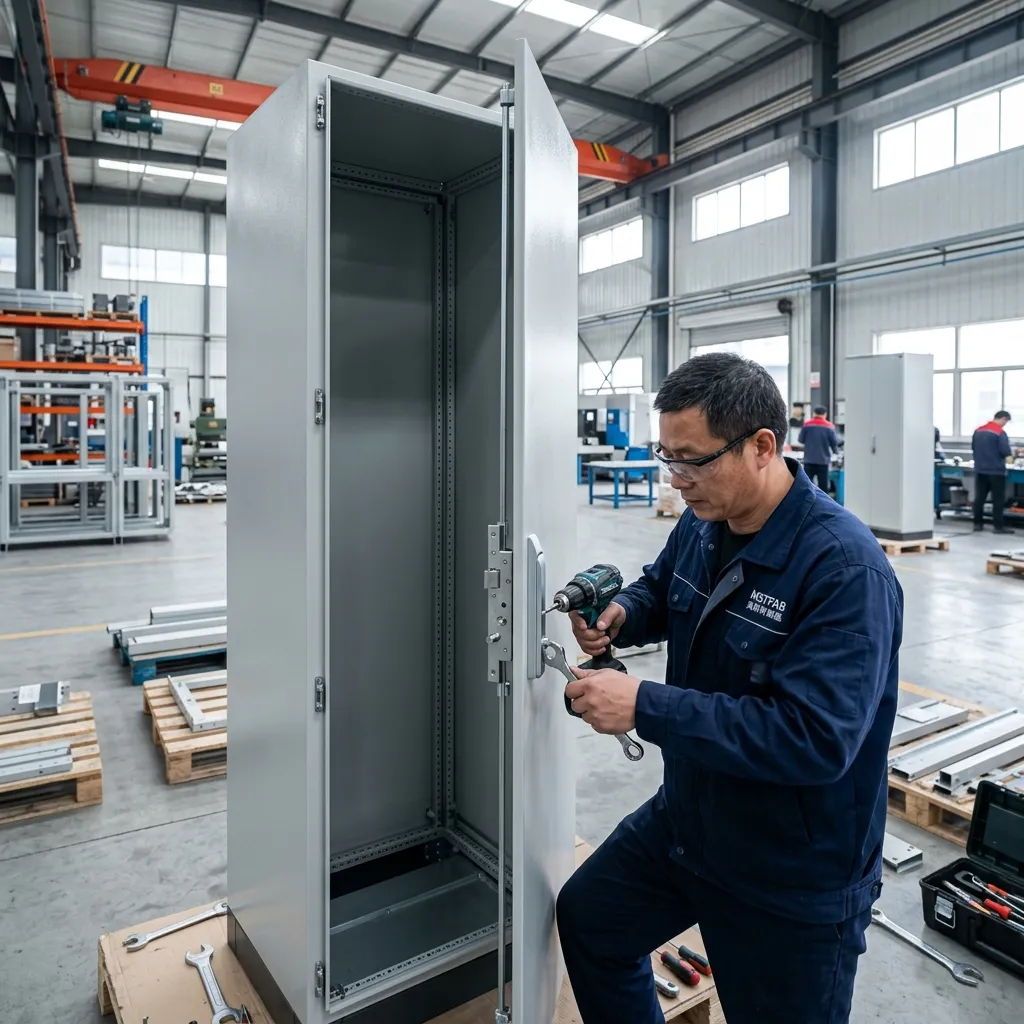
Separate Alignment From Seal Verification
Even gaps and smooth closure are useful checks, but they do not by themselves establish an environmental rating. If a gasket is included, define its profile, joint, retention, compression target, mating land and test responsibility for the completed configuration.
Buyer Trust Table
| Supplier statement | Evidence to request | Buyer value |
|---|---|---|
| “Door fits” | Finished-condition gap and diagonal record | Defines fit with measurements |
| “Hardware installed” | BOM check, function check and installation photos | Confirms identity and operation |
| “Gasket seals” | Specified gasket, compression plan and responsible test party | Separates geometry evidence from rating claims |
| “Ready to ship” | Door restraint, panel protection and packing photos | Protects alignment during transport |
Door and Hardware Fit-Up Checklist
- Cabinet support condition defined
- Frame datums and diagonals checked
- Gap locations and acceptance values shown
- Flushness and corner alignment checked
- Hinge axis and opening angle verified
- Latch and rod engagement confirmed
- Tool and maintenance access available
- Grounding hardware masked and accessible
- Gasket interface separately reviewed
- Door restrained for export packing

Frequently Asked Questions
Should the door gap be checked before or after powder coating?
Critical fit should be confirmed in the finished condition. Coating, hardware and final support can affect clearance or engagement.
Does an even door gap prove an IP or NEMA rating?
No. A rating depends on the applicable standard, completed configuration and verification. Door alignment is only one part of the seal system.
Does MSTFAB install electrical components?
No. MSTFAB supplies drawing-defined empty cabinet metalwork and specified mechanical hardware; electrical integration remains buyer-controlled.
Inspect the Door as a Finished Mechanical System
Send the cabinet drawing, hardware schedule, fit requirements, gasket details and inspection plan for review.
 WeChat Contact
 WhatsApp Me Directly