
Machine guard RFQ
A belt guard is more than a bent cover, but the fabricator cannot invent the machine risk assessment. The buyer must define the hazard envelope, access rules and required safety standard before metal is cut.
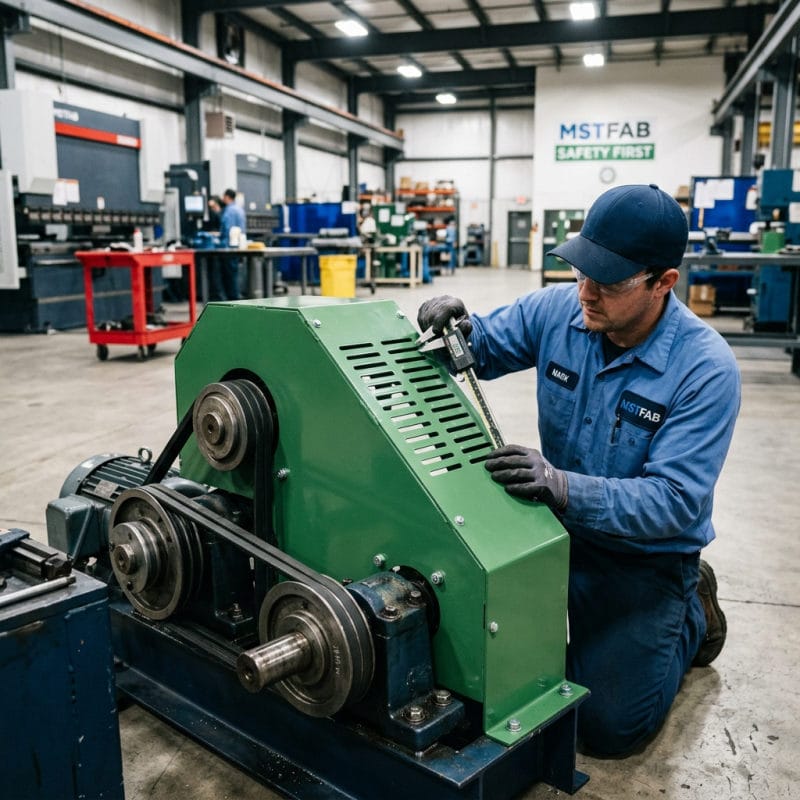
Define What the Guard Must Keep Apart
Show pulleys, belts, tension adjustment, expected movement, adjacent controls and the nearest operator or service space. Include the operating and maintenance states. A guard that clears the belt in one position may interfere after tensioning or block the tool needed for routine service.
Hazard envelope
Provide the maximum moving and adjustment envelope plus the required separation from openings and fixed surfaces.
Access condition
State who removes the guard, with which tool, and whether it remains attached, hinged or fully removable.
Mounting and retention
Locate brackets, studs, hinges, captive hardware and machine datums; identify loads or vibration inputs used by the design.
Heat and debris
Define ventilation, drain or cleanout needs without creating an opening that conflicts with the safety assessment.
Buyer Trust Table
| Control | Evidence | Ownership |
|---|---|---|
| Hazard and clearance envelope | Buyer-controlled model or drawing | Machine designer or buyer defines and approves |
| Fabricated geometry | First-article dimensions, fit and hardware check | Fabricator verifies against the released drawing |
| Finish and edge condition | Visual criteria, coating scope and edge inspection | Agreed in the PO and inspection plan |
| Machine safety validation | Risk assessment and validation record | Buyer, integrator or responsible machine builder |

Send a Guard Package That Can Be Checked
- Provide a 3D assembly context, not only an isolated guard model.
- Mark mounting datums, maximum component movement and keep-out zones.
- Specify sheet material, thickness, openings, finish and visible faces.
- Identify captive or tool-operated hardware and service sequence.
- List critical dimensions and the fit check required on the first article.
- Confirm who owns machine-level risk assessment and final validation.
MSTFAB fabricates drawing-defined sheet metal guards, brackets and mechanical assemblies. It does not determine whether a guard makes a machine compliant or safe for a particular use. That decision remains with the responsible designer, integrator and buyer.
Frequently Asked Questions
Can the fabricator design the safety clearance?
The fabricator can flag manufacturing conflicts, but the responsible machine designer must define and approve safety distances and the guarding concept.
Should a belt guard be ventilated?
Only when the thermal and debris requirements allow it and the opening pattern remains consistent with the buyer’s safety assessment.
What makes a useful first article?
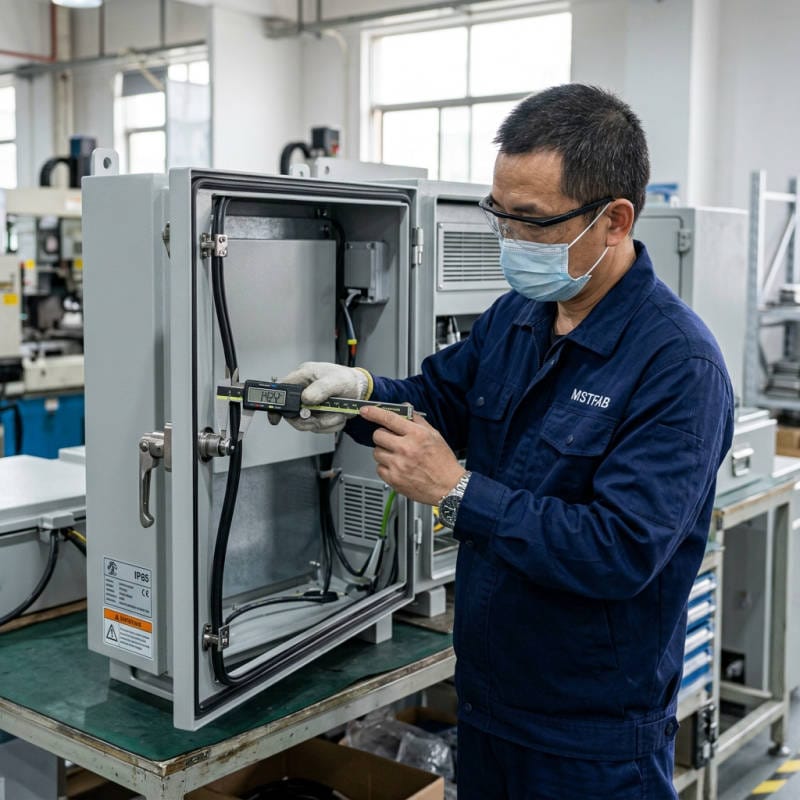
A representative guard with real mounting features, access hardware, finish and critical clearance dimensions, checked against the machine interface.
Review the Guard in Its Machine Context
Send the assembly model, hazard envelope, mounting datums and inspection points for a fabrication-focused review.
 WeChat Contact
 WhatsApp Me Directly