Custom Sheet Metal Stamping and Bending for OEM Parts
Custom sheet metal stamping and bending are used when buyers need formed metal parts with repeatable shapes, holes, flanges, ribs, tabs, brackets, panels, covers, or enclosure components. Stamping can create repeated features efficiently, and bending gives the part its final shape. MSTFAB provides custom sheet metal stamping and bending services for overseas OEM buyers who need drawing-based fabrication from STEP files, PDF drawings, DXF files, samples, or project specifications.
Together, they are often used for:
- Sheet metal brackets
- Mounting plates
- Equipment covers
- Enclosure panels
- Cabinet panels
- Machine guards
- Door panels
- Cable entry plates
- Ventilation panels
- Reinforced sheet metal parts
- OEM metal components
We support custom fabrication for:
- Electrical enclosure parts
- Industrial control cabinet parts
- Telecom cabinet panels
- EV charger enclosure parts
- Battery storage cabinet parts
- Machine guard components
- Belt guard components
- Metal covers
- Custom brackets
- Mounting plates
- Support plates
- Access panels
- Chassis parts
- Formed sheet metal parts
- Custom OEM sheet metal assemblies
Stamping is useful. But stamping is not always the first answer. For prototypes and low volume parts, laser cutting and CNC bending may be more practical because tooling cost can be avoided. For repeat production, stamped features can reduce cycle time, improve repeatability, and support lower unit cost. A good sheet metal supplier should not push one process blindly. The right process depends on the drawing, tolerance, quantity, material, feature type, and production plan. That is manufacturing, not guesswork.
What Are Sheet Metal Stamping and Bending Services?
Sheet metal stamping and bending services include forming flat sheet metal into custom parts through stamping, punching, pressing, forming, and CNC bending. The process may include:
- RFQ and drawing review
- DFM review
- Material and thickness confirmation
- Stamping feasibility and tooling requirement review
- Laser cutting or punching
- Hole forming, slot forming, embossing, louvers, formed tabs, and flanges
- CNC press brake bending
- Deburring and hardware insertion
- Welding and grinding, if required
- Powder coating or surface finishing
- Assembly checking, quality inspection, and export packaging
- Prototype, low volume, and batch production
Stamping and bending must be reviewed together. A stamped hole too close to a bend line may deform. A formed rib may affect bending sequence. A louver may interfere with tooling. A flange may block later forming. A tight bend radius may crack the material. CAD has no tooling collision. CAD has no springback. CAD has no burrs. CAD has no forming cracks. CAD has no angry assembly technician. Real manufacturing does. That is why DFM review matters before production starts.
When Does Sheet Metal Stamping Make Sense?
Stamping can make sense when a part has repeated features, higher quantities, or formed details that are better produced with tooling. Stamping may be suitable for repeated mounting holes, slots, louvers, embossed ribs, strengthening ribs, formed tabs, knockouts, countersunk or formed holes, repeated bracket shapes, repeated production panels, high-volume sheet metal parts, and parts requiring consistent formed features.
Stamping can help improve repeatability, production speed, feature consistency, unit cost in batch production, formed feature quality, and part-to-part consistency. But stamping often requires tooling. Tooling is not free. Tooling takes time. Tooling must match the drawing revision, and tooling changes cost money. If the design is still changing, hard tooling may become an expensive mistake. A sample made before the design is stable should not force the buyer into tooling too early. For early-stage projects, laser cutting and CNC bending may be better. For stable repeat production, stamping can become more attractive.
When Is Laser Cutting Better Than Stamping?
For some custom sheet metal projects, laser cutting is more practical than stamping. Laser cutting may be better when quantity is low, the design is still changing, the part is a prototype, multiple revisions are expected, tooling cost is not justified, cutouts are complex, the buyer needs fast sample production, the project has many different part numbers, or batch quantity is uncertain.
A custom laser cutting service is flexible because it does not require stamping tooling for the profile. That makes it useful for prototypes, low volume production, and custom OEM projects. However, laser cutting may not replace every stamping feature. Some formed details, louvers, ribs, or pressed shapes may still require tooling or secondary forming operations. Good fabrication review should compare the options. Not every hole needs a stamping tool, and not every production part should stay laser cut forever. The right answer depends on quantity, geometry, cost target, and production stability.
Custom Sheet Metal Parts We Stamp and Bend
Custom Brackets
Brackets are one of the most common sheet metal stamping and bending applications. We can support custom bracket fabrication such as L brackets, U brackets, Z brackets, mounting brackets, support brackets, reinforcement brackets, equipment brackets, wall brackets, machine brackets, and frame brackets. Bracket features may include stamped holes, slots, formed tabs, reinforcement ribs, CNC bends, welded nuts, rivet nuts, PEM hardware, and powder coating. A bracket with wrong holes is just an expensive drilling template—and nobody orders drilling templates by accident. Good bracket fabrication must control hole position, bend angle, material thickness, hardware fit, and batch repeatability.

Enclosure and Cabinet Panels
Custom enclosures and cabinets may include stamped and bent sheet metal panels. Common parts include door panels, side panels, rear panels, top covers, bottom plates, mounting plates, cable entry plates, ventilation panels, HMI panels, push button panels, and internal support plates. These parts may require stamped holes, slots, louvers, knockouts, formed flanges, bend lines, door returns, gasket contact surfaces, and hardware installation. For enclosures and cabinets, stamping and bending affect door fit, cable entry accuracy, internal mounting, grounding areas, and final assembly. An enclosure is not just a box. It is a group of sheet metal details that must fit together.
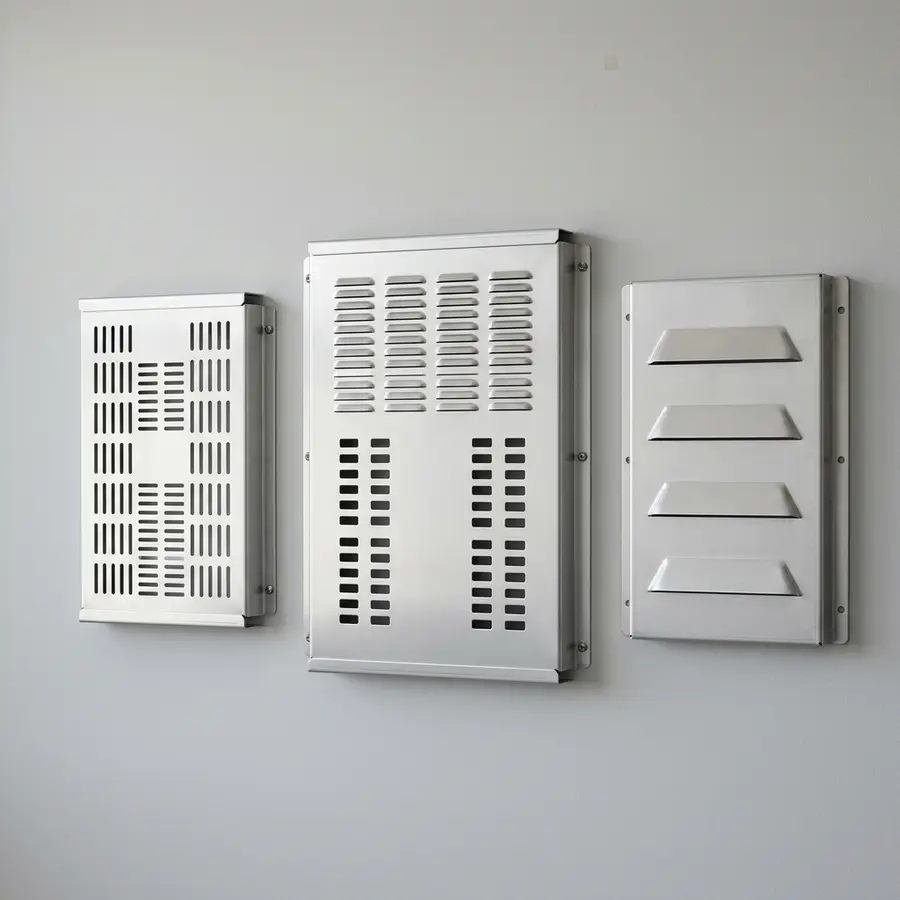
Machine Guards and Covers
Machine guards, belt guards, chain guards, motor covers, and equipment covers may require stamping and bending for ventilation, strength, and installation. Common features include ventilation holes, louvers, folded edges, reinforced flanges, mounting holes, access openings, safety edges, and powder coated surfaces. A guard that rubs the belt is not a guard—it is a problem with a nice finish. Good guard fabrication should consider clearance, mounting, edge safety, service access, and final fit.
MSTFAB manufactures physical sheet metal guards according to customer drawings and agreed specifications. Final machine safety compliance, safety distance, interlock design, and risk assessment should be confirmed by the customer or qualified engineering party.
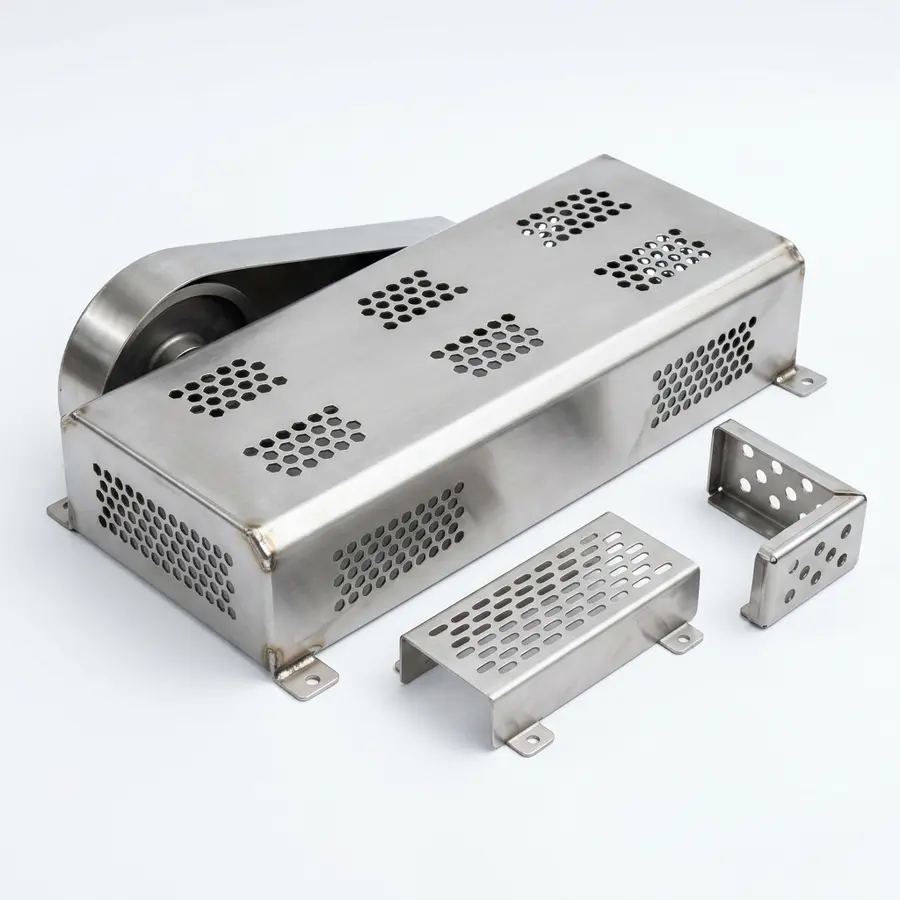
Mounting Plates and Internal Panels
Mounting plates are used inside electrical enclosures, control cabinets, telecom cabinets, EV charger enclosures, battery cabinets, and equipment housings. They may include stamped holes, slots, component mounting patterns, cable tie holes, DIN rail mounting holes, formed edges, and grounding areas. A mounting plate is not a hidden detail; it is the foundation of the internal assembly. Wrong holes create drilling. Wrong spacing creates wiring problems. Poor flatness creates component mounting issues. Coating in the wrong place creates grounding or assembly problems. A good mounting plate should make the buyer’s assembly easier, not slower.

Formed Sheet Metal Parts
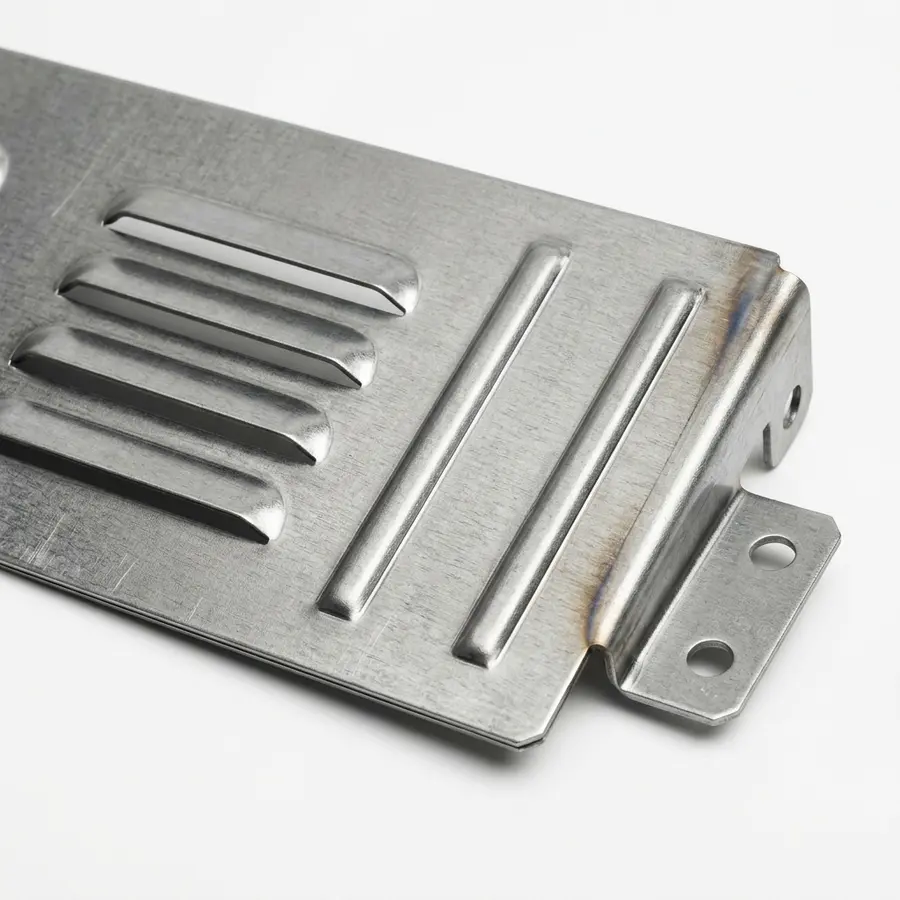
Some sheet metal parts need formed features beyond simple bending. These may include embossed ribs, strengthening ribs, louvers, flanged holes, formed tabs, knockouts, pressed shapes, return flanges, reinforcement forms, and local pressed areas. Formed features may improve stiffness, ventilation, location, mounting, or appearance. But formed features require manufacturing review. A formed rib near a bend may create tooling problems. A louver direction may affect airflow and rain exposure. A flanged hole may need enough material around it. A pressed feature may distort a visible panel. Hope is not a load-bearing feature. Good formed sheet metal design should be reviewed before production.
Materials for Sheet Metal Stamping and Bending
Carbon Steel
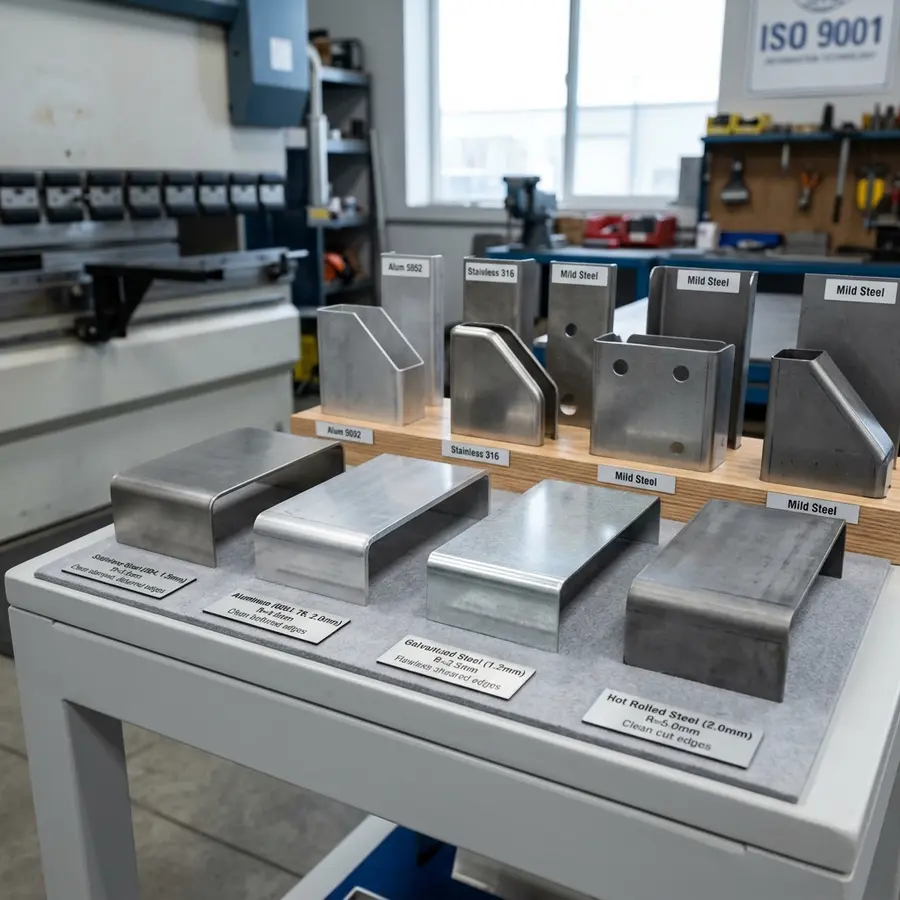
Carbon steel is commonly used for stamped and bent brackets, guards, cabinets, covers, frames, and industrial sheet metal parts. It is strong, cost-effective, and suitable for powder coating or painting. Carbon steel usually needs surface protection for outdoor, humid, or corrosive environments. Raw steel and outdoor weather are not friends; they are the beginning of a rust story.
Stainless Steel
Stainless steel is used when corrosion resistance, washdown use, clean appearance, or harsh environments matter. Common options include Stainless Steel 304 and Stainless Steel 316. Important review points include stamping feasibility, bend radius, springback, surface scratch protection, brushed grain direction, weld cleanup, and packaging protection. Stainless steel is corrosion-resistant, but it is not scratch-proof. Poor handling can make expensive stainless steel look cheap.
Aluminum
Aluminum is used when lightweight construction, corrosion resistance, and easier handling are important. Common options include Aluminum 5052, 6061, and 6063. Aluminum needs careful review for bend radius, cracking risk, surface scratches, formed feature feasibility, hardware insertion strength, powder coating pretreatment, and galvanic corrosion risk. Aluminum is not lightweight steel—it bends differently, scratches more easily, and can crack when the bend design is not suitable. CAD has no cracking sound; real forming does.
Galvanized Steel
Galvanized steel is often used for cabinet parts, internal mounting plates, brackets, cable entry plates, and semi-outdoor parts. Important review points include stamping edge condition, bend area coating condition, cut edge protection, weld zone protection, powder coating compatibility, and surface preparation. Galvanized steel is useful, but it is not magic; cut edges and formed areas still need attention.
Important Design Factors for Stamping and Bending
Material Thickness
Material thickness affects stamping force, bend radius, strength, stiffness, weight, cost, and tooling feasibility. Thicker material may improve strength, but it can increase forming force and bending difficulty. Thinner material may reduce weight, but it may need ribs, flanges, or formed features to improve stiffness. Strong but crooked is not engineering—it is a heavy problem. The right thickness should match the part function and manufacturing method.
Bend Radius
Bend radius affects part quality, cracking risk, final dimensions, and appearance. The correct bend radius depends on material type, sheet thickness, material temper, bend angle, tooling, surface requirement, and final part function. A bend radius that works for mild steel may not work for aluminum or stainless steel. Ignoring bend radius is how clean CAD becomes rejected parts.
Hole-to-Bend Distance
Hole-to-bend distance is critical for stamped and bent sheet metal parts. If holes, slots, louvers, or cutouts are too close to bend lines, they may deform during bending. This can affect mounting hole accuracy, slot shape, cable entry geometry, ventilation opening appearance, assembly alignment, and functional fit. A hole is not just a hole when it is near a bend; it becomes a negotiation with physics. Good DFM review helps prevent deformation before production starts.

Stamped Feature Location
Stamped features must be placed where tooling and forming can work. This matters for louvers, ribs, embossed features, knockouts, formed tabs, flanged holes, slots, and recessed features. A stamped feature too close to an edge, bend, weld, or another formed area may create distortion or tooling problems. The drawing may look clean, but the tool may disagree. Tooling needs space, and metal needs order.

Bend Sequence
Bend sequence affects whether the part can be formed correctly. It is especially important for box structures, enclosure bodies, U brackets, multi-bend parts, cabinet panels, folded covers, parts with stamped features, and parts with hardware inserts. A part may look easy in 3D. But if the bend sequence does not work, the press brake will not care about the CAD model. Good bending is not just force; it is controlled geometry.
Springback
Springback means the metal tries to return slightly after bending. Springback depends on material grade, sheet thickness, bend radius, bend angle, tooling, and material hardness. Springback is not a mistake; it is material behavior. A good sheet metal supplier understands that different materials need different forming control.
Stamping, Bending and Secondary Processes
Many stamped and bent sheet metal parts also require additional processes. MSTFAB can support additional fabrication steps according to customer drawings and project scope, including laser cutting, CNC bending, welding, spot welding, grinding, deburring, hardware insertion, rivet nuts, PEM nuts and studs, hinges, locks, handles, powder coating, stainless steel brushing, aluminum surface finishing review, assembly checking, inspection, and export packaging.
This is important because most OEM buyers do not only need a stamped blank. They need a usable part. A stamped bracket may need bending and powder coating. A cabinet panel may need louvers, bends, hardware, and coating. A guard may need ventilation holes, folded edges, and welding. An enclosure door may need hinges, lock holes, gasket surfaces, and finish protection. The process chain matters.
Powder Coating After Stamping and Bending
Many stamped and bent sheet metal parts require powder coating after fabrication. Powder coating is common for enclosures, cabinets, brackets, guards, covers, and frames. Important coating details include surface pretreatment, edge condition, weld cleanup, color or RAL code, gloss level, texture requirement, coating thickness, masking for holes, threads, and grounding points, and packaging after coating. Powder coating adds thickness, which affects assembly. A hole that is correct before coating may become tight after coating. A grounding point covered beautifully with powder coating is not useful—it is a decorative problem. Coating requirements should be reviewed before production, not after the parts are painted.
DFM Review for Custom Sheet Metal Stamping and Bending
DFM means Design for Manufacturability. For custom sheet metal stamping and bending projects, DFM review helps identify forming, tooling, bending, assembly, finishing, and batch repeatability risks before production starts. DFM is not paperwork; it is how buyers avoid turning a clean CAD model into an expensive stamped and bent metal argument. A design issue found before tooling is a drawing update; a design issue found after tooling is rework, delay, and cost. Tooling mistakes are not cheap. That is why drawing review matters before production starts.
Prototype, First Article, Low Volume and Batch Production
MSTFAB supports custom sheet metal stamping and bending for different project stages:
- Prototype Parts: Used for fit checking, design testing, customer samples, and engineering validation. For prototypes, laser cutting and CNC bending may sometimes be more practical than stamping tooling.
- First Article Parts: First articles help confirm material, dimensions, formed features, bend angles, surface finish, hardware fit, and packaging before batch production.
- Low Volume Production: Useful for pilot runs, trial orders, custom equipment projects, and early-stage OEM projects. For low volume parts, tooling cost should be reviewed carefully.
- Batch Production: Batch production is where stamping may become more attractive if the part design is stable and quantity supports tooling investment.
One good sample is useful. But the real goal is repeatability. The 200th part should still match the approved version. A sample made with heroic manual correction is not manufacturing; it is a magic trick, and magic tricks do not scale.
Quality Inspection for Stamped and Bent Sheet Metal Parts
Inspection should verify that stamped and bent sheet metal parts match drawings and agreed requirements. Typical inspection items include material confirmation, sheet thickness check, stamped feature dimensions, hole positions, slot dimensions, louver position, formed feature quality, bend angle, bend direction, final formed size, hole-to-bend areas, edge deburring, hardware position, welding fit, powder coating appearance, assembly fit, and packaging protection. For stamped and bent parts, extra attention should go to feature repeatability, bend angle consistency, hole distortion near bends, stamped feature distortion, critical mounting holes, visible surface protection, sharp edge removal, batch repeatability, and drawing revision consistency. Inspection is not paperwork; it is how the buyer avoids turning assembly into the final quality department. Quality should be checked before shipment, not discovered after arrival.
Export Packaging for Stamped and Bent Sheet Metal Parts
Stamped and bent sheet metal parts may need protective packaging, especially when parts are powder coated, stainless steel, aluminum, visible, or ready for assembly. Packaging should protect powder coated surfaces, stainless steel surfaces, aluminum surfaces, corners, edges, brackets, panels, covers, formed features, louvers, mounting holes, and finished parts during export shipping. Export packaging may include protective film, foam protection, corner protection, layer separation, pallets, wooden crates, moisture protection, batch labeling, and hardware protection. A perfect stamped and bent part that arrives scratched, bent, or chipped is no longer perfect—it is a customer complaint with forklift marks. For OEM equipment, appearance and arrival condition matter.
What to Send for a Stamping and Bending Quote
To quote accurately, please provide:
- 3D STEP file (helps show the formed part)
- 2D PDF drawing (defines material, thickness, tolerances, stamping notes, bend requirements, finish, and inspection standards)
- DXF or DWG files, when available
- Material grade and sheet thickness
- Required quantity (prototype quantity vs. future batch)
- Drawing revision number and critical dimensions
- Stamped feature details (hole and slot dimensions, louver direction, embossing or rib details)
- Bend angle requirements, bend direction information, bend radius requirement
- Tolerance requirements and hardware insertion requirement
- Welding requirement and surface finish requirement (powder coating color or RAL code, masking)
- Inspection requirement, packaging requirement, shipping destination, and target lead time
A good quote starts with clear drawings—not guesswork.
Manufacturing Scope and IP Protection
MSTFAB focuses on physical sheet metal fabrication, including stamping-related forming, CNC bending, and secondary fabrication according to customer drawings. We manufacture sheet metal parts according to customer drawings and agreed specifications. We do not design your electrical circuits, software, PLC programming, HMI software, control logic, charging modules, telecom equipment, battery systems, complete machines, or final control systems unless a separate engineering scope is agreed. This boundary protects your intellectual property and keeps the manufacturing scope clear. For example, we do not need your proprietary electrical circuit design, PLC logic, HMI interface design, control software, BMS logic, telecom system design, or complete machine operating principle unless those details directly affect sheet metal dimensions, mounting, clearance, ventilation, cable entry, or fabrication requirements. You bring the product design—we build the stamped and bent sheet metal parts that support it.
Why Choose MSTFAB for Custom Sheet Metal Stamping and Bending?
MSTFAB is a custom sheet metal fabrication manufacturer in Guangzhou, China, supporting overseas OEM buyers with drawing-based cutting, stamping-related forming, CNC bending, welding, finishing, inspection, and packaging.
- Drawing-Based Manufacturing: We work from STEP files, PDF drawings, DXF files, samples, and project specifications.
- Stamping and Bending Support: We support custom sheet metal parts with holes, slots, flanges, formed features, brackets, panels, covers, guards, enclosure parts, and cabinet parts.
- DFM Feedback Before Production: We review material, thickness, stamping feasibility, tooling requirement, bend radius, hole-to-bend clearance, feature location, assembly fit, coating impact, packaging, and batch repeatability.
- Prototype to Batch Production: We can support prototype parts, first articles, low volume production, pilot runs, and repeat batch manufacturing. For early-stage projects, we can review whether laser cutting and CNC bending are more practical before stamping tooling.
- Complete Sheet Metal Fabrication Chain: Beyond stamping and bending, we can support laser cutting, welding, grinding, deburring, hardware insertion, powder coating, stainless steel finishing, assembly checking, inspection, and export packaging according to project requirements.
- Confidentiality: We respect customer-owned drawings and product designs. Our manufacturing scope is physical sheet metal fabrication according to customer requirements.
A good sheet metal stamping and bending supplier should not only form metal. It should help buyers reduce tooling risk, forming problems, assembly risk, finishing issues, and batch production surprises. That is the value MSTFAB aims to provide.
Request Custom Sheet Metal Stamping and Bending Services
If you need custom sheet metal stamping and bending services for brackets, panels, covers, guards, mounting plates, enclosure parts, cabinet parts, formed components, or OEM sheet metal assemblies, send us your STEP, PDF, DXF, or DWG drawings.
MSTFAB can review the material, thickness, stamping feasibility, tooling requirement, bend radius, bend sequence, hole-to-bend distance, feature location, welding requirement, powder coating needs, inspection requirements, packaging, and production quantity.
A good stamped and bent sheet metal part should be formed correctly, fit correctly, finish correctly, and repeat correctly. That starts with clear drawings and practical manufacturing review.
Frequently Asked Questions (FAQ)
What are custom sheet metal stamping and bending services?
Custom sheet metal stamping and bending services include forming sheet metal parts through stamping, punching, pressing, forming, and CNC bending according to customer drawings and production requirements.
What parts can MSTFAB support for stamping and bending?
MSTFAB can support custom brackets, panels, covers, guards, mounting plates, enclosure parts, cabinet parts, formed sheet metal components, and OEM metal assemblies.
Is stamping suitable for prototypes?
Stamping may require tooling, so it is not always the best choice for prototypes. For early-stage projects, laser cutting and CNC bending may be more practical until the design is stable.
When does stamping make sense?
Stamping can make sense when the part has repeated features, stable drawings, higher production quantities, formed details, or batch requirements that justify tooling cost.
What materials can be stamped and bent?
Common materials include carbon steel, stainless steel 304, stainless steel 316, aluminum 5052, aluminum 6061, aluminum 6063, and galvanized steel. Material choice affects forming, bending, springback, surface finish, and tooling feasibility.
Why is hole-to-bend distance important?
If holes, slots, or stamped features are too close to bend lines, they may deform during bending. This can affect mounting accuracy, appearance, and assembly fit.
Can MSTFAB provide powder coating after stamping and bending?
Yes. MSTFAB can support powder coating, surface preparation, deburring, welding, hardware insertion, inspection, and export packaging according to the agreed project scope.
Can MSTFAB support prototype and batch production?
Yes. MSTFAB can support prototype parts, first articles, low volume production, pilot runs, and repeat batch manufacturing. The best process route depends on quantity, design stability, and tooling cost.
What affects the cost of sheet metal stamping and bending?
Cost is affected by material, thickness, part size, stamping features, tooling requirement, bend quantity, bend complexity, hardware insertion, welding, surface finishing, quantity, inspection, and packaging.
CNC sheet metal bending services
MSTFAB provides CNC press brake bending services for precision sheet metal parts, enclosures, brackets and OEM assemblies.
 WeChat Contact
 WhatsApp Me Directly