TIG vs MIG Welding for Sheet Metal Fabrication
TIG and MIG welding solve different sheet metal manufacturing problems. TIG gives better control for thin stainless steel, aluminum and visible cosmetic welds. MIG gives higher speed and deposition rate for carbon steel frames, internal brackets and structural assemblies.
This guide helps OEM buyers choose a welding process, write clearer RFQs and reduce distortion, grinding, leakage and cosmetic rework before production starts.
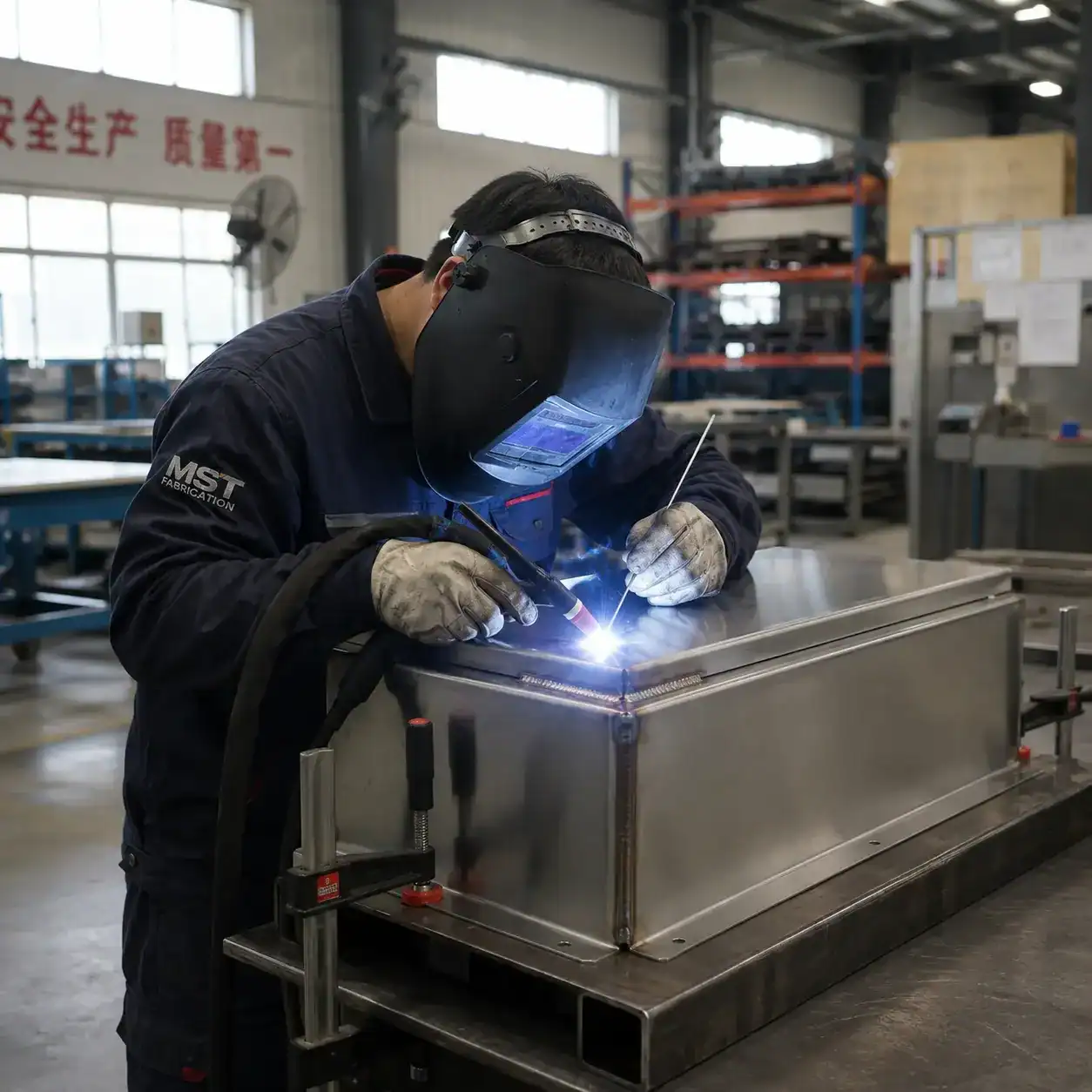
Quick Answer: Should You Choose TIG or MIG?
For sheet metal buyers, the best welding method depends on material, thickness, appearance, structural load, sealing requirement and production volume.
TIG vs MIG Welding Comparison for OEM Buyers
| Decision Factor | TIG Welding (GTAW) | MIG Welding (GMAW) | Buyer Recommendation |
|---|---|---|---|
| Best materials | Stainless steel, aluminum, thin carbon steel, visible panels. | Carbon steel, galvanized steel after weld-area prep, thick brackets and frames. | Match the welding method to substrate and finish requirement. |
| Sheet thickness | Better control on thin sheet, especially below 1.5 mm. | Better productivity on thicker sheet and structural sections. | Thin cosmetic parts usually favor TIG; thick internal structures usually favor MIG. |
| Appearance | Clean weld bead, lower spatter, less grinding when done correctly. | More spatter and larger bead; acceptable for hidden or ground welds. | Define visible surfaces and cosmetic class before quotation. |
| Speed and cost | Slower, higher operator skill, higher cost per weld length. | Faster, higher deposition rate, better for repeat production. | Use MIG where appearance is hidden and strength is the main target. |
| Distortion risk | Lower heat input and better puddle control, but still needs fixtures. | Higher heat and faster deposition can increase distortion on thin panels. | Ask for weld sequence, tack plan and fixture control on large panels. |
| Post-weld finishing | Less grinding for stainless and cosmetic parts. | Often needs grinding, spatter cleanup or coating after welding. | Include grinding and surface finishing requirements in the RFQ. |
Manufacturing Route for Welded Sheet Metal Assemblies
DFM and Joint Review
Review material, thickness, bend sequence, joint access, weld length, strength target and visible surfaces before quotation.
Fixture and Tack Plan
Plan clamps, tack weld locations, datum control and weld sequence to reduce heat distortion and assembly drift.
TIG or MIG Process Selection
Select TIG for cosmetic low-heat welds and MIG for structural or high-volume welds where deposition rate matters.
Weld Execution
Control wire, filler, current, travel speed, shielding gas and joint fit-up to reduce porosity, burn-through and spatter.
Grinding and Surface Prep
Define whether welds stay visible, are brushed, ground flush, sealed, powder coated or protected before assembly.
Inspection and Packing
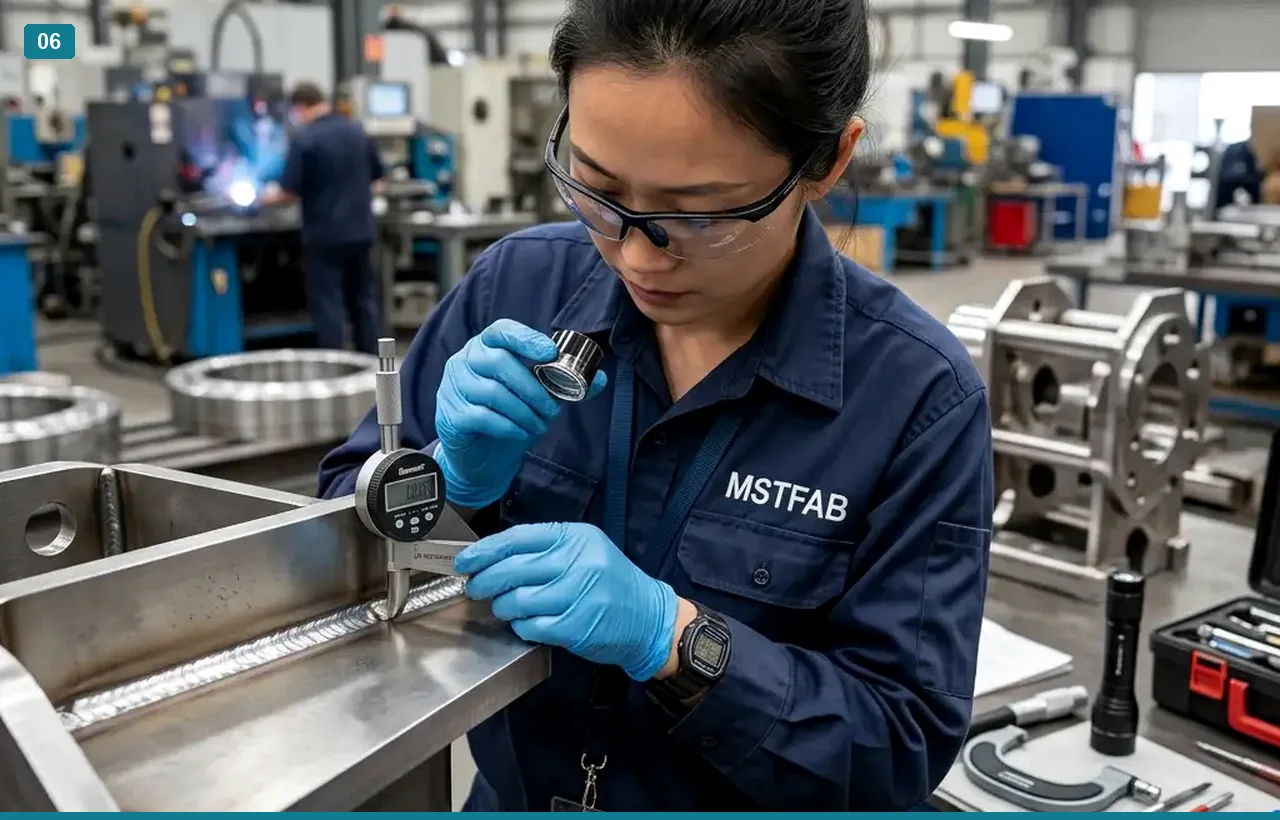
Check dimensions, flatness, weld continuity, cosmetic defects, sealing surfaces and finished-surface protection.
TIG and MIG Welding Process Images for Sheet Metal Buyers
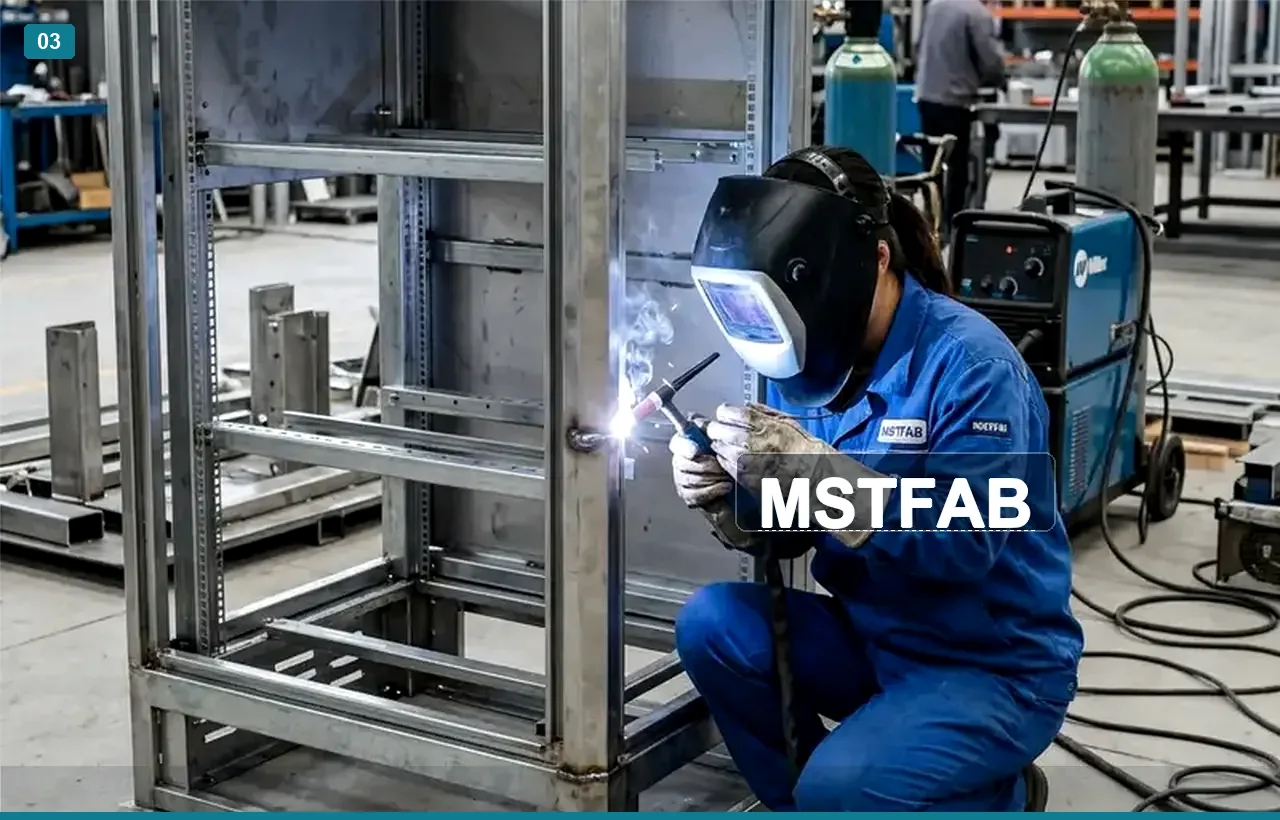
These MSTFAB process images show the practical checks behind welded sheet metal fabrication: visible TIG welds, sealed corners, MIG frame welding, fixture control, robotic welding, first article inspection, surface finishing and export packaging.






When MSTFAB Recommends TIG Welding
Best TIG Applications
- Visible stainless steel panels: clean weld beads and lower spatter reduce cosmetic rework.
- Medical and aesthetic equipment: thin covers, stainless housings and visible edges need controlled heat input.
- Aluminum enclosures: TIG provides better puddle control and cleaner weld appearance on suitable aluminum alloys.
- Sealed enclosure corners: continuous welds can support IP-style sealing when the drawing and inspection plan are clear.
TIG RFQ Notes
For TIG welded parts, send drawings that identify visible welds, allowed discoloration, grinding requirement, sealing surfaces, sheet thickness, filler material and whether the final finish is brushed, polished, passivated or powder coated.
For stainless assemblies, combine the welding requirement with the right surface finishing specification to avoid color mismatch, weld halos or scratch disputes.
When MSTFAB Recommends MIG Welding
Best MIG Applications
- Carbon steel frames: higher deposition rate supports structural chassis, bases and cabinet frames.
- Internal brackets: hidden welds can prioritize strength and speed over bead appearance.
- High-volume assemblies: MIG helps reduce unit cost when weld access and fixture control are repeatable.
- Powder coated parts: weld cleanup can be hidden after grinding, pretreatment and coating.
MIG RFQ Notes
MIG welding still needs clear requirements. Define weld size, weld length, whether the weld is intermittent or continuous, grinding level, spatter cleanup, strength target and coating requirements.
For heavy structures and frames, related DFM work often starts with laser cutting and CNC bending accuracy before welding begins.
Material and Thickness Selection Guide
| Material | Typical Welding Choice | Buyer Risk | Useful Internal Resource |
|---|---|---|---|
| Stainless steel 304 / 316 | TIG for visible welds; MIG may be used for hidden structural welds. | Heat tint, distortion, grinding marks, passivation and brushed grain mismatch. | Custom stainless steel enclosure fabrication |
| Aluminum | TIG for precision or cosmetic welds; MIG for suitable thicker production parts. | Oxide layer, porosity, alloy selection, distortion and finish mismatch after anodizing. | Custom aluminum metal parts |
| Carbon steel | MIG for frames and high-volume assemblies; TIG for small precision welds. | Spatter, coating buildup, grinding level, weld distortion and corrosion at weld seams. | Custom carbon steel parts |
| Galvanized steel | Usually requires weld-area preparation and post-weld corrosion protection. | Fume control, coating burn-off, weld quality and zinc repair after fabrication. | Galvanized steel metal parts |
RFQ Checklist for TIG and MIG Welded Sheet Metal Parts
To reduce quote delay and welding rework, include these details when sending drawings to MSTFAB:
- Material grade, sheet thickness and whether the weld is TIG, MIG or supplier-selected.
- Joint type, weld length, weld size, continuous or intermittent weld requirement.
- Visible surfaces, cosmetic weld class, grinding level and acceptable weld discoloration.
- Sealing requirement, IP target, leakage risk, gasket surfaces and corner weld details.
- Dimensional tolerance, flatness requirement, datum points and critical assembly interfaces.
- Post-weld finish: powder coating, brushing, passivation, polishing, plating or export protection.
- Inspection requirement: visual inspection, dimensional check, weld map, fixture check or buyer-specific report.
Internal Links for Welding and Sheet Metal Fabrication Buyers
Process guideWelded sheet metal fabrication servicesWelding process, fixtures, finishing and inspection for custom parts.
EnclosuresCustom sheet metal enclosure fabricationFabricated enclosures that may require seam welding, grinding and coating.
CabinetsMetal enclosure box fabricationControl boxes, electrical cabinets and industrial housings.
ApplicationMedical aesthetic equipment enclosuresThin, visible and cosmetic sheet metal housing requirements.
ApplicationTelecommunications enclosuresOutdoor cabinets, welded frames and finished enclosure assemblies.
FAQ: TIG vs MIG Welding for Sheet Metal
Is TIG or MIG better for sheet metal welding?
TIG is usually better for thin sheet metal, visible stainless steel welds, aluminum parts and cosmetic surfaces. MIG is usually better for thicker carbon steel, structural frames and internal welds.
When should OEM buyers specify TIG welding?
Specify TIG when weld appearance, low heat input, thin-gauge control, stainless steel cosmetics, aluminum weld cleanliness or sealed enclosure corners are more important than welding speed.
When should OEM buyers specify MIG welding?
Specify MIG for carbon steel frames, internal cabinet structures, thick brackets, high-volume production and welds that will be ground, hidden or powder coated after fabrication.
What welding details should be included in an RFQ?
Include material grade, thickness, joint type, weld length, cosmetic class, grinding requirement, sealing requirement, tolerance target, finish process, inspection requirement and quantity.
Need TIG or MIG Welding Review for Your Sheet Metal Assembly?
Send STEP, DWG, DXF or PDF files. MSTFAB can review weld process selection, distortion risk, fixture requirements, grinding level, finish compatibility and export packaging before quotation.
 WeChat Contact
 WhatsApp Me Directly