Metal fabrication is not just cutting and bending metal.
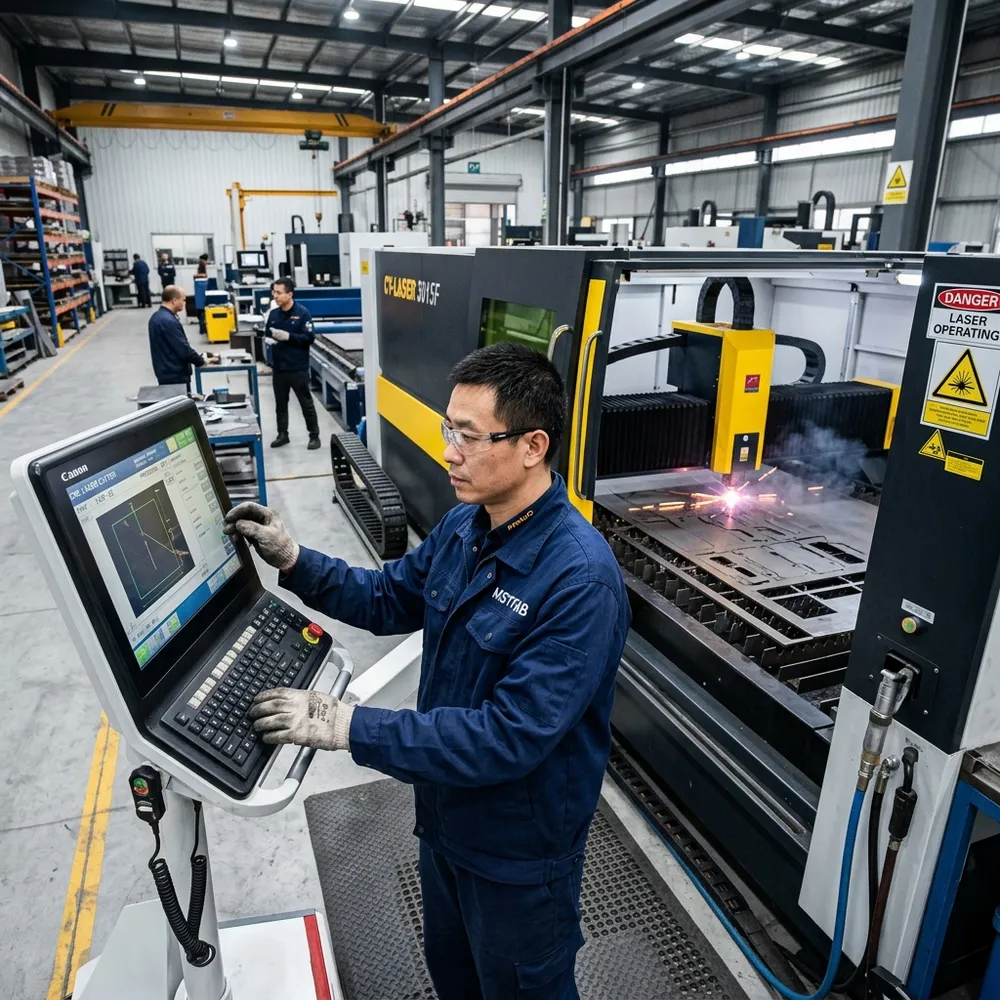
A low-quality metal part may look acceptable at first, but it can create problems later:
- Mounting holes do not align
- Doors do not close properly
- Panels warp after welding
- Coating fails too early
- Brackets are too weak for the load
- Cable entries are in the wrong position
- Assembly requires drilling or grinding
- Batch production does not match the approved sample
That is why custom metal fabrication should start with clear drawings, practical engineering review and controlled production.
MSTFAB provides custom metal fabrication services based on customer drawings, samples or project requirements. Our manufacturing process can include laser cutting, CNC bending, welding, surface finishing, hardware installation, mechanical assembly, inspection and DFM review.
Need production capability? This article focuses on sheet metal supplier evaluation scorecard. For manufacturing scope, process capability and drawing-based quotation support, review MSTFAB’s custom sheet metal fabrication services.
What We Manufacture
We support custom metal fabrication for physical metal structures and components, including:
- Sheet metal enclosures
- Electrical cabinets
- Telecom cabinets
- EV charger enclosures
- Battery storage cabinets
- Medical equipment housings
- Industrial control cabinets
- PLC and HMI enclosures
- Control station cabinets
- Metal brackets
- Metal chassis
- Mounting plates
- Custom metal panels
- Equipment covers
- Frames and structural parts
- OEM sheet metal components
Each part can be manufactured according to drawings, samples or project specifications.
Metal Fabrication Capabilities
Laser Cutting
Laser cutting is used to cut flat sheet metal into precise profiles, holes, slots, cable entries, ventilation openings, display cutouts and custom shapes.
It is commonly used for:
- Enclosure panels
- Cabinet doors
- Brackets
- Covers
- Mounting plates
- Chassis parts
- Front panels
- Industrial metal parts
Accurate laser cutting helps reduce rework and improves assembly fit.
CNC Sheet Metal Bending
CNC bending forms flat metal sheets into the required angles and structures.
It is used for:
- Cabinet bodies
- Doors and covers
- Brackets
- Chassis parts
- Mounting flanges
- Internal supports
- Equipment panels
Bending quality matters because even a small angle error can affect final assembly, door alignment, gasket compression and mounting accuracy.
Welding and Structural Assembly
Welding is used for reinforced frames, brackets, cabinet structures, bases, supports and custom metal assemblies.

Depending on the project, welding may include:
- TIG welding
- MIG welding
- Spot welding
- Full seam welding
- Local structural welding
Welding should be reviewed carefully because heat can affect flatness, alignment and final appearance.
Surface Finishing
Surface finish affects both appearance and service life.
Common finishing options include:
- Powder coating
- Wet painting
- Brushing
- Polishing
- Galvanizing
- Zinc plating
- Anodizing for aluminum
- Passivation for stainless steel
- Anti-corrosion coating
- Silkscreen printing or marking
For outdoor cabinets, telecom enclosures, EV charger housings and battery storage cabinets, corrosion resistance should be considered early in the design stage.
Hardware Installation
Custom fabricated metal parts often require installed hardware before shipment.
Hardware options may include:
- PEM nuts
- Threaded inserts
- Blind studs
- Standoffs
- Hinges
- Locks
- Handles
- Grounding studs
- Mounting plates
- Internal brackets
- Cable entry plates
- Sealing strips
Pre-installed hardware helps reduce assembly time and avoids drilling finished parts on the customer’s assembly floor.
Materials We Work With
Material selection affects strength, weight, corrosion resistance, cost, bending behavior, welding quality and surface finish.
Cold-Rolled Steel
Cold-rolled steel is commonly used for indoor cabinets, control boxes, machine covers, panels and powder-coated parts. It offers good strength and stable forming performance.
Galvanized Steel
Galvanized steel provides better corrosion resistance than standard cold-rolled steel. It is often used for electrical cabinets, telecom enclosures, power distribution cabinets and semi-outdoor applications.
Stainless Steel
Stainless steel is used when corrosion resistance, clean appearance or long-term durability is important. It is suitable for medical equipment, food equipment, outdoor structures, humid environments and industrial equipment.
Aluminum
Aluminum is lightweight and corrosion-resistant. It is commonly used for equipment housings, front panels, HMI enclosures, telecom parts, EV charger panels and lightweight metal structures.
Carbon Steel
Carbon steel is suitable for heavy-duty brackets, frames, supports, bases and structural metal parts. It may require powder coating, painting, galvanizing or zinc plating depending on the working environment.
Metal Fabrication Material Comparison Table
| Material | Strength & Rigidity | Corrosion Resistance | Typical Fabrication Uses |
|---|---|---|---|
| Cold-Rolled Steel | High | Low (needs powder coating) | Indoor cabinets, brackets, chassis |
| Galvanized Steel | High | Medium | Telecom, semi-outdoor enclosures |
| Stainless Steel | Very High | Excellent | Medical, marine, food equipment |
| Aluminum | Medium | High | HMI panels, EV chargers, covers |
| Carbon Steel | Very High | Low | Heavy-duty framing, machine bases |
Why DFM Review Matters
A 3D model can look perfect on screen and still create problems in production.
Metal has thickness. It bends. It stretches. It springs back. It warps during welding. Surface coating adds thickness. Hardware needs installation space. Packaging must protect the final finish.
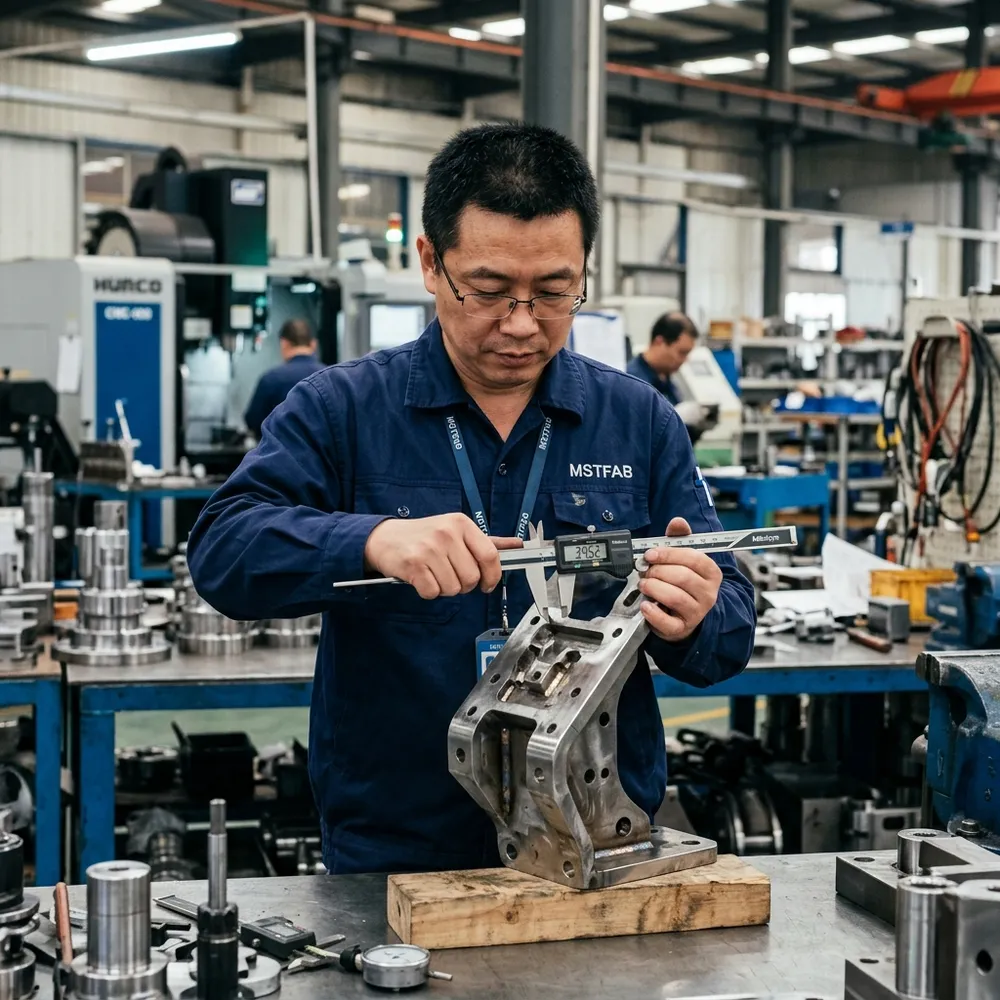
A Design for Manufacturability review helps identify these issues before production begins.
DFM review may check:
- Material selection
- Sheet thickness
- Bend radius
- Hole-to-bend clearance
- Welding structure
- Hardware position
- Surface finish risk
- Door and hinge alignment
- Gasket contact surfaces
- Assembly sequence
- Packaging protection
A design issue found before production is a small engineering correction. A design issue found after production is usually a much more expensive problem.
Prototype to Batch Production
Custom metal fabrication projects often begin with prototype or first-article production.
A prototype helps confirm:
- Dimensions
- Hole alignment
- Bend angles
- Assembly fit
- Surface finish
- Welding quality
- Hardware installation
- Packaging method
After approval, batch production can be arranged with controlled cutting, bending, welding, finishing, inspection and packaging.
For OEM buyers, consistency is critical. The final batch should match the approved drawing and sample.
Applications of Metal Fabrication
Electrical Equipment
Custom metal fabrication is used for electrical enclosures, control cabinets, mounting plates, cable entry plates and internal brackets.
Telecom and Network Equipment
Telecom systems require cabinets, panels, ventilation parts, cable management structures, brackets, rails and outdoor enclosure parts.
EV Charging Equipment
EV charger cabinets may need display openings, cable holder brackets, ventilation parts, reinforced bases and service doors.
Medical and Aesthetic Equipment
Medical equipment housings require clean appearance, accurate panel fit, smooth edges, corrosion-resistant materials and controlled finishing.
Industrial Automation
Industrial equipment may require PLC enclosures, HMI housings, control station cabinets, brackets, frames, chassis and machine covers.
Battery Storage and Energy Systems
Battery storage cabinets and power equipment require reinforced structures, ventilation parts, cable routing, outdoor protection and reliable surface finishing.
Quality Control
Metal fabrication quality affects final assembly and product reliability.
Typical inspection items include:
- Material confirmation
- Sheet thickness check
- Laser cutting dimension inspection
- Hole position inspection
- Bend angle inspection
- Flatness inspection
- Welding quality inspection
- Surface finish inspection
- Hardware installation check
- Assembly fit check
- Packaging inspection
For OEM projects, first-article inspection can be arranged before batch production.
Clear Manufacturing Scope
MSTFAB focuses on custom metal fabrication and sheet metal structure manufacturing.
We manufacture physical metal parts and structures, including enclosures, cabinets, chassis, brackets, panels, frames, covers and OEM metal components.
We do not require customer software, internal circuit design, protected electronic schematics, source code or proprietary system logic.
Our scope is the physical metal part or structure based on customer drawings and project requirements.
This keeps the project boundary clear and helps protect customer intellectual property.
What to Send for a Metal Fabrication Quote
To quote your custom metal fabrication project accurately, please provide:
- 3D STEP file
- 2D PDF drawing
- Material requirement
- Thickness
- Quantity
- Surface finish
- Tolerance requirements
- Bending requirements
- Welding requirements
- Hardware requirements
- Application environment
- Packaging or shipping requirements
If drawings are not available yet, samples, reference photos and key dimensions can help with early evaluation.
For production orders, clear drawings are strongly recommended.
Request a Metal Fabrication Quote
If you need custom metal enclosures, cabinets, brackets, chassis, panels, frames or OEM metal parts, send us your drawings or project requirements.
Our engineering team will review the design, check manufacturability and provide a practical quotation based on material, structure, finish, quantity and production requirements.
A good fabricated metal part should fit correctly, support assembly, protect the equipment and perform reliably in real use.
That starts with practical engineering review and controlled metal fabrication.
Request a Metal Fabrication Quote
Need precision metal fabrication for your OEM project? Send us your CAD drawings for an engineering review and direct factory pricing.
Frequently Asked Questions
What is metal fabrication?
Metal fabrication is the process of cutting, bending, welding, finishing and assembling metal parts or structures according to drawings or project requirements.
What types of metal parts can be fabricated?
Common fabricated parts include enclosures, cabinets, panels, brackets, chassis, frames, covers, mounting plates and OEM sheet metal components.
What materials can be used for metal fabrication?
Common materials include cold-rolled steel, galvanized steel, stainless steel, aluminum, carbon steel, brass and copper depending on the application.
Can metal parts be made according to drawings?
Yes. Custom metal parts can be fabricated based on 3D STEP files, 2D PDF drawings, CAD files, samples or reference photos.
Do you support prototype production?
Yes. Prototype or first-article production can be supported before batch manufacturing.
What surface finishes are available?
Common options include powder coating, painting, brushing, polishing, galvanizing, zinc plating, anodizing, passivation and anti-corrosion coating.
Why is DFM review important?
DFM review helps identify material, bending, welding, hole clearance, hardware, finish and assembly risks before production, reducing rework and improving production consistency.
custom sheet metal enclosure fabrication
MSTFAB manufactures custom sheet metal enclosures, electrical cabinets, control boxes and industrial metal housings for OEM buyers.
 WeChat Contact
 WhatsApp Me Directly