By: Frank, General Manager
Technical Review: Michael Chen, Quality Manager
Last Updated: July 5, 2026
An aluminum enclosure is not simply a lightweight metal box.
It may protect electrical components, displays, controls, batteries, sensors, communication devices, industrial equipment, charging systems, or mechanical assemblies. It may need doors, hinges, locks, mounting plates, cable-entry openings, ventilation patterns, grounding points, visible surfaces, and export-ready protective packing.
That is why buyers need a custom metal parts manufacturer for aluminum enclosures, not only a supplier that can laser cut aluminum sheet.
The real requirement is a controlled enclosure fabrication route:
Material review → laser cutting → CNC bending → welding or assembly → hardware installation → surface finishing → inspection → protective packing.
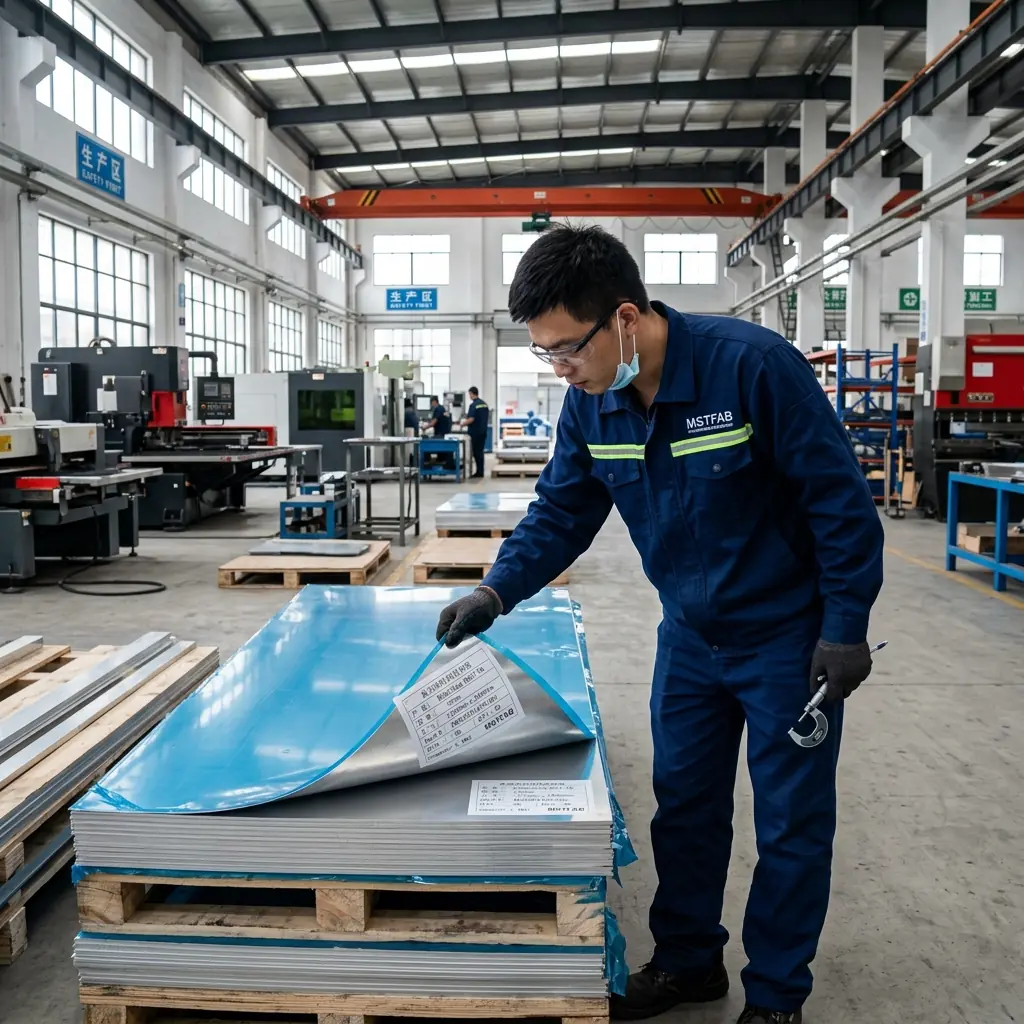
MSTFAB supports drawing-based aluminum enclosure fabrication for OEM equipment, including cabinet bodies, covers, doors, mounting plates, cable-entry panels, HMI panels, ventilation covers, chassis sections, brackets, equipment housings, and multi-part enclosure assemblies.
The objective is straightforward:
Deliver aluminum enclosures that fit the intended equipment, support the required hardware, maintain finish quality, and arrive ready for the buyer’s next assembly stage.
For general fabrication capability, visit aluminum sheet metal manufacturing services.
What Is a Custom Aluminum Enclosure?
A custom aluminum enclosure is a fabricated housing made around the buyer’s drawing, CAD model, dimensions, equipment layout, mounting requirements, surface-finish standard, and operating environment.
It may include:
- Enclosure body panels
- Doors and access covers
- Mounting plates
- HMI or display openings
- Cable-entry plates
- Ventilation panels and connector cutouts
- Hinges, handles, locks and latches
- Grounding points
- PEM nuts, rivet nuts, and threaded inserts
- Brackets and hardware kits
- Foam-separated export packing
Typical aluminum enclosure applications include electrical control enclosures, telecom equipment housings, battery-system covers, EV charging equipment enclosures, industrial control boxes, electronics housings, HMI cabinets, and network-device enclosures.
The enclosure should not only look correct when empty. It should fit the parts, fasteners, wiring space, mounting layout, doors, seals, cable entries, and service requirements that come later.
Why Aluminum Enclosures Need a Dedicated Manufacturing Route
Aluminum is commonly selected because it can support lighter equipment, corrosion resistance, cleaner visible surfaces, easier handling, and flexible finish options. However, aluminum enclosures also require practical manufacturing control.
Potential issues include bend cracking, visible tool marks, surface scratches, door-gap variation, hardware interference, welding distortion, grounding contact loss after coating, thread damage, and damage during export transport.
A cabinet door may fit as bare metal but become too tight after coating. A cable-entry panel may have the correct cutout but interfere with connectors after bending. A lightweight enclosure may look good but flex too much without return bends or reinforcement features.
The useful question is not only: “Can this enclosure be made from aluminum?”
The better question is: “Can this aluminum enclosure be fabricated, assembled, finished, inspected, and packed for the equipment it must protect?”
Aluminum Grade and Temper Must Be Confirmed Early
“Aluminum” is not enough information for a production-ready enclosure quotation. The grade, temper, thickness, bend geometry, finish route, and application environment can all affect the final result. For many enclosure projects, buyers may specify materials such as 5052 or 6061, depending on the required fabrication route.
Before quotation, clarify the aluminum grade, temper, material thickness, indoor or outdoor application, corrosion exposure, visible-surface requirement, and hardware requirement. The manufacturer reviews whether the selected material can be cut, bent, welded, finished, inspected, and packed according to the drawing.
Start With a Complete Aluminum Enclosure RFQ
A useful RFQ should define the finished enclosure, not only the flat cutting pattern. For an accurate quotation, provide the STEP or STP assembly file, PDF enclosure drawing, DXF or DWG cutting files, material thickness, and hardware list.
A STEP file helps show the finished enclosure and its internal relationships. A PDF drawing controls dimensions, tolerances, finish notes, and inspection requirements. Together, these files reduce assumptions before fabrication begins.
DFM Review for Aluminum Enclosures
DFM means Design for Manufacturing. For aluminum enclosure projects, DFM review identifies practical risks before cutting, bending, welding, finishing, inspection, or packing begins.
A DFM review may consider aluminum grade and temper, material thickness, panel stiffness, hole-to-bend clearance, bend radius, tooling access, bend sequence, door-gap requirements, hinge and lock locations, and cable-entry positions.
For example, a large cutout may weaken a panel and require a return bend or reinforcement. A cable-entry feature may need more clearance around a connector. A grounding point may need masking to preserve metal-to-metal contact.
Laser Cutting for Aluminum Enclosure Panels
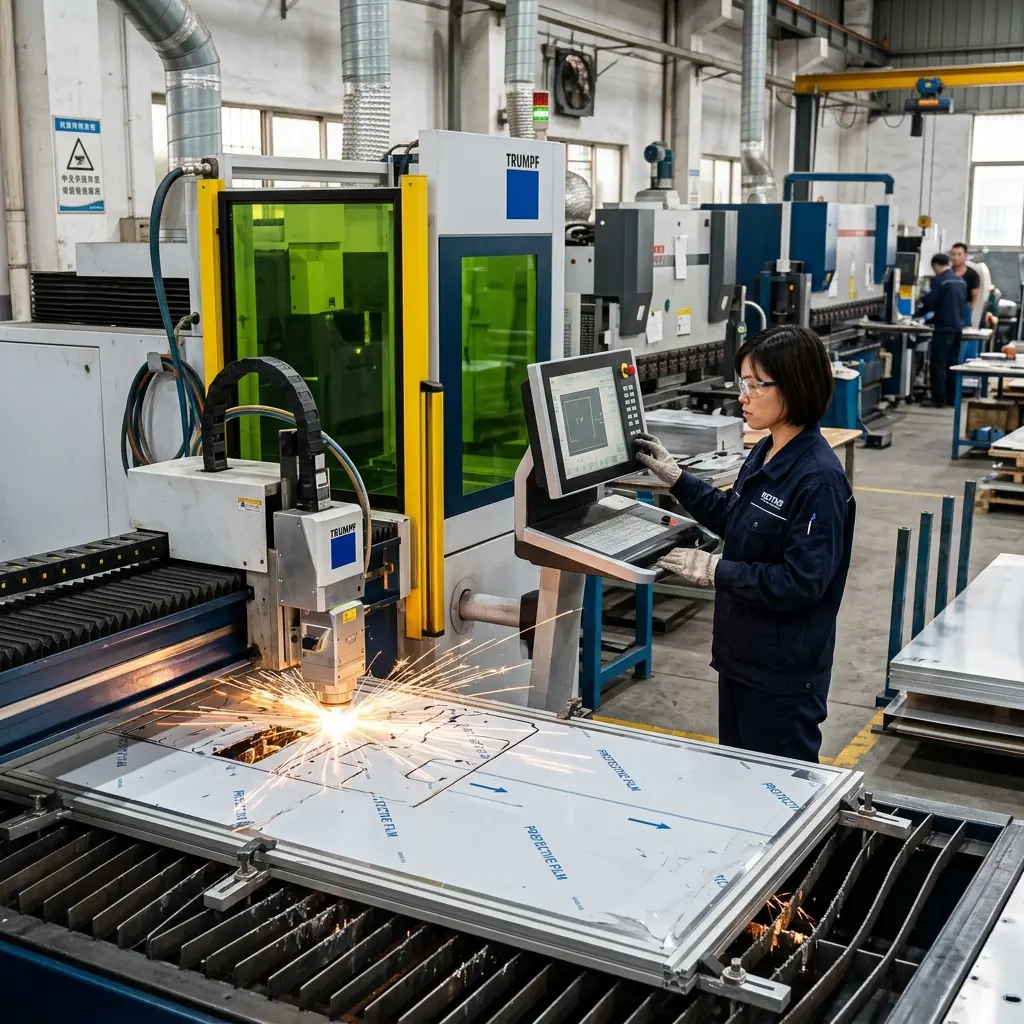
Laser cutting creates the flat parts used for cabinet bodies, doors, covers, mounting plates, cable-entry panels, ventilation panels, HMI panels, brackets, and chassis components.
The cut geometry should support the finished enclosure. A locating tab can support welding alignment. A slot can allow controlled installation adjustment. A bend relief can reduce stress at formed corners. A cable-entry cutout must remain usable after bending.
CNC Bending Creates Enclosure Geometry
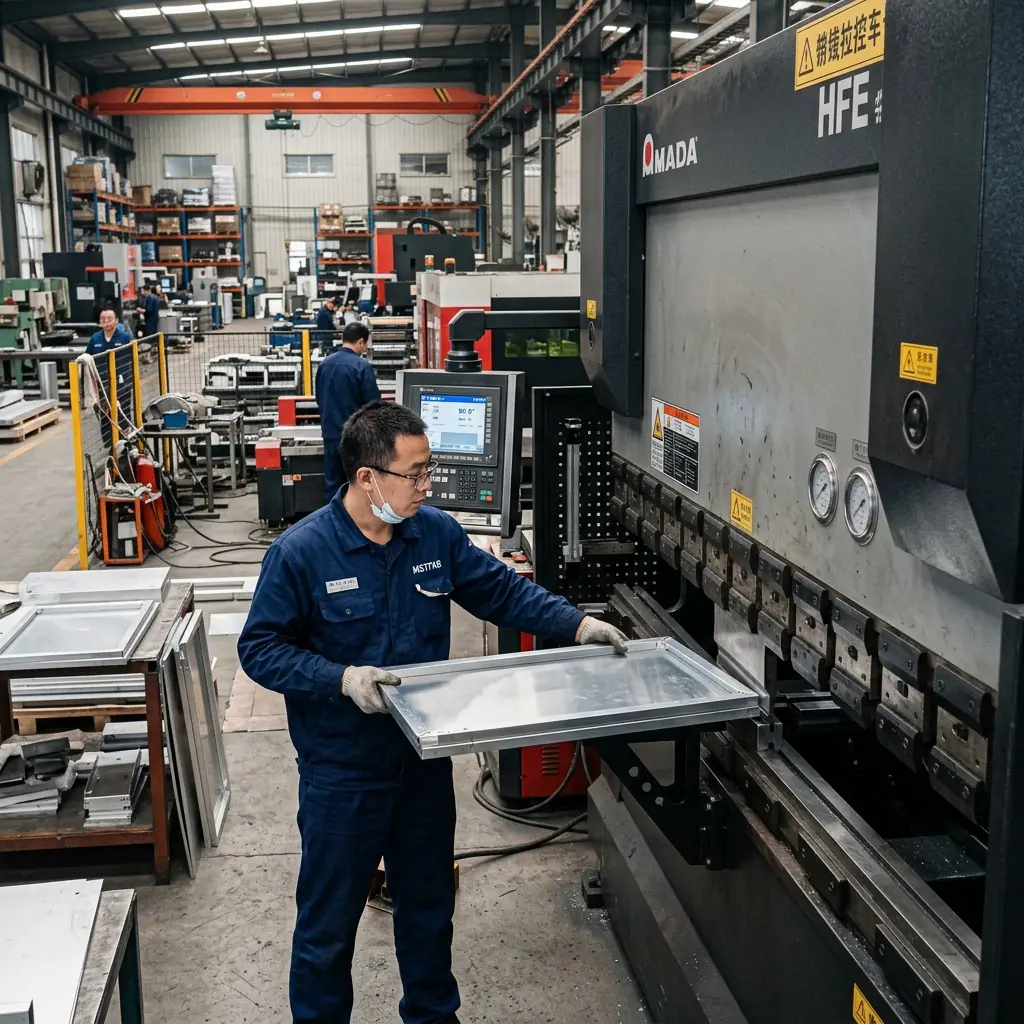
CNC bending transforms flat aluminum blanks into cabinet bodies, enclosure doors, covers, trays, channels, chassis sections, brackets, and reinforcement features. The final geometry can be affected by alloy, temper, material thickness, bend radius, tooling, bend sequence, and springback.
A flat part can be correct before bending and still create problems after forming. A bend might crack because the radius is too tight for the selected material condition. A door might become too narrow or too wide for its frame. A flange might block screwdriver access.
Aluminum Enclosure Welding and Assembly
Some aluminum enclosures are made mainly from bent panels and hardware. Others require welding to form frames, structural sections, welded housings, support structures, or multi-part assemblies.
Welding adds strength. It also introduces heat, which can affect flatness, squareness, door gaps, panel alignment, hole position, and surface appearance. Before welding begins, clarify the weld location, cosmetic weld requirements, fixture requirements, and critical post-weld dimensions.
A welded aluminum enclosure should not only be structurally sound. It should remain compatible with its door, mounting plate, cable-entry panel, hardware, finish, and final assembly stage.
Doors, Hinges, Locks, and Service Access
An enclosure door is not only a bent aluminum panel. It is part of a mechanical system that may involve hinges, handles, locks, latches, gaskets, grounding straps, viewing windows, and service-access requirements.
Before production, define the door opening direction, hinge type and position, handle and lock type, latch engagement, door gaps, gasket-contact area, and grounding arrangement. A door may look aligned before coating and still bind after finishing, hardware installation, or gasket compression.
Hardware, Threads, and Grounding Points
Many aluminum enclosures are incomplete until hardware is installed. Typical hardware includes PEM nuts, rivet nuts, threaded inserts, hinges, locks, latches, grounding studs, and captive fasteners.
Hardware should be planned before the fabrication route is finalized. A PEM nut may need installation before powder coating. A thread may need masking before finishing. A grounding point may require bare aluminum contact. Loose hardware may need labeled kit bags for the buyer’s final assembly.
Aluminum Enclosure Surface Finishing
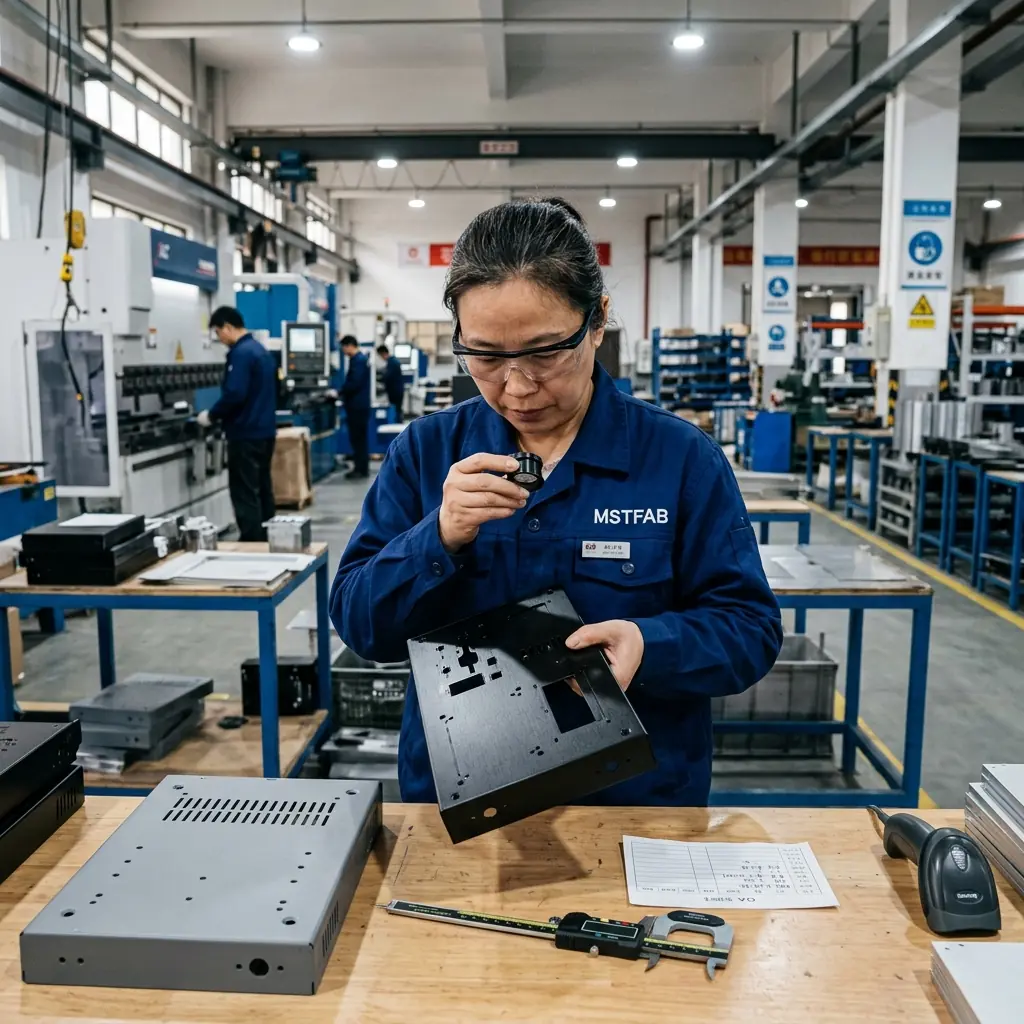
Surface finish affects corrosion resistance, visible appearance, scratch resistance, grounding, thread function, gasket surfaces, door fit, and packaging requirements. Common finish routes include powder coating, wet painting, anodizing, brushing, sandblasting, and protective film.
Powder Coating: Before powder coating, define the color reference, texture, gloss level, visible surfaces, thread masking, grounding areas, and gasket surfaces.
Anodizing: Anodizing may be suitable where the project requires a metallic appearance or controlled aluminum finish. Define the aluminum alloy, visible-face requirement, and surface-preparation requirement.
A finish should support the finished enclosure, not only improve its appearance in a sample photo. For finish planning, visit surface treatment services for sheet metal parts.
Aluminum Enclosures and IP or NEMA Requirements
Aluminum material alone does not make an enclosure IP-rated, weatherproof, or NEMA-rated. Final enclosure performance can also depend on door and cover geometry, gasket design, latch pressure, cable-entry design, seam construction, ventilation features, drainage details, and mounting orientation.
For a required IP or NEMA target, include the required rating and technical expectations in the RFQ. The buyer should define the applicable product requirements for seams, gaskets, cable entries, doors, and access panels.
For material-neutral electrical enclosure projects, see custom electrical enclosure fabrication. For projects focused primarily on external aesthetic housings rather than fully sealed cabinets, see aluminum equipment shells and housings.
Inspection for Aluminum Enclosures

Inspection should focus on the features that affect enclosure fit, function, visible quality, hardware operation, and delivery.
Depending on the project, checks may include aluminum grade and thickness, overall enclosure dimensions, door gaps, mounting-hole positions, bend angles, flatness, squareness, hardware type and location, thread function, hinge movement, lock engagement, and grounding-point accessibility.
Not every feature needs equal inspection priority. A hidden internal flange may not be as critical as a door gap, a mounting pattern, a cable-entry opening, a hinge location, a gasket surface, or a visible front panel.
Prototype, Pilot, and Repeat Aluminum Enclosure Production
Prototype Enclosures: Prototype builds help validate material selection, cabinet dimensions, door fit, hinge alignment, lock and latch operation, mounting plate position, cable-entry locations, and hardware access.
Pilot Production: Pilot production helps confirm repeatable bending, door-gap consistency, hardware installation, finish quality, inspection points, and packaging layout.
Repeat Production: Repeat orders should follow controlled records for the enclosure part number, drawing revision, aluminum grade and temper, bend sequence, welding requirements, surface-finish standard, and packaging method. A repeat order should rely on approved records, not only earlier samples.
Packaging for Aluminum Enclosures

An aluminum enclosure can pass inspection and still arrive damaged if packing does not protect visible faces, doors, corners, hardware, and internal components.
This is especially important for anodized covers, powder-coated cabinet doors, large enclosure bodies, visible HMI panels, and welded aluminum frames.
Packaging may include protective film, foam separation, edge guards, individual wrapping, labeled hardware bags, pallets, and solid wooden crates. A visible aluminum door should not rub against another panel during transport. A welded frame should be supported to reduce shifting during export delivery.
How to Compare Aluminum Enclosure Manufacturers
Do not compare enclosure suppliers only by cabinet size, material price, or a single unit cost. Compare whether they can control the full enclosure route.
| What to Compare | What Buyers Should Confirm |
|---|---|
| Material Review | Alloy, temper, thickness, visible-surface and application requirements |
| DFM Review | Door gaps, bends, cable entries, mounting interfaces, hardware and service access |
| Laser Cutting | Cutouts, holes, vents, HMI openings, hinge locations and edge condition |
| CNC Bending | Cabinet geometry, flange dimensions, door fit, flatness and squareness |
| Welding | Fixture planning, distortion control, cleanup and final alignment |
| Hardware | Hinges, locks, latches, threads, grounding studs and hardware kits |
| Surface Finish | Powder coating, anodizing, masking, visible-face standard and protection |
| Inspection | Door fit, gaps, hardware function, finish condition and assembly checks |
| Packaging | Film, foam, labels, corner protection, pallets or crates |
| Repeat Orders | Revision control, approved samples, finish standards and packing records |
A low quote may cover basic laser cutting and bending. Another quote may include DFM review, hardware integration, welding, finishing, inspection, labeled packing, and export preparation. Those are not the same delivery scope.
Frequently Asked Questions
What aluminum enclosure parts can be custom manufactured?
Custom aluminum enclosure projects can include cabinet bodies, doors, covers, mounting plates, cable-entry panels, ventilation panels, HMI panels, chassis sections, brackets, hardware-installed components, machine guards, welded frames, and multi-part assemblies.
Can aluminum enclosures include doors, hinges, locks, and mounting plates?
Yes. Suitable projects can include doors, hinges, locks, latches, handles, internal mounting plates, grounding points, hardware kits, and mechanical assembly checks when they are defined in the project drawings.
Does aluminum automatically make an enclosure IP-rated or NEMA-rated?
No. Material alone does not establish an IP or NEMA rating. Seams, doors, gaskets, latches, cable entries, mounting orientation, ventilation, assembly method, and product-level validation all affect enclosure performance.
Can anodized or powder-coated aluminum enclosures be protected during shipping?
Yes. Depending on the enclosure geometry and finish, protective film, foam separation, edge protection, wrapping, cartons, pallets, or wooden crates can be used to reduce transit damage.
Related Procurement Guides
- Custom Stainless Steel Enclosure Fabrication
- Quality Control for Sheet Metal Fabrication
- How to Get an Accurate Sheet Metal Fabrication Quote
Request Custom Aluminum Enclosures
A reliable aluminum enclosure manufacturer should do more than cut and bend sheet.
They should help ensure the enclosure fits the intended equipment, supports the required doors and hardware, protects visible surfaces, allows practical assembly, passes relevant inspection, and arrives protected.
Send your enclosure drawings, aluminum grade, material thickness, quantity, hardware list, finish requirements, assembly details, inspection requirements, and packaging expectations through the MSTFAB quotation page.
Because an aluminum enclosure is successful only when it protects the equipment inside and makes the next stage of your product easier to build.
 WeChat Contact
 WhatsApp Me Directly