Low Volume Laser Cutting Services
Small-batch sheet metal orders sound simple until the quote gets weird. One supplier ignores the job because the quantity is too low. Another says yes to everything, then discovers after cutting that the bend line eats a hole, the finish masks the threads, or the parts need packaging that was never priced. Lovely. Very relaxing.
Quick answer: low volume laser cutting is best for OEM buyers who need pilot runs, bridge production, replacement parts, or repeat small batches of custom sheet metal parts. The safest supplier is not the one who only quotes a low unit price. It is the one who checks drawings, material, tolerances, bending, hardware, finish, inspection, and export packaging before production starts.

What Low Volume Laser Cutting Really Means
Low volume is the awkward middle zone between one prototype and full mass production. It may be 10 parts, 50 parts, 300 parts, or a repeat small order every month. The quantity is not huge, but the parts still need to fit, ship safely, and match the next batch.
For OEM buyers, this matters because low quantity does not remove engineering risk. A 30-piece pilot batch can still fail if the material is wrong, a slot shifts after bending, a PEM insert is installed on the wrong side, or the powder coat closes a threaded hole. Small batch does not mean casual batch.
Where Low Volume Orders Go Wrong
The supplier treats it like a sample
A sample mindset is fine for proving a shape. It is not enough when the parts must be installed in real equipment or repeated later.
The quote hides secondary work
Laser cutting is only one line. Bending, tapping, PEM hardware, welding, finishing, inspection and packing can decide the real price.
The drawing is not reviewed
Holes near bends, sharp internal corners and unrealistic tolerances are cheap to fix before cutting and expensive after the batch is on the bench.
The first batch cannot be repeated
If revisions, material certificates and inspection points are not controlled, the second order becomes a guessing game with invoices.
Our Low Volume Laser Cutting Workflow
MSTFAB builds low volume sheet metal parts around a controlled process. The goal is boring in the best way: the first batch fits, the buyer knows what was made, and the next order can be repeated without detective work.
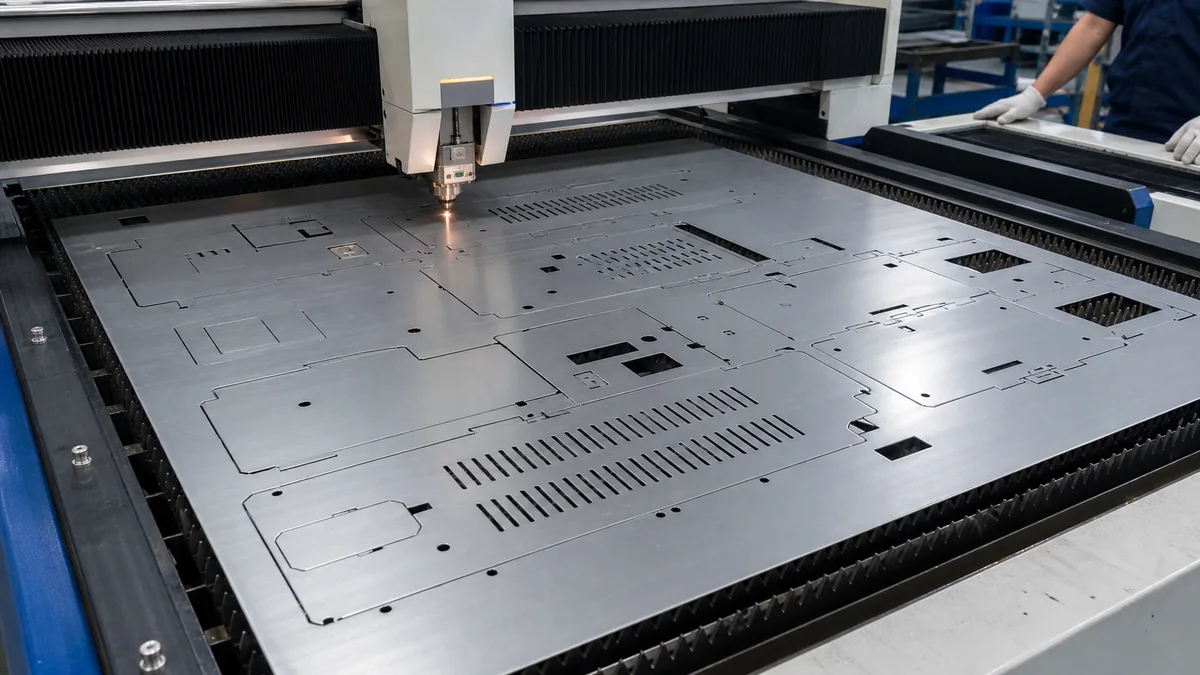
1. RFQ File Check
We review your DXF, DWG, PDF, STEP or STP files, then check material, thickness, finish, quantity and critical dimensions. If something is vague, we ask before cutting. A silent assumption is not engineering; it is a future argument wearing safety glasses.

2. DFM Review Before Cutting
Low volume projects often carry new-design risk. We check whether holes are too close to bends, whether the bend radius matches available tooling, whether tabs can distort, and whether the part can be inspected after forming. For deeper design rules, see our sheet metal DFM guide.

3. Laser Cutting, Deburring and CNC Bending
After nesting and cutting, parts are deburred and moved into forming. This is where many “cheap cutting only” quotes fall apart. A flat panel can be accurate, but the final part is judged after bending. If a bracket or enclosure cover needs tight fit, the flat pattern and bend sequence must be planned together.
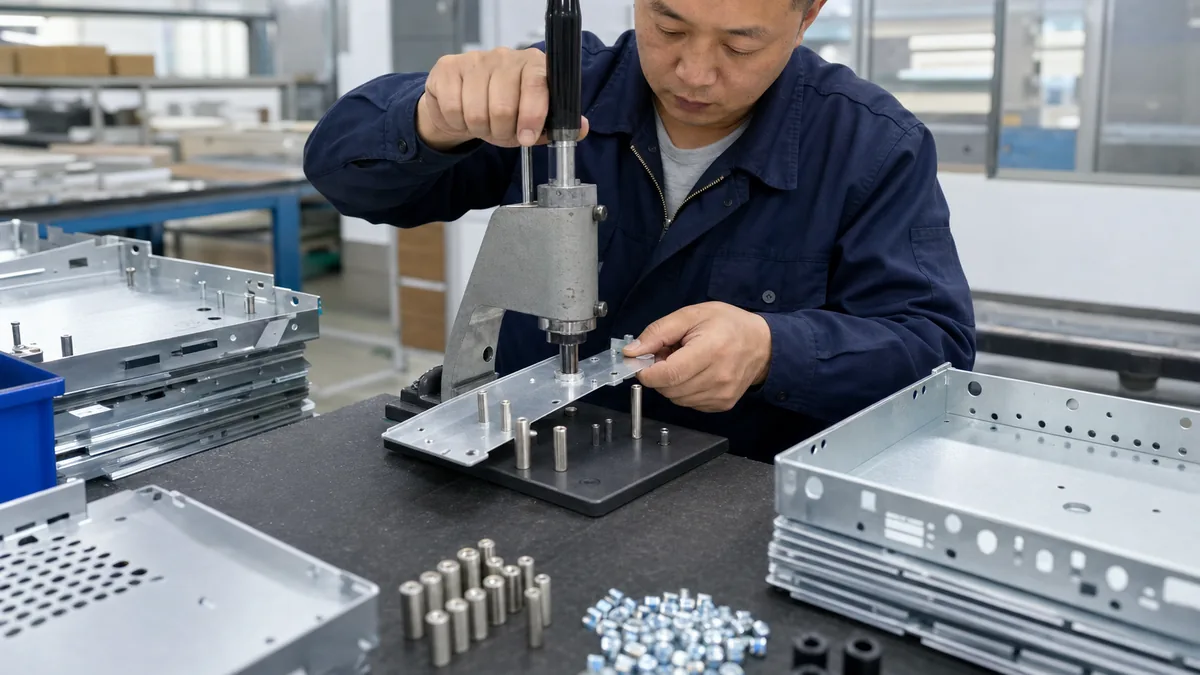
4. Hardware, Tapping and Assembly-Ready Details
Many low volume parts need threaded inserts, studs, standoffs, tapped holes, hinges, latches or grounding points. These are not “small details.” They affect fit, lead time and cost. We define side, location and installation sequence before production, especially on enclosure components.

5. Welding and Fixture Control
When the part becomes a welded shell or frame, fixture control matters more than hero welding photos. Thin sheet metal moves when heat enters the part. We check weld sequence, clamps, corner squareness and visible seam requirements before a batch becomes a stack of shiny regrets.
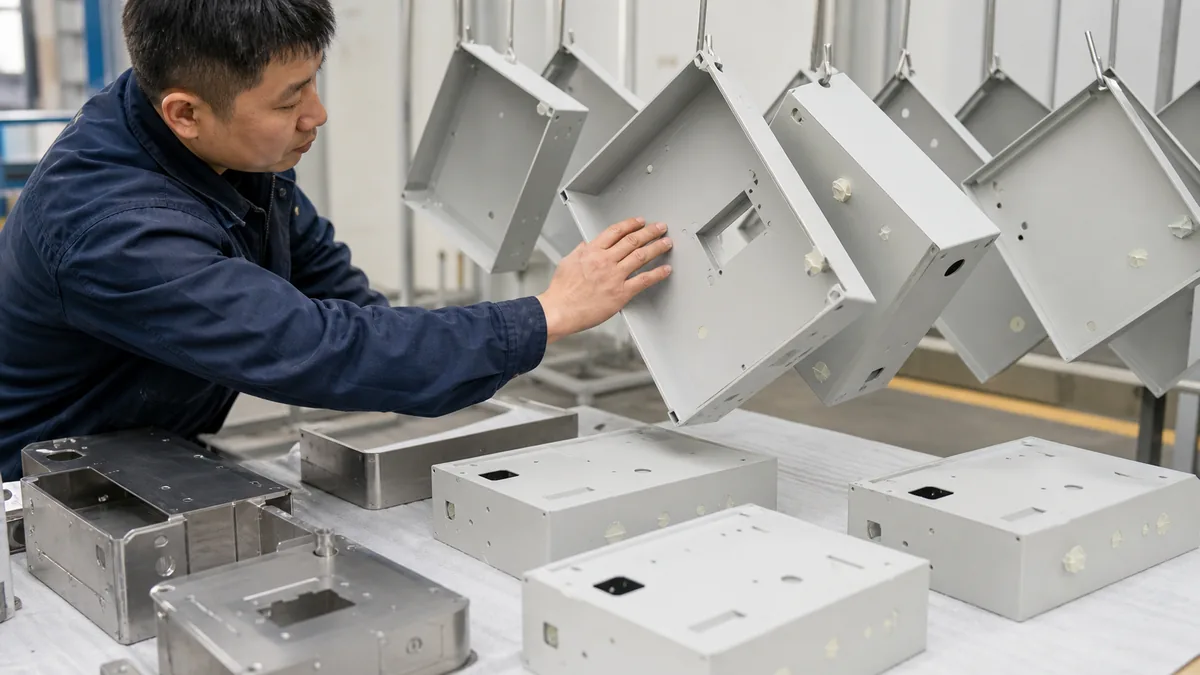
6. Surface Finish Without Surprises
Powder coating, plating, brushing or anodizing should match the part material and service environment. For enclosure parts, we also check masking requirements, coating allowance, thread protection and cosmetic surfaces. The finish is not decoration only; it can change fit.
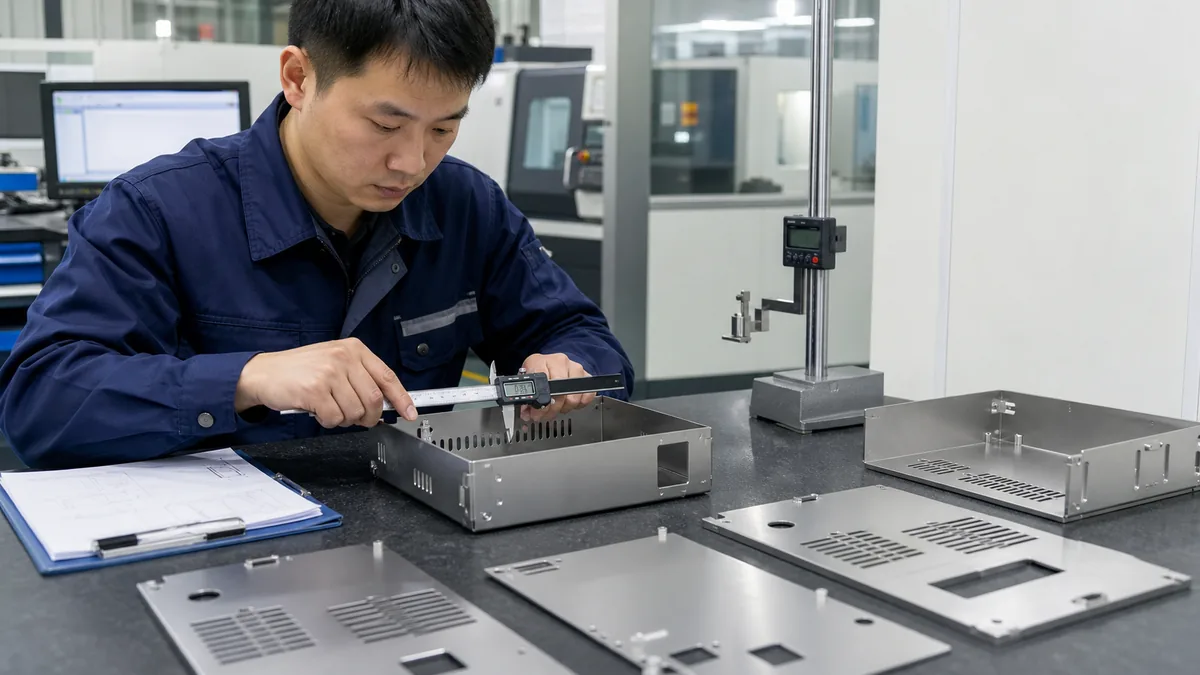
7. Inspection and Batch Records
A low volume order still deserves inspection. We confirm critical dimensions, bend angles, hole positions, surface finish, hardware fit and packaging condition. If your project needs a first article report, mark the inspection points clearly in the RFQ. Our sheet metal quality control guide explains how FAI and measurement records support repeat orders.
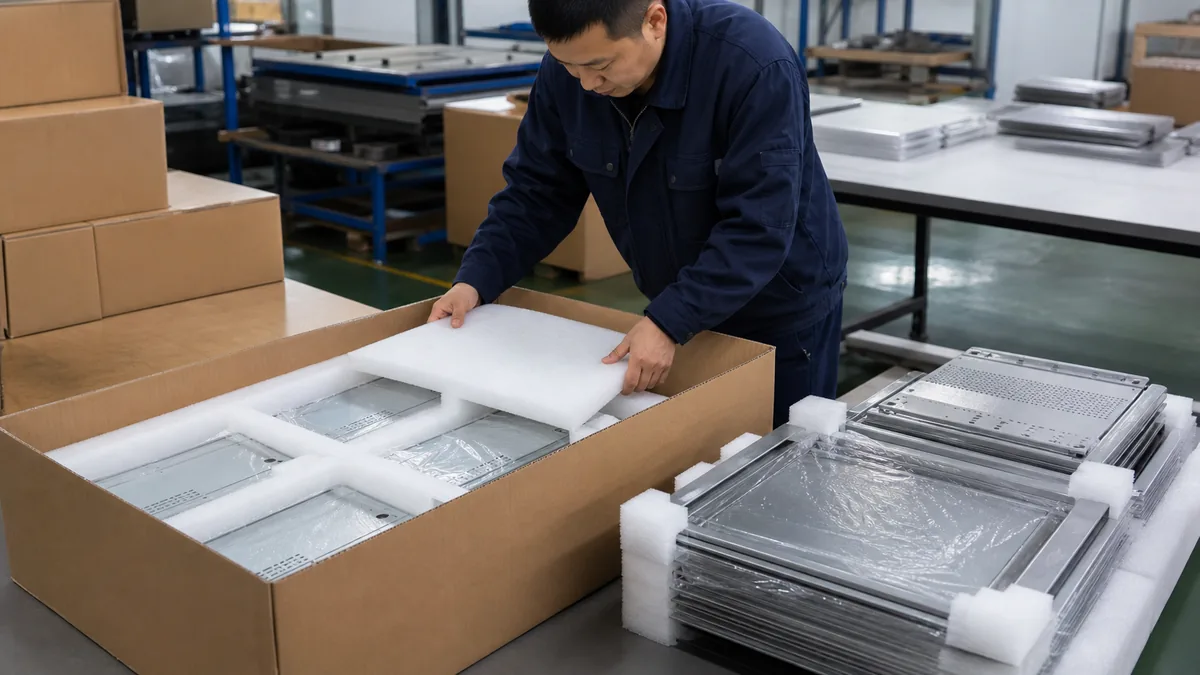
8. Export Packing for Small Batches
Small batch parts are often more vulnerable in shipping because there are fewer parts to absorb movement inside a carton. We use protective film, foam separation, corner protection and carton or crate planning based on finish and geometry. A perfect panel that arrives scratched is still a bad part.
Trust Table for OEM Buyers
Use this table when comparing low volume laser cutting suppliers. It keeps the conversation practical and stops the quote from turning into a mystery box.
| Buyer concern | What can go wrong | What MSTFAB checks | Evidence to request |
|---|---|---|---|
| Material | Wrong grade, thickness or surface condition | Grade, thickness, stock availability and finish match | Material confirmation or certificate when required |
| Cut accuracy | Slots, holes or tabs drift from drawing intent | DXF/PDF match, nesting, kerf and burr condition | Critical dimension photos or inspection report |
| Bending fit | Holes move after forming or cover does not close | Bend radius, bend sequence, flange height and bend-to-hole distance | First article photos, bend angle checks |
| Hardware | PEM inserts on wrong side or threads blocked by finish | Hardware type, side, installation order and masking | Hardware checklist and close-up photos |
| Finish | Scratches, color mismatch, coating buildup or poor masking | Finish spec, masking areas, cosmetic surfaces and packing method | Finish sample, color code, visual inspection photos |
| Repeat orders | Second batch differs from the pilot | Revision control, inspection points and approved sample record | Drawing revision, approved sample photos, batch record |
Low Volume vs. Prototype vs. Mass Production
| Order type | Main goal | Typical risk | Best supplier behavior |
|---|---|---|---|
| Prototype | Prove the shape and function | Design changes after testing | Fast feedback, DFM comments, flexible revision handling |
| Low volume | Build usable pilot or repeat small batches | Hidden secondary operations and inconsistent repeatability | Controlled process, itemized quote, inspection and revision control |
| Mass production | Reduce unit cost and stabilize output | Tooling, capacity and long-term quality drift | Production planning, batch records, process controls and capacity reservation |
How to Get a Quote That You Can Actually Compare
Send every supplier the same RFQ package. Include drawings, STEP files, material grade, thickness, quantity, finish, tolerance requirements, hardware list, inspection needs and shipping destination. Then ask for an itemized quote. If the quote shows only a unit price, you are not looking at a bargain; you are looking at a fog machine.
Useful related reads: how to read a sheet metal quote and the sheet metal RFQ checklist for engineers.
What to Send MSTFAB for Low Volume Laser Cutting
- 2D drawing with material, thickness, tolerances and revision number.
- DXF or DWG flat pattern if available.
- STEP or STP model for bent parts, welded shells or enclosure assemblies.
- Quantity for prototype, pilot batch and expected repeat order.
- Surface finish requirement, color code and masking areas.
- Hardware list: PEM inserts, standoffs, studs, hinges, latches, screws or grounding points.
- Critical dimensions and inspection reporting needs.
- Packaging and shipping destination.
Red Flags When Choosing a Low Volume Laser Cutting Supplier
- They quote instantly without asking about material, thickness, finish or tolerances.
- They say “standard tolerance” but never define the standard. Our sheet metal tolerance guide explains why that blank line matters.
- They treat bending, hardware, welding and finish as “later details.” Later details have a magical talent for becoming expensive details.
- They cannot explain how the pilot batch will be repeated.
- They show finished equipment photos when you asked for custom metal parts. Pretty pictures do not prove sheet metal capability.
Need a Low Volume Laser Cutting Quote?
Send your drawing package and expected quantity. MSTFAB will review the material, bend feasibility, hardware, finish, inspection points and packaging before quoting, so the number you receive is tied to a manufacturable part.
Frequently Asked Questions
What quantities count as low volume laser cutting?
There is no universal number. Low volume usually means a small batch, pilot run, bridge order, replacement run or repeat order that is not large enough for full mass-production pricing. The key is controlling the process so the batch can be repeated.
Can MSTFAB provide finished electrical equipment?
No. MSTFAB manufactures custom sheet metal parts and enclosure metalwork from buyer drawings. We do not supply finished electrical products, chargers, electronics, control systems or certified end-use machines.
Do low volume parts still need DFM review?
Yes. Low volume orders often need more review because the design may still be changing. DFM catches bend, hole, hardware and finish problems before a small batch becomes scrap.
Why does low volume laser cutting cost more per part than high volume production?
Programming, setup, material handling, inspection and packaging still happen even when the quantity is small. More pieces spread those fixed costs over a larger batch. Small quantity is not a scam; it is arithmetic with a clipboard.
What files should I send for a fast quote?
Send a PDF drawing, DXF/DWG flat file, STEP/STP model, material and thickness, quantity, finish, tolerance notes, hardware list and shipping destination. Clear inputs produce faster, safer quotes.
Updated: July 26, 2026. This guide is written for OEM buyers sourcing custom sheet metal enclosure parts, panels, brackets and low-volume laser-cut components from engineering drawings.
 WeChat Contact
 WhatsApp Me Directly