⚡ Direct Answer: How to Fabricate Laser Cut Copper Busbars for High-Current Applications?
Laser cut copper busbar fabrication requires high-power (12kW–20kW) fiber lasers equipped with back-reflection optical isolators to cut highly reflective pure copper (C11000 ETP and C10200 OFHC). Fabrication encompasses: 1) Nitrogen / Oxygen Assist Gas Tuning to eliminate dross burrs on conductive edges; 2) CNC Press Brake Bending with R ≥ 1.0T to maintain 100% IACS electrical cross-section; 3) Post-Cutting Tin or Silver Electroplating (3–8 µm) to prevent surface oxidation; and 4) Automated CMM Dimensional & Micro-Ohm Resistance Testing.
Introduction
Laser cut copper busbars are used in electrical equipment, power distribution systems, battery systems, EV charging equipment, switchgear, control cabinets, energy storage systems and industrial power modules. Buyers choose copper because it offers excellent electrical conductivity, thermal conductivity and reliable performance in power transmission applications.
However, copper busbar fabrication is not the same as ordinary sheet metal cutting. Copper is highly reflective and highly conductive, which makes cutting more challenging than carbon steel or stainless steel. Busbars also require accurate hole positions, clean edges, reliable contact surfaces, controlled bending and careful inspection.
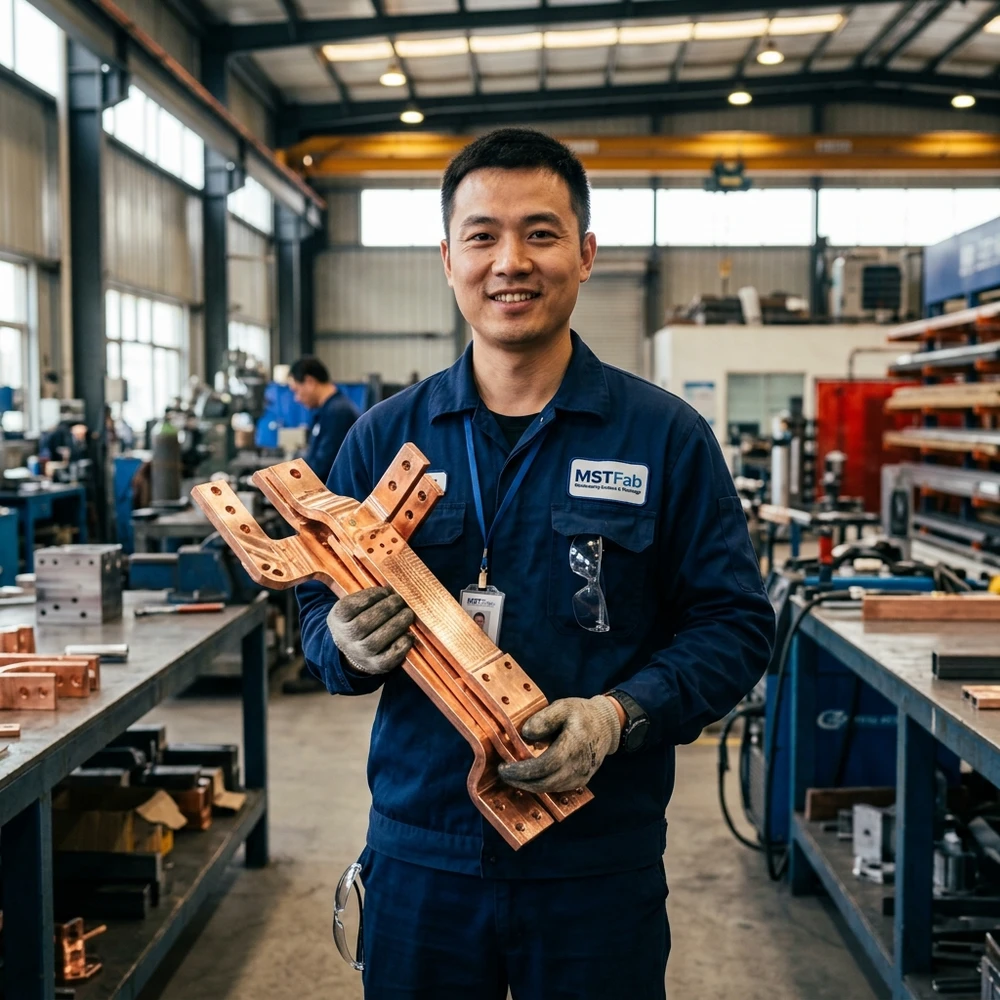
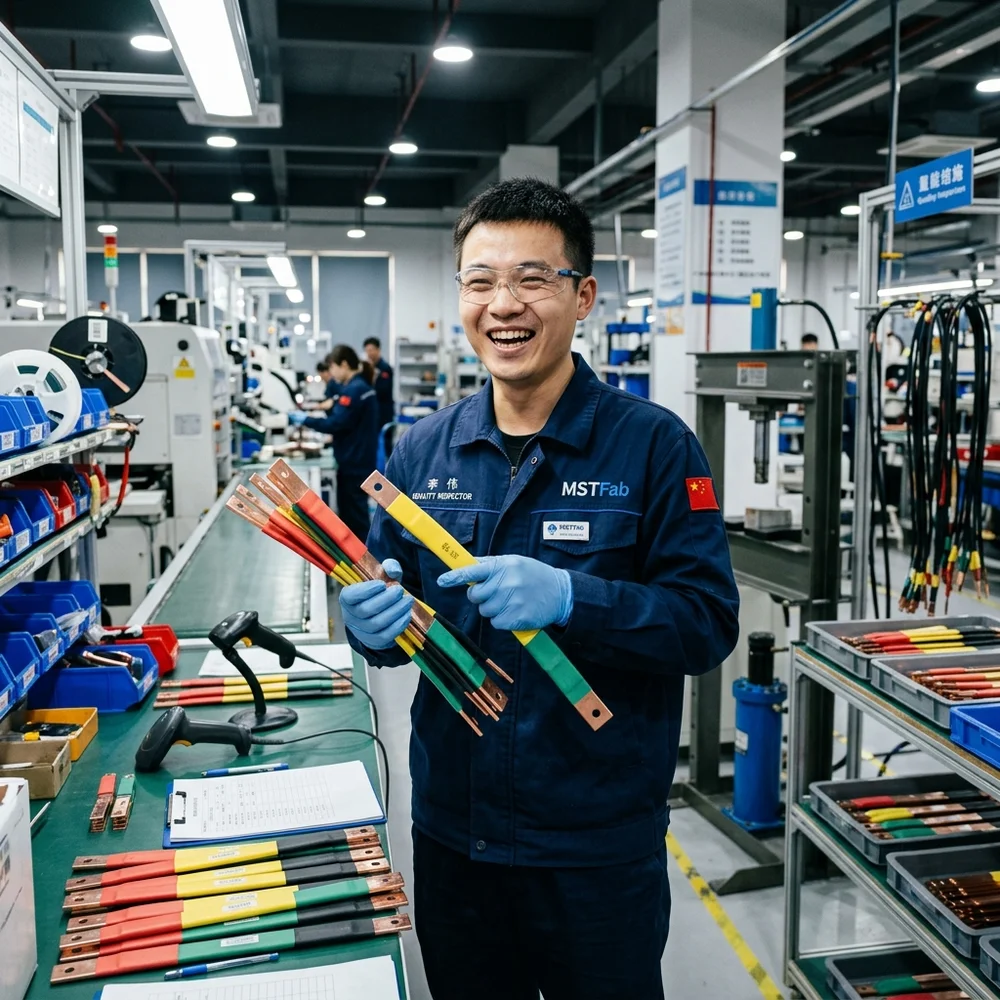
MSTFab provides custom copper busbar fabrication based on customer drawings. We manufacture copper busbars, copper links, copper plates, copper connectors, grounding bars, battery connection plates and power distribution components from DXF, DWG, PDF, STEP and STP files.
Our services can include copper laser cutting review, drilling, punching, CNC bending, deburring, surface finishing, plating support, insulation support, dimensional inspection and export packaging.
What Are Copper Busbars?
Copper busbars are conductive metal components used to distribute electrical current inside equipment or power systems. They are often used instead of cables when buyers need compact layout, stable conductivity, better heat dissipation and reliable assembly.
Common copper busbar applications include:
- Electrical cabinets, Switchgear systems, and Control panels
- EV charger cabinets and Battery energy storage systems
- Power distribution units and Industrial power modules
- Inverter systems, UPS systems, and Grounding systems
- Battery pack connections and Custom OEM electrical equipment
For EV charger cabinet projects, visit our EV charger enclosure fabrication page.
For complete sheet metal support, visit our custom sheet metal fabrication service.
Why Copper Busbar Fabrication Requires Careful Review
Copper busbars are functional electrical components. A small manufacturing problem may affect assembly, contact performance, heat dissipation or electrical reliability.
Important busbar requirements may include Copper grade, Material thickness, Conductive surface quality, Hole position accuracy, Slot and cutout accuracy, Edge deburring, Bend angle control, Flatness control, Surface plating requirement, Insulation requirement, Contact area protection, Assembly clearance, and Inspection requirement.
For precision projects, buyers should mark critical dimensions and contact areas clearly on the drawing.
Buyer Pain Points We Help Solve
1. Copper Is Difficult to Cut
Copper is a highly reflective and thermally conductive material. Laser cutting feasibility depends on copper grade, thickness, part geometry and equipment capability. For some thick copper busbars, other processes such as punching, drilling, milling or waterjet cutting may also be reviewed.
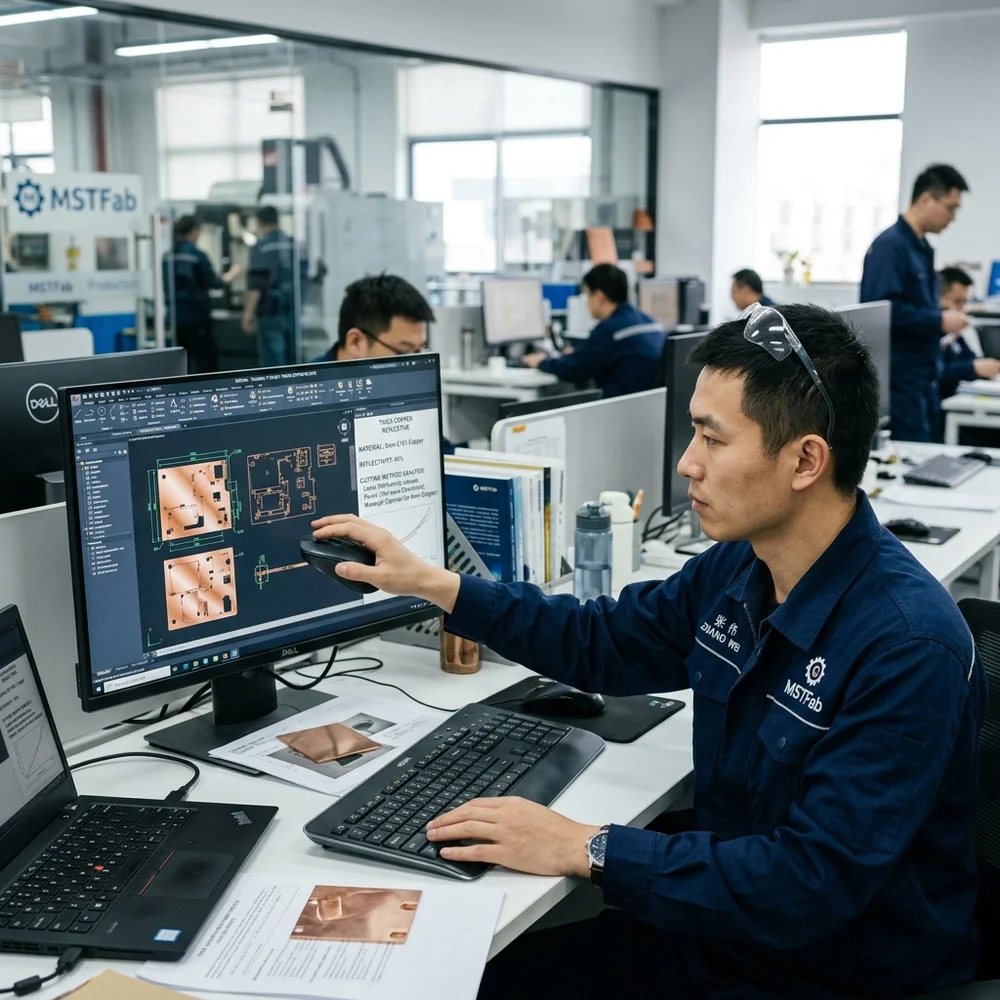
MSTFab reviews copper busbar drawings before production and recommends a practical manufacturing route based on thickness, geometry, tolerance and quantity.
2. Hole Positions Must Match Electrical Assembly
Copper busbars often connect with terminals, bolts, insulators, battery modules, contactors, breakers or power distribution parts. If the holes are not accurate, the busbar may not assemble correctly.
MSTFab can inspect key dimensions such as hole diameter, hole spacing, slot size, cutout position and overall length before shipment.
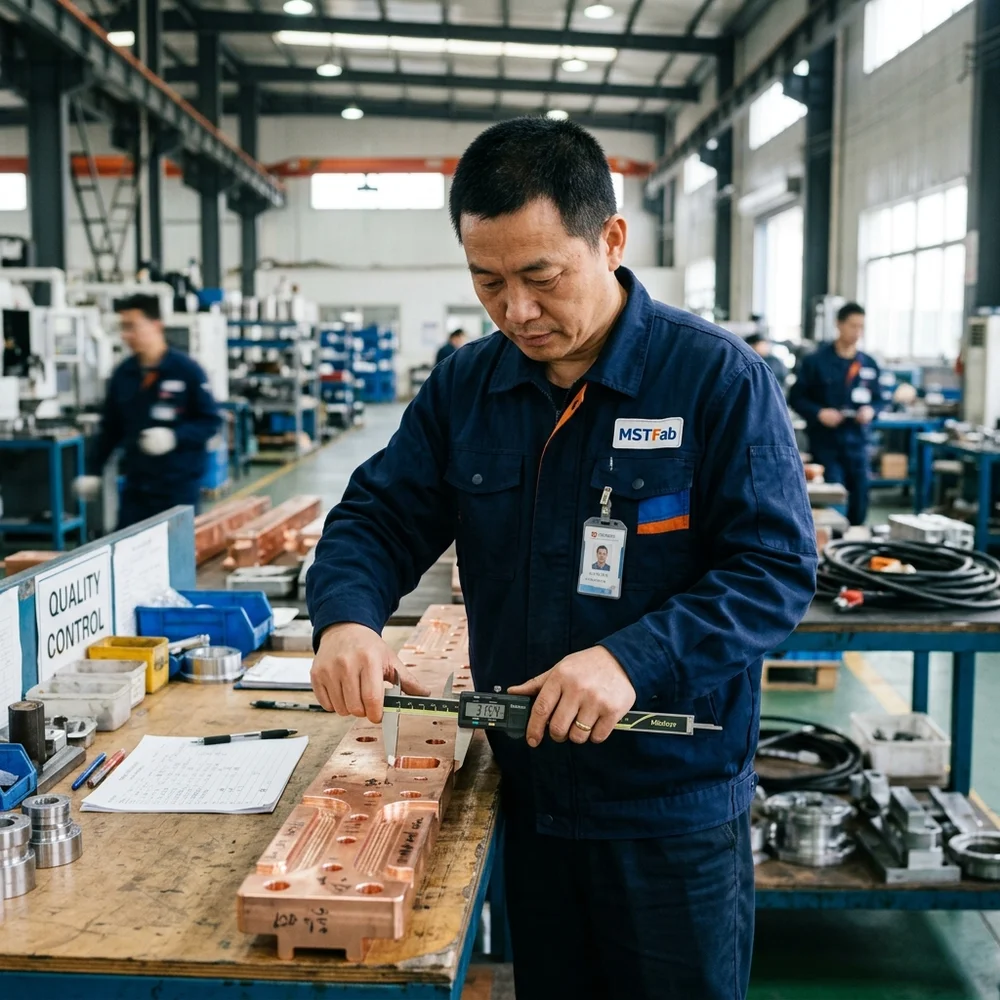
For measured data support, visit our sheet metal supplier with dimensional inspection report page.
3. Burrs Can Affect Safety and Assembly
Burrs or sharp edges on copper busbars can affect installation, damage insulation, create poor contact areas or cause safety concerns.
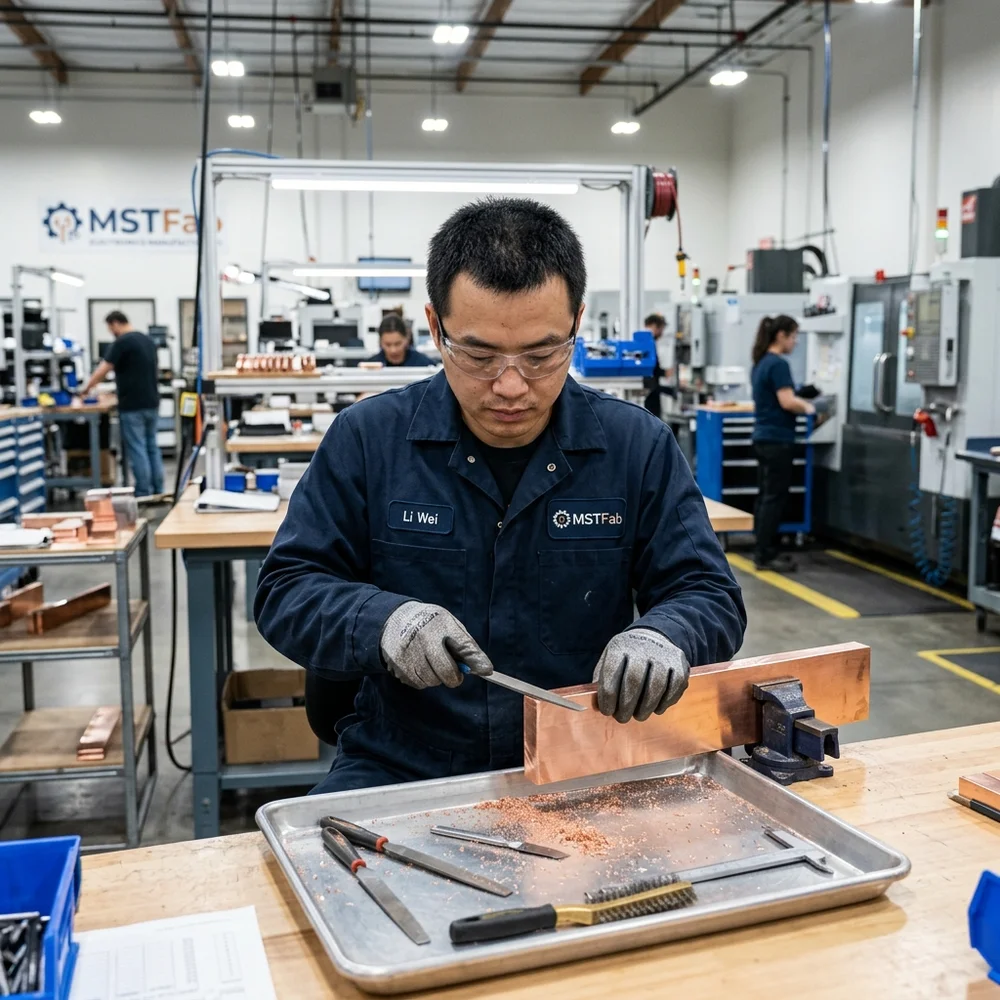
MSTFab can support deburring, edge smoothing and surface cleaning depending on project requirements. Buyers should confirm edge quality expectations before production.
4. Contact Surfaces Must Be Protected
Copper busbars often have electrical contact areas. Scratches, oxidation, coating contamination or poor handling may affect the contact surface.
Buyers should clearly mark contact surfaces, no-coating areas, plating areas and masking areas on the drawing.
For export protection, visit our sheet metal fabrication factory with export packaging page.
5. Bending Copper Busbars Requires Proper Radius Control
Many copper busbars require bending to fit inside compact electrical assemblies. Copper bending must consider material thickness, bend radius, hole-to-bend distance and final assembly clearance.
MSTFab reviews bending requirements before production. If a copper busbar has holes or slots near bend lines, deformation risk should be checked.

For formed parts, visit our CNC bending service.
Custom Copper Busbars We Manufacture
MSTFab can manufacture many types of copper busbar components, including:
- Flat copper busbars and Bent copper busbars
- Copper battery busbars and Copper grounding bars
- Copper terminal links, power distribution plates, and connector plates
- Copper electrical links and switchgear busbars
- Copper EV charger busbars and energy storage busbars
- Copper control cabinet busbars and OEM copper power components
Each project is manufactured according to customer drawings, copper grade, thickness, tolerance, surface finish, plating requirement and inspection standard.
Copper Busbar Manufacturing Options
Depending on the drawing and thickness, MSTFab can review several fabrication methods.
Common processes include Copper laser cutting review, CNC punching, Drilling, Slot cutting, CNC bending, Deburring, Edge smoothing, Surface cleaning, Plating support, Insulation support, Dimensional inspection, and Export packaging.
For CAD-based projects, visit our laser cutting services from CAD drawings page.
For DXF files, visit our laser cutting services for DXF files page.
For DWG files, visit our custom laser cut parts from DWG files page.
Copper Materials and Surface Options
Copper Grades
Copper busbars are commonly made from high-conductivity copper materials. Buyers should specify the copper grade if conductivity or electrical performance is critical.
Bare Copper
Bare copper provides excellent conductivity, but it may oxidize over time. Surface protection and packaging should be reviewed if the parts need to remain clean before assembly.
Tin-Plated Copper
Tin plating is commonly used when buyers need better oxidation resistance, improved solderability or more stable contact performance in some electrical applications.
Nickel-Plated Copper
Nickel plating may be selected for corrosion resistance, wear resistance or specific electrical equipment requirements.
Insulated Copper Busbars
Some busbar projects may require insulation coating, sleeves, heat shrink tubing or other insulation support. Buyers should provide insulation drawings, coverage areas and voltage-related requirements.
Key Design Details to Confirm
Before copper busbar production, buyers should confirm Copper grade, Material thickness, Conductivity requirement if specified, Hole diameter, Hole spacing, Slot size, Bend radius, Bend angle, Flatness requirement, Contact surface areas, Plating requirement, Masking requirement, Insulation requirement, Surface protection requirement, Critical dimensions, and Assembly environment.
Clear design details help reduce production risk and improve final assembly performance.
Quality Inspection for Copper Busbars
Copper busbars are functional electrical parts, so inspection should focus on dimensions, contact areas and assembly-critical features.
Our inspection process can include Material verification, Thickness check, Cutting dimension inspection, Hole position inspection, Slot and cutout inspection, Edge burr inspection, Bend angle inspection, Flatness check, Contact surface check, Plating appearance check if plated, Insulation coverage check if required, and Packaging inspection.
For new busbar projects or batch production, buyers can request first article inspection before full production.
For first article support, visit our sheet metal fabrication with first article inspection page.
Industries We Support
Our copper busbar fabrication services can support many industries, including Electrical equipment, EV charging equipment, Energy storage systems, Battery systems, Switchgear, Power distribution units, Control cabinets, Industrial automation, Telecom equipment, Renewable energy equipment, Inverter systems, UPS systems, and Custom OEM machinery.
What Buyers Should Send for a Copper Busbar Quote
To quote laser cut copper busbars or custom copper busbar fabrication accurately, please send DXF or DWG files for cutting profiles, PDF drawings with dimensions and tolerance notes, STEP or STP files if available, Copper grade, Material thickness, Quantity, Hole and slot requirements, Bend requirements, Conductivity requirement if specified, Plating requirement, Insulation requirement, Contact surface requirement, Critical dimensions, Inspection requirements, Packaging requirements, and Target delivery schedule.
If your copper busbar is used in an electrical assembly, please send the assembly drawing or installation reference so we can better understand clearance and contact requirements.
Why Choose MSTFab for Laser Cut Copper Busbars?
Choosing the right copper busbar fabrication supplier can reduce assembly risk, improve electrical connection reliability and simplify overseas sourcing.
MSTFab supports OEM buyers with Copper busbar fabrication based on drawings, DXF, DWG, PDF, STEP and STP file review, Laser cutting feasibility review for copper parts, Drilling, punching, bending and deburring support, Tin plating and nickel plating support when required, Insulation support when required, DFM review before production, Critical dimension inspection, First article inspection support, Contact surface protection, Export packaging support, Prototype, low volume, batch and repeat order support, and Clear communication for international projects.
We help buyers turn approved drawings into copper busbars ready for electrical assembly, power distribution or repeat production.
Request a Quote for Laser Cut Copper Busbars
If you are looking for laser cut copper busbars or custom copper busbar fabrication, MSTFab can support your project.
Send us your drawings, copper grade, material thickness, quantity, plating requirements and inspection requirements. Our team will review your files and provide a practical copper busbar manufacturing solution.
Contact MSTFab today for copper busbars, copper plates, grounding bars, battery busbars, power distribution components and custom OEM copper conductive parts.
 WeChat Contact
 WhatsApp Me Directly