OEM Metal Enclosure Fabrication Supplier in China: Buyer Guide
Content updated October 26, 2026. Manufacturing and documentation scope is confirmed for the quoted project.
Compare an OEM metal enclosure fabrication supplier in China against the same released drawings, material, finish, quantities and acceptance requirements. This guide covers mechanical enclosure shells and the records to agree before sampling and repeat production.
MSTFAB fabricates drawing-based sheet metal enclosure shells, panels, covers, brackets, cabinet bodies and agreed mechanical hardware. Confirm material, finishing, inspection and packing in the quotation. Electronics, cooling-equipment installation and wiring, software and completed-equipment validation remain with the buyer or responsible integrator.

The images illustrate fabrication features and process planning. They are not material certificates, customer approvals or batch inspection records.
Scope Before Requesting a Quote
An OEM metal enclosure fabrication supplier in China manufactures custom sheet metal enclosure shells and related semi-finished metal parts from buyer drawings. The supplier should review STEP files and 2D drawings, confirm material and finish, plan laser cutting and CNC bending, control welding and hardware locations, inspect critical dimensions and protect parts for export delivery.
MSTFAB fabricates drawing-based sheet metal enclosure shells, panels, covers, brackets, cabinet bodies and agreed mechanical hardware. Confirm material, finishing, inspection and packing in the quotation. Electronics, cooling-equipment installation and wiring, software and completed-equipment validation remain with the buyer or responsible integrator.
For the fabrication scope, see custom sheet metal enclosure fabrication. Use the sheet metal fabrication overview to review the process route and prepare a drawing-specific RFQ.
What MSTFAB Actually Supplies
Procurement language can get fuzzy fast. One buyer says enclosure, another says cabinet shell, another says chassis, another says metal box. MSTFAB’s practical scope is simple: we make the metal structure according to your drawings. We do not pretend to be every supplier in your bill of materials. That clarity helps buyers quote the right work and avoid supplier confusion.
Empty sheet metal bodies, folded boxes, cabinet shells and formed covers made from customer drawings.
Laser-cut front panels, back plates, removable access covers, mounting plates and vented panels.
Formed brackets, support rails, rack-style mounting strips, tabs and hardware-prep features.
Welded frames, reinforced cabinet bodies and hinge-ready metal structures where strength matters.
Powder coating, brushing, plating, anodizing or other surface treatments based on project need.
Foam separation, cartons, pallets and photo evidence to protect semi-finished enclosure parts.
Why Overseas Buyers Look for a China Enclosure Fabrication Supplier
OEM buyers often search for a metal enclosure fabrication supplier in China because they need a practical mix of cost control, forming capability, export communication and repeatable production. The best result is not the lowest unit price on a spreadsheet. The best result is a supplier who can make the same drawing correctly in sample, pilot run and repeat batch production.
The buying risk is familiar: the first quote looks attractive, the sample looks almost right, the second sample fixes one issue and creates another, and suddenly the project manager has a new hobby called “explaining delay.” A reliable sheet metal enclosure supplier should reduce those surprises before production starts.
| Buyer pain point | Why it happens | What MSTFAB checks |
|---|---|---|
| Quote is unclear | Files miss material, finish, tolerances or quantity assumptions | RFQ package, drawing revision, process route and scope notes |
| Sample fits poorly | Hole positions, bend lines or flange heights were not treated as critical | DFM review for cutouts, bends, formed dimensions and mating features |
| Finish causes fit risk | Coating thickness and masking were not considered before quotation | Visible faces, powder coating notes, masking zones and clearance needs |
| Welded parts distort | Heat input and fixture needs were underestimated | Weld sequence, reinforcement, grinding, squareness and inspection points |
| Parts arrive scratched | Export packing was treated as a carton problem, not a quality problem | Foam separation, surface protection, carton layout and photo evidence |
1. RFQ and DFM Review: Start With the Drawing, Not the Guess

A good OEM enclosure project starts with drawing review. MSTFAB checks the 3D model and 2D drawing together, because the model tells us shape and the drawing tells us what the buyer actually cares about. Material, thickness, tolerance notes, finish, PEM hardware and packing requirements should be clear before price comparison begins.
DFM review is not a fancy report written to make a quote look clever. It is a practical check: Can this flange be bent with available tooling? Is the hole too close to a bend? Will coating reduce the clearance? Is the weld location likely to pull the cabinet shell out of square? Does the drawing call out the surfaces that must look clean?
If you are preparing a quote package, read what files are needed for a sheet metal fabrication quote and DFM for sheet metal fabrication. These two pages help buyers avoid sending a pretty 3D model with missing production instructions.
2. Laser-Cut Enclosure Panels: Accuracy Begins While the Part Is Still Flat
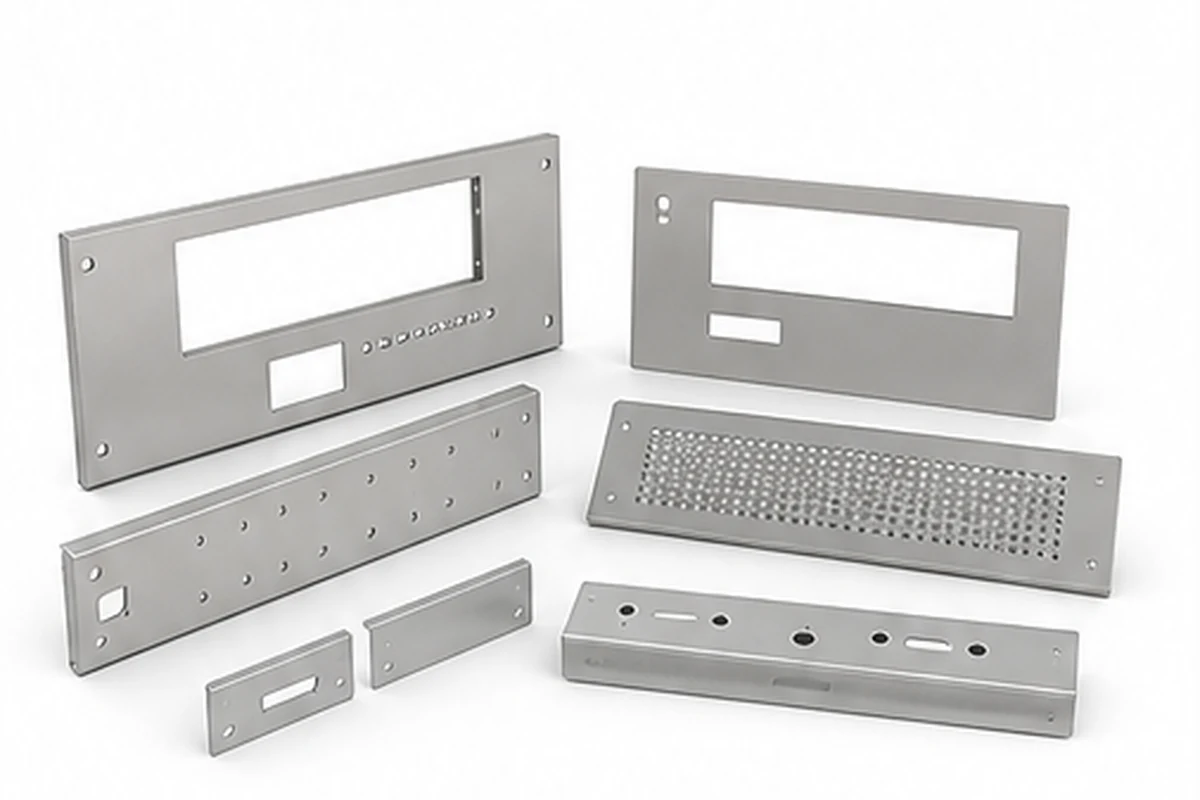
Laser cutting is where many enclosure details begin: display openings, ventilation patterns, mounting slots, cable gland holes, back plate holes, rack rail positions and cosmetic front panels. For OEM enclosure fabrication, cutting accuracy matters because every later step depends on the blank being correct.
Buyers should identify which openings are functional, which are cosmetic and which must align with other parts. A slot used only for airflow may not need the same tolerance as a mounting pattern. A front panel opening may need tighter visual control than an internal service panel. These distinctions help MSTFAB quote intelligently and inspect the right features.
For process capability, review laser cutting services. For online upload and quote review, use the drawing upload page.
3. CNC Bending: The Moment Flat Metal Learns Geometry
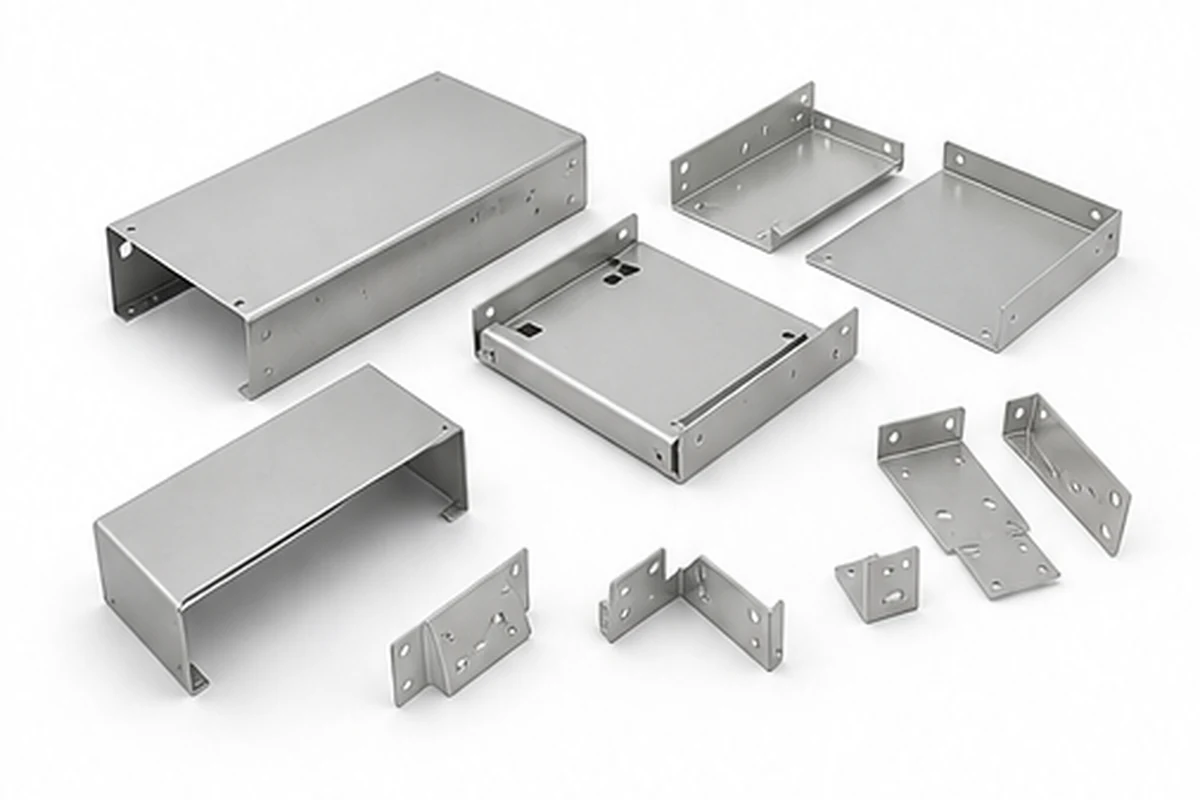
CNC bending turns laser-cut blanks into covers, brackets, U-channels, cabinet sides and flanged enclosure bodies. This is also where many low-cost quotes quietly become expensive. A drawing can look simple on screen, but bend radius, flange length, material springback and tooling access decide whether production is stable.
For OEM metal enclosure fabrication, MSTFAB reviews bend sequence, hole-to-bend distance, formed height and fit-up requirements before quotation. A bracket that is easy to cut but hard to bend repeatably is not a bargain. It is a future email thread with screenshots and red circles.
For more on the forming process, visit sheet metal bending.
4. Welded Enclosure Shells: Strength Needs Control
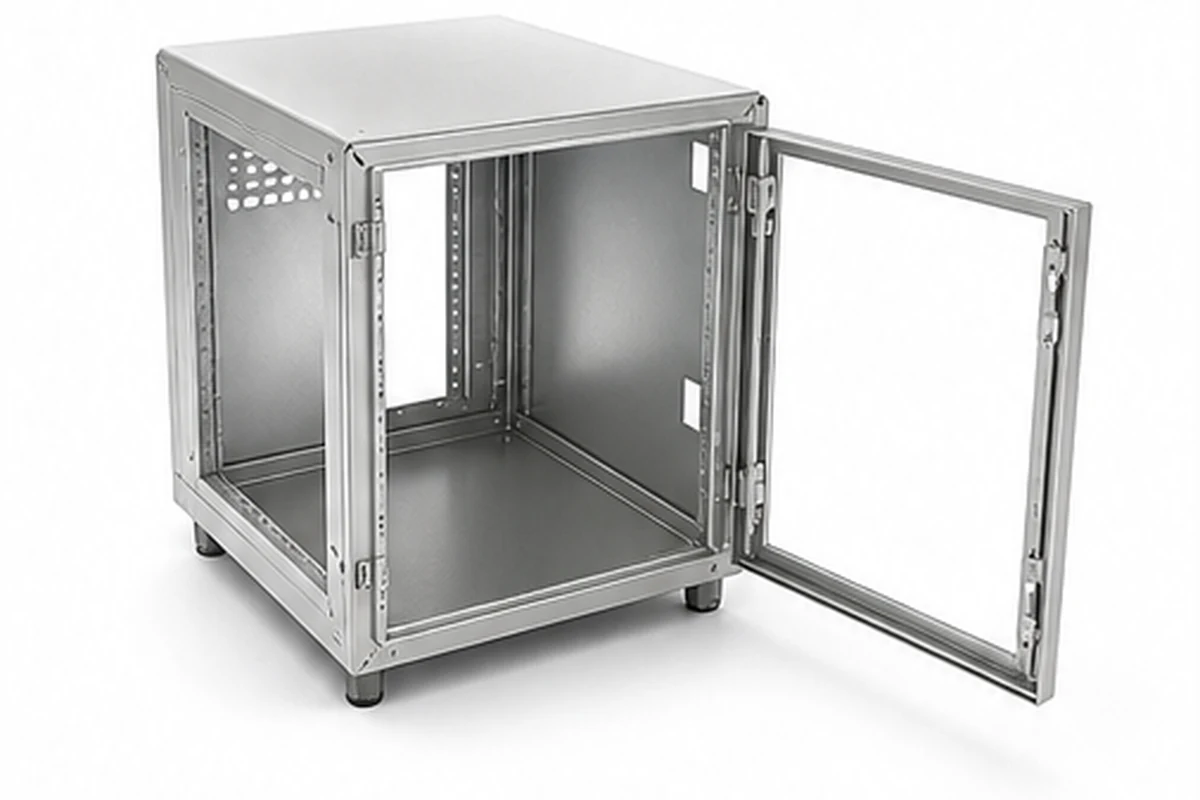
Some enclosure shells and cabinet bodies need welding for strength, rigidity or hinge support. Welding can be valuable, but it adds heat, fixture needs, grinding time and distortion risk. A serious supplier should review welded structures before quoting instead of treating every weld symbol as a small line on a drawing.
Buyer drawings should clarify weld locations, visible surfaces, ground seams, hinge zones, reinforcement tabs and critical dimensions after welding. If welding can be replaced by a formed tab, rivet nut, PEM feature or mechanical fastening point, that should be discussed early. Good manufacturing is not about using every process possible; it is about using the process that makes the part repeatable.
For related capability, see welding services.
5. Surface Finishing: Appearance, Protection and Fit All Share the Same Bill

Surface finishing affects both how enclosure parts look and how they fit. Powder coating, brushing, plating and anodizing can change thickness, corrosion resistance, scratch behavior and visible surface quality. That is why finish should be in the RFQ, not added after the quote like a side dish.
MSTFAB reviews color, texture, gloss, coating thickness, masking requirements and visible faces for custom metal enclosure fabrication projects. If a cover lip, hinge area, tab or mounting slot has tight clearance, finishing may need a masking note or adjusted geometry. For stainless steel parts, grain direction and scratch control should also be defined.
For more detail, visit surface treatment and powder coating.
6. Mounting Plates, Brackets and Hardware Prep: Small Parts Can Cause Big Delays

Mounting plates, back plates, rack rails, brackets, PEM nuts, threaded inserts and tabs may look smaller than enclosure shells, but they often decide whether the buyer’s integration work goes smoothly. One hole pattern out of position can hold up a larger project, especially when the part is buried inside a cabinet body.
RFQ drawings should show which hole patterns are critical, what hardware is installed before shipment, which surfaces remain visible and whether bracket positions are matched to another assembly. MSTFAB uses these details to plan laser cutting, CNC bending, hardware preparation and inspection.
For cost factors, see sheet metal fabrication cost for enclosures.
7. Export Packing: The Last Step Still Counts as Quality

Export packing is not glamorous. Nobody posts a heroic photo of foam separators on the office wall. But for powder-coated panels, brushed stainless covers and formed cabinet shells, packing can decide whether parts arrive ready for the buyer’s next step or arrive with scratches, bent corners and unhappy receiving photos.
MSTFAB can prepare packing based on part geometry and surface finish: foam separation, corner protection, plain cartons, pallet packing and photo evidence before shipment. Buyers should include packing expectations in the RFQ so the quote reflects the real delivery requirement.
Material Choices for OEM Metal Enclosure Fabrication
Material choice affects price, bending, welding, corrosion resistance and finish. If buyers only write “steel enclosure” in an RFQ, the supplier has too much room to guess. If the grade is flexible, say so. If the grade is fixed, write it clearly.
| Material | Common enclosure use | Buyer note to include |
|---|---|---|
| SPCC cold-rolled steel | Indoor powder-coated cabinets, covers, chassis parts and brackets | Thickness, finish, visible faces and corrosion environment |
| SGCC galvanized steel | Back plates, internal brackets and some protected cabinet parts | Zinc coating requirement, cut-edge expectations and coating compatibility |
| Stainless steel | Corrosion-resistant, premium or hygiene-sensitive enclosure panels | Grade, grain direction, brushed finish, scratch limit and passivation need |
| Aluminum sheet | Lightweight covers, communication shells and corrosion-aware projects | Alloy, bend radius, anodizing or coating notes and surface protection |
How to Evaluate a China Metal Enclosure Supplier
Choose the depth of supplier evaluation around the part risk and your purchasing requirements. Drawing feedback, a process explanation and sample records can inform the review; they do not replace any required audit, qualification or certification check.
| Evaluation area | What to ask | Strong answer looks like |
|---|---|---|
| Drawing review | Can the supplier review STEP and PDF drawings before quote? | They discuss material, bend risk, cutouts, finish, hardware and inspection points. |
| Process route | Can cutting, bending, welding, finishing and inspection be managed together? | The supplier explains the manufacturing sequence and risk points. |
| Sample to batch | Can the same route support prototype, pilot and repeat production? | They discuss fixtures, tooling, inspection and revision control. |
| Surface protection | How are visible faces protected during production and packing? | They define masking, handling, packing and photo evidence. |
| Communication | Can the supplier answer technical RFQ questions clearly? | They ask useful questions instead of only sending a price. |
Supplier Evidence to Agree Before Ordering
Confirm which records and acceptance checks are available and included before ordering. This checklist is not evidence that a particular batch has passed inspection.
| Requirement | Agree before production | Evidence to confirm |
|---|---|---|
| Drawing revision | Identify the model, 2D drawing and approved changes. | Quotation assumptions and the released revision reference. |
| Material and finish | Specify grade, thickness, finish, masking and visible faces. | Required material records and agreed finish or sample approval. |
| Critical interfaces | Identify mounting datums, openings, door gaps and tolerances. | Agreed first-article measurements and fit-up records. |
| Repeat orders | Define revision control and approval of proposed changes. | Order-specific inspection and deviation records agreed in the quote. |
| Packing | Approve surface separation, handling and shipment protection. | Packing instructions and photographs where agreed. |
Choose the Next Procurement Step
Review enclosure fabrication scope, prepare the RFQ package, or send the current drawings for review. Keep the same revision and acceptance requirements across supplier quotations.
OEM Buyer Checklist Before Sending Drawings
- Confirm the project is for semi-finished metal enclosure shells, panels, covers, brackets or cabinet components.
- Prepare STEP or STP files plus 2D PDF drawings with revision numbers.
- Define material grade, thickness, surface finish, color and visible faces.
- Mark critical dimensions for holes, slots, bend locations, hinges and mating features.
- Specify PEM hardware, inserts, weld nuts, threaded features or purchased hardware prep.
- State prototype quantity, pilot quantity and expected repeat order volume.
- List inspection expectations, photo evidence needs and cosmetic surface checks.
- Define packing needs for coated, brushed or scratch-sensitive enclosure parts.
FAQ: OEM Metal Enclosure Fabrication Supplier China
Does MSTFAB make end systems or only metal enclosure parts?
MSTFAB fabricates drawing-based sheet metal enclosure shells, panels, covers, brackets, cabinet bodies and agreed mechanical hardware. Confirm material, finishing, inspection and packing in the quotation. Electronics, cooling-equipment installation and wiring, software and completed-equipment validation remain with the buyer or responsible integrator.
What is the best way to request a quote?
Send STEP or STP files, 2D drawings, material, thickness, finish, quantity, tolerance notes, hardware requirements and packing expectations. A screenshot alone may not show the dimensions and specifications needed for a reliable quotation.
Can MSTFAB support prototypes and repeat production?
Prototype and repeat-production requirements can be reviewed from the drawing. Confirm sample scope, quantities, process route, inspection records and schedule in the quotation. Approve samples and any proposed drawing changes before repeat production.
Which industries use MSTFAB enclosure fabrication?
Common applications include telecom cabinet shells, industrial control cabinet bodies, EV charger enclosure parts, energy cabinet panels, machinery covers, medical equipment housings and automation equipment sheet metal structures.
What should buyers check when comparing suppliers?
Compare more than unit price. Check whether the supplier reviewed DFM, defined material and finish, understood critical dimensions, included inspection needs and planned packing protection for export shipment.
Send Your Metal Enclosure Drawings for OEM Review
Have STEP files, PDF drawings or an RFQ package for custom sheet metal enclosure shells, panels, covers, brackets or cabinet bodies? MSTFAB can review manufacturability, material, laser cutting, CNC bending, welding, finish, inspection and packing before quoting.
Scope note: MSTFAB manufactures custom semi-finished sheet metal enclosure parts for OEM buyers.
 WeChat Contact
 WhatsApp Me Directly