Quick Answer
An IATF 16949 galvanized steel junction box electrical manufacturer is the right partner when your junction boxes are serialized electrical interconnect components procured into the automotive electrical supply chain — feeding a Tier-1 wiring-harness or electrical-distribution supplier, or on an automotive electrical assembly BOM.
IATF 16949 is not a product-safety certificate; it is the automotive quality-management system that forces PPAP, material disclosure (IMDS), serialization, and disciplined change control across thousands of identical, low-cost galvanized shells.
For general, non-automotive electrical wiring (building, facility, non-auto industrial), ISO 9001 is the proportionate baseline and IATF is over-certification. Galvanized steel suits dry-to-mixed-duty electrical interconnect; washdown, food, pharma, or cleanroom zones need 304/316L stainless. MSTFAB builds the empty shell to your drawing; you supply the wiring, terminals, and glands.
A Junction Box Is a Wiring Node — Not a Control Box, Not a Distribution Box
Sourcing mix-ups start with lazy names. A distribution box feeds power — main isolator, branch breakers, busbars. An electrical/control box makes decisions — it holds the DIN rail, the PLC, the relays, the drives. A junction box joins things. It is the wiring-interconnect node in an electrical system: a splice point, a conduit pull point, a harness tap, a terminal-block housing that just passes signal and power from A to B without making any decision.
Why belabor the distinction? Because the IATF 16949 galvanized steel junction box electrical manufacturer you choose is graded on a different scorecard than a control-box supplier. The junction box is the boring, high-count, can’t-tell-one-from-the-next part that appears five hundred times on the BOM — and that is exactly the part automotive quality systems exist to regulate.
We are not building control logic; we build the shell that keeps the interconnect tidy, grounded, and protected. (For the same shell mounted on an automation machine rather than inside an electrical system, see our automation junction-box counterpart.)
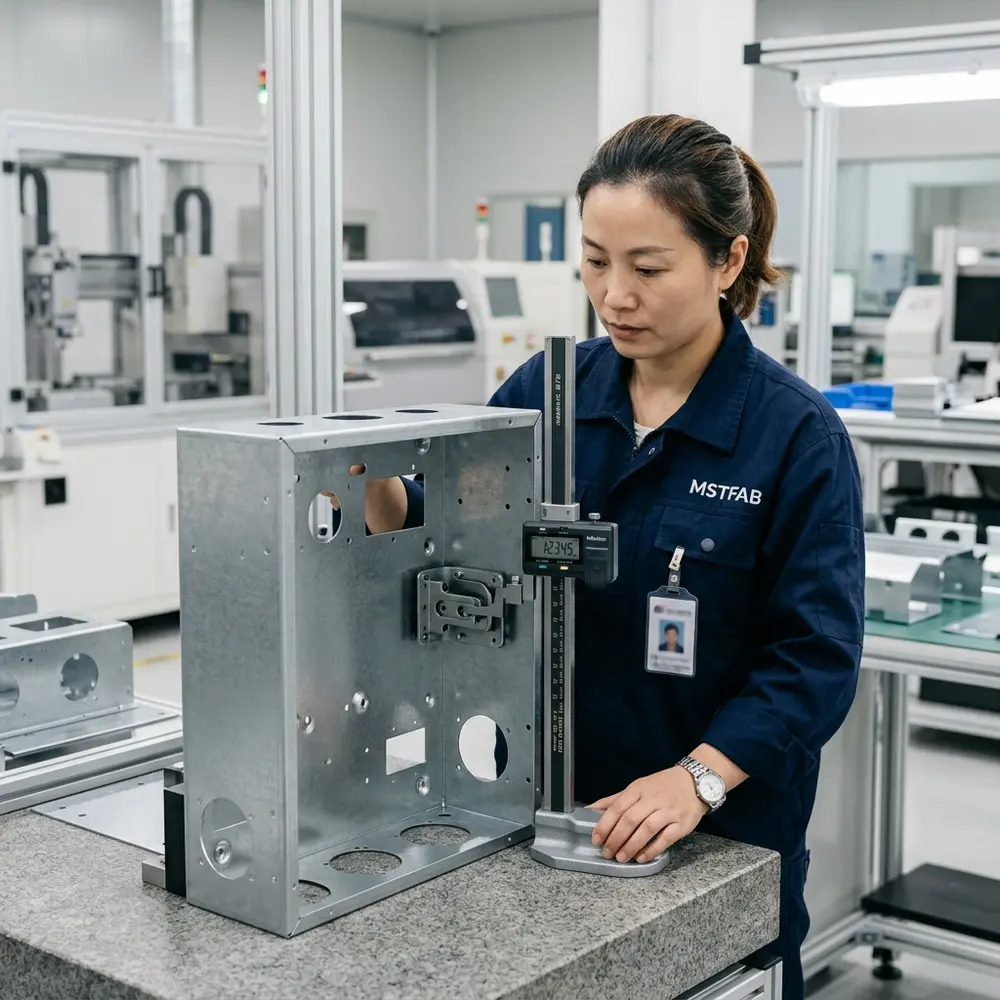
What an IATF 16949 Galvanized Steel Junction Box Electrical Manufacturer Actually Delivers
The certificate does not make the box waterproof, insulated, or electrically safe. What it forces is a quality system built for automotive volume and traceability:
- PPAP discipline. A real control plan, process flow, PFMEA, MSA, and SPC behind every revision — not a caliper and a hope.
- Material disclosure (IMDS). Every galvanized grade, coating, gasket, and hardware item declared in the automotive material database.
- Serialization and lot traceability. When 5,000 identical junction boxes ship, you can trace any one back to its heat number, coating batch, and inspection record.
- Special-characteristic control. Critical-to-quality features (sealing-face flatness, gland-plate location, ground-stud weld) held to a controlled process.
- Change control that actually stops. A silent material or tooling change across thousands of units is a recall, not a footnote. IATF makes the supplier document and notify.
HARD GATE (mandatory): IATF 16949 only applies if your junction box is a serialized electrical interconnect component procured into the automotive supply chain, with requirements flowed down from an automotive OEM or Tier-1 electrical supplier. A junction box in a general building, facility, or non-auto industrial electrical system does not need it — ISO 9001 is the right-sized baseline there. Order IATF where the supply chain demands it; otherwise you are paying for paperwork that audits nobody.
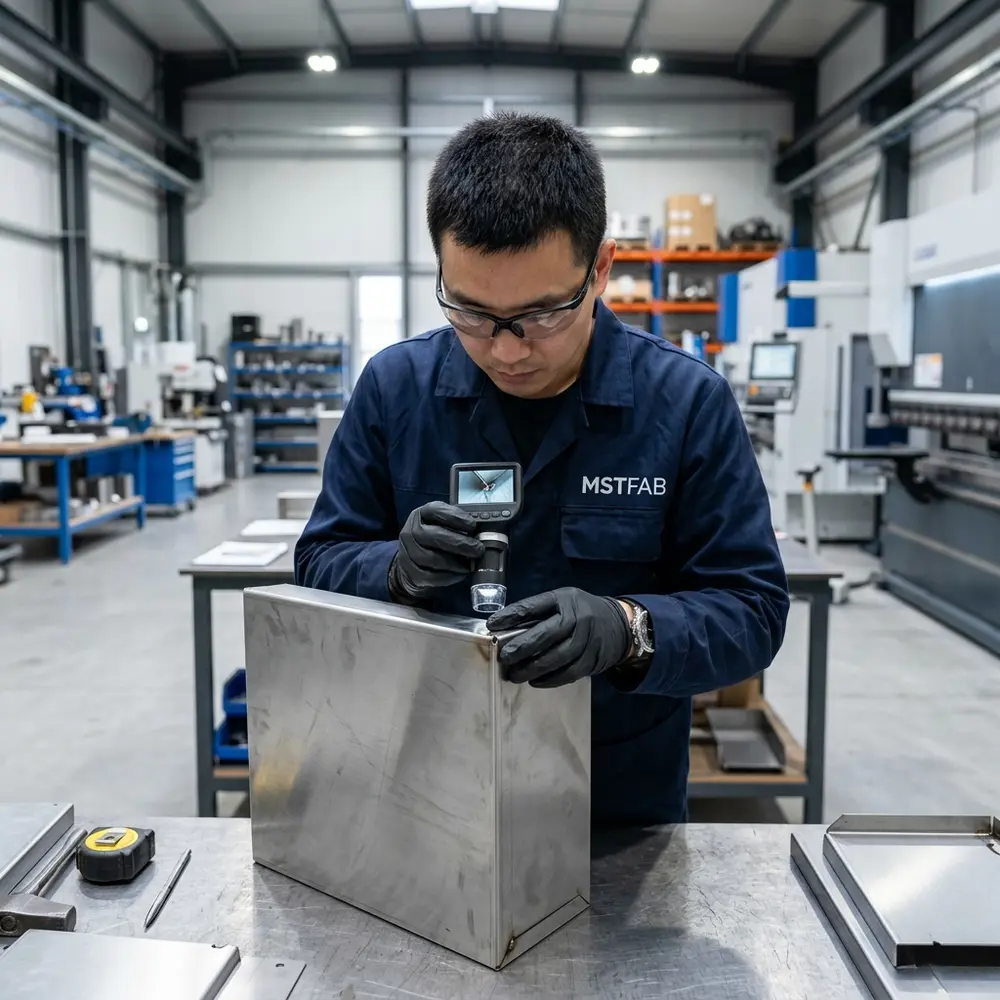
Where These Electrical Junction Boxes Live — and Where Galvanized Stops
Galvanized steel earns its keep in the dry-to-mixed-duty electrical interconnect of an automotive electrical system:
- Wiring-harness assembly-cell junction boxes — the shells an automotive electrical supplier uses to organize, route, and test harness runs.
- Electrical distribution nodes inside automotive electrical sub-assemblies and harness looms.
- Field electrical pull and junction boxes in dry equipment rooms and panel annexes.
- General facility electrical interconnect (non-automotive) where oil mist, coolant drip, and dust are the daily hazards.
It does NOT mean:
- Food, beverage, or pharma washdown zones (those need 304/316L stainless with sealed finishes).
- Cleanrooms or any particulates-sensitive core.
- Outdoor or constant-water environments without a verified IP/NEMA rating on the whole sealed assembly.
For every “does not” bullet, the honest answer is stainless. Galvanized saves money in the mixed-duty zones; it does not buy you a washdown rating, and IATF does not change that material fact.
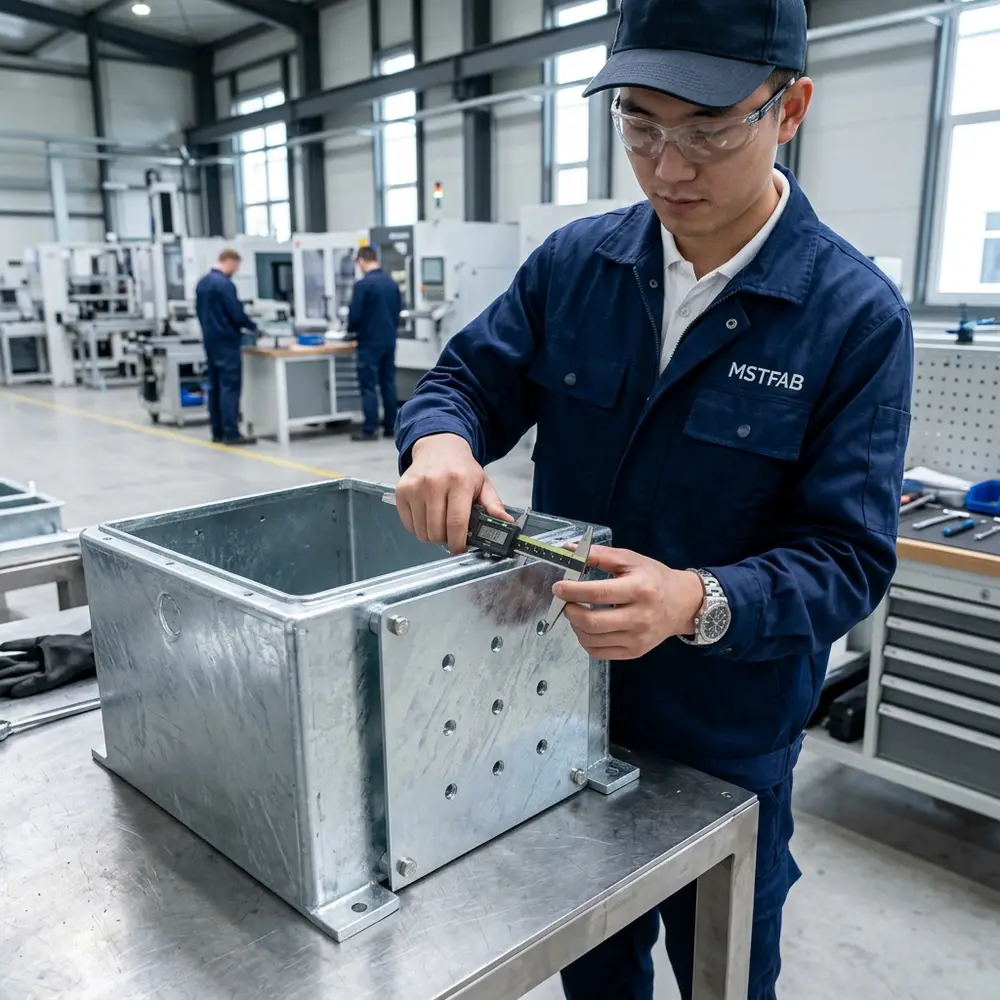
Galvanized + Electrical: Right Box, Right Zone
Hot-dip galvanizing (HDG, ASTM A123/A123M) or pre-galvanized sheet (ASTM A653/A653M) gives a tough zinc barrier at a fraction of stainless cost. For an electrical interconnect shell that is exactly right — provided three practical points sit on the table:
- Pre-galvanized sheet exposes bare steel at cut edges and welds. Those edges need treatment (touch-up, seal, or a powder coat) so corrosion does not start at the cut and migrate inward.
- Powder-coating over galvanize adds a uniform look and a second barrier, but it can block electrical bonding. The drawing must mark masked grounding points, or the “grounded” box is grounded only where the paint cracked.
- Gland plates, conduit entries, and conductor clearances must be specified, not assumed. An electrical junction box lives or dies by where wires enter, exit, and how much clearance the routing needs.
A beautiful powder-coated box that cannot establish reliable grounding or seal its entries is still a bad box. Define the masked areas and the gland strategy before fabrication, not after.
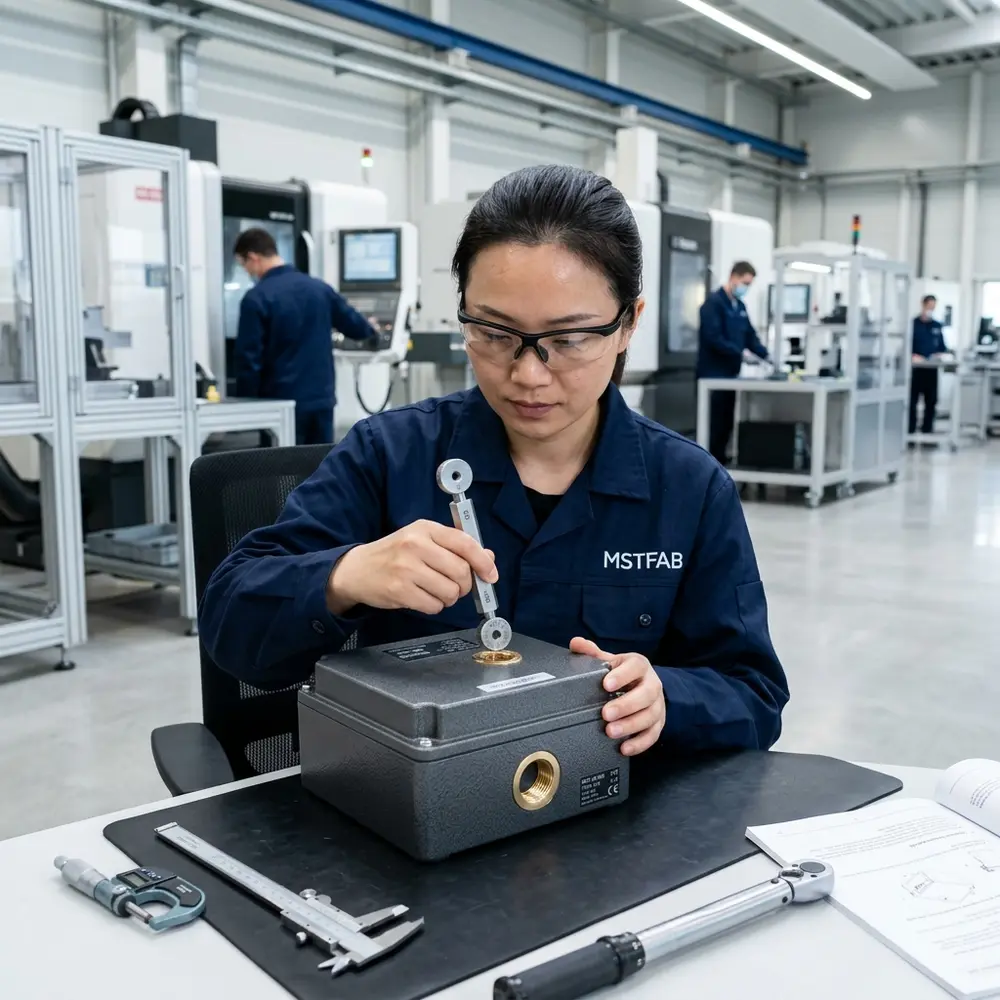
IATF 16949 Proves the System, Not the Enclosure
This is the part every slick brochure skips. An IATF 16949 certificate tells you the supplier controls documents, traceability, non-conformance handling, and corrective action at automotive volume. It does NOT certify that one empty box is waterproof, insulated, or suitable for your cleaning chemicals.
You still need drawings, specs, and product-level verification (IP/NEMA gasket validation, grounding continuity, FAI). For the broader “does my enclosure supplier even need IATF” question, see our automotive machinery IATF guide and the IATF/ISO 9001 explainer.
The No-BS 7-Dimension Scorecard
Forget fake online rankings. Vet your fabrication partner with this 7-dimension scorecard and a paid trial order.
| Dimension | What you actually check | Pass / Fail bar |
|---|---|---|
| D1 — Identity | Live video audit of laser, brake press, welding cells | HARD GATE: no video, no trust |
| D2 — IATF Fit | Valid IATF 16949 cert spanning fabrication; PPAP + IMDS capability | HARD GATE: real automotive QMS required |
| D3 — Capability | In-house laser, bending, hardware insertion, sealed gland plates | Must prove high-count repeatability |
| D4 — Build Quality | First Article Inspection (FAI) on every revision | Will run full FAI on a trial order |
| D5 — Material Proof | EN 10204 3.1 mill cert, heat number, PMI on the galvanized steel | HARD GATE: traceability is your recall defense |
| D6 — Market Certs | IATF 16949 in scope + ISO 9001 baseline | Certs match the exact construction |
| D7 — Commercials | Usable PPAP package, strict change control (PCN), sane IP protection | Automotive programs live on documentary discipline |
Documents You Actually Need (PPAP + IMDS + Serialization)
More PDFs does not mean more quality, but automotive electrical programs require a specific set. For a junction box on an automotive electrical BOM, request: approved drawing, material specification, EN 10204 3.1 mill certificate with heat number, PMI result, FAI / FAIR report, IMDS material declaration, and a PPAP package (PSW, control plan, process flow, PFMEA, MSA, SPC evidence) plus a lot-traceable Certificate of Conformance.
A box can pass a caliper check and still fail your PPAP audit if the package is missing.
HARD GATE (mandatory): before full production, run a representative trial order — confirm gland-plate fit, cover closure, thread protection, masked grounding points, conductor clearances, and that the IATF certificate names the actual manufacturing site. A trading company with a borrowed cert is not an IATF 16949 galvanized steel junction box electrical manufacturer; it is a paperwork reseller.

Key Takeaways
- This article’s angle: a junction box is a wiring-interconnect node in an electrical system, not a control box and not a distribution box — and its high-count, identical, serial nature is exactly why automotive quality systems regulate it.
- IATF 16949 is the automotive quality-management system (PPAP, IMDS, serialization, change control), not a product-safety certificate.
- IATF applies only when the junction box is a serialized electrical interconnect component in the automotive supply chain; general building/facility/non-auto electrical work needs only ISO 9001.
- Galvanized steel is right for dry-to-mixed-duty electrical interconnect; food, pharma, cleanroom, or washdown zones need 304/316L stainless.
- Require a live video audit (D1), a verifiable IATF cert naming the real factory (D2), and full material traceability with EN 10204 3.1 + PMI (D5) as hard gates.
- MSTFAB makes the empty shell to your drawing; you supply the wiring, terminals, and glands.
FAQ
When does a junction box actually need an IATF 16949 galvanized steel junction box electrical manufacturer?
Only when the box is a serialized electrical interconnect component procured into the automotive supply chain, with quality requirements flowed down from an automotive OEM or Tier-1 electrical supplier. The junction box is a high-count serial part, so IATF’s PPAP, IMDS, and change-control discipline directly protects you. For a general building, facility, or non-automotive industrial electrical system, an ISO 9001 supplier is sufficient and cheaper. Order IATF where the supply chain demands it.
Is galvanized steel good enough for electrical junction boxes?
For dry-to-mixed-duty electrical interconnect — harness assembly cells, distribution nodes, dry equipment rooms — hot-dip or pre-galvanized steel with a powder coat is the economical, durable choice. For food, pharma, cleanroom, or washdown zones, switch to 304/316L stainless. Material follows the zone, not the certificate.
Does IATF 16949 make the junction box waterproof or electrically safe?
No. IATF 16949 is a quality-management system, not a product-performance certificate. Waterproofing comes from the gasket, sealing faces, and validated IP/NEMA rating of the whole sealed assembly; electrical safety comes from design, bonded grounding, and correct clearances. Require independent validation of those features; the IATF cert only proves the process behind them is controlled.
What documents prove the shell was built under IATF 16949?
An IATF 16949 certificate whose scope names the real factory and fabrication, plus a PPAP package (PSW, control plan, process flow, PFMEA, MSA, SPC), IMDS material declaration, EN 10204 3.1 with heat number, PMI result, FAI / FAIR, and a lot-traceable Certificate of Conformance. Change-control evidence shows the system actually runs.
IATF 16949 vs ISO 9001 for an electrical junction box: which do I pick?
By supply chain. General electrical system with no automotive flow-down → ISO 9001 (right-sized, cheapest). Automotive OEM or Tier-1 electrical supplier with flow-down → add IATF 16949. Pick the cert the customer or the regulation actually requires; paying for both when one suffices is waste. (For the control-box side of the same decision, the ISO 9001 electrical automation path applies.)
If the enclosure format is still open, compare MSTFAB’s custom sheet metal enclosure shells before the PPAP scope and interfaces are frozen.
 WeChat Contact
 WhatsApp Me Directly