A practical OEM guide to sheet metal network and communication enclosure shells for hospitals, laboratories and healthcare facilities
Written by: Frank, Sheet Metal Manufacturing Specialist
Technical Review: David Chen, Senior Quality Engineer
Last Reviewed: August 2026
Manufacturing Scope: Drawing-based empty sheet metal enclosure shells and mechanical parts only
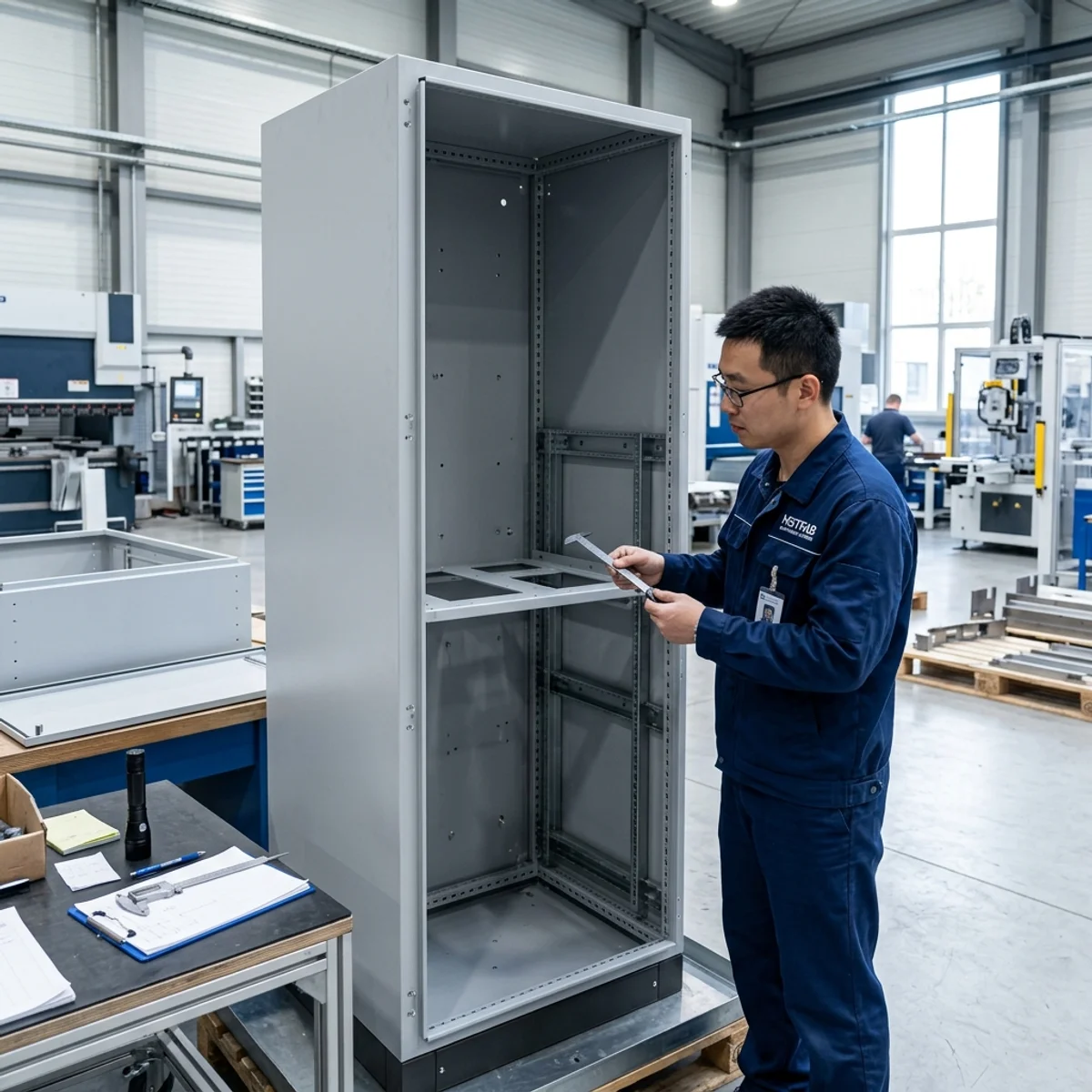
Quick Answer
A network or telecommunications enclosure installed in a hospital does not automatically become a medical device, and its sheet metal supplier does not automatically need ISO 13485 certification simply because the cabinet is located near medical equipment.
The more useful sourcing question is: What mechanical requirements change when a network enclosure moves from a normal server room into a healthcare, laboratory or controlled facility environment?
For the sheet metal enclosure, buyers should define at least:
- Installation zone
- Material and corrosion exposure
- Cleanability of exposed surfaces
- Cabinet and door geometry
- Service-access requirements
- Rack or DIN-rail support interfaces
- Cable-entry and gland plates
- Grounding and bonding features
- Ventilation and cooling-unit interfaces
- Surface finish and masking
- First-article inspection requirements
- Change control and export packaging
MSTFAB manufactures the unpopulated mechanical enclosure. We do not manufacture the finished network or medical system.
Routers, switches, communications electronics, power supplies, batteries, wiring, software, network configuration, medical-device validation and final system certification remain with the buyer or system integrator.
We manufacture the metal house. Your network team decides who moves in and why they suddenly need twenty-seven cables.
First Question: Is This Actually a Medical-Device Enclosure?
This distinction matters. ISO 13485 is an internationally recognized quality-management-system standard specifically associated with medical devices and organizations involved in the medical-device supply chain.
A sheet metal network enclosure may be installed in a hospital data room, a clinic communications closet, a laboratory utility area, beside imaging equipment, in a pharmaceutical facility, or in a clean manufacturing building.
None of those locations automatically makes the enclosure itself a medical device.
That is very different from true medical equipment enclosure shells that are physically part of a regulated medical device.
A hospital network cabinet does not become a medical device because a doctor walks past it. Location matters for the enclosure design. It does not automatically rewrite the product classification.
1. Classify the Installation Zone Before Choosing Material
Do not specify material from the word “hospital” alone. Define where the enclosure actually lives.
Zone A: Dedicated IT or Communications Room. Exposure may be similar to a commercial data room.
Zone B: Hospital Corridor or Public Technical Area. The enclosure may experience frequent contact, cleaning, visible cosmetic expectations, and restricted access.
Zone C: Laboratory or Controlled Production Area. Requires consideration for cleaning chemicals, surface accessibility, seams, and horizontal ledges.
2. Choose Material From Exposure, Not Marketing Vocabulary
A surprisingly common RFQ says: Material: medical-grade metal.
There is no useful sheet metal grade called “medical-grade metal.” The drawing should identify an actual material (e.g., Cold-rolled steel, Zinc-coated steel, Stainless steel 304 or 316, Aluminum).
3. Do Not Automatically Specify Hot-Dip Galvanizing
Hot-dip galvanizing sounds extremely industrial. But galvanizing after fabrication can affect surface texture, fine dimensions, threads, hinges, and door flatness.
The best coating process is not the one with the toughest name. It is the one that survives the environment without fighting the geometry.
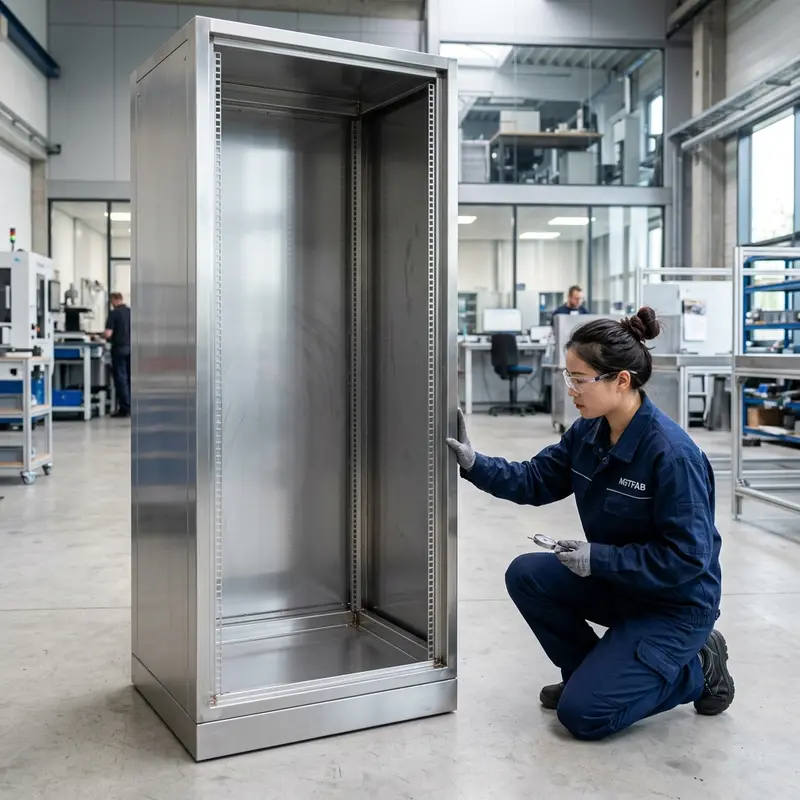
4. Design Exposed Surfaces for Cleaning
Healthcare facilities may clean exposed equipment surfaces more frequently than ordinary industrial locations.
The objective is simple: Do not create geometry that is unnecessarily difficult to maintain. A fashionable recess looks excellent in CAD. Dust is also a strong supporter of recessed architecture.
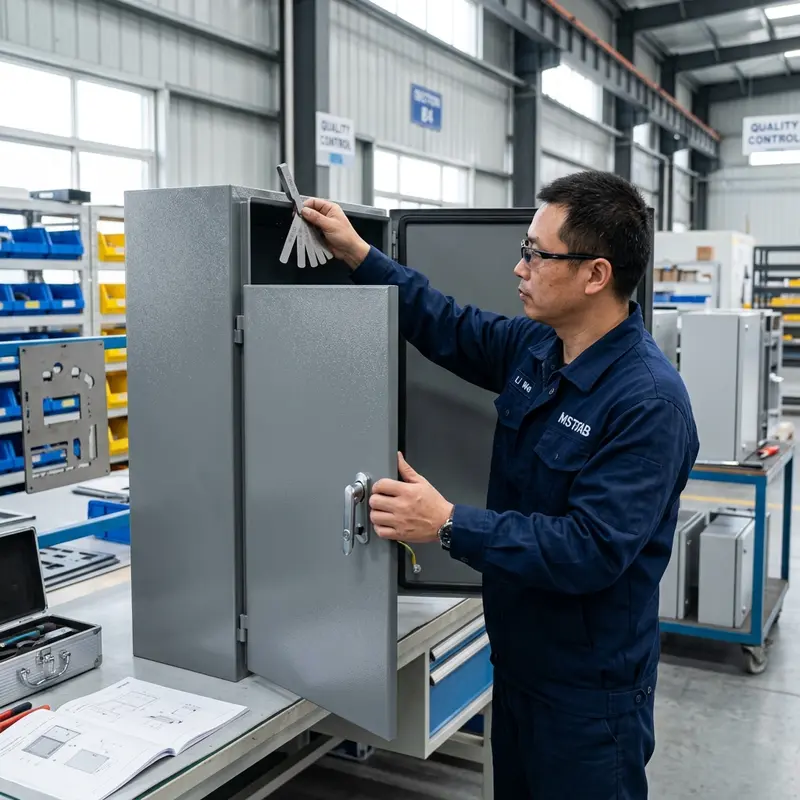
5. Control Door Geometry Before Batch Production
Telecom and network cabinet doors look simple until they stop closing properly.
A large cabinet door should not be approved only while the enclosure lies horizontally. Check its intended installed orientation. Gravity has very little respect for the supplier’s dimensional inspection report.
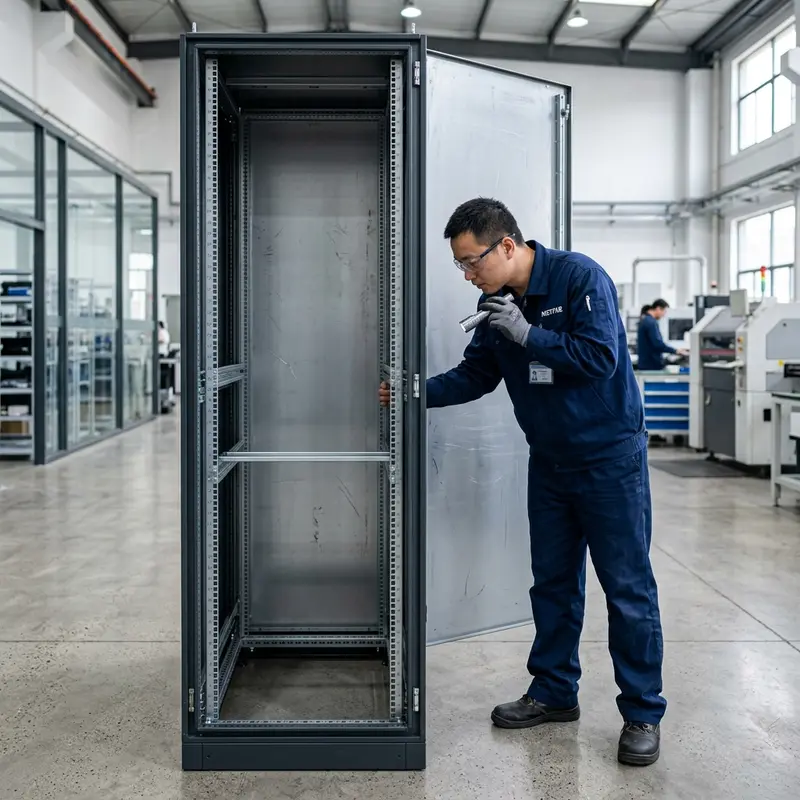
6. Treat DIN Rail and Rack Supports as Mechanical Interfaces
For network cabinet sheet metal fabrication requiring 19-inch rack structures or DIN-rail supports, the tolerance should follow the actual assembly requirement.
Do not specify “DIN rail ±1 mm everywhere” simply because the number sounds precise. Precision without function is just a more expensive decimal place.
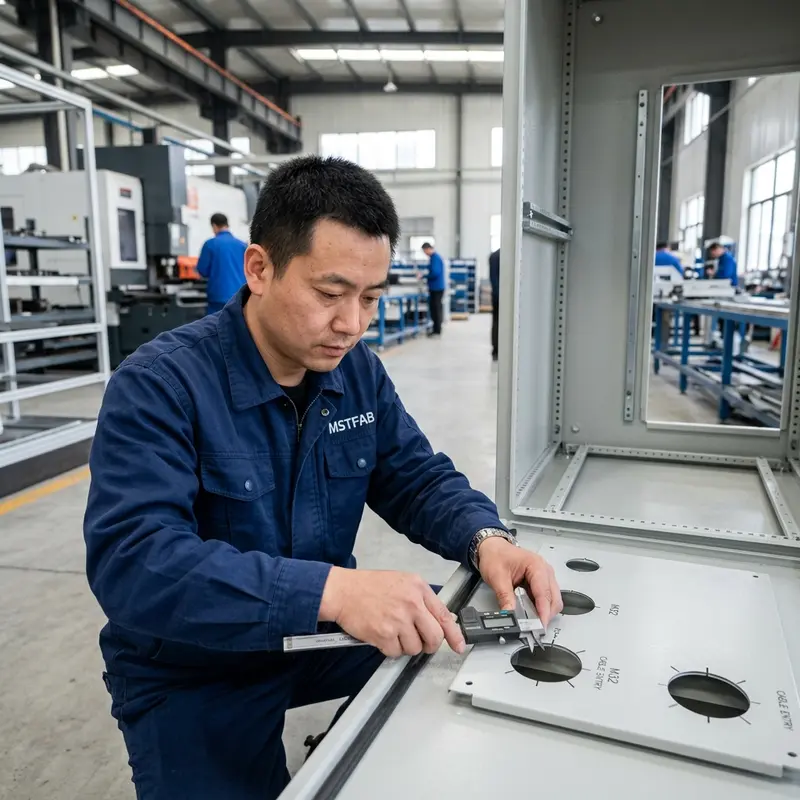
7. Cable Entry Should Be Designed Around Real Cable Bundles
Hospital network infrastructure can become cable-dense very quickly. A gland plate that looked generous during CAD review may become completely full after fiber, ethernet, power, and monitoring arrive together.
Planning spare cable space is usually less expensive than discovering spare cables.
8. Separate Grounding Features From Electrical System Design
The sheet metal supplier can manufacture mechanical grounding interfaces such as welded studs or masked conductive areas.
Do not rely on the production team to interpret: Keep grounding point conductive. Manufacturing drawings work better with dimensions than philosophical guidance.
9. Plan Ventilation Interfaces Without Making the Sheet Metal Factory the Thermal Engineer
Do not write: Add sufficient ventilation. “Sufficient” is not a laser-cut dimension. Provide the exact component model and cutout requirements.
10. Reduce Unnecessary Particulate-Trapping Details
A cabinet installed in a hospital basement IT room should not be specified like a sterile processing chamber just because both addresses contain the word “hospital.” The cleanliness requirement should come from the actual installation zone.
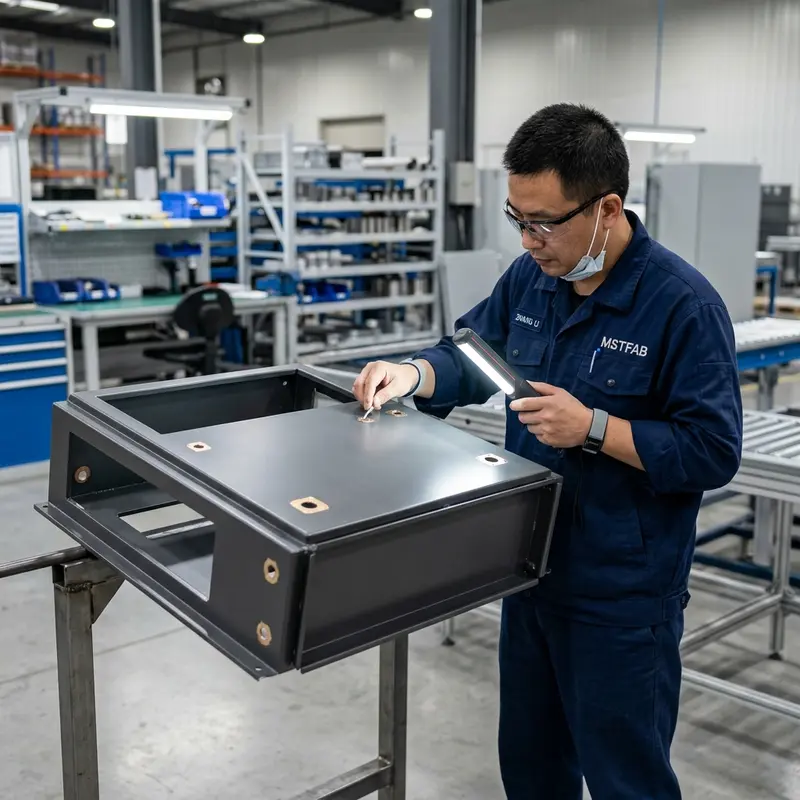
11. Specify Finish With Numbers and Samples
Color words are dangerous. “Light gray” can describe at least twenty shades and three procurement arguments. Approve the finish before batch production.
12. Make First-Article Inspection About Interfaces
A hole can be dimensionally correct. The real component can still have a connector behind it that nobody remembered. Mechanical reality enjoys these small details. Use representative mechanical fit checks.
When ISO 13485 Actually Enters the Conversation
Do not purchase a certificate because the cabinet has a hospital postcode. Purchase the controls the project actually requires.
For many ordinary healthcare network-infrastructure enclosure projects, a general quality-management system such as ISO 9001 may be a more appropriate supplier baseline where no medical-device-specific QMS requirement is flowed down.
Certificates should support the procurement strategy, not become the strategy.
Change Control Matters on Repeat Orders
“Equivalent component” should not mean: It fits approximately the same hole and procurement found it cheaper. Engineering approval comes before batch production.
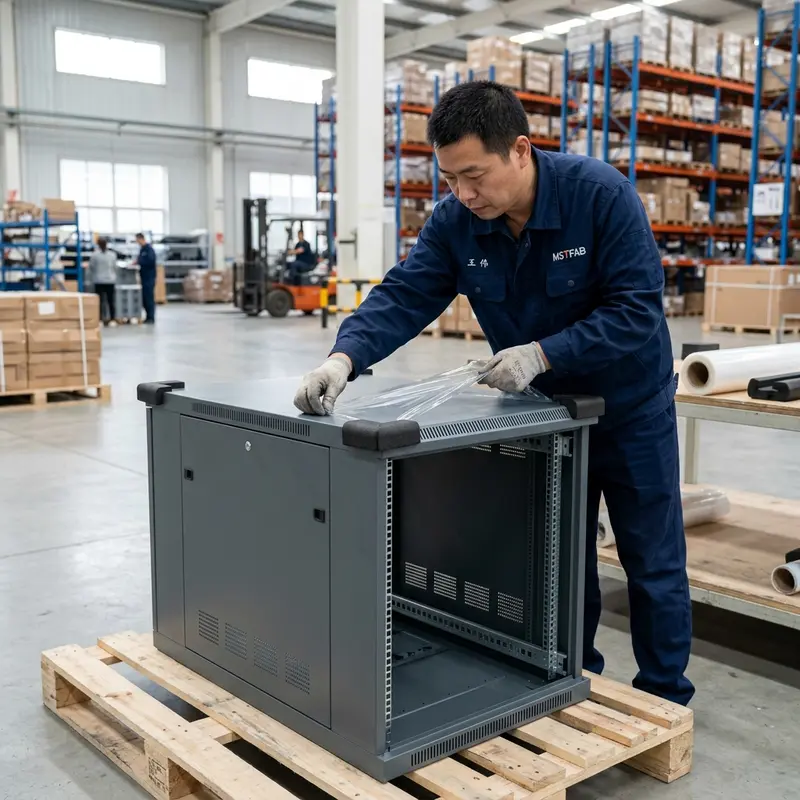
Packaging Matters More in Healthcare-Facing Projects
A visible cabinet with scratched powder coating or bent corners does not become acceptable because the network equipment inside will eventually work perfectly.
The enclosure should reach the customer ready for assembly. Not ready for a short career in body repair.
Supplier Responsibility Matrix
| Project Item | MSTFAB Sheet Metal Scope | Buyer / Network Integrator |
|---|---|---|
| Cabinet body | Manufacture | Define and approve |
| Rack structure / DIN rails | Manufacture to drawing | Define equipment layout |
| Cable-entry plates | Manufacture | Define cable plan |
| Surface finish | Manufacture to specification | Define cleaning/environment |
| Routers / switches / wiring | Not supplied | Buyer scope |
| Medical-device validation | Not supplied | Responsible OEM scope |
This table appears obvious. That usually means somebody should include it in the RFQ before it stops being obvious.
What MSTFAB Manufactures
MSTFAB’s established custom telecom enclosure fabrication scope is the empty enclosure and mechanical cabinet structure, not finished telecommunications equipment.
An enclosure does not need blinking LEDs to be valuable. Getting the metal interfaces right is enough work already.
Request a Precision Sheet Metal Quote
Upload your network enclosure CAD files for a rigorous mechanical DFM review and production quote.
Key Takeaways
A healthcare network enclosure should be engineered from its real installation environment, not from the word “hospital.”
ISO 13485 does not automatically apply to a telecom enclosure because it is installed in a hospital, pharmaceutical facility, laboratory or cleanroom building. It becomes relevant when the enclosure genuinely enters a medical-device quality-system scope.
The most useful RFQ does not say: Hospital telecom box, medical grade, please quote.
It says: Here is the STEP file, installation zone, material, finish, cleaning exposure, rail layout, cable-entry plan and critical interface drawing.
The first sentence sounds important. The second one can actually be manufactured. Metal has always preferred drawings to adjectives.
 WeChat Contact
 WhatsApp Me Directly