An EV startup can make a sharp-looking demo with a screen, a cable and a dream. The metal enclosure is where the dream meets rain, dust, cable pull, heat, public handling and the certification lab’s very expensive raised eyebrow.
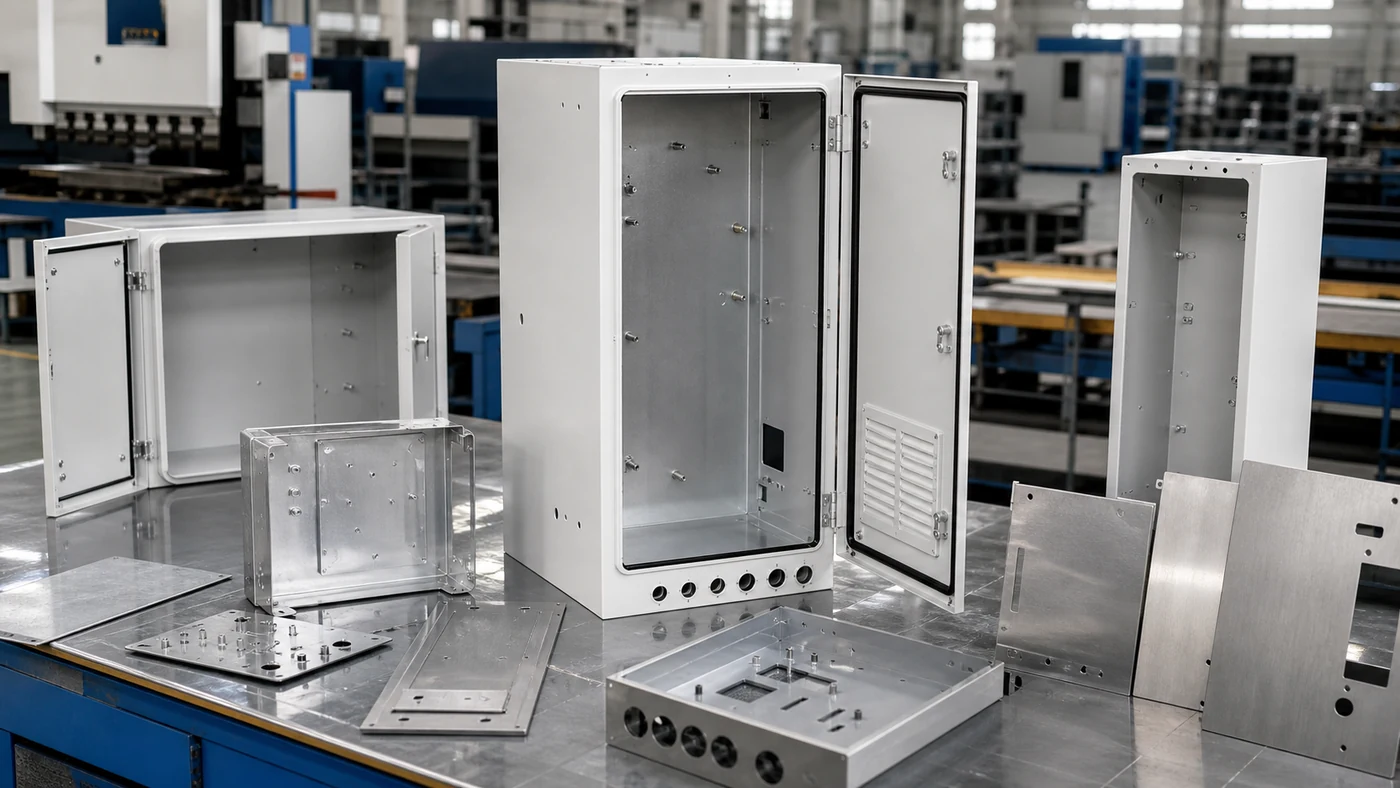
Quick answer: An EV charger enclosure manufacturer for EV startups should fabricate the custom sheet metal shell, cabinet body, door, panels, mounting plate, brackets, cable-entry plates, gasket channel, grounding points and ventilation features from your drawings. MSTFAB does not make finished EV chargers, power electronics, charging cables, firmware or certified complete EVSE products. We manufacture the metal enclosure parts that your electrical team or integrator builds into the final charger.
Scope note for buyers: This page is about empty sheet metal EV charger enclosure shells and related metalwork. IP rating, UL, CE, IEC 61851 and final electrical safety approval depend on the complete assembled charger and test program. We can build the buyer-specified metal geometry that supports those targets, but the finished-product certification belongs to the charger manufacturer.
The enclosure is not the charger
This distinction matters. If a supplier sells you a “charger enclosure” but talks mostly about electronics, software or a finished charging station, you may be in the wrong conversation. For MSTFAB, the job is the sheet metal: the formed cabinet, door, hinge side, latch points, mounting plate, vents, cable entry, grounding studs, gasket surfaces, brackets and packaging.
That may sound less glamorous than a full charging station, but it is exactly where many startup problems begin. A bad enclosure shell makes the good electronics look guilty. It leaks, warps, blocks service access, rubs the cable, chips the finish, traps heat or arrives dented after export shipping. Not a great investor demo. Even worse, not a great pilot batch.
What the metal shell must support
Startup RFQ checklist
| Buyer should define | Why it matters | What MSTFAB can provide |
|---|---|---|
| STEP file plus 2D drawing revision | Prevents “nice render, wrong metal” syndrome. | DFM review for bend access, cutouts, hardware and welding risk. |
| Target environment | Indoor, outdoor, coastal, curbside and washdown sites punish metal differently. | Material and finish guidance for the specified duty, without pretending one coating fixes all weather. |
| Sealing concept | The IP target needs gasket compression, flatness and cable-entry control. | Fabricated gasket channels, door flanges, gland plates and inspection notes. |
| Thermal openings and component zones | Airflow and heat paths need space in the enclosure design. | Vent panels, louvers, fan cutouts, heat-spreader brackets and mounting plates. |
| Grounding and bonding points | Powder coat can accidentally insulate the one place that needs conductivity. | Grounding studs, masked bonding areas and hardware placement checks. |
| Prototype quantity and pilot target | A one-off demo and a 200-piece pilot should not be quoted like the same animal. | Prototype route, first article inspection, pilot-batch process and export packaging plan. |
Prototype to pilot route
For startups, the best route is usually not “quote the cheapest box.” It is prototype, review, revise, first article, pilot batch. Each stage should remove a specific risk before the next order becomes bigger and more expensive.
- DFM review: Check bend radius, hole-to-bend distance, latch position, door flatness, vent strength, gasket surface and cable-entry access.
- Prototype shell: Build real metal so the team can test mounting, cable routing, service access, enclosure stiffness and assembly sequence.
- First article inspection: Record critical dimensions, door gap, hole position, hardware placement and finish condition against the drawing revision.
- Pilot batch: Confirm repeatability, coating control, packaging protection and supplier response before scaling the order.
What MSTFAB can fabricate
- EV charger sheet metal enclosure shells and cabinet bodies.
- Doors, removable panels, latch plates, hinge reinforcement and gasket flanges.
- Mounting plates, DIN-rail support plates, internal brackets and welded frames.
- Cable-entry plates, gland plates, connector cutout panels and strain-relief metalwork.
- Ventilation panels, louvers, fan guards and filter frames according to drawing requirements.
- Grounding studs, PEM hardware, threaded inserts and masked bonding areas.
- Powder coating, brushing, passivation or plating coordination based on material and finish plan.
- First article inspection photos, dimensional checks and export packaging for metal parts.
What MSTFAB does not provide
This is the trust section buyers actually need. MSTFAB does not supply finished EV chargers, charging cables, plugs, power modules, displays, PCBs, software, firmware, electrical wiring, installation services or final UL/CE/IEC certification. We fabricate the metal enclosure shell and related sheet metal parts from the buyer’s drawings.
If you need a certified complete EVSE, your electrical integrator owns the charger system. If you need a precise, export-ready metal enclosure shell for that system, that is our lane. Staying in the correct lane saves everyone money, time and awkward emails.
Buyer trust table
| Buyer risk | What to ask before PO | Good evidence |
|---|---|---|
| Scope confusion | Are you quoting the metal shell only or a complete charger? | Quote lists enclosure body, panels, hardware, finish and packaging separately from electronics. |
| Ingress failure | How are gasket surfaces, door flatness and cable entries controlled? | DFM comments, inspection points and clear responsibility for final assembled IP testing. |
| Heat trouble | Where do vents, fan cutouts and heat-spreader brackets land? | Drawing review tied to component zones and service clearance. |
| Grounding issue | Which areas stay conductive after coating? | Masked bonding areas, grounding stud locations and inspection photos. |
| Startup rework | Can prototype feedback flow into pilot production? | Revision control, first article inspection and repeatable process route. |
| Shipping damage | How are doors, corners and coating protected for export? | Foam separation, carton or crate specification and packing photos. |
Red flags when sourcing EV charger enclosure shells
- The quote says “EV charger” but does not separate sheet metal from electronics.
- The supplier promises IP65 without asking about gasket, door flatness, cable glands or final assembly testing.
- No DFM comments on vents, latch position, grounding points, PEM hardware or bend access.
- Material is listed as “metal” or “steel” with no grade or thickness.
- Finish advice is only cosmetic, with no discussion of outdoor corrosion, UV exposure or masking.
- Prototype and pilot batches use completely different processes with no inspection bridge.
- The supplier shows finished charging stations but cannot show fabricated enclosure shells, panels and cabinet bodies.
Related buyer resources
FAQ
Does MSTFAB make finished EV chargers?
No. MSTFAB manufactures custom sheet metal EV charger enclosure shells, cabinet bodies, panels, brackets, mounting plates and related metalwork. Electronics, cables, firmware, installation and final charger certification are handled by the buyer or system integrator.
What should an EV startup include in the RFQ?
Send STEP files, 2D drawings, material and thickness, finish, prototype quantity, target pilot volume, cable-entry layout, gasket concept, ventilation requirements, grounding points and any critical dimensions. A short RFQ creates long surprises.
Can a sheet metal factory guarantee IP65 for the enclosure?
A sheet metal factory can fabricate the gasket channels, door flanges, gland plates and flatness targets that support an IP requirement. The actual IP rating must be tested on the complete assembled charger, including seals, glands, electronics, fasteners and installation method.
What material is best for an EV charger enclosure shell?
It depends on the environment. Powder-coated carbon steel can work for cost-sensitive applications, galvanized steel adds corrosion value, aluminum reduces weight, and stainless steel is useful for harsh or coastal sites. The drawing should specify exact grade and thickness.
When should a startup move from prototype to pilot batch?
Move after the prototype confirms fit, door closure, cable entry, grounding points, thermal openings, finish and first article dimensions. Pilot production should test repeatability, not discover the first obvious metalwork problem.
 WeChat Contact
 WhatsApp Me Directly