
EV Charger Cabinet DFM: Design Checks Before Sheet Metal Fabrication
An EV charger cabinet can look absolutely perfect in CAD.
The door is flawlessly flat. The cable entry holes are exactly where they should be. The mounting plate lines up. And the gasket path looks like it will keep the water out forever.
Then sheet metal fabrication begins.
The door warps slightly after welding. The cable entry plate is too crowded. The powder coating permanently blocks your grounding points. And suddenly, your perfectly sealed IP65 cabinet has turned into a hot metal oven that slowly cooks your expensive charging electronics.
At MSTFAB, an expert EV charger cabinet manufacturer, we perform rigorous Design for Manufacturability (DFM) reviews on every project. You bring the electrical layout; we catch the sheet metal risks before the laser cutter ever fires.
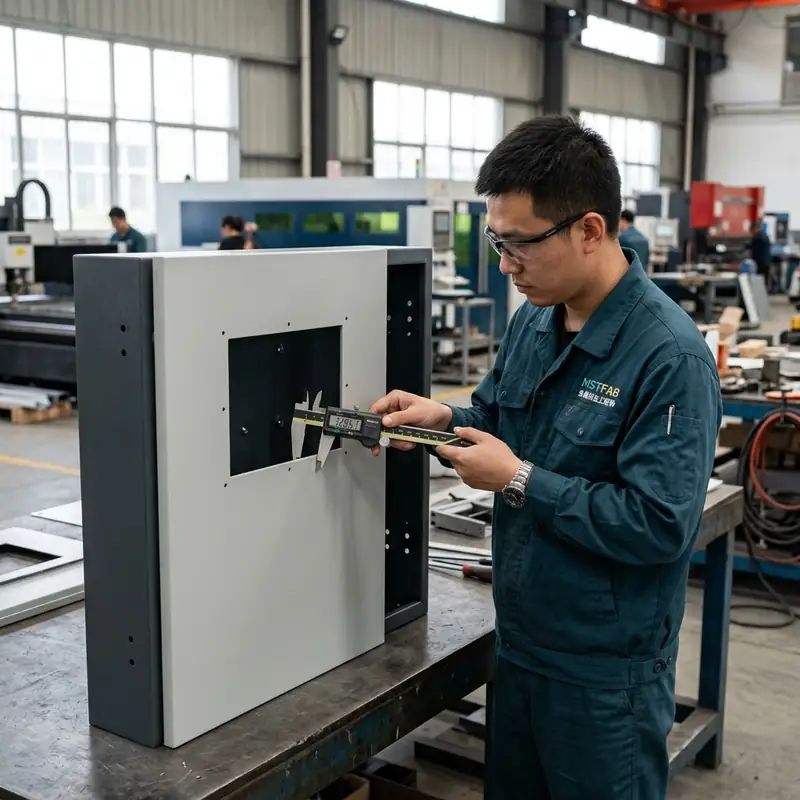
Thermal Management vs. Water Sealing
This is the ultimate engineering contradiction for EV charger cabinets. If you seal the cabinet completely to stop dust and rain, you trap the massive heat generated by DC contactors and power modules.
During DFM review, we scrutinize your EV charging enclosure thermal management. We check louver orientation, filter accessibility, and airflow paths. A beautifully sealed cabinet with no thermal plan is not “well protected”—it is just a warm metal room for electronics. Our engineering team ensures that your ventilation design stops water without strangling airflow.
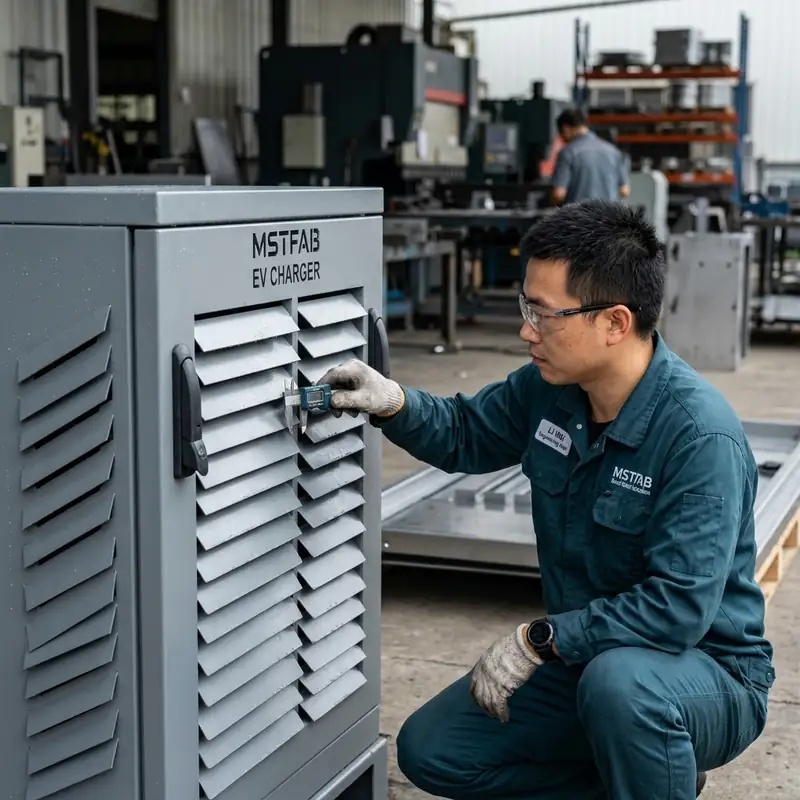
Cable Entry DFM: Stop Field Drilling
In CAD, dragging a cable routing line is easy. In reality, massive high-voltage cables need serious bending radii. If your DFM review ignores cable clearance, the site installer will literally drill new holes into the bottom of the cabinet.
Drilling holes after powder coating is not engineering—it is corrosion with a drill. We review your gland plate layouts to ensure modular, oversized, drill-free cable entry systems are pre-fabricated.
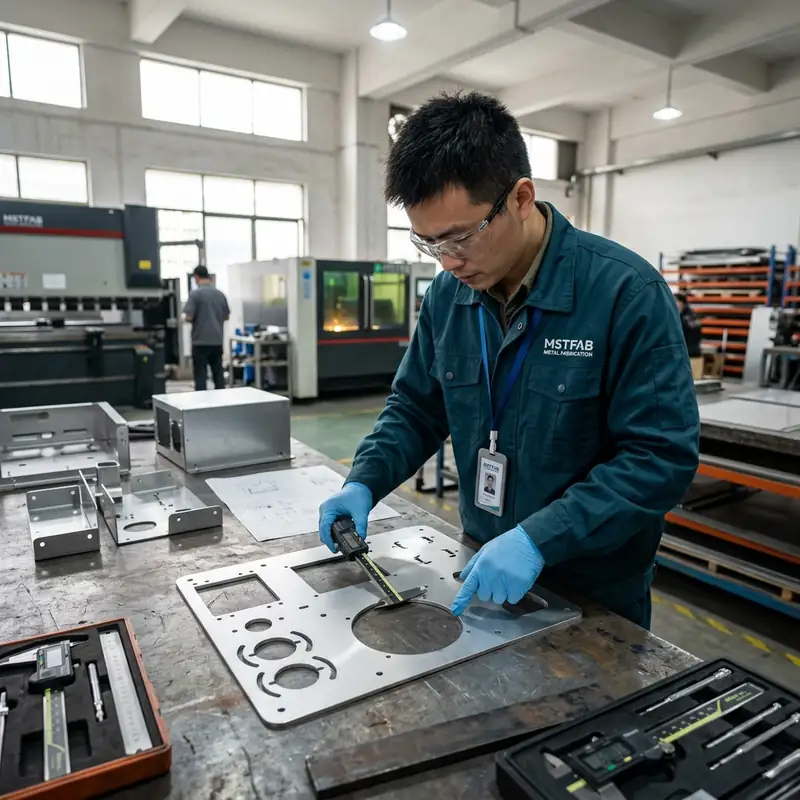
Door Flatness and Gasket Sealing
Many engineers assume that adding a premium rubber gasket guarantees a waterproof seal. It does not. A gasket only works if the metal structure allows it to work.
If you design a door that is too thin, it will bow outward. If you ignore TIG welding heat input, the frame will distort. A gasket cannot save a twisted door. Our DFM checks mandate proper return flanges and fixture-controlled welding sequences to guarantee 100% flatness for reliable gasket compression.
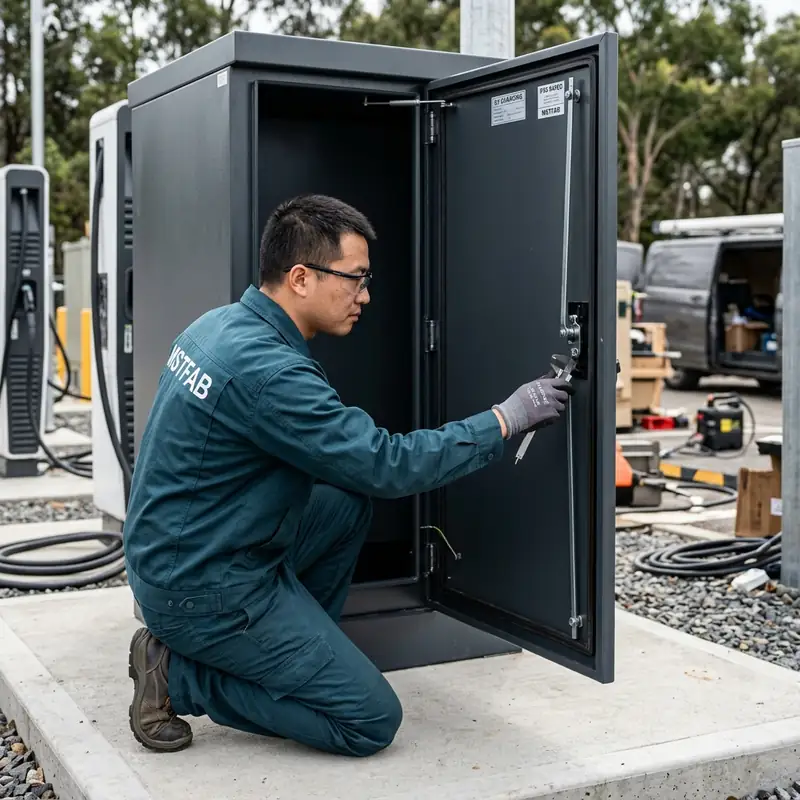
Powder Coating and Grounding Paths
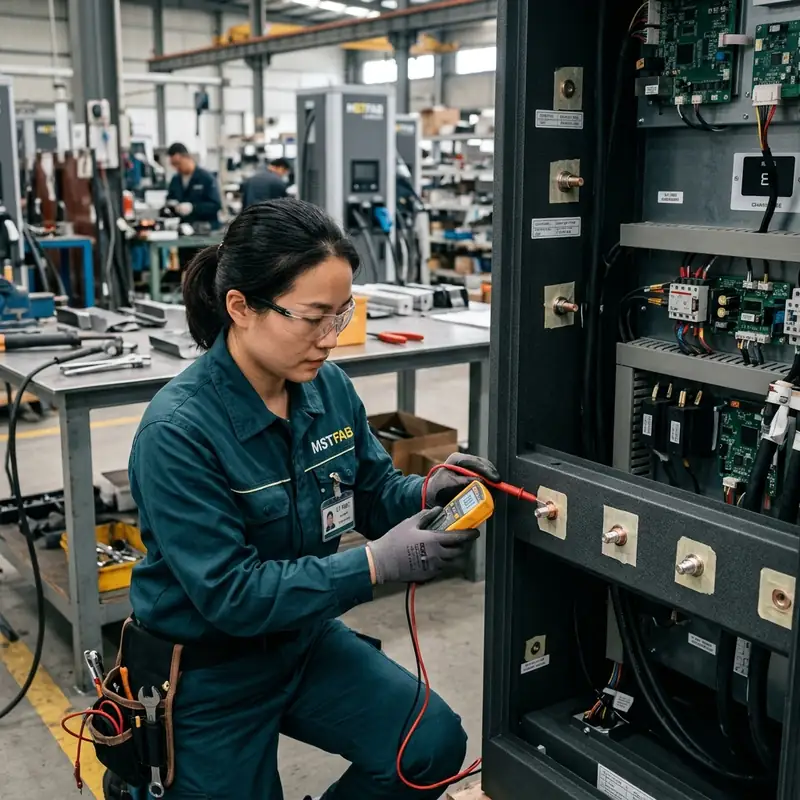
Powder coating is a fantastic protective finish, but it is also an excellent electrical insulator. We frequently receive CAD drawings with zero masking instructions for earth points.
If your factory blindly coats the cabinet, the electrical contractor will have to spend hours grinding paint off just to pass grounding inspection. Our DFM process aggressively flags every single grounding stud, door bonding point, and internal rail connection to ensure high-temperature masking tape is applied before the powder line.
Welding Distortion and Frame Squareness
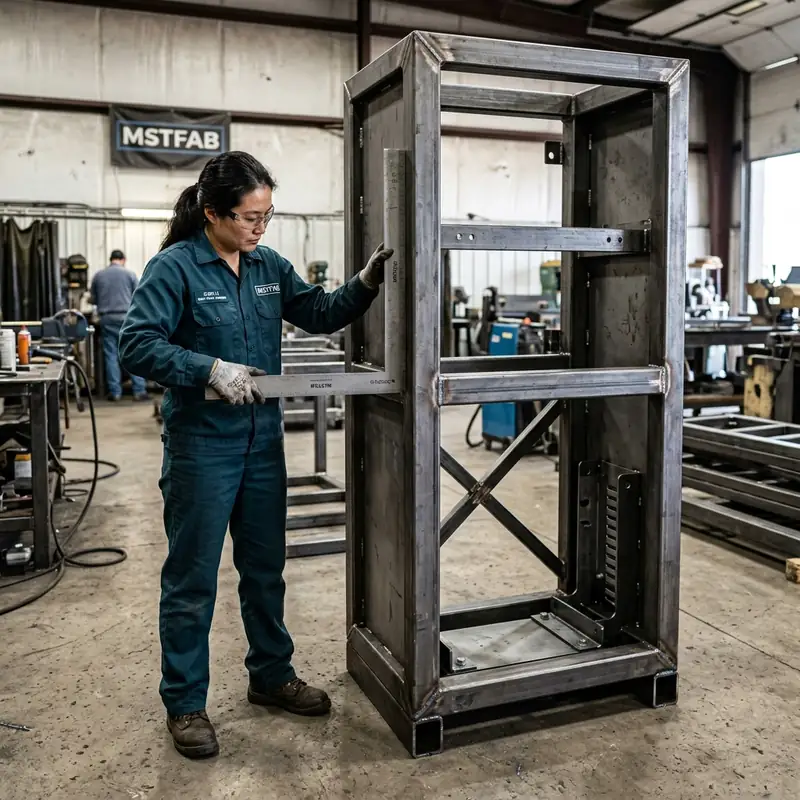
More welding does not always mean better strength. Sometimes, extensive TIG welding on thin sheet metal pulls the entire base frame out of square. When the frame twists, the doors jam.
Our engineers use DFM to replace unnecessary continuous welds with intelligent CNC bends, gussets, and tab-and-slot joinery, reserving heavy structural welding strictly for the massive base plinths.
| EV Cabinet DFM Risk | The “Blind Fabrication” Factory | The MSTFAB Engineering Review |
|---|---|---|
| Grounding Paths | Sprays powder coating directly over grounding points, causing immediate failure during electrical safety inspection. | Aggressively flags bonding points in DFM and applies extreme-heat masking tape prior to coating. |
| Thermal Conflict | Cuts plain holes for fans without reviewing rain trajectory, turning the fan into a water pump during a storm. | Engineers hooded labyrinth louvers that optimize heat exhaust while physically blocking driving rain. |
| Cable Congestion | Blindly cuts undersized gland holes, forcing installers to aggressively bend extremely thick power cables. | DFM review ensures massive internal cable bending clearance and modular, drill-free entry plates. |
| Welding Warpage | Welds thin 1.2mm doors continuously, causing massive heat distortion that makes corner gasket sealing impossible. | Replaces unnecessary welds with stiffening CNC bends and uses fixture-controlled sequences for perfect flatness. |
Scope Clarity: We Build the Metal, You Build the Charger
At MSTFab, we manufacture the physical sheet metal cabinet structure. We do not design EV charging modules, software, or payment systems.
You bring the electrical design and the 3D STEP files. We bring the critical sheet metal DFM review to ensure your cabinet actually works in the real world.
Catch Fabrication Errors Before They Happen
Stop paying for expensive prototype mistakes. Let MSTFAB’s engineering team review your EV cabinet design for manufacturability.
Send STEP + 2D Drawings for Complete DFM Review & Quotation »
Explore More Technical Fabrication Guides
- EV Charger Cabinet Manufacturer
- EV Charging Station Enclosure Fabrication
- DFM for Sheet Metal Enclosures
- Outdoor Charging Station Enclosures
- Sheet Metal Parts for EV Charging Stations
- IP65 Weatherproof Guide
- NEMA 4X EV Charger Enclosures
- Australia EV Charger Cabinets
- Vietnam EV Charging Cabinets
- Battery Storage Cabinets
- EV Feeder Cabinet Enclosures
- Custom EV Charger Enclosure
- EVSE Cabinet Manufacturer
- Electrical Control Cabinet Manufacturer
- Power Distribution Enclosure
- Material Selection Guide
- CNC Sheet Metal Bending Service
- TIG Welding Service
- Powder Coating Guide
- Stainless Steel Enclosures
- Galvanized Steel Enclosures
custom sheet metal enclosure fabrication
MSTFAB manufactures custom sheet metal enclosures, electrical cabinets, control boxes and industrial metal housings for OEM buyers.
 WeChat Contact
 WhatsApp Me Directly