By: Frank, General Manager
Technical Review: Michael Chen, Quality Manager
Last Updated: July 5, 2026
A custom metal cabinet is more than a group of bent panels.
It may protect equipment, organize internal components, support doors and locks, provide mounting locations, create service access, manage ventilation, hold hardware kits, and survive export transport before it reaches the buyer’s assembly line.
A cabinet body may look correct before the door is installed. Then the hinge alignment is wrong. The lock does not engage. The mounting plate cannot be installed after welding. The powder coating blocks a grounding point. The cabinet reaches the customer with scratched doors because it was packed like a hidden internal bracket.
That is why buyers need a custom metal parts manufacturer for metal cabinets, not only a factory that can cut and bend steel sheets.
The real requirement is a connected manufacturing route:
Drawing review → material confirmation → laser cutting → CNC bending → welding or assembly → hardware installation → surface finishing → inspection → export packing.
MSTFAB supports drawing-based metal cabinet fabrication for OEM projects, including industrial cabinets, equipment cabinets, cabinet bodies, doors, access panels, internal mounting plates, base frames, side panels, cable-entry plates, ventilation panels, machine cabinets, control cabinet structures, and multi-part cabinet assemblies.
The objective is straightforward:
Deliver metal cabinets that fit the intended equipment, support the required hardware, remain practical to assemble and service, and stay consistent for repeat orders.
For broader OEM fabrication support, visit custom sheet metal fabrication for OEM parts.
Need production capability? This article focuses on metal cabinet parts. For manufacturing scope, process capability and drawing-based quotation support, review MSTFAB’s industrial enclosure manufacturing.
Planning an RFQ? This guide focuses on metal cabinet component guide doors panels hardware. For production capability, drawing review and quotation support, see MSTFAB’s custom sheet metal enclosure design and fabrication.
What Is a Custom Metal Cabinet?
A custom metal cabinet is a drawing-based fabricated structure designed around the buyer’s dimensions, equipment layout, service-access needs, material choice, finish standard, mounting arrangement, and delivery requirements.
A cabinet may include cabinet body panels, doors and access covers, internal mounting plates, shelves or support trays, structural base frames, plinths or support legs, side panels, rear panels, ventilation panels, cable-entry plates, hinges, handles, locks and latches, PEM nuts and studs, rivet nuts, grounding studs, hardware kits, labels, and protective shipping materials.
Typical applications include industrial equipment cabinets, machine cabinets, control cabinet structures, telecom cabinet bodies, network equipment cabinets, battery-system cabinets, storage and support cabinets for OEM equipment, automation equipment cabinets, cabinet bodies for electrical assemblies, instrument cabinets, service-access cabinets, outdoor equipment cabinet structures, rack-related cabinet assemblies, and custom sheet metal cabinet frames.
The cabinet should not only look correct when empty. It must work with the mounting plates, equipment, doors, locks, brackets, cable routes, ventilation features, fasteners, and service requirements that come later.
Metal Cabinets, Enclosures, and Electrical Cabinets Are Not the Same
These terms are often used together, but their purchasing intent can be different.
- Metal Cabinet: Larger structured storage or equipment-support unit. Focuses on doors, internal space, mounting layout, service access, and base frame.
- Metal Enclosure: Protective housing around a device or assembly. Focuses on seams, access panels, protection, and mounting interfaces.
- Electrical Cabinet: Cabinet designed around electrical layout. Focuses on mounting plates, cable entries, DIN rails, ventilation, and electrical access.
- Equipment Housing: Protective structural shell for equipment. Focuses on panels, covers, chassis, appearance, airflow, and assembly fit.
A custom metal cabinet page should focus on the physical cabinet structure and its mechanical delivery requirements. Electrical wiring, PLC programming, circuits, internal electrical components, product-level safety validation, and final compliance testing should be separately defined because they are not automatically part of sheet metal fabrication scope.
For electrical-specific projects, see custom metal electrical cabinets.
For electrical layout concerns, see custom electrical enclosure fabrication.
For equipment shell projects, see metal equipment housing manufacturer.
Why Metal Cabinets Require More Than Basic Sheet Metal Processing
A cabinet may consist of several components that must work together.
For example, the cabinet body must remain square. The door must align with hinges and locks. The internal mounting plate must fit after body welding. Hardware must remain accessible during final assembly. Cable-entry openings must match the buyer’s layout. Ventilation features must not interfere with internal components. Grounding areas may need bare-metal contact. Powder coating must not block threads or gasket-contact surfaces. Visible doors and panels must be protected during shipment.
A cabinet can pass a basic dimensional check and still create problems for the buyer. Common failure points include door gaps that are uneven, hinges that bind after coating, locks that do not engage, mounting plates that no longer fit, fasteners that cannot be reached with normal tools, cable-entry plates in the wrong position, surface scratches on visible doors, frames distorted by welding, hardware kits packed incorrectly, and cabinet bodies damaged during pallet transport.
The useful question is not only: “Can you make this cabinet?”
The better question is: “Can this cabinet be fabricated, assembled, opened, mounted, serviced, finished, inspected, packed, and repeated without creating work for the buyer’s assembly team?”
Common Components in a Custom Metal Cabinet
A cabinet is usually a controlled assembly rather than one single fabricated part.
- Cabinet Body: Creates the main protected structure. Requires flatness, squareness, controlled weld areas, and mounting points.
- Door or Cover: Provides service access and protection. Requires controlled door gap, hinge alignment, and lock/latch function.
- Mounting Plate: Supports internal devices or components. Requires hole pattern accuracy, fastener access, and installation clearance.
- Base Frame or Plinth: Supports cabinet position and weight. Requires strength, level mounting, and transport support.
- Side and Rear Panels: Close the cabinet body. Requires fit, removable access, and visible finish.
- Ventilation Panel: Supports airflow management. Requires correct opening position and reinforcement.
- Cable-Entry Plate: Allows cables or connectors to enter. Requires correct cutout size and mounting interface.
- Hardware Kit: Supports assembly and installation. Requires correct quantity, labels, thread compatibility, and packing order.
The individual parts matter. The relationship between all parts matters more.
Start With a Complete Metal Cabinet RFQ
A cabinet quotation should define the complete mechanical requirement, not only the outer dimensions.
For an accurate review, provide the STEP or STP assembly file, PDF cabinet drawing, exploded-view drawing, individual part drawings, DXF cutting files, part numbers and revisions, material grade and thickness, required quantity, and cabinet dimensions.
Also include door, hinge, handle, lock, and latch requirements, mounting plate and base-frame requirements, cable-entry and ventilation requirements, hardware list, welding notes, surface-finish requirement, inspection needs, and packaging expectations.
A STEP assembly file helps explain the relationship between cabinet body, doors, mounting plates, hardware, and internal space. A PDF drawing controls dimensions, materials, revision, finish notes, tolerance requirements, and inspection needs. An exploded view helps identify the correct component sequence.
DFM Review for Metal Cabinets
DFM means Design for Manufacturing. For cabinet projects, DFM review should consider both part-level manufacturability and cabinet-level fit.
A cabinet DFM review may consider material grade and thickness, cabinet dimensions, panel proportions, door gaps, hole and slot positions, hole-to-bend clearance, bend radius, flange length, tooling access, bend sequence, welding access, weld-distortion risk, mounting plate clearance, hardware installation sequence, hinge positions, lock and latch cutouts, gasket-contact surfaces, cable-entry positions, ventilation requirements, and grounding areas.
For example, an internal mounting plate may fit in CAD but become impossible to install after a side panel is welded into place. A door may have correct dimensions as bare metal but bind after hinges, coating, and seals are added. A large cabinet side panel may need reinforcement bends to reduce flexing.
Material Selection for Custom Metal Cabinets
The correct material depends on cabinet location, weight, corrosion exposure, visible appearance, finish route, structural requirement, and buyer specification.
- Carbon Steel: Indoor industrial cabinets, machine cabinets, support structures. Verify thickness, welding, powder coating, and corrosion protection.
- Galvanized Steel: Cabinet panels, internal supports, utility cabinet components. Verify coating condition, bends, and finish compatibility.
- Stainless Steel: Wash-down cabinets, outdoor cabinets, visible industrial cabinets. Verify grade, surface finish, welding cleanup, and protective packing.
- Aluminum: Lightweight cabinets, telecom structures, electronics-related cabinets. Verify alloy, bend feasibility, stiffness, and anodizing or coating.
CNC Bending Creates Cabinet Geometry and Stiffness
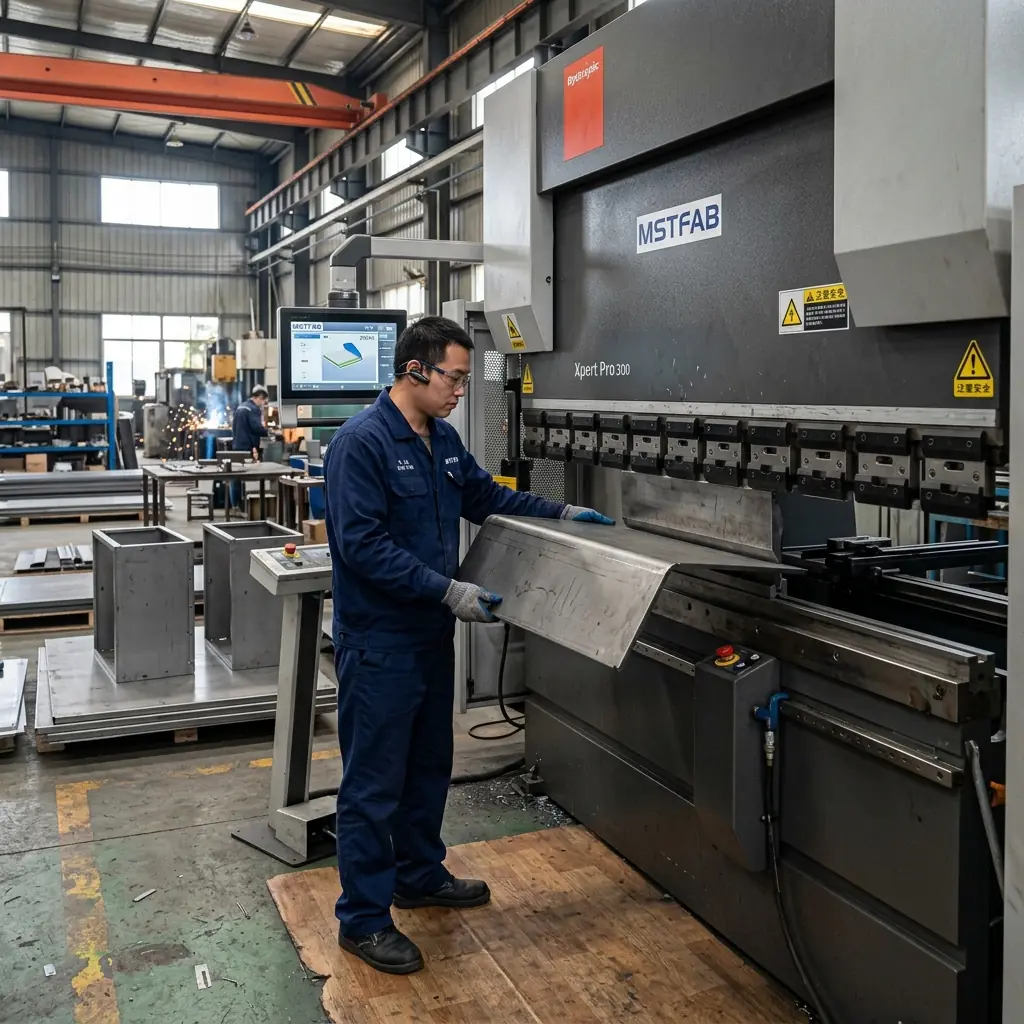
CNC bending turns flat panels into cabinet bodies, doors, channels, trays, side panels, reinforcement features, base sections, and mounting structures.
Springback is normal. Metal may move slightly back toward its original flat shape after bending. That means the flat DXF pattern may be correct while the finished cabinet component still creates a fit problem.
Important post-bend checks include cabinet width, height, and depth, door gap, flange length, hinge position, lock location, mounting-hole alignment, panel flatness, cabinet squareness, hardware access, and mounting-plate clearance.
Welding and Cabinet Frame Assembly
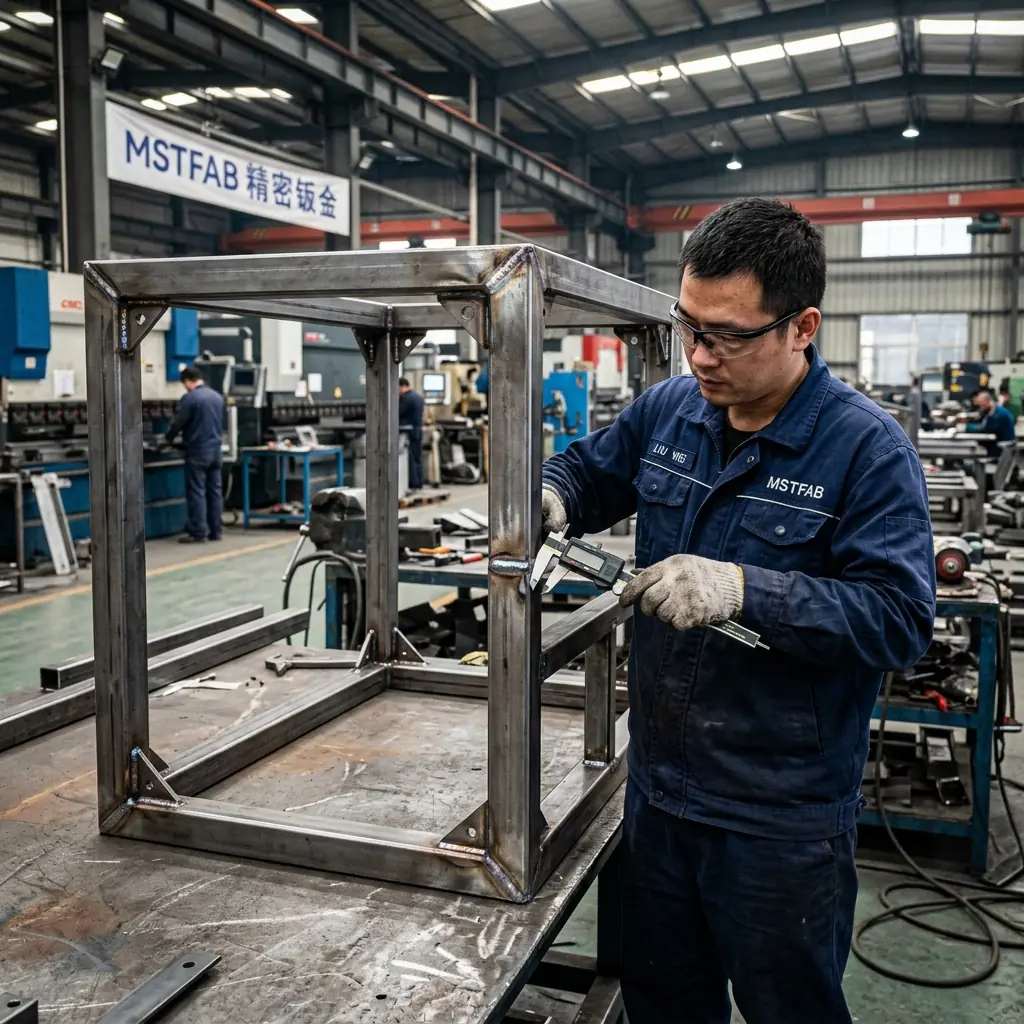
Some cabinet structures are assembled mainly through bends, hardware, and removable panels. Others require welding to create cabinet frames, bases, structural corners, welded bodies, reinforcements, or multi-panel structures.
Welding adds strength. It also introduces heat. Heat can affect flatness, squareness, door gaps, hole position, panel alignment, surface appearance, mounting plate fit, and hardware access.
Before welding begins, clarify weld locations, continuous or intermittent welds, structural or cosmetic requirements, visible weld areas, grinding requirements, fixtures, flatness requirements, and critical post-weld dimensions. A welded cabinet frame should not only be strong. It should remain square enough for doors, panels, mounting plates, hardware, and equipment interfaces to fit correctly.
Doors, Hinges, Locks, and Service Access
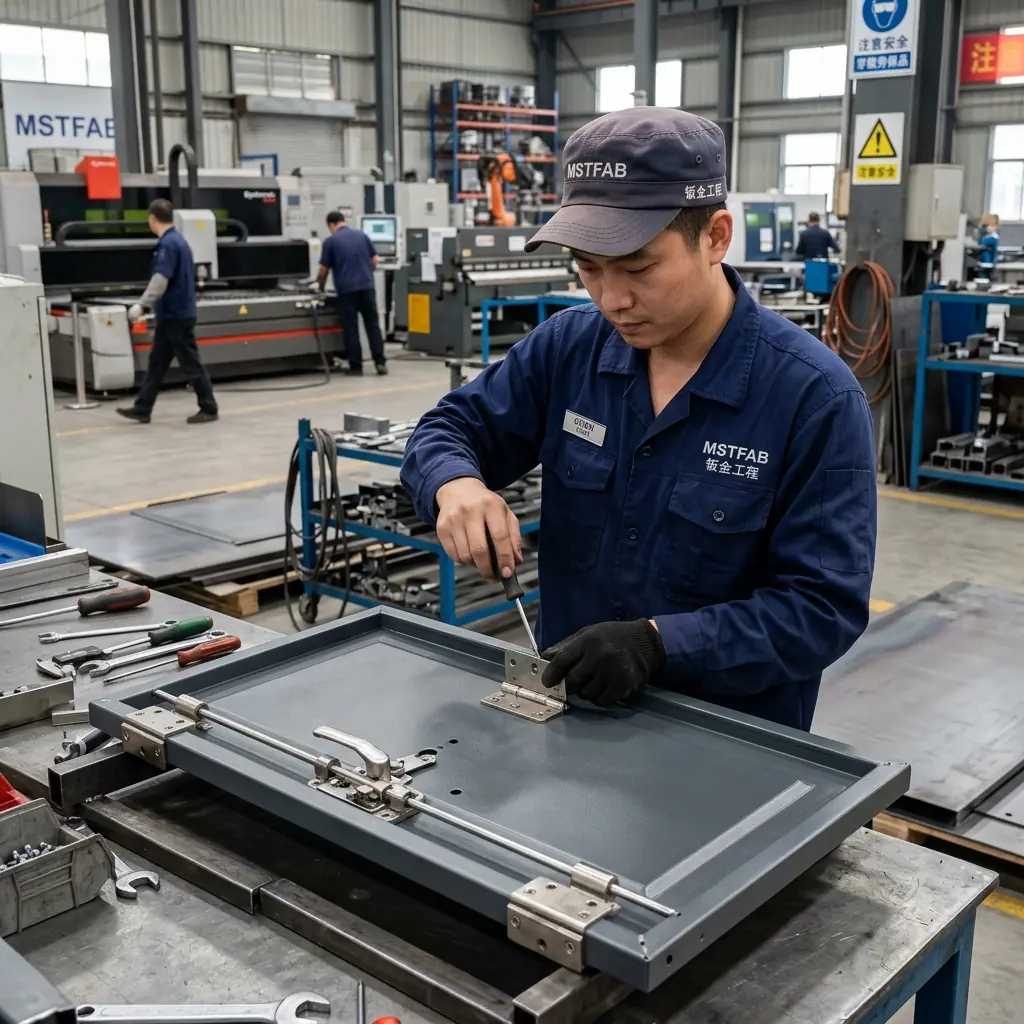
A cabinet door is not simply a bent sheet metal panel. It is part of a service-access system that may involve hinges, handles, locks, latches, gaskets, grounding straps, viewing windows, access panels, fasteners, internal clearance, and tool access.
Before production, confirm door opening direction, hinge type and position, handle location, lock type, latch engagement, door gap, gasket-contact surfaces, fastener accessibility, and grounding arrangement.
A door that looks aligned before finishing may still bind after coating, gasket compression, or hardware installation. Assembly verification should focus on actual opening, closing, locking, and service access.
Mounting Plates, Shelves, and Internal Cabinet Layout
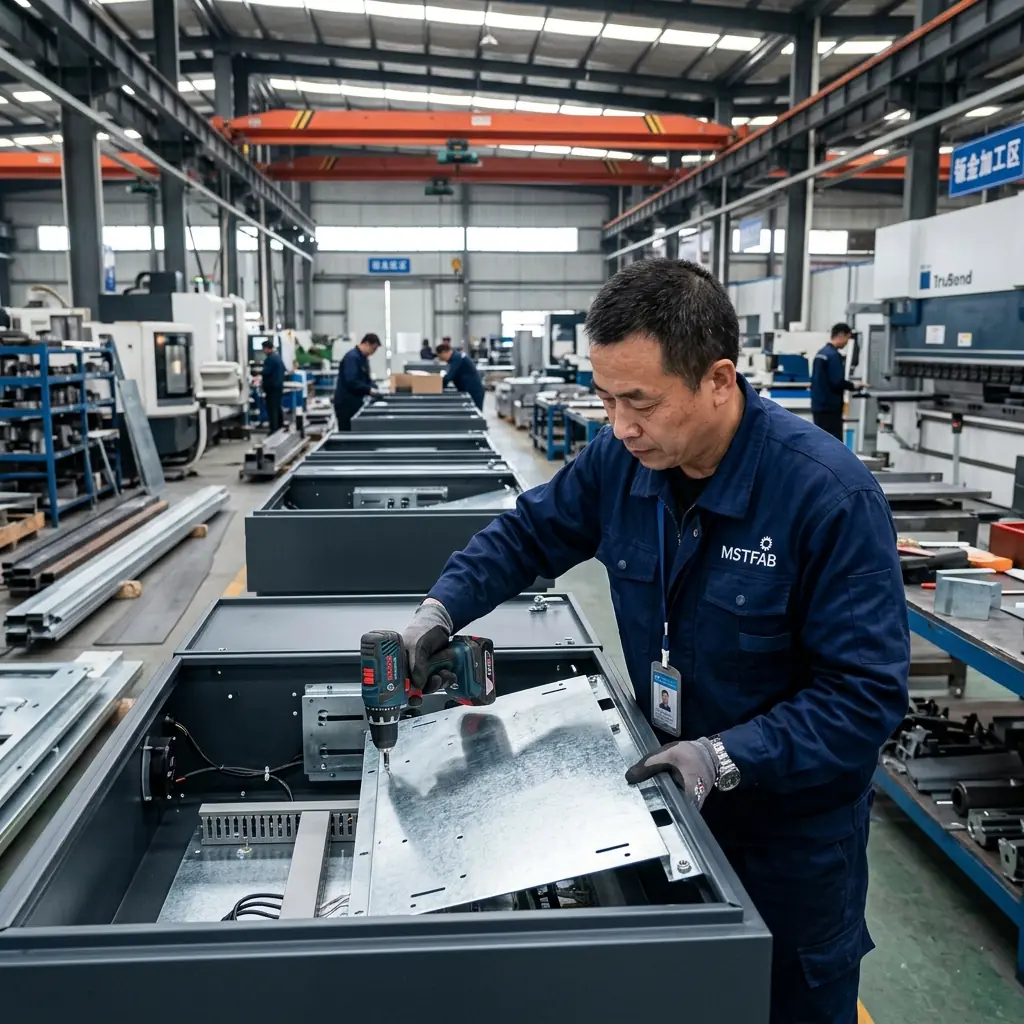
Many cabinets contain internal structural components that support the buyer’s own equipment. These may include mounting plates, equipment rails, internal brackets, support trays, shelf panels, cable-support brackets, fan mounting plates, filter supports, grounding plates, internal chassis sections, and removable access panels.
The cabinet manufacturer should understand the mechanical relationship between these components. Before production, confirm mounting-hole pattern, installation sequence, tool access, fastener direction, cable clearance, internal clearance, door opening clearance, ventilation pathway, service space, and grounding areas.
Surface Finishing for Metal Cabinets
Surface finishing affects corrosion resistance, visible quality, scratch resistance, grounding, thread function, door fit, gasket contact, and packaging requirements.
Common finish routes may include powder coating, wet painting, anodizing for aluminum, zinc-related protection, passivation for stainless steel, brushing, polishing, and protective film.
Before production, define finish type, color reference, texture, gloss level, visible faces, thread masking, grounding areas, gasket surfaces, door and panel gaps, and scratch-protection requirement.
Inspection for Custom Metal Cabinets
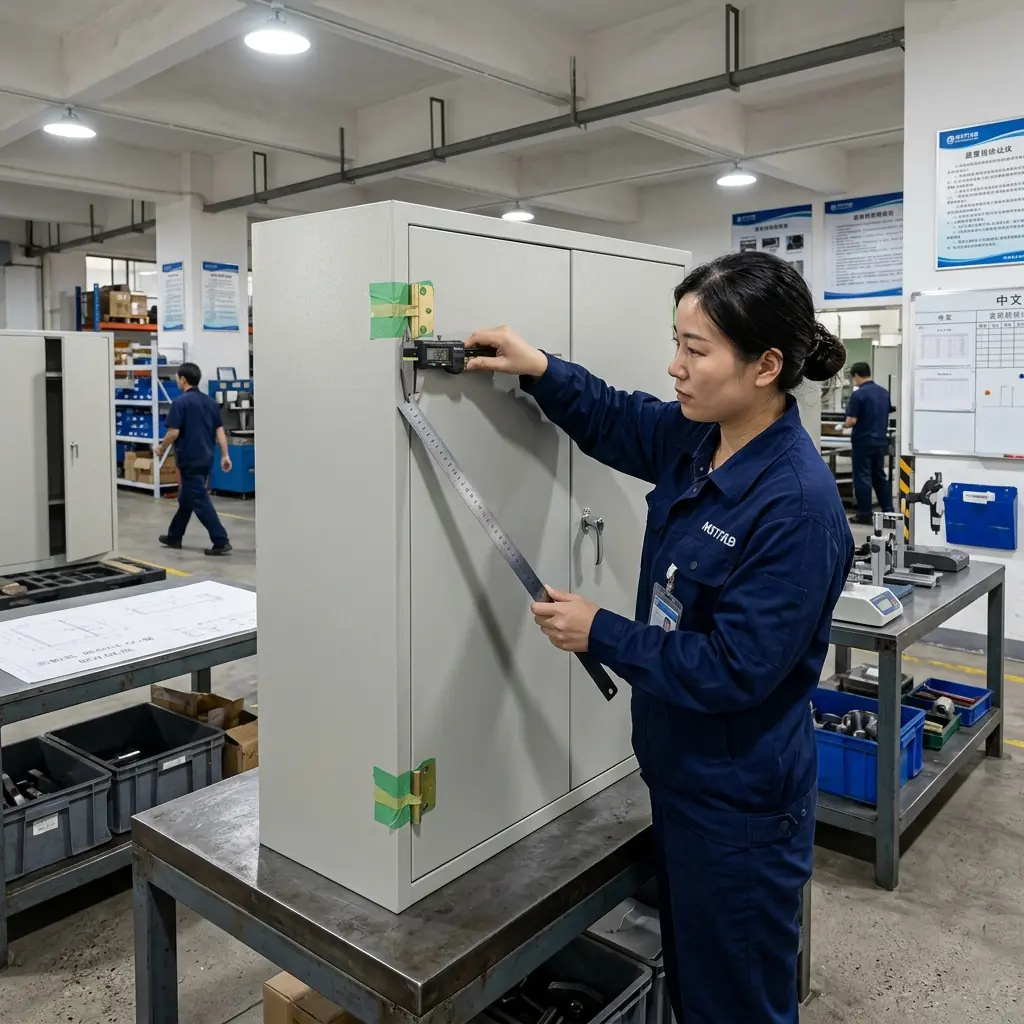
Inspection should focus on the features that affect cabinet fit, function, service access, visible quality, and delivery.
Depending on the project, checks may include material thickness, cabinet dimensions, door gaps, mounting-hole positions, bend angles, flange length, flatness, squareness, weld condition, hardware type and position, thread function, hinge movement, lock and latch engagement, grounding-point access, mounting plate fit, surface appearance, and packaging condition.
Not every cabinet feature needs equal inspection priority. A hidden internal edge may not matter as much as door gaps, lock cutouts, hinge locations, mounting-hole patterns, equipment mounting interfaces, gasket-contact surfaces, cable-entry openings, visible doors, and critical service-access zones.
Packaging for Finished Metal Cabinets
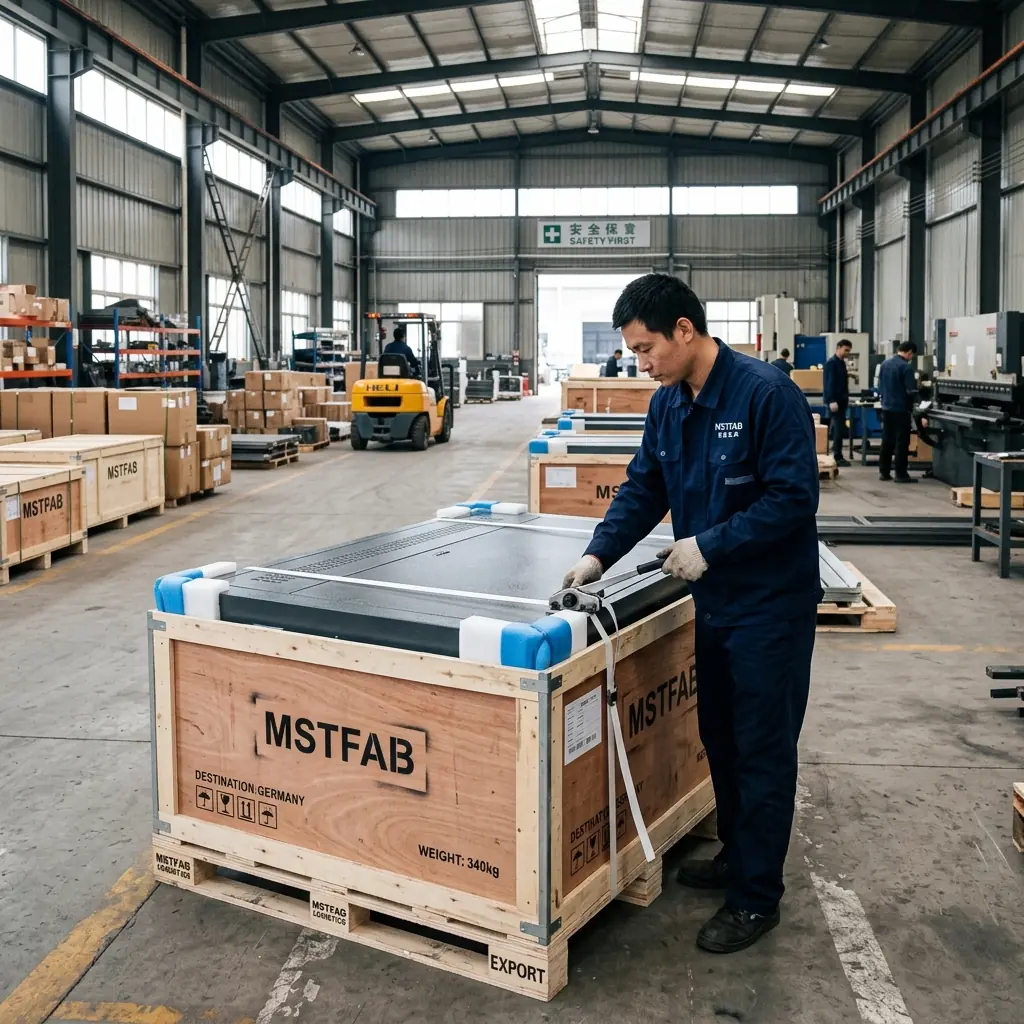
A cabinet can pass inspection and still arrive damaged if packaging does not protect its doors, visible panels, corners, hardware, and internal components.
This is especially important for powder-coated cabinet doors, stainless steel cabinet faces, large cabinet bodies, hardware-installed cabinets, welded base frames, multi-part cabinet kits, visible front panels, and equipment-support cabinets.
Packaging may include protective film, foam separation, edge guards, divider cartons, labeled hardware bags, component labels, reinforced cartons, pallets, wooden crates, moisture-control materials, and defined support points for large cabinet structures.
A visible cabinet door should not rub against another panel in transport. A hardware bag should not move freely inside the cabinet body. A welded frame should be supported to reduce shifting or twisting during export handling.
How to Compare Metal Cabinet Manufacturers
Do not compare cabinet suppliers only by cabinet dimensions or unit price. Compare whether the supplier controls the finished cabinet as a mechanical system.
| What to Compare | What Buyers Should Confirm |
|---|---|
| Assembly Review | Door fit, internal clearance, mounting plates, service access and component relationships |
| DFM Support | Bends, hardware access, welding, cabinet stiffness and finish compatibility |
| Laser Cutting | Cutouts, holes, vents, cable entries, lock openings and edge condition |
| CNC Bending | Cabinet geometry, flanges, door fit, flatness and squareness |
| Welding | Fixture planning, distortion control, cleanup and frame alignment |
| Hardware | Hinges, locks, latches, threads, handles, grounding studs and hardware kits |
| Surface Finish | Coating, masking, visible-face quality and scratch protection |
| Inspection | Door movement, lock function, mounting plate fit, dimensions and final visual review |
| Packaging | Foam, film, labels, pallets, crates and support points |
| Repeat Orders | Revision control, approved production route and documented packing standard |
A low quote may include basic cutting and bending. Another quote may include DFM review, welding, mounting plates, doors, hardware, finishing, inspection, labels, export packing, and repeat-order control. Those are not the same delivery scope.
Frequently Asked Questions
What types of custom metal cabinets can be manufactured?
Custom metal cabinets can include industrial equipment cabinets, machine cabinets, cabinet bodies, doors, access panels, mounting plate cabinets, telecom cabinet structures, battery-system cabinets, network equipment cabinets, control cabinet structures, service cabinets, and multi-part cabinet assemblies.
Can custom cabinets include doors, hinges, locks, and handles?
Yes. Suitable projects can include doors, hinges, locks, latches, handles, mounting plates, internal brackets, grounding studs, hardware kits, and mechanical assembly checks when they are defined in the drawings.
Can metal cabinets include mounting plates and internal support structures?
Yes. Cabinets can include mounting plates, shelves, support trays, internal brackets, chassis sections, rails, cable supports, fan panels, grounding plates, and other mechanical components.
Does cabinet fabrication include electrical wiring and internal electrical components?
The normal scope is physical sheet metal fabrication and mechanical assembly. Electrical wiring, circuit design, PLC programming, electrical components, software, and final product testing should be separately defined by the buyer.
Request Custom Metal Cabinets
A reliable metal cabinet manufacturer should do more than form sheet metal into a box.
They should help ensure the cabinet fits the intended equipment, supports the required doors and internal parts, allows practical service access, protects visible surfaces, passes relevant inspection, and arrives ready for the next assembly stage.
Send your cabinet drawings, material requirements, quantity, door and hardware details, internal layout, finish requirements, inspection needs, and packaging expectations through the MSTFAB quotation page.
Because a good metal cabinet should make your equipment easier to build, install, service, and reorder.
 WeChat Contact
 WhatsApp Me Directly