CERTIFICATION CLAIMS FOR BUILD-TO-PRINT SHELLS
Quick answer: “UL-ready” is informal project language, not an official certification status. A UL Listed product is covered by a specific certification record and controlled construction. A buyer-designed empty enclosure shell may support that route, but MSTFAB cannot transfer another product’s Listing, apply a finished-product UL Mark or certify the completed electrical equipment.

1. Start with the deliverable, not the logo
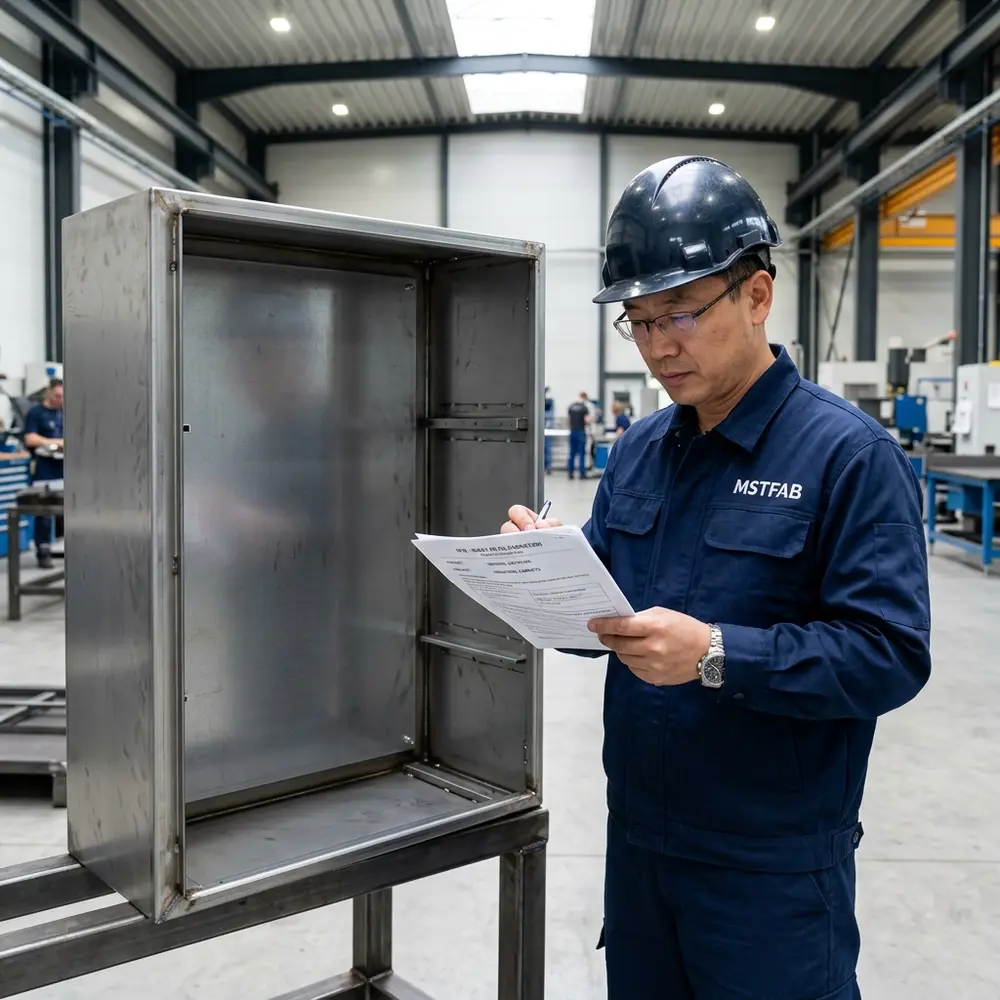
The word enclosure can mean an empty metal shell, a mechanically prepared cabinet, a certified enclosure product or completed electrical equipment. Those are different deliverables with different owners, records and liabilities.
Buyer-designed empty bodies, doors, covers, mounting plates, gland plates, brackets, cutouts, studs, specified hardware, finishes, mechanical inspection and export packing.
Electrical architecture, component selection, wiring, energized testing, NRTL services, certification decisions and application of a finished product’s UL Mark.
Certification holder, product category, approved construction, component conditions, final assembly, deviations, testing, labeling and regulatory acceptance.
If the RFQ says only “UL-ready cabinet,” everyone can agree while imagining a different product. The misunderstanding then waits politely until the quotation, audit or incoming inspection.
2. Use the certification terms precisely
| Term | Practical meaning | What it does not prove |
|---|---|---|
| UL Listed or UL Certified product | A specific product or family is covered by an applicable certification record and controlled program. | Every custom variation, factory, accessory or later modification is automatically covered. |
| UL Recognized Component | A component is evaluated for use within a larger product under defined conditions. | The complete enclosure or assembled electrical equipment becomes Listed by association. |
| UL Classified | Evaluation addresses specified properties, hazards or conditions stated in the classification. | Every aspect of the product was evaluated. |
| “UL-ready” or “built to UL” | Informal language whose meaning must be defined by the drawing, PO and responsibility matrix. | Any official certification status or authorization to apply a mark. |
UL Solutions explains that a Recognized Component is intended for incorporation into a larger certified product and is subject to conditions of acceptability. It is distinct from a Listed end product. See the official UL Component Recognition explanation.
3. “UL-ready” needs a project definition or it means nothing useful
The phrase can be convenient inside a project team, but it should point to controlled requirements. Define the buyer drawing, intended certification route, responsible parties, component limitations, approved factory, evidence package and deviation process.
“UL-ready” without a named construction is not a shortcut. It is a future meeting invitation.
4. Verify the exact certification record
When a supplier claims a product is Listed, verify the certification holder, product identity, category, model or family, manufacturing site and current record through the certification body’s official database. A logo in a PDF is not enough. A file belonging to a neighboring factory is not close enough, even if both factories share a parking lot.
- Certification holder’s legal name
- Certification file or record number
- Product category and scope
- Exact model or family
- Authorized manufacturing location
- Applicable mark and country coverage
- Controlled construction or drawing
- Follow-up service requirements
- Approved accessories and options
- Deviation approval route
5. Understand the NRTL role
OSHA describes an NRTL as a private-sector organization recognized to test and certify products using consensus-based standards within its recognized scope. UL Solutions is one NRTL; the certification path is not a metal fabricator’s self-declaration. See OSHA’s official NRTL Program FAQ.
The applicable code, project specification, certification body and authority having jurisdiction determine what the finished equipment needs. This article is a purchasing guide, not a certification ruling.
6. Recognized components do not certify the shell by osmosis
A recognized gasket, fan, switch, terminal block or plastic material can support an end-product evaluation. It does not automatically certify the surrounding custom enclosure. Conditions of acceptability, installation geometry, temperature, spacings and other limitations still matter to the complete construction.
Certification is not office coffee. Putting a certified component near the shell does not make the certification spread through the room.
7. Keep the metal-fabrication scope measurable
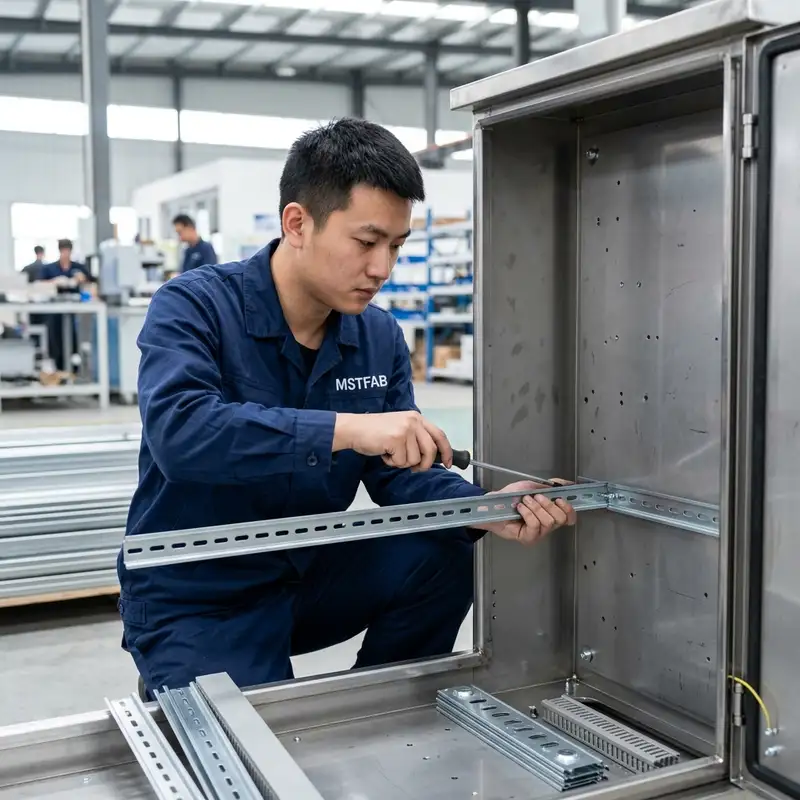
MSTFAB can manufacture released shell geometry and provide agreed mechanical evidence. That may include material records, dimensional reports, weld and finish records, installed hardware verification, photographs, first-article checks and revision traceability.
Those records can support the buyer’s technical file. They do not replace the evaluation of the complete product.

8. Freeze cutouts, materials and factories before release
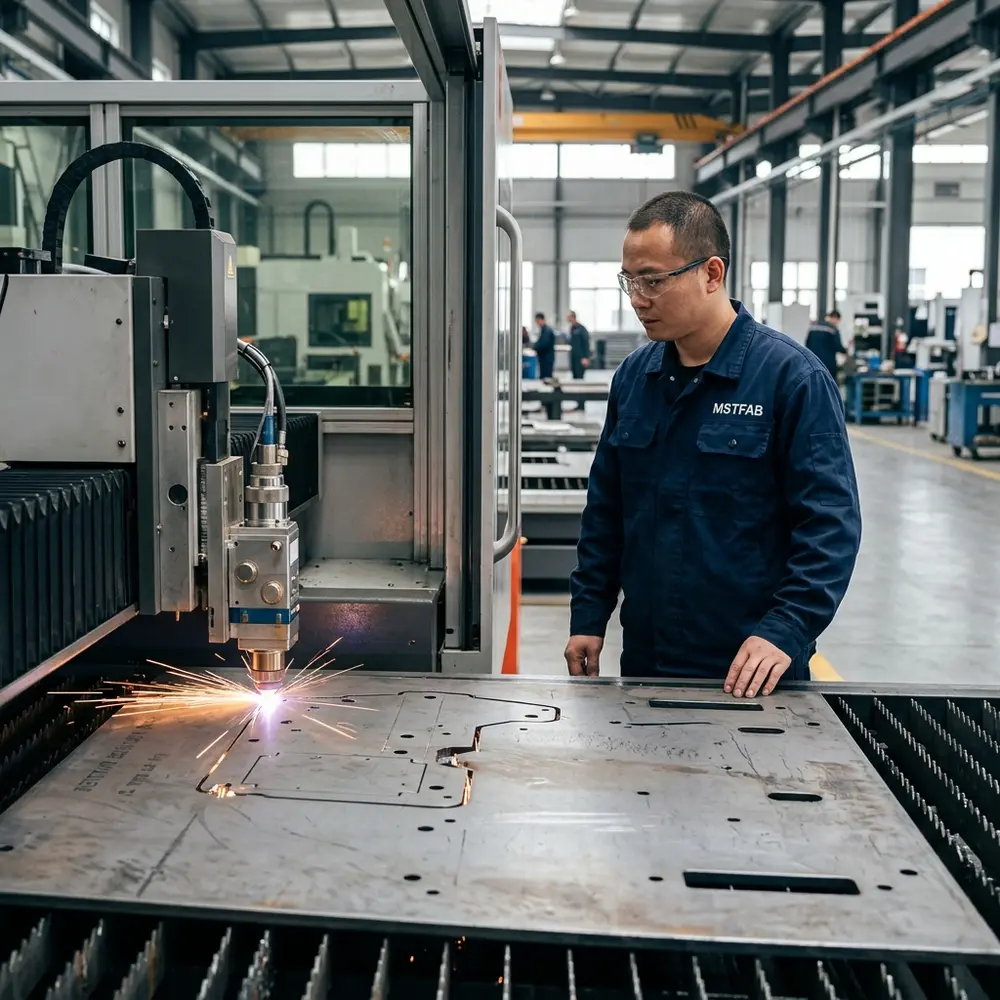
A new cable opening, different gasket, alternate sheet grade, changed coating, revised latch or new manufacturing location may affect the controlled construction. The buyer should define who can approve each change and what evidence is required before implementation.
The shop should never hear “it is only one extra hole” after certification review. Holes are famously small right up until they become deviations.
9. Do not assume a familiar gasket transfers performance
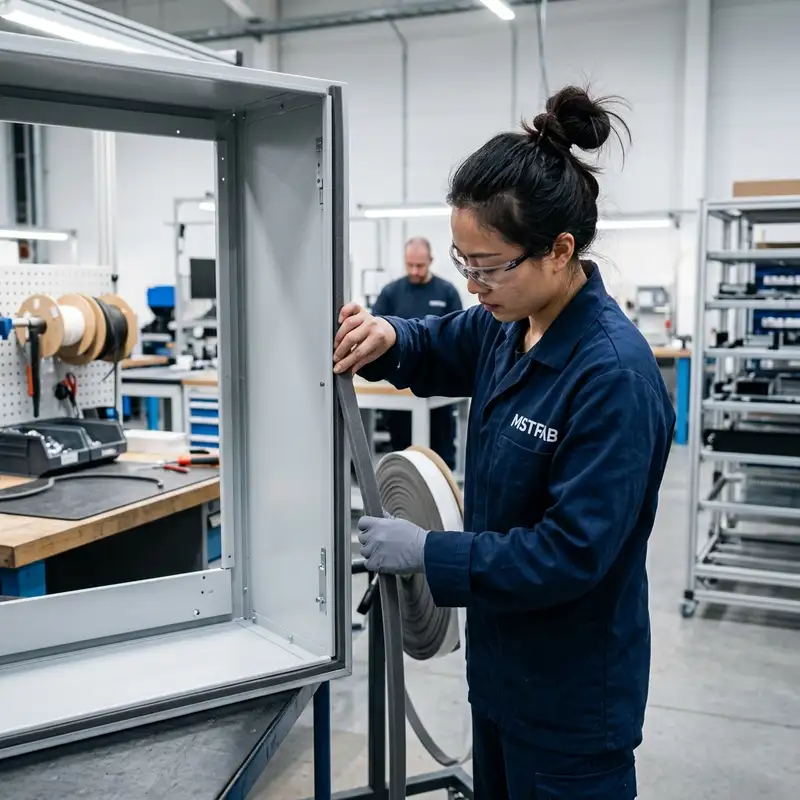
Environmental performance depends on the complete relationship among body, door, flange, gasket, corner joints, fasteners, cable entries and assembly process. A gasket with a recognition mark or a familiar catalog number does not make a custom shell a Listed enclosure by itself.
Define gasket material, profile, joint, compression, adhesive or retention method, flange geometry and test responsibility in the buyer-controlled construction.
10. Tie production to the released revision
The purchase order should identify the part number, drawing revision, bill of materials, approved material substitutions and deviation status. Manufacturing records should refer to the same revision.
A dimensional report for Rev B cannot prove Rev C was built correctly merely because the cabinets are the same shade of grey.

11. Ask the metal supplier for evidence it can actually own
Grade, thickness, heat or lot traceability and finish records when required by the PO.
Functional datums, cutouts, door relationship, mounting interfaces and finished condition.
Approved weld, hardware, coating, masking and first-article records.
Documented deviation request, buyer approval and effective revision.
Do not ask the shell supplier for a vague “UL certificate” when the supplier is not the certification holder for the finished product. Ask for the exact mechanical records your certification owner needs.

12. Write the RFQ in responsibility language
A useful RFQ sentence is: “Fabricate the unpopulated sheet metal enclosure shell to drawing ABC-123 Rev C for integration and certification review by the buyer’s qualified panel shop and certification body.” Then list the required records and approval path.
That sentence is not glamorous. It is much cheaper than discovering that the supplier quoted an empty shell while purchasing expected a field-ready panel.
13. Keep the adjacent standards topic on its own page
This article explains claims and purchasing responsibility. It does not repeat detailed panel-integration requirements. For the next stage, use the UL 508A and IEC 61439-2 enclosure shell input guide to organize buyer-owned design information before panel integration.
For a product-specific example, the UL switch box shell buyer-verification guide applies that responsibility boundary to operator hardware, handle cutouts, field changes and panel-builder ownership.
14. First-article evidence should match the certification route
| Evidence | MSTFAB can provide when specified | Decision owner |
|---|---|---|
| Material and finish records | Records tied to part and lot | Buyer defines acceptability for the controlled construction |
| Dimensional report | Released revision and agreed CTQs | Buyer or certification party defines required features |
| Mechanical fit check | Approved shell, fixture, dummy or template | Buyer approves the checking method |
| Deviation record | Proposed change and implementation status | Certification holder or authorized reviewer approves |
| Certification status | No finished-product claim unless MSTFAB is the named holder | Certification body and named certification holder |
15. Supplier-claim red flags
- “UL-ready” appears with no project definition
- A logo is shown without a searchable record
- The certificate holder name does not match the seller
- The factory on the record differs from the production site
- A recognized component is presented as proof for the complete box
- Custom cutouts are promised without deviation review
- Substitutions need no buyer approval
- The supplier offers to apply a mark it does not control
- Mechanical records have no drawing revision
- The quotation mixes empty shells and wired equipment
16. Responsibility matrix
| Item | MSTFAB scope | Buyer, integrator or certification owner |
|---|---|---|
| Empty shell metalwork | Fabricate to released drawings | Approve geometry and intended certification route |
| Mechanical records | Provide agreed material, dimensional and process evidence | Define required records and acceptance limits |
| Electrical components and wiring | Not selected, supplied or installed | Design, assemble and test |
| Certification file and mark | No ownership unless explicitly named in the record | Control file, authorized construction and mark use |
| Final product acceptance | Support with mechanical evidence | Certification body, AHJ and product owner decide |
17. RFQ checklist
- Exact deliverable definition
- Certification holder and review contact
- Applicable record, category and model
- Controlled drawings and BOM
- Authorized manufacturing location
- Materials and approved substitutes
- Cutouts, gasket and hardware controls
- First-article evidence
- Deviation approval route
- Change-notification period
- Marking and labeling responsibility
- Packing and revision traceability

Planning a physical change? Use the UL enclosure modification change-control checklist before releasing new cutouts, doors, materials, ventilation or hardware to fabrication.
Frequently asked questions
Is “UL-ready” an official certification status?
No. It is informal language. Define exactly what it means in the drawing, purchase order, evidence list and responsibility matrix.
Does MSTFAB provide UL Listed completed electrical enclosures?
No. MSTFAB provides buyer-designed empty sheet metal shells and mechanical parts. We do not wire panels, perform NRTL certification or apply a finished product’s UL Mark.
Do UL Recognized components make the final box Listed?
No. Recognized components are evaluated for use within a larger product under stated conditions. The complete construction still follows its own evaluation and certification route.
Can a buyer modify a certified enclosure construction?
Potentially, but the certification holder and authorized reviewer must determine whether the change is covered, requires evaluation or is not acceptable. Do not assume a custom change is automatically included.
Send the controlled shell drawing and responsibility matrix
Share the released enclosure files, material, finish, quantity, required mechanical evidence and named approval path. MSTFAB will review the build-to-print shell scope and return practical DFM questions before production.
 WeChat Contact
 WhatsApp Me Directly