Sheet Metal Curling Process: Design Rules, Tooling & DFM Guide
Blood on the Assembly Floor is Bad for OPEX
Let’s be brutally honest about raw, unformed sheet metal: it is essentially a giant, floppy razor blade.
If you are engineering a heavy-duty industrial cabinet, a food-grade hopper, or an outdoor telecom enclosure, and you leave a raw laser-cut edge exposed, two terrible things are guaranteed to happen. First, the metal will lack structural rigidity and deflect under operational stress. Second, a highly-paid assembly technician will inevitably slice their hand open, or worse—a vital power cable will chafe against the sharp edge, eventually short-circuiting your million-dollar infrastructure.
You don’t need a band-aid; you need the sheet metal curling process.
Curling (or rolling) the edge of sheet metal into a hollow cylinder is the ultimate engineering two-for-one. It permanently eliminates sharp edges, guaranteeing absolute edge safety, while simultaneously multiplying the structural stiffness of the panel without adding a single ounce of extra material.
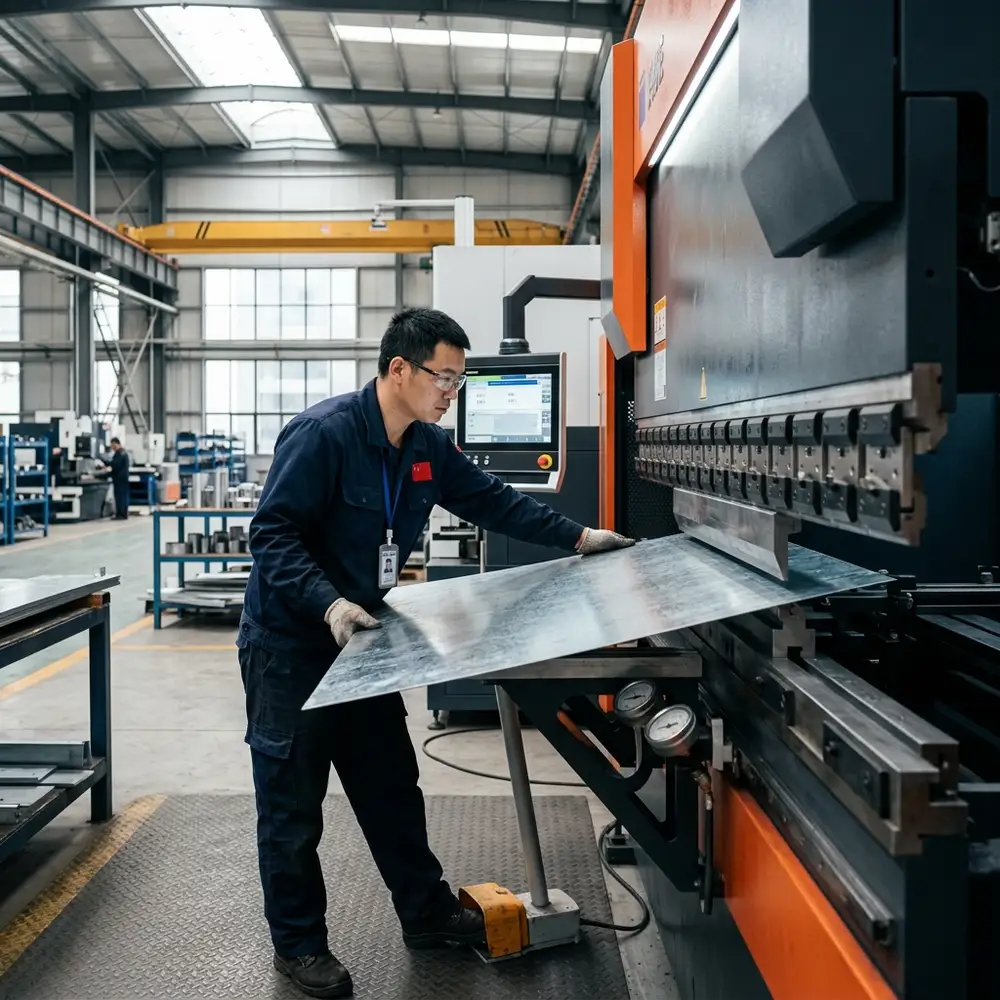
The Physics of the Curl: Design Rules You Can’t Ignore
In modern 3D CAD environments, curling an edge requires just a click of a button. In the physical manufacturing realm, however, you are asking a flat sheet of rigid steel to perform intense metallurgical gymnastics. If you fail to respect the boundaries of physics, the metal will stress-fracture and snap.
Here are the definitive DFM (Design for Manufacturing) rules that elite mechanical engineers employ to prevent costly production disasters:
1. The Bend Radius Reality Check
You cannot force thick steel into a microscopic tube. As a fundamental metallurgical rule, the outside bend radius (R) of a curl must be at least twice the thickness (t) of the material (R > 2t). If you attempt to force a 2.0mm thick piece of stainless steel into a 3.0mm radius curl, the outer fibers of the metal will aggressively stretch and tear open, completely obliterating structural integrity and exposing jagged, rust-prone cracks.
2. Distance to the Nearest Cutout
Engineers often make the critical error of placing mounting holes or louvers immediately adjacent to a curled edge. When the press brake tooling rolls the edge, the localized metal stretches violently. If a tapped hole or ventilation cutout is positioned too close to the deformation zone, the hole will stretch into a distorted oval, causing severe fastener misalignment. Always leave a flat margin equivalent to at least the radius of the curl plus material thickness before introducing a cutout.
3. Material Selection: Don’t Curl Potato Chips
Not all alloys are suitable for intense curling operations. Highly ductile materials—such as AL5052-H32 aluminum, mild cold-rolled steel (SPCC), and copper—roll beautifully and consistently. Conversely, if you attempt to tightly curl aerospace-grade 6061-T6 aluminum or high-yield stainless steel, it will fracture like a dry potato chip. If your structural design absolutely demands a high-strength alloy, the bend radius must be significantly increased to compensate for lower ductility.
| Material Type | Ductility Level | Minimum Curl Radius (R) | Curling Feasibility |
|---|---|---|---|
| Cold Rolled Steel (SPCC/SECC) | High | R ≥ 2.0 × Thickness | Excellent. Ideal for enclosures. |
| Aluminum AL5052-H32 | Medium-High | R ≥ 2.5 × Thickness | Very Good. Minimal cracking risk. |
| Aluminum AL6061-T6 | Low | R ≥ 4.0 × Thickness | Poor. High risk of fracture. Avoid if possible. |
| Stainless Steel (304/316) | Medium | R ≥ 3.0 × Thickness | Good, but requires specialized hardened tooling. |
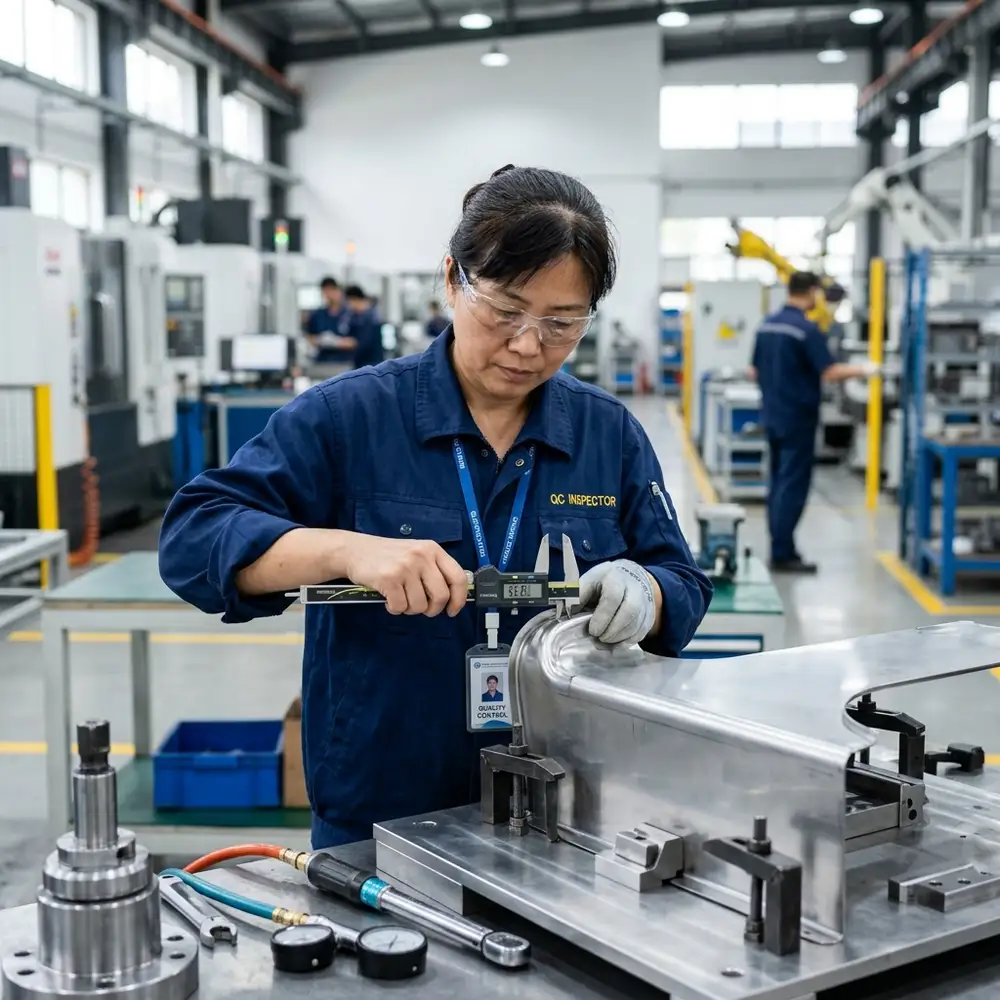
Tooling: Why Cheap Factories Fail at Curling
Forming a perfect, seamless curl is not achieved with standard V-dies and blind hope. It requires highly specialized, precision-ground tooling.
The operation typically involves a multi-stage process: first, the edge is pre-bent to a specific angle using standard tooling. Subsequently, specialized U-shaped curling dies and circular punches systematically force the metal to roll smoothly back onto itself.
When procurement teams select bottom-tier workshops to save pennies, those vendors inevitably lack the capital to invest in custom curling dies. Instead, they attempt to “fake” the curl by aggressively crushing the metal together with standard flat dies. The catastrophic result? A flattened, tear-drop-shaped edge that is highly stressed, micro-cracked, and fundamentally fails both the aesthetic and structural requirements of premium OEM hardware.
The MSTFAB Reality Check: Predictable, Boring Precision
At MSTFAB, we believe that cracked metal and assembly floor lacerations are an unacceptable way to conduct business. We prefer our manufacturing execution to be predictably boring and mathematically perfect.
Operating from our precision-optimized 5,000-square-meter facility in Guangzhou, China, we back our 23+ years of heavy-duty fabrication heritage with a front-loaded engineering approach. When you submit your native CAD files, our engineering matrix executes a ruthless DFM audit. We mathematically verify your bend radii, audit hole clearances, and specify the exact tooling matrix required to achieve a flawless, structurally rigid safety edge.
Our Pure-Play Boundary: We Protect Your IP
We achieve this level of mechanical mastery because we fiercely respect our boundaries. We are pure-play precision sheet metal experts. We manufacture the physical metal armor—the shells, chassis, and custom enclosures. We do not write software. We do not design circuitry. We will never ask for your proprietary electronic schematics, and we explicitly exclude internal electronic components from our manufacturing scope. You supply the brilliant electronic brain; we supply the flawless, perfectly-curled industrial skull.
Stop Gambling on Sharp, Flimsy Edges
A perfectly curled edge is a joy to assemble, a massive boost to structural integrity, and the undeniable hallmark of a premium OEM product. We back our geometric obsession with highly predictable global logistics, offering FOB, CIF, or fully managed DDP delivery straight to your factory doors.
Stop forcing your assembly technicians to deal with dangerous, structurally compromised metal. Request a direct factory quote below, and our engineering team will provide a comprehensive manufacturing analysis within 24 hours.
Related engineering guide: Before releasing a drawing for quotation, review our guide to reading sheet metal drawings for thickness, bend notes, hole dimensions, tolerance callouts, and manufacturability checkpoints.
CNC sheet metal bending services
MSTFAB provides CNC press brake bending services for precision sheet metal parts, enclosures, brackets and OEM assemblies.
 WeChat Contact
 WhatsApp Me Directly