RENEWABLE ENERGY ENCLOSURE RFQ
A renewable energy enclosure RFQ should translate the installation site and buyer-owned equipment into mechanical shell inputs. The useful starting point is not “outdoor cabinet.” It is the equipment envelope, heat load, cable routes, mounting method, exposure and evidence needed at handoff.
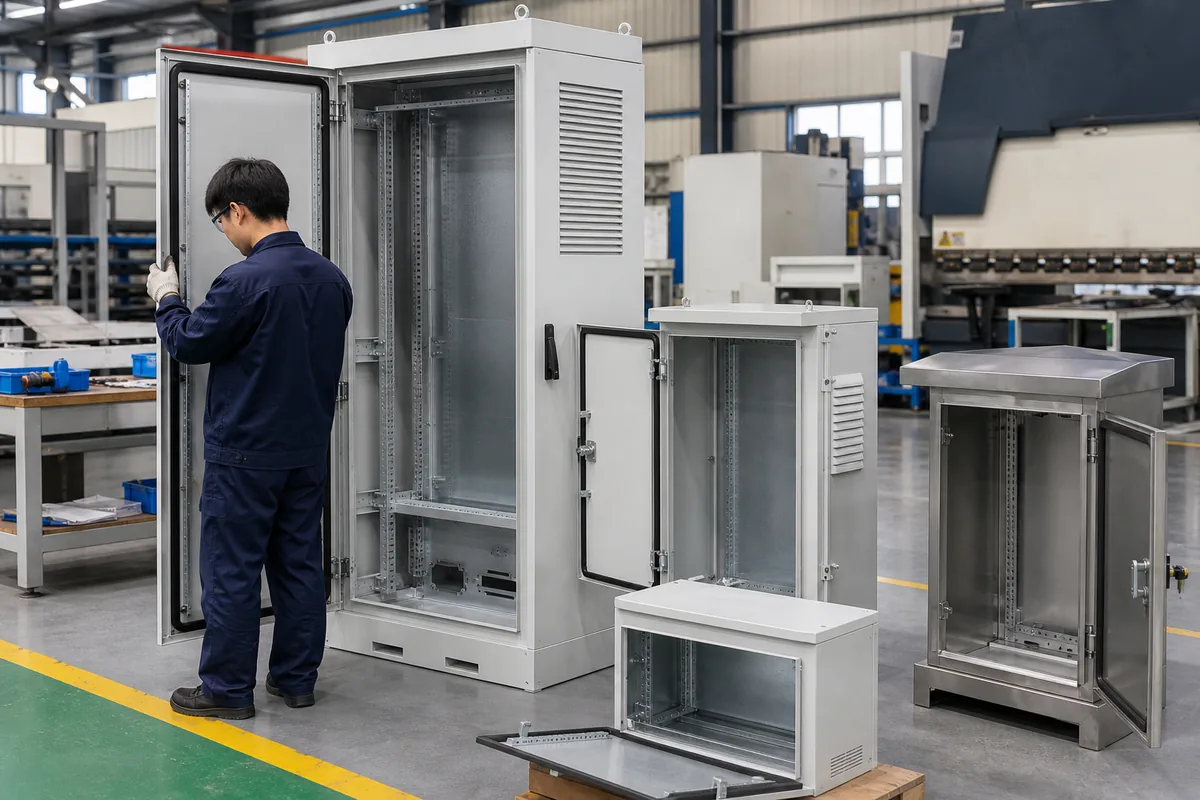
Convert Site Conditions Into Drawing Inputs
| Site question | Mechanical input | Responsible evidence |
|---|---|---|
| Where will it be installed? | Indoor or outdoor, sheltered or exposed, wall, pad or skid mounting | Buyer site specification and installation drawing |
| What will it contain? | Equipment envelope, mass, rails, keep-out zones and service access | Buyer-controlled component and interface drawings |
| How will heat leave? | Selected fans, exchangers, vents or sealed thermal interfaces | Buyer thermal analysis and selected hardware |
| How will it be handled? | Base, anchors, lifting points, center of mass and shipping state | Approved load cases and handling plan |
Freeze Component Interfaces Before Cutting Metal
Define cutout size, fastener pattern, flange, gasket land, connector projection and removal path for every buyer-selected component. Cooling hardware, gland plates and service doors compete for the same space surprisingly often. An interface schedule exposes that argument while it is still happening in CAD.
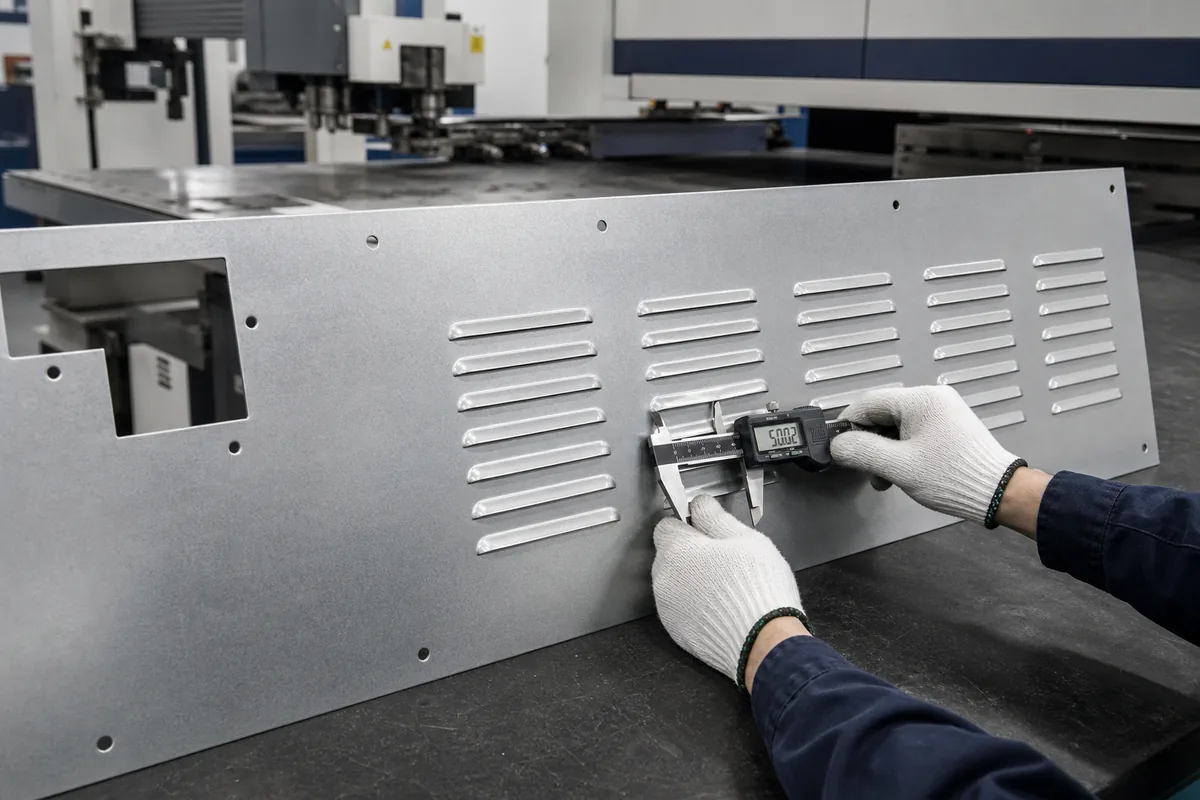
Release Loads, Finish and Handoff Evidence
Large cabinets may need reinforced bases, door frames, lifting provisions and controlled panel flatness. The buyer supplies equipment loads, installation loads and handling conditions; the fabricator reviews how the approved shell can be made and inspected. Material and coating follow the environment and maintenance plan, not a generic “best outdoor metal” rule.
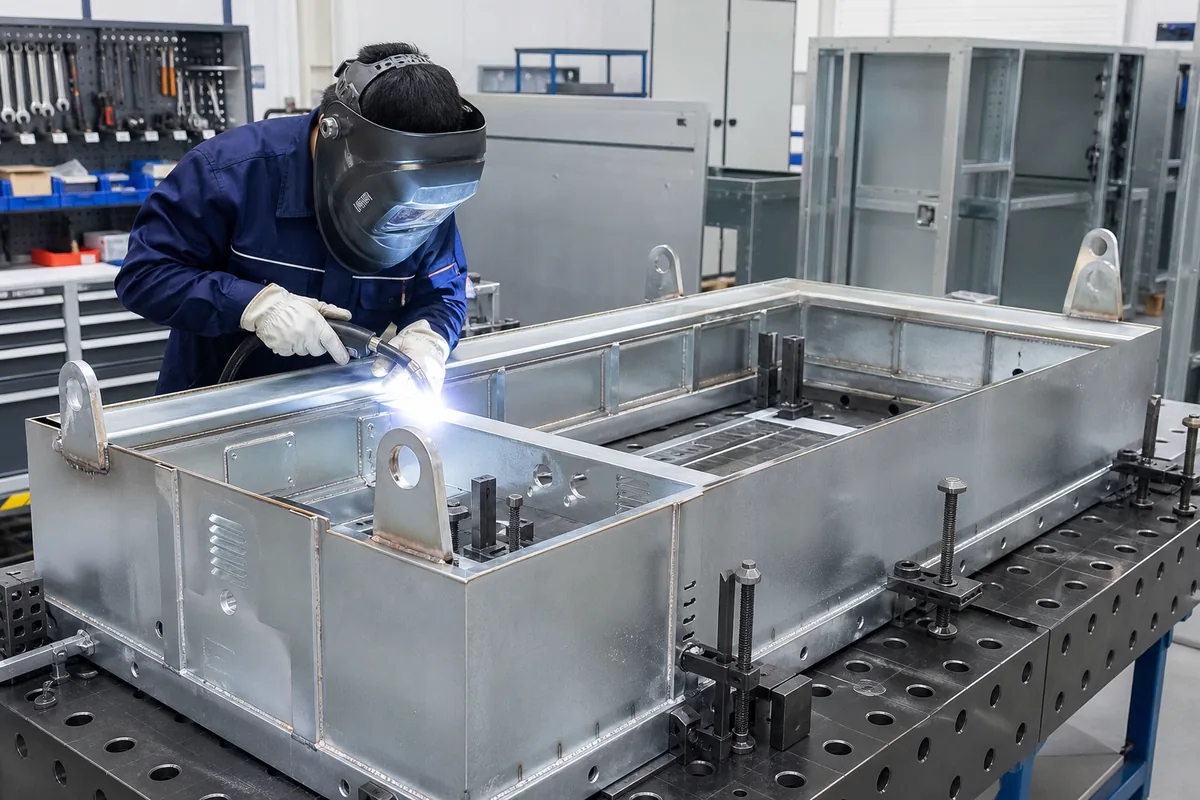
Buyer Trust Table
| Commercial phrase | Evidence to request | Buyer value |
|---|---|---|
| “Outdoor ready” | Exposure, material, pretreatment, coating and maintained interfaces | Replaces a slogan with a finish route |
| “Cooling ready” | Selected hardware, cutout, load, clearance and seal drawing | Confirms mechanical fit only |
| “Heavy duty” | Load cases, support points and inspection plan | Connects reinforcement to real loads |
| “Rating compliant” | Applicable standard, sample configuration and responsible test party | Keeps certification ownership clear |
Example: The Same Cabinet Moves From a Wall to a Skid
An unchanged equipment list does not necessarily mean the enclosure drawing can remain unchanged. If a buyer moves a cabinet from a sheltered wall installation to an exposed skid, review the mounting arrangement, cable approach, service space, handling conditions and finish specification before repeating the order.
Start by identifying which approved assumptions have changed. The responsible engineer supplies the revised load and installation requirements. The fabricator reviews the affected metalwork, such as base plates, supports, anchor access, removable panels and shipping restraints. Neither a thicker base nor an added lifting lug is an automatic solution.
Record the affected drawing revisions and obtain approval for the revised geometry. Ask whether tooling, purchased hardware, work in progress, price or timing are affected. Then agree which first-article checks and system-level assessments must be repeated. This is an illustrative purchasing scenario, not a claim about a completed MSTFAB customer project.
Make Each Open Item a Release Decision
Keep a short register containing the interface, required input, responsible owner, source revision and closure evidence. For example, a cooling-unit cutout should reference the selected unit’s controlled interface information, not a dimension copied from an earlier quotation. If the source is still provisional, identify the approval needed before cutting rather than quietly treating the dimension as final.
Mechanical first-article records can confirm the agreed hole pattern, finished fit and other specified dimensions. They do not replace structural, electrical or thermal validation. Release repeat production only against the approved scope and documented disposition of open items.
Renewable Energy Enclosure RFQ Checklist
- Installation site and exposure
- Equipment mass and envelope
- Heat and airflow inputs
- Cooling components selected
- Cable and gland interfaces
- Mounting and lifting loads
- Material and finish specification
- Door and service sequence
- CTQs and first-article evidence
- Completed-system owner named
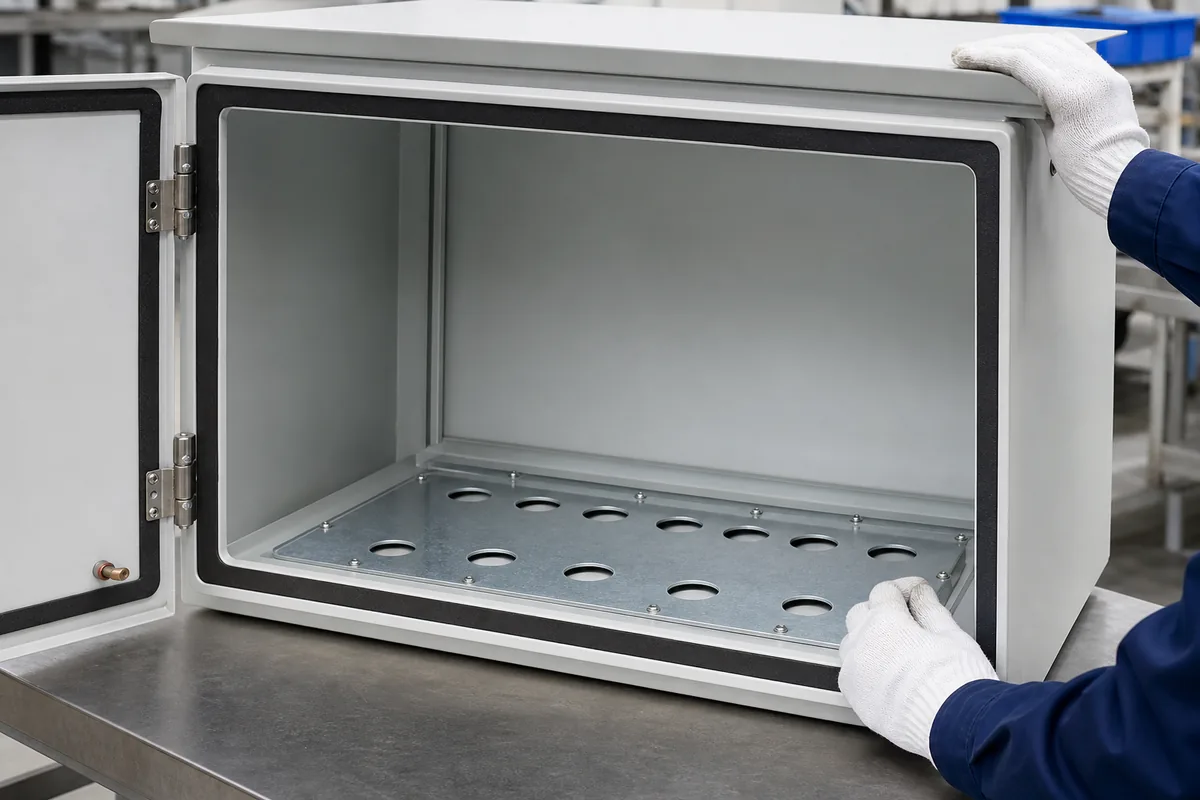
Frequently Asked Questions
Does MSTFAB design the renewable energy system?
No. MSTFAB reviews and fabricates the defined mechanical shell. The buyer or its qualified team owns electrical, thermal and system-level engineering.
Can one enclosure drawing cover every installation site?
Only when the buyer confirms that the same loads, exposure, mounting, service and compliance assumptions apply. Site differences often change interfaces.
Who owns the final environmental rating?
The responsible product owner should define the applicable standard, test configuration and validation party for the completed assembly.
Start With the Site and Interface Package
Send the shell drawings, equipment interfaces, site inputs, loads, finish and inspection requirements for review. Our sheet metal fabrication service covers drawing-defined mechanical parts; the battery storage enclosure page addresses the related storage-cabinet shell scope.
 WeChat Contact
 WhatsApp Me Directly