PHARMACEUTICAL MACHINERY SHELL DFM
A stainless enclosure can be bright enough to admire your reflection and still be awkward to clean, difficult to inspect or impossible to assemble consistently. Good pharmaceutical machinery sheet metal starts with a precise scope, controlled geometry and fewer places for residue, liquid and paperwork to hide.
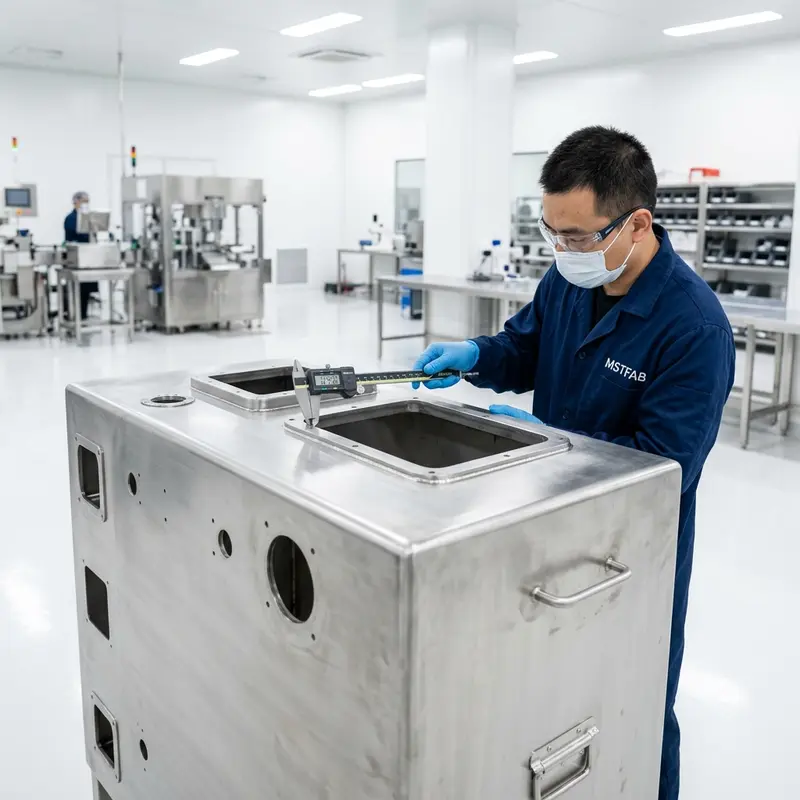
THE QUICK ANSWER
Define the exposure zone before defining the finish
The OEM should identify whether each surface is product-contact, indirect-contact, washdown-exposed, cleanroom-exposed or ordinary non-process equipment. That decision controls material, seam design, surface finish, drainage, inspection and validation requirements.
- Send one controlled 3D assembly and 2D drawing set.
- Specify material grade, finish direction and acceptance criteria.
- Dimension cleanable geometry and after-finish interfaces.
- Approve a first article before repeat production.
First Question: What Does the Shell Actually Touch?
Many pharmaceutical machines use sheet metal as an outer guard, service cabinet, operator interface housing or support frame. That is different from a hopper, vessel or chute that directly contacts product. Procurement should identify the boundary instead of asking the fabricator for “pharma grade” and hoping those two words perform engineering by themselves.
MSTFAB can manufacture the customer-defined shell and document agreed characteristics. The customer determines the regulatory classification, contamination risks, cleaning process and whether a particular feature belongs in a validated product-contact system.
Product-contact
Requires OEM-defined hygienic design, materials, welding, finish and validation beyond a generic enclosure quotation.
Cleanroom-exposed
May require controlled materials, smooth external geometry, cleanable joints and documented surface acceptance.
Non-process shell
Still needs repeatable fabrication, safe edges, service access and the specified cosmetic or corrosion-resistant finish.
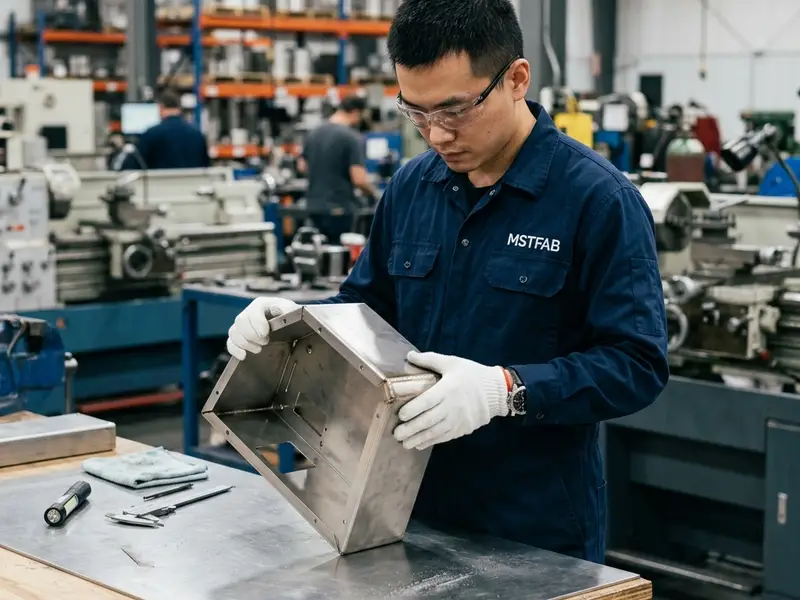
Build the RFQ Around Controlled Inputs
A useful RFQ combines a STEP or STP assembly with controlled PDF drawings. The model explains shape and assembly relationships; the drawing defines what MSTFAB must inspect and accept.
Identify materials, thicknesses, weld symbols, finish, grain direction, masking, hardware, critical dimensions and documentation. “Make it like the render” is not a finish specification, although it remains impressively popular.
| Input | What the OEM should define | Fabrication evidence |
|---|---|---|
| 3D assembly | Shell geometry, panel relationships, keep-outs and service access | DFM review and first-article fit check |
| 2D drawings | Datums, tolerances, welds, finish, masking and revision | Dimensional and visual inspection record |
| Exposure map | Product-contact, cleanroom, washdown and non-process zones | Zone-specific workmanship checks |
| Quality plan | CTQs, sampling, reports, certificates and approved samples | FAI and lot documentation |
Material Selection: 304, 316 or Something Else?
Stainless steel 304 is common for general equipment shells and cleanroom furniture. Stainless steel 316 may be selected where the customer’s corrosion assessment identifies more demanding chemicals or chloride exposure. Cold-rolled steel with coating can suit non-cleanroom, non-washdown machine bases or internal structures.
Material selection depends on exposure, cleaning chemistry, temperature, fabrication, cost and the finished machine’s risk assessment. MSTFAB does not substitute 304 for 316, or any other grade, without written customer approval.
For a deeper procurement comparison, see our SUS304 versus SUS316 fabrication guide.
Cleanable Geometry for an Outer Enclosure Shell
For surfaces the customer intends to wipe or wash, review horizontal ledges, blind pockets, overlapping seams, open hems, exposed threads and water traps. Sloped top panels, accessible radii and drainable lower geometry may help, but the OEM must define the required slope, radius and cleaning access.
A perfectly smooth panel with a hidden pocket behind it is still a hidden pocket. Cleanability belongs to the whole mechanical assembly, not just the surface visible in the brochure photograph.

Weld Seams: Structural, Cosmetic or Hygienic?
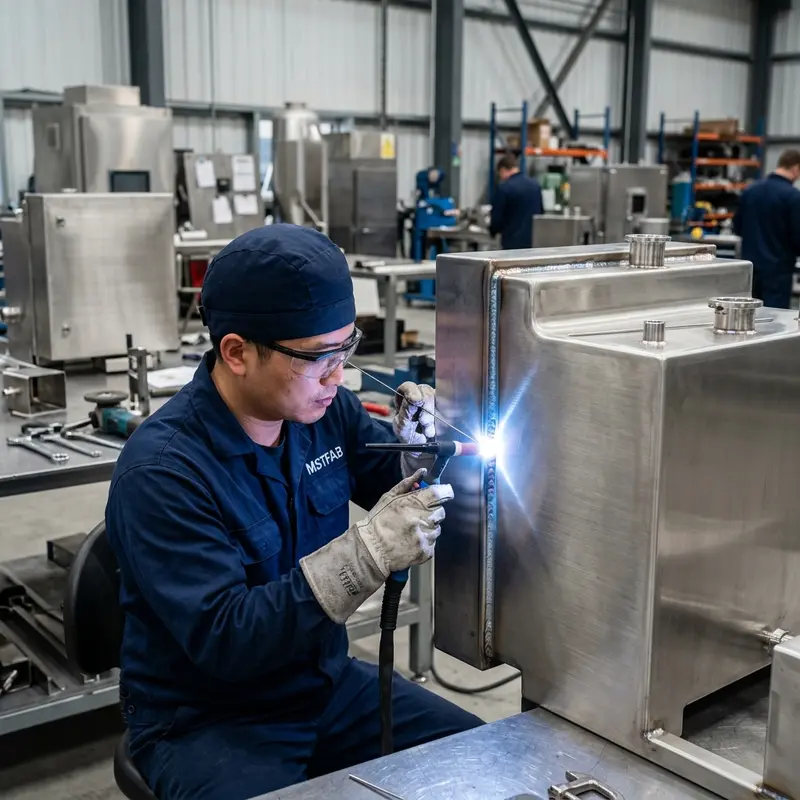
The drawing should distinguish structural welds, sealed seams, cosmetic welds and any customer-defined hygienic weld requirements. Specify process, size, length, continuity, finish and acceptance rather than using “smooth weld” as a universal instruction.
TIG welding can produce controlled stainless seams, but heat input may distort doors, frames and thin panels. Fixtures, balanced weld sequences, intermediate checks and suitable finishing help control the result.
MSTFAB does not claim a weld is sanitary or suitable for product contact unless the customer provides the applicable specification, acceptance criteria and validation responsibility.
Doors, Gasket Lands and Service Access
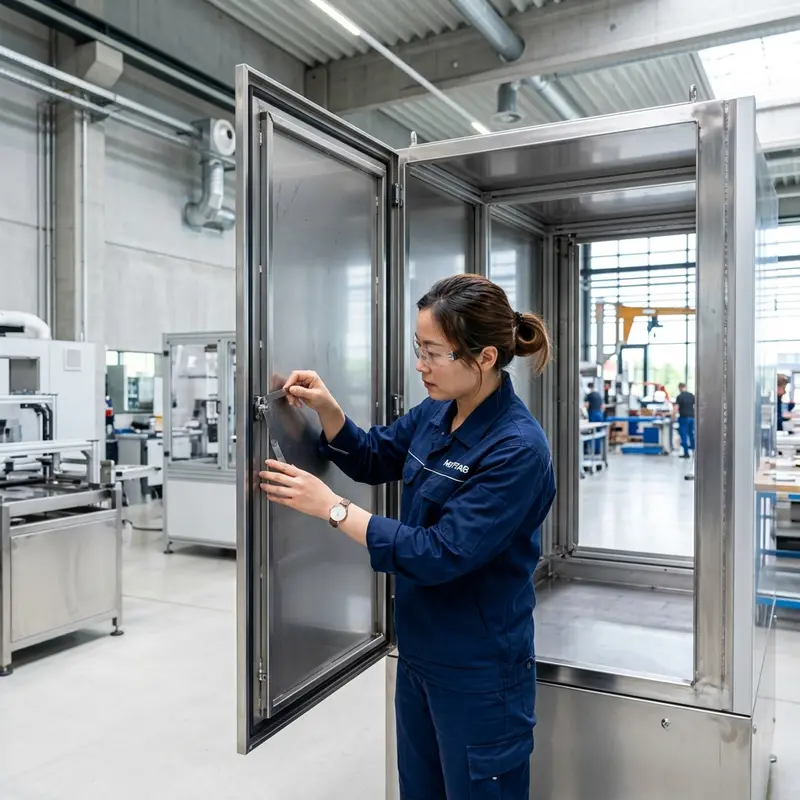
Freeze door gaps, hinge positions, latch engagement, gasket landing width, compression geometry and after-finish clearances. If a gasket is included, specify its material, profile, splice condition and approved supplier.
The OEM defines the sealing target and validates the completed machine. MSTFAB can inspect the metal path, fit customer-specified hardware and perform an agreed mechanical fit check.
Serviceability Is Part of Cleanability
Removable panels should come off without trapping hardware in inaccessible pockets or scraping finished surfaces. Reserve tool access and define the service sequence.
HMI, Glazing and Connector Cutouts
Dimension cutouts from stable datums and identify corner radii, edge distances, burr limits, flatness and after-finish acceptance. Use customer-approved templates for later-installed operator interfaces, viewing windows or connectors.
MSTFAB fabricates the openings and related metal reinforcement. We do not select the HMI, electrical connector or sealing system, and we do not validate the installed component.
Surface Finish, Grain Direction and Passivation
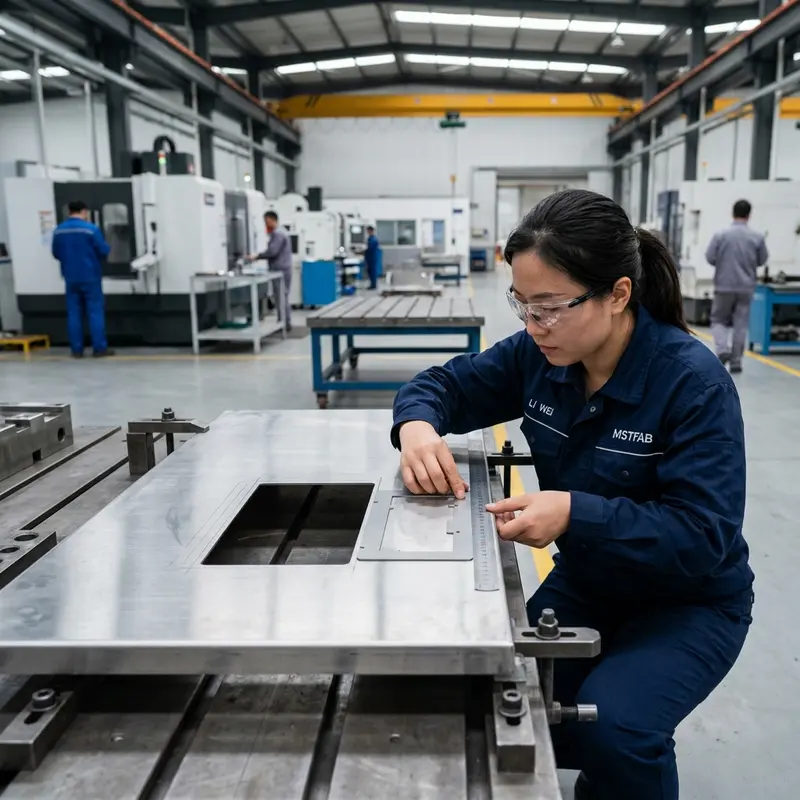
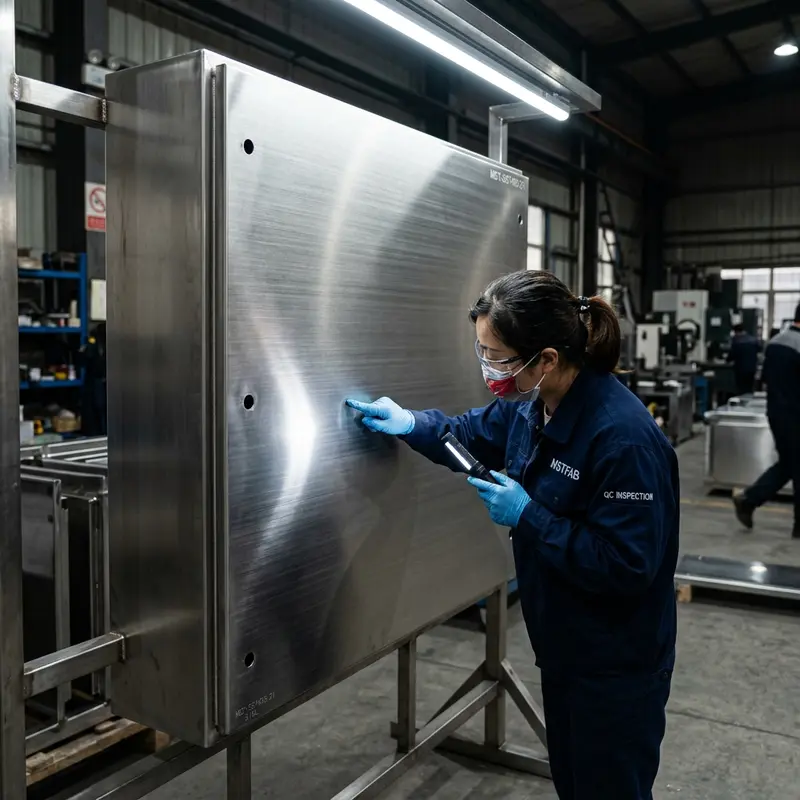
A finish callout should define the actual acceptance condition: mill finish, brushed grain, bead-blasted appearance, polish level, electropolish or passivation where applicable. If roughness matters, specify the value, measurement direction, instrument and sampling plan.
Do not assume every brushed surface has the same roughness or contamination behavior. Cosmetic appearance and cleanability are related, but they are not identical twins.
Protect finished surfaces from carbon-steel contamination, uncontrolled grinding marks and cross-grain repair. Mask contact zones and threaded interfaces as the drawing requires.
Flatness, Drainage and Assembly Fit
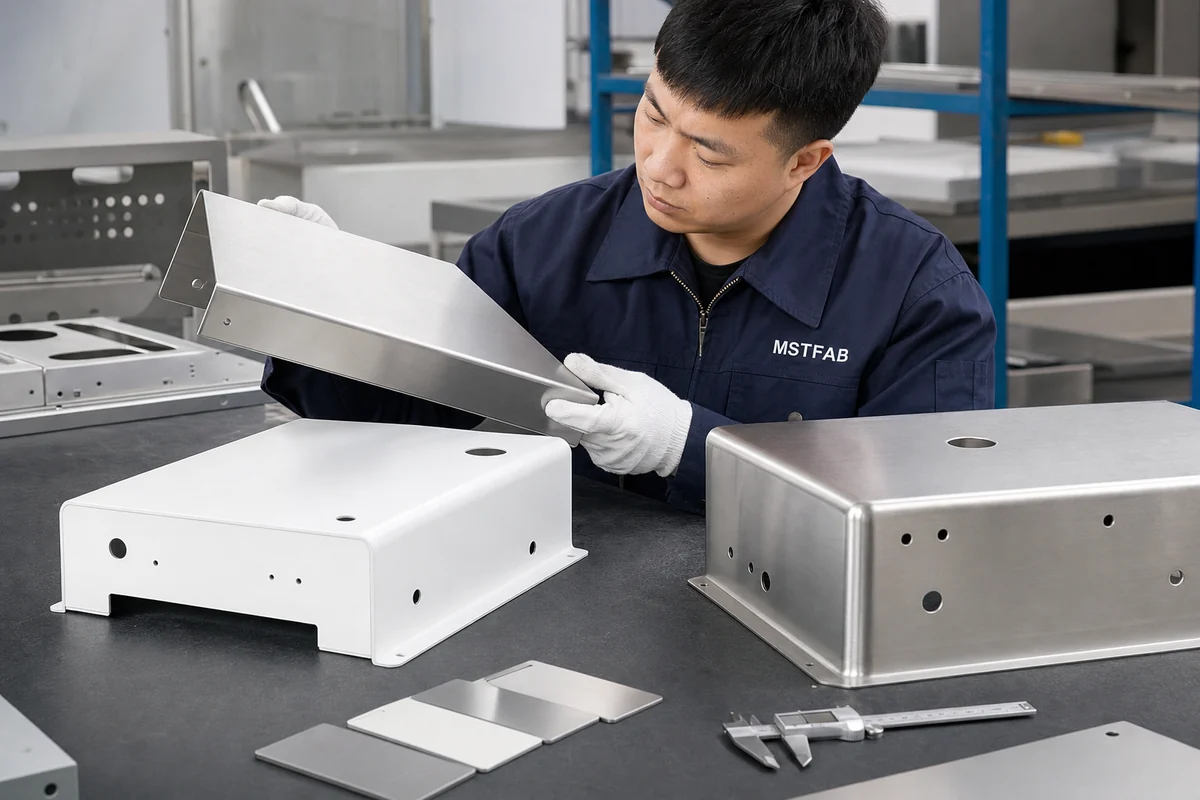
Large stainless panels may move during laser cutting, bending, welding and grinding. Define flatness only where it serves a function: gasket compression, door alignment, equipment mounting or cleanable gaps.
If the customer requires drainage, show the installed orientation and specify slope or no-pooling criteria. MSTFAB can manufacture and inspect the geometry; the OEM verifies the complete cleaning and drainage behavior in the assembled machine.
First-Article Evidence Buyers Can Use
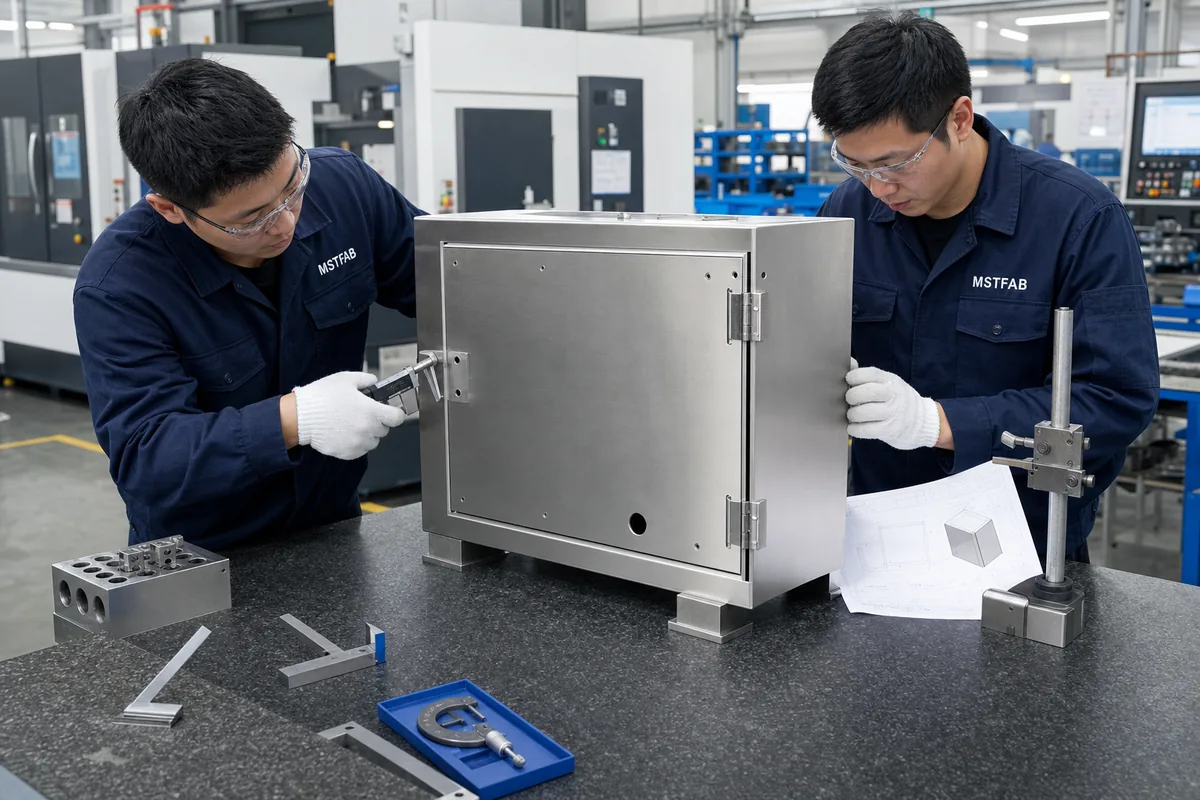
Before approving repeat production, link the first article to the released drawing revision and inspect the characteristics that affect fit, cleaning access and appearance. The report should state whether dimensions apply before or after finish.
Confirm identity
Part number, revision, material, thickness and finish match the purchase package.
Measure CTQs
Datums, cutouts, door gaps, gasket lands, mounting patterns and specified flatness are recorded.
Review surfaces
Grain direction, weld finishing, masking, scratches and approved cosmetic zones are checked.
Trial fit
Customer-defined plates, panels and mechanical hardware are installed and removed in sequence.
| Risk | Drawing control | Practical verification |
|---|---|---|
| Liquid or residue trap | Slope, radius, closed seam or accessible gap | Visual access and customer-approved drainage check |
| Door seal inconsistency | Gasket-land width, gap and latch positions | Post-finish fit check |
| Surface mismatch | Finish process, grain direction and approved sample | Controlled-light visual inspection |
| Weld distortion | Functional datums, gap and flatness CTQs | Fixture, gauge or dimensional report |
Fabrication Cleanliness and Packaging
For stainless parts, define handling and protection expectations during cutting, forming, welding, grinding, inspection and packing. Separate tools or controlled cleaning procedures may be required to reduce embedded carbon-steel contamination.
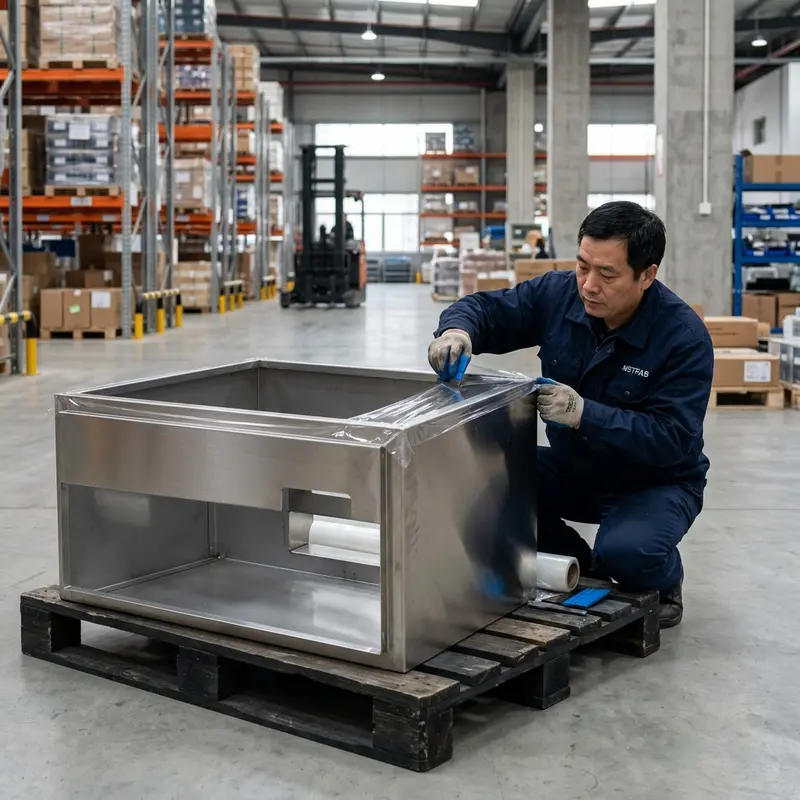
Protect brushed surfaces, door corners and exposed studs during shipment. Packaging is not glamorous, but neither is explaining why the expensive front panel arrived with a forklift-shaped autograph.
Quality and Regulatory Responsibility
MSTFAB: build-to-print sheet metal fabrication, DFM feedback, specified mechanical assembly, dimensional inspection, finish inspection and agreed first-article records.
OEM or equipment manufacturer: intended use, exposure classification, contamination risk, material approval, cleaning procedure, cleaning validation, process performance, GMP applicability and final equipment qualification.
FDA’s equipment CGMP Q&A explains that equipment cleaning and maintenance controls are intended to prevent contamination or malfunction, and that cleaning validation should demonstrate the proposed procedure works for the particular equipment, materials and substances involved. An enclosure fabricator can support controlled geometry and documentation, but cannot validate the customer’s cleaning process from a drawing alone.
Reference: FDA Questions and Answers on CGMP Requirements: Equipment.
RFQ Checklist
- Released STEP or STP assembly and controlled PDF drawings
- Exposure-zone or cleanability map
- Material grade and sheet thickness
- Weld symbols and finishing requirements
- Surface finish, grain direction, roughness criteria and approved sample
- Door, gasket, hinge, latch and service-access requirements
- Customer-defined cutouts and keep-out envelopes
- Critical dimensions and inspection method
- Prototype and production quantities
- FAI, certificates and lot documentation
- Packaging and destination
Frequently Asked Questions
Does MSTFAB manufacture complete pharmaceutical machines?
No. We manufacture customer-designed sheet metal parts and empty enclosure shells. Process equipment, controls, validation and finished machinery remain outside our scope.
Can MSTFAB decide whether 304 or 316 is required?
We can explain fabrication differences and availability, but the customer approves material based on exposure, cleaning chemistry, risk and regulatory requirements.
Can you supply sanitary or product-contact welds?
Only when the customer provides the governing specification, weld details, acceptance criteria and validation responsibility. A generic enclosure quote does not imply sanitary-process certification.
Can you passivate or brush stainless steel panels?
Yes, when the drawing defines the process and acceptance condition. Required certificates, roughness records or approved samples should be identified in the RFQ.
Does a cleanable shell prove GMP compliance?
No. GMP applicability and equipment qualification depend on the complete machine, intended use, cleaning procedure, risk controls and customer validation.
Send the Shell Drawings Before “Pharma Grade” Becomes a Guess
Provide the assembly, controlled drawings, exposure zones, material, finish, quantity and inspection requirements. MSTFAB will review the empty enclosure shell for manufacturability and repeatable inspection.
 WeChat Contact
 WhatsApp Me Directly